Nakahechi Part 1

Thursday, May 21

Takijiri-oji to Takahara • 4km

One thing we’ve noticed in public life and about is an absence of hand towels or dryers. People carry their own small towel throughout the day, whisking it out or their handbags/pockets and then tucking it away just as swiftly. I’m so impressed by all the small ways people take individual responsibility for themselves here, to make everything work more smoothly for everyone. I’ve finally tired of leaving the sink with wet hands, so have dug my backpacking microfiber towel out of my pack and folded it into my pants pocket to have on the ready today.

I slept well, although Chris did not, and has developed a cough. The son had apologetically informed us the night before that his mother snores heavily, so I slept in total oblivion for several hours with earplugs and eye mask before realizing his mother’s snore was totally tolerable and nowhere near the shelter-rattling snores we encountered from middle aged-on men on the Appalachian Trail.

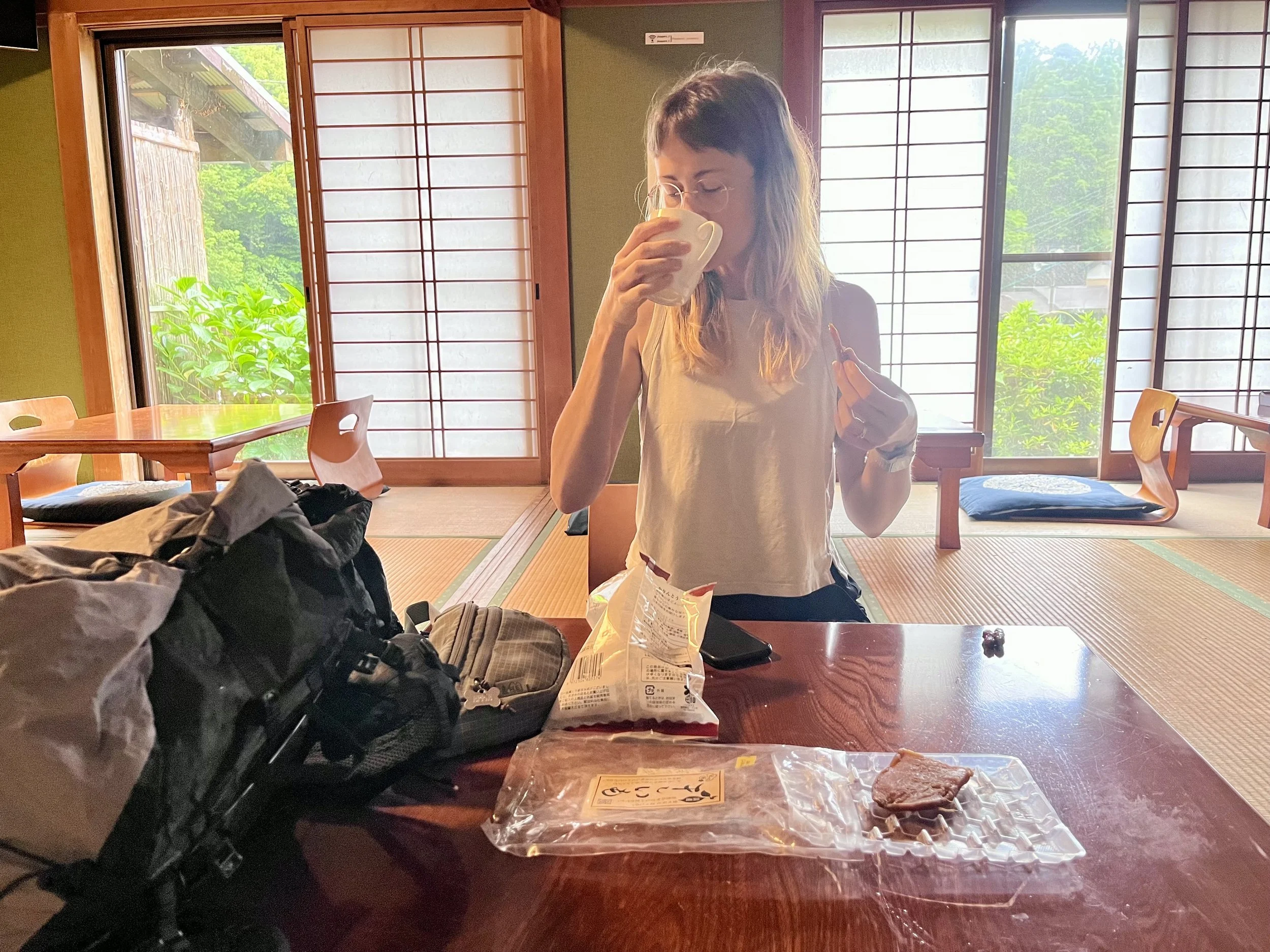
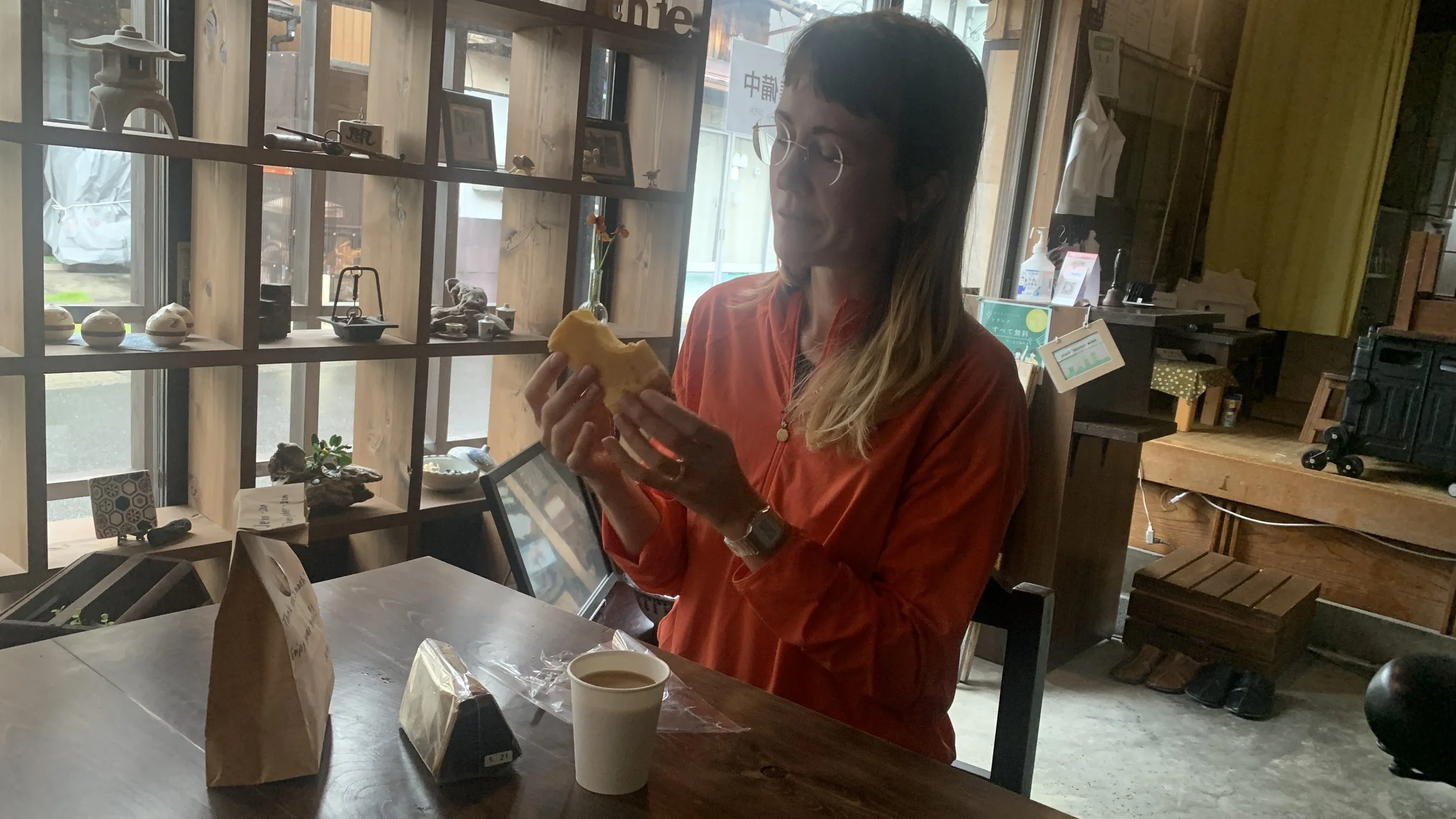
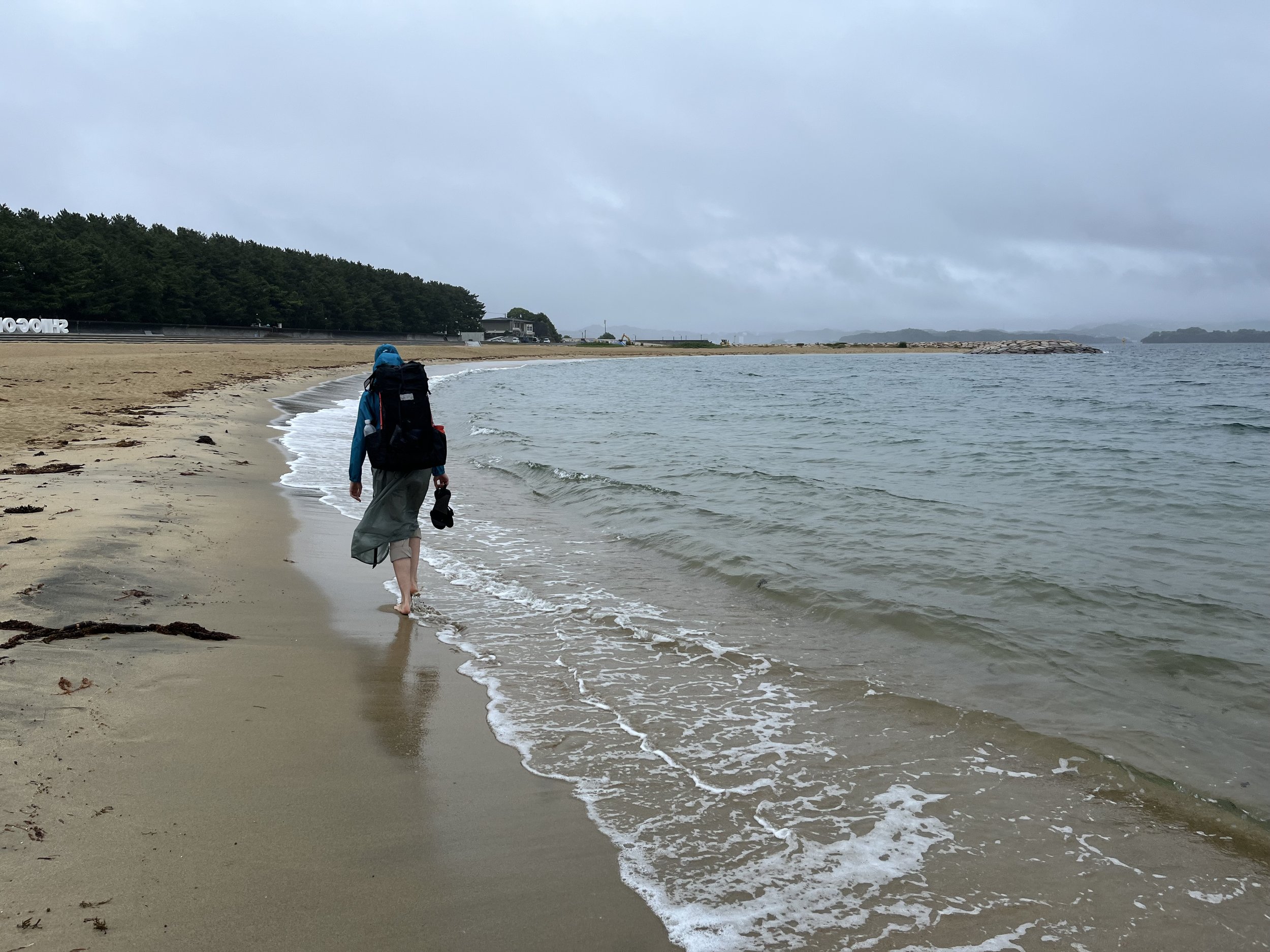
After getting our packs situated, eating my fluffy chiffon cake, and drinking coffee, we set off into the rain to find the beach. We walked barefoot in the waves and then through a park as we made our way toward the visitor center where we needed to pick up a guide map/book and pilgrims credential (stamp book).

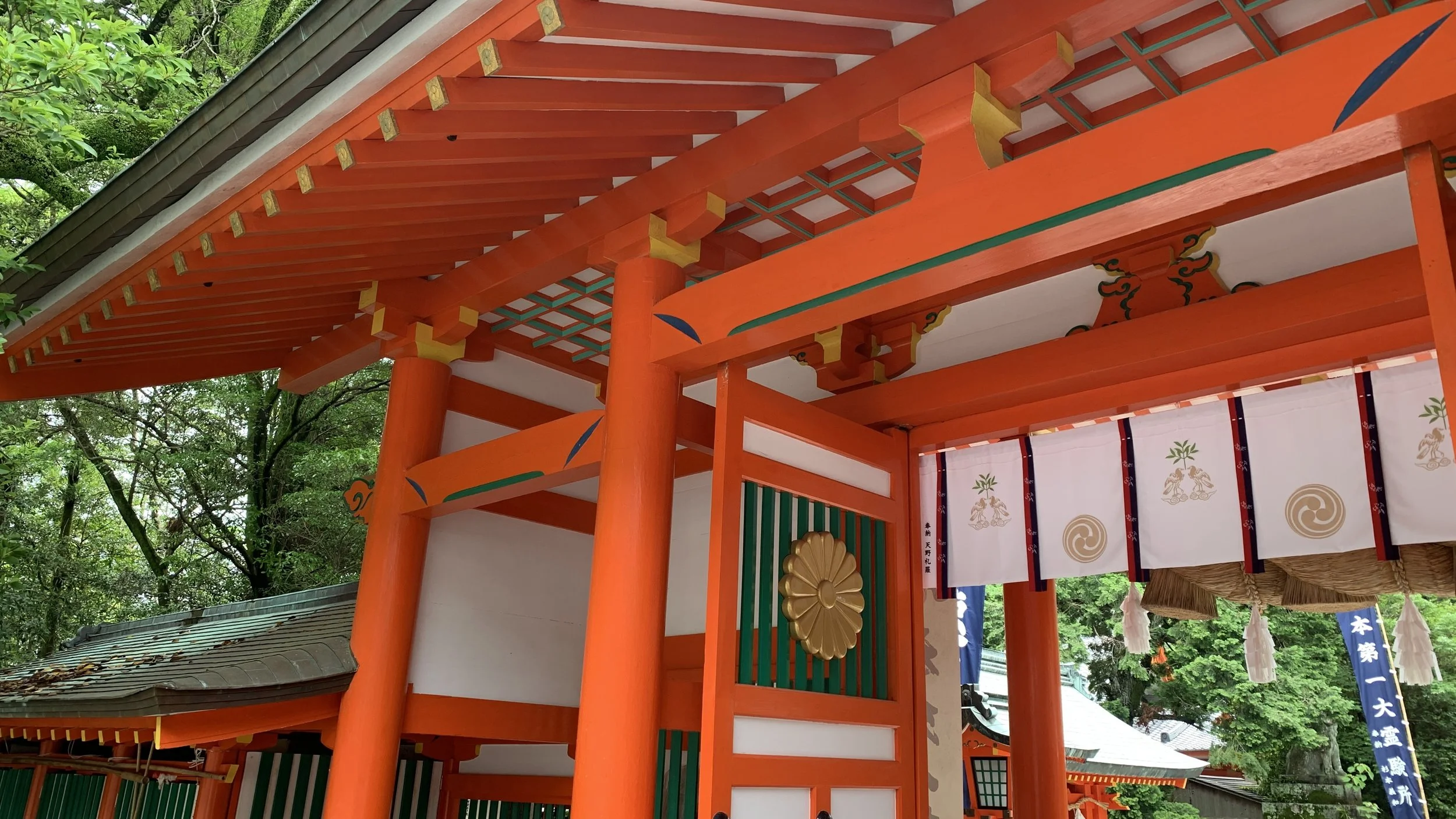
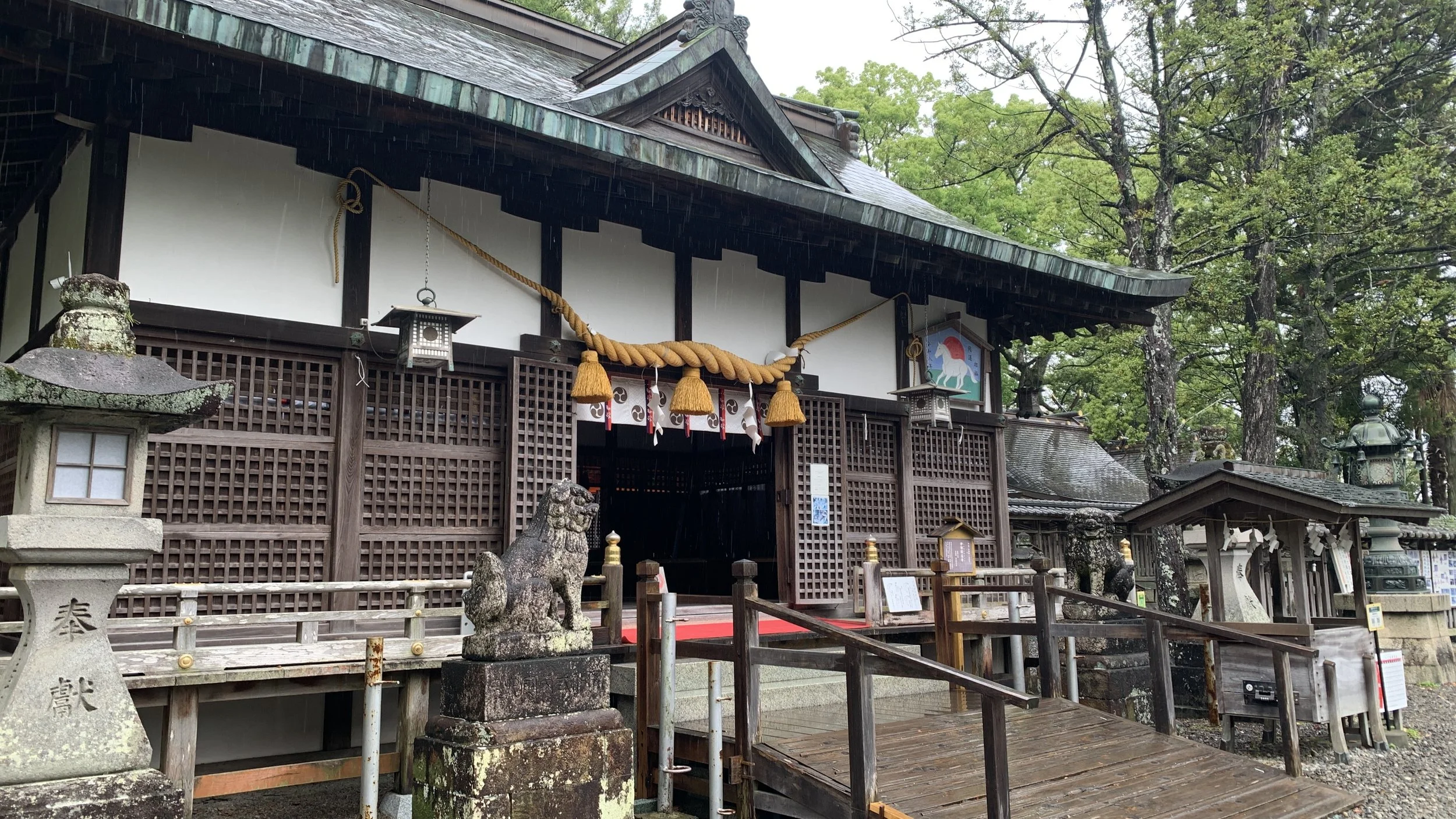
Along the way to the visitor center we took a short detour to visit the local Shinto shrine - named after fighting roosters - where we practiced our first Nirei-nihakushu-irei (meaning literally “2 bows, 2 claps, 1 bow”) to make a prayer and pay our respects.

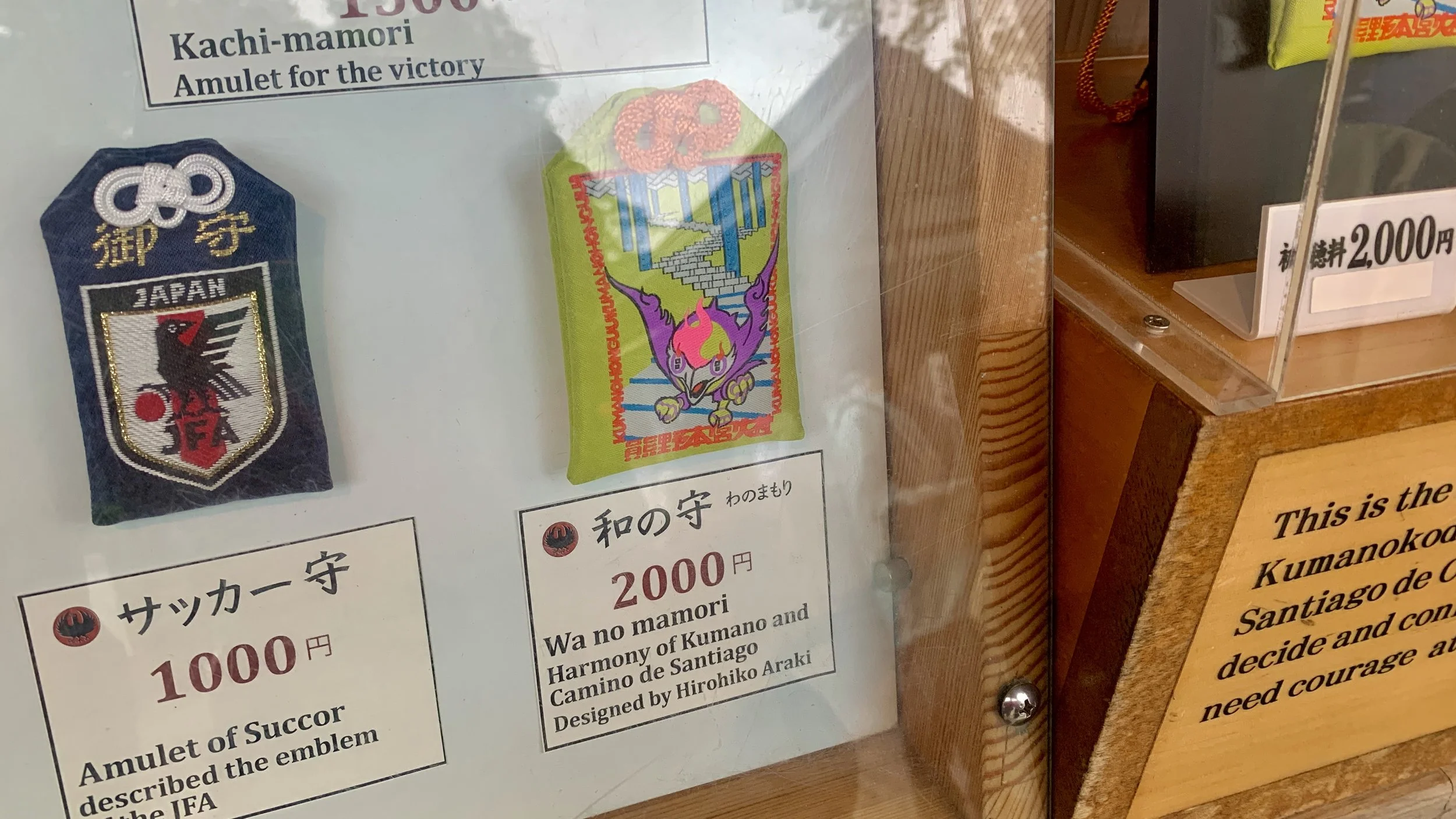
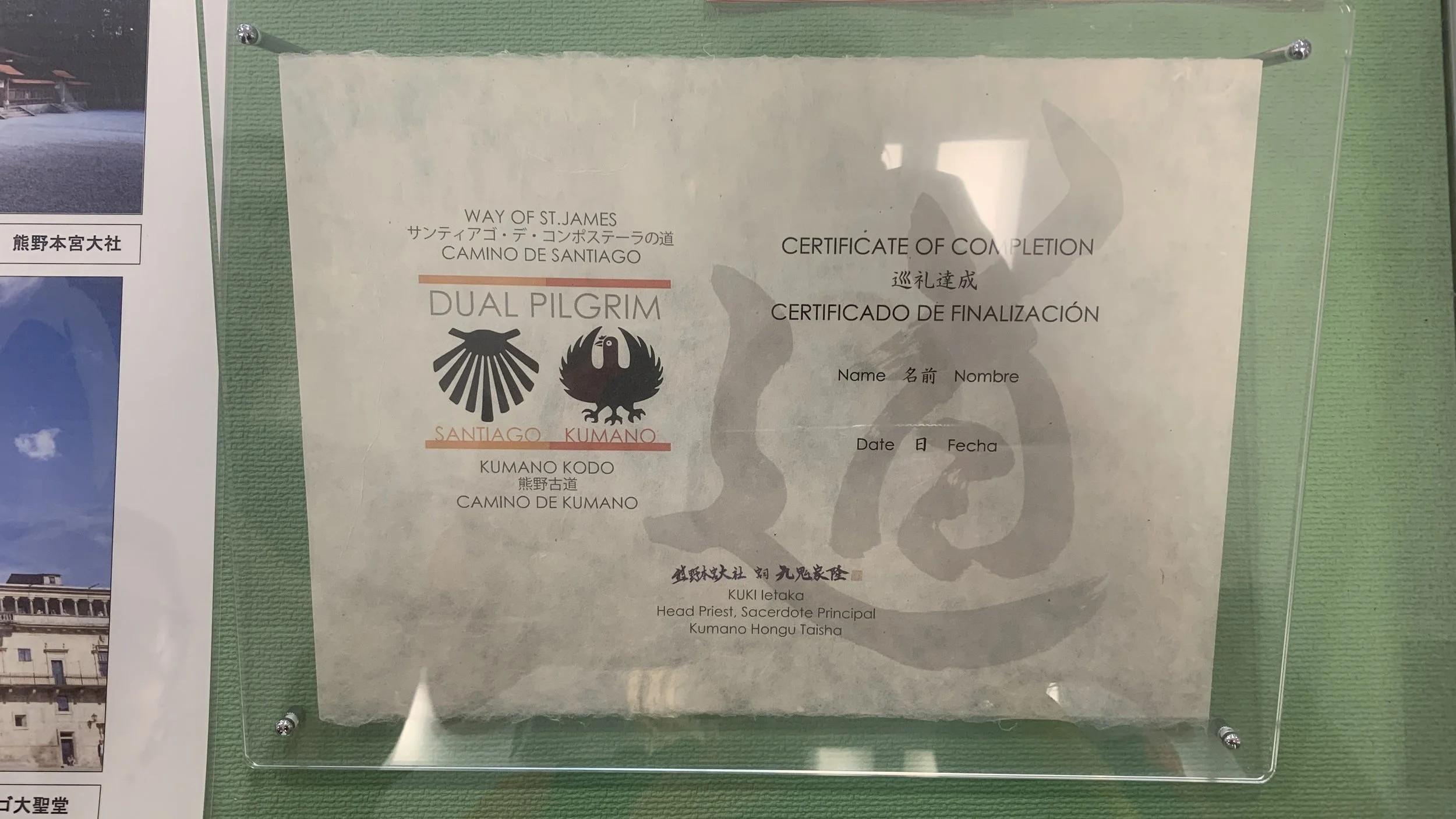
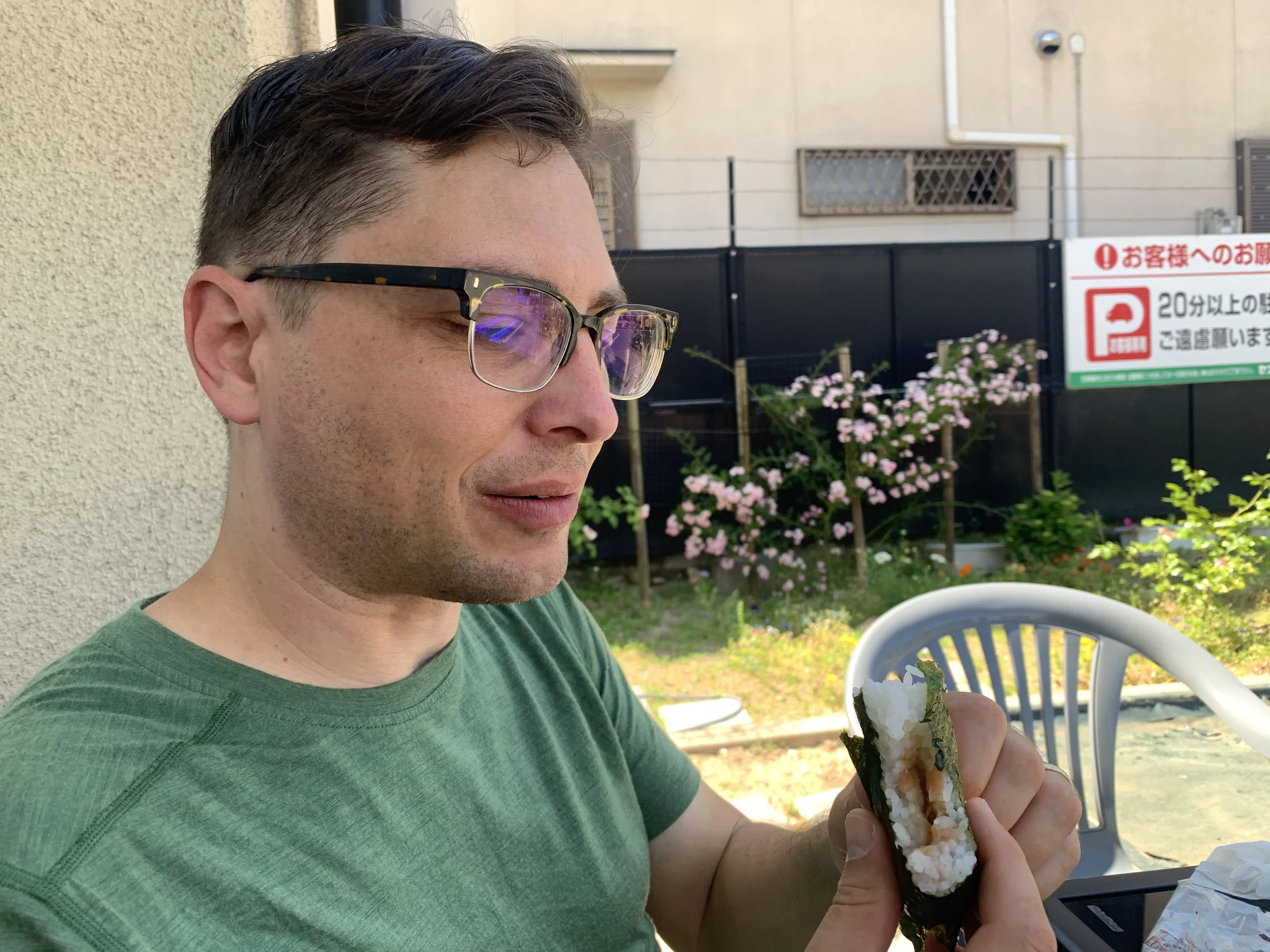
Once at the visitor center we picked up the final items we needed, including a lighter for our backpacking stove, for the handful of occasions that Chris won’t be able to eat the food at our lodgings. Some of the most remote accommodations, particularly along the Kohechi route, cannot make modifications beyond vegetarian requests. I got us more of the adzuki bean and pickled plum rice cakes from the 7-11 next door for lunch on the trail. We also saw a nice exhibit about the collaboration between the Camino de Santiago and Kumano Kodo, including the certificate that dual pilgrims receive, and we got our first stamp of the trail. Then we went to wait at the bus stop along with a handful of other backpackers.

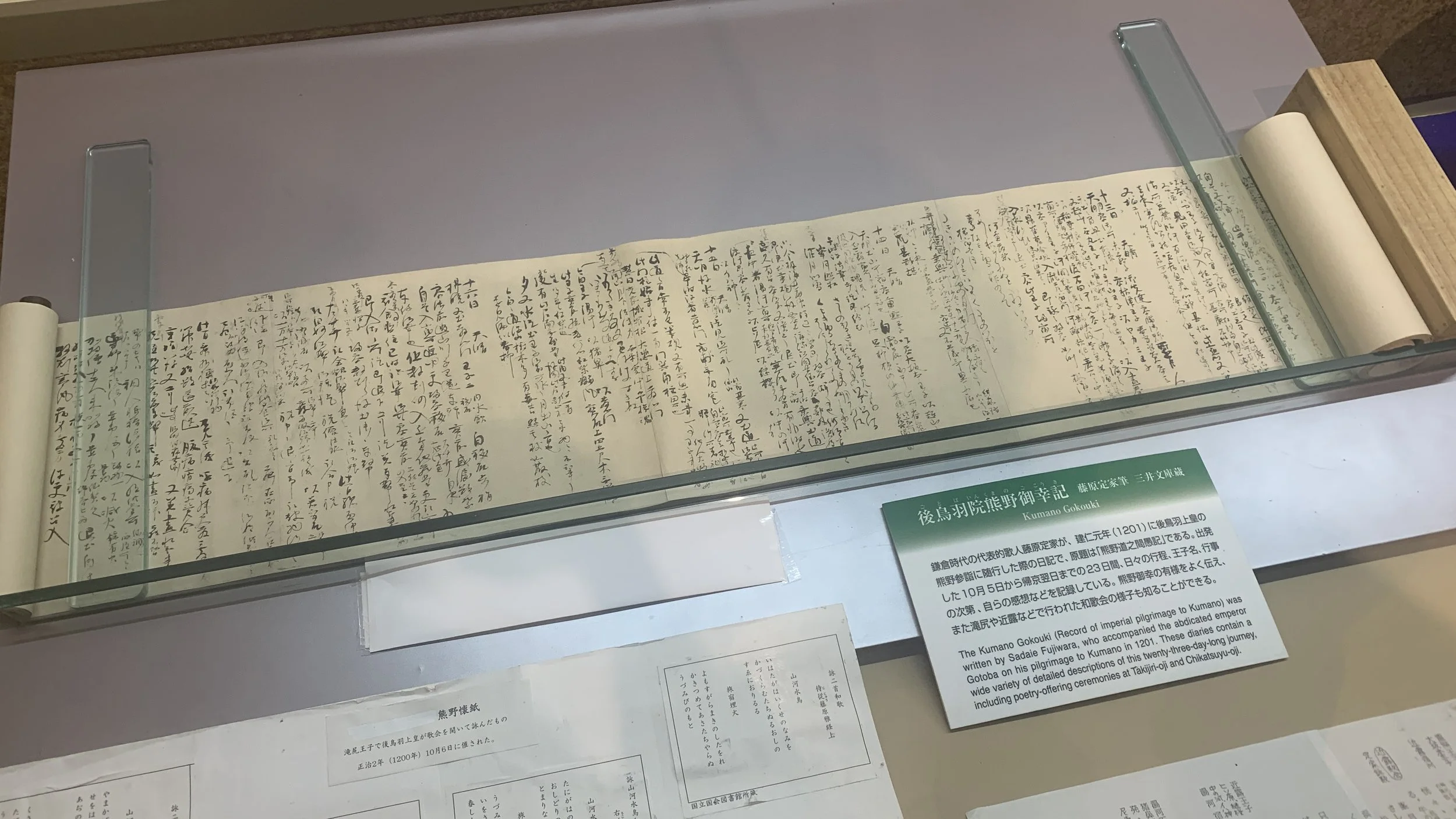
The 45 minute bus ride to Takijiri-oji went smoothly, and on arrival we stopped into the visitors center to check out the museum. One particularly neat item was a scroll which contained someone’s trail journal from their Kumano Kodo pilgrimage in 1200.

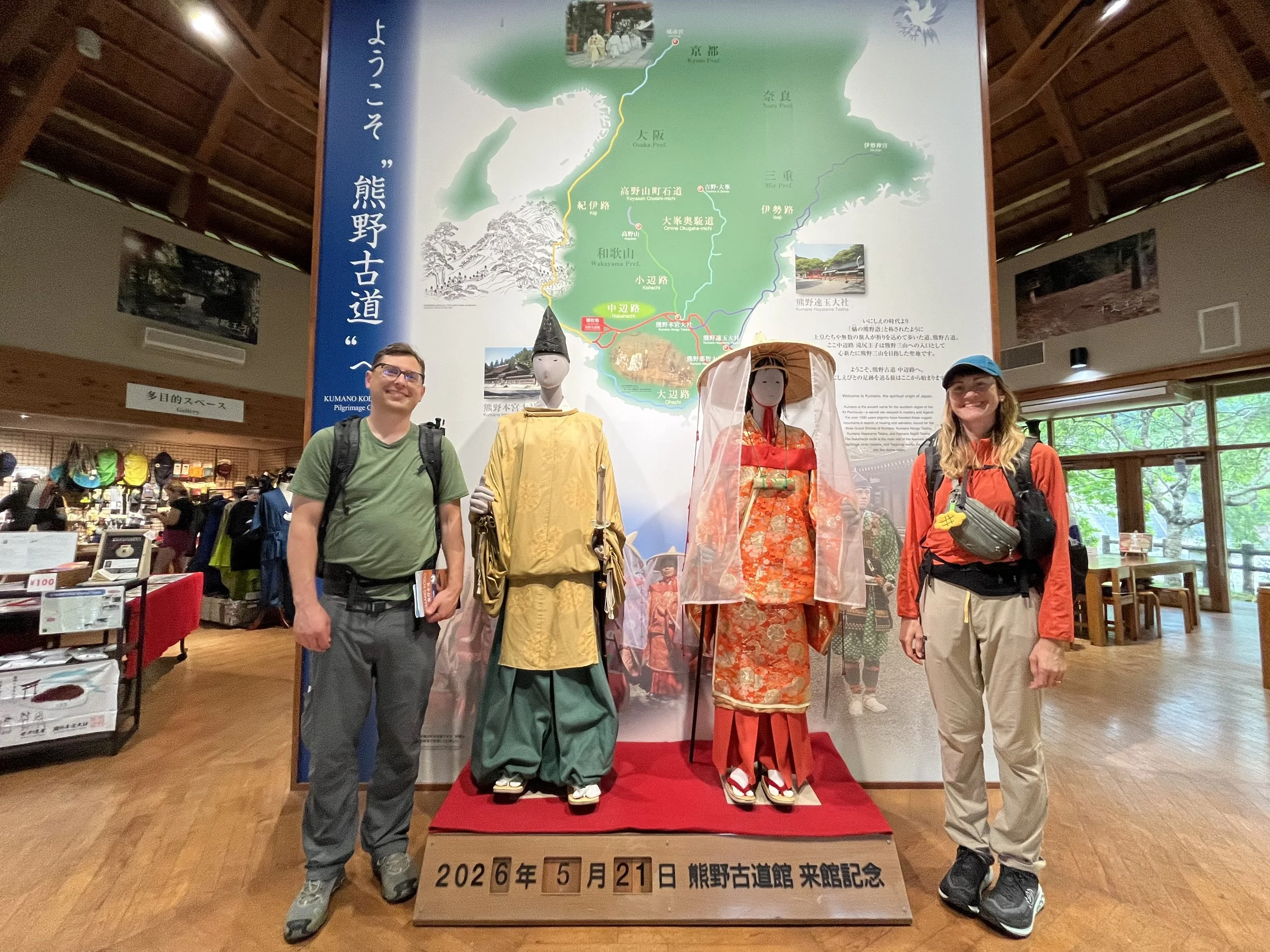
There were also a couple of mannequins dressed in traditional attire as would have been worn by pilgrims hundreds of years ago. The history of the trail is far too complex for me to get into here but in summary, it’s been around for over a thousand years, to the extent that there was lodging and food that pilgrims could partake in.

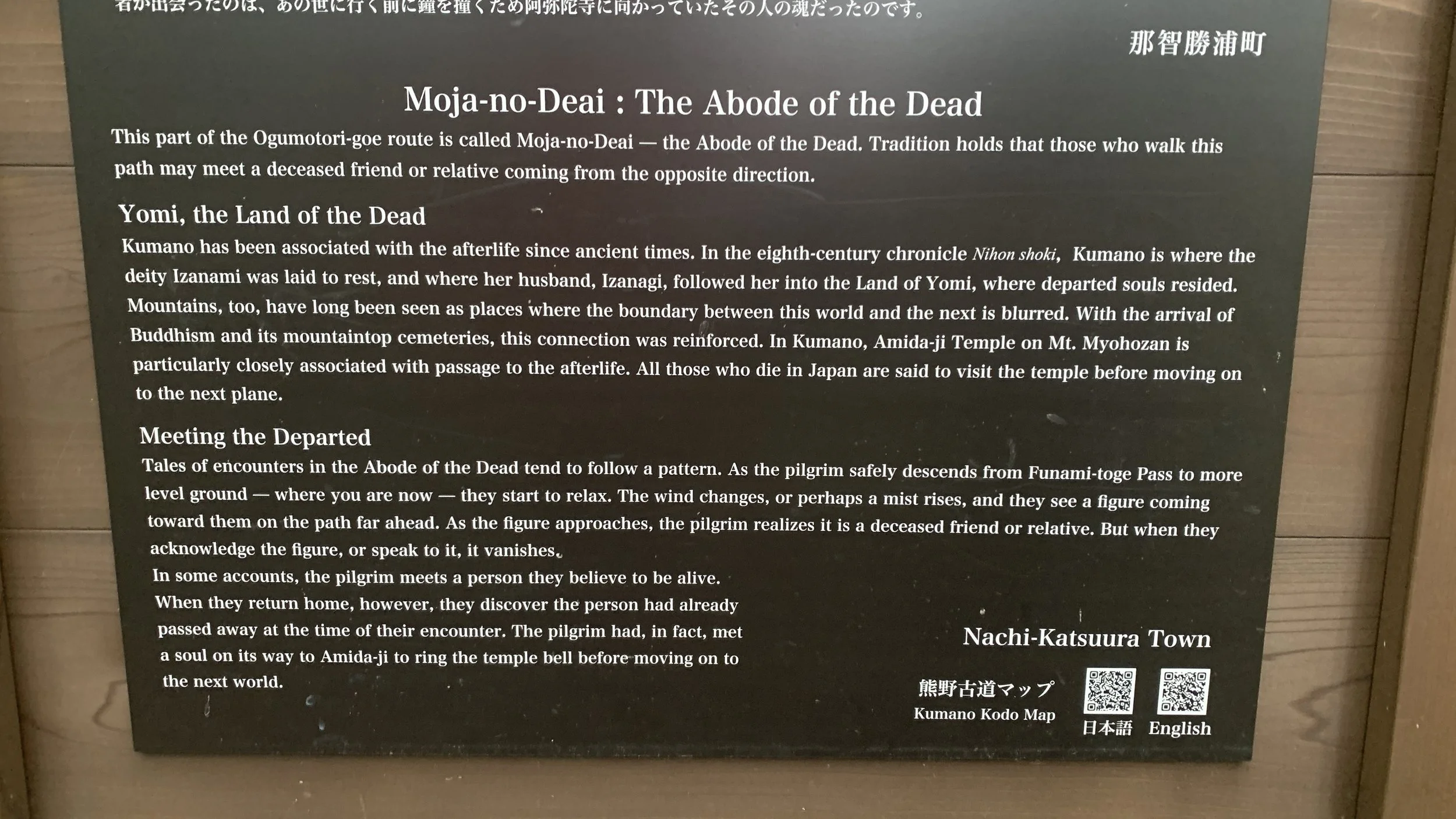
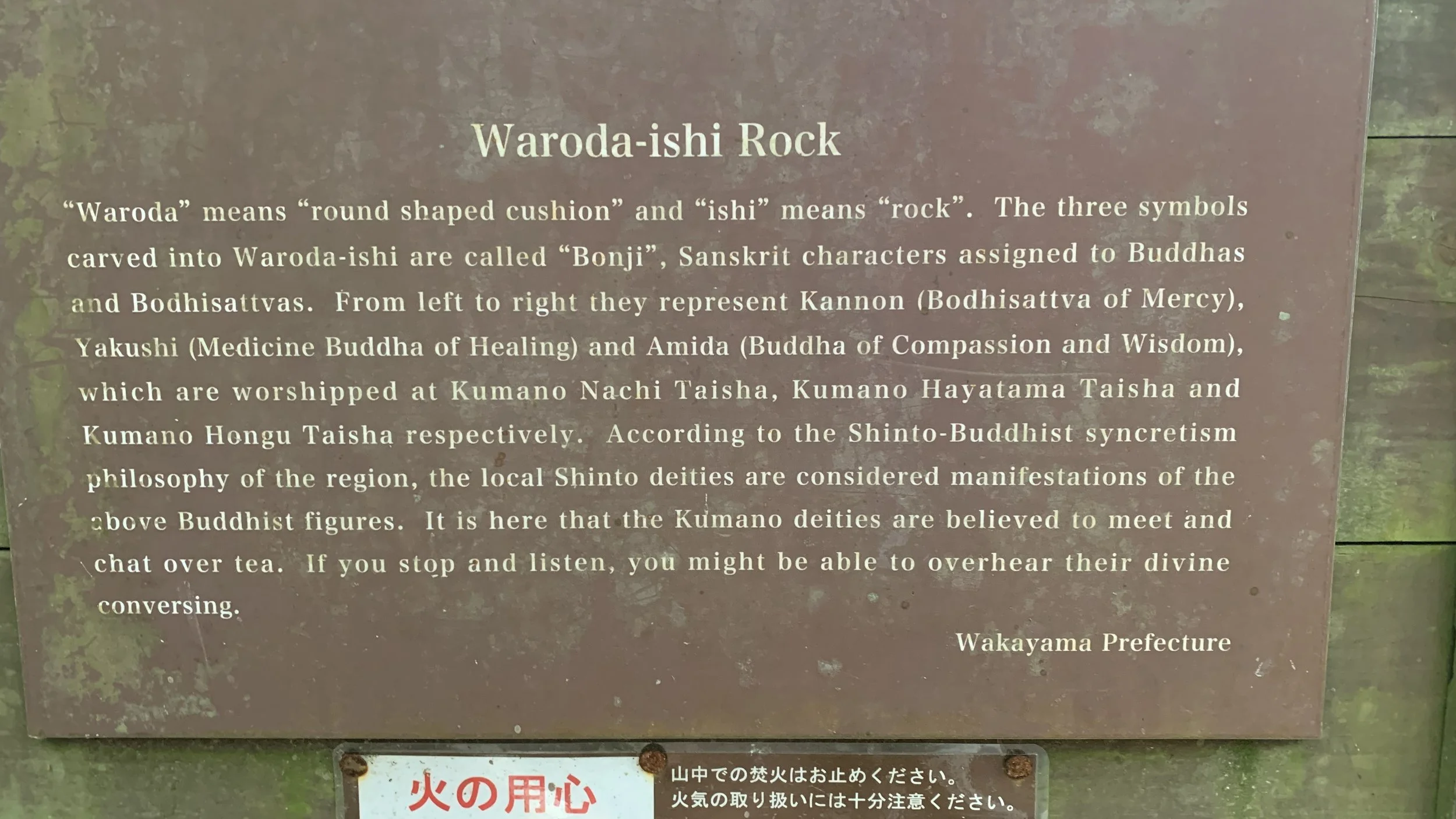
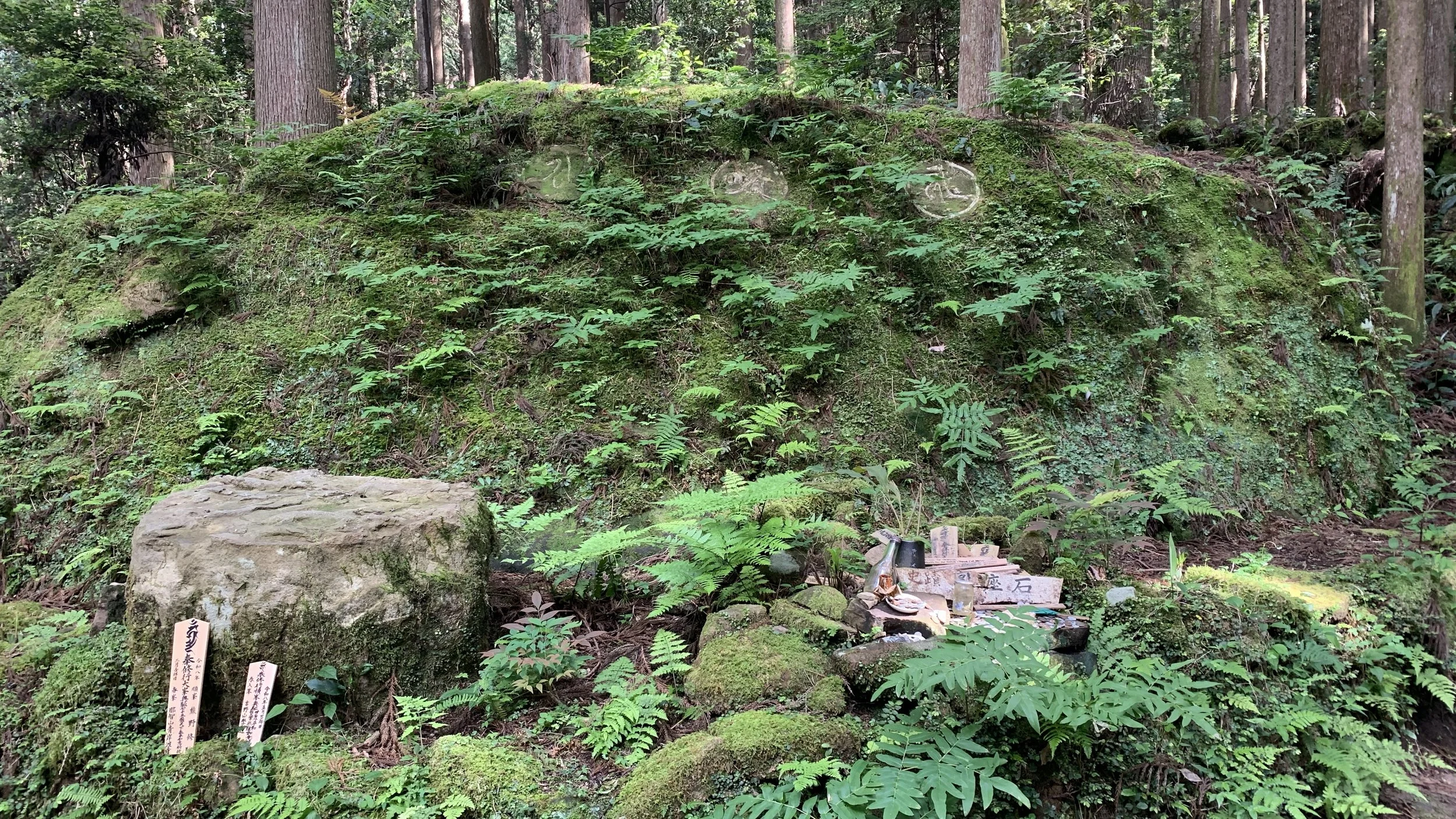
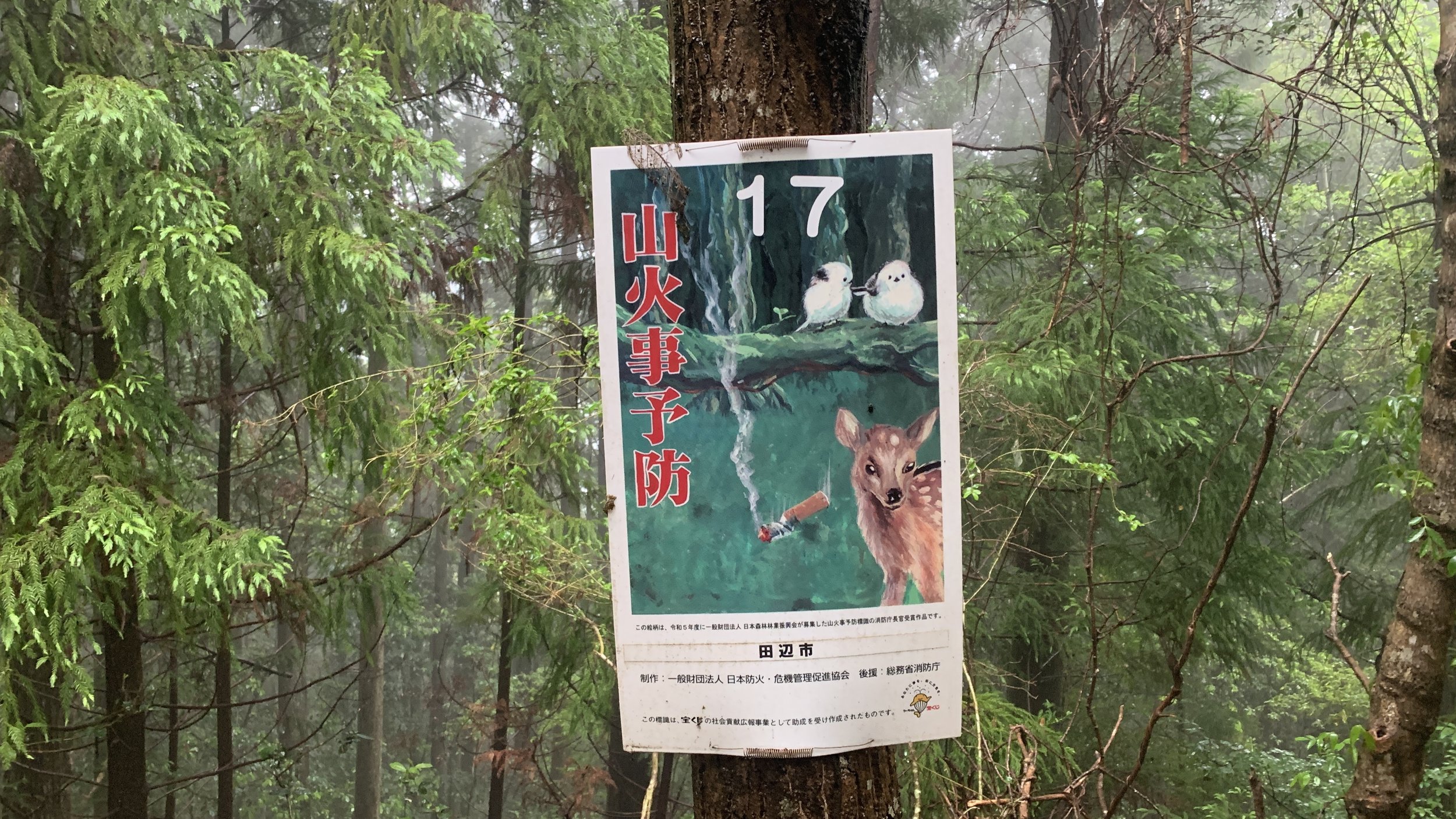
The trails fell into disuse for several hundred years due to state sponsored religious reform, and post-war reforestation and infrastructure. Eventually interest in the trail resumed and it became a UNESCO world heritage pilgrimage in the early 2000’s. Pilgrims pass right through the remains of many of those tea houses and settlements from hundreds of years ago, and many of the sites have interpretive signage explaining the significance and relaying local stories involving that spot.

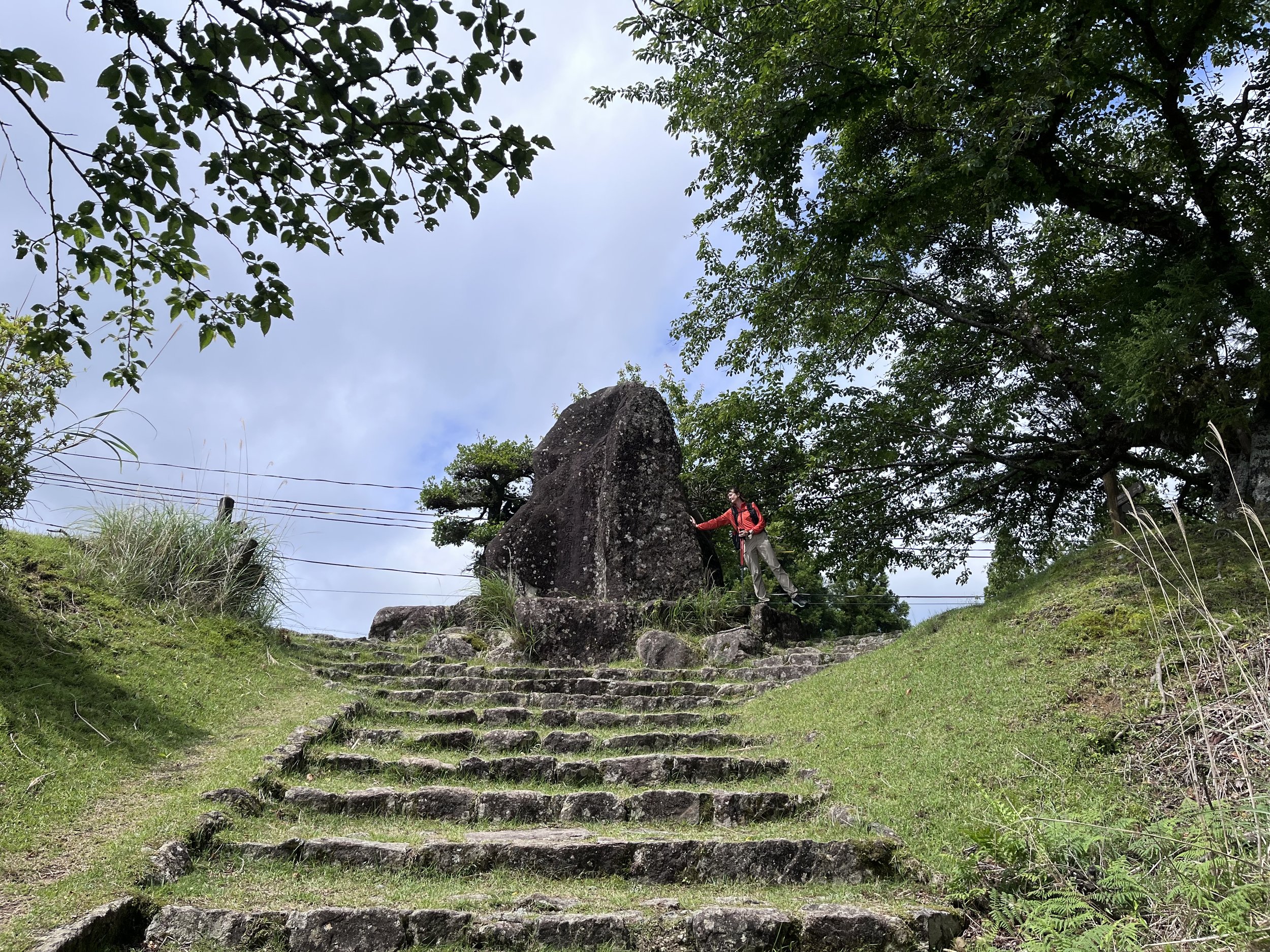
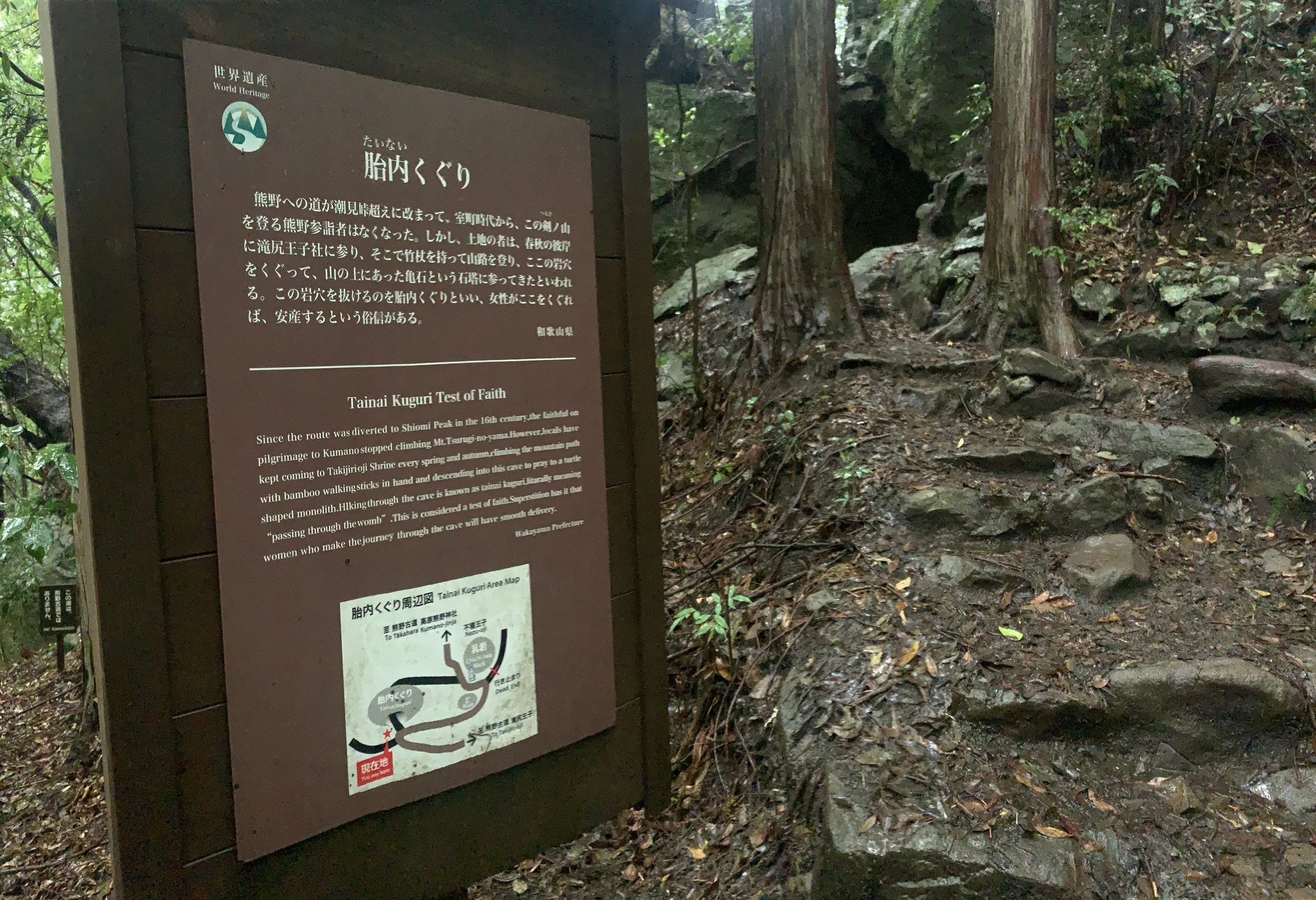
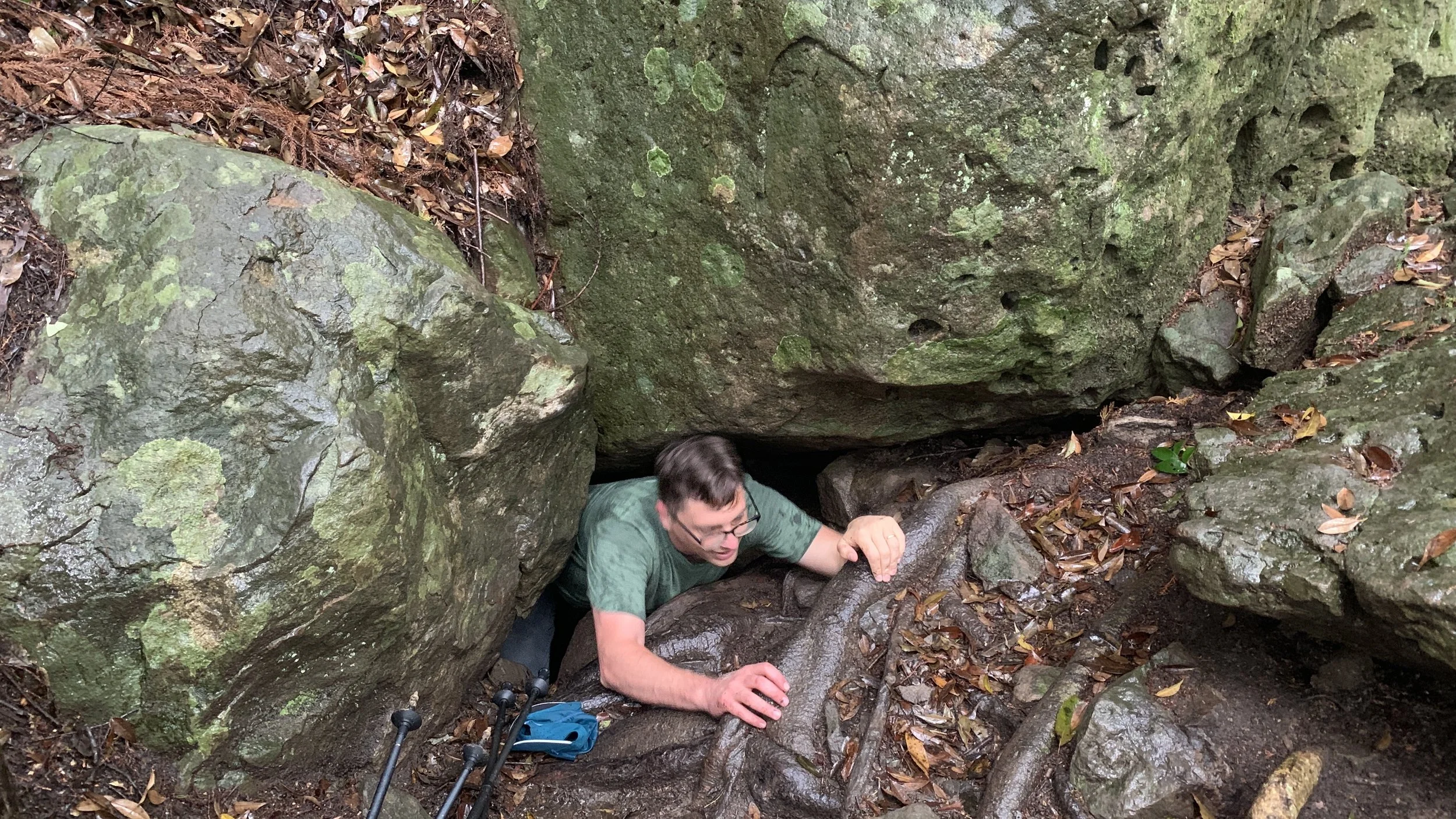
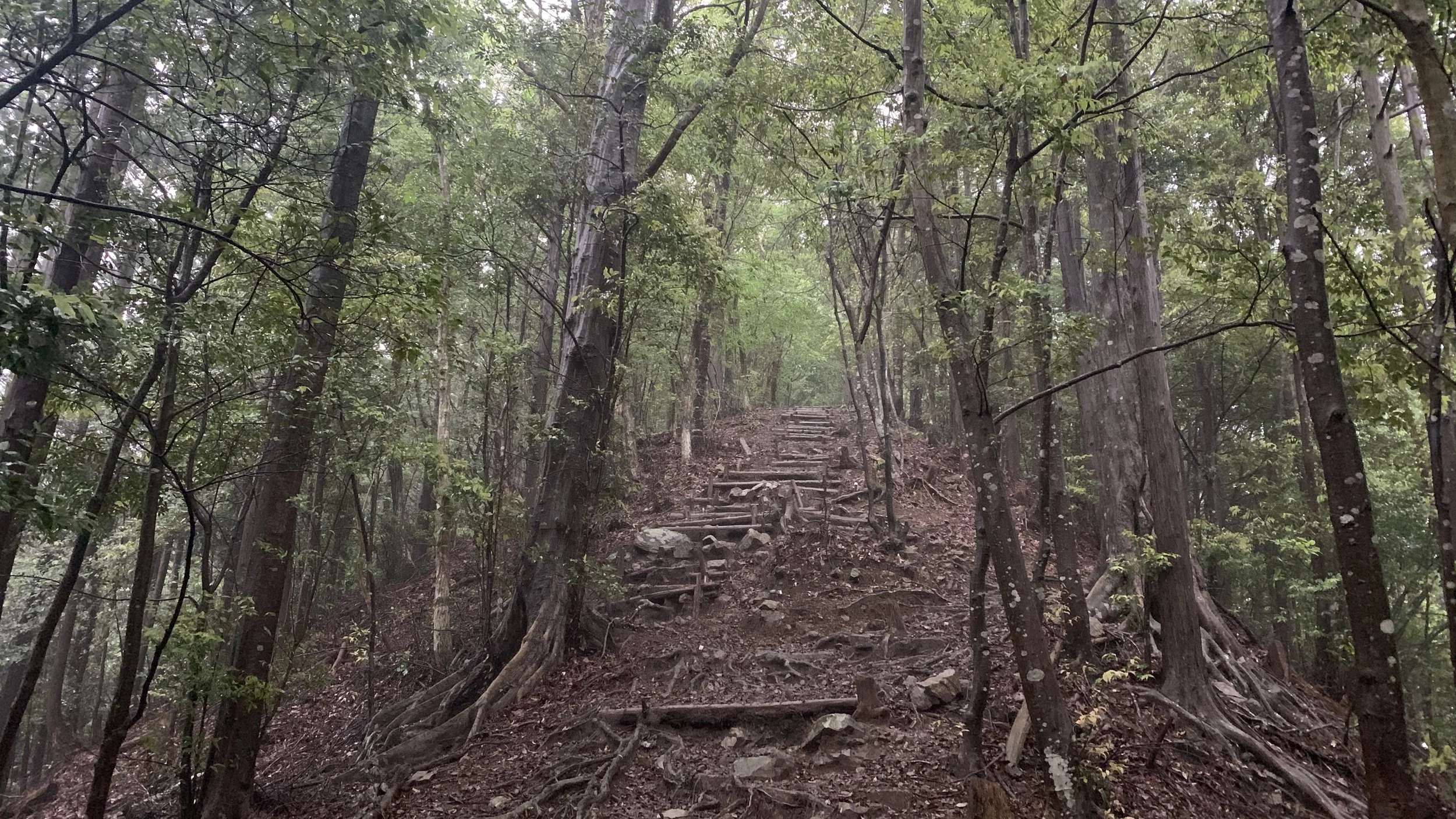
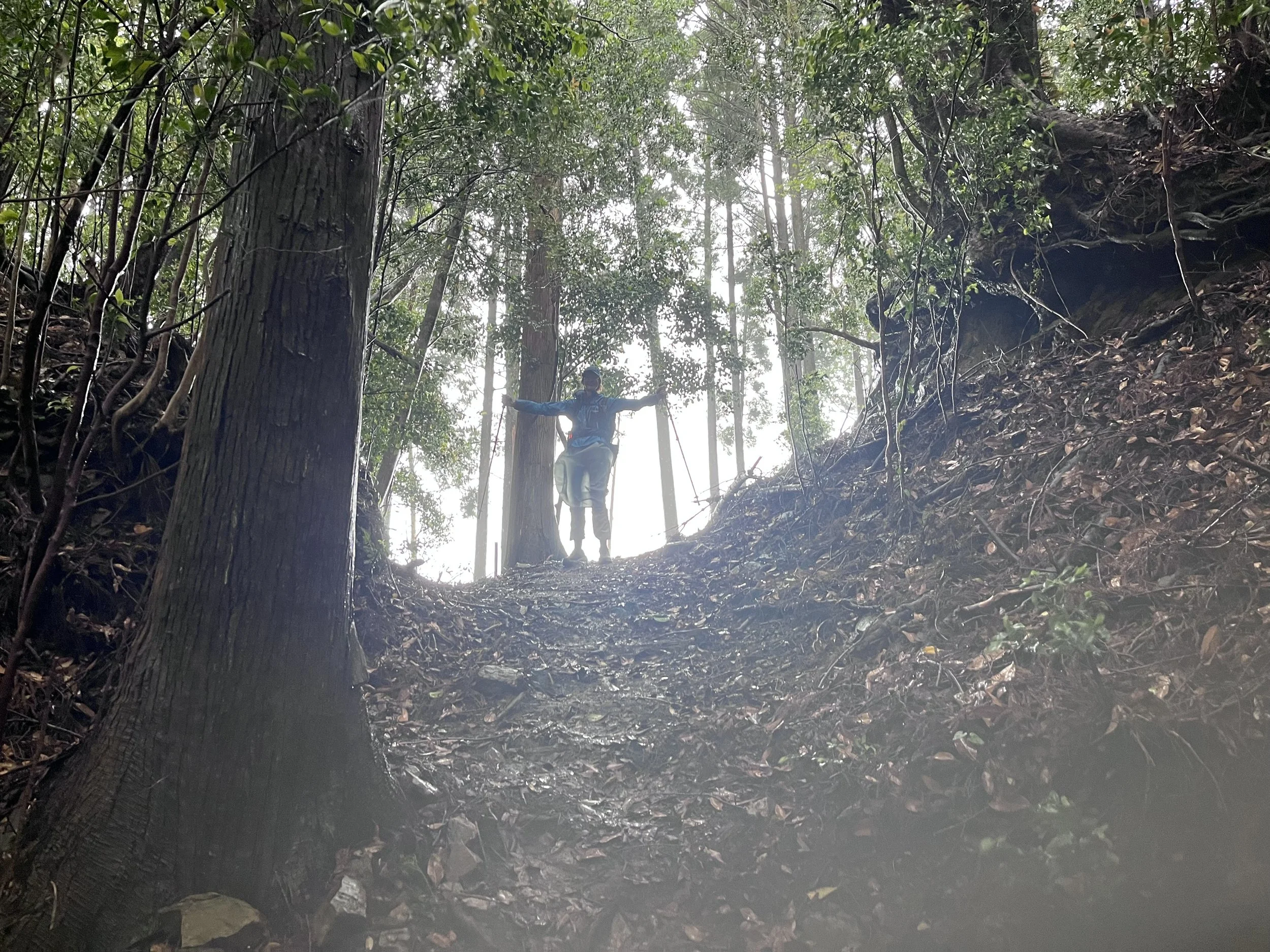
It was pouring rain as we set out, but we stopped to pay our respects at the shrine before stepping foot on the trail proper. Straight into a brutal uphill we went, followed by a wet crawl through a small cave where hikers must squeeze through a shockingly small cave mouth, shoving pack and poles through the opening ahead and then shimmying through after.

This served nicely for ridding us of any pretense of staying clean as we were from this point on covered in mud from head to toe. The local tradition apparently says if a woman passes through the opening she will have a smooth child birthing experience. In other words, well worth the trouble.

Shortly, we met our first other hikers: two Australian friends on holiday named Bernice and Lisa. We leapfrogged with them the rest of the 4km.

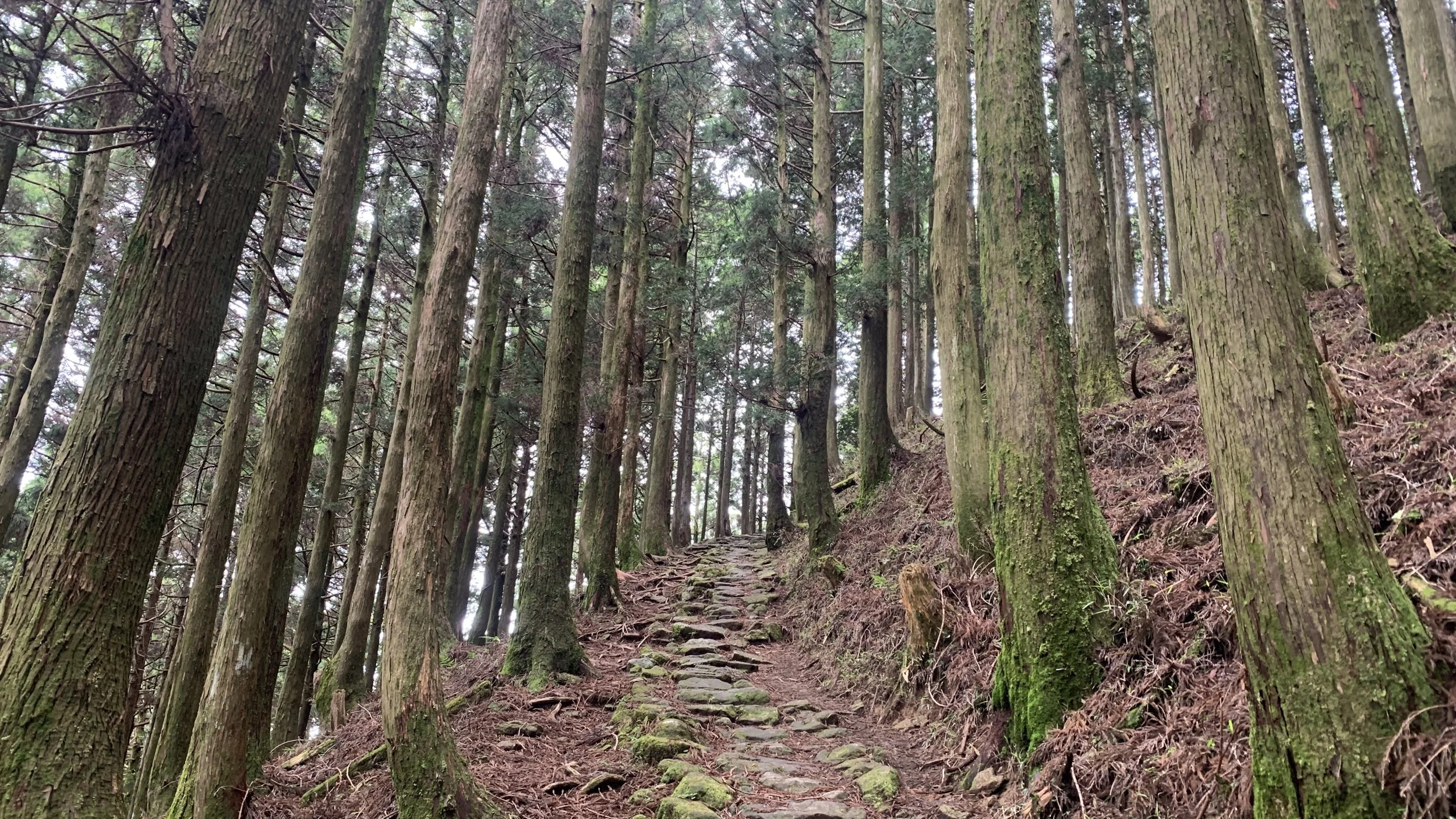
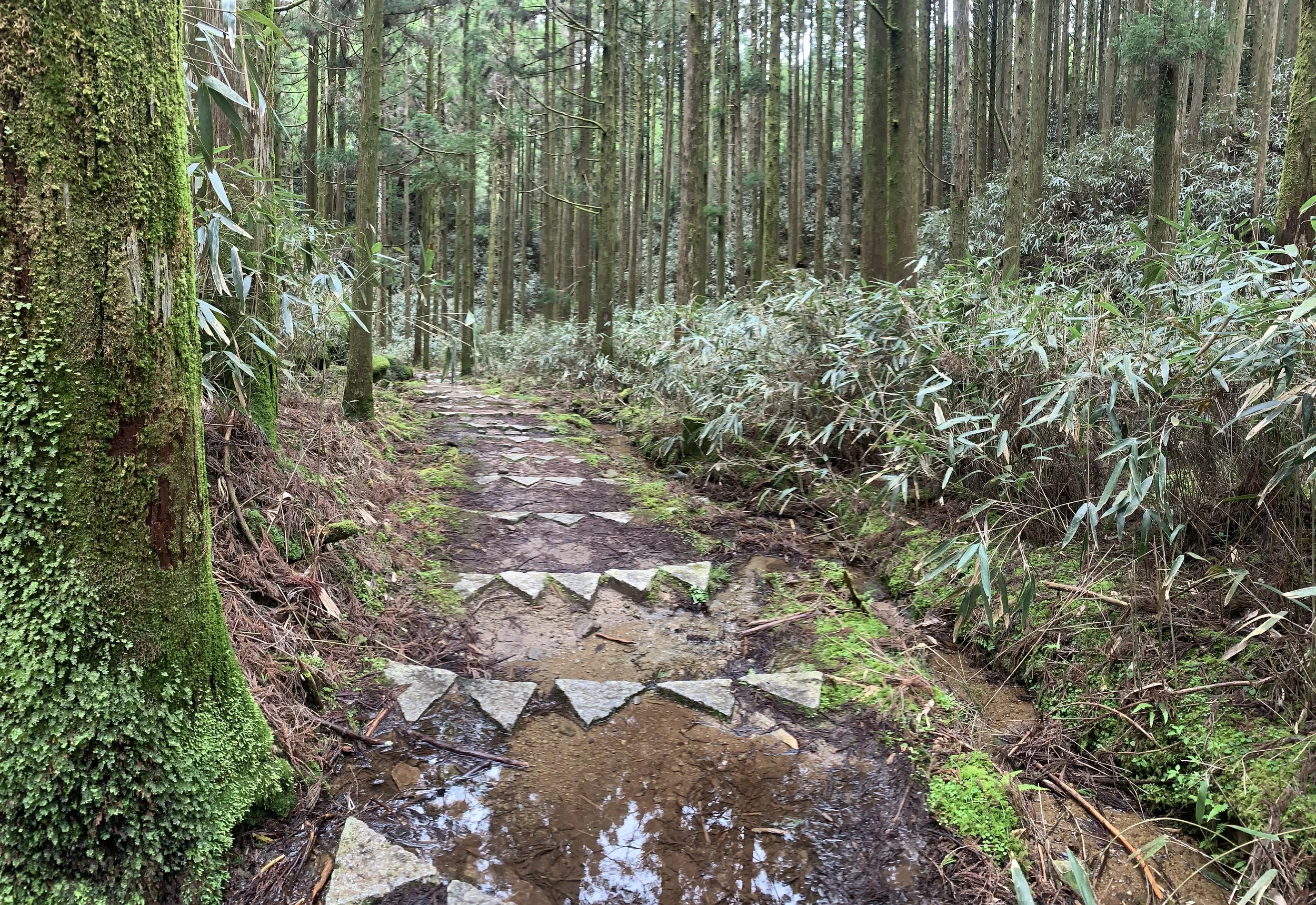
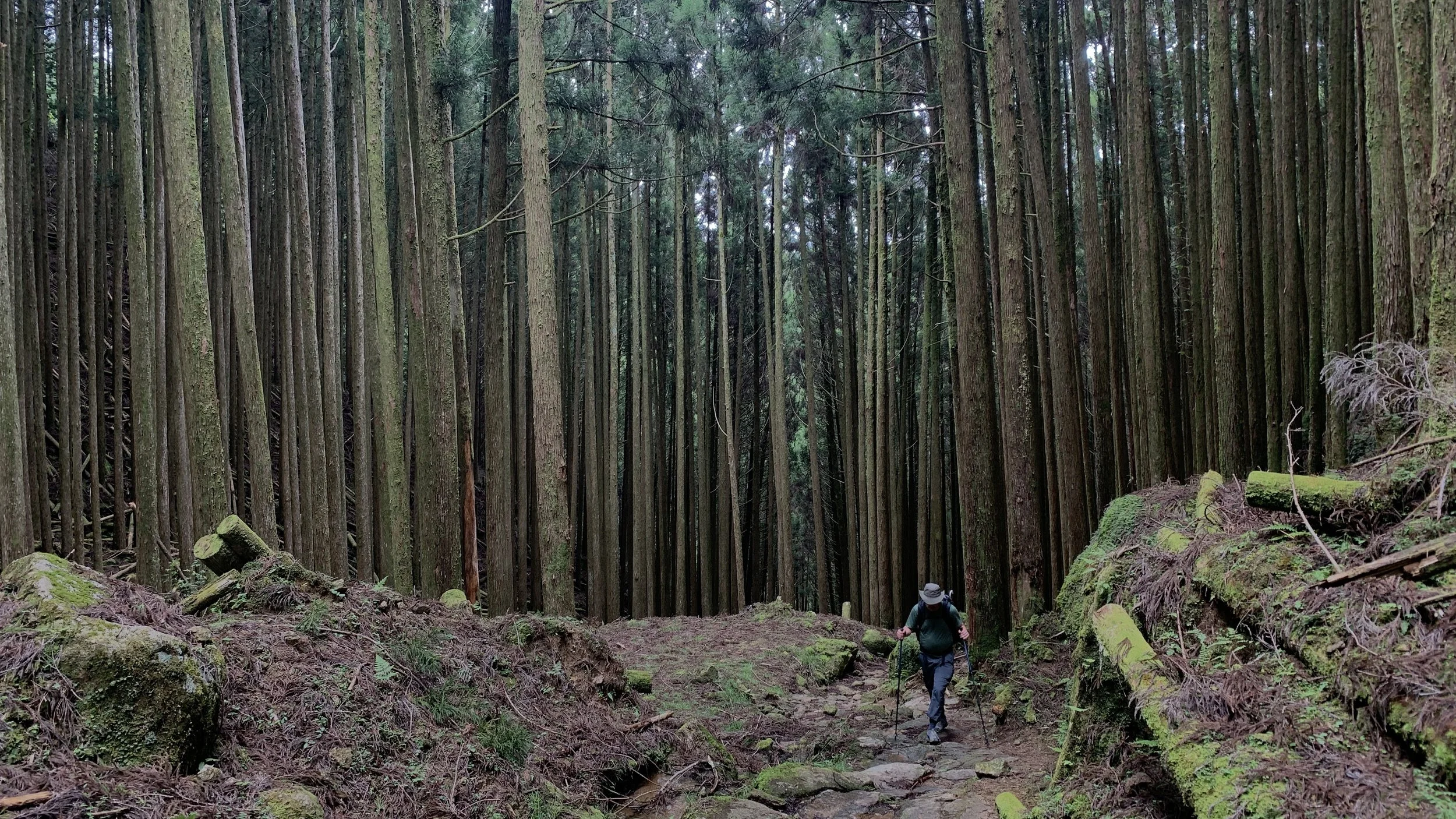
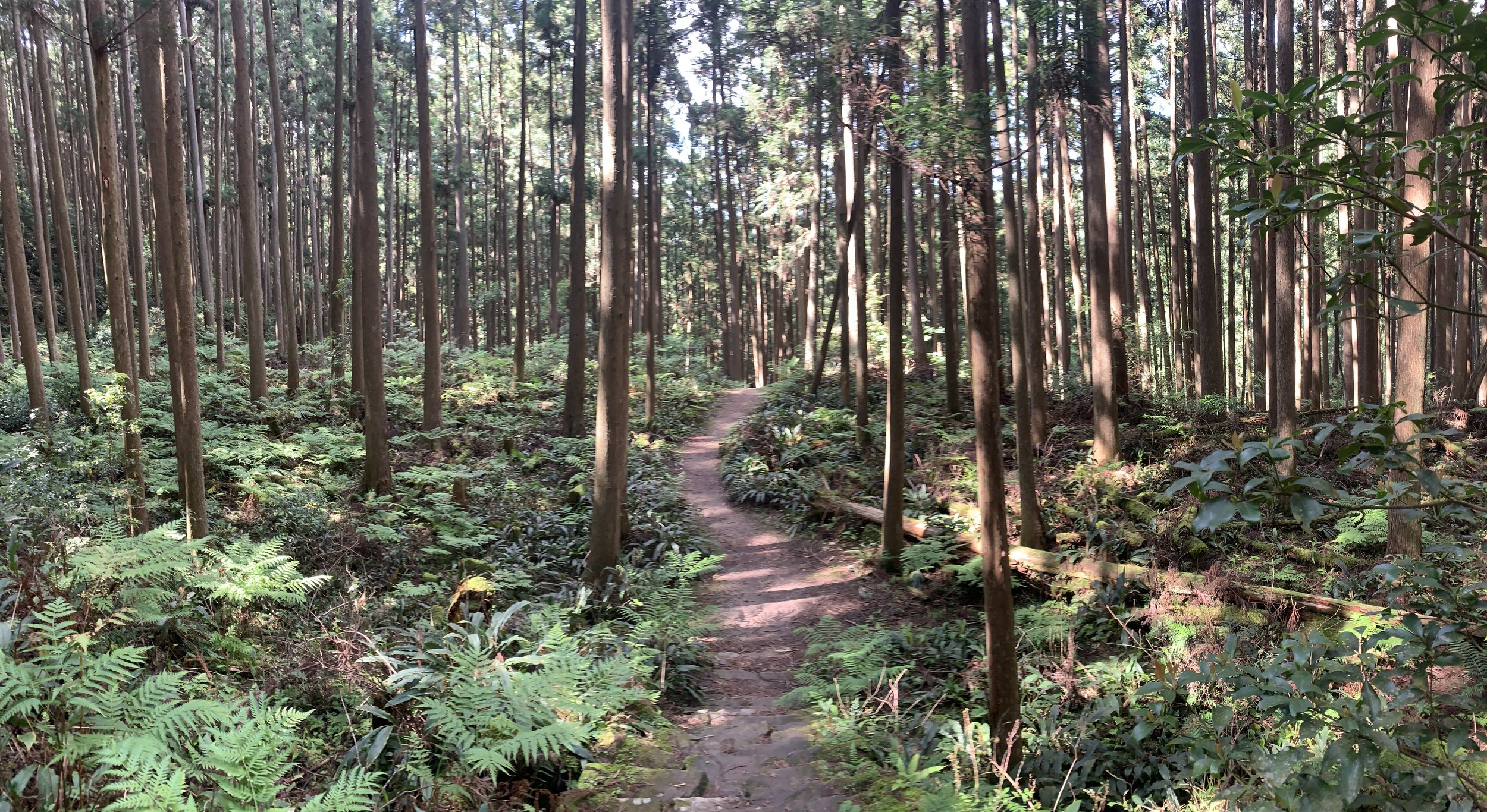
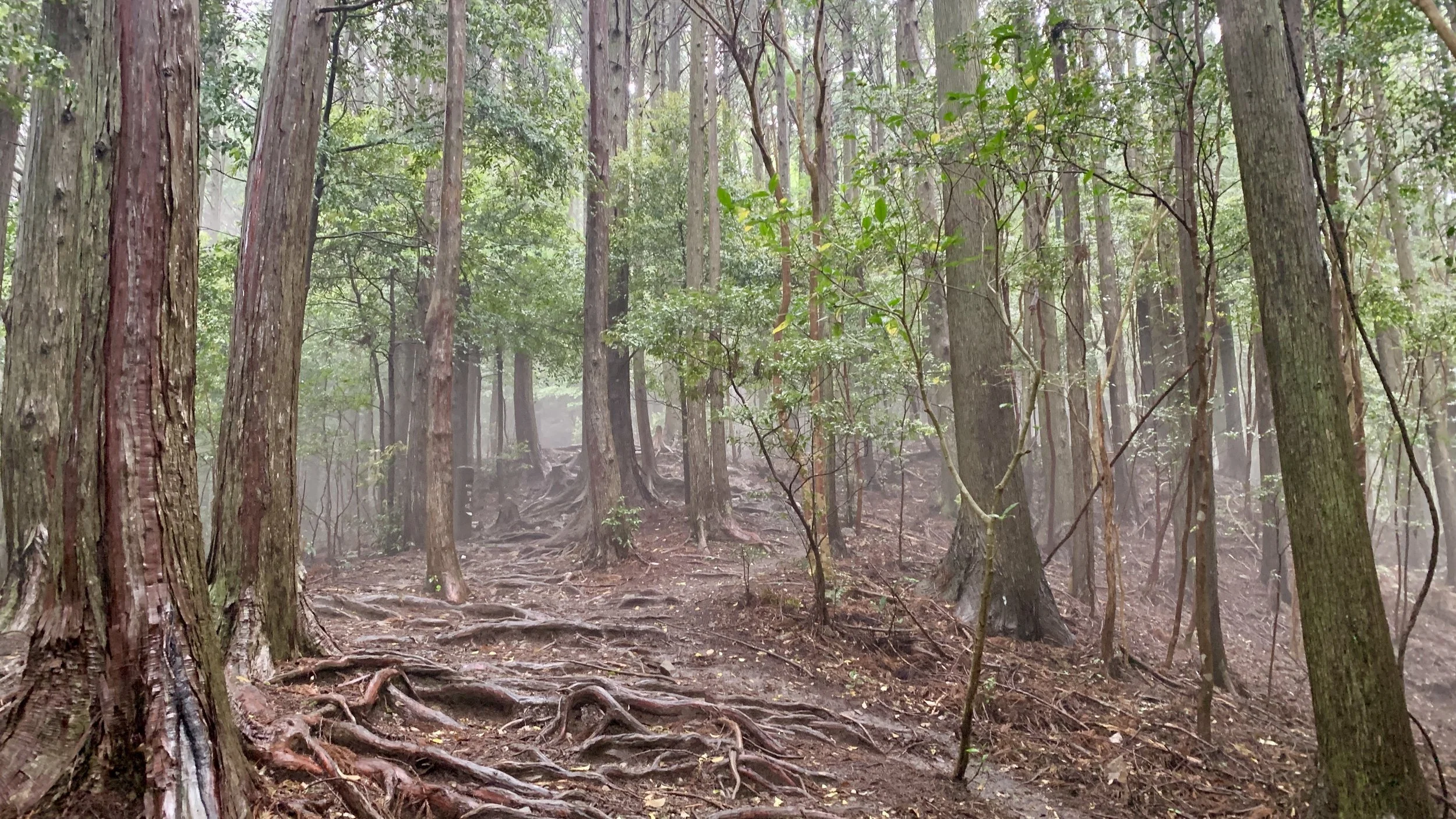
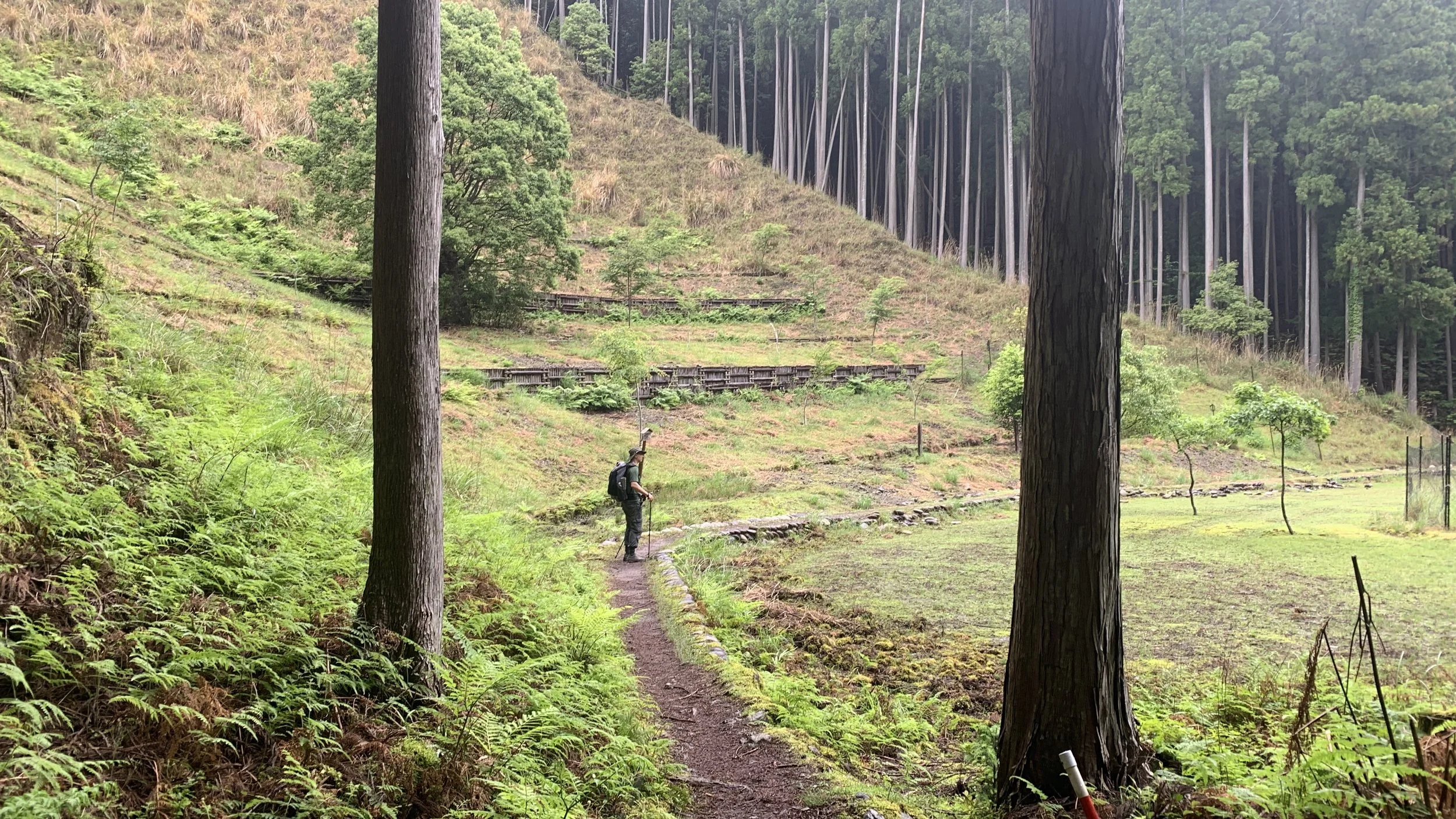
Admittedly it has been a pleasant surprise that the trail is somewhat challenging. It reminds us both a bit of parts of the AT, these wooded ~3,000 foot mountains …the rain not withstanding.

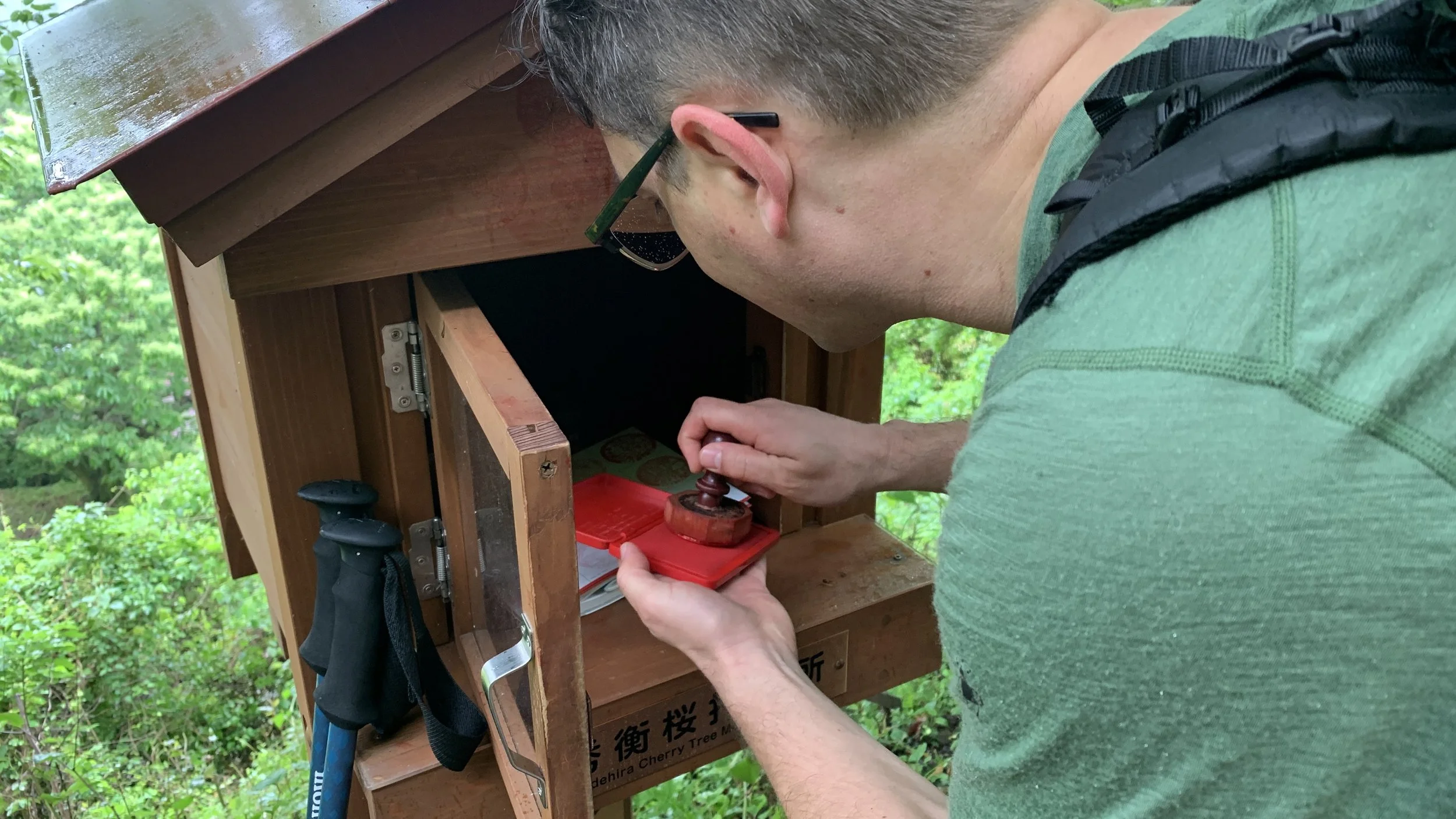
We stop at each small shrine to stamp our pilgrim credential and each stamp is a unique work of art. We’ve decided to share a credential - which feels fitting for a honeymoon trip (and totally not because I promptly lost mine, no…). All the more reason for us to go back and do a full Camino together to become “dual pilgrims”.

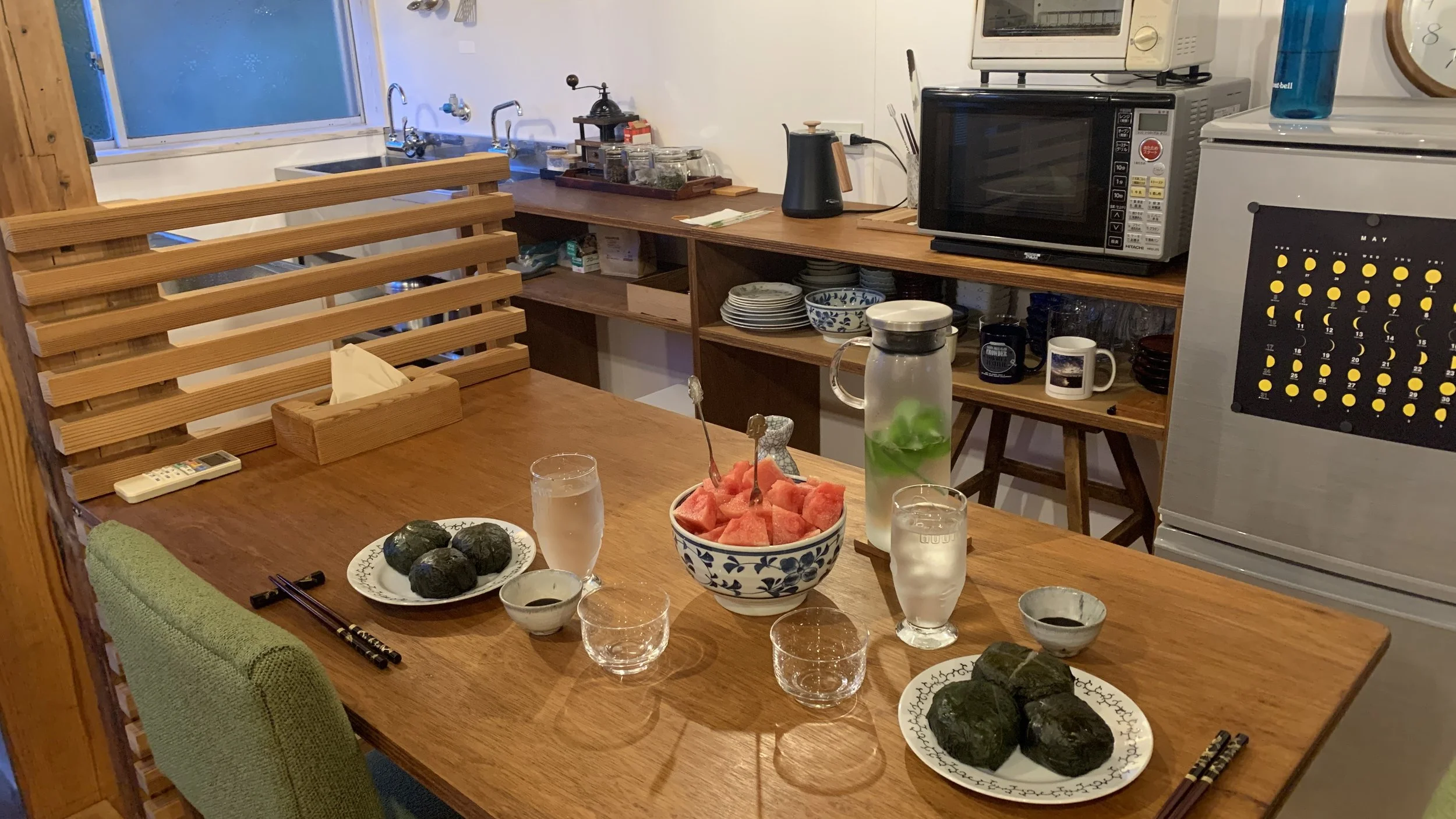
I am certain that sweating in rain gear in this humidity, and pushing myself physically, is exactly what I need to rid myself of this cold quickly. My head is clearing already. Up we go, inching closer to Takahara, stopping to enjoy our pickled plum seaweed rice cake at the first magnificent view.

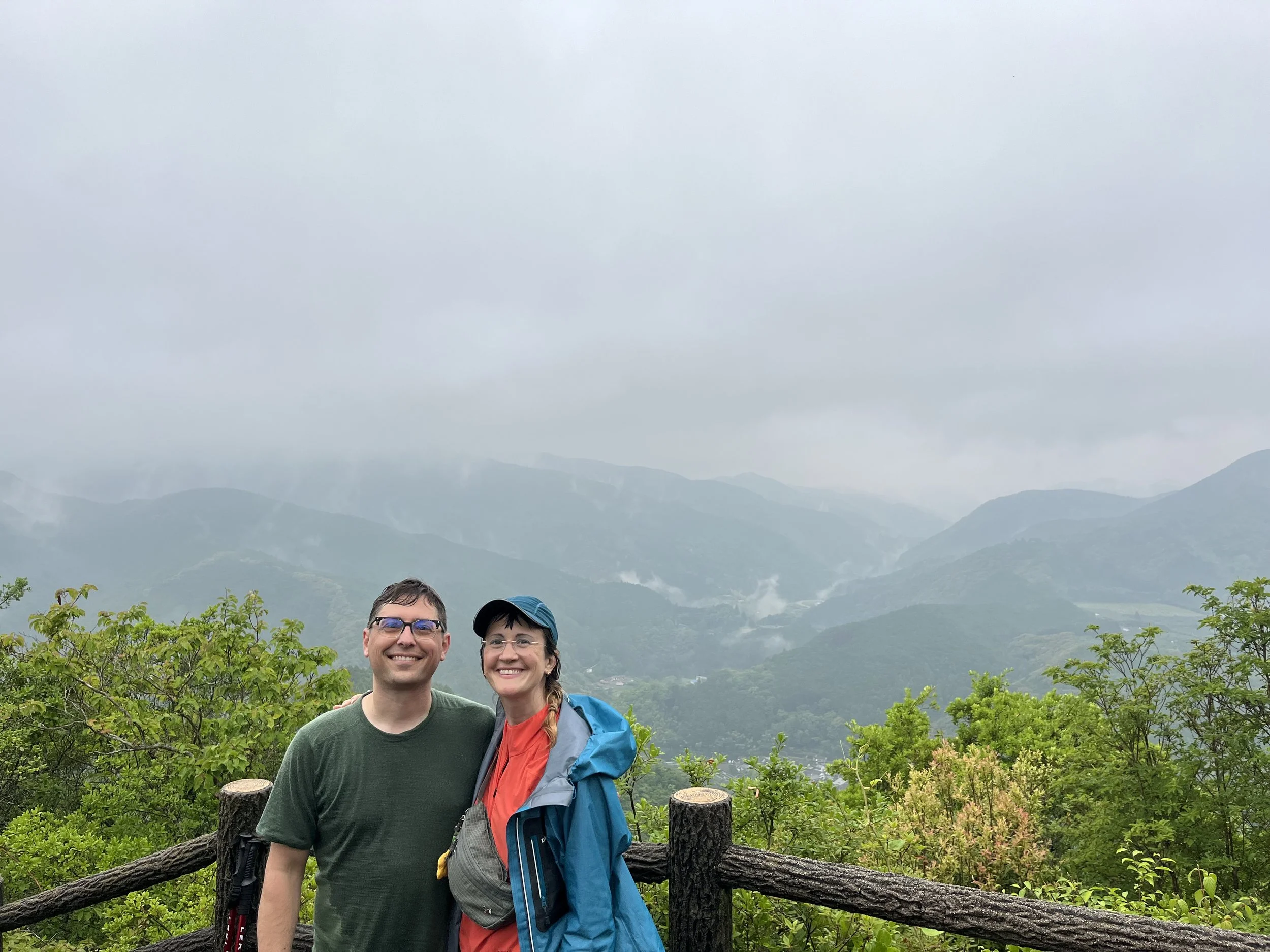
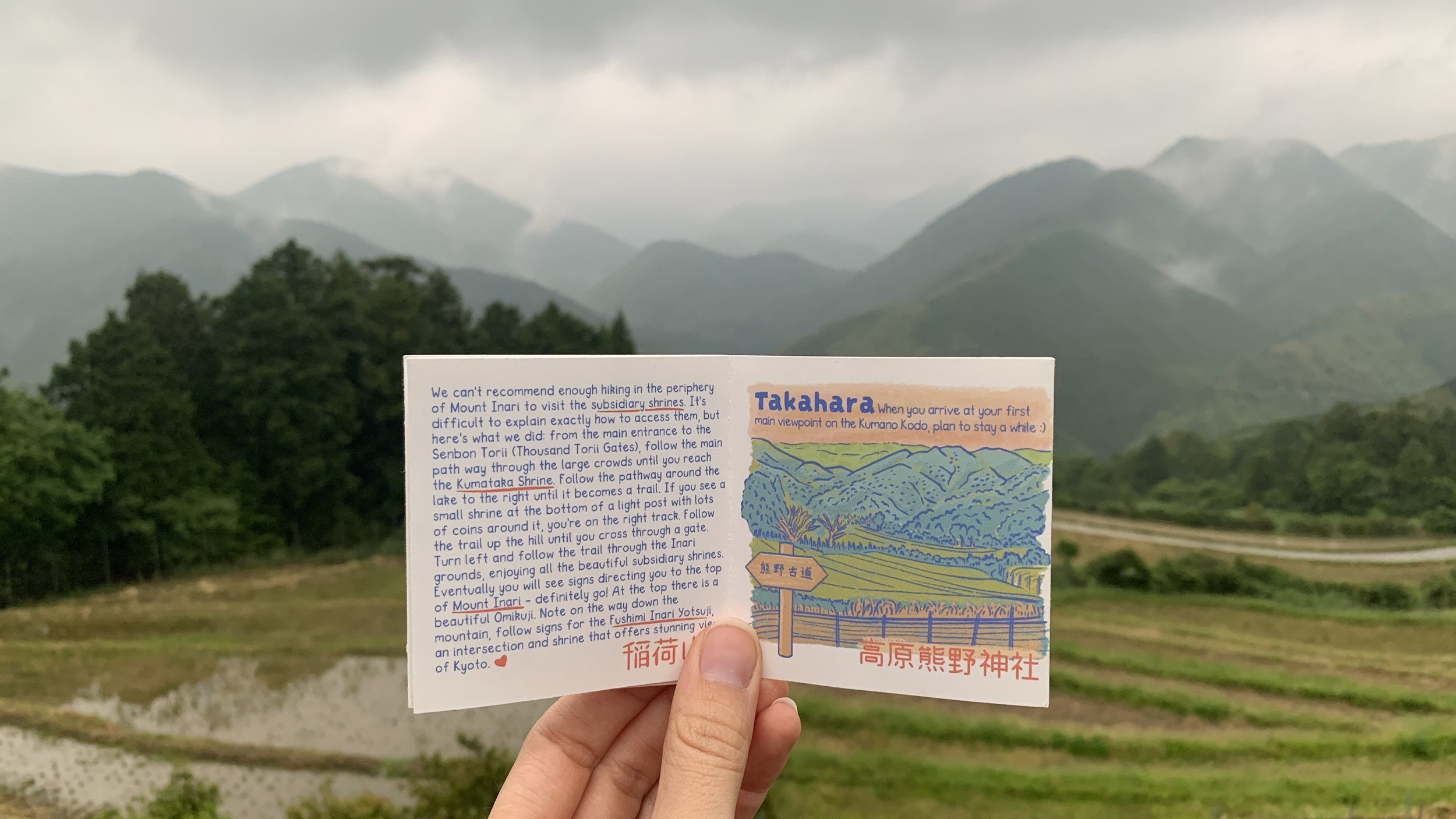
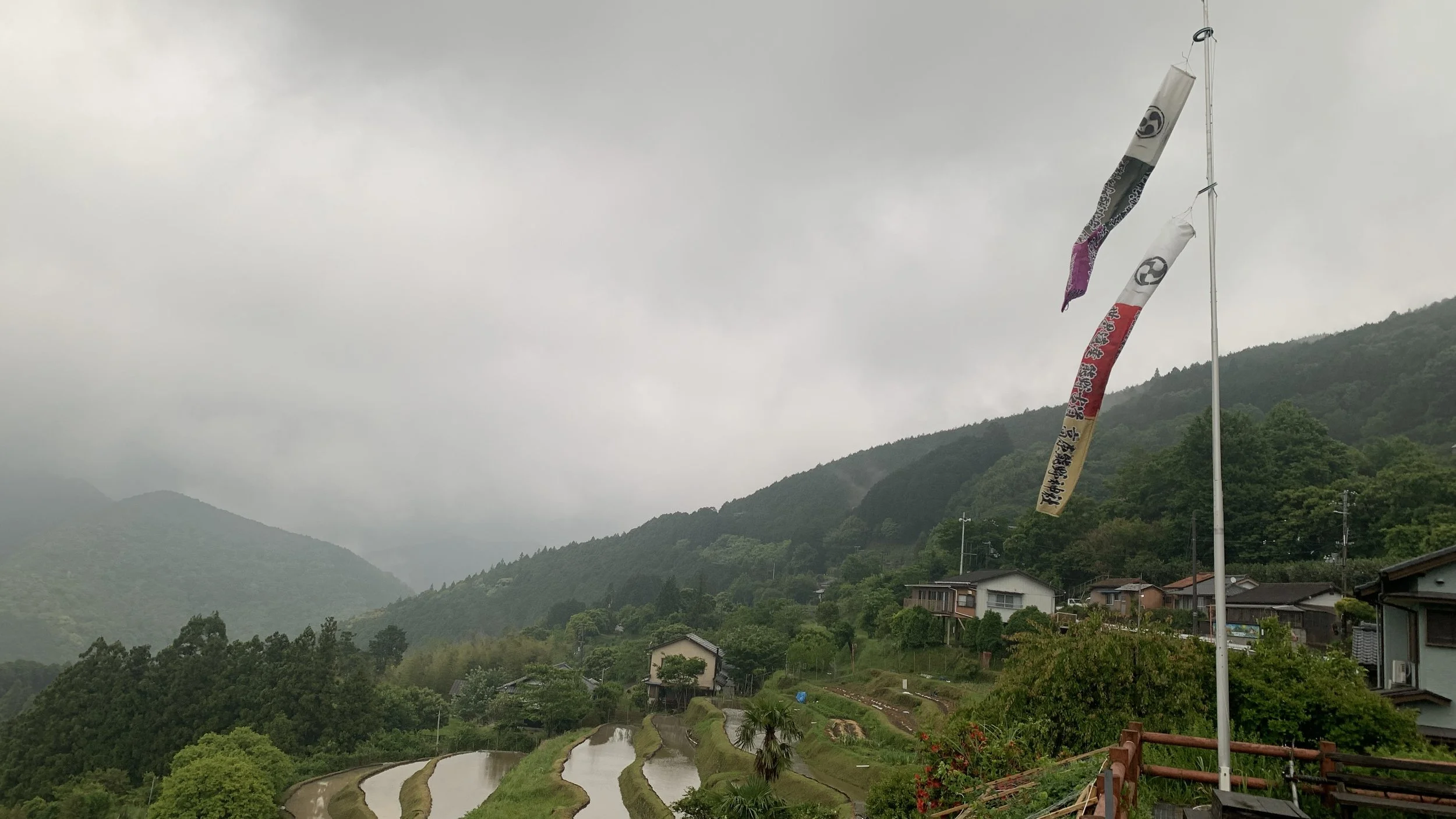
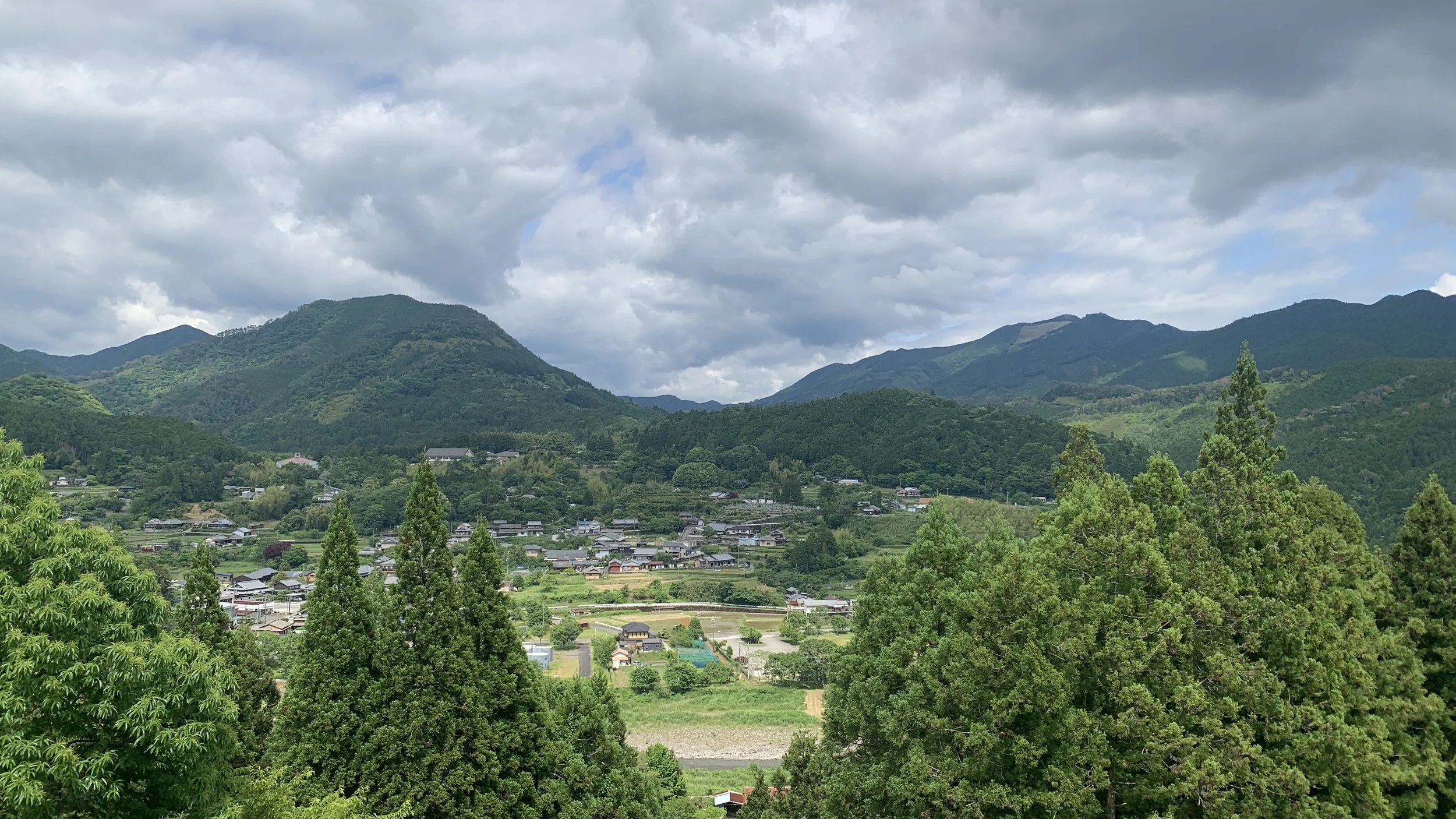
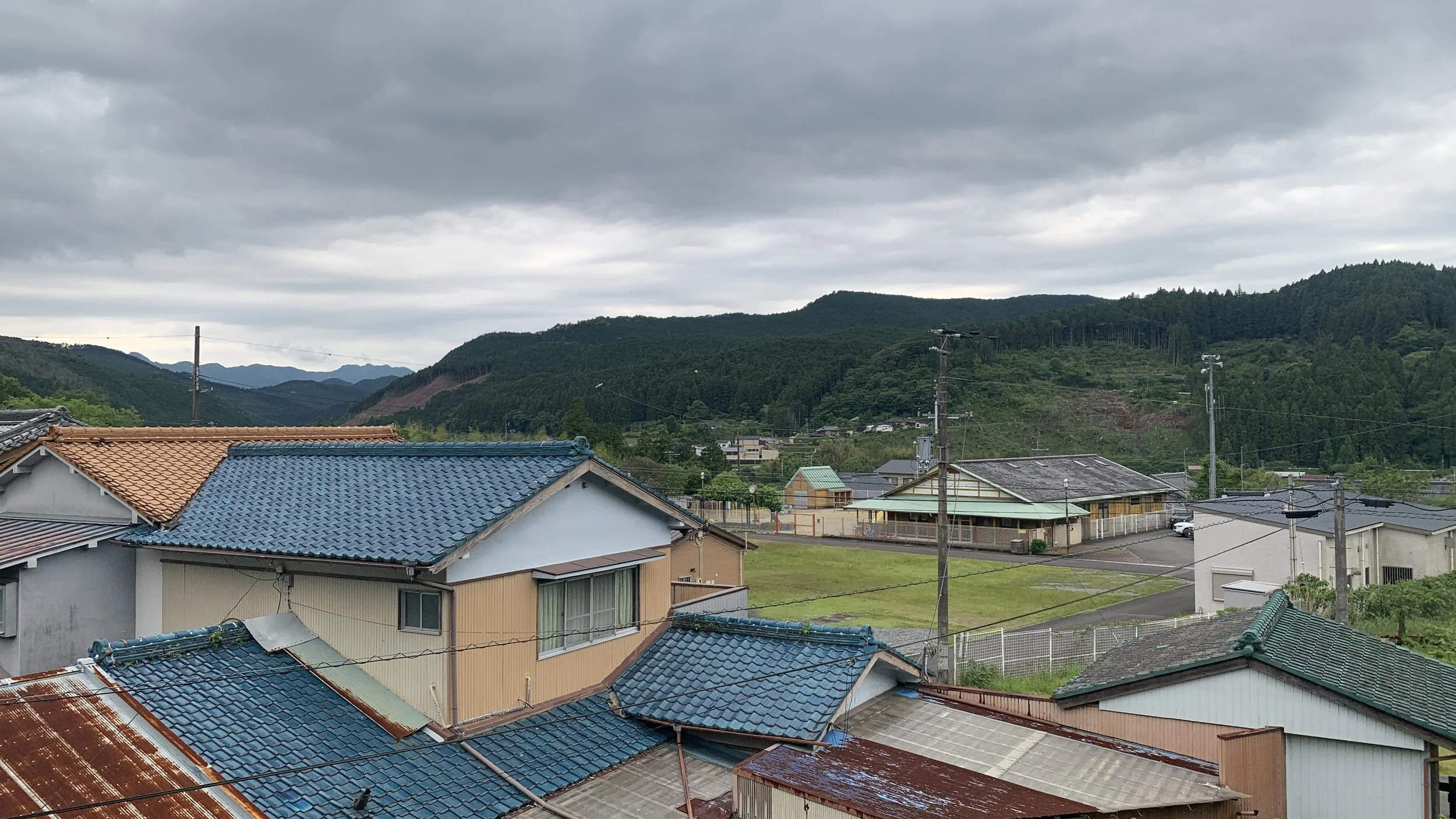
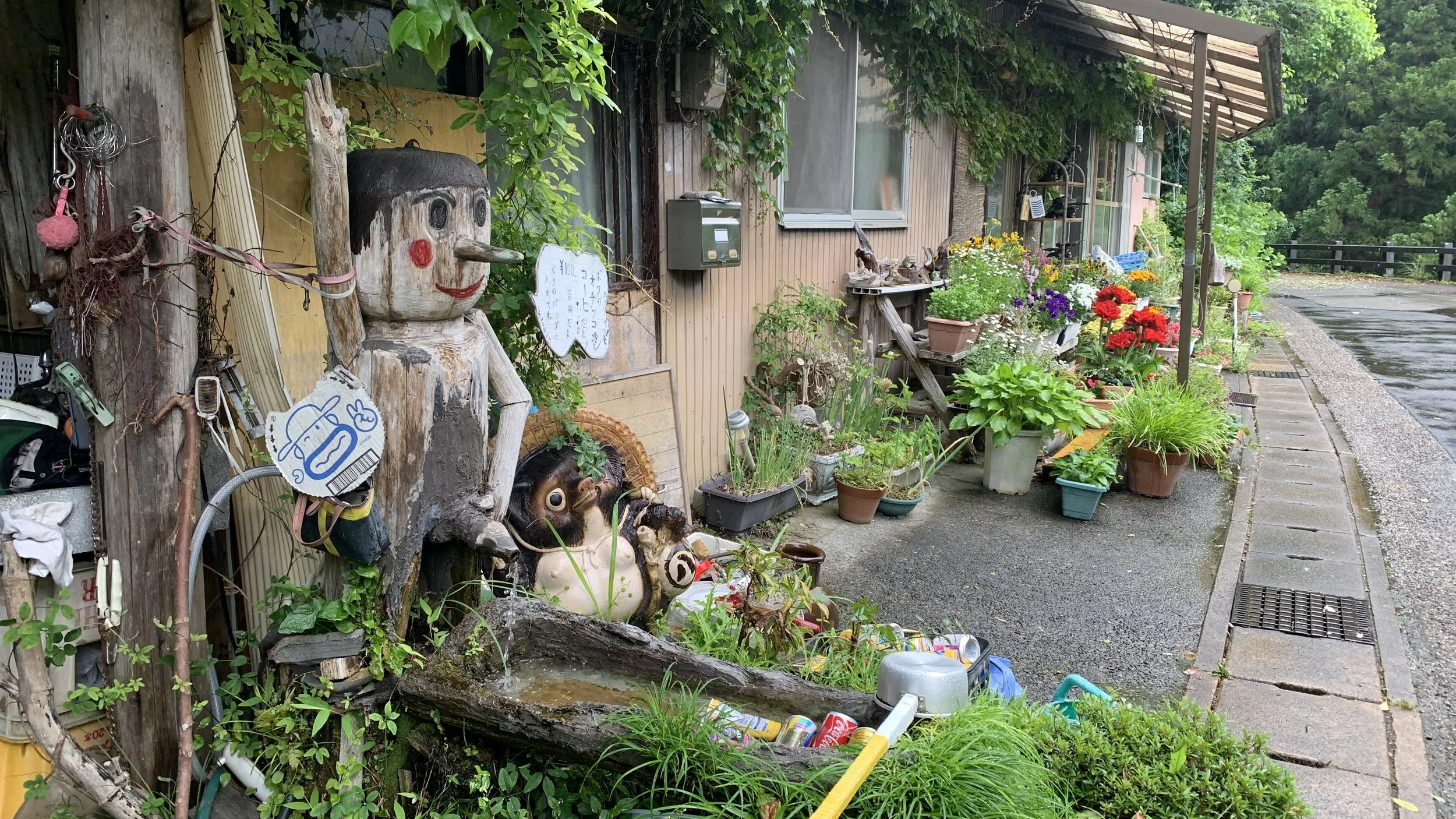
Arriving in Takahara, we had a short walk past some homes and other pilgrim accommodations, before arriving at a lookout point in the center of the village with a gorgeous view of the mountains and rice paddies. Planning to stay awhile here was the final note in our illustrated honeymoon guide!

A man below rides a machine through one of the paddies, while to our left a wooden water mill steadily creaks and groans as it slowly spins. A couple of long colorful kites ripple in the breeze.

There was large map showing where the areas at greatest risk of landslides were and you could see several landslides in the distance, mountainside scraped bare like an open wound.

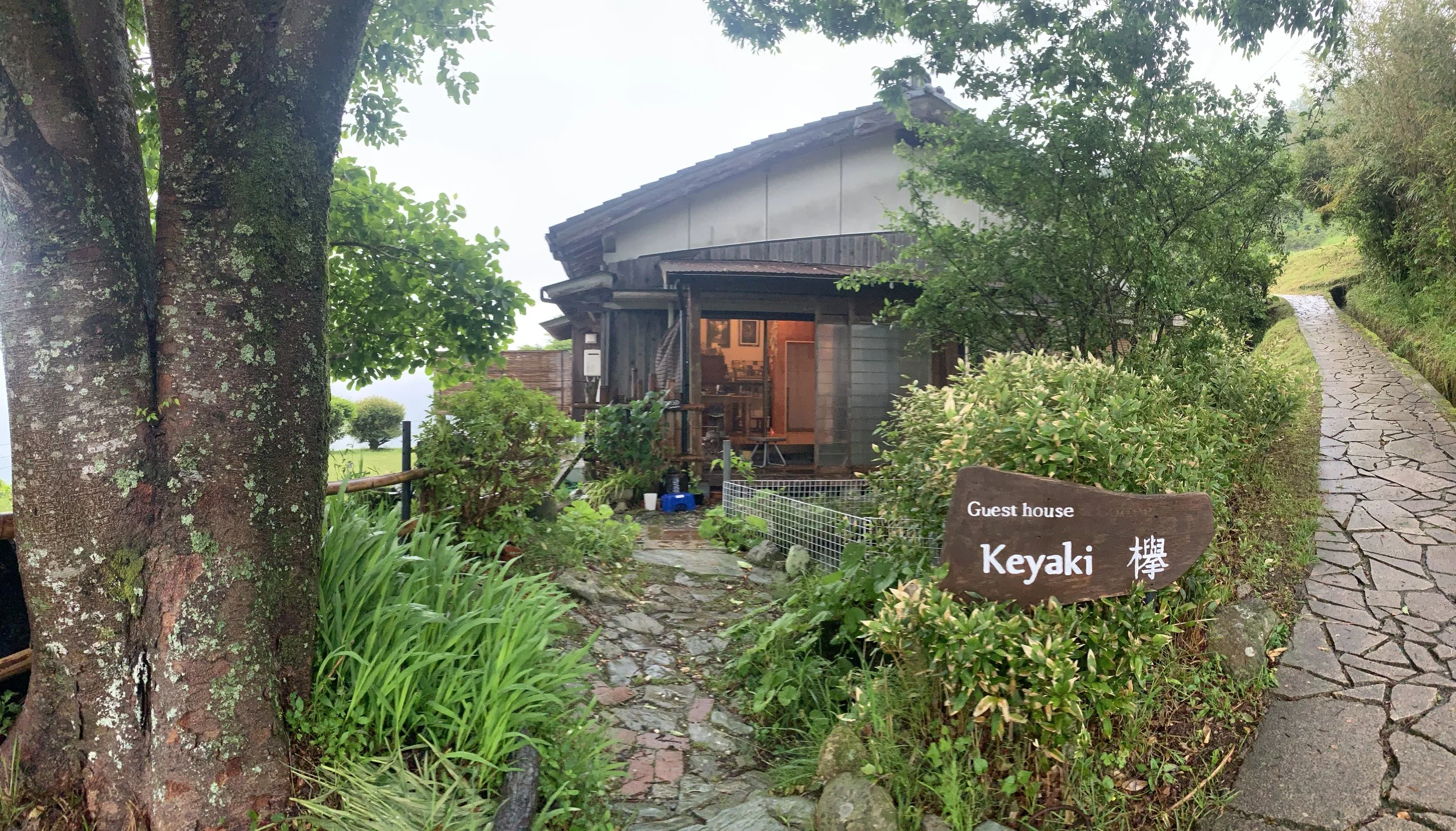
Onward up a very steep cobblestone path through the mountain village until we reached our first accommodations on trail: Keyaki.

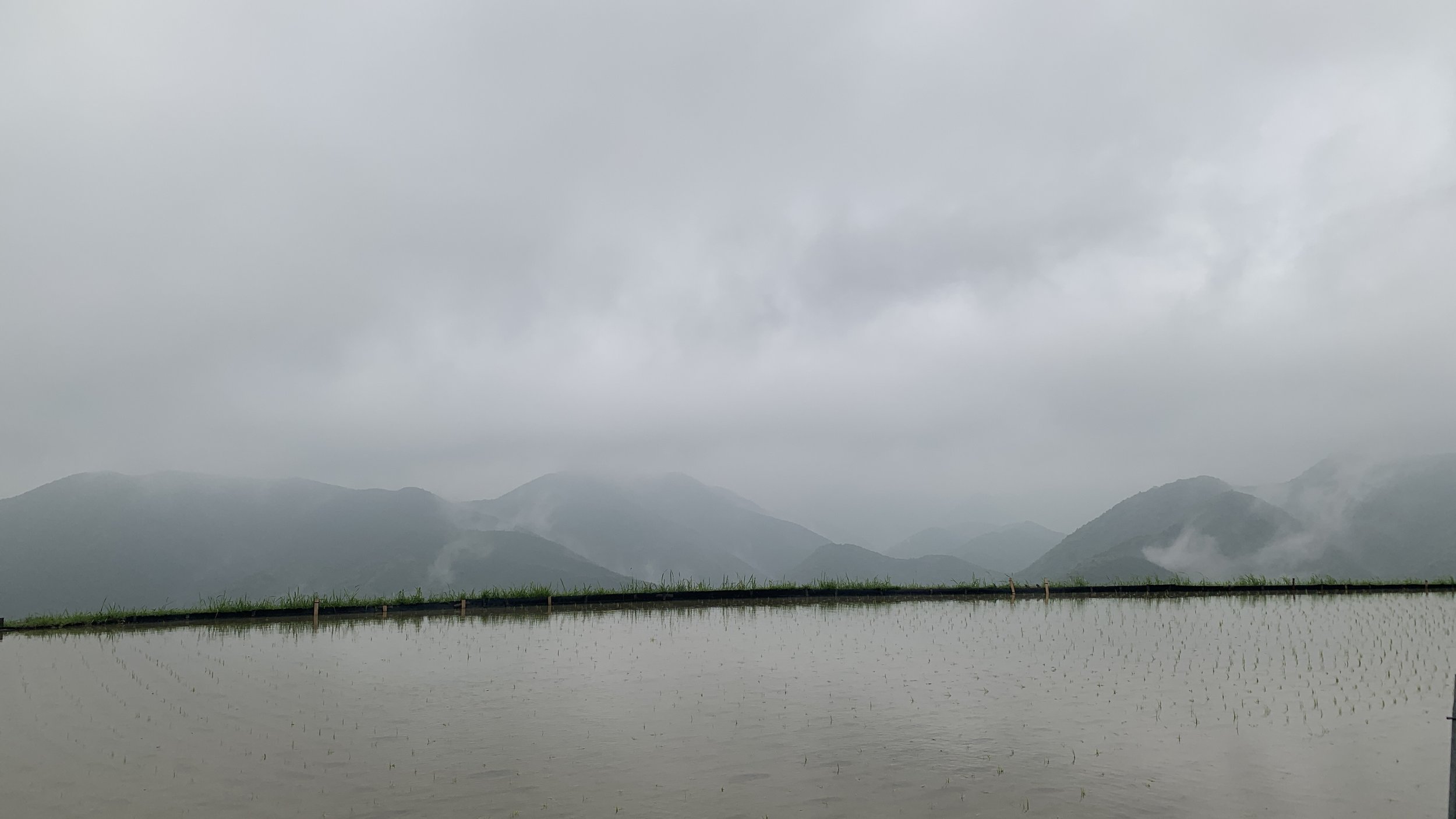
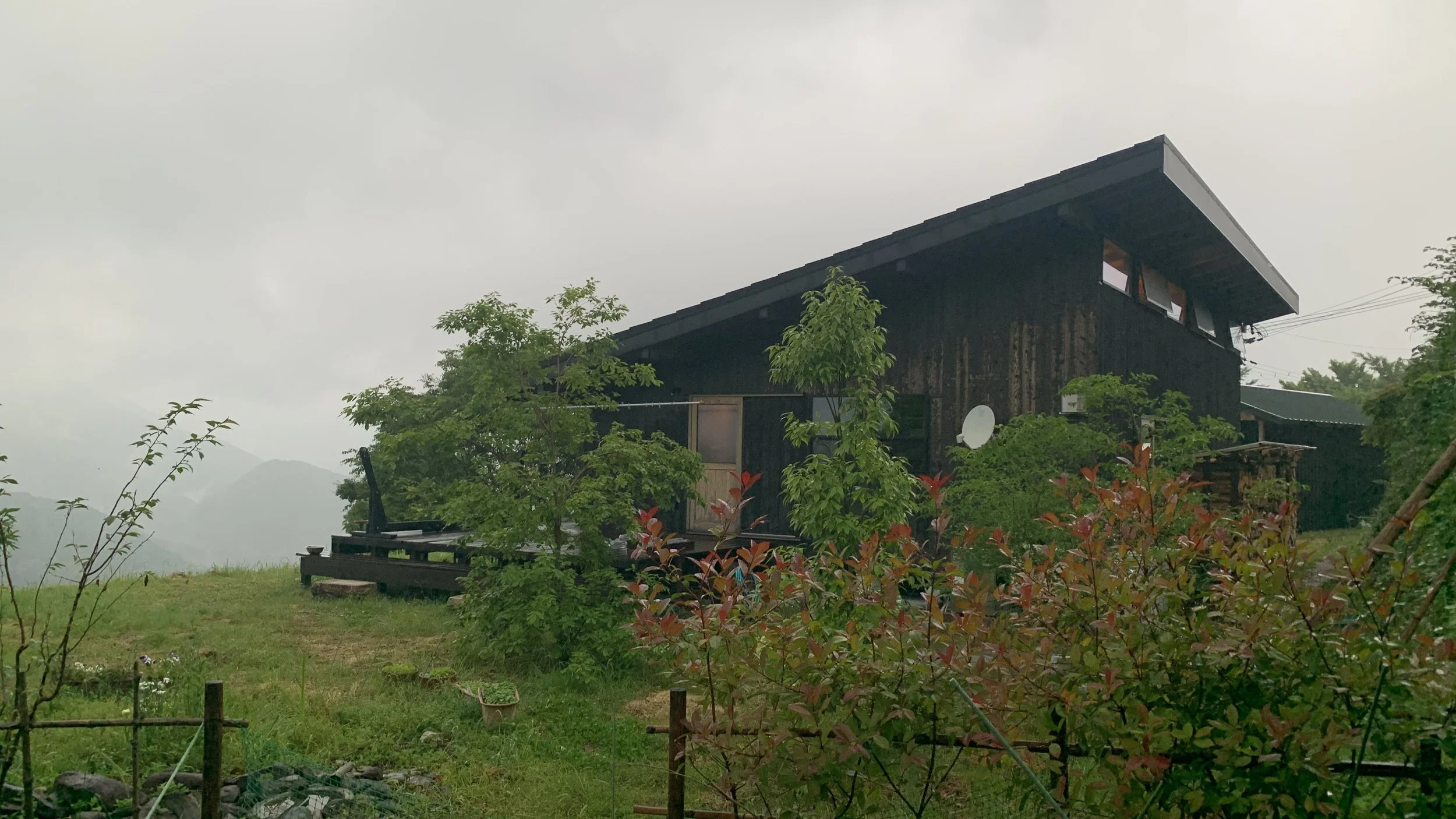
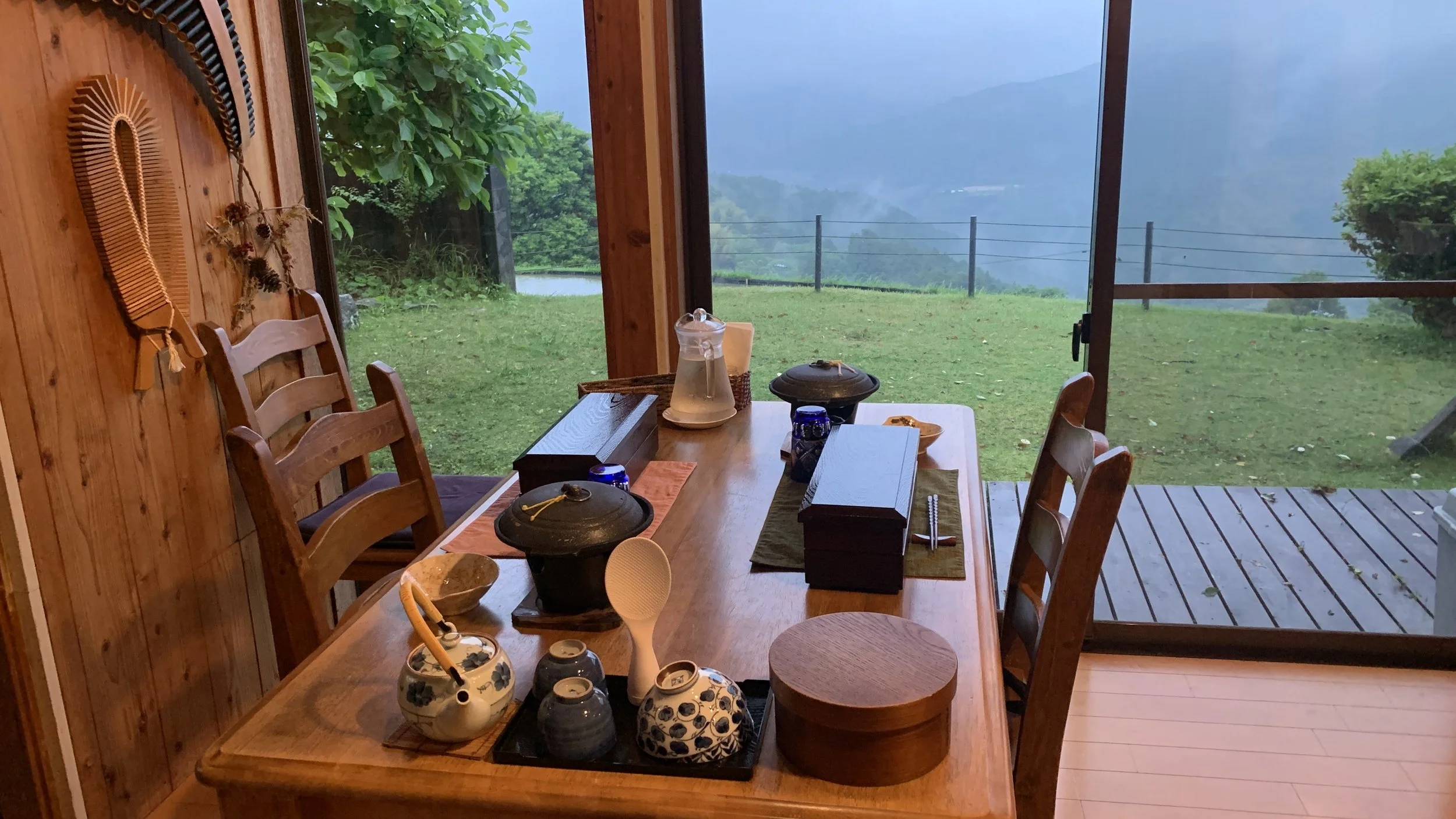
When we booked Keyaki we had no idea the level of excellence that was in store for us. On arrival, Mahito-san asked us to remove our shoes and put them in a vertical shoe-drying locker on the patio. The house looks over a small rice paddy and has immaculate views of the mountains.

Mahito-san and his wife live here with their three young children and rent our half of their home to Kumano Kodo pilgrims, in addition to an elegant studio one tier down from the main house, where our Australian friends are evidently staying.

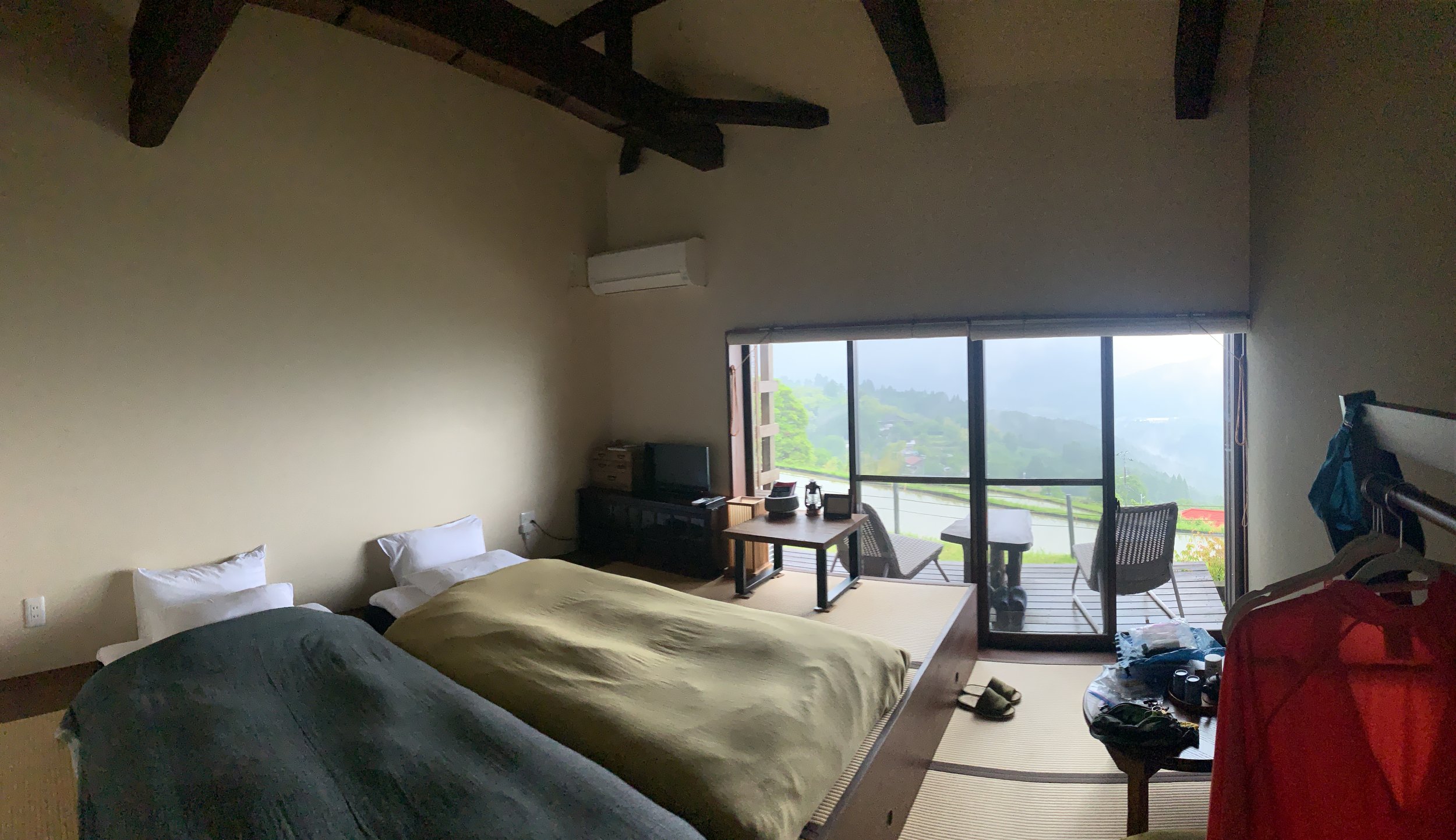
Our room is blissful, well cared for, and elegantly designed. Out of our sliding glass door wall is an open air patio. The bathroom is immaculate and with another deep soaking tub inside a fully waterproof room with a handheld shower nozzle. The coffee station, too, is a work of art, with a chemist set drip coffee set up, a hand crank grinder with fresh beans, and little ceramic mugs with saucers and tiny spoons.

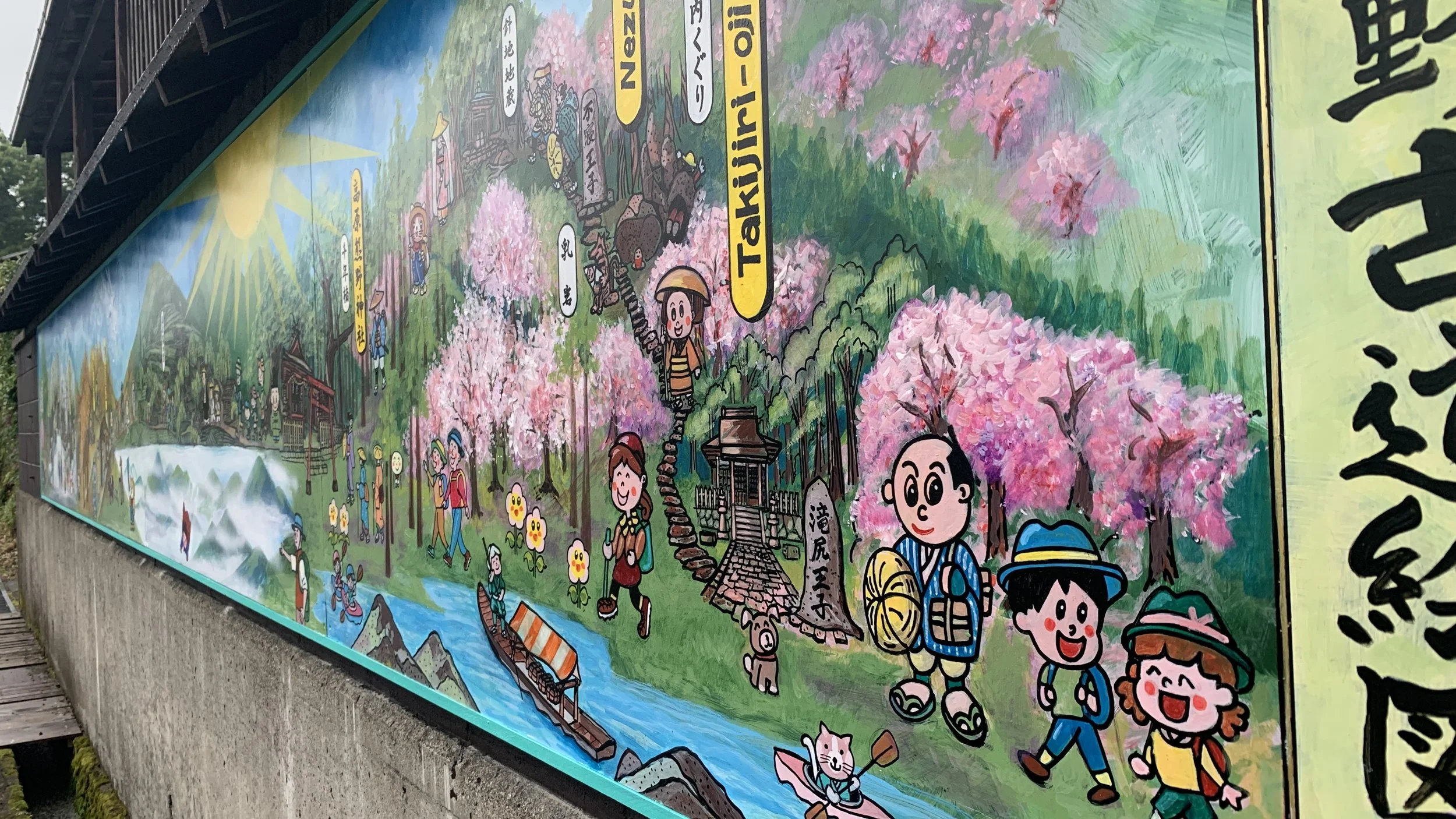
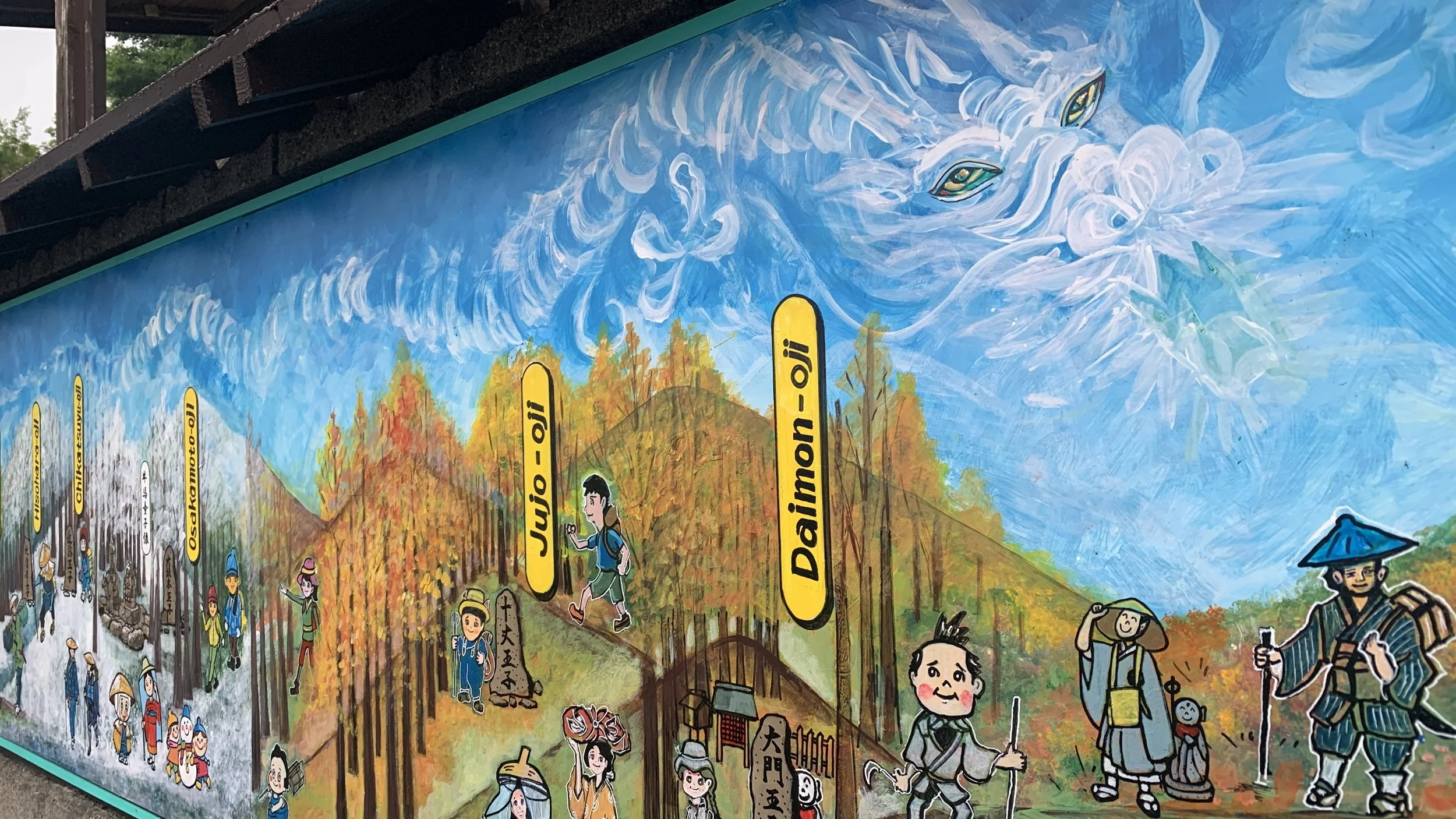
While Chris took a bath I hiked back down the steep cobblestone path to the overlook point in the village to see if I could find the neko (cat) that reportedly likes to greet people there. The cat evidently had better things to do, but I did find a neat Nakahechi mural, and got to see more of this little village.

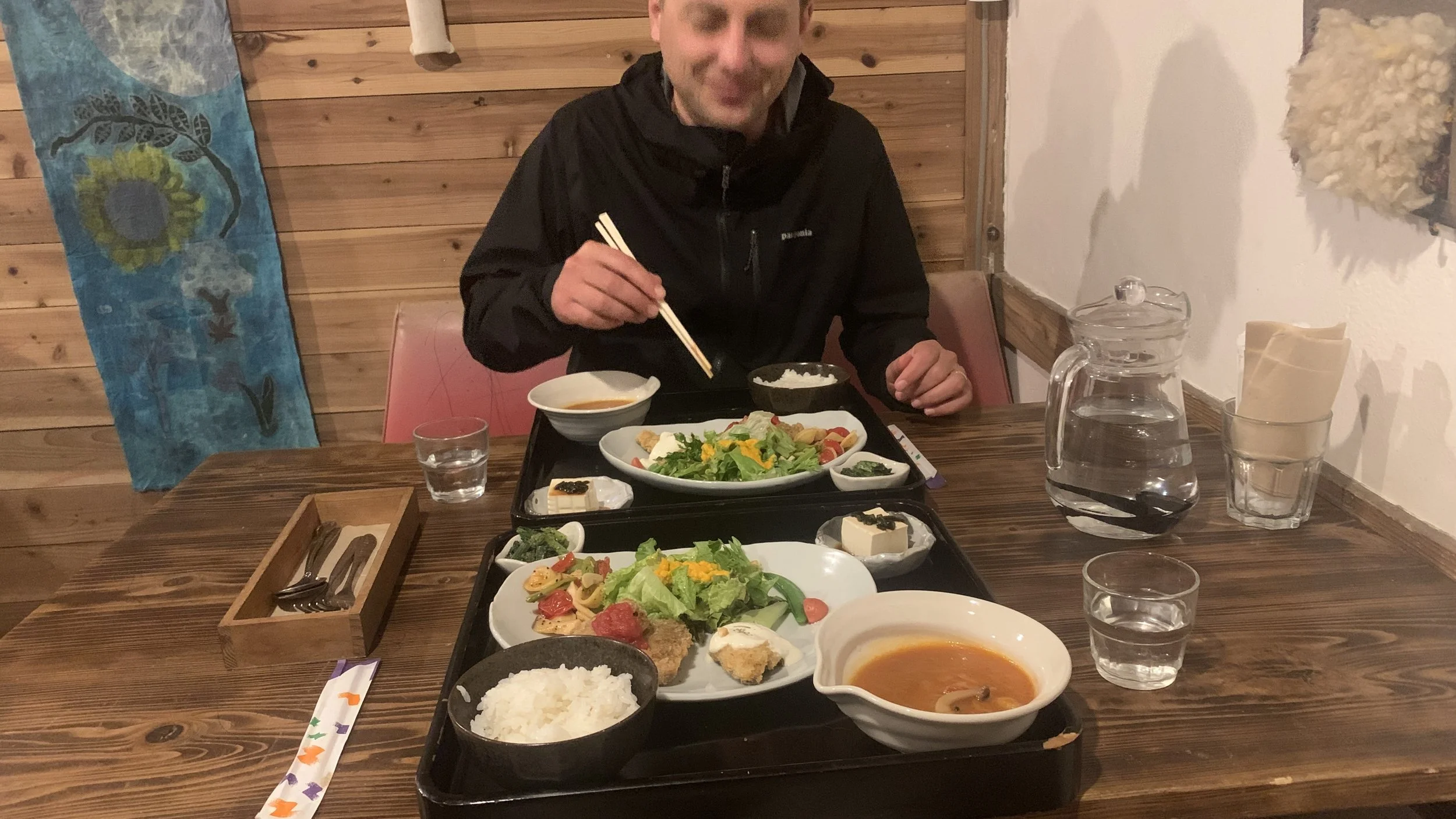
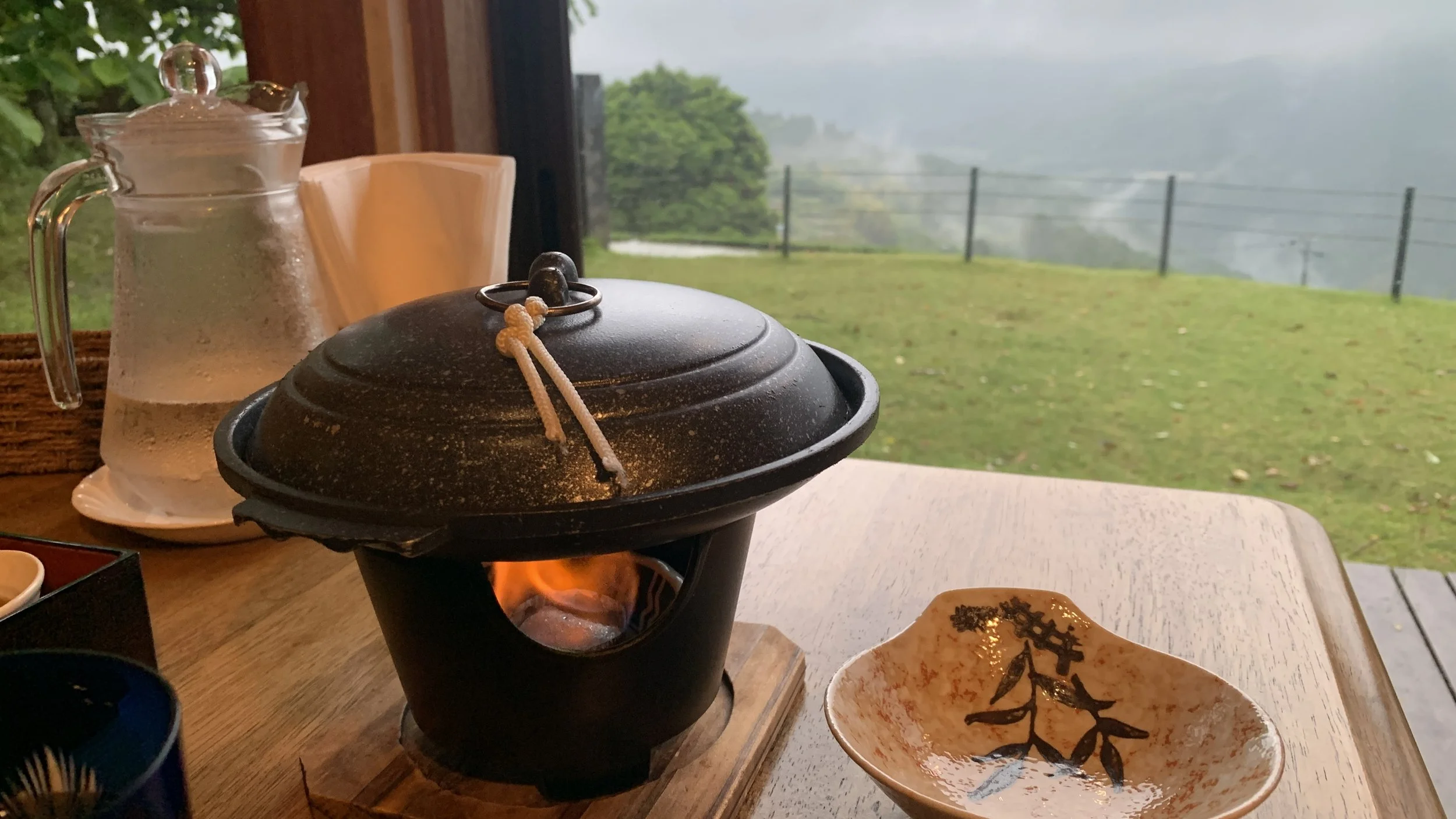
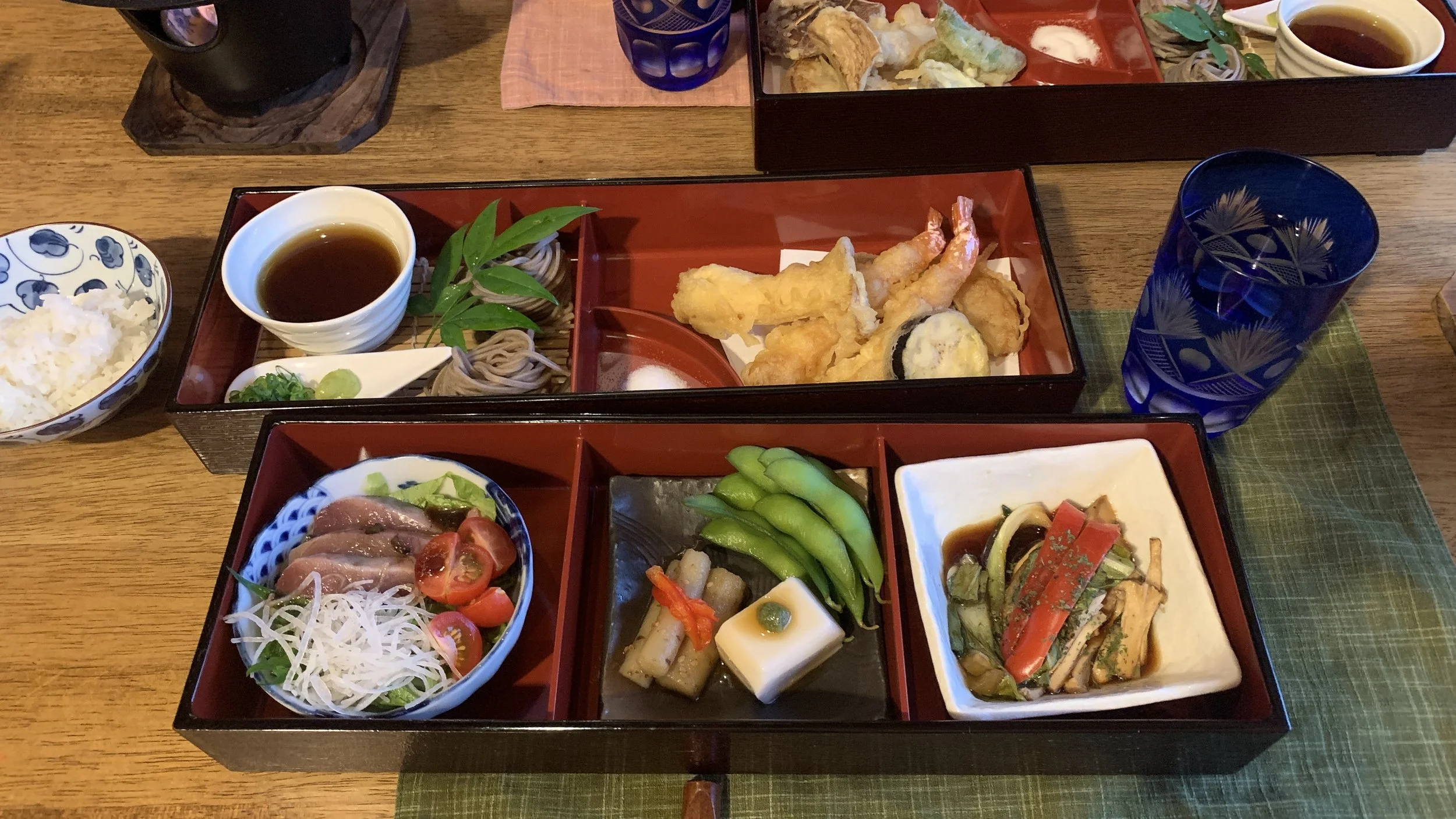
Back at Keyaki, my own bath felt like the nail in the coffin for this cold of mine, causing my body temperature to rise dramatically, and mimicking a fever. I finished up just in time for dinner - and no, this dinner spread may actually be the best of our lives. Mahito-San was the chef, and each element was prepared to perfection. The view wasn’t bad either.

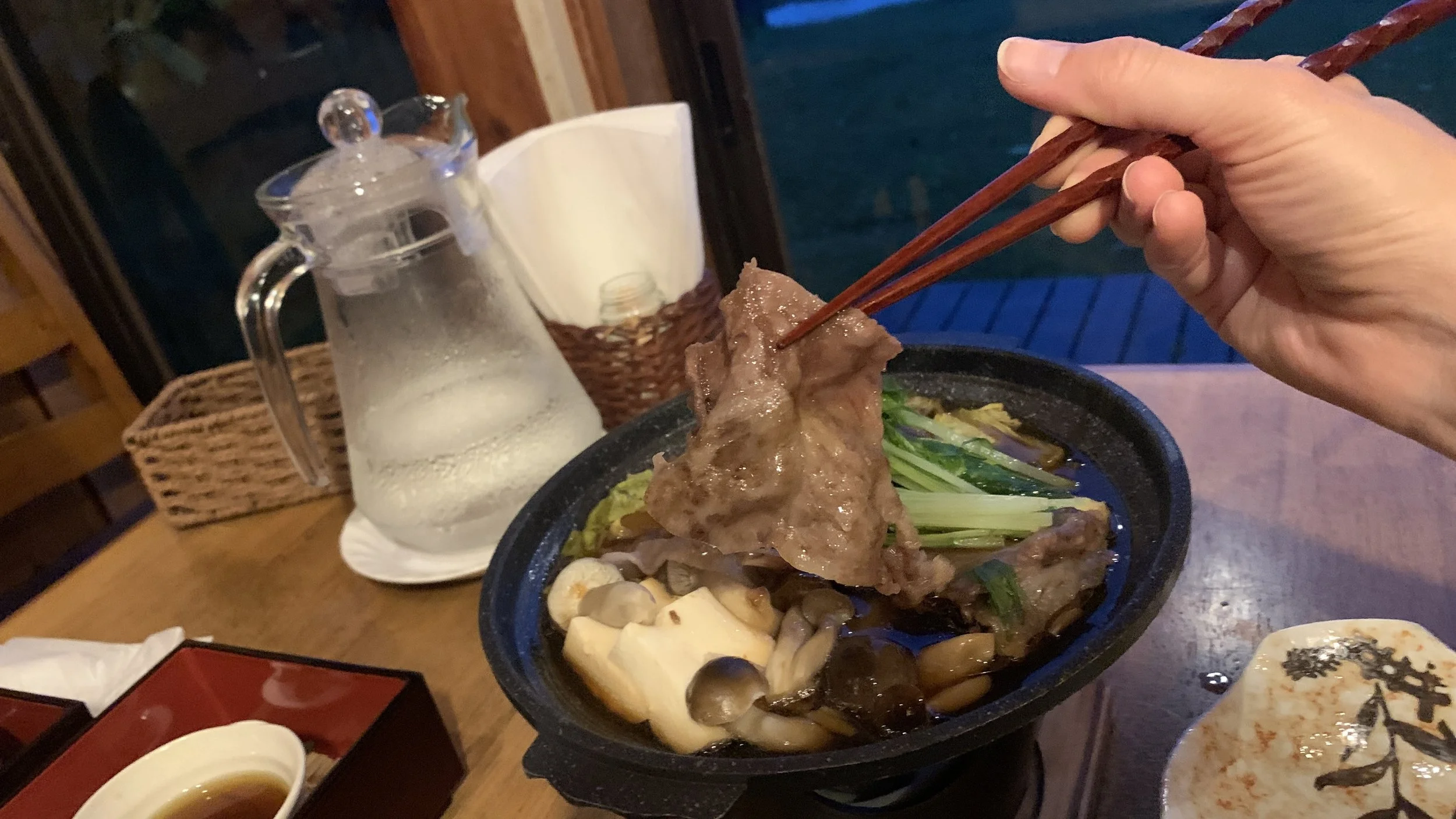
I opted to list myself as having no dietary restrictions when we applied for accommodations on this journey in hopes of increasing our odds of being accepted (rural Japanese diet includes much fish and meat), so I had to lock in mentally when Mahito-san lifted the lid off my sukiyaki to reveal a simmering hot pot of thinly sliced high-quality wagyu ‘Kumano Beef’ and other delicacies.

I needn’t have worried. The beef was delicious, as was the tempura battered shrimp and mushrooms, rice, vegetables, noodles, miso, etc.

We went to bed shortly thereafter. I’m feeling significantly better but Chris’ allergic asthma is seeming quite persistent, though I suspect he may have an underlying cold as well.

Friday, May 22

Takahara to Chikatsuya • 12km

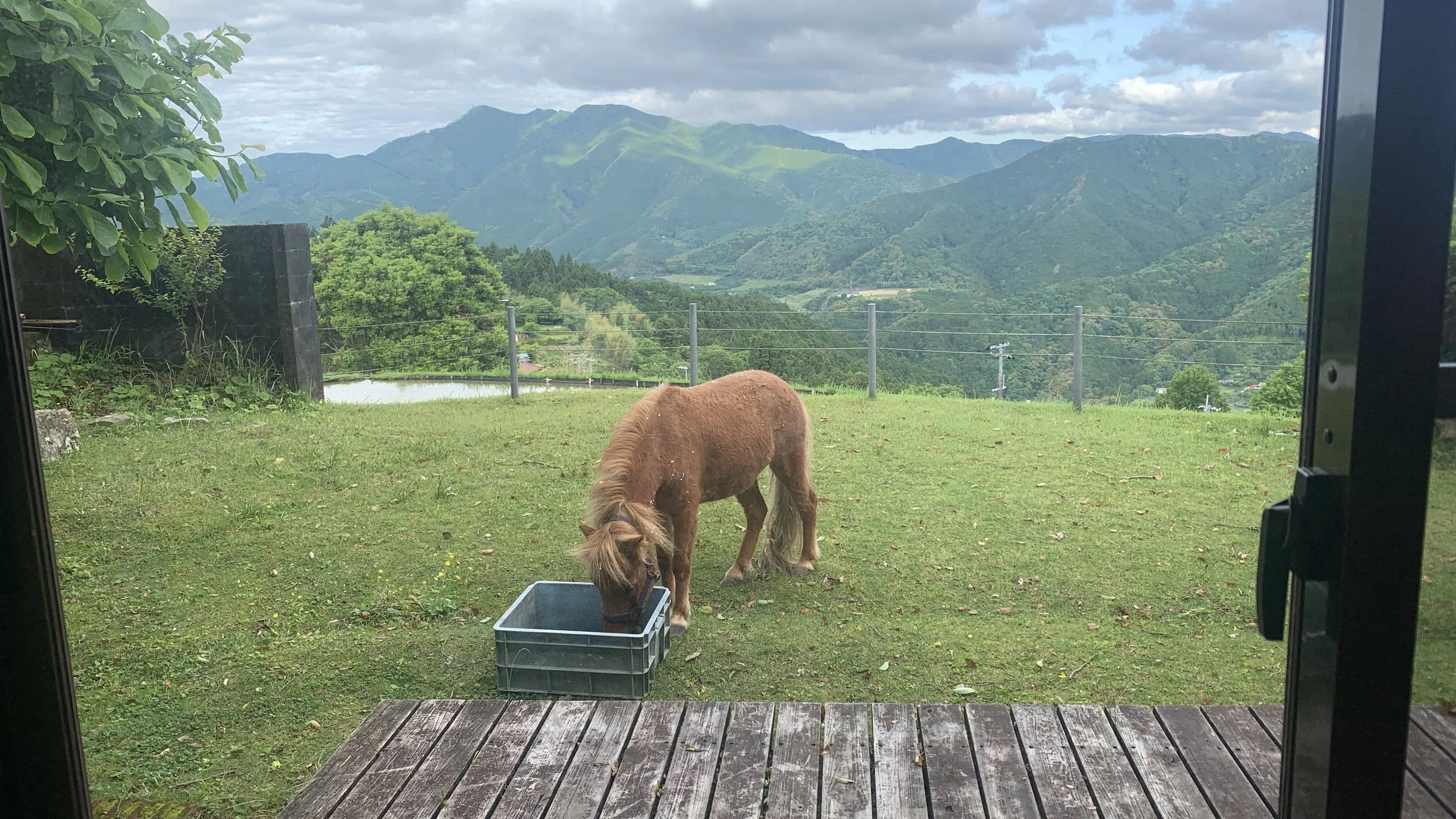
Phenomenal breakfast! Toasted sandwiches, hot veggie broth, tea, coffee, scrambled eggs for me, and a mysterious roasted root of some sort for Chris. The family’s 17 year old pet pony, Chaka, ate his breakfast just outside the window, too. And mounted over the kitchen was a beautiful painting of Chaka, by Mahito-san’s mother.

Over breakfast we had the chance to meet the other lodgers, another couple: Whitney (Presbyterian pastor) and Amy (labor & delivery nurse), taking this trip to celebrate sending their 3rd and final kid off to college. We had quite a laugh when they joked about a heated encounter they had during their transit to Kii Tanabe when there was a ticket mishap. “30 years of marriage nearly down the drain!” We have had similarly fraught moments, especially within the public transit realm, since every time we figure something out another high-stakes puzzle appears, so it was fun to laugh about this aspect another couple.

After saying goodbye to Mahito-san and his cute little daughter, we set out from Keyaki around 9am for our first full day of hiking. Shamefully late start, but a 13km day should still make for both a pleasant pace and arrival time in Chikatsuya.

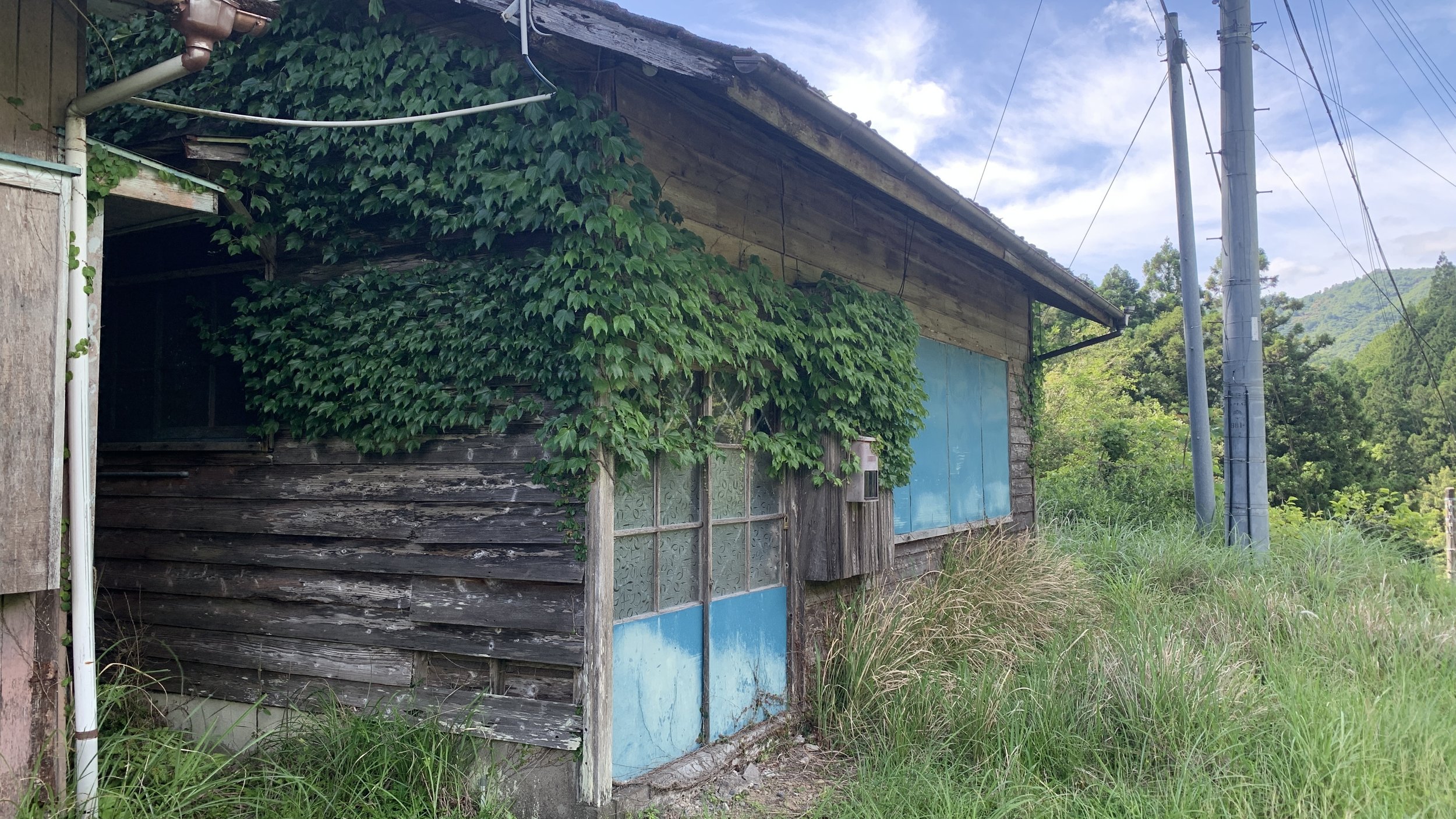
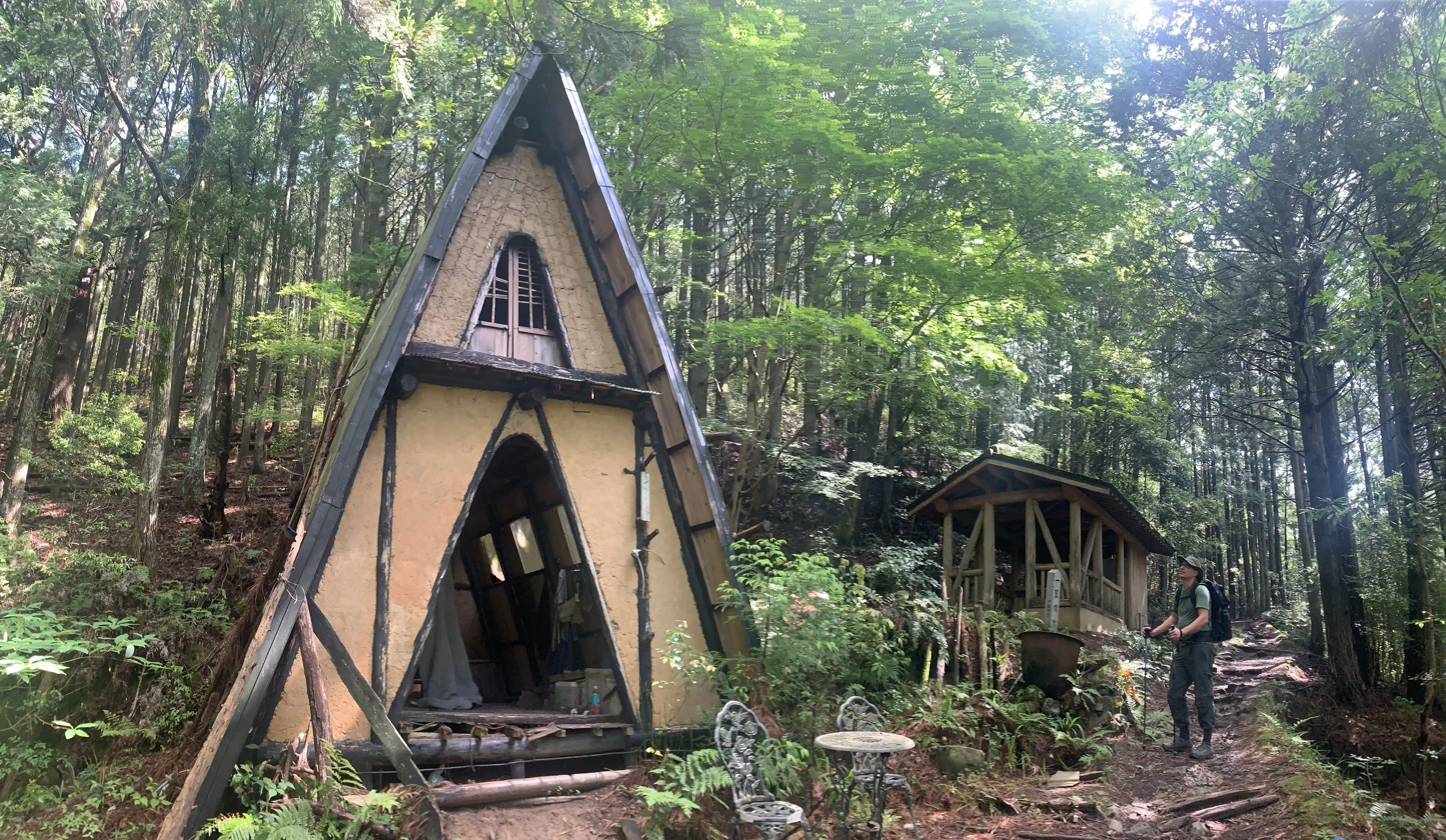
The hike was beautiful and no rain made for extra enjoyable walking. We passed an interesting A-frame mud hut that that seemed abandoned, next to a picnic shelter.

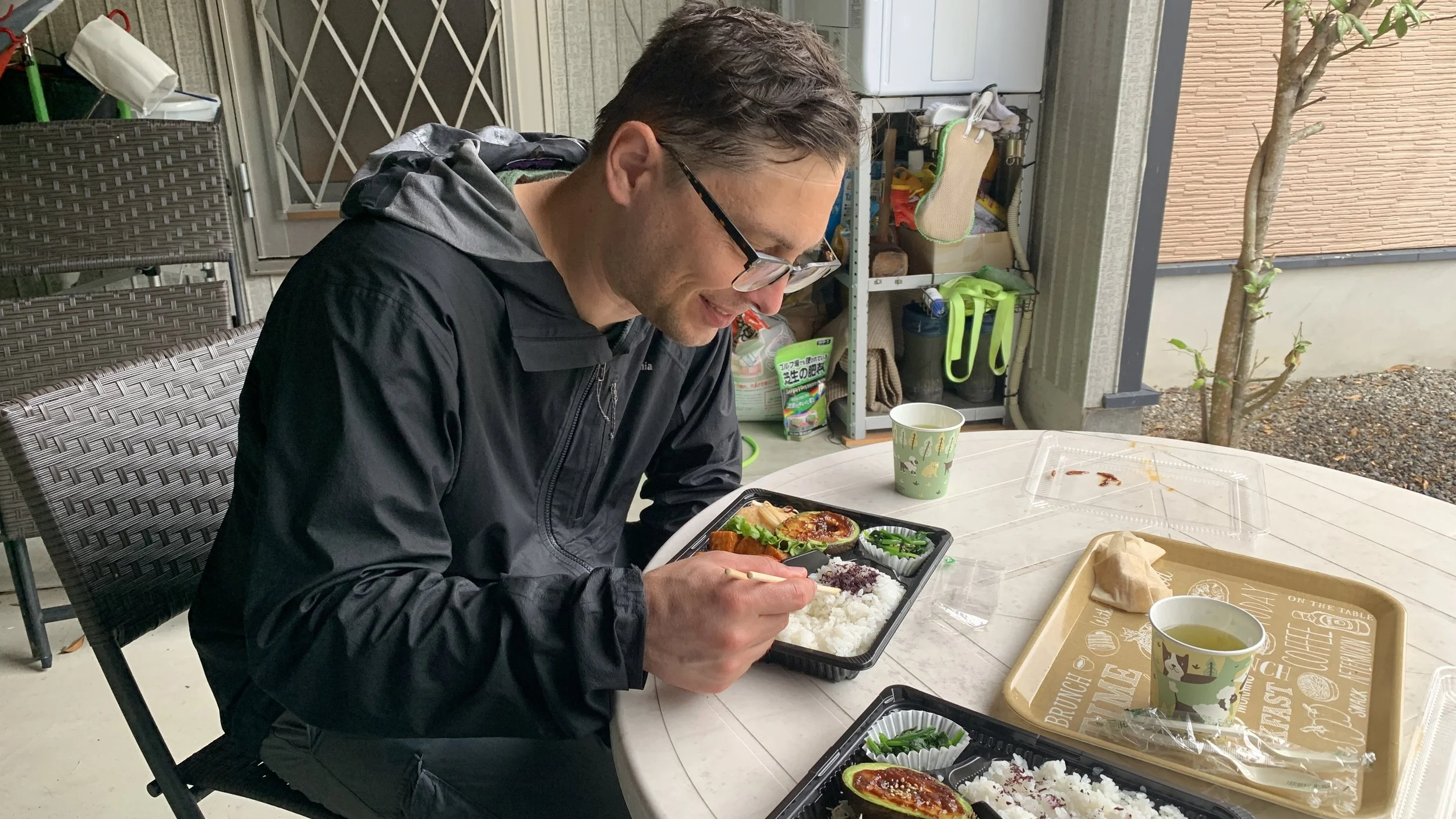
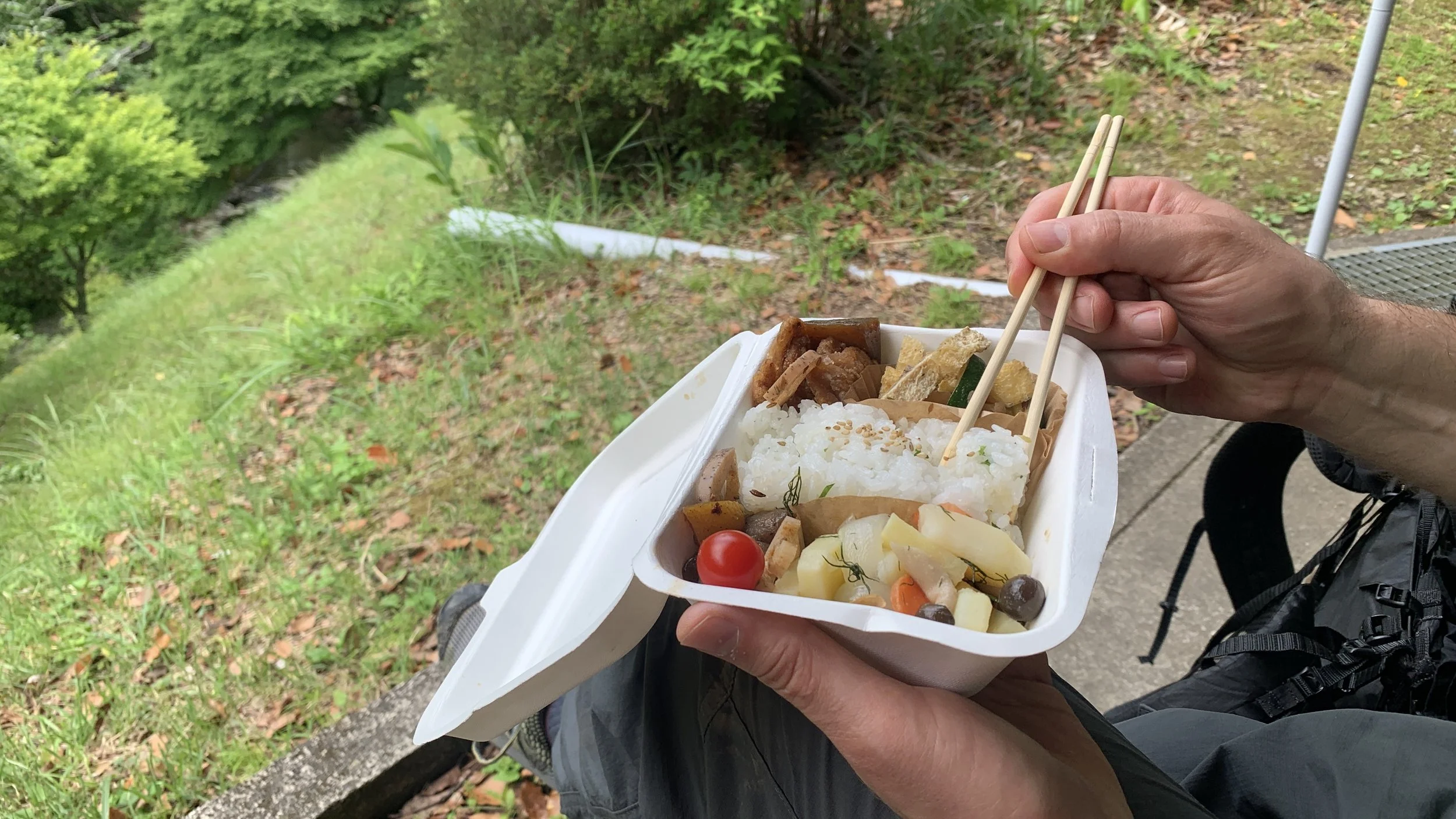
Around lunchtime we stopped at a small grocery spot directly on trail that had a wide assortment of tasty snacks and drinks and plenty of outdoor seating. Since Keyaki provided a bento box for us for lunch, we sat and enjoyed those before getting back on trail.

For desert I purchased a packet of locally made mochi that listed mugwort as an ingredient. Very neat, and I’m curious whether I’ll notice any dream effects from the mugwort (that is if the Google translation was even correct…. It can make some pretty wild guesses as to word meaning, like the time it listed cockroaches as an ingredient on some savory crackers).

We hiked together awhile with a woman named Camille, from Paris, France, and also leapfrogged with our neighbors from the night before, Amy and Whitney. We all ended up chatting for a bit when we reached the overlook point for Chikatsua.

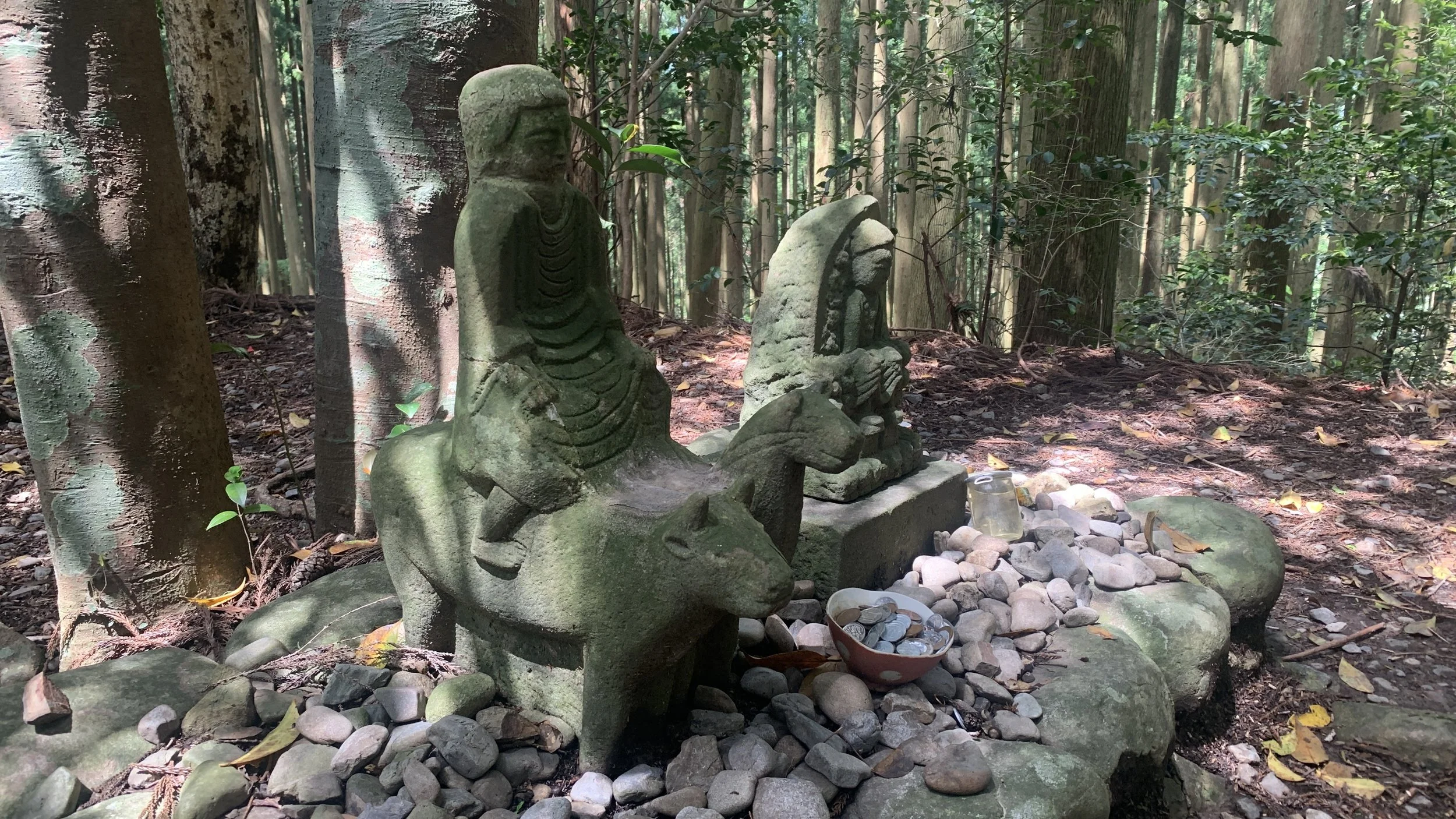
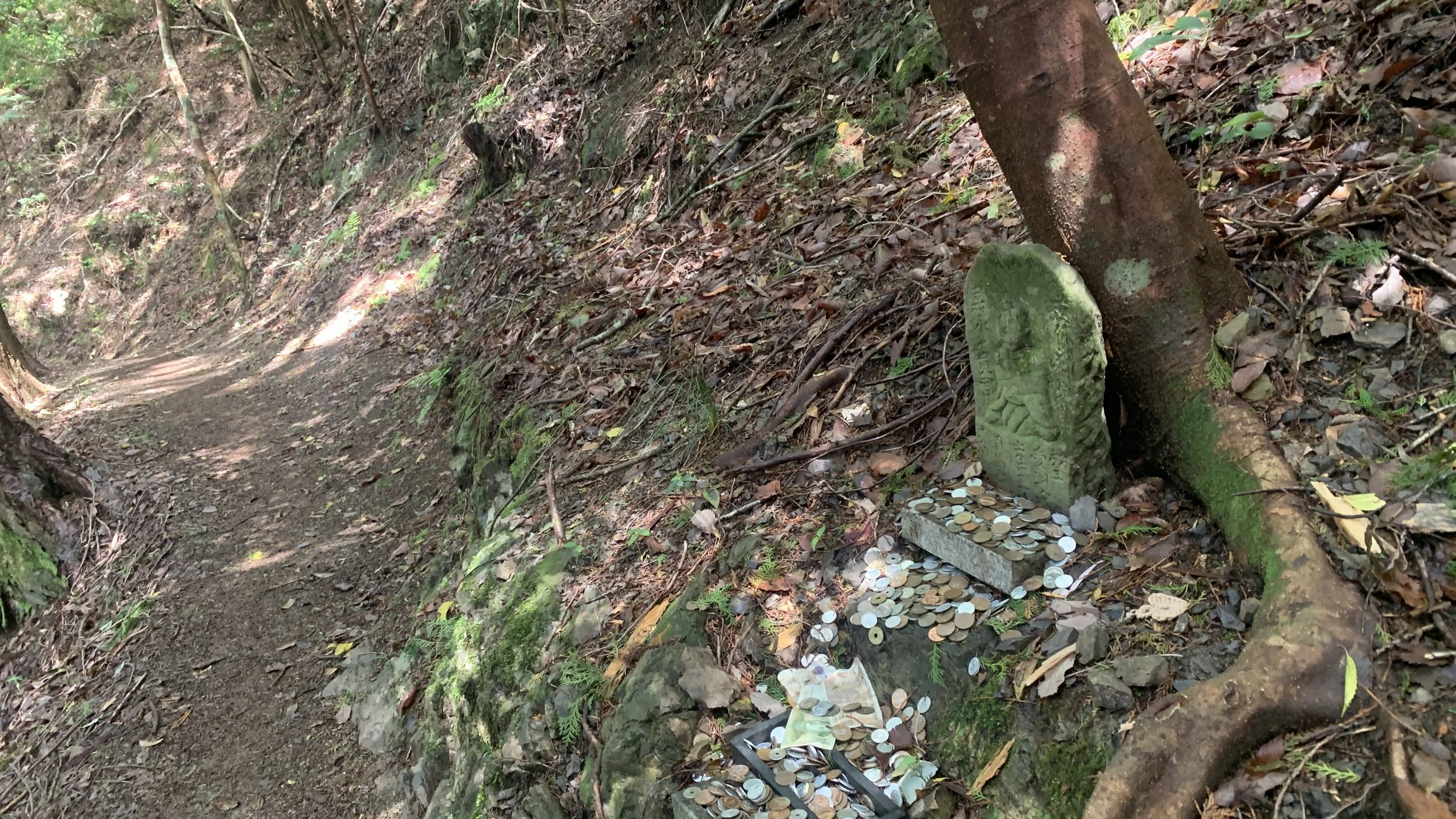
The whole walk is lined with Ojis: a stone marker commemorating a shrine that used to be here and describing some story related to the shrine. One such oji explained the story of how the village of Chikatsuya’s name came to be. Chi = blood, ka = and, tsuya = dew. We have been enjoying the tales told by these stones and it’s incredible to think of what it must have been like for these pilgrims of 1100, 1200, hiking in straw sandals, carrying swords for protection, etc. One detailed the former homestead site of a man who had been recorded by a 16th century pilgrim to have lived on a particular mountain ride “long ago”.

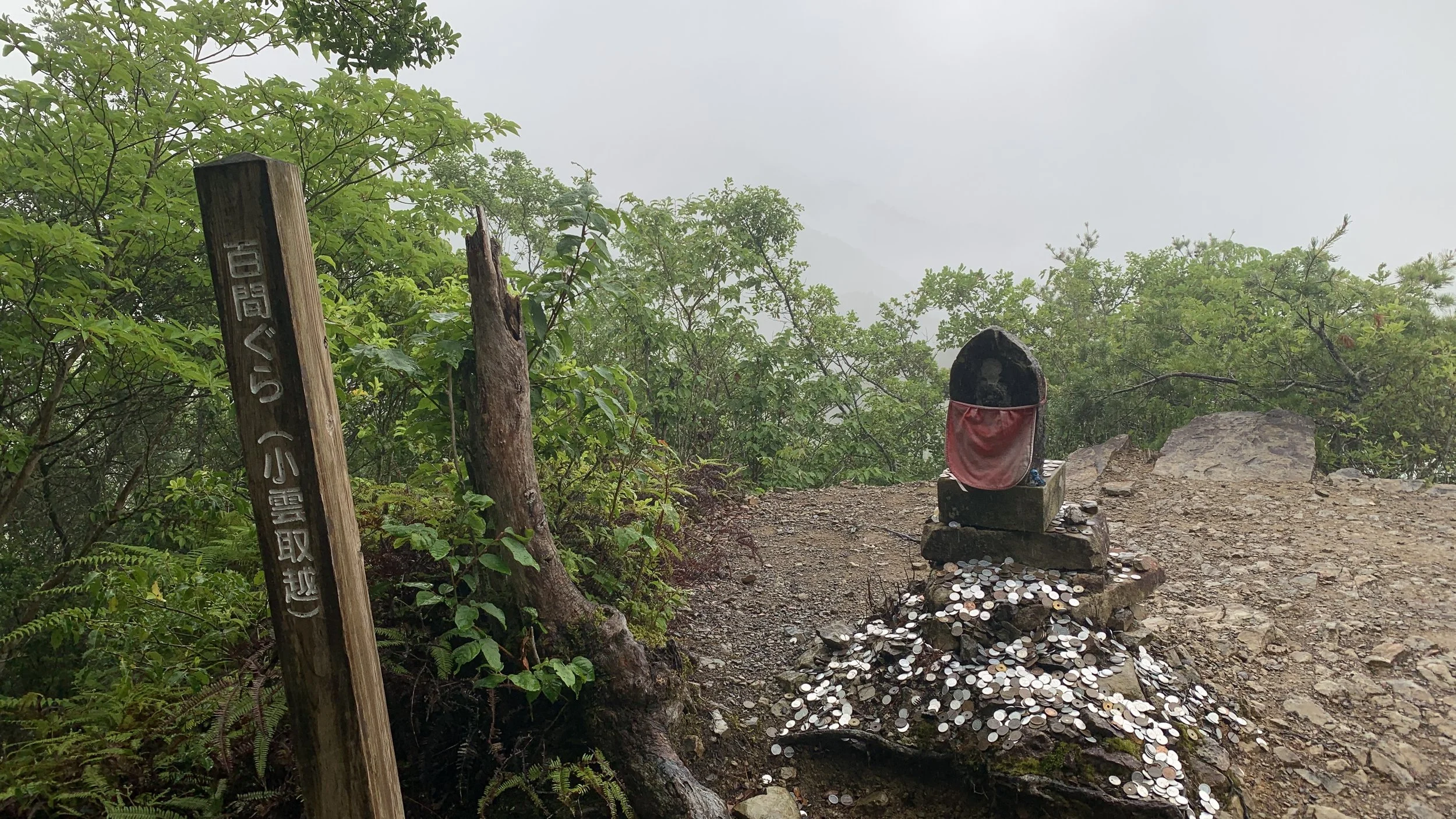
Many held lore around esoteric events at the sites they occurred at such as the “three-fold moon,” and others pay tribute to pilgrims who met their ends on the Kumano Kodo, such as a man as recent as the in the 1800’s who starved to death on the trail. When the townspeople eventually found him they discovered that he had placed a gold coin in his mouth before passing, presumably as a way of performing his own funeral rites. So moving was this to the townspeople that a shrine was erected in his honor.

When we arrived in Chikatsuya around 2:30 we realized our accommodations were only a 20 minute walk up trail, so we stopped at Sakura Beer Garden for a drink with Camille. Another pilgrim, Juliette from the Netherlands, joined us and we stayed for a couple hours, playing the ancient Japanese game GO (it’s the world’s oldest still played board game, and one Chris has been learning with our friend Chase), drinking homemade ginger ale, and a Kumano Kodo pale ale.

Juliette works in human rights processing immigration applications and said there had been a huge uptick in American immigrants since Trump. She told us if we ever want to try to live in the Netherlands the Dutch American Friendship Treaty (which evidently works more in favor of Americans than the Dutch) would be the route to take. With the looks of a storm rolling in we departed the beer garden for our lodging at Guest House Housen Cafe.

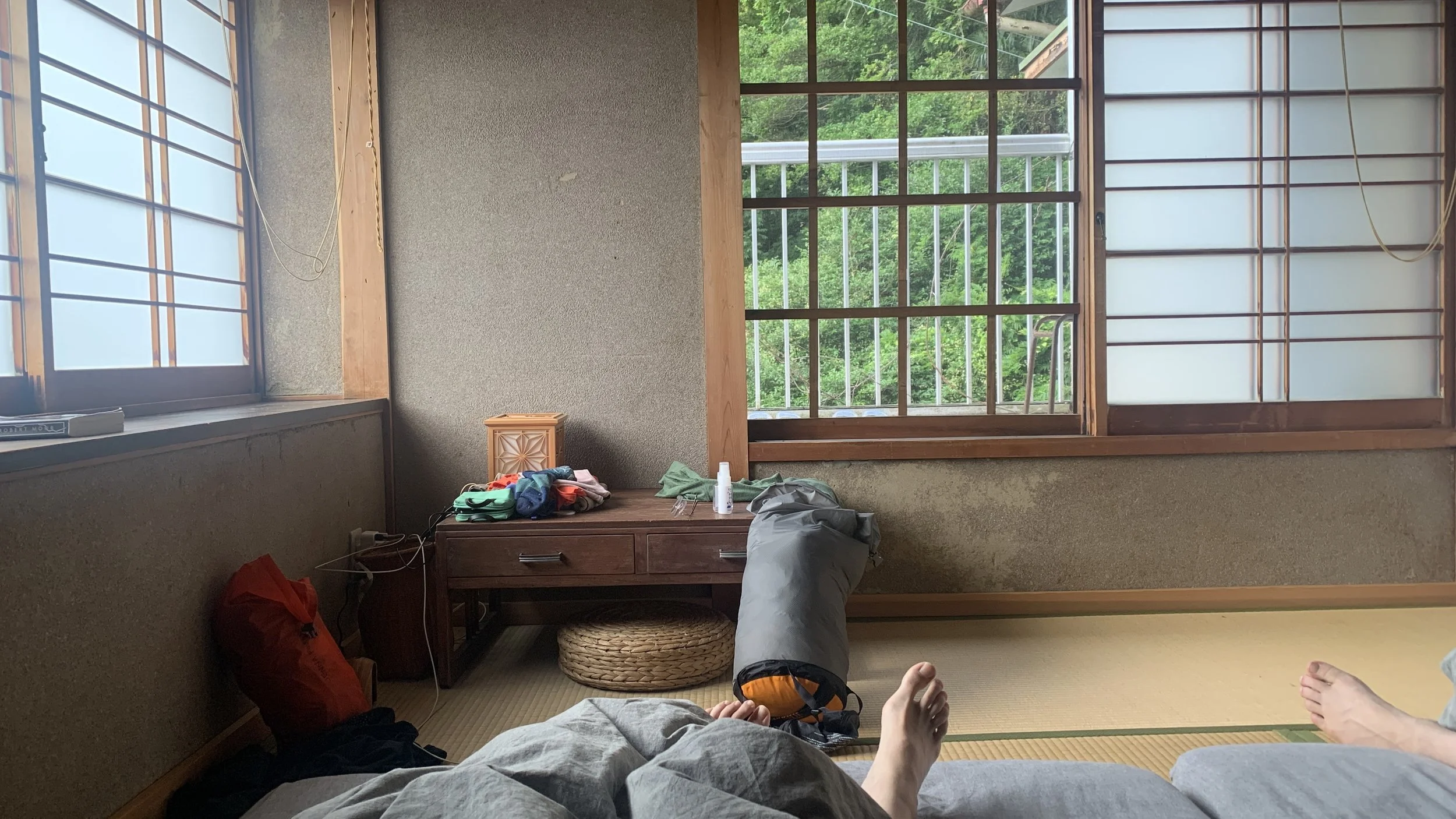
Tonight we have “western beds” which I wasn’t too jazzed about when booking but once we felt their softness, and discovered the two screened windows in the bedroom to create a cool draft, we knew we would sleep well.

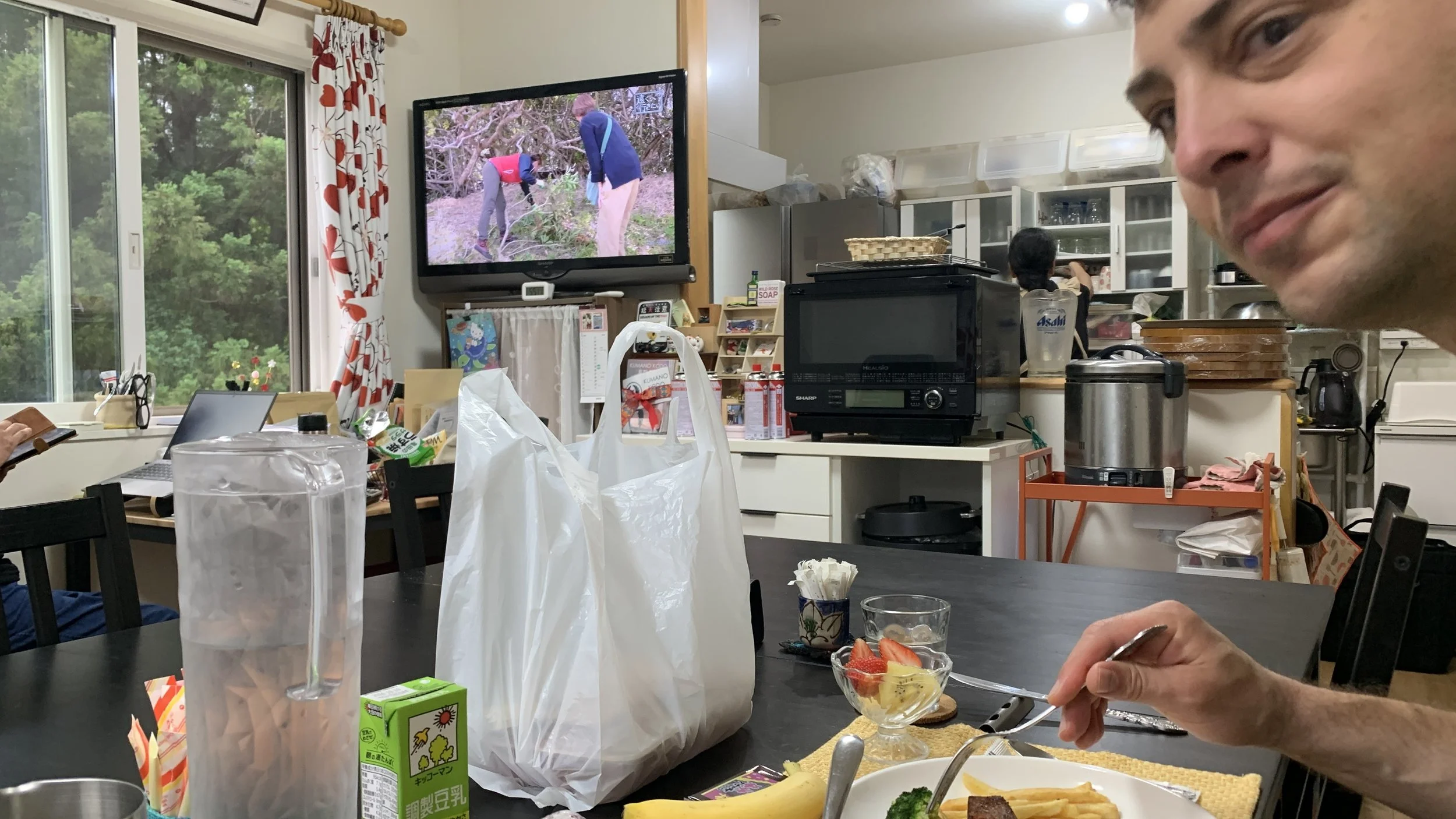
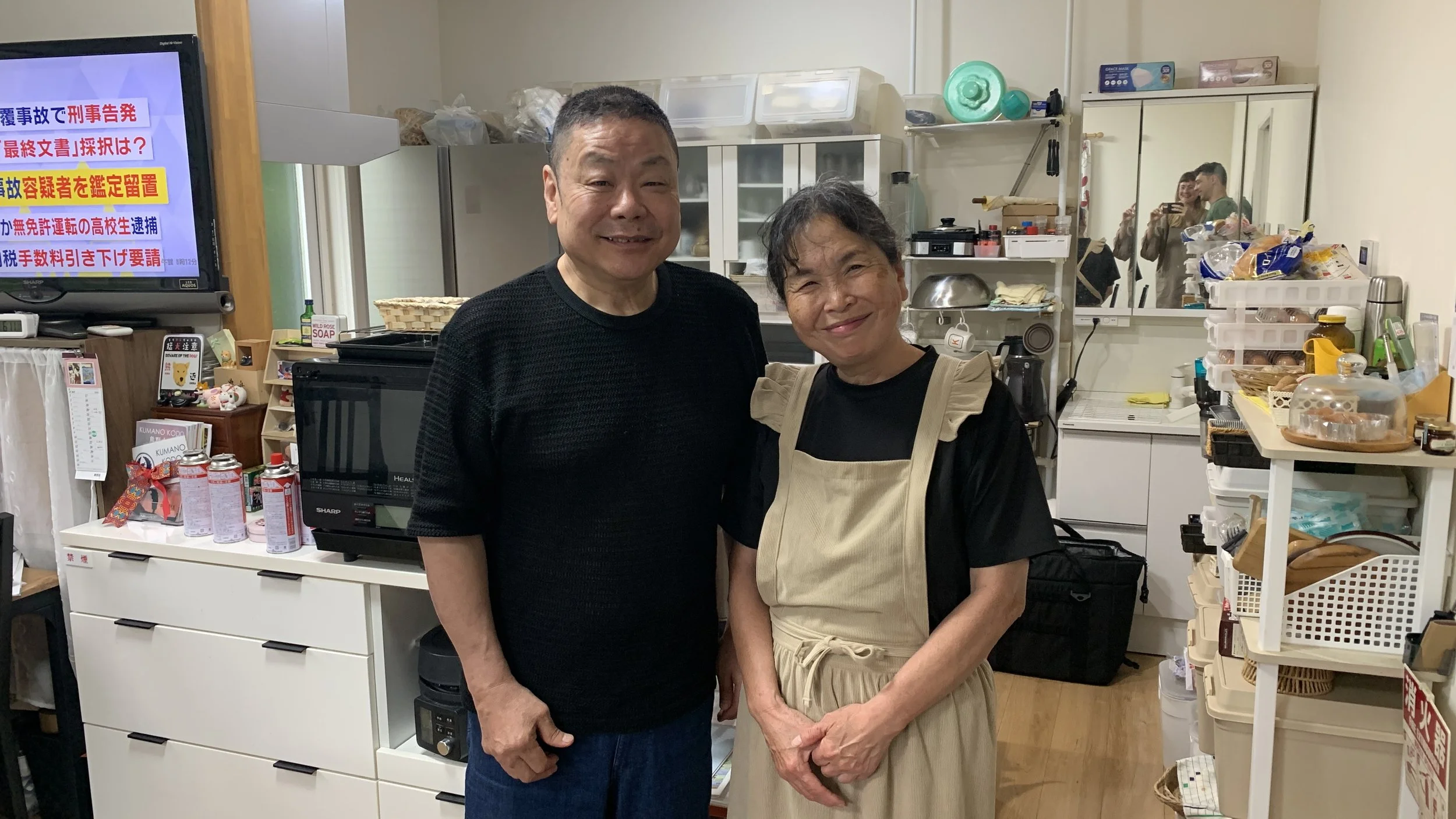
Our hosts were very gracious, cooking a huge meal. Once again I forced my way through a mountain of different animal meats, side eyeing Chris’ fruits and vegetables with no small amount of envy. The kitchen was bright, the television blared with Japanese news. We were riveted by a dramatic story of a bear that made its way into the city and had to be removed, kawaii commercials about cat food, etc.

At one point when I had to get up to use the toilet, our hosts looked alarmed when I stood, so I said “sumimasen, o tearai” meaning basically, “excuse me, bathroom”. They laughed heartily. The older woman who was making most of the food complimented my Japanese and I’ve gotten faster at the “Īe madamadadesu” or, “no, still long, long way to go.” Which I can now top off with “demo jōzu eigo yo” or “but your English is skillful.” Slowly getting there… conversations dead-ending a little less quickly is a win. We purchased some chips from the owner’s adult son who had a small cafe next door, walls lined with his manga collection from floor to ceiling, many of which appeared quite old/loved.

After showers and laundry, I finally published the Tokyo section of the blog. It has been tougher to keep up with journaling with how constantly we stay busy, unlike journaling from a tent on the Appalachian Trail with nothing else to do after sundown. I will say showering each evening has been quite a treat, as is the regular opportunity for laundry. I swear all this meat is giving me the meat sweats and I’m way stinkier than usual.

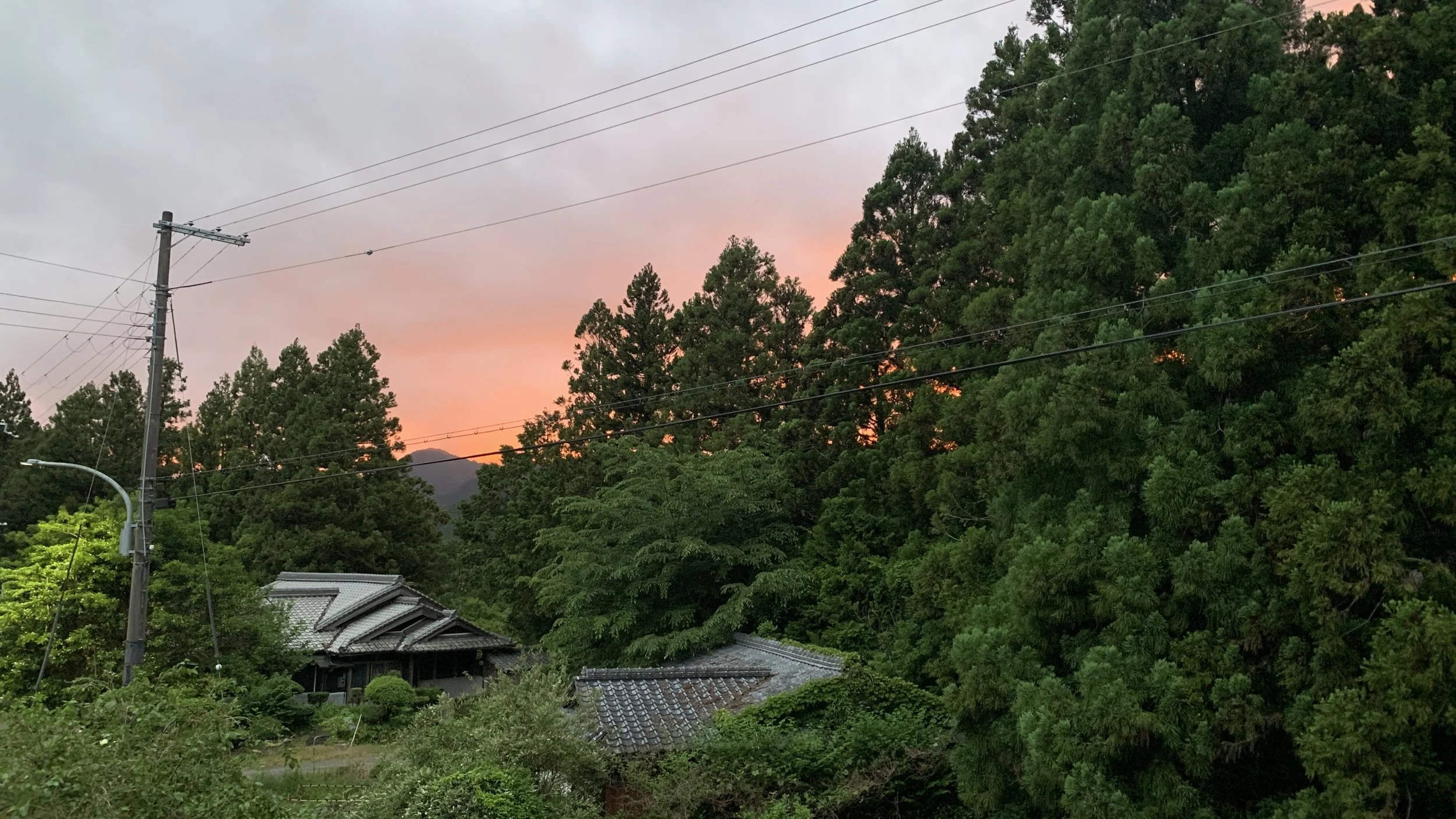
As we fell asleep an owl whose hoot I did not recognize, called from the woods outside our window.
Saturday, May 23

Chikatsuya to Hongu Taisha Grand Shrine • 27km

6am breakfast, another yummy mountain of food! We surreptitiously moved some packable items into our lunchboxes so as to not offend our hosts by leaving items behind. My plate had French fries and a small hot dog… a sweet gesture that we chuckled about a bit later. We have adored everyone we’ve met so far but have found the families that host pilgrims to be ultra charming, perhaps because we are so grateful to be allowed a glimpse of their lives as well.

As we set off into the woods at 7am, in an attempt to tackle our longest hiking day early, the owner leaned out the kitchen window to wave goodbye (and point us in the right direction). We both slept amazingly and felt good about our chances of being able to complete the full distance from Chikatsuya to Kumano Hongu Taisha Grand Shrine, which I had estimated to be about 22km. As an aside, thank goodness Chris can eat fish. Understandably, it’s quite a staple in this peninsula.

Rain began almost immediately, and continued throughout the day, though never too heavy. There were several shrines as well. One had a monkey skull offering at it. One had a very old cherry tree paying tribute to the couple who had planted it after giving birth on the Kumano Kodo and leaving their baby behind, as a means of asking for the baby’s protection.

Yet another recognized the remains of a dying settlement in which the Japanese government eventually relocated the remaining families. The descendants of these families still return to the site for specific festival days. Later, a landslide wiped out a great swath of these community ruins, leaving a bright patch in the middle of the woods.

On our second of three big climbs of the day we met a software developer named Matthew who had just moved to the Bay Area. He was pleasant to talk to and we passed some time discussing Japanese language when it emerged that he was reasonably proficient after taking 2 or 3 Japanese classes at ACC (Austin Community College) before moving to San Francisco.

We made respectable time and stopped for lunch at a covered shelter where we encountered Amy and Whitney, Matthew, Bernice and Lisa, and an Austrian couple we hadn’t met yet. A bit too wet and focused to eat a big lunch, we ate the vegetables and left the giant mystery seaweed/rice ball for later, setting back out into the wind and rain with Matthew, Amy and Whitney. We all leapfrogged one another for the next few hours and when Amy and Whitney missed their bus at Hashinman Oji shrine and decided to keep hiking with us to the end (Hongu Taisha) we all cheered. It was like a little tramily (trail family) had formed, and made the final 6k push go by much more easily.

Not having my trail legs yet, this 26k (roughly 17 mile) day really took it out of me and the last four miles were a bit of a grind. At the same time we passed through some of the most awe-inspiring scenery of the walk so far, so we can’t complain.

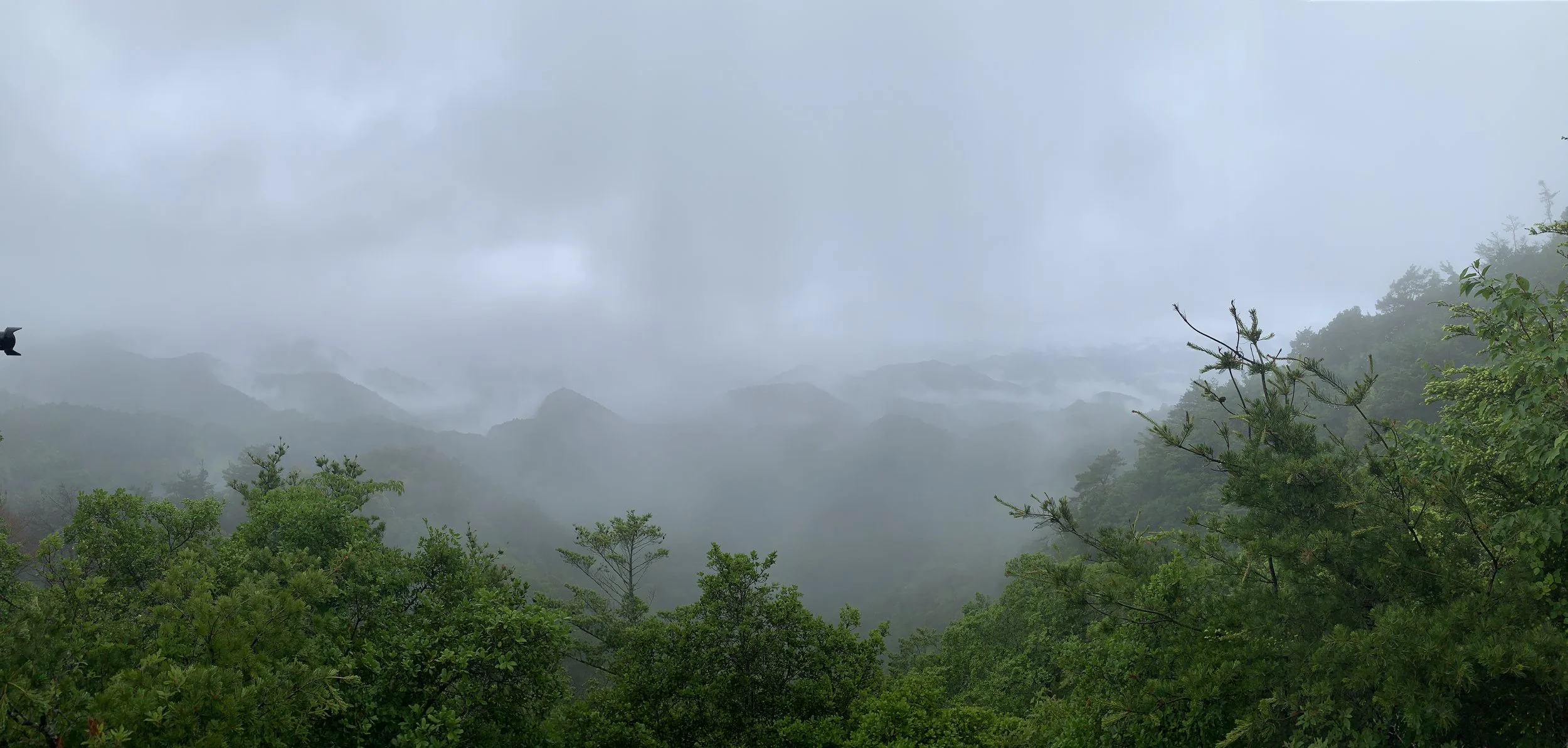
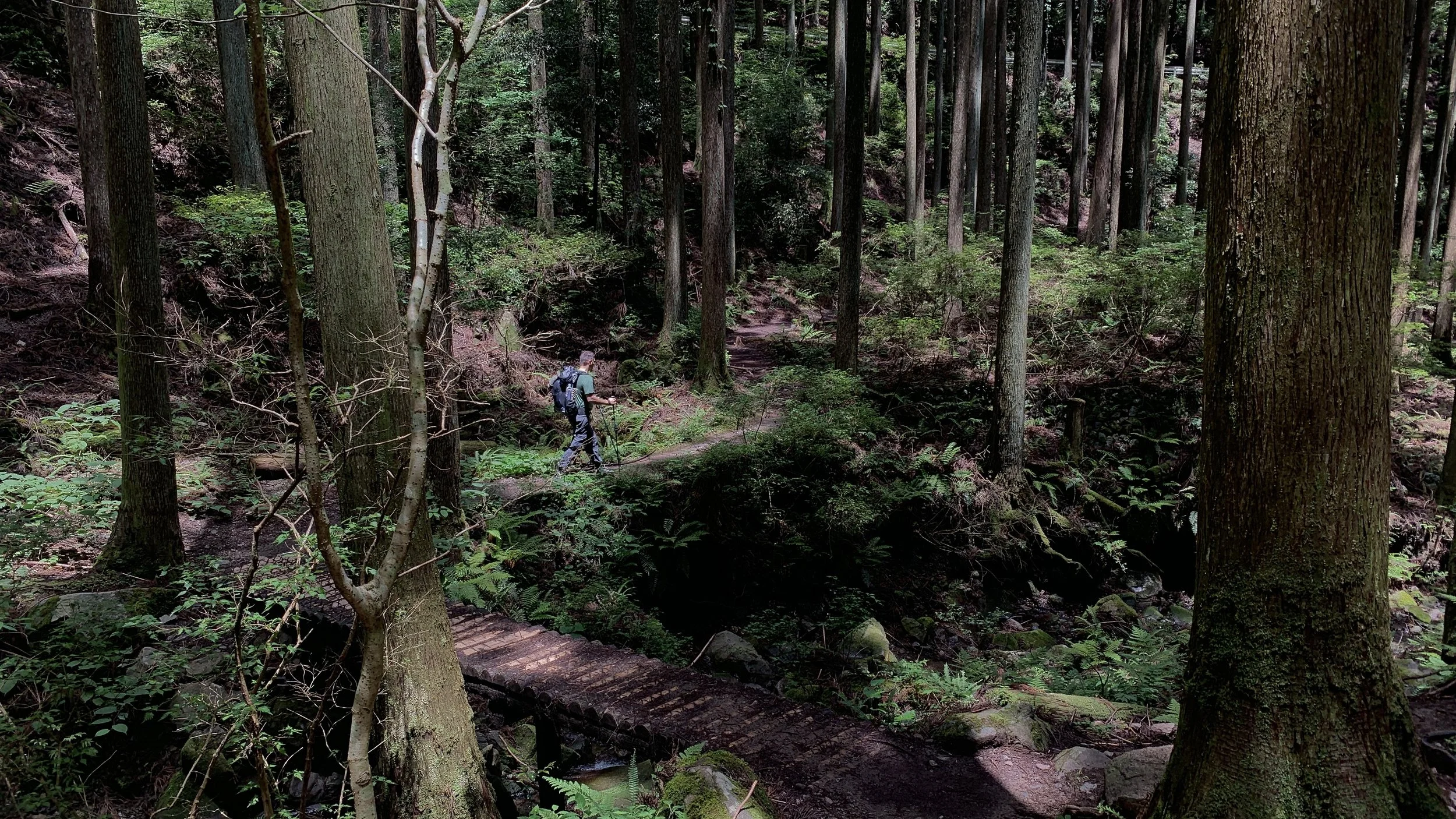
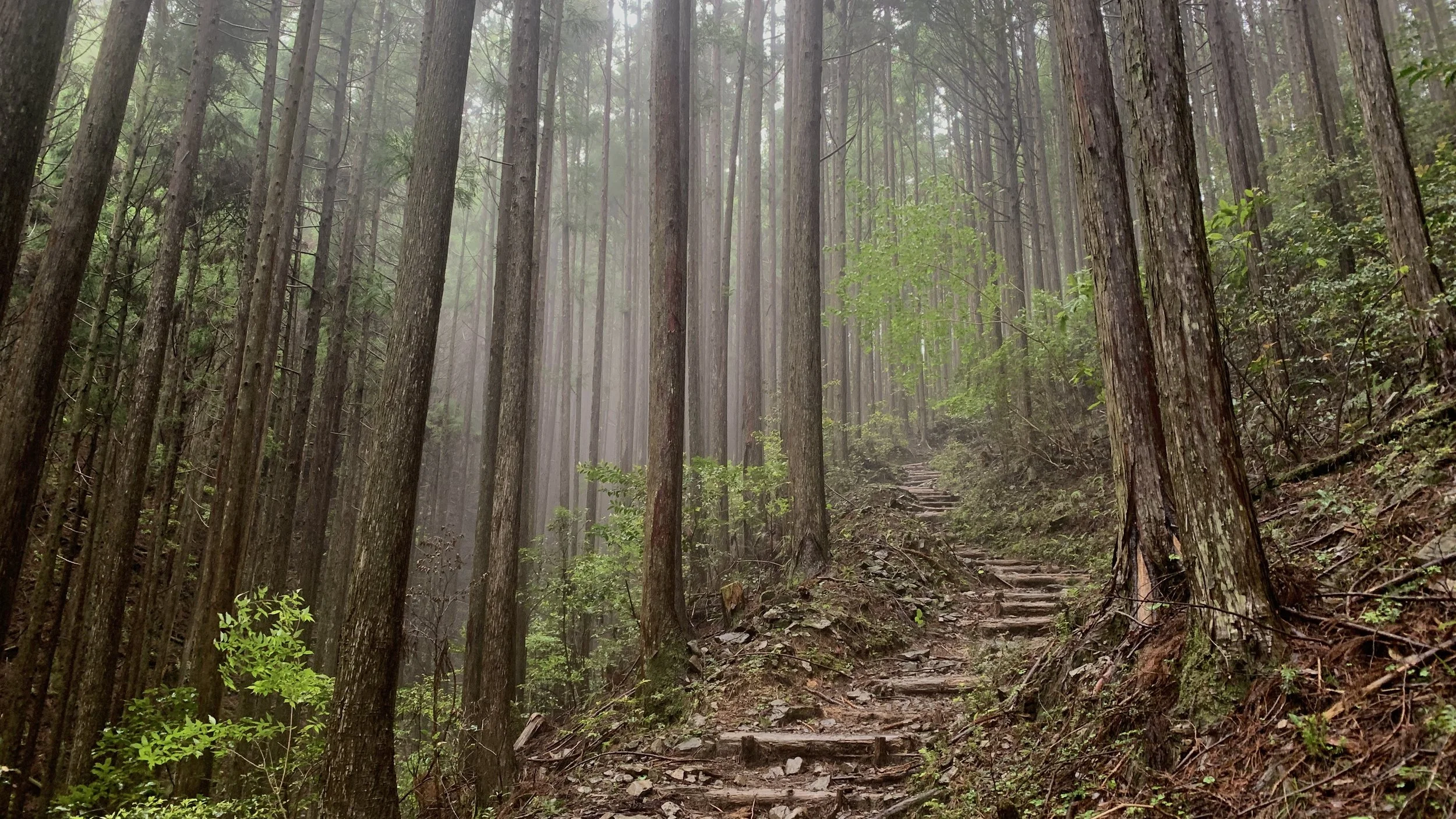
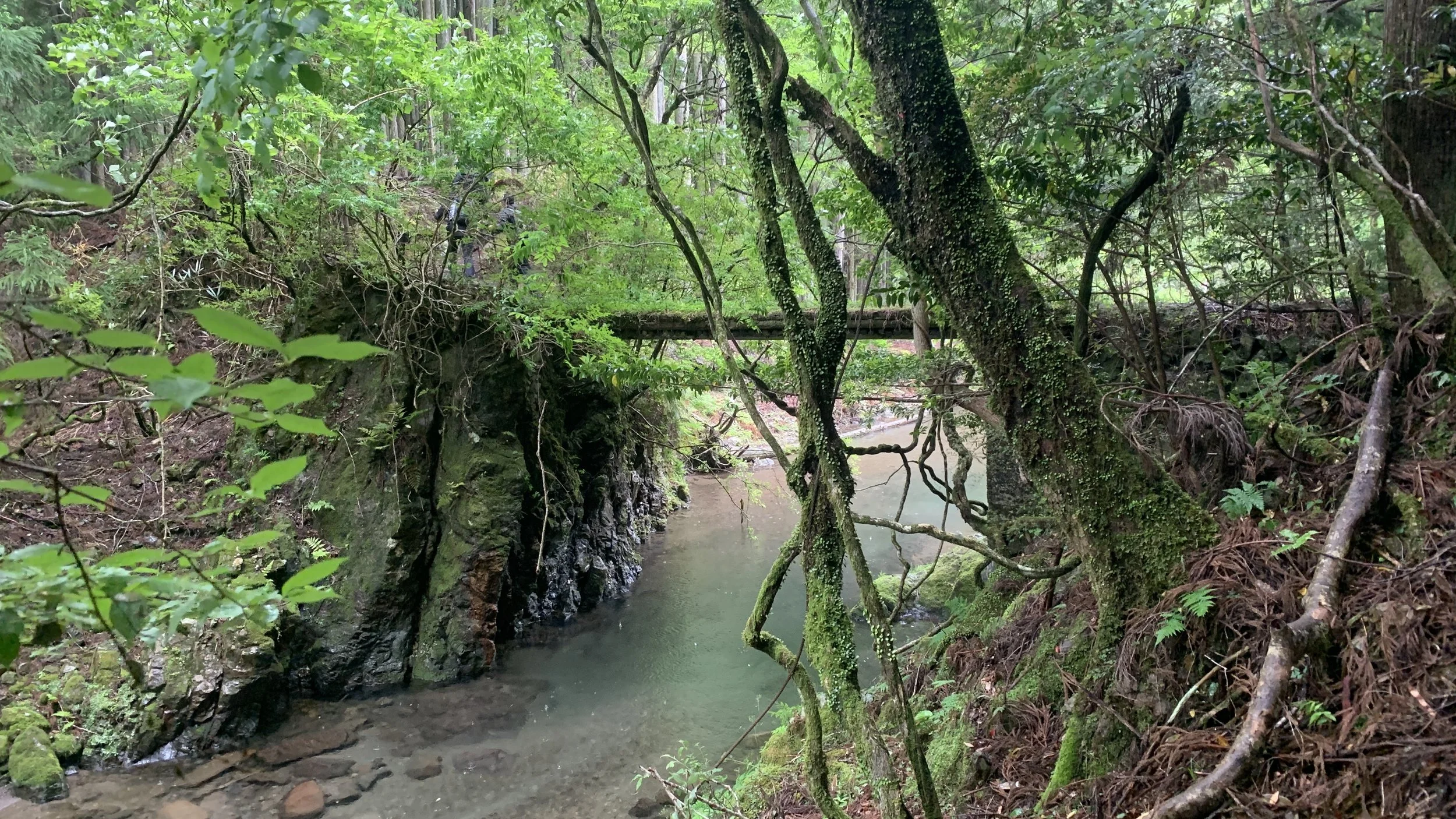
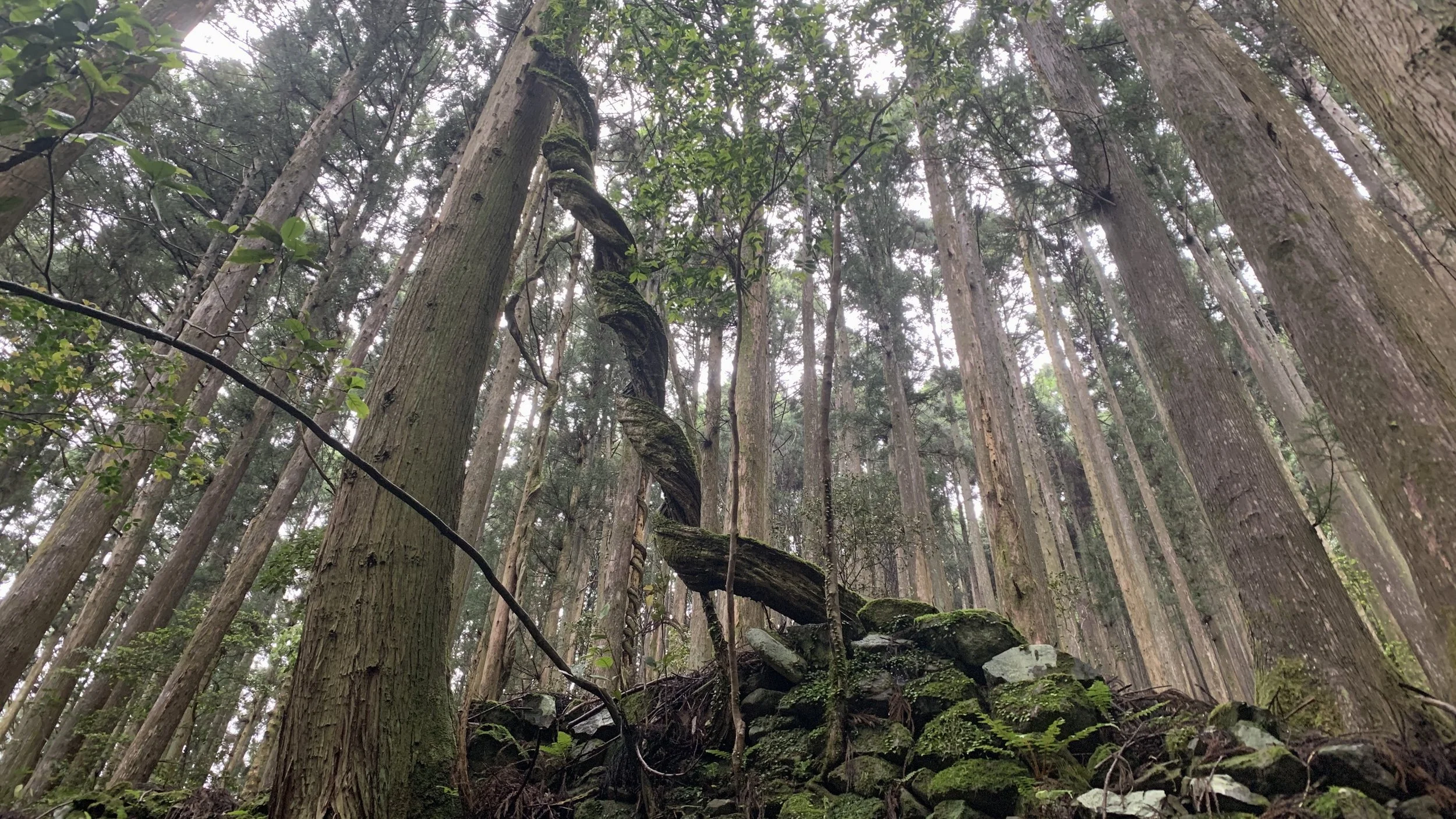
Oji Forest was so lush and with a clear, at times even blue, creek with mini waterfalls and footbridges criss crossing back and forth. The persistent rainfall and clouds settled into the layers of the mountains also increased the intensity of every color, smell, and fullness/magic of the forest.

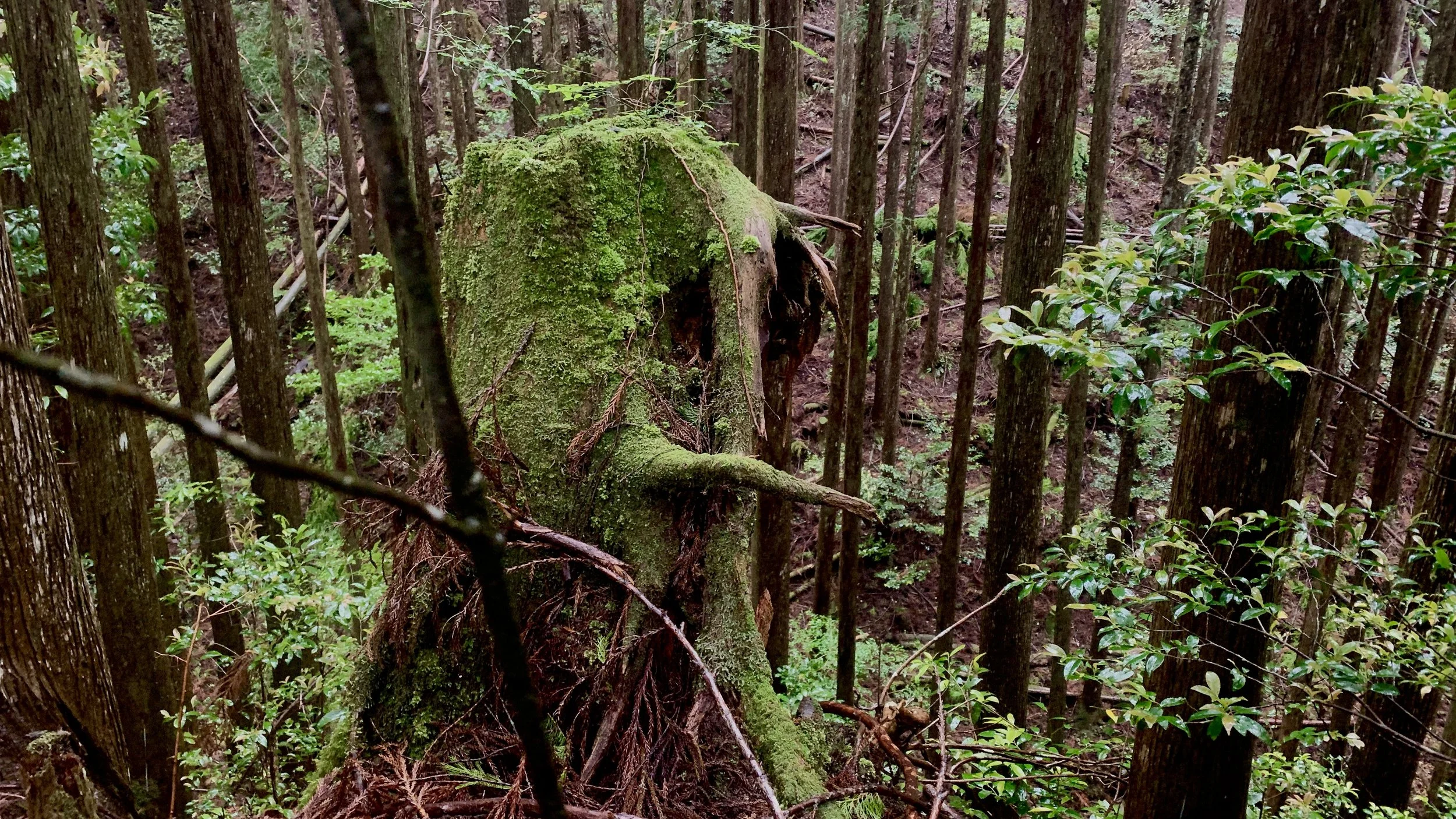
At one point we even encountered a mossy stump that looked nearly identical to the polluted river spirit that comes in need of a medicinal bath in Miyazaki’s Spirited Away:

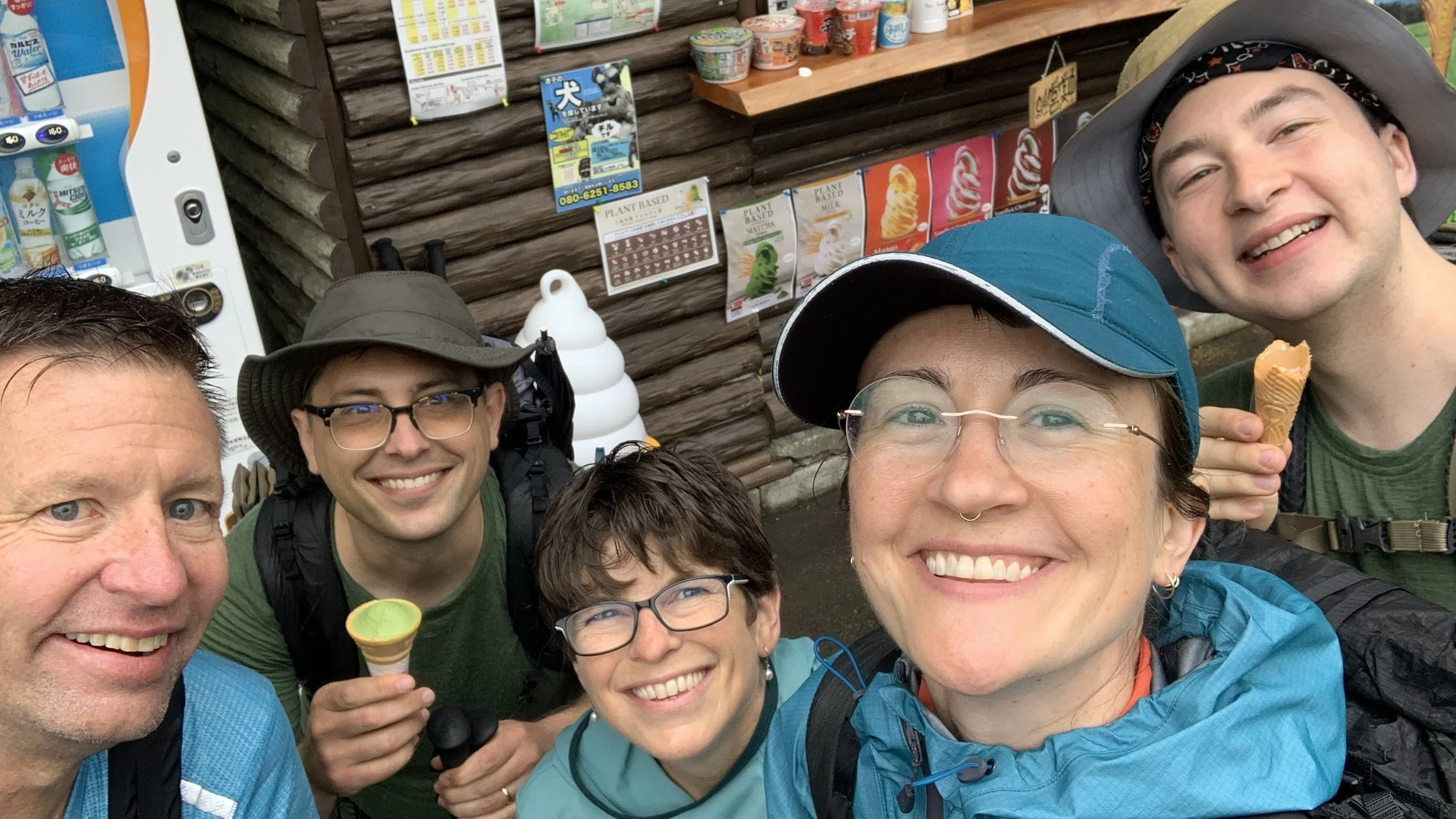
As we neared Hongu Taisha, we passed a Kohechi route trail marker - the route we’ll be doing next when we loop back to Hongu Taisha after completing the full Nakahechi route. Shortly thereafter we came across an icecream stand that had a dairy free matcha icecream cone so we all stopped for a much needed sugar boost for the final push to the temple.

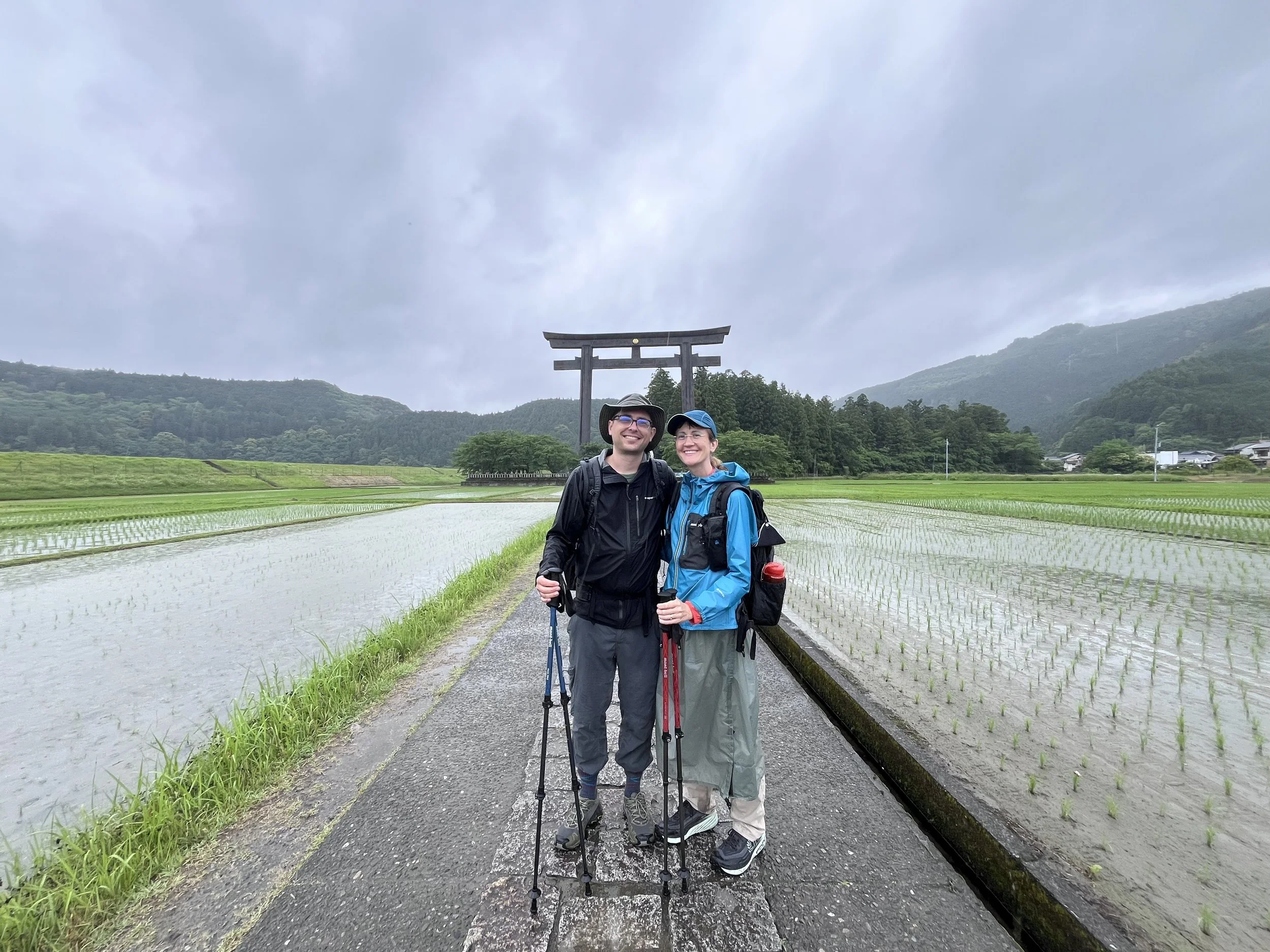
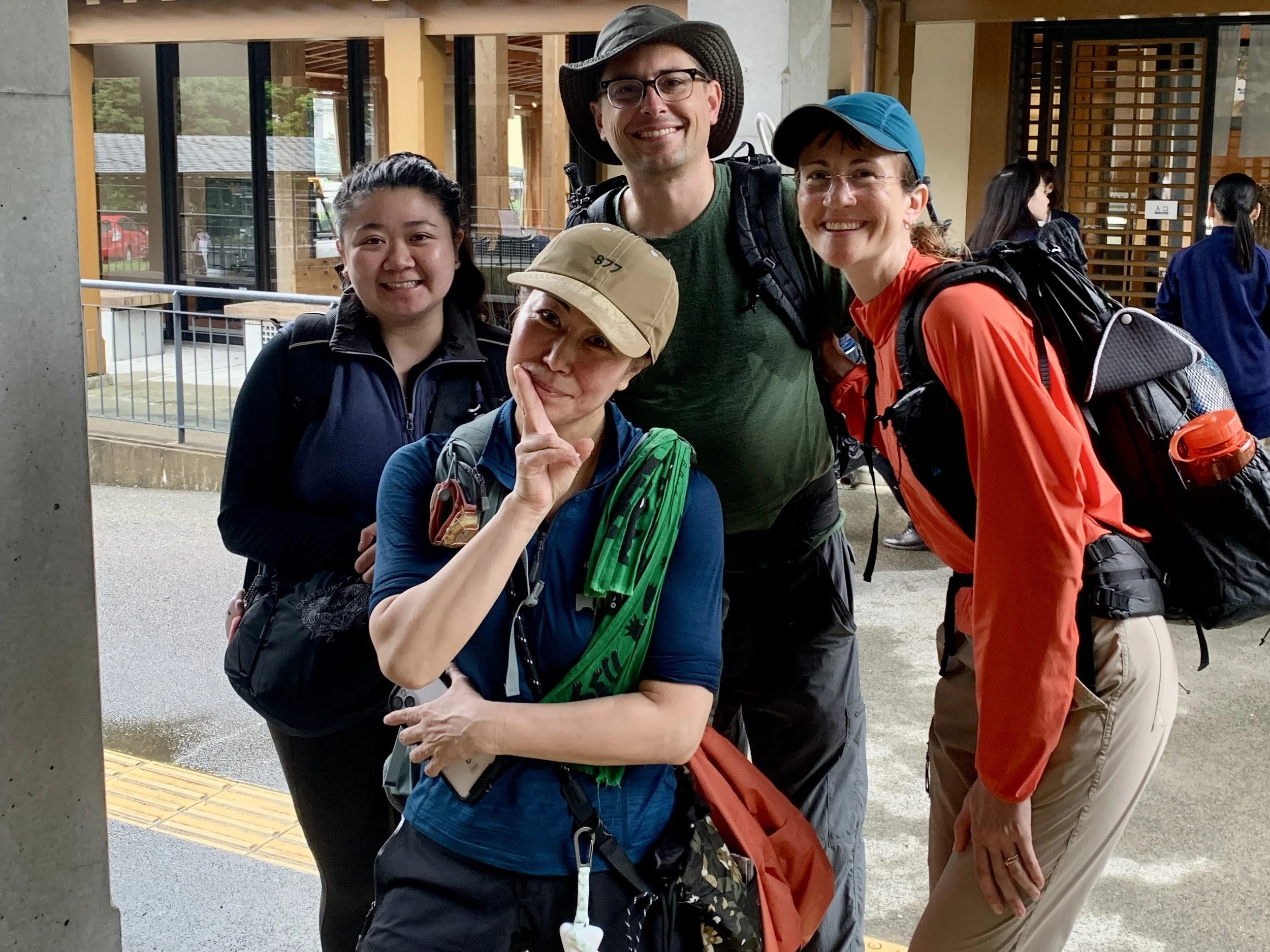
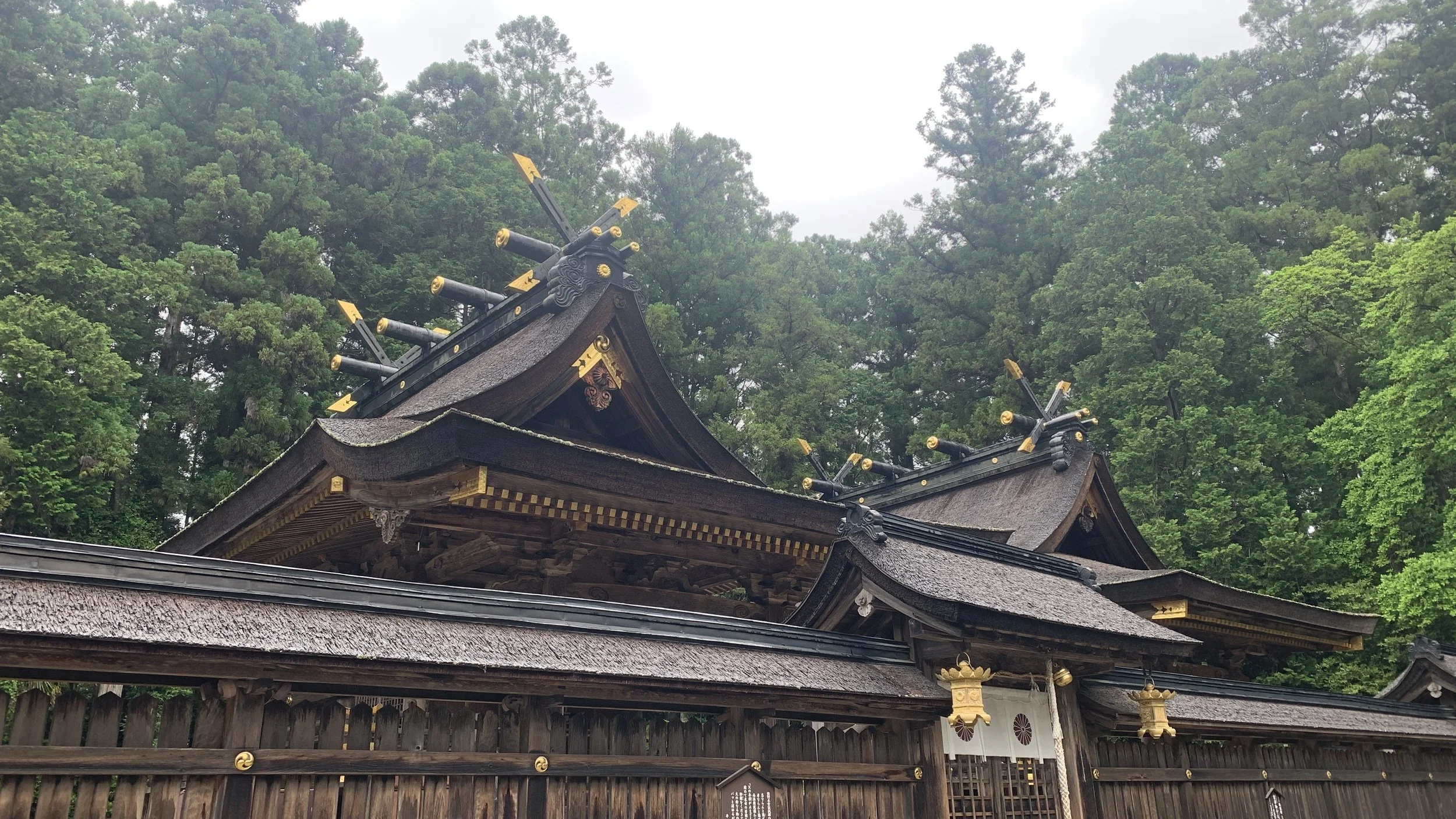
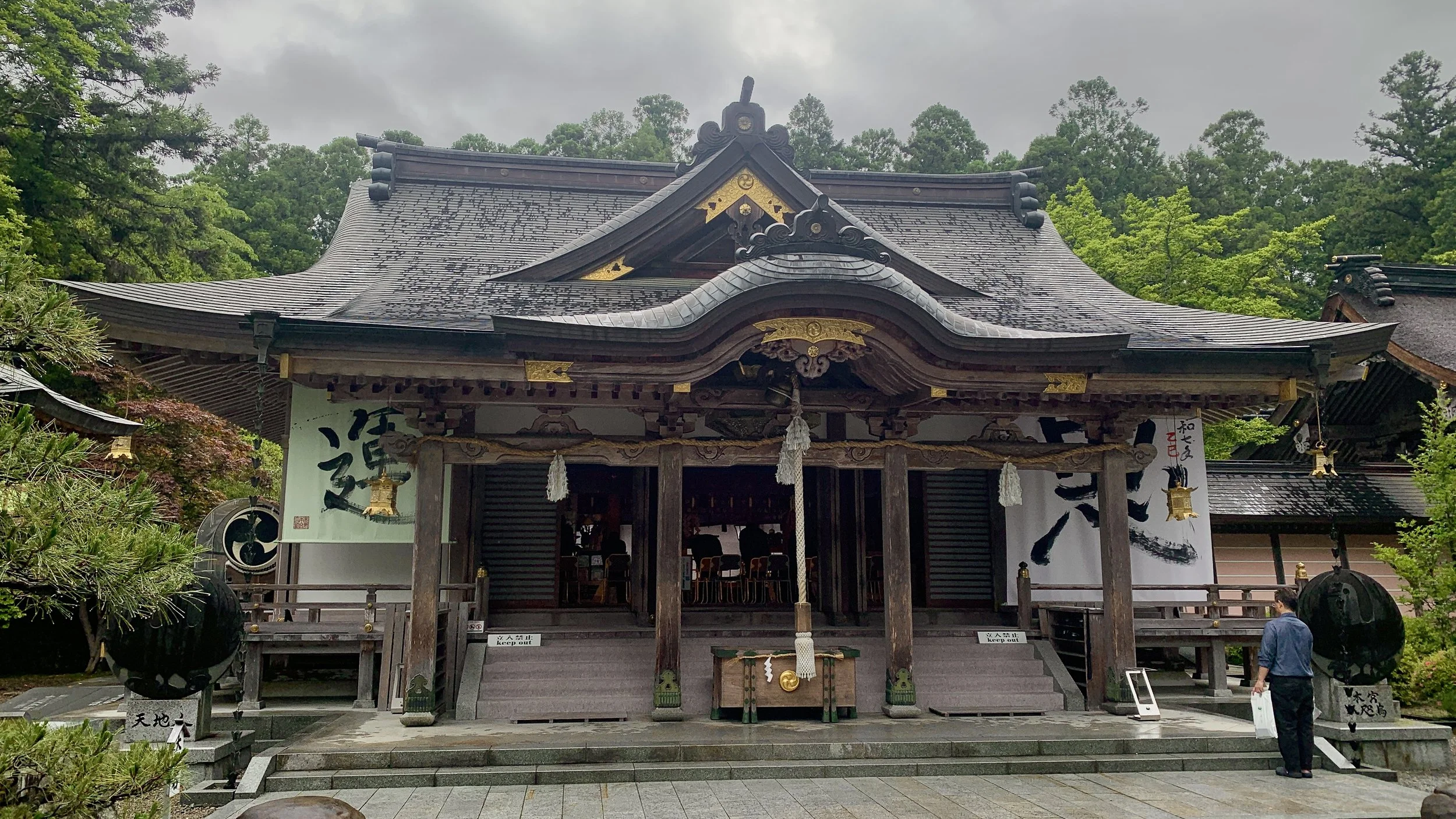
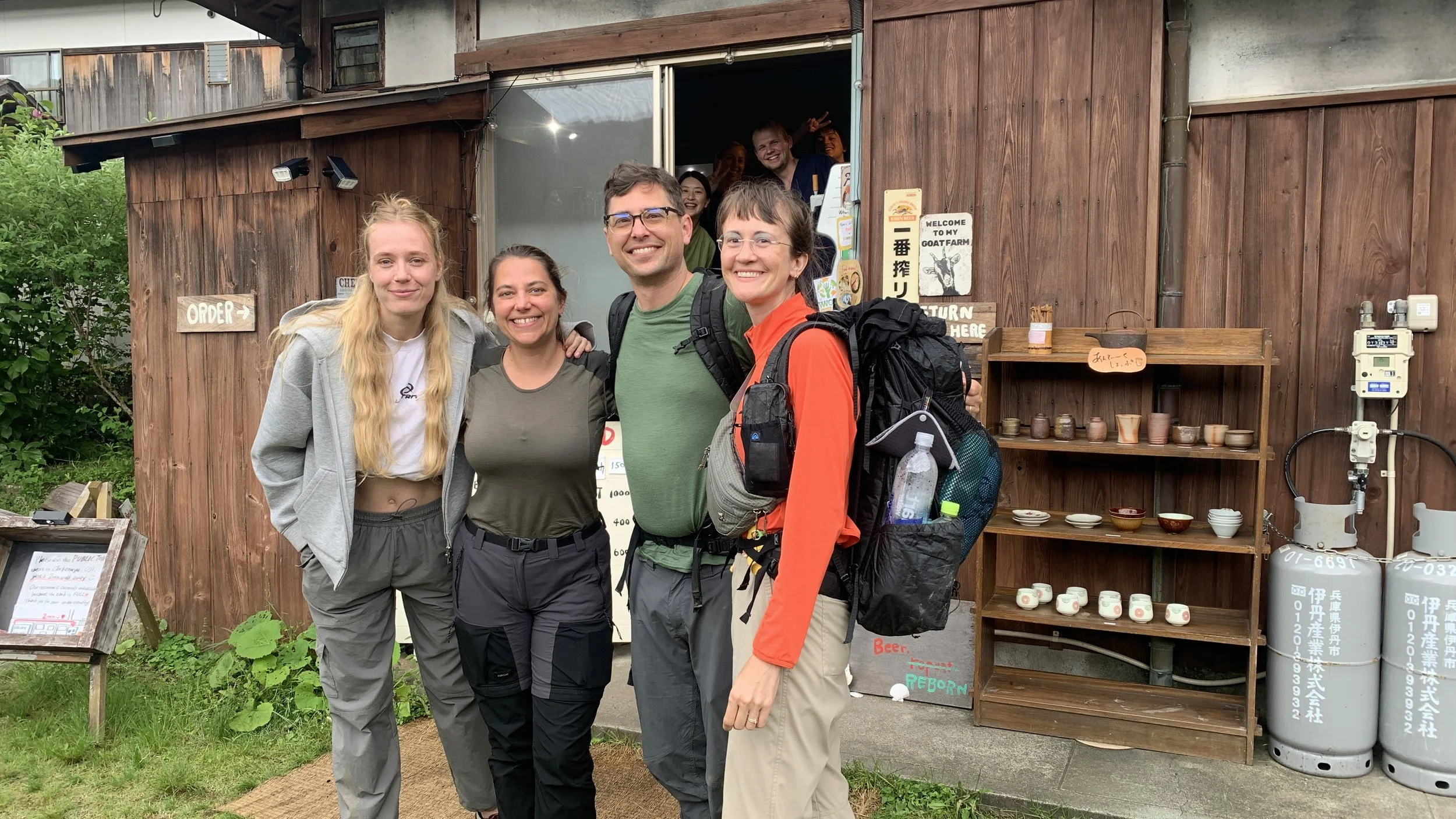
At Hongu Taisha we met a hiker from the Philippines named Arnold, and got a group photo beneath the Tori gate. We were too tired to spend much time appreciating the shrine, so we decided to pay it the proper respect when we come back this way in a few days, opting instead to catch the bus to our onsen (natural hot spring) town of Yunomine, only about a mile away as the crow flies.

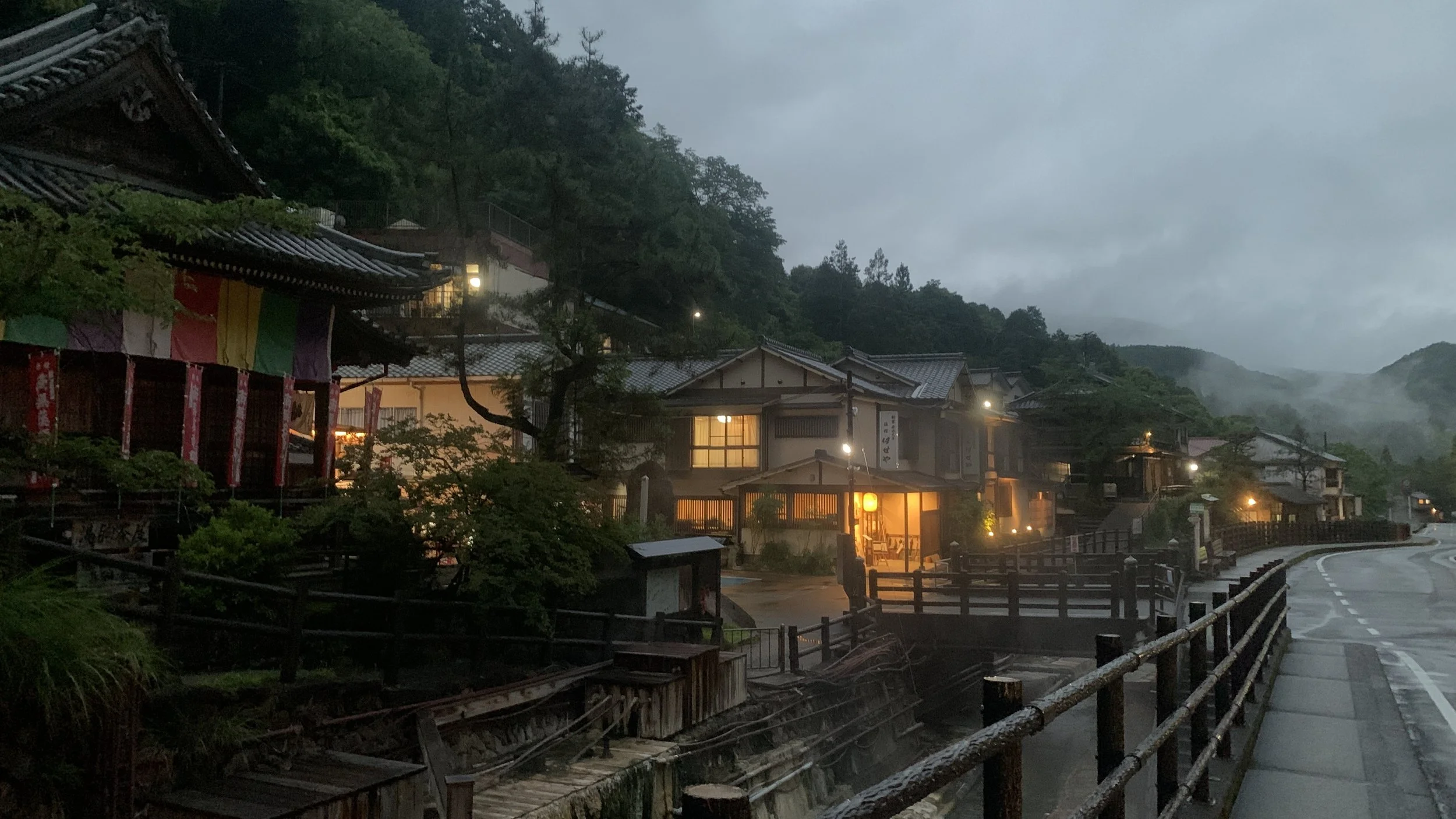
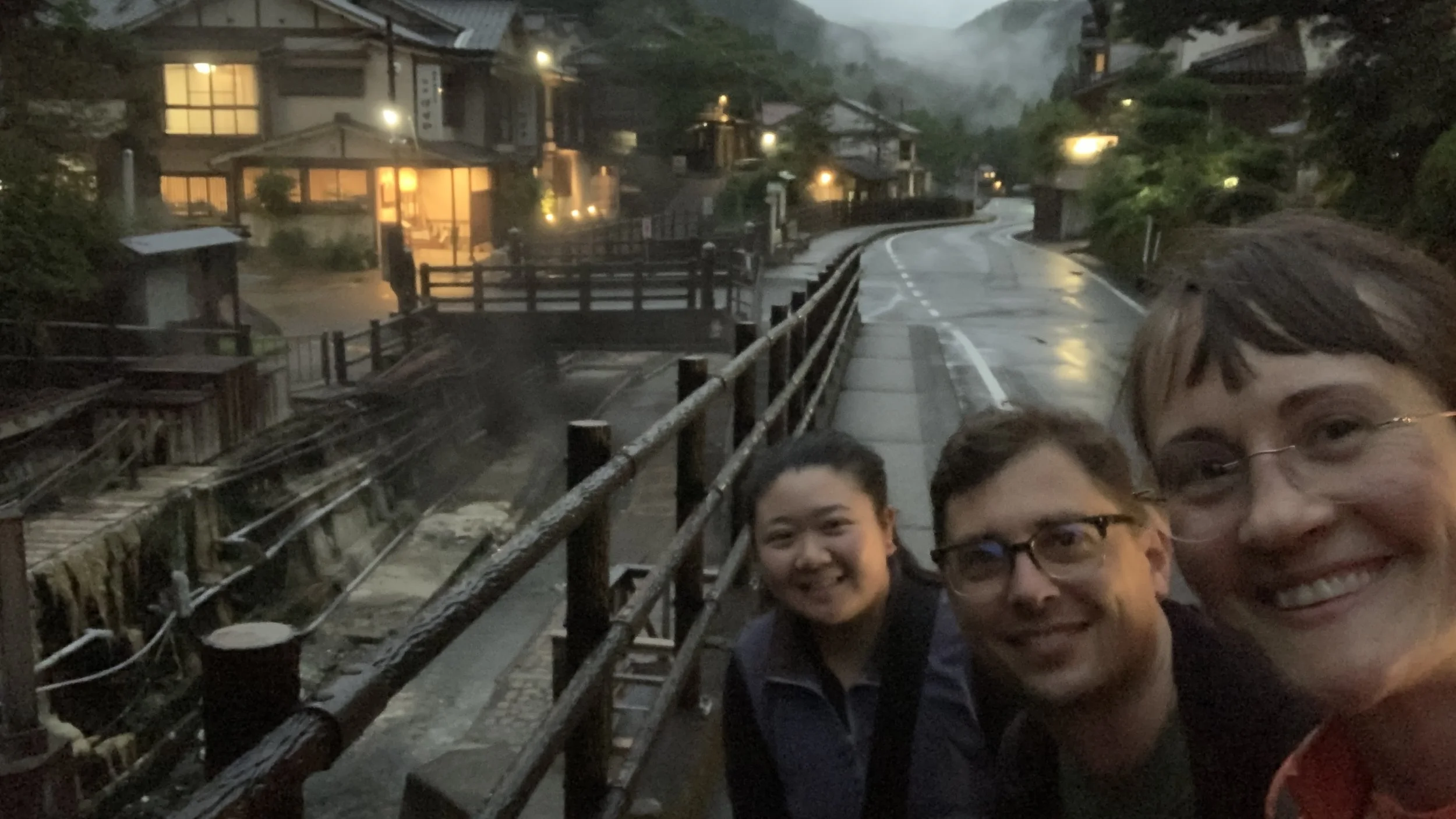
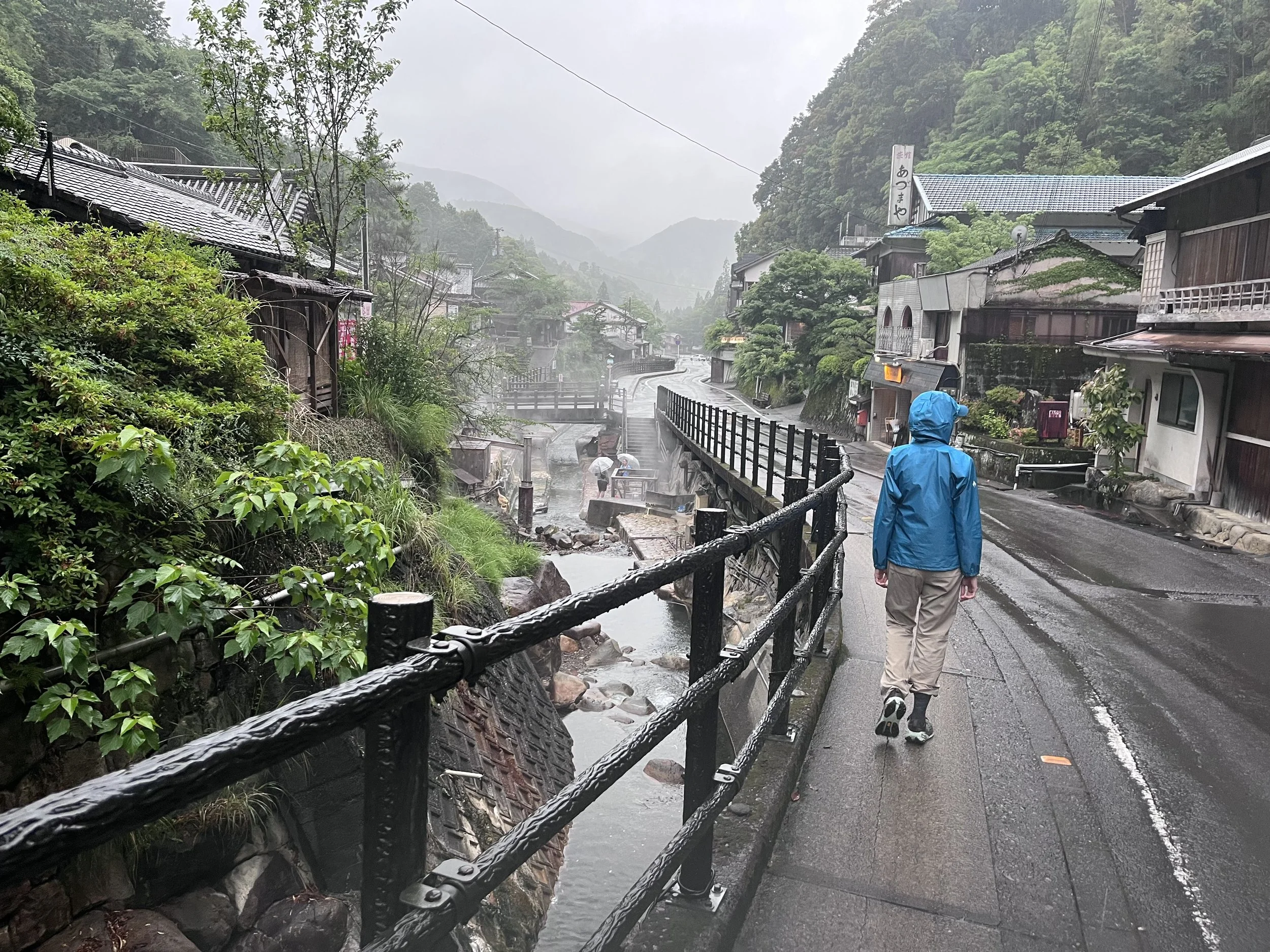
A winding 40 minute bus ride later we parted ways with Amy and Whitney (Matthew and Arnold stayed behind at the shrine) and landed in Yunomine Onsen. A natural hotspring river runs through the town, where there’s a couple small restaurants, a public and private bath house, and a little sectioned off part of the hot spring where anyone can steam/boil their food.

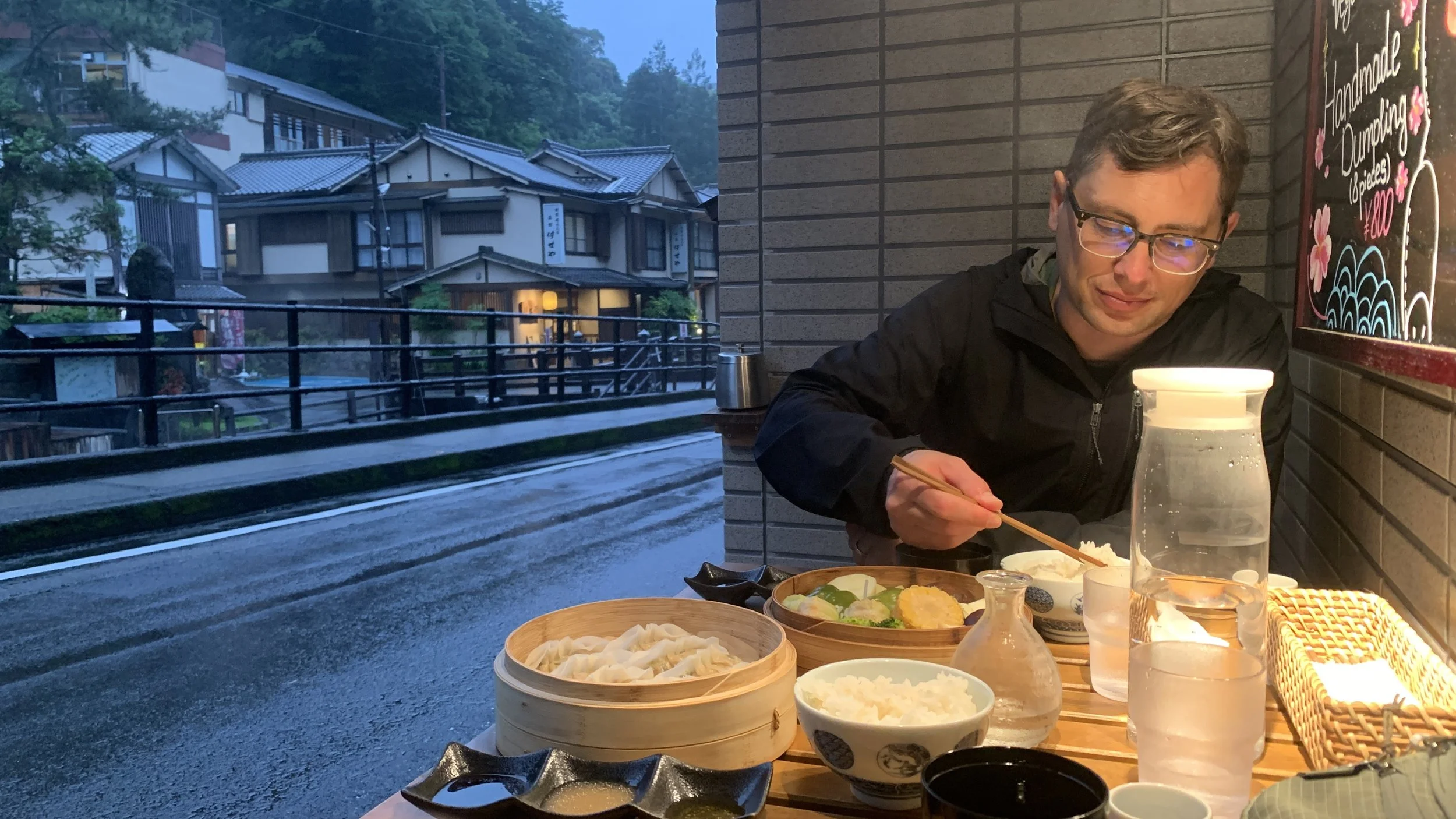
Checked into our hostel, we went straight for dinner where we sat in a little outdoor nook, protected from the rain and with a view of the town center. After getting our fill with Onsen-steamed veggies and gyoza, sake, and miso soup, and saying hello to a tiny shiba-inu looking dog we made our way to the public bathhouse.

It was an hour wait for the private outdoor onsen right on the river so we sat and read up on the Kohechi in a guide map we had acquired at the J Hoppers hostel we’re staying at.

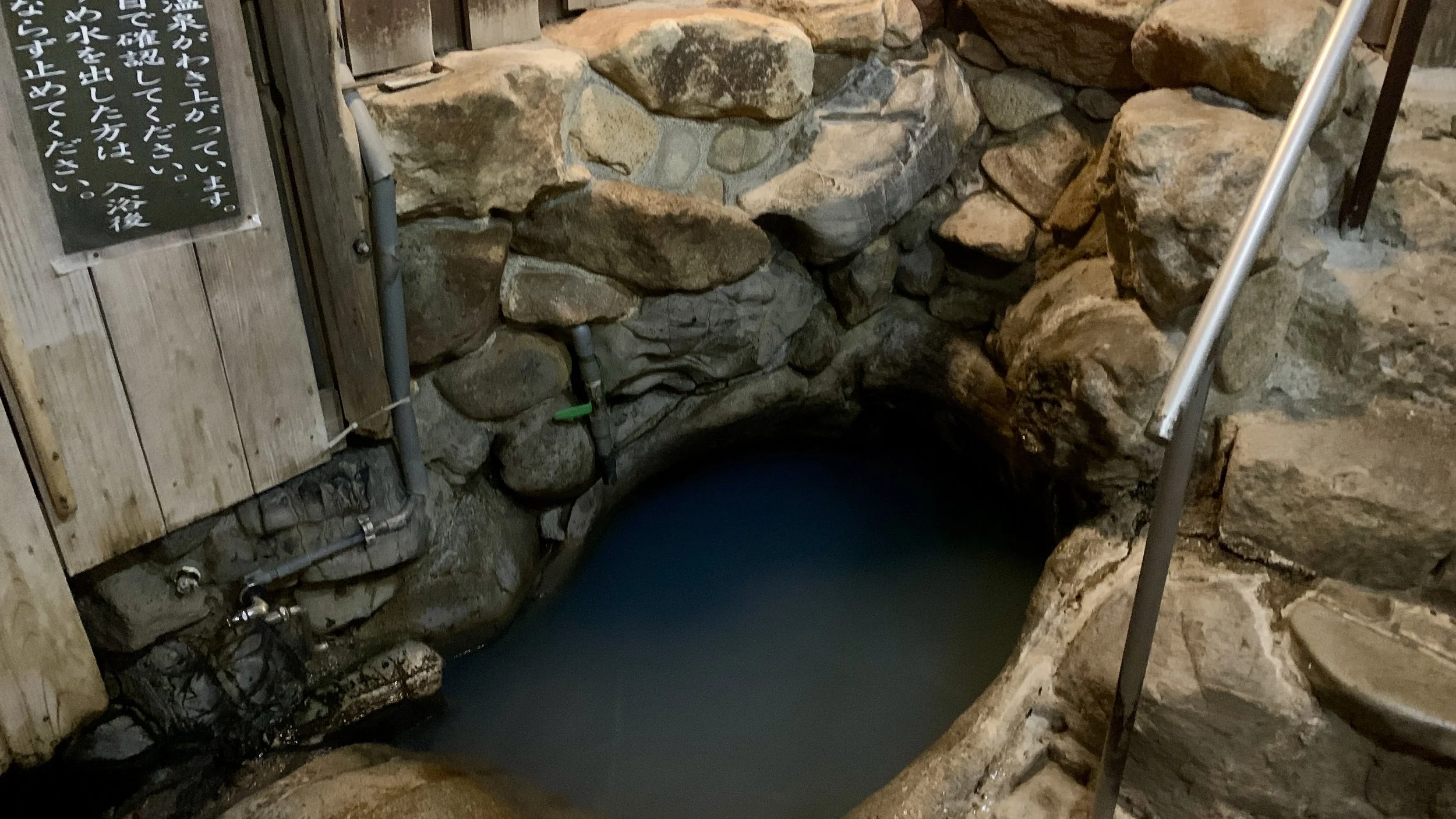
The soak was exquisite. Super hot water in a rock pool, enclosed by a small wooden hut, with the river rushing by a couple feet from the hut. Just what Chris needed to soothe his asthma and what we both needed to help our bodies recover from today’s distance.

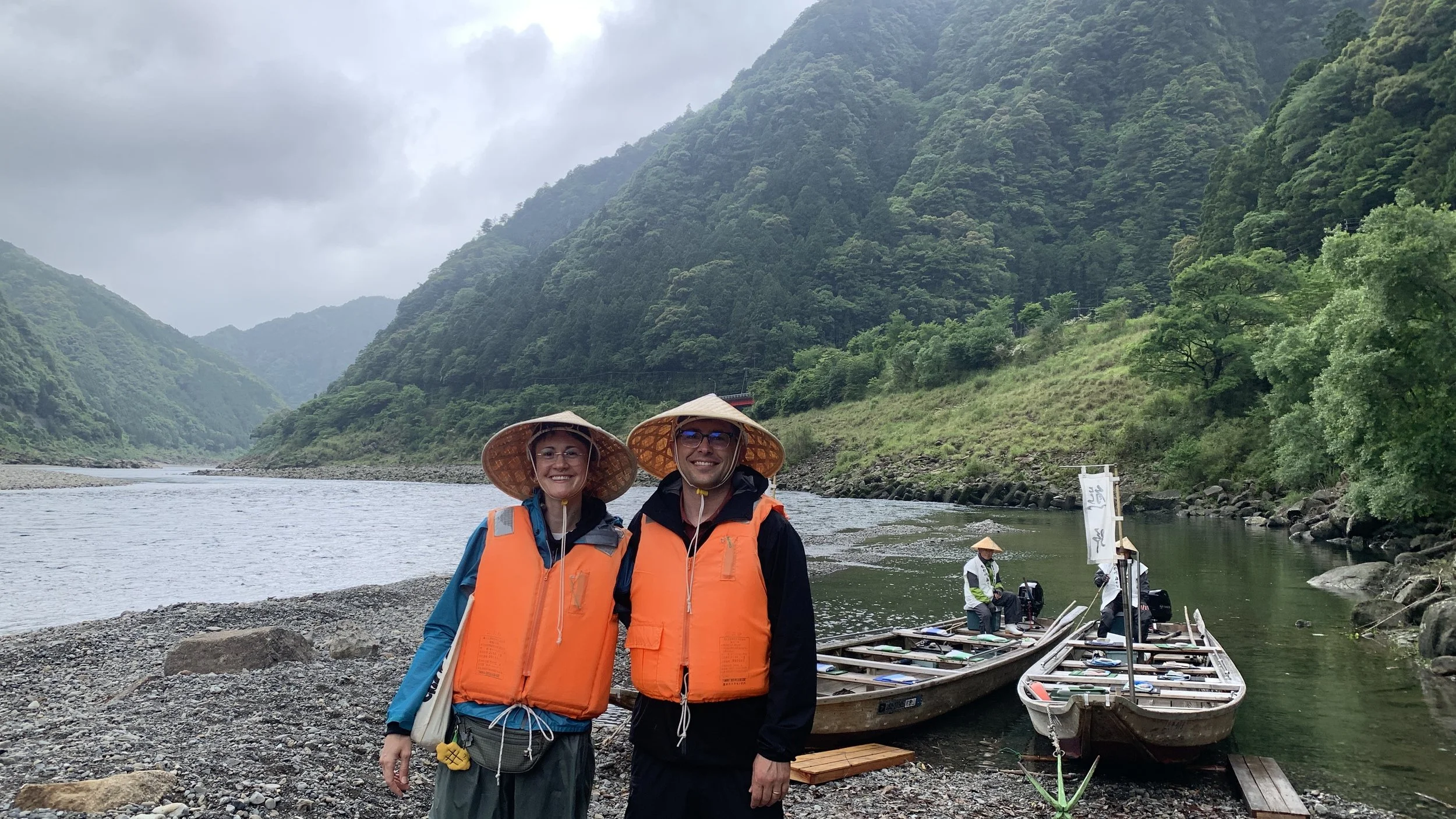
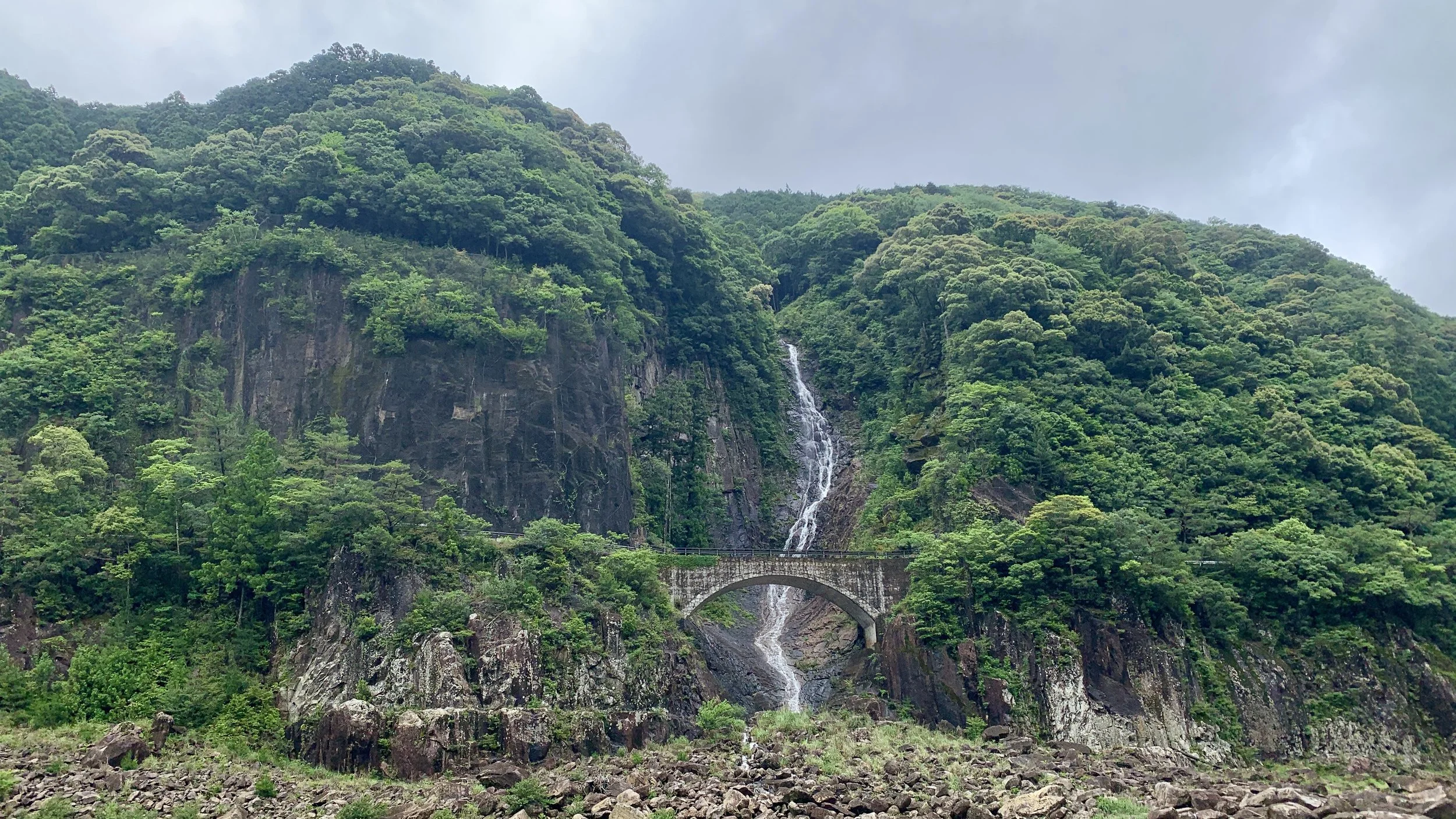
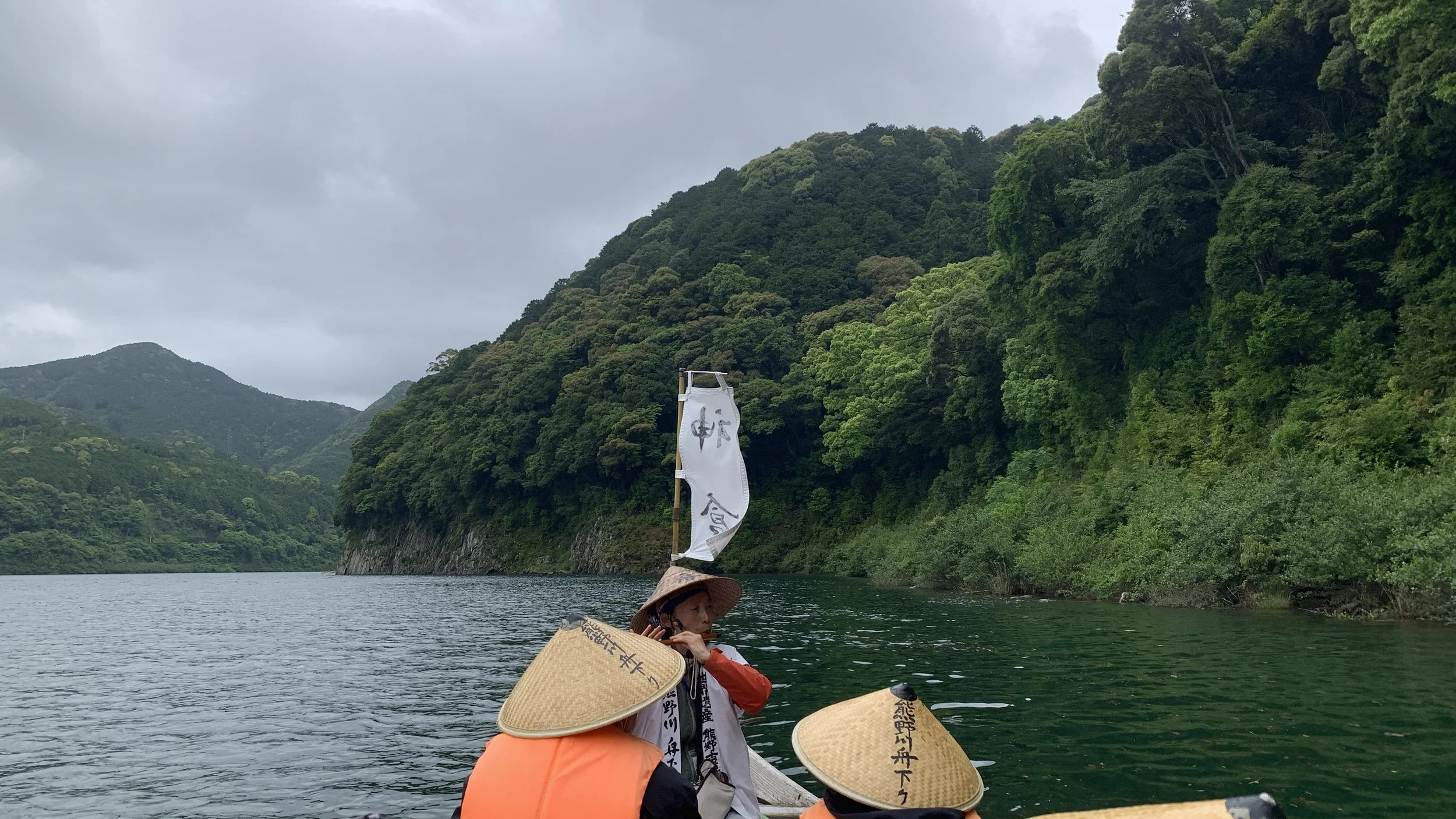
Then outdoor shower in the Hostels own onsen, followed by yet another soak in the onsen. Sleep. Tomorrow begins our next leg of the journey where we’ll take a traditional pilgrimage boat ride down the Kumanogawa River for Shingu, where we will rest for a couple days before looping back up the final stretch of the Nakahechi, between Nachi Taisha grand shrine and Hongu Taisha grand shrine.

Kyoto

Sunday, May 17

This morning we walked the mile from our B&B to downtown Kyoto. Breakfast at Smoothie, etc. I had a spiced smoothie and Chris did a green smoothie. Each came in a bowl topped with nuts, berries, and other goodness. Then we meandered across the street to our first stationary store of the journey, where we stocked up on small souvenirs and useful items.

After the stationary store we wandered our way toward a traditional matcha shop, ducking in and out of small shops along the way.

One fun thing about the public restrooms here is that when you sit on the toilet, nature sounds come on to mask your own natural sounds.

One notable stop was the 7-11 where we were relieved to get a tube of bug repellant (I’ve noted several stray mosquitos), replacement batteries for our air-tags that *of course* started chirping in the echoey silence of the National Museum of Tokyo, and a giant bottle of water.

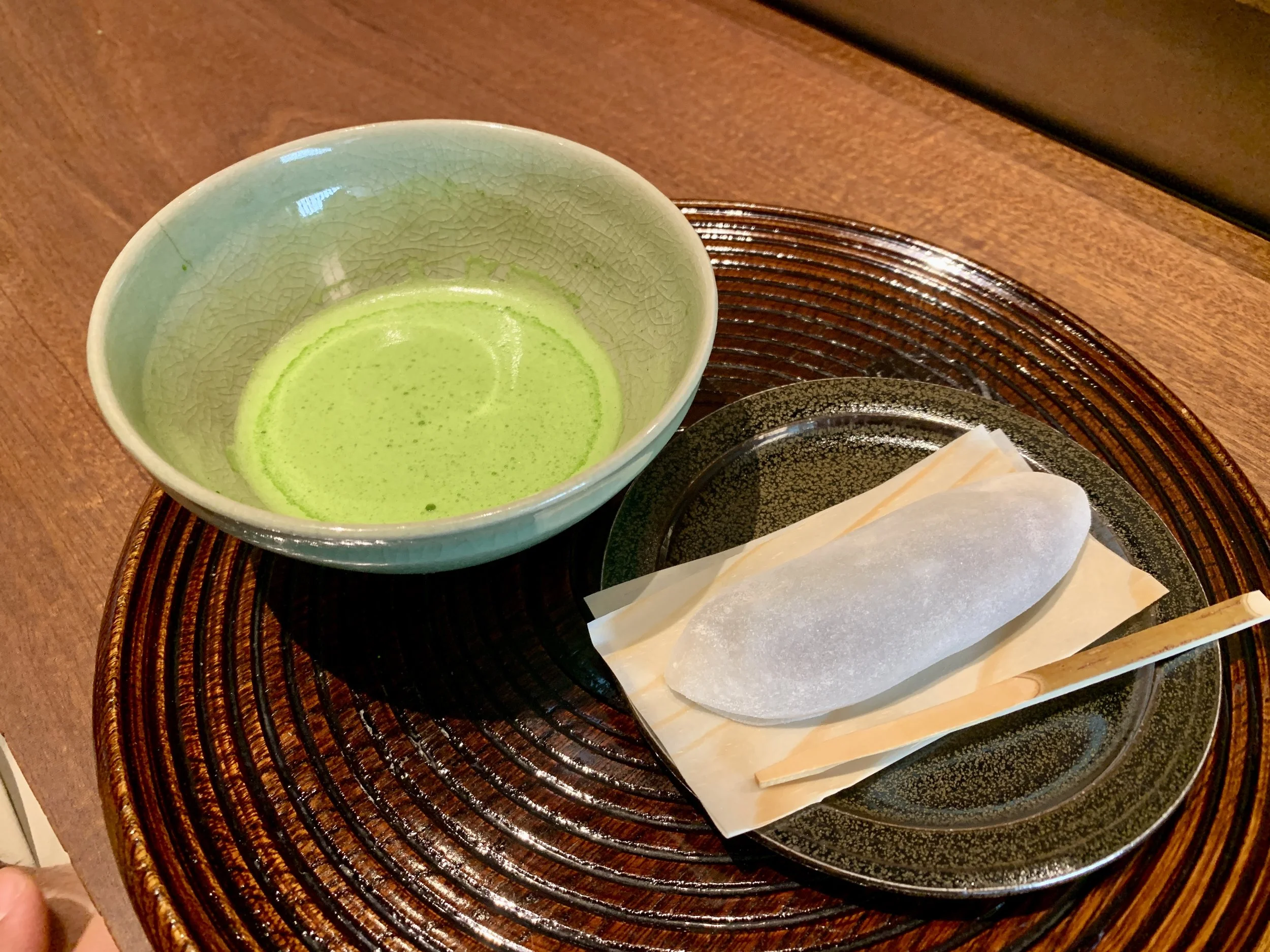
At Ippodo Tea, we each ordered a matcha drink and drank them in the lovely tea house, admiring all the fine architectural details like the rice paper softening the rays coming through the sun roof, the wooden beams that are polished smooth but still maintain their natural forms and knots.

This morning I learned how to say “how do you say it in Japanese” (nihondenantoimasuka) which has been helpful for filling in a pause when I can’t come up with the right word for something. Chris was delighted by his matcha. He chose one explicitly marked as ‘not for beginners’ which had a decently pungent flavor. He also got a long droopy mochi. I just got a tried and true matcha latte and it was delicious.

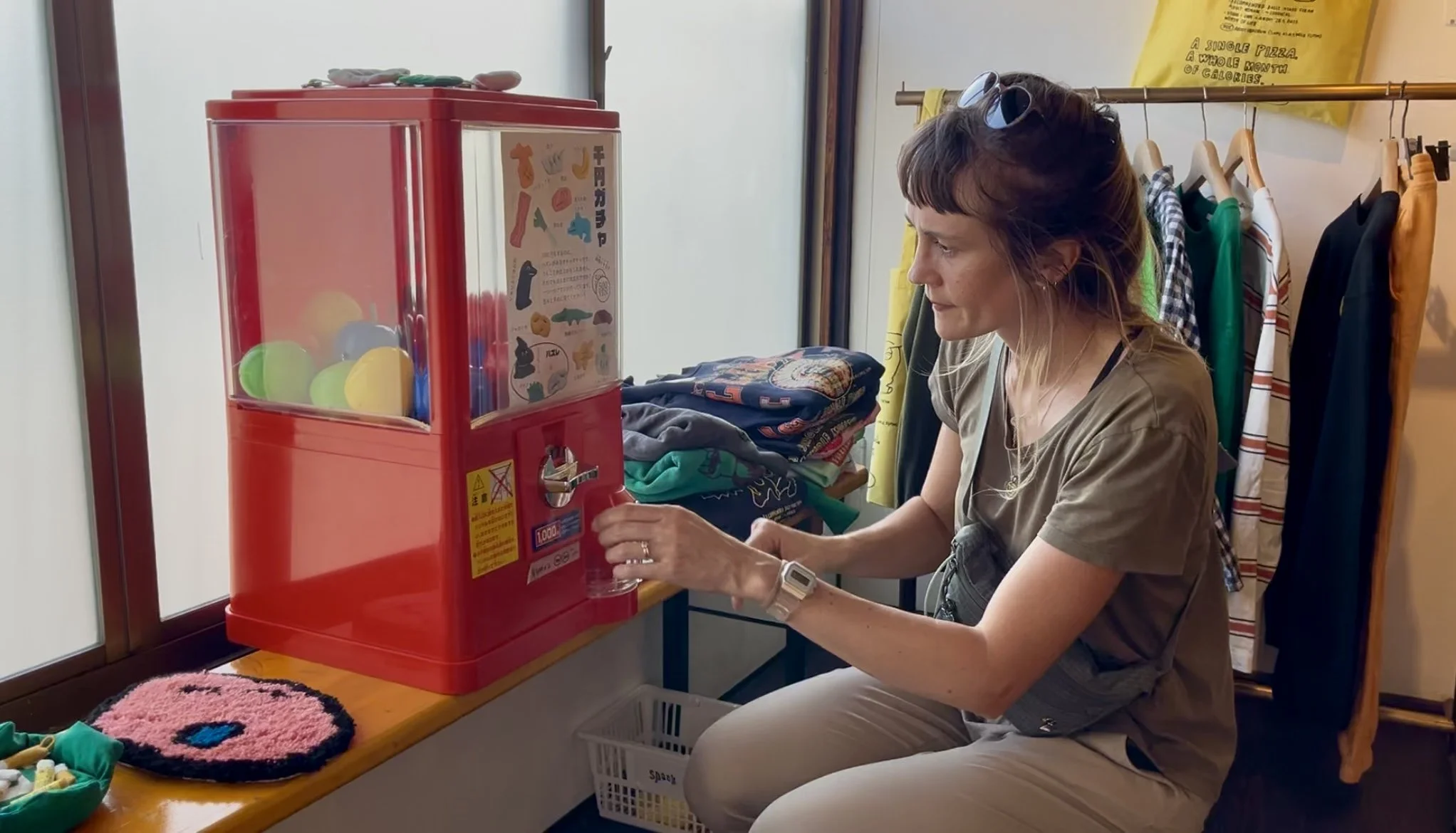
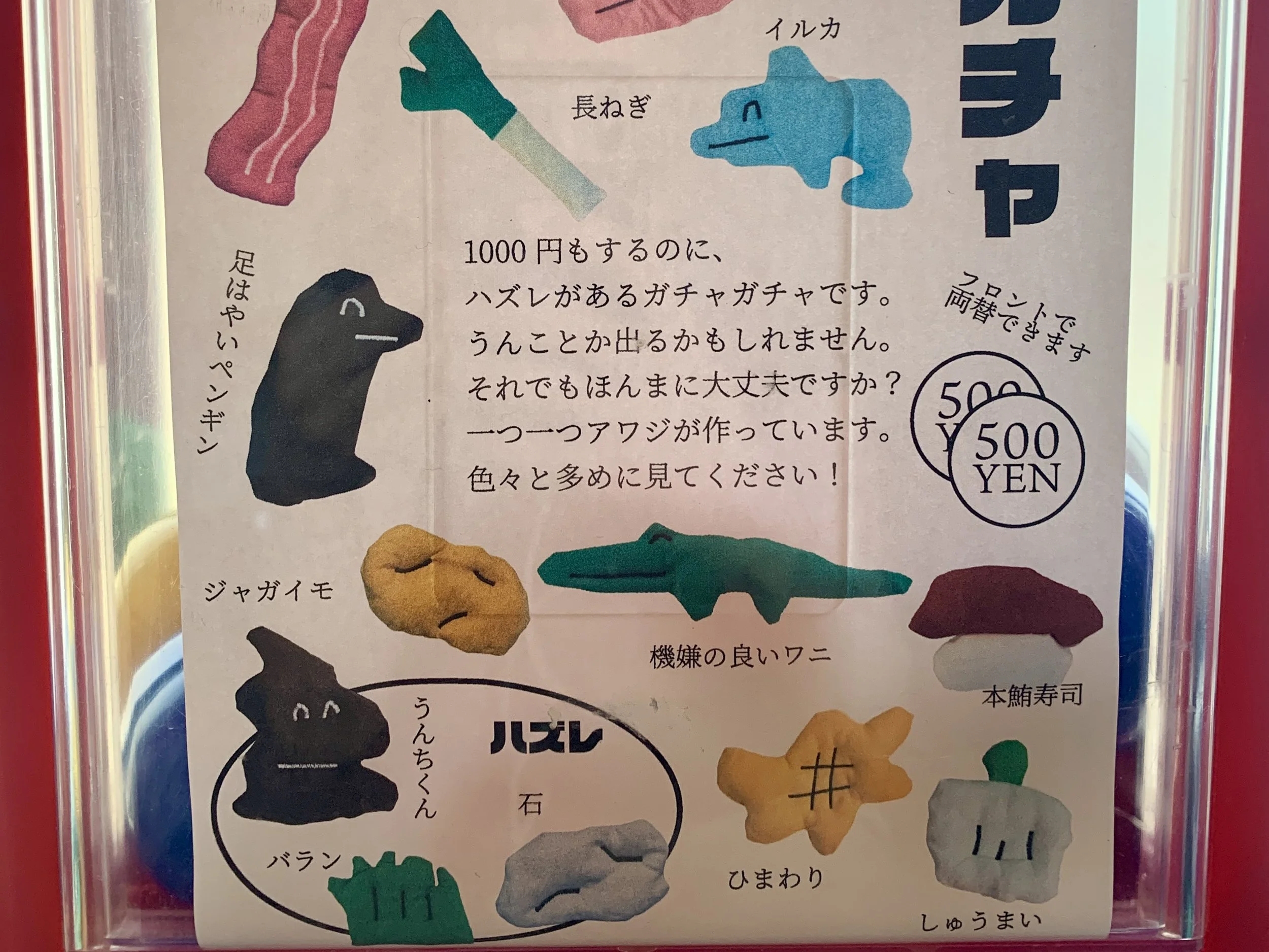
After Ippodo we walked back toward Azukiya, and a woman waved us into her shop with a small art gallery upstairs. It was a delightful surprise to find a handmade fiber and plushy art exhibit, including posters that would animate if you scanned the QR code and… a handmade plushy keychain vending machine!!

I ended up with a sunflower, which I thought was hashbrowns at first. Some of the other options included a stone, a poop, an alligator, and more. We regrettably never made it back during open hours to try Chris’ luck, although we liked to imagine he would have ended up with a stone.

https://awaji.work

Back at Azukiya, Chris poured way too much detergent concentrate into our laundry and had to call staff to advise, fearing the worst. However, it turned out to be a “Wazawai tenjite fuku to nasu” or “a disaster turned into a blessing” when Chieko showed up and said it was definitely fine (daijobudesuyo). She instead got into a conversation with Chris about a nearby temple within the Soto zen tradition that he was hoping to visit, and insisted on calling them up to see if it would be alright if we come by. Chris is over the moon about it.

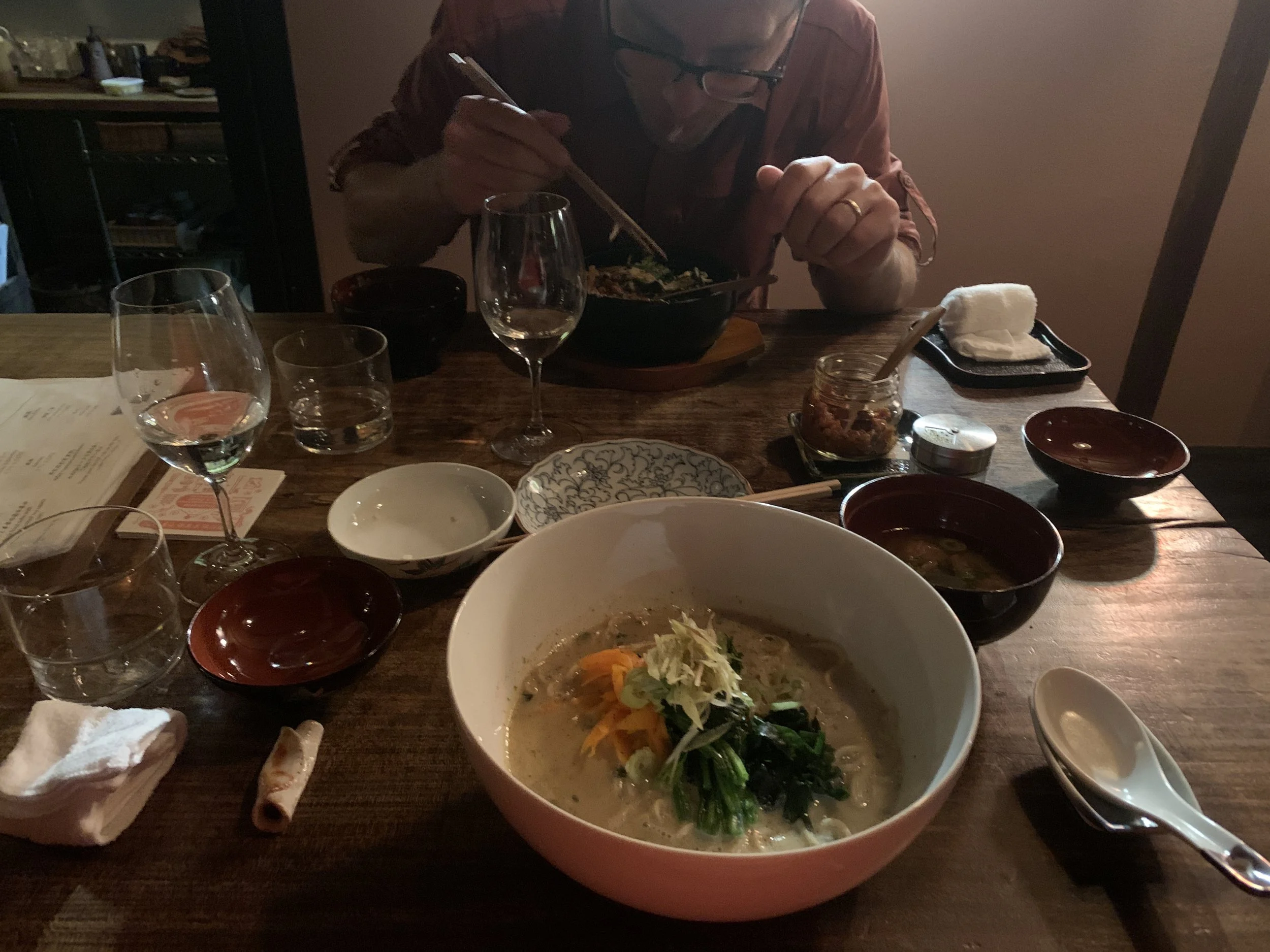
After a brief spell at Azukiya we took the subway and then walked the last stretch to Itatekizen vegan restaurant for an outstanding multi-course dinner. We did not hold back, ordering four appetizers, two glasses of local junmai ginjo sake each (Tananohikari for me and Kyoto Special for Chris - both made in Kyoto), and main courses. It was delicious; especially the Bibimbap. On our way out we chatted with a German couple who had been curious about our illustrated recommendation guide that Anna made.

Leaving the restaurant we caught the 201 bus for a 25 minute ride back to Azukiya. The bus, as with every other public transit we’ve taken, was right on time. We climbed on through the back door, rode until we reached our stop, and swiped our Suica cards (the same ones we used for trains in Tokyo, and now subway and busses in Kyoto). We were able to add the Suica card to our Apple wallets directly by searching and adding it, and adding money to it from any other card already in the Apple wallet. It’s been such a convenience!

On the final leg of our journey back, we stopped in at a Lawson convenience store for snacks and other goods like the famous Japanese convenience store socks.

Back at Azukiya I called my mom for her 66th birthday, and we wound down for the night. Chris took another bath while I opted for a shower and got under the covers to journal and fall asleep for our last night at lovely Azukiya.

Monday, May 18

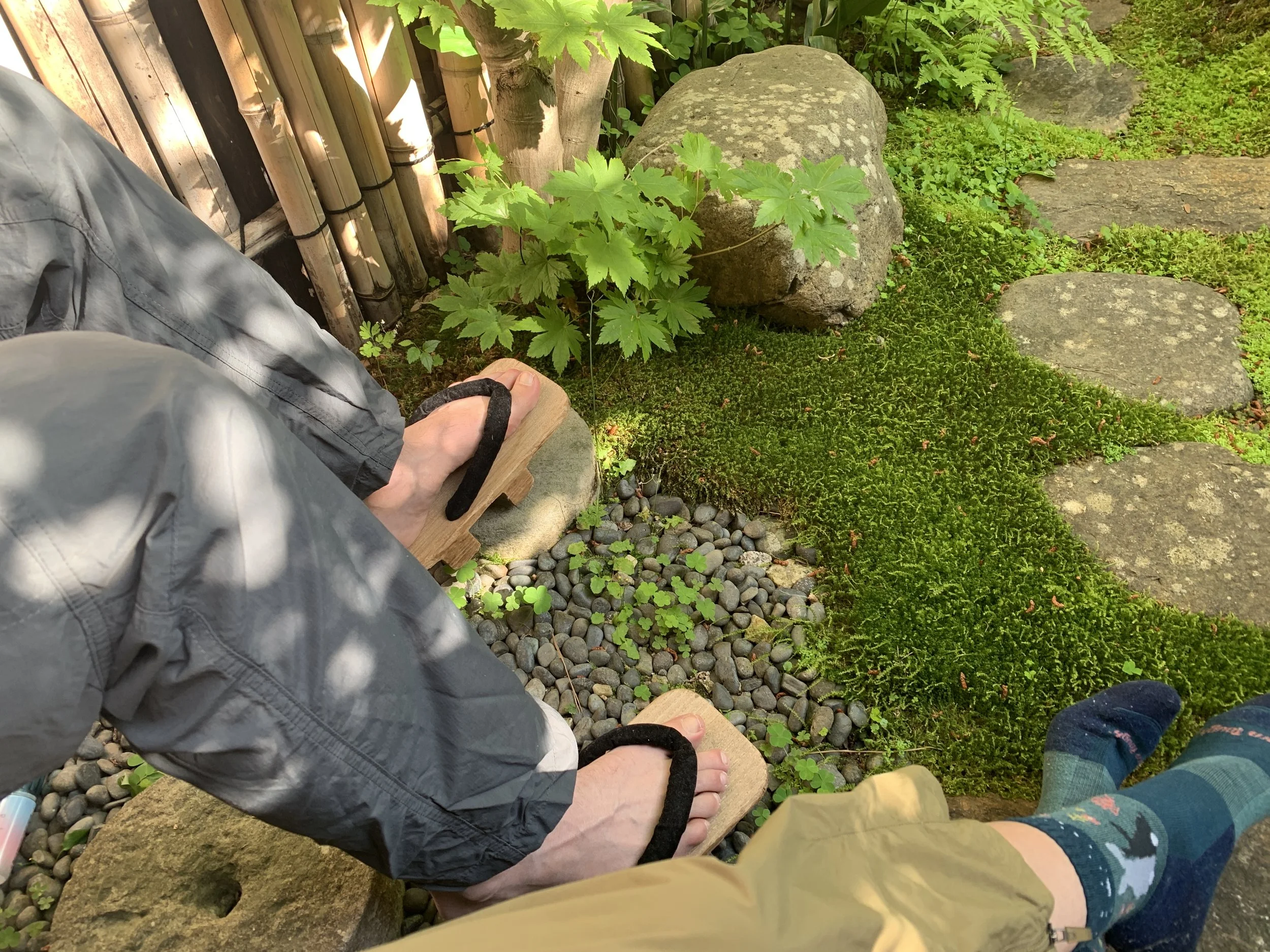
Woke up at 7am and spent the next couple hours having coffee and convenience store snacks (nori wrapped rice crackers and dried mango) that we picked up in our way home last night, in our Japanese garden. Chris wobbled around in the wooden clogs provided for use in the garden.

We checked out of our beautiful Azukiya b&b around 10am and set out for the Kyoto Botanic Garden via subway. The garden was cash-only and we got our tickets via a vending machine, then proceeded inside to marvel at all the Japanese plants - some familiar as ornamentals (or pervasives) in the USA and many that were new to us!

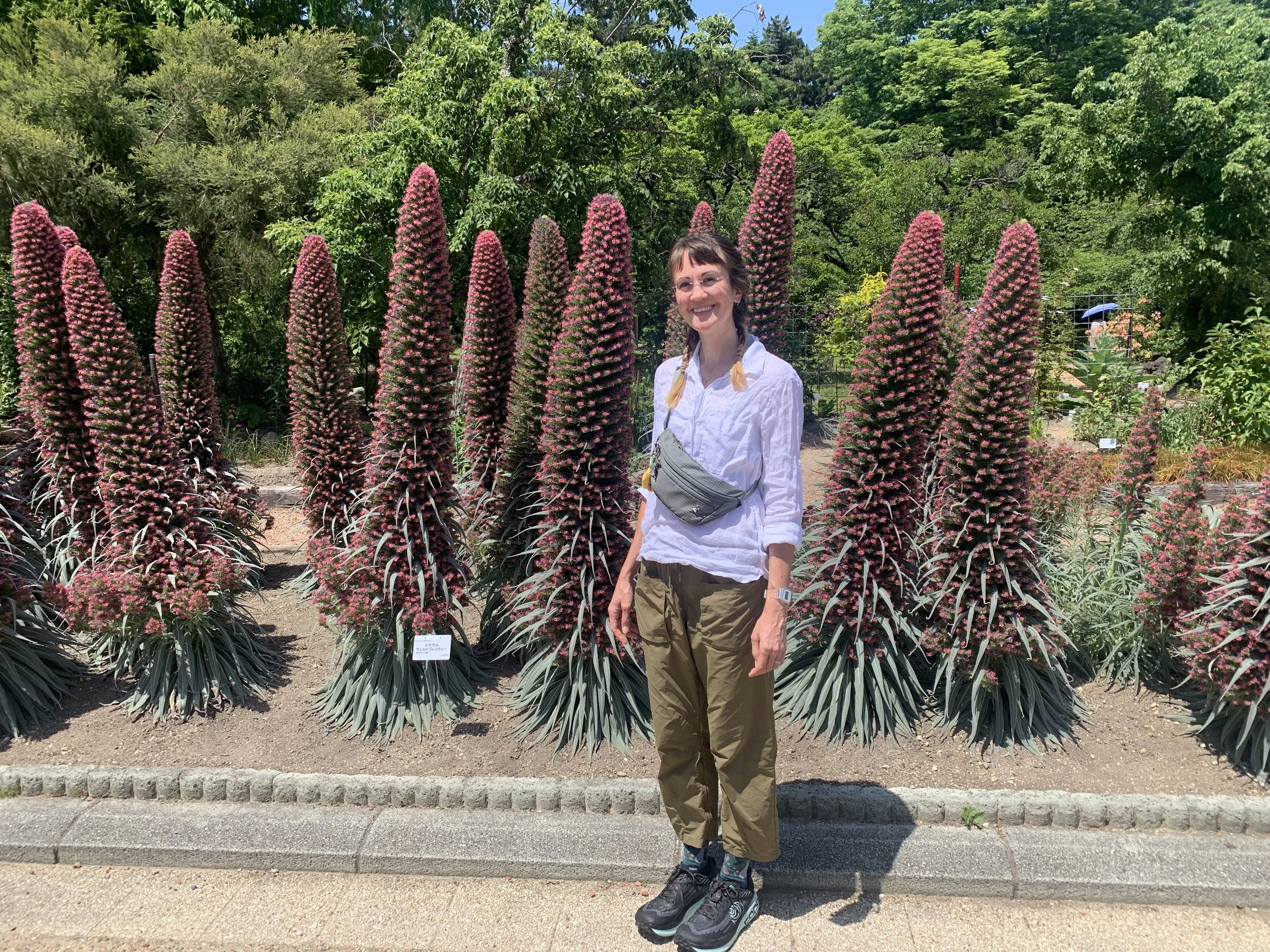
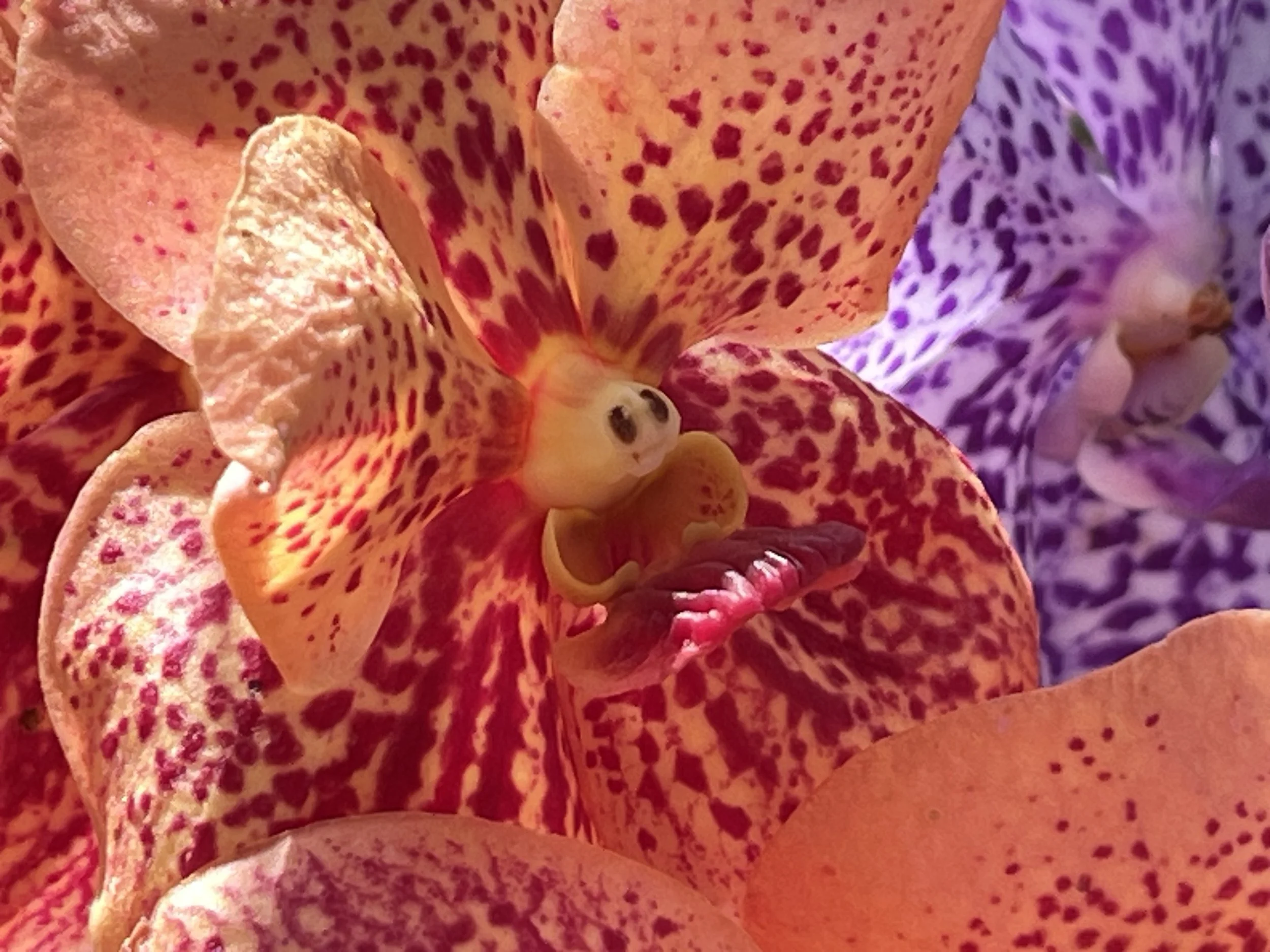
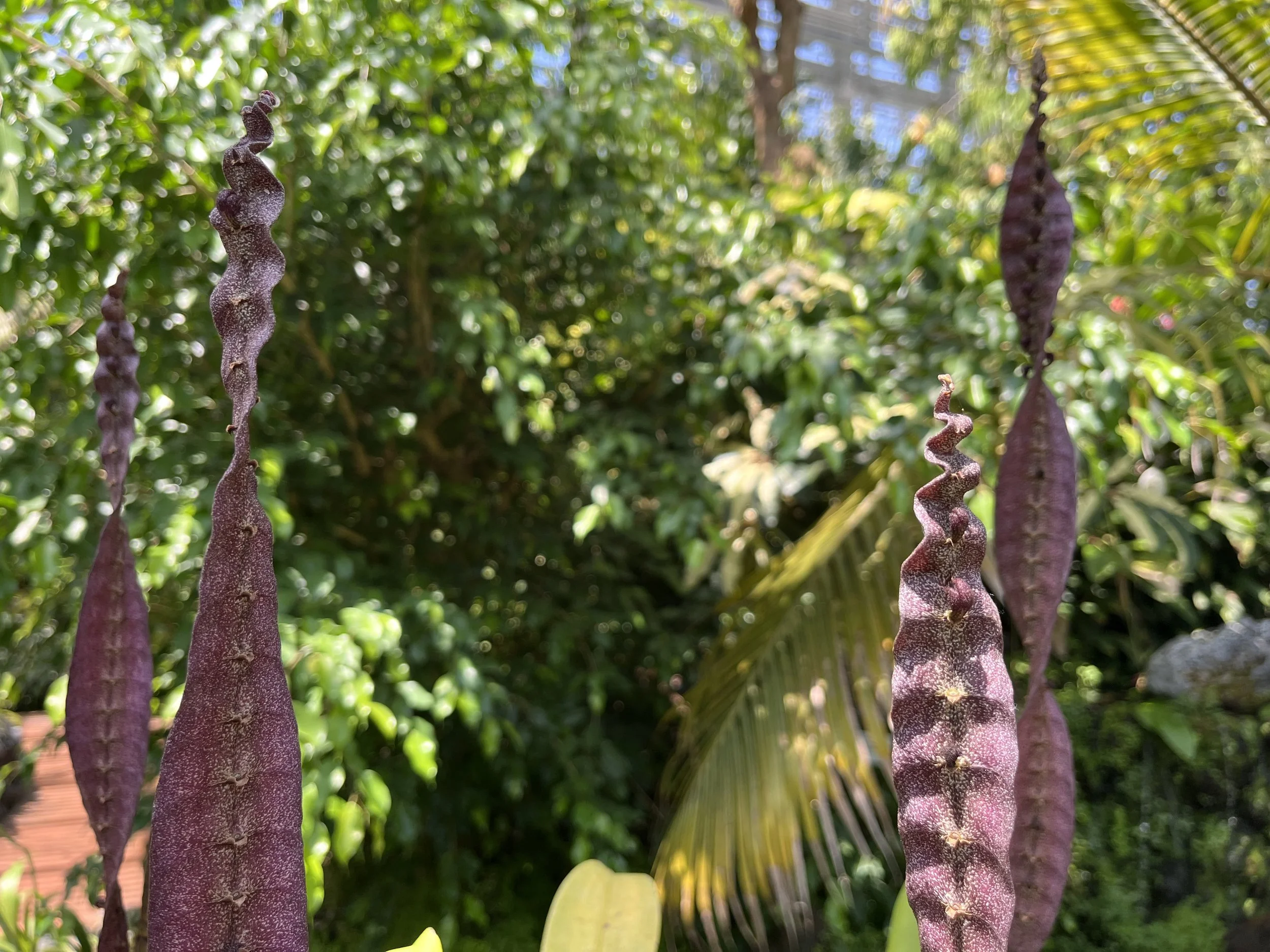
The conservatory was so cool, and many plants were in full bloom. I particularly loved the Pelican and Green Bird plants. Orchids and any carnivorous plants are always a hit as well. The rose garden was also immaculate, and made me think of my Grandma Pat (both a rose gardener and Rosacrucian).

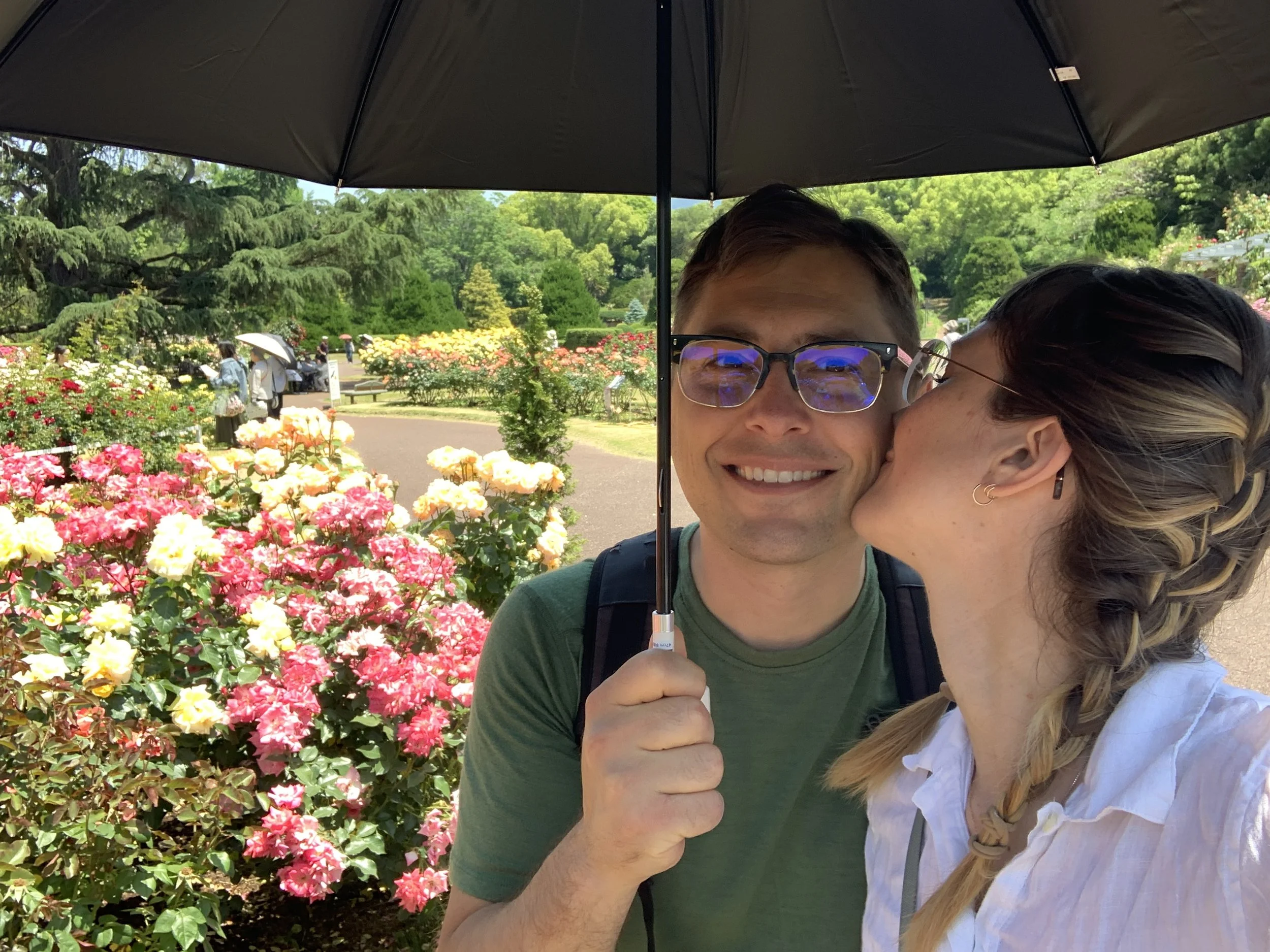
It’s pretty warm today. Carrying an umbrella for sun shade is customary here, and we are the odd ones out in this regard, so we bought an umbrella at the visitor center that instantly improved our lot in life. After making the loop we ate an orange we had picked up the day before that stated on the package that it was grown in the Wakayama prefecture, where we’re headed next. It was a good orange!

A school group (kindergarten or maybe pre-k) all in uniform and wearing bright yellow hats, chimed in unison to the garden staff, “Arigatogozaimasushitaaaa!” 😭 (a polite past-tense thank you).

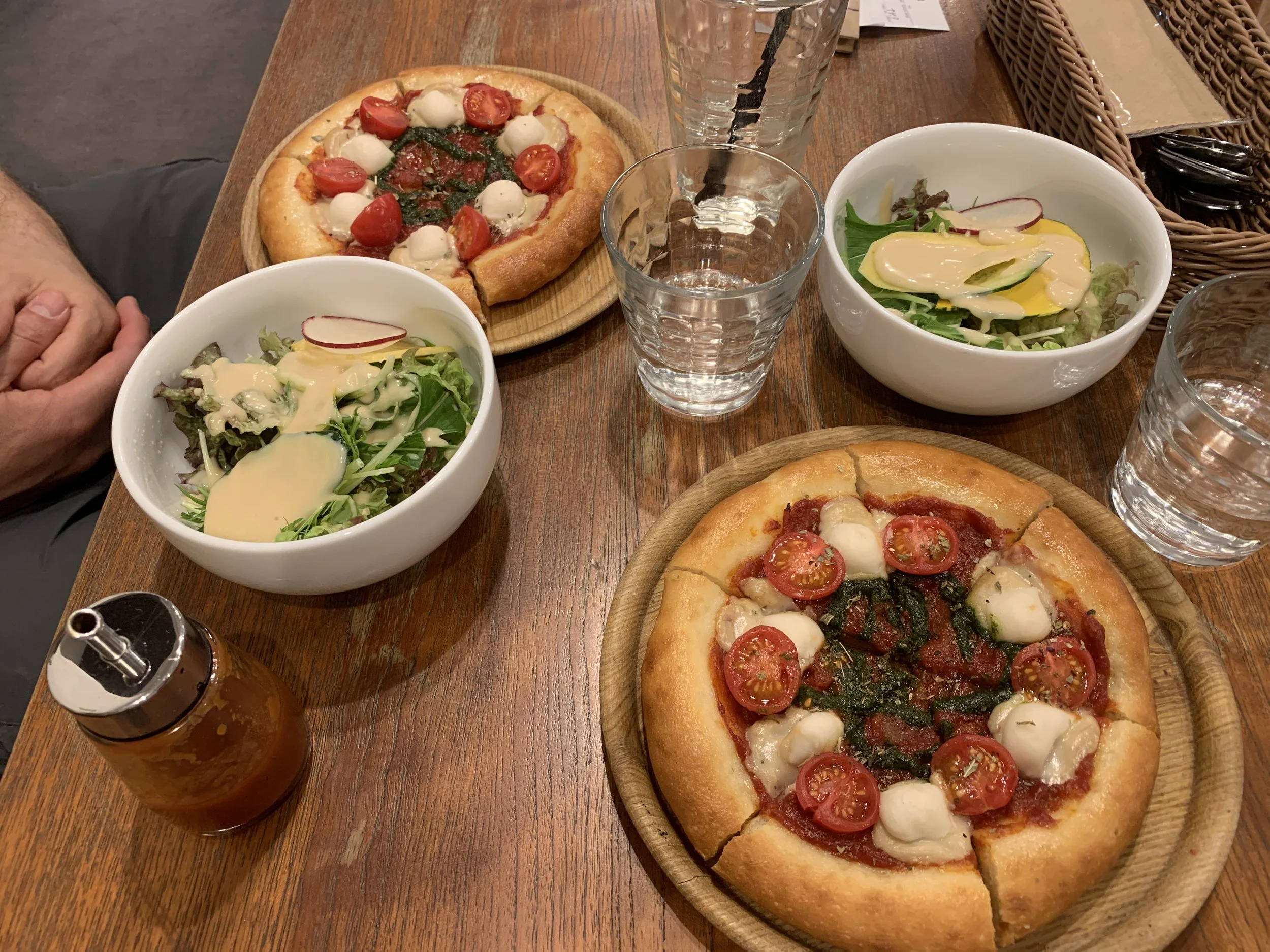
Upon leaving the gardens we went to CHOICE for lunch, a vegan restaurant down the street from Azukiya. We ordered two oishi (delicious) personal pizzas and a cheese taster plate. The cheese was a firm herb, and a soft rum raisin, made in Kyoto.

From there, on a quest for gardening tools, we found ourselves at an anarchist gardening supply/apparel shop called Brodism. The designer himself was there. Much of the store was his line of clothing products called Sassafrass, and the totem store is in Philadelphia! He proudly showed us a photo of one of the Eagles players wearing his clothing line. He was very curious how we found the shop and we did our best to explain in Japanese that our host Chieko, at Azukiya, recommended us. We came to learn that he had been to Atlanta, Georgia and knew of Athens, even saying “bulldogs!” I bought a cool illustrated shirt.

From there we visited Mont-bell, a famous Japanese outfitter that is very expensive in the States, to stock up on backpacker meals and a couple other sensible items for our upcoming trek. I’m sure I will regret not taking advantage of the tariff-free shopping at this high-end outfitter, but we got overwhelmed quickly. By afternoon we began to see an other side of Kyoto… absolutely overrun by tourists. It seems grossly unsustainable and some of the romance of the city has worn off a bit as a result. Now very much looking forward to being in the countryside of Wakayama Prefecture in two days time.

We also ~regretfully~ moved into our new lodgings this afternoon. Gion Ryokan Q-beh is far inferior to Azukiya and for the same price, due to the ‘desirable’ neighborhood. And while it is quite an interesting historic area it is just inundated with tourists and souvenir shops. We are still pleased to get to experience a ryokan and see another part of the city.

For dinner we ate at Vog, an Indian food restaurant with a vegan-friendly menu, after being informed the sushi place we intend to eat at had run out of food. “Line stops here” the server said, drawing an invisible line at my and Chris’ feet as the couple who had rushed to get in line in front of us looked on guiltily. Vog was much needed comfort food after a busy day so things worked out the way they needed to.

Back at our ryokan we showered and turned in.

Tuesday, May 19

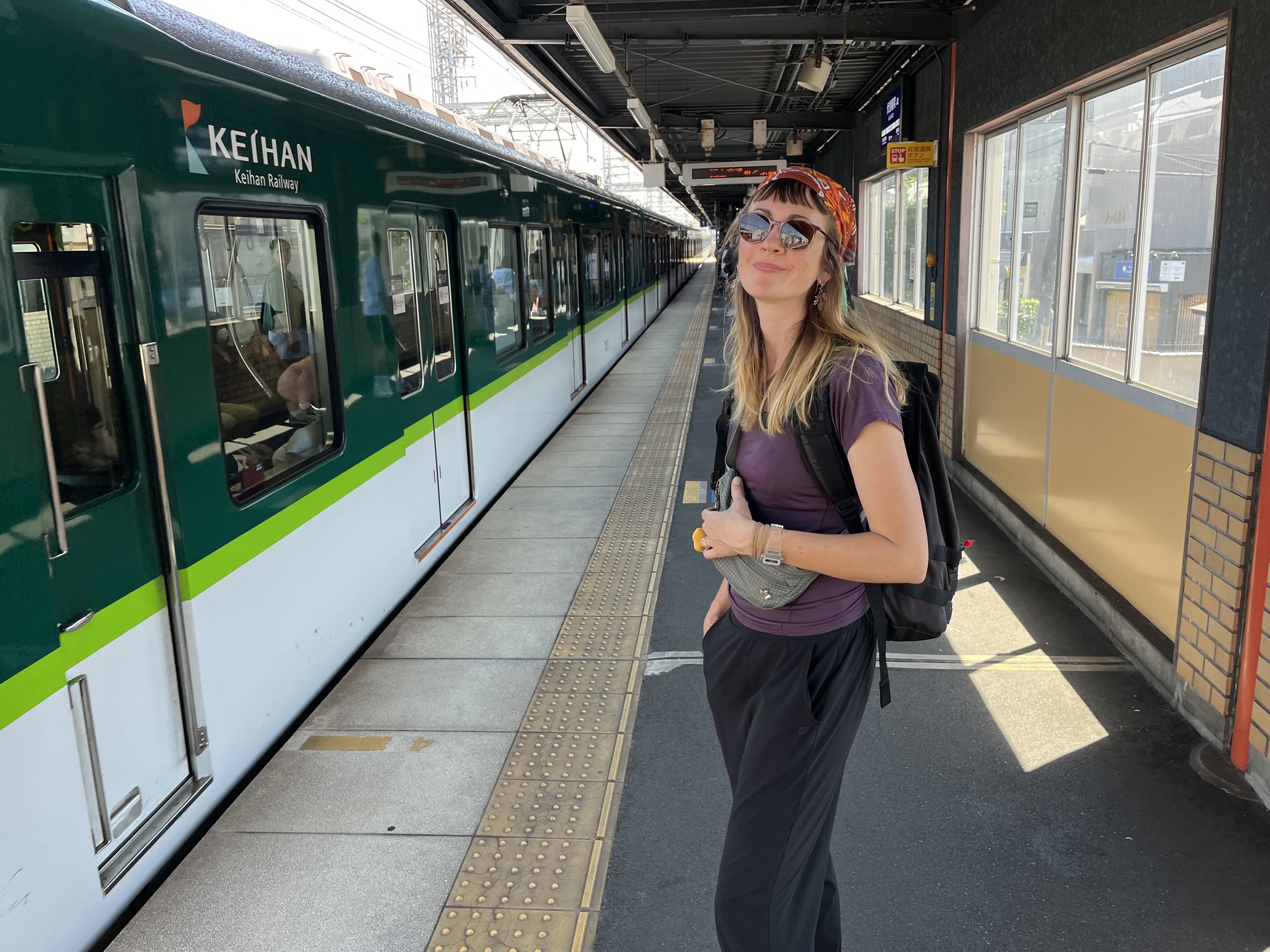
Coffee at our Ryokan and headed to Gion-Shijo station for a train to Mount Inari. We mistakenly boarded a premium train and rode it halfway to Osaka before we were able to get off. We found a conductor to ask how to retroactively pay for our mistake, and between my broken Japanese and a couple verbal translations of more complex phrases with the help of Google translate, were kindly informed “daijobu desu” (it’s fine) and to just get the next train headed back for Kyoto.

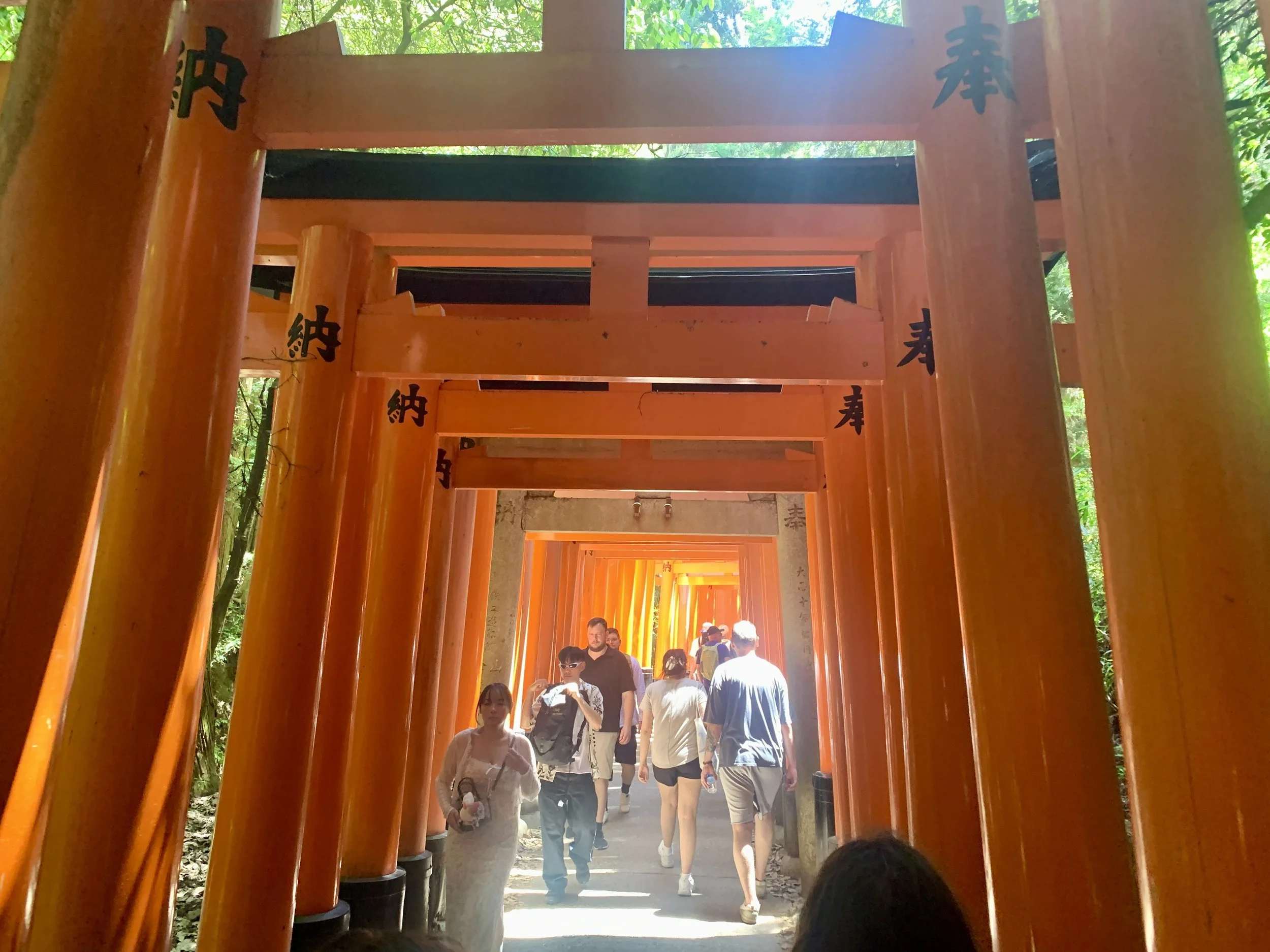
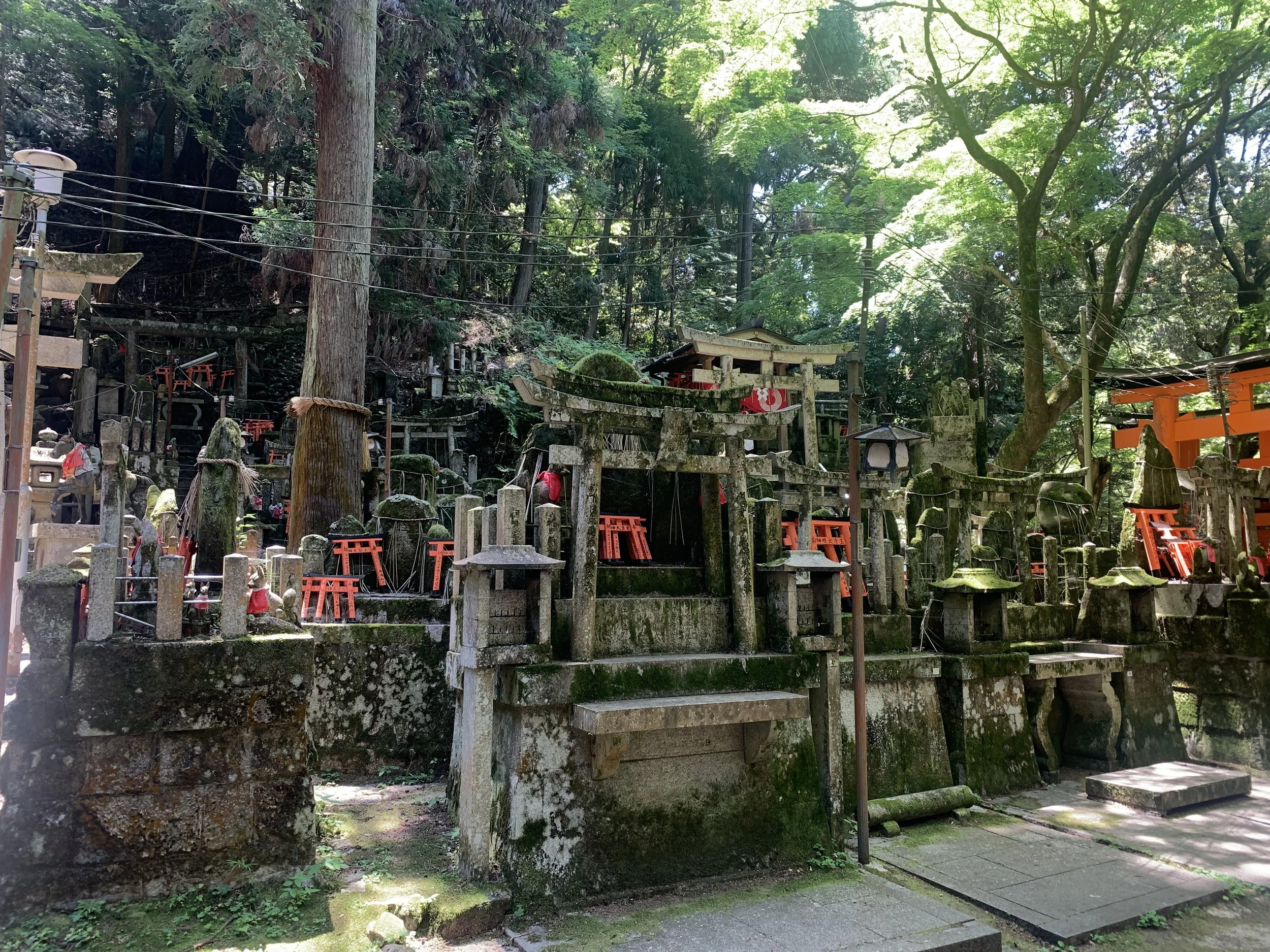
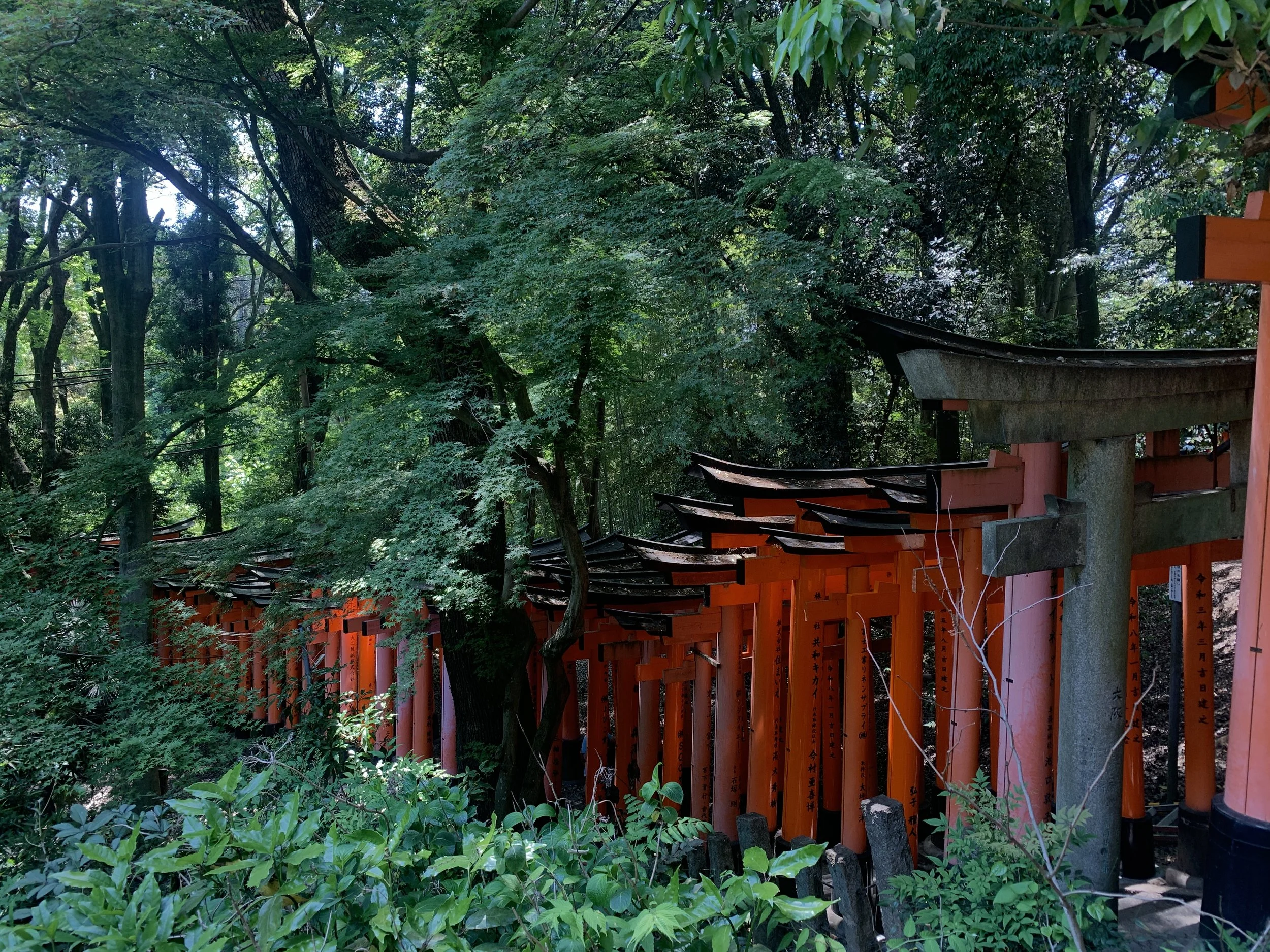
When we arrived at the gates to Inari, the signs of over tourism were still evident. In spite of the crowds, we pushed on up the mountain through the many tori gates until we reached the top of Mount Inari! Numbers of people of course thinned the higher we went, and we branched off a couple times to explore the subsidiary shrines, some of which were quite extensive and maze-like.

I particularly enjoyed all the kitsune (fox) statues, frozen in various action poses. We also got several spectacular views of Kyoto against the backdrop of the mountains north of the city.

From there we took the train to the southeastern corner of the city to find a particular shrine rooted in the Soto Zen tradition. However, due to confusion around the name we ended up at a similarly named temple (koshoji vs kosho-ji) which brought us through a quiet neighborhood and to an equally quiet temple tucked in the woods, with a beautiful cemetery behind it.

We also stopped at a 7-11 for snacks and hydration, and ate a smattering of Japanese convenience store delicacies, including a pickled plum rice ball wrapped in seaweed, a chewy bean rice ball, crispy herbed lotus chips, and a green tea. The 7-11 had lovely landscaping as well, full of flowers. From there we decided to pivot and head across the city to catch an afternoon ride on the Sagano Romantic Train, another recommendation from Anna’s illustrated guide ♥️

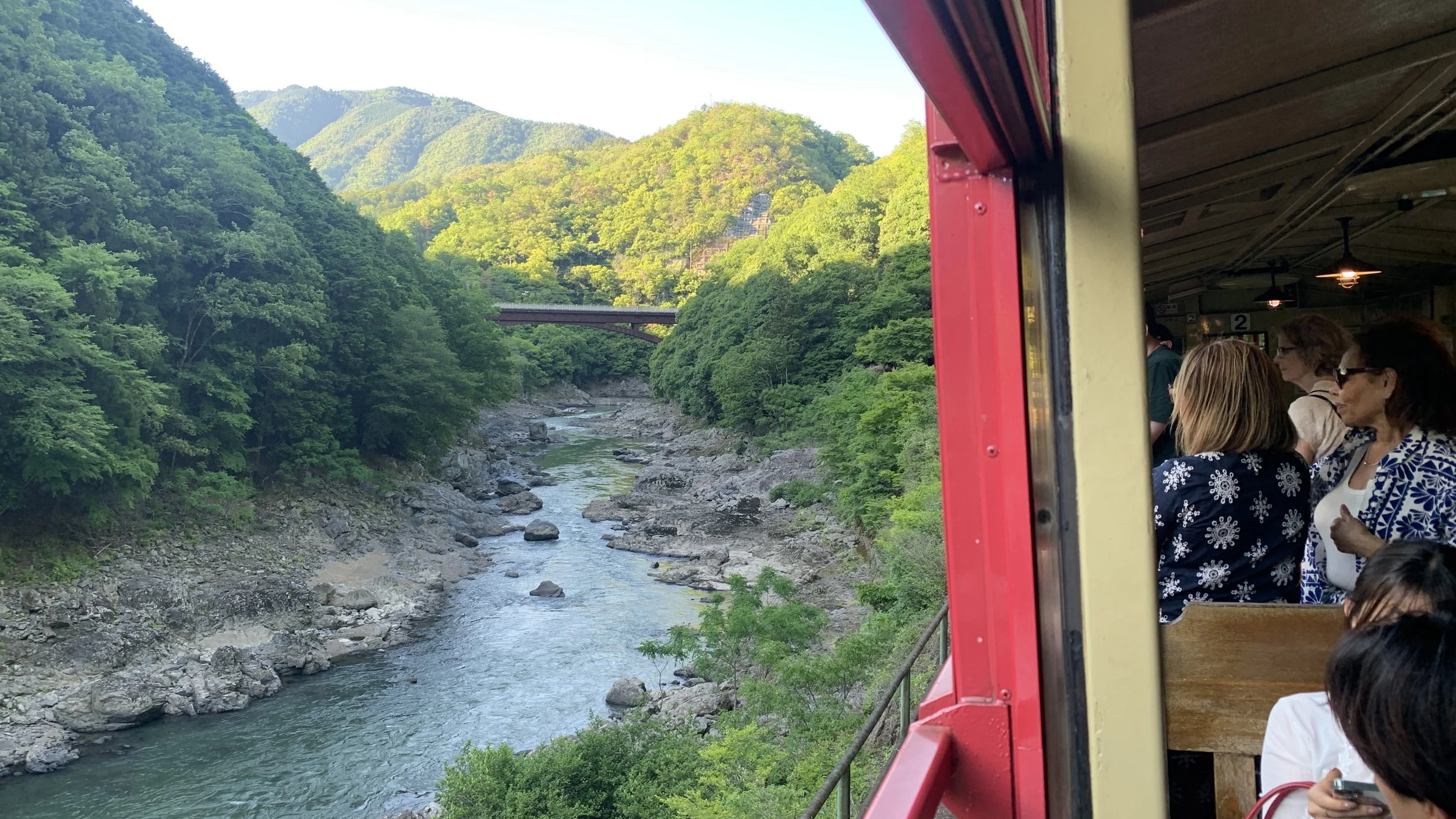
We arrived at the Torroko Kameoka embarkation point for the train just in time! The train was a vintage, open air train with wooden seats. Our train car was only a quarter of the way full, so we had the freedom to move from side to side, leaning over the railings through the windows on either side to catch the best views of the gorge below. We saw several large water birds, and Chris spotted some largish creature at the river’s edge. Monkey? Bear? When the ride ended at Arashima Station, roughly three miles back east toward Kyoto, we took a stroll through a forest of giant bamboo and then back to the train/subway to head back to Gion to make another attempt for Sushi!
Sushi Taka was yummy. This time we managed to get in by arriving before sundown. We shared the fatty tuna wasabi rolls, cucumber rolls, ginger, two miso soups, then sake, and Sapporo beer to wash it all down.

Back at the hostel we got organized for our departure for Kii Tanabe tomorrow, organizing everything we don’t need on the Kumano Kodo into a duffle bag for storage at (hopefully) Shin-Osaka station where we’ll pass back through on our way to Tokyo after the trail, to catch the Shinkansen back to Tokyo.

Lessons: try to book lodging near the subway lines • don’t get on premium trains • get up earlier to avoid heat/crowds. Better yet, come in off-season, if there is one • always have bug repellent and sunscreen/sun shade (umbrella preferred, hat acceptable)

Wednesday, May 20

Out of the Ryokan by 9:30am for a final stop by a different Montbell location in search of final backpacking items, and to check out a vegan bakery, before our journey to the Kii peninsula.

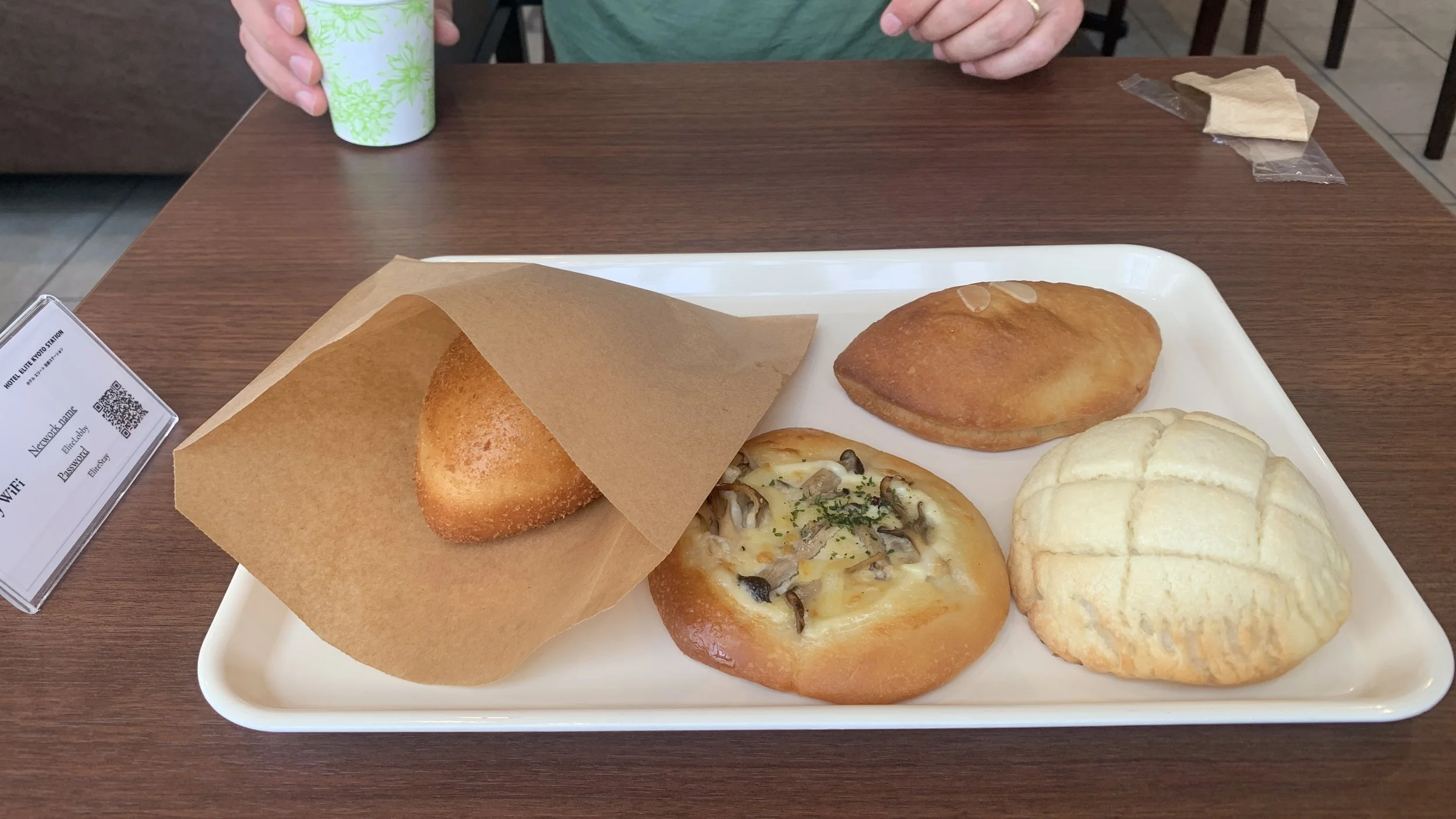
Mercy vegan bakery was excellent and we ordered extra for the road! The pit stop at Montbell was also a success as we were able to secure our remaining gear items. My rain jacket from the Appalachian Trail was wetting out quickly (and there looks to be lots of rain in our future), we couldn’t bring our trekking poles from home since we didn’t check a bag (it is possible to get through security with them but was a gamble we didn’t want to take), and I needed a bug head net just in case we encounter mosquito hatch season. Chris also got a puffy to replace his 20 year old Western Mountaineering puffy that had survived multiple thru-hikes.

All in all ridiculously huge savings on a great backpacking brand that’s already expensive that’s mostly out of reach in the states. I also had my most successful/lengthiest Japanese exchange yet at the checkout counter with a friendly cashier. Outside the Montbell we crammed the new gear into our packs and headed out to catch the train to Osaka (Shin-Osaka station).

Since this is the same station we’ll be passing through after we’re done walking the Kumano Kodo, the first task was finding someplace in the station where we could store our bag of souvenirs and urban clothes. Chris carried that stupidly heavy duffle bag all through transit from our ryokan this morning until we finally found “Luggage Station”. 13,000 yen later (1,000 yen a day) Chris was infinitesimally lighter.

We had a couple hours before our next limited express JR train to Kii Tanabe in the Wakayama Prefecture, where we’d be staying the night, so we left Osaka station, attracted by a vegan Taiwanese hole in-the-wall called RAZUKEN, a short metro ride away.

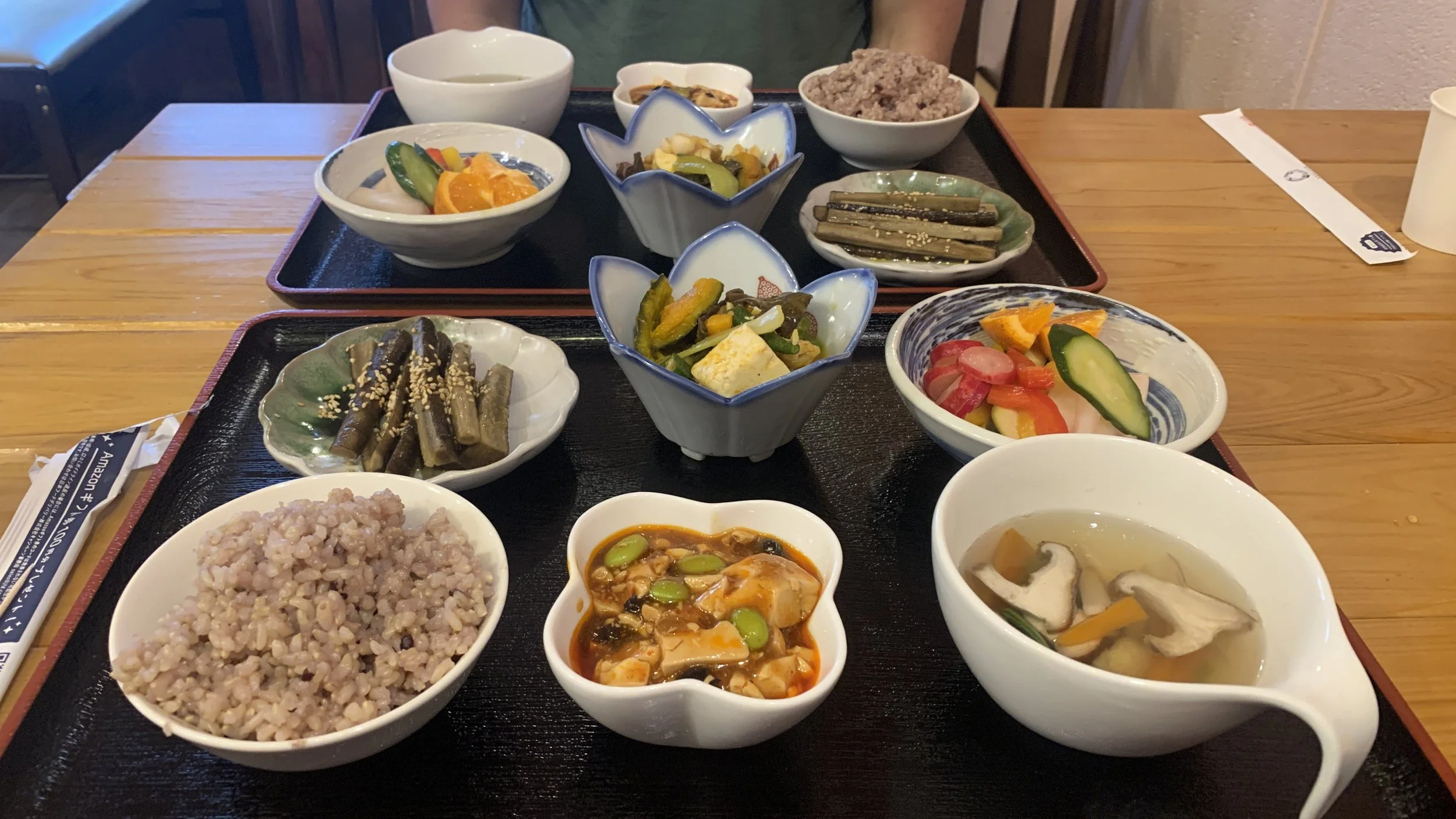
The Taiwanese spot was some of the best and most nourishing food of the whole trip. We ordered the lunch special which included a wide array of small bowls of various fare including pickled vegetables, miso soup, roasted burdock root, tofu/mushroom soup, vegetable soup, and rice. We paired the lunch with a mango smoothie and medicinal tea.

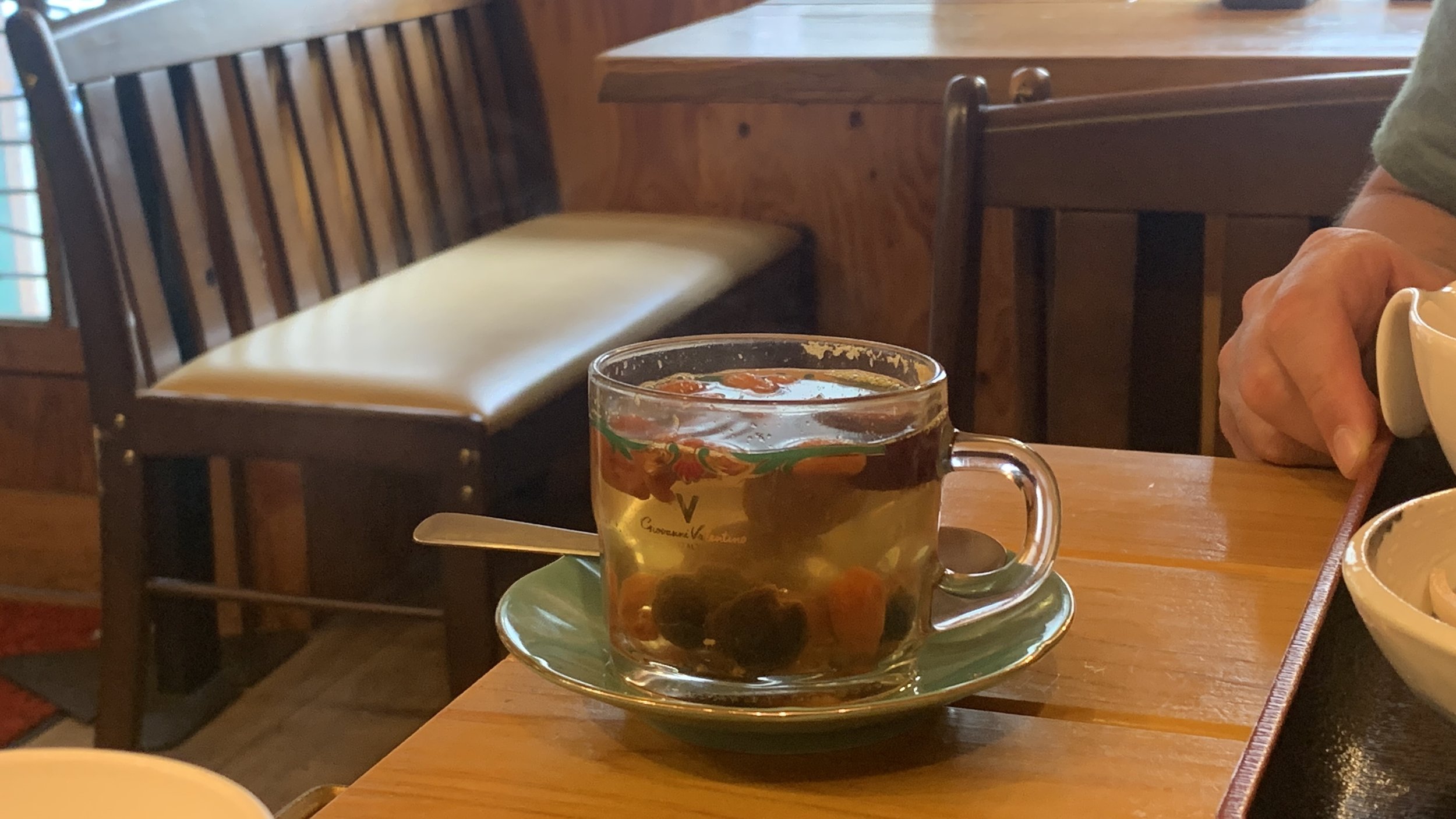
The hot medicinal tea was loaded with various berries neither of us had seen or tasted before, and one of the tastiest teas we’ve had. We were the only ones in the restaurant the whole time and the owner, an older Taiwanese woman, was very sweet. It was just what we needed as a break from the chaos of the stations. I’m worried I’m coming down with something, as is Chris. Hard to say at this point if it’s just allergies/dehydration/fatigue/dry air or if we’ve caught something on public transit. Many Japanese (perhaps 25%) wear masks on the trains so this may have been a rookie error on our part.

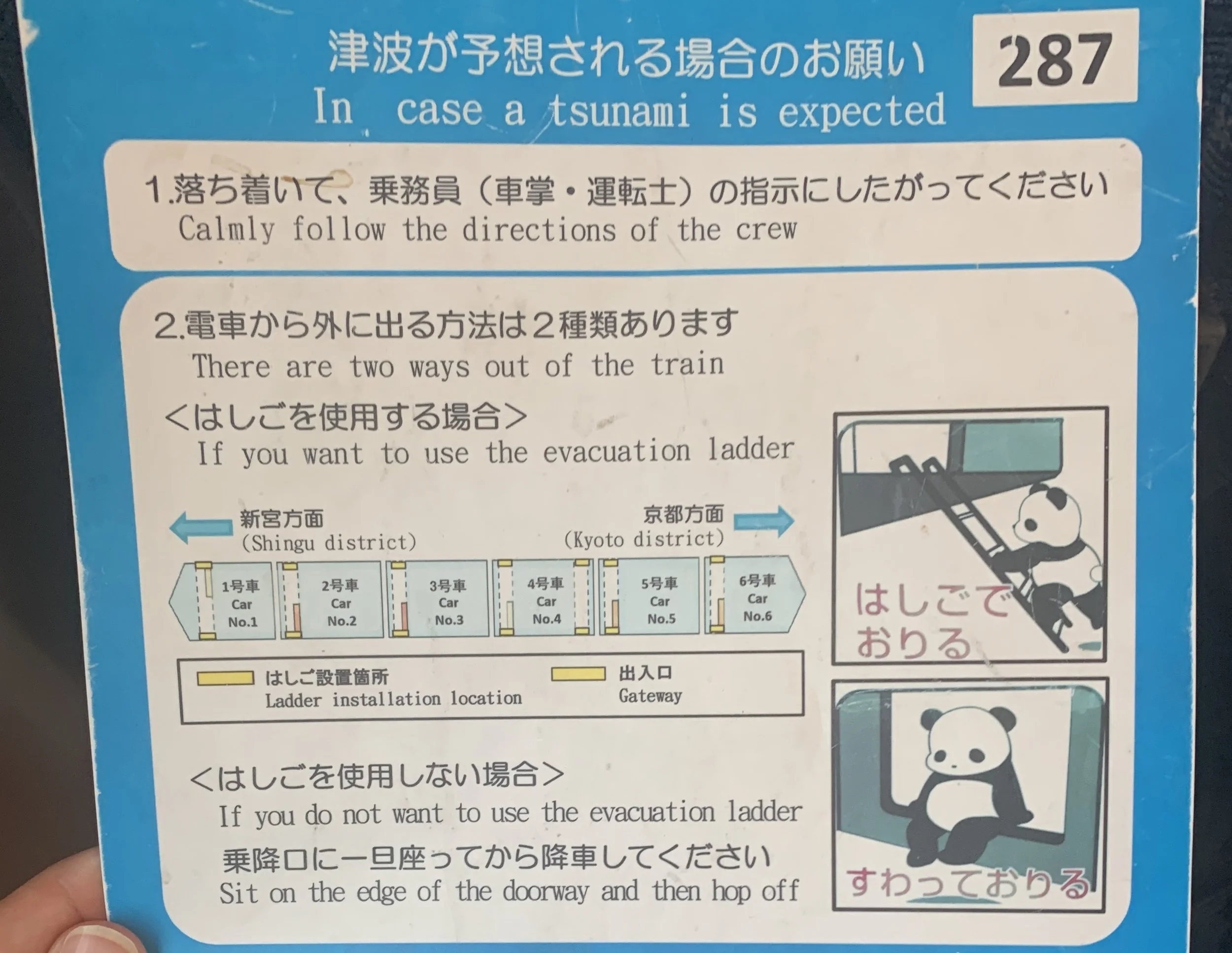
When we got back to the station we purchased a ticket on the JR Limited Service train for Kii Tanabe, where we will spend the night on the coast at a small cafe guesthouse before bussing to Takijiri-Oji tomorrow to begin our pilgrimage. A peaceful train ride and a very kawaii leaflet about what to do if a large earthquake occurs.

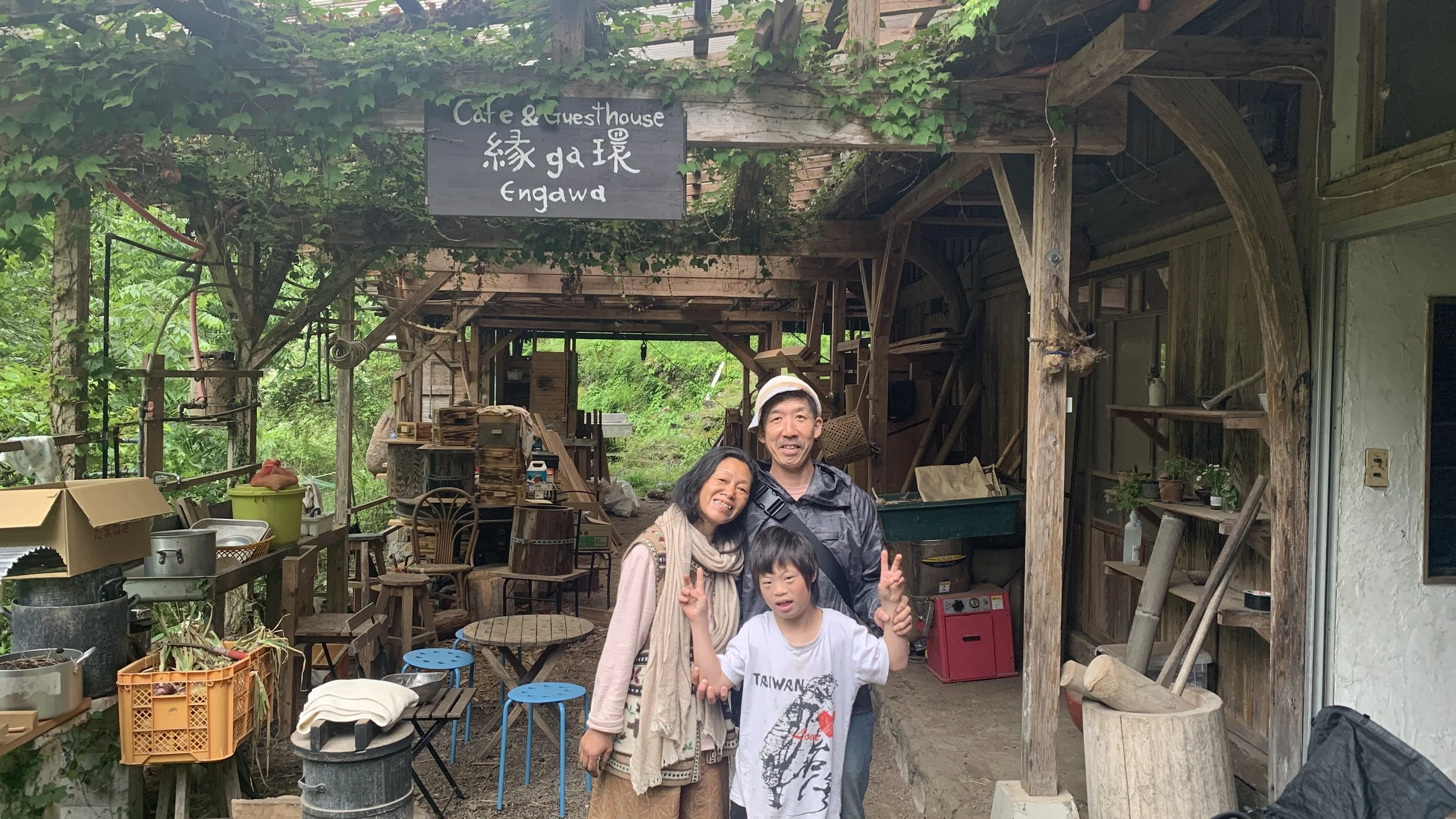
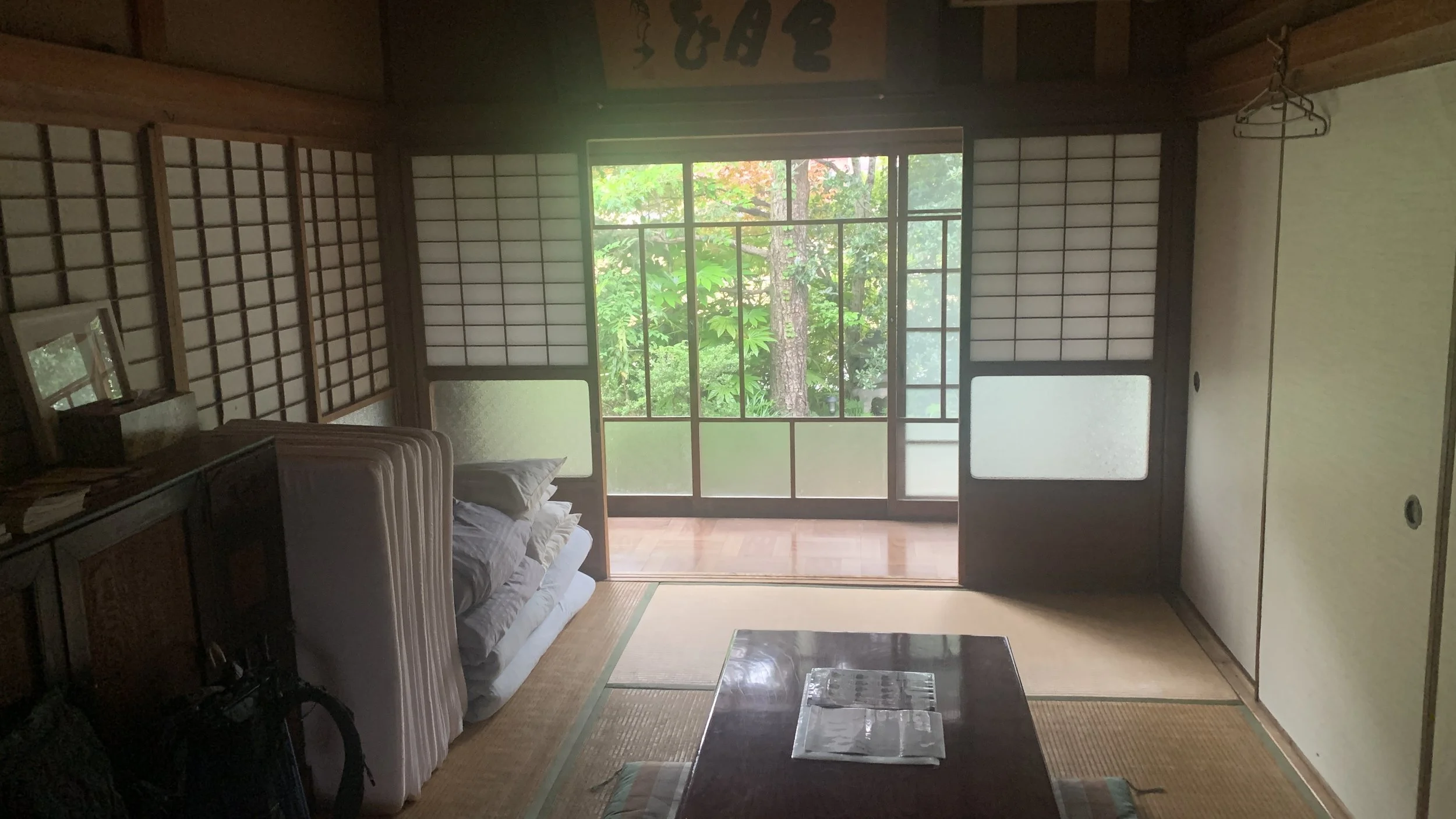
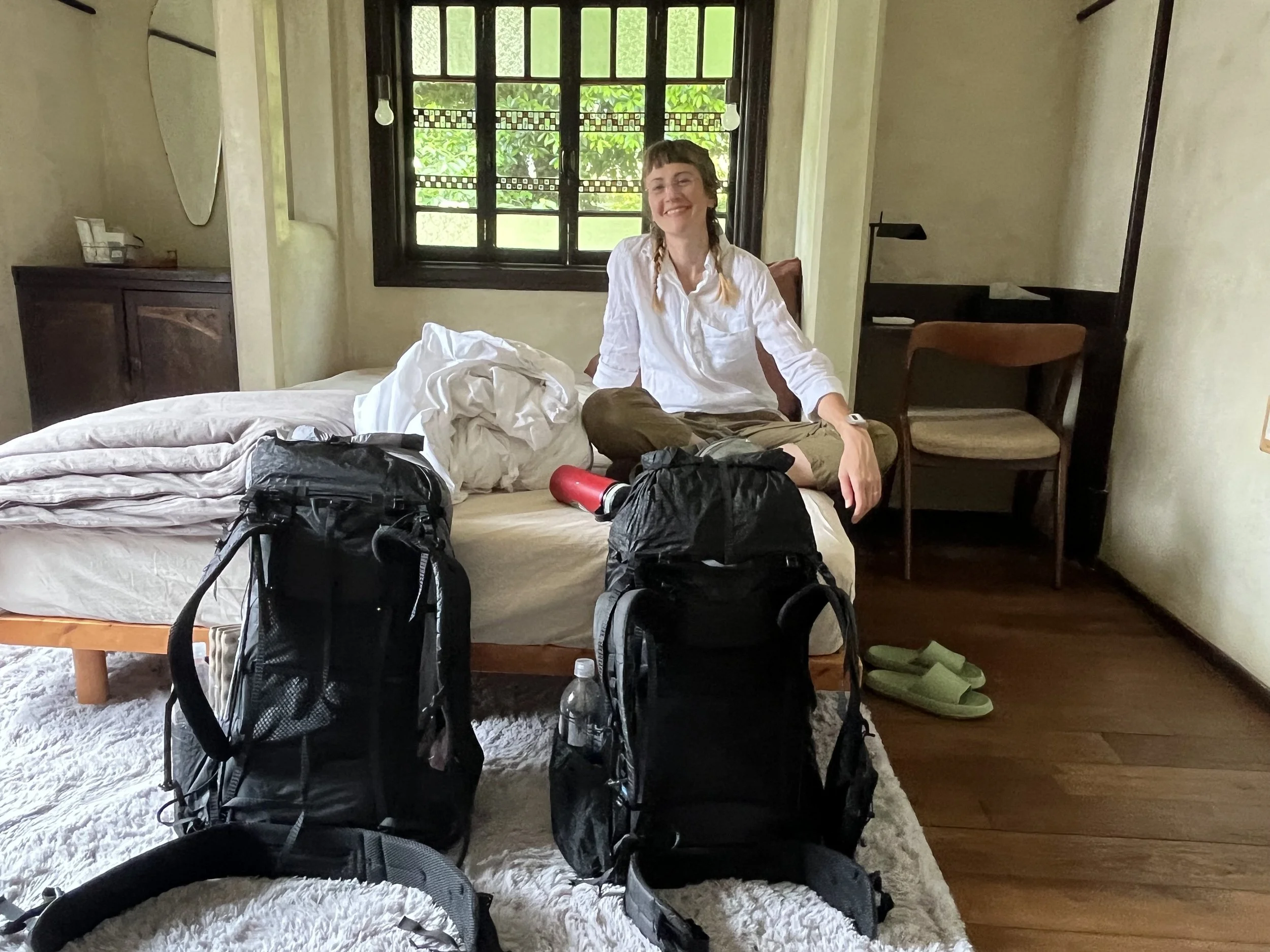
The guesthouse is lovely, and I’ll stop repeating myself now about how crucial some minimal grasp of basic Japanese language has been for this trip. Our host, Miho, checked us in and showed us to our cozy room. We are separated from the other pair staying here - a Taiwanese woman and her adult son - by a thin sliding partition.

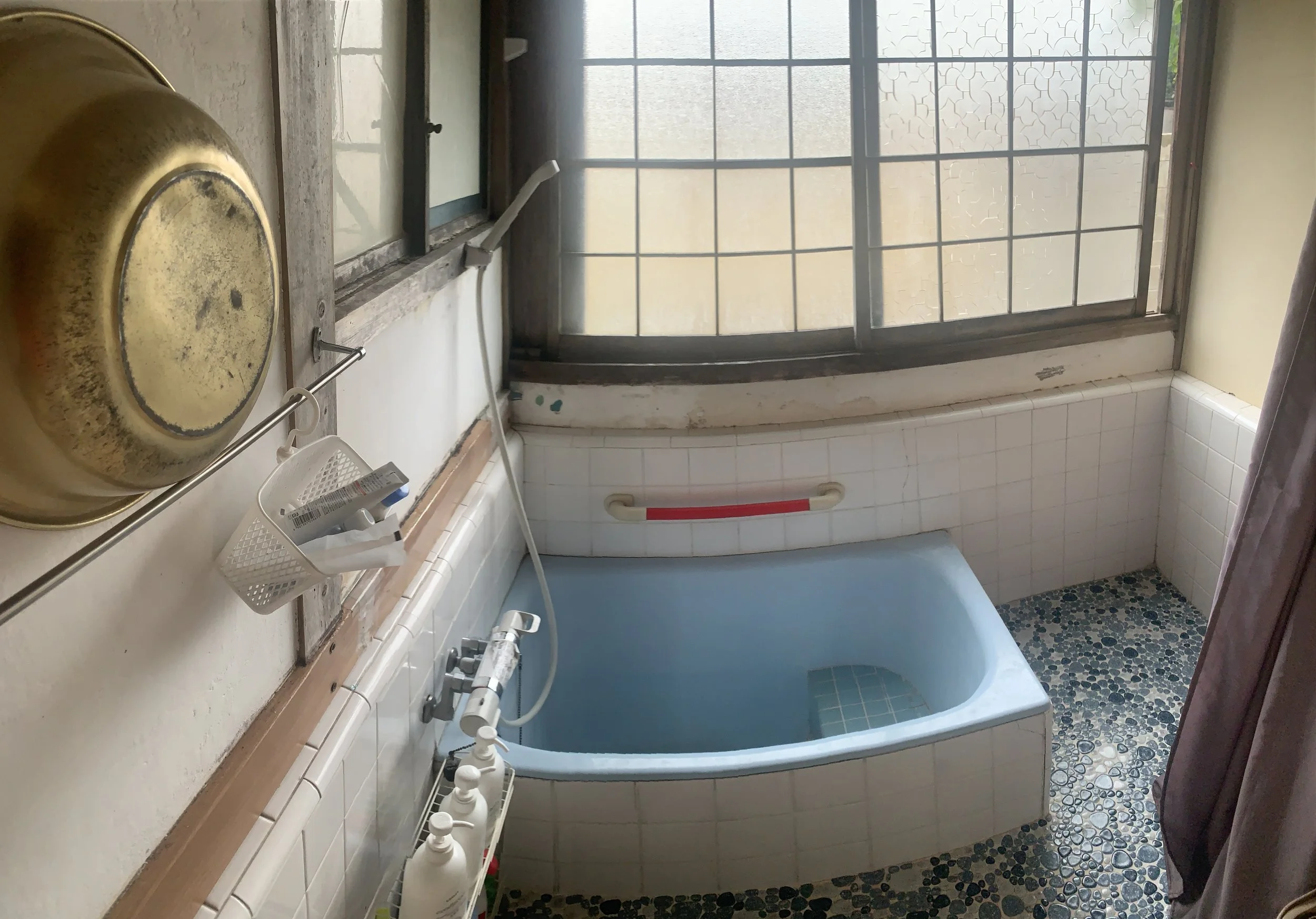
After Miho left we set up our futon and each got a shower in a bathroom that was full of character. Mine was cold because I couldn’t figure out the handle but it was welcome after a hot day of transit. A/C is kept to a minimum in public spaces, and we have head several warm bus/train/subway rides.

I like how this house is laid out, with a main entrance and kitchen, then two rooms in the center of the home that are fully enclosed by sliding glass/rice paper doors with entrances/exits on all four sides. Then the hallway wraps all the way from the living room around those two rooms to find the bath and toilet rooms.

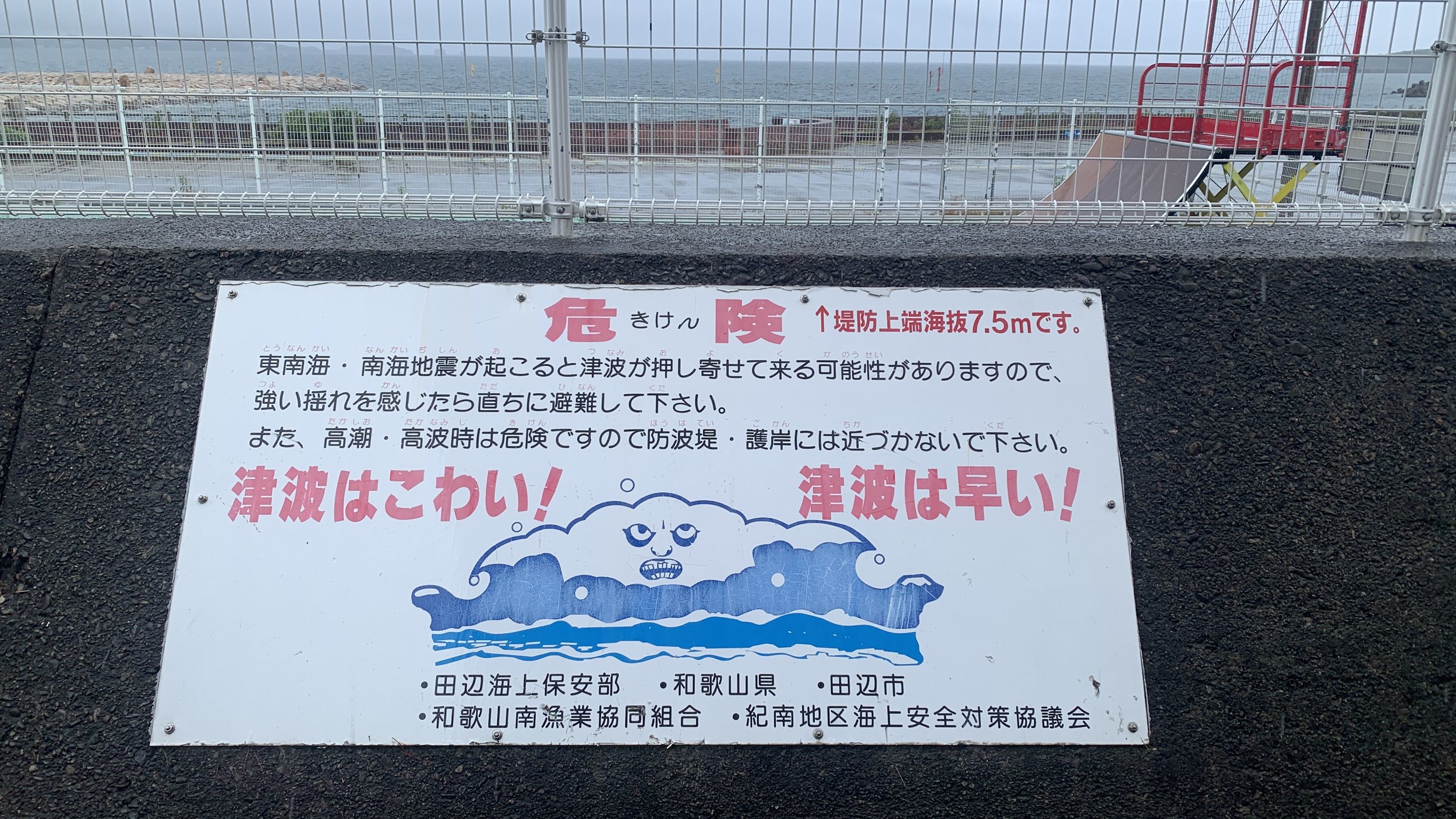
Thanks to the multiple warning systems on the train ride here about evacuation protocols in case of a major earthquake and subsequent tsunami, and bulletins all around town pointing which direction to run in the case of tsunami, I realized we should sign up for public safety notices. We did so through the following website, which let me add up to 5 travel destination for which to receive disaster warnings:

https://www.jnto.go.jp/safety-tips/eng/app.html

The next town over has a multi-story tsunami shelter but Kii Tanabe doesn’t seem to, so I suppose worst case scenario we evacuate inland, as we are only a couple blocks from the ocean. Soon to be slightly less of an issue as we head inland tomorrow for Takijiri-oji to begin the Nakahechi leg of our honeymoon pilgrimage.

Tokyo

May 12-14: Travel Days

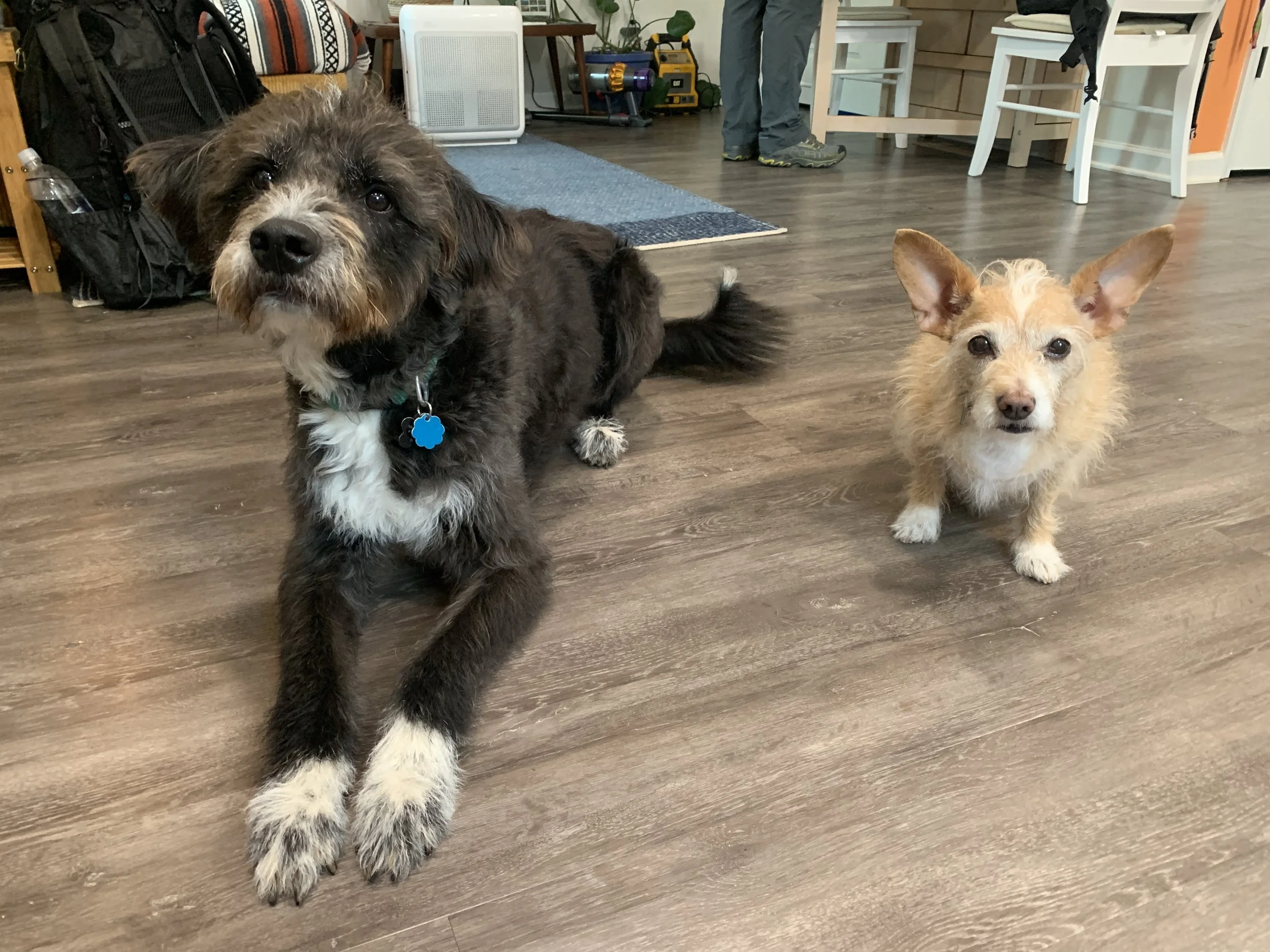
Saying goodbye to the dogs is the hardest part of any travel. Grateful for good friends who are willing to take care of these kids.

Squeaking through international terminal security just before closing at midnight, we spent the night in the Atlanta airport international terminal F in a cluster of roughly 40 other overnighters. It recalled group camping, except in place of wilderness we had liminal man-made spaces: single bucket-seat couches pushed together for form a chaotic cluster of lumpy makeshift beds, bright lights, a forest of palmettos in large ceramic pots, a background cacophony equal only to a forest pond’s frog choir but consisting of airport jazz and the bustling of overnight shift janitors, and for the wildlife, cockroaches. :(

The woman nearest our own ‘campsite’ commented to us something to the effect of “why would you pay for Minute Suites for $70 an hour when you can spend $0 and sleep in the company of others” and I couldn’t agree more. Despite the obvious pitfalls of spending the night at the airport, everyone we encountered was absolutely delightful, from our Sri Lankan groome shuttle driver with a keen interest in wildlife, who raises pigeons in his backyard, loves snakes, and allows rat snakes to steal the pigeon eggs because the birds multiply too quickly otherwise, to the extra kind airport staff who actually seem to enjoy their jobs during these eerily quiet hours at the airport. Chris pulled an all nighter studying up on information that will be useful for navigating Tokyo public transit, and I dozed intermittently. These hours were not without marital strife but overall happy with our decision.

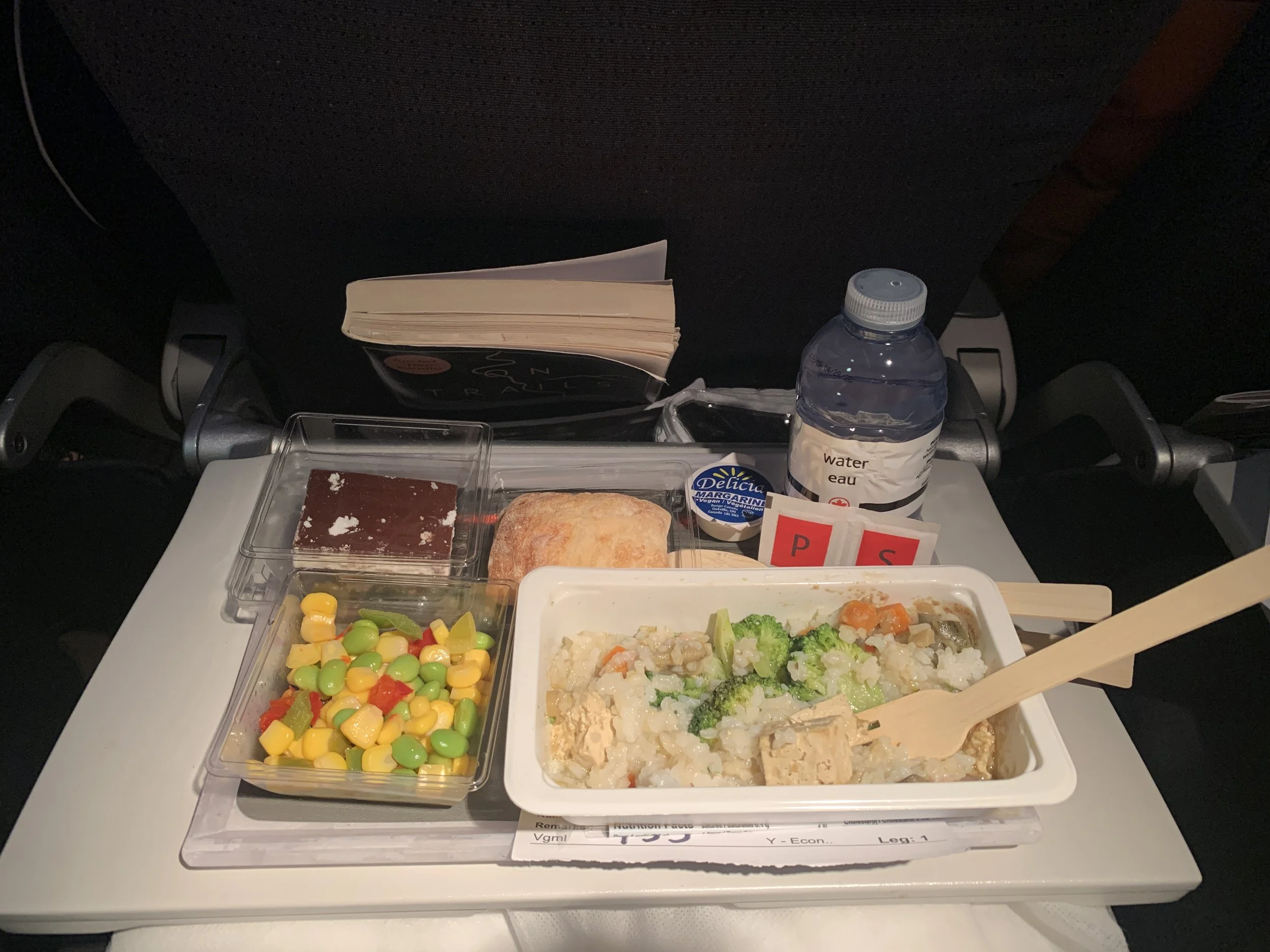
At 5:30am we walked to our nearby gate and boarded the plane to Toronto where we had a pleasant 4hr layover. The terminal was small, clean, and uncrowded, with some interesting large scale public art and interior design. We passed the time talking and drinking coffee, before boarding our flight to Tokyo at 1pm. Thankfully we were fed almost immediately, as Air Canada seems to be adjusting us to Japanese time in advance by serving dinner when we would’ve otherwise had lunch, then turning off the lights for the night. We spent the next 12 hours napping and reading (On Trails by Robert Moore and Genki Elementary Japanese Textbook).

Side note: Ordering the vegan meal on planes is a secret life hack because all the special dietary meals always get handed out first.

On arrival in Tokyo, we had to immediately figure out how to use the Suica public transit card via Apple wallet (the Suica app all in Japanese), then took the train from Haneda to Shinagawa station, transferring there from there the JR line to Ueno, where our hostel is. The train was packed because it was rush hour, and we watched the sun set over the city as we flew toward our destination on an elevated rail line. We got off at Uguisudani station and stepped into the fresh air right for the first time in two days right around sunset.

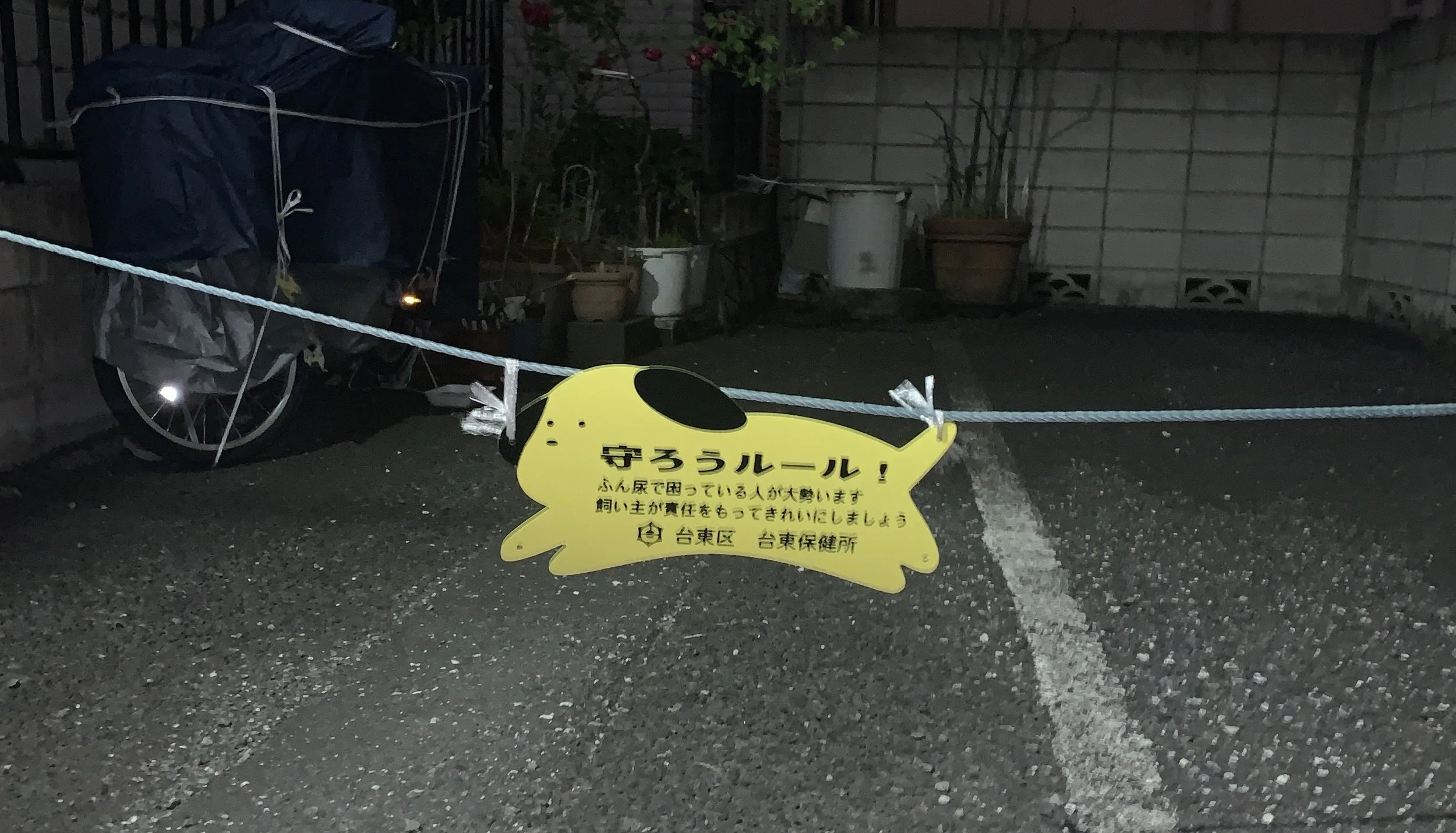
One thing immediately noticeable is that the Japanese never miss an opportunity to make even the most banal thing kawaii (cute).

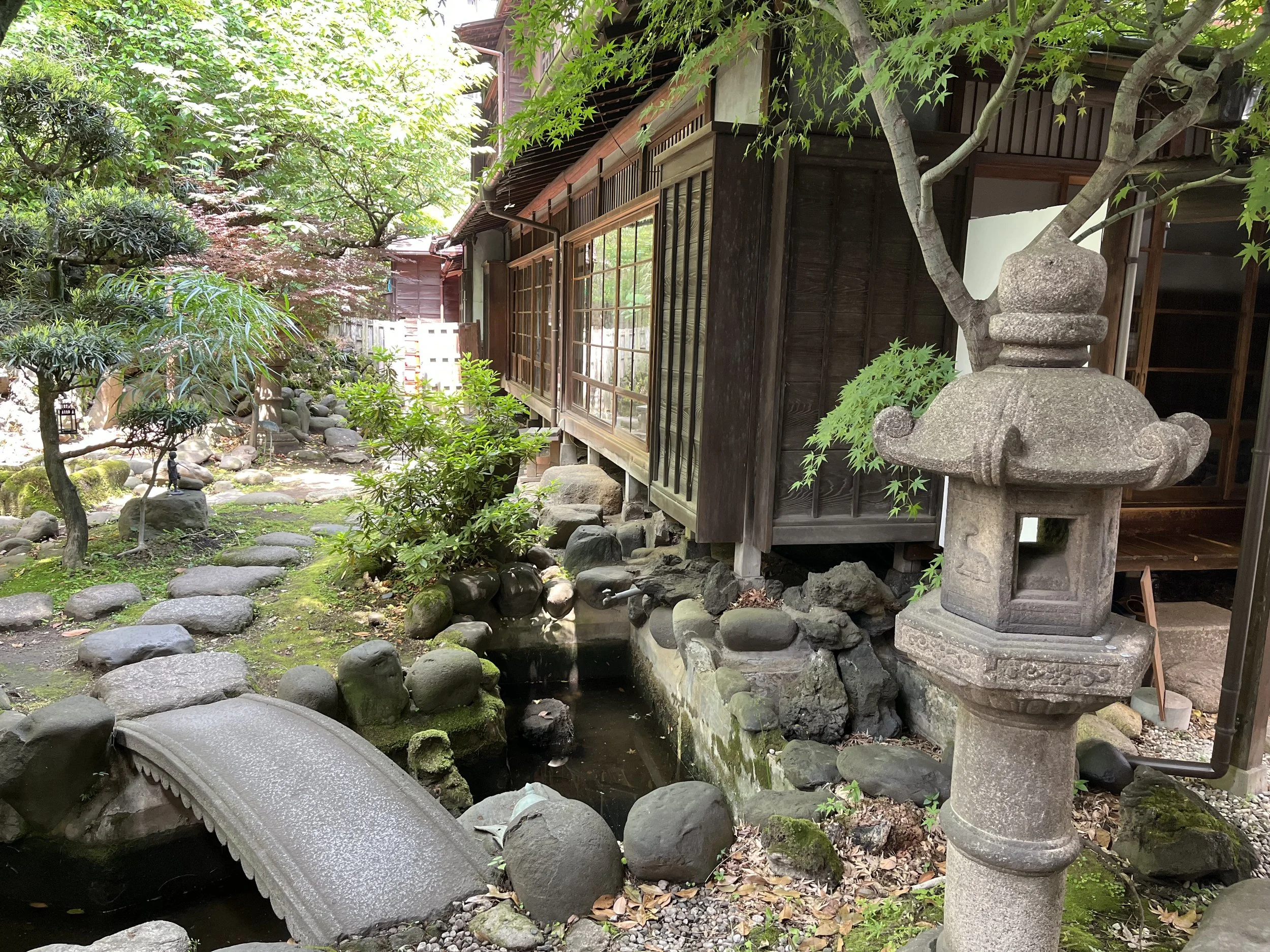
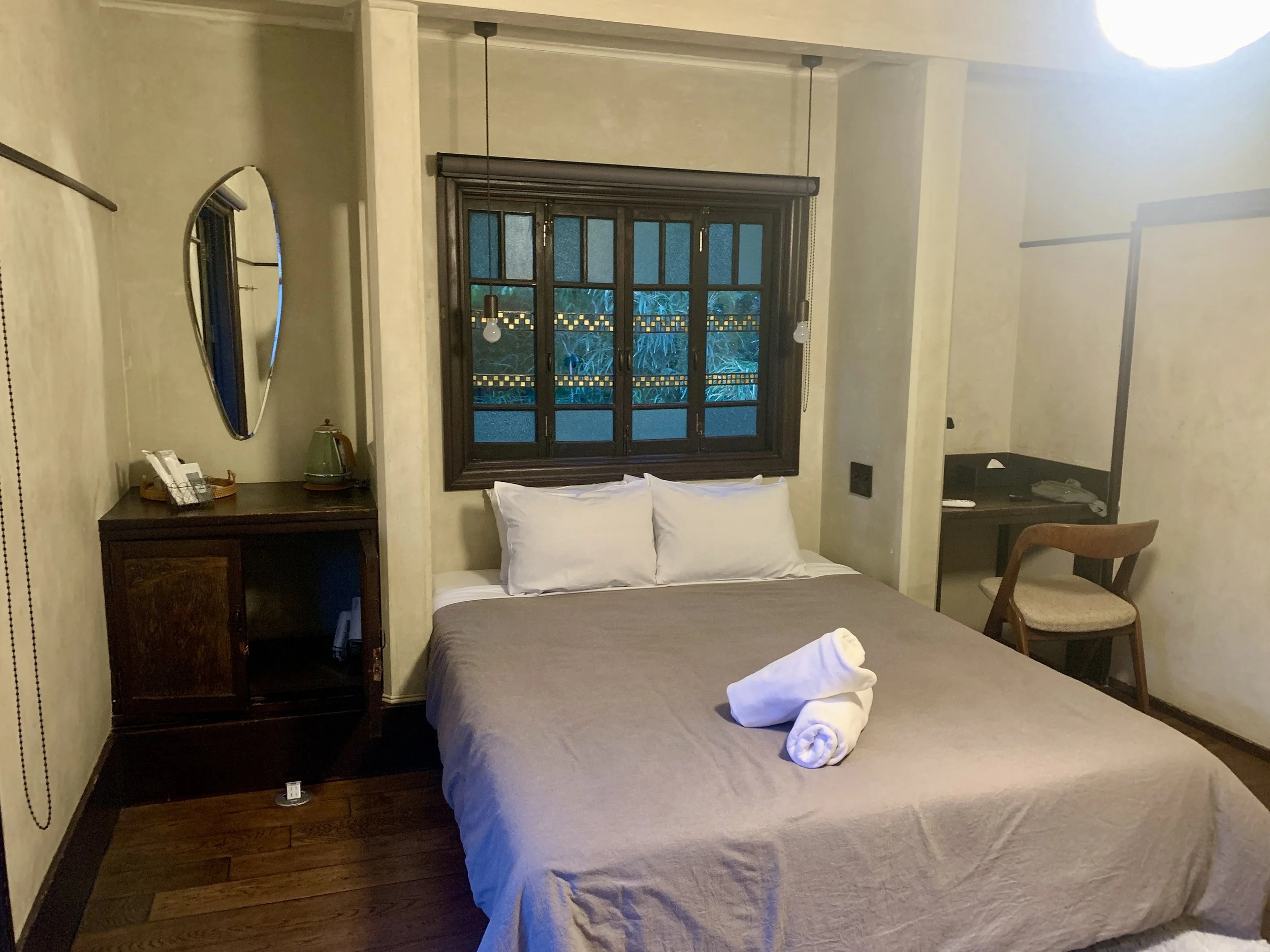
We walked to our hostel and got checked in, at this point near delirious with fatigue. Our room is the perfect soft landing to begin our trip. The hostel is very old and well cared for, with a lovely Japanese garden.

The bed is cozy, it’s quiet, there are operable stained glass windows behind the bed, a single light hanging on either side of the bed by which to read, a small desk, and a private patio through a pair of double doors.

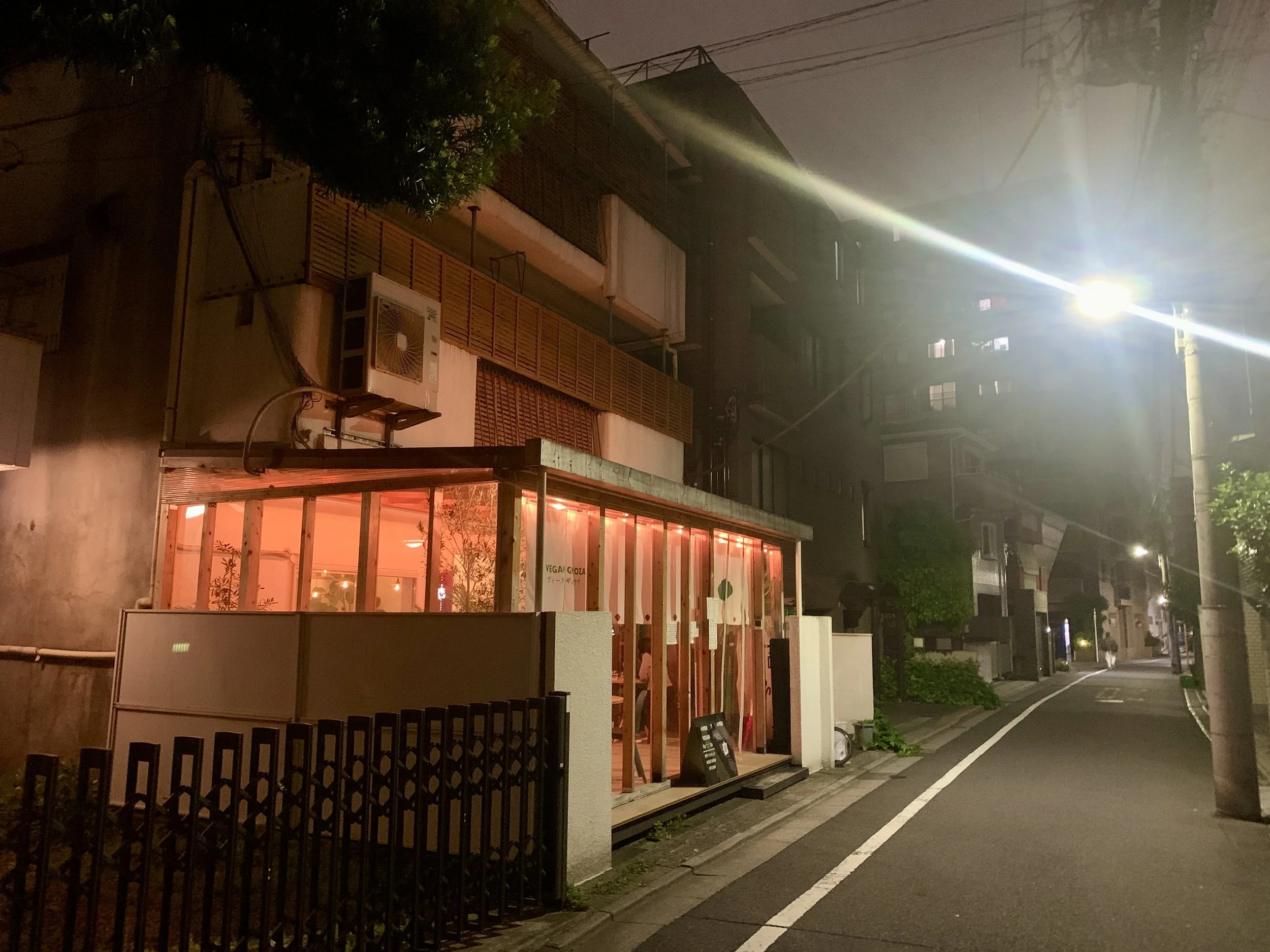
After wandering out for nearby Vegan Gyoza (delicious), and suffering through my first attempts to use Japanese face to face with a person (rather than the safety of my language learning app) we fell asleep to the sound of rain outside our window.
Friday, May 15

Chris woke me up at sunrise before we realized that the sun rises at 4:30am this time of year in Japan and promptly returned to bed. On our way out in search of brunch after a restful morning, we stopped at a couple convenience stores, Lawson and 7-11, to browse the products. It was a good chance to practice using google translate’s camera function to read packaging labels.
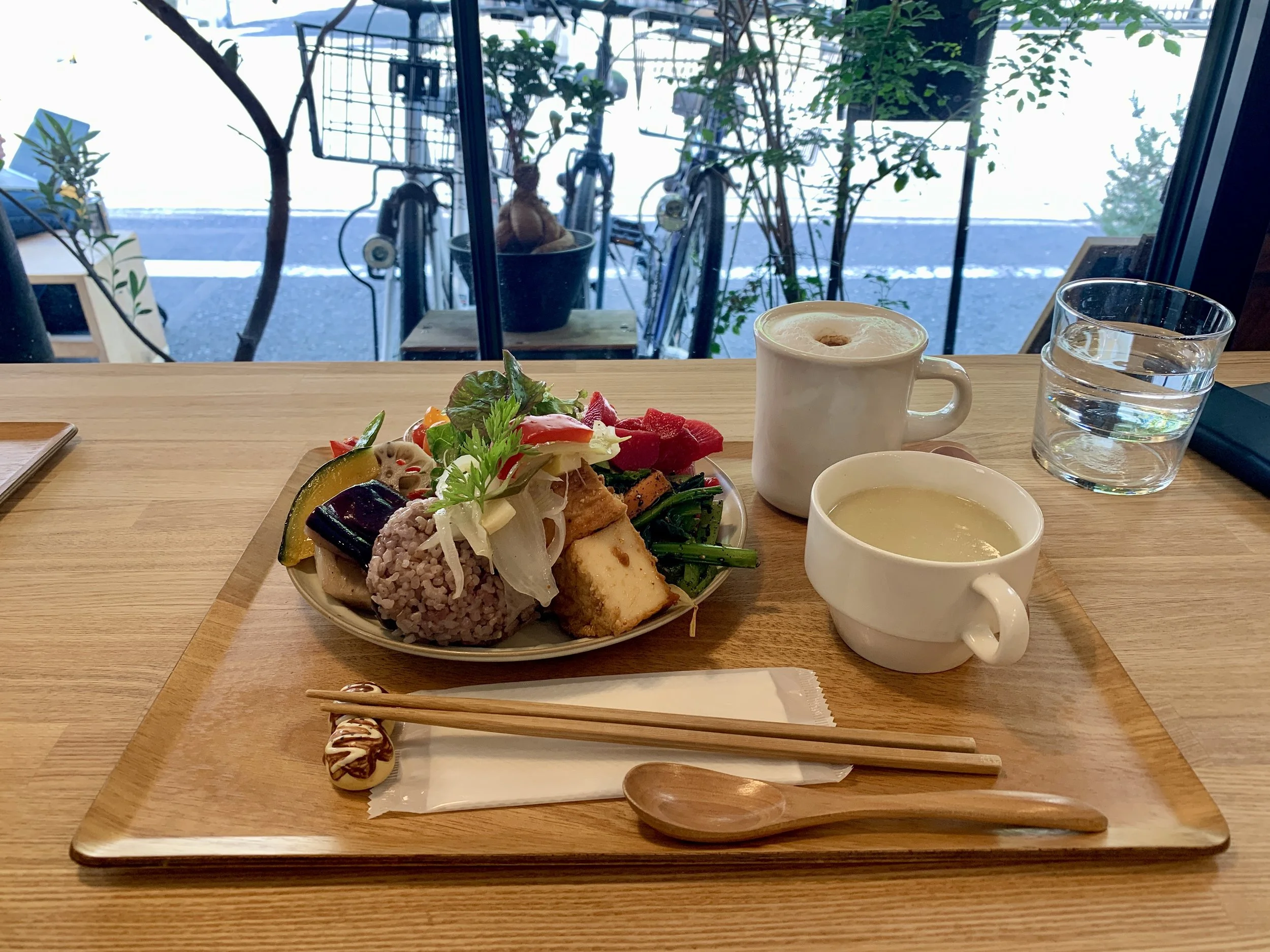
When we arrived at Guruatsu vegan cafe we both ordered the lunch plate with soup and coffee, along with a couple muffins to go (earl grey/orange and black sesame with bean paste filling). The meal was among the greatest either of us have had in our lifetimes to date. It was a mound of colorful veggies prepared in different ways and pan-seared soft tofu, with a side of soup.

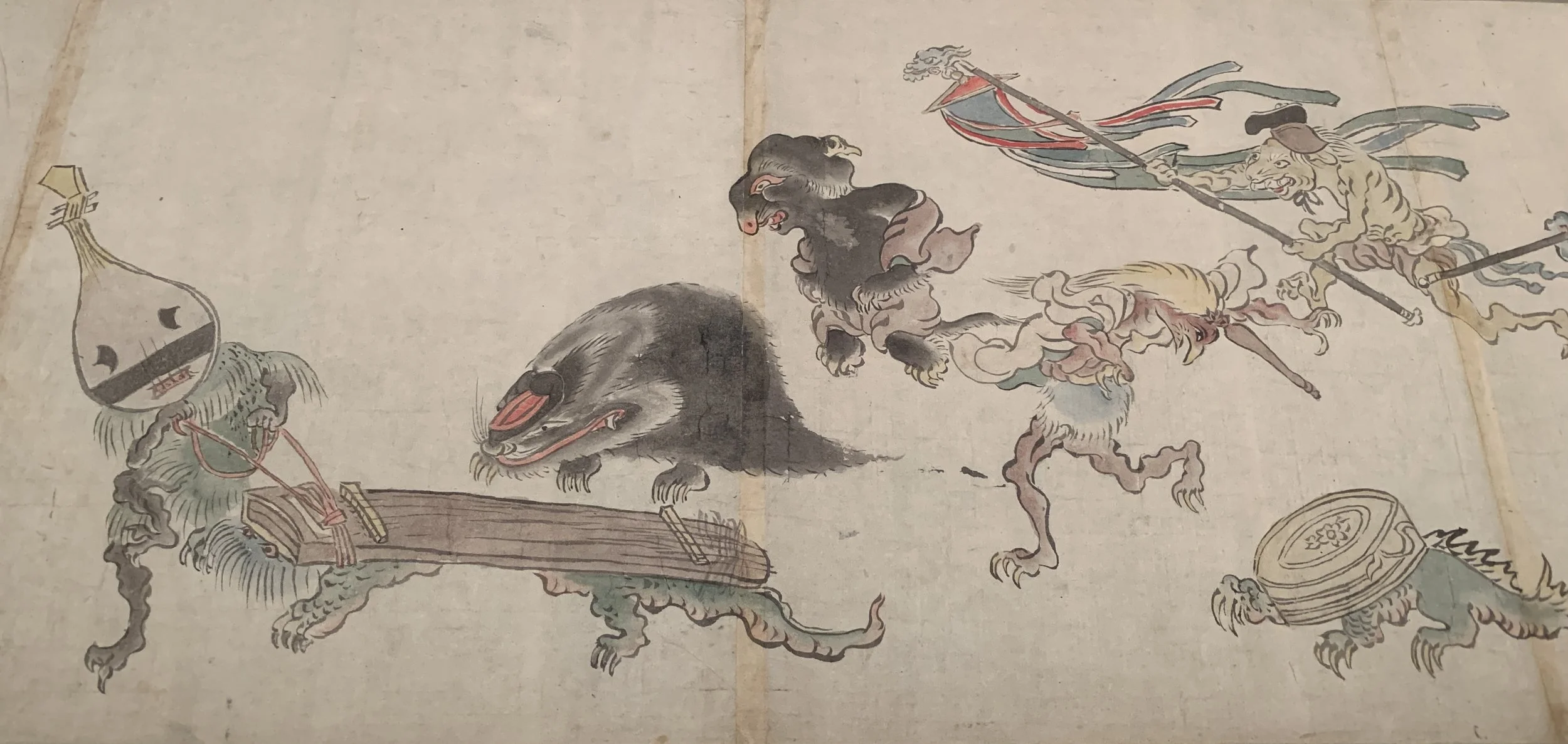
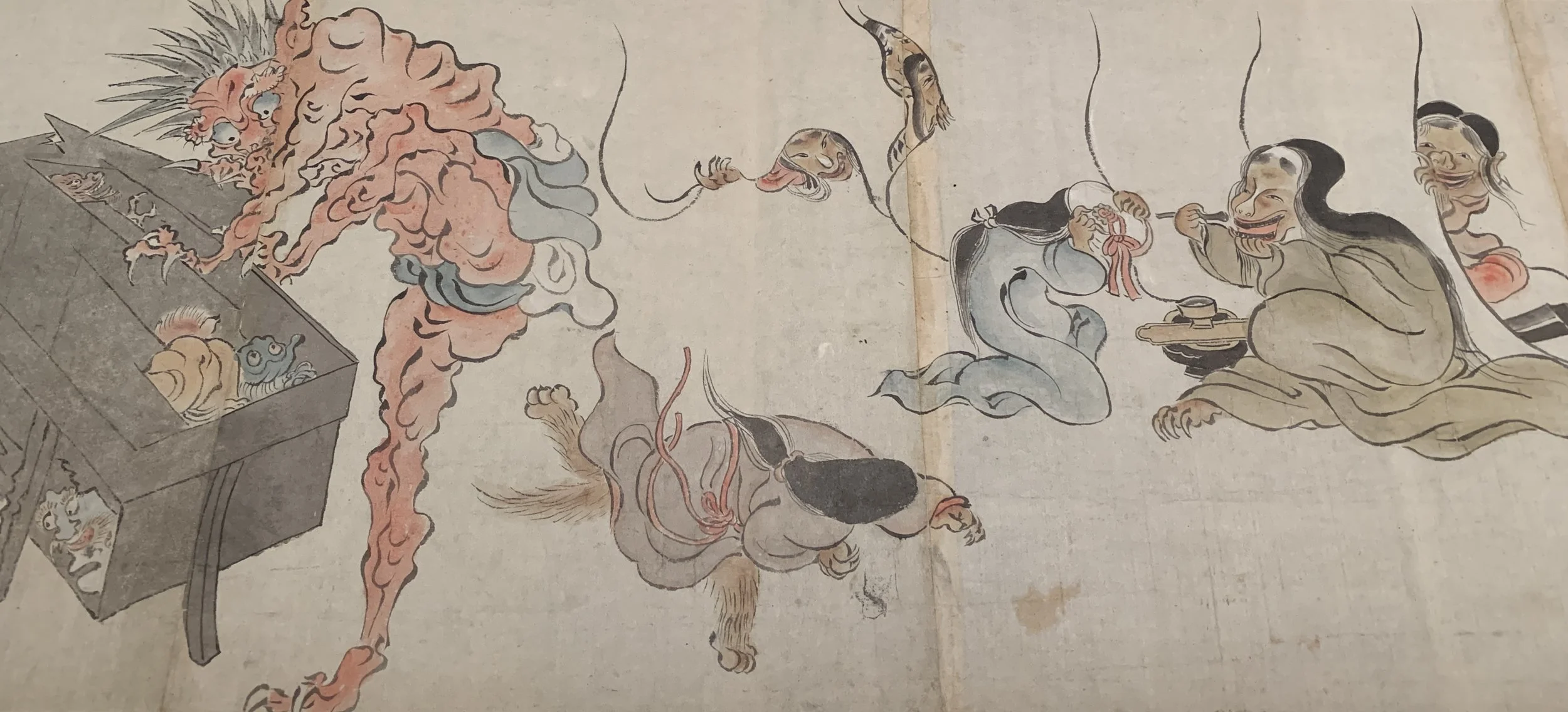
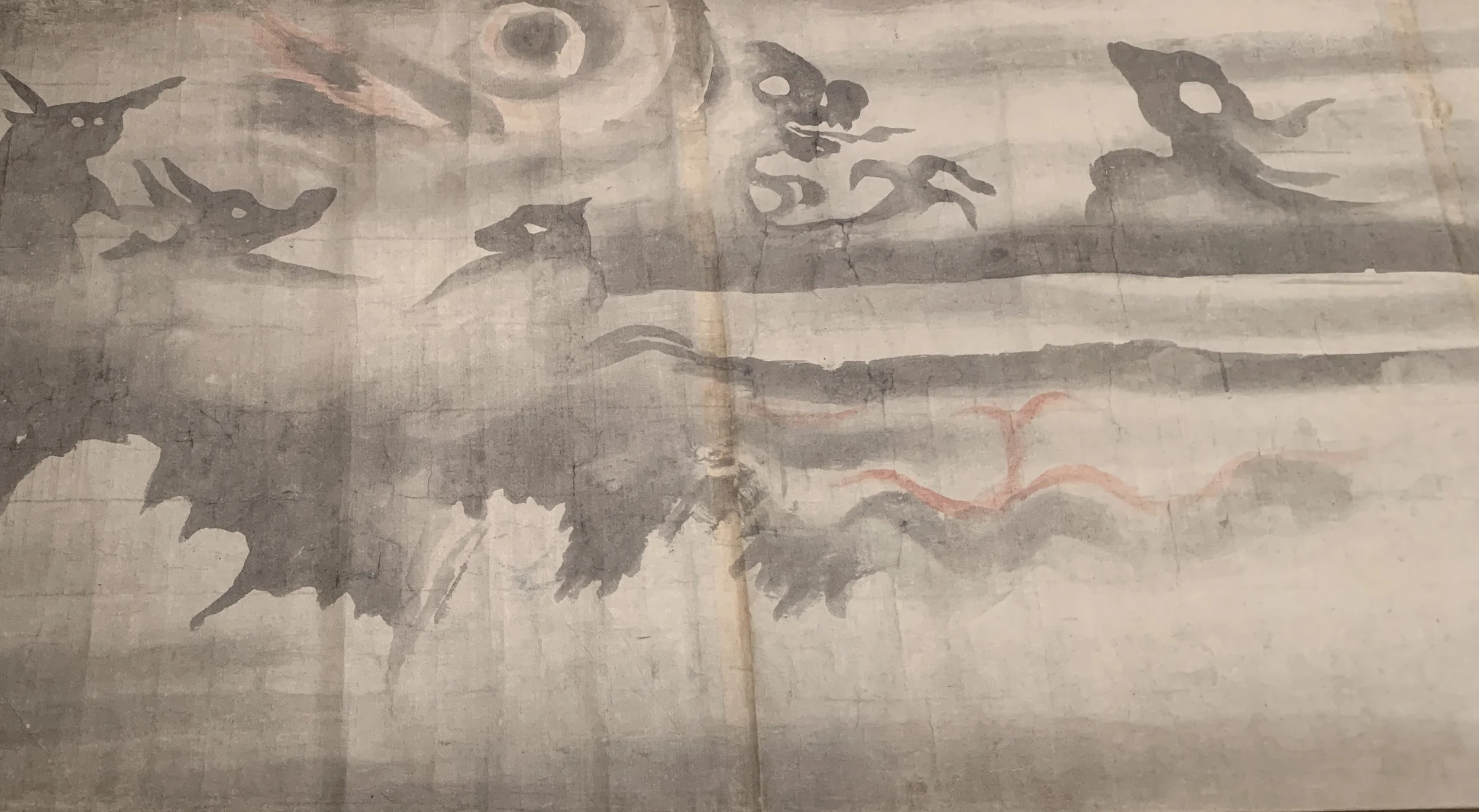
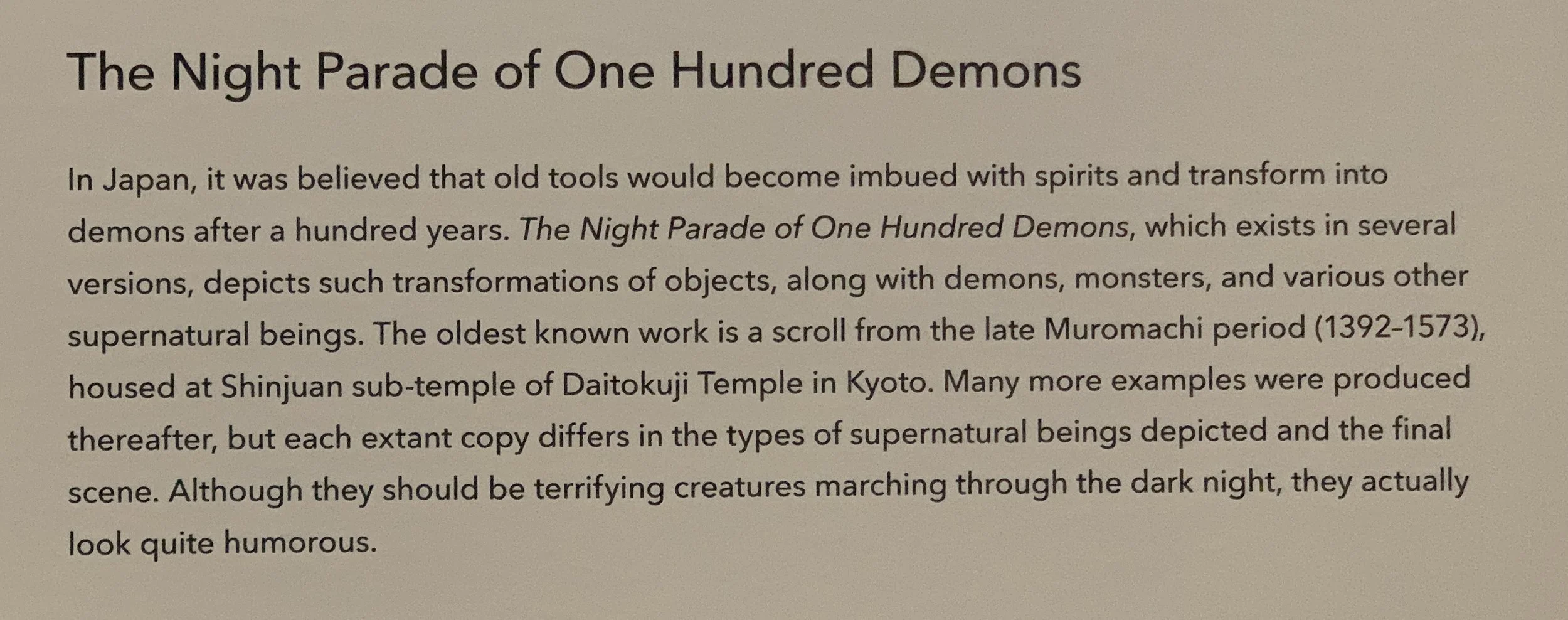
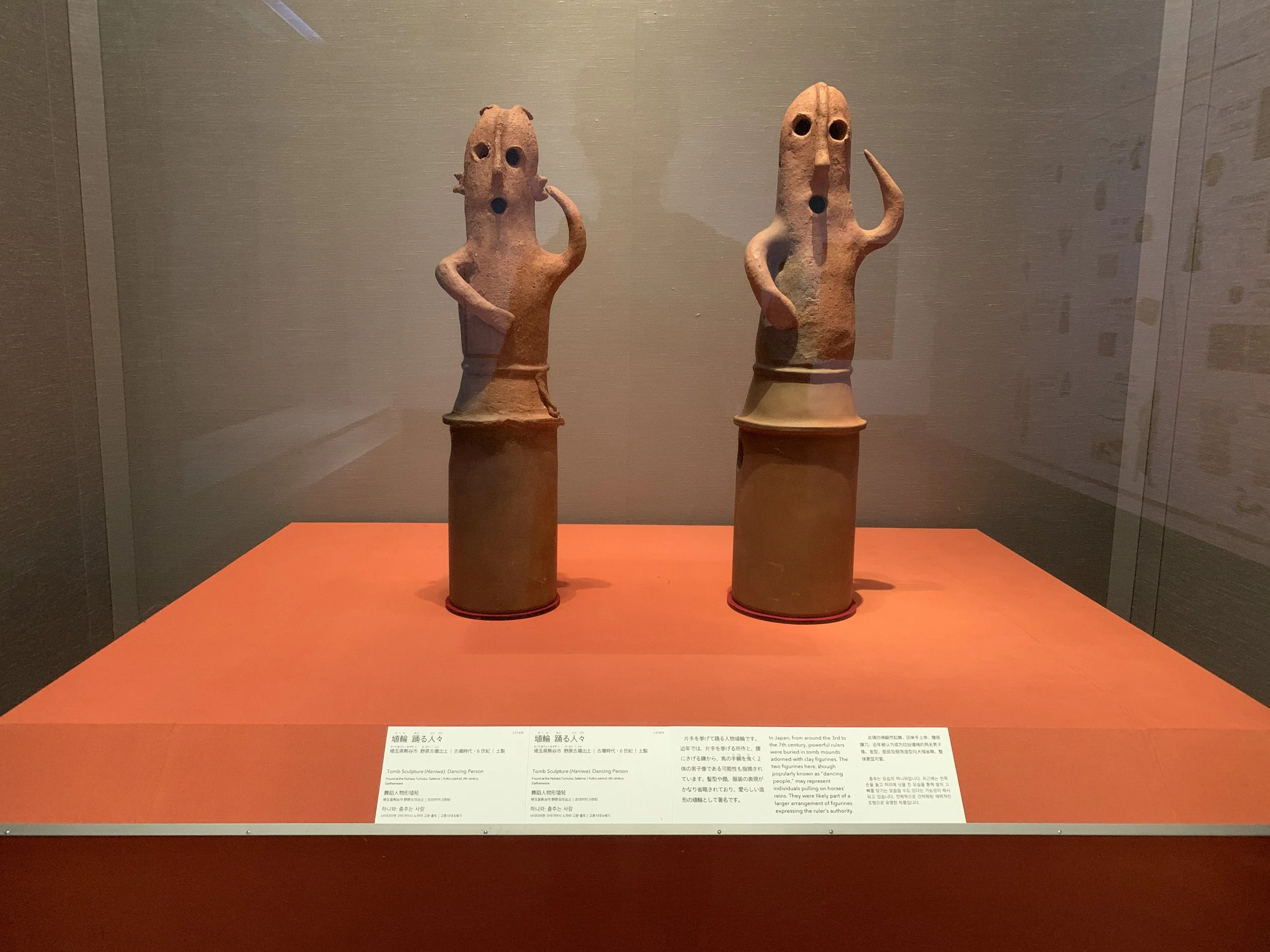
From there we walked to Ueno Park where we visited the National Museum of Tokyo. Here we got a better sense of the history of Japan and evolution of Japanese art, seeing impressive exhibits such as samurai outfits and swords, Lotus Sutra Scroll, and several takes on the Night Parade of 100 Demons (my personal favorite as I like to imagine the artists had fun on this one).

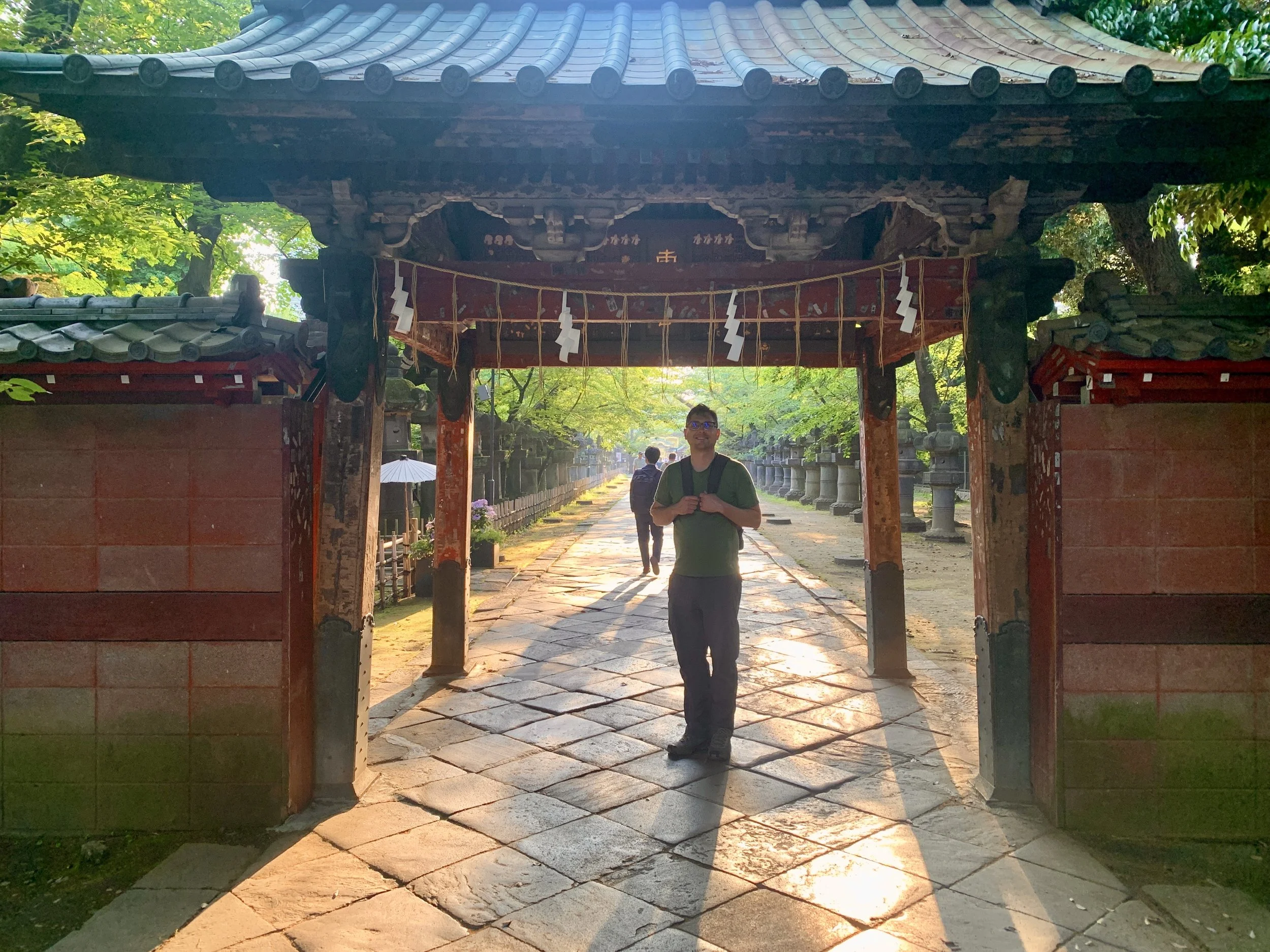
After the museum we walked around the Ueno Toshogu Shrine and caught a glimpse of a lovely five-story pagoda.

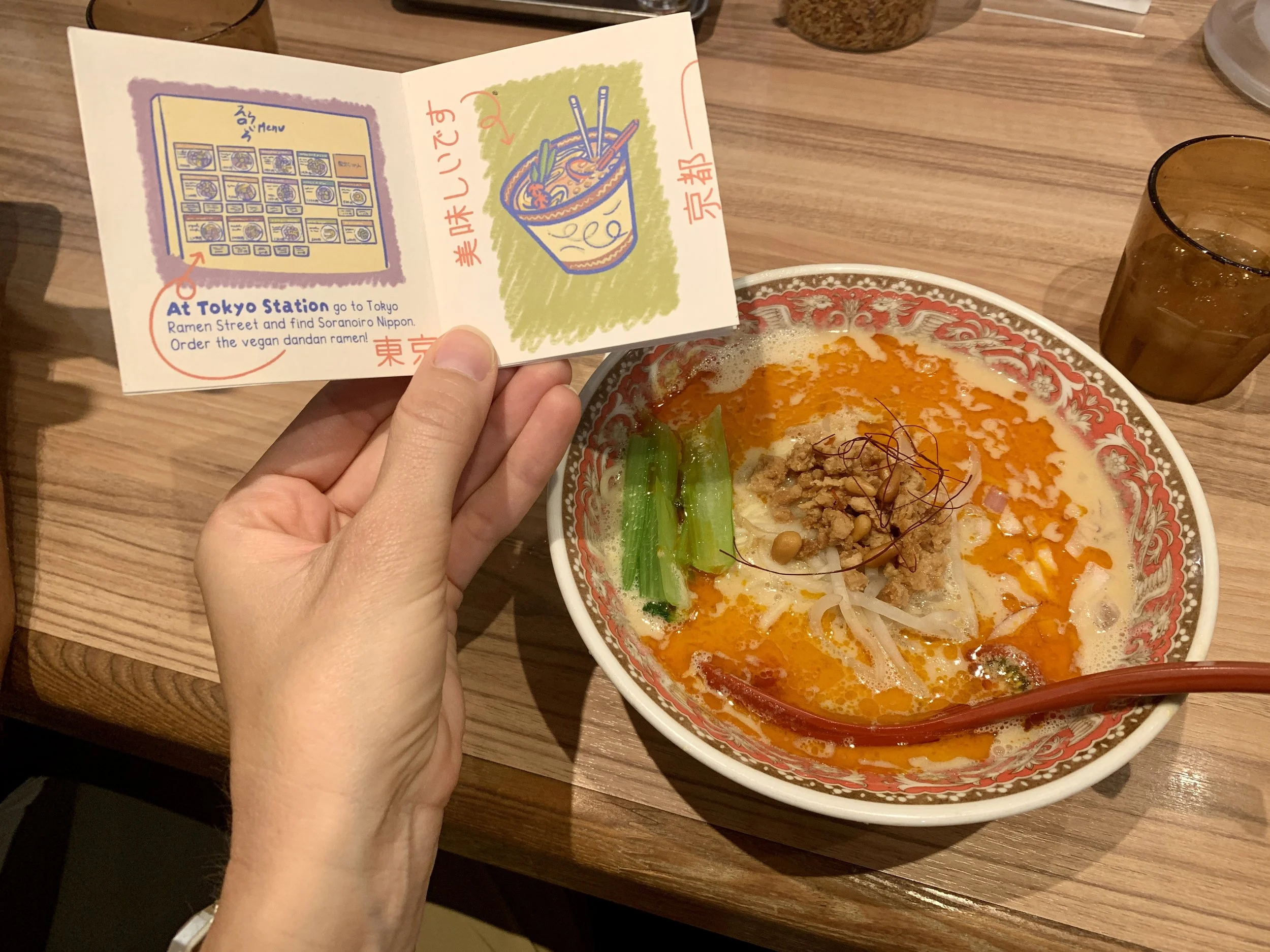
Stomachs rumbling, we took JR line from Ueno to Tokyo Station, where we embarked on an level hard scavenger hunt for the first recommendation in our friend Anna’s Illustrated Recommendations for Japan (an extra special wedding/graduation/honeymoon gift)! Locating Soranoioro Nippon on Ramen Street, a lower level eatery inside the station was like trying to find a needle in a haystack. I eventually spied the first character of the restaurant name around a corner and we enjoyed vegan dan dan ramen; while practicing slurping - a customary way of expressing gratitude for the meal (also “Oishiiii” (delicious))!

We are slowly getting better at communicating in broken Japanese and navigating the train system, although admittedly it is a bit overwhelming at times!

We made it back to the hostel without incident, although my phone was reaching precariously low battery levels and I was having anxious visions of wandering the streets of Tokyo completely lost. Safely back at the hostel we accepted a complimentary drink from the bar; I got Japanese sake and Chris got sweet potato shochu with soda water. We met another traveler who had just arrived that night from LA. He told us about a cell phone plan that he used and we ended up signing Chris up for it that night so he could use his phone on cellular as well as wifi. While I am mostly the Navigation Person it will be nice to be able to easily communicate with one another if separated. This doesn’t seem out of the question in the throngs of commuters in the stations.

We showered and went to bed, exhausted and proud to be getting a better handle on how to navigate this city and daily interactions.

Saturday, May 16

Tokyo to Kyoto

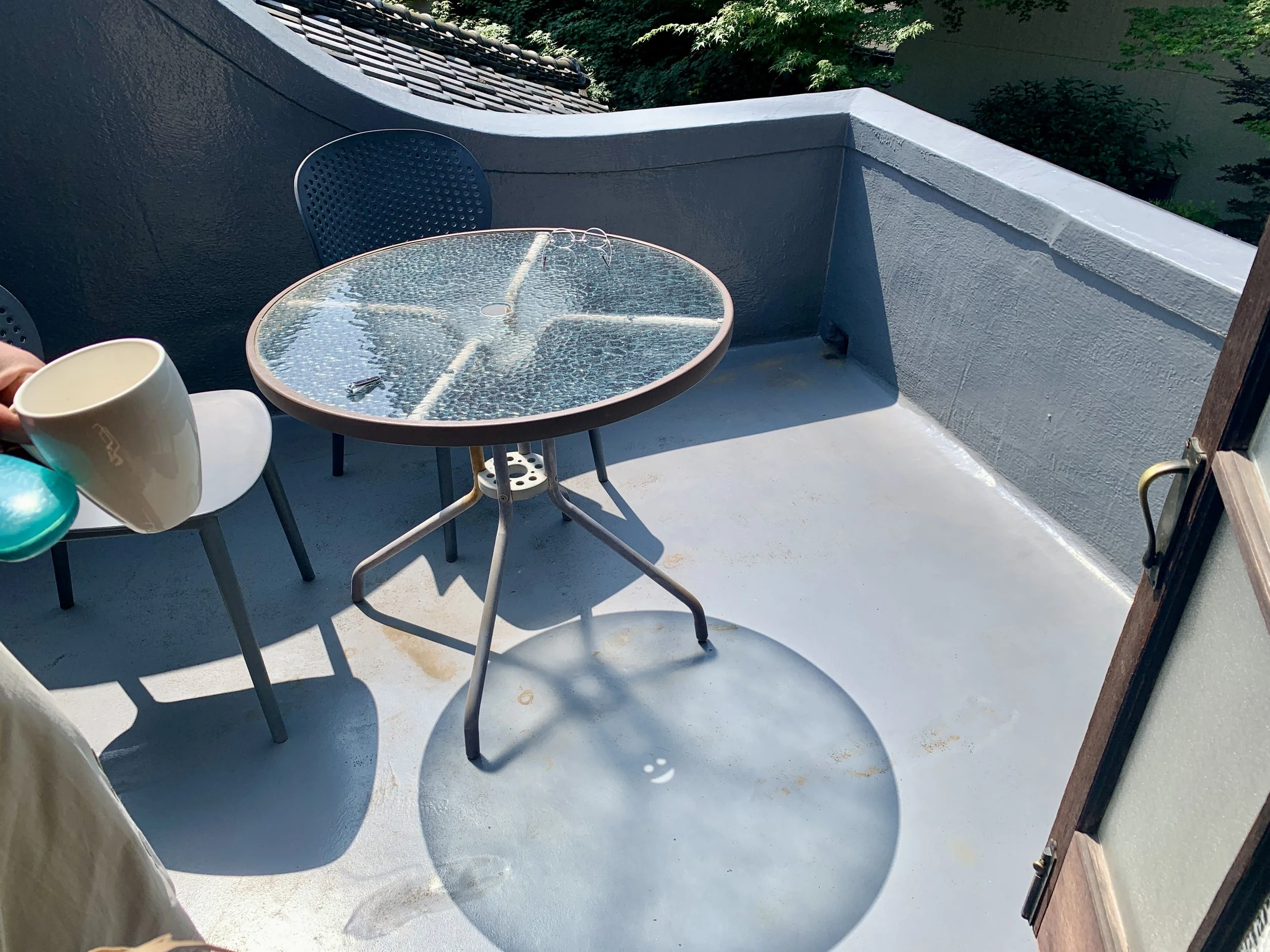
We got up around 6:30am and had a peaceful morning. We made very strong instant coffees that we enjoyed on our patio. On our way out we noticed the light was hitting our table just right, casting a smiley face on the ground. A very kawaii good omen!

It feels like an absolute miracle when we find a restaurant we’re looking for onsite in Tokyo station. T’s Tantan ramen for lunch. Chris got a rice bowl with teriyaki seitan and gyoza, and I got a black sesame bowl.

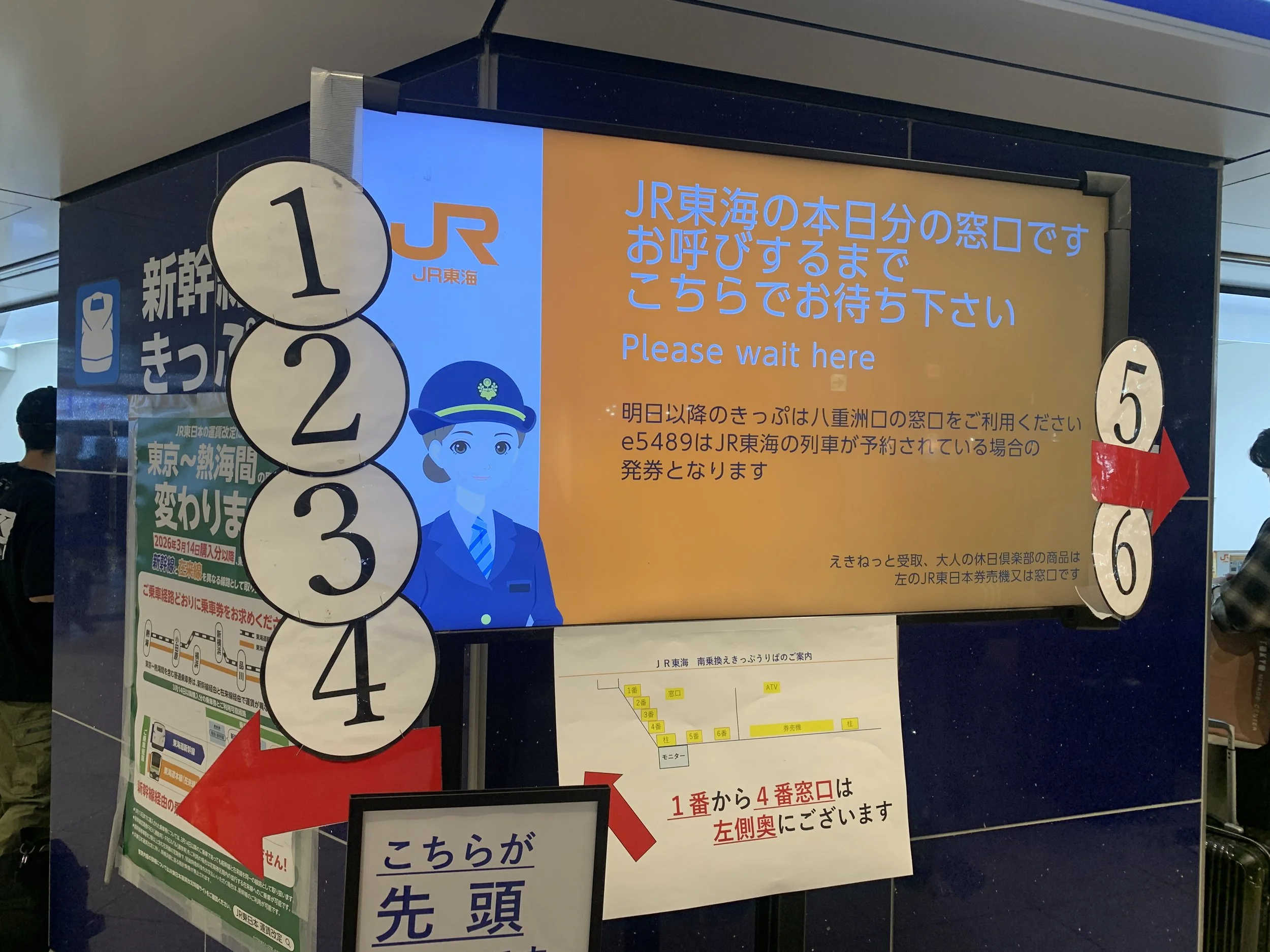
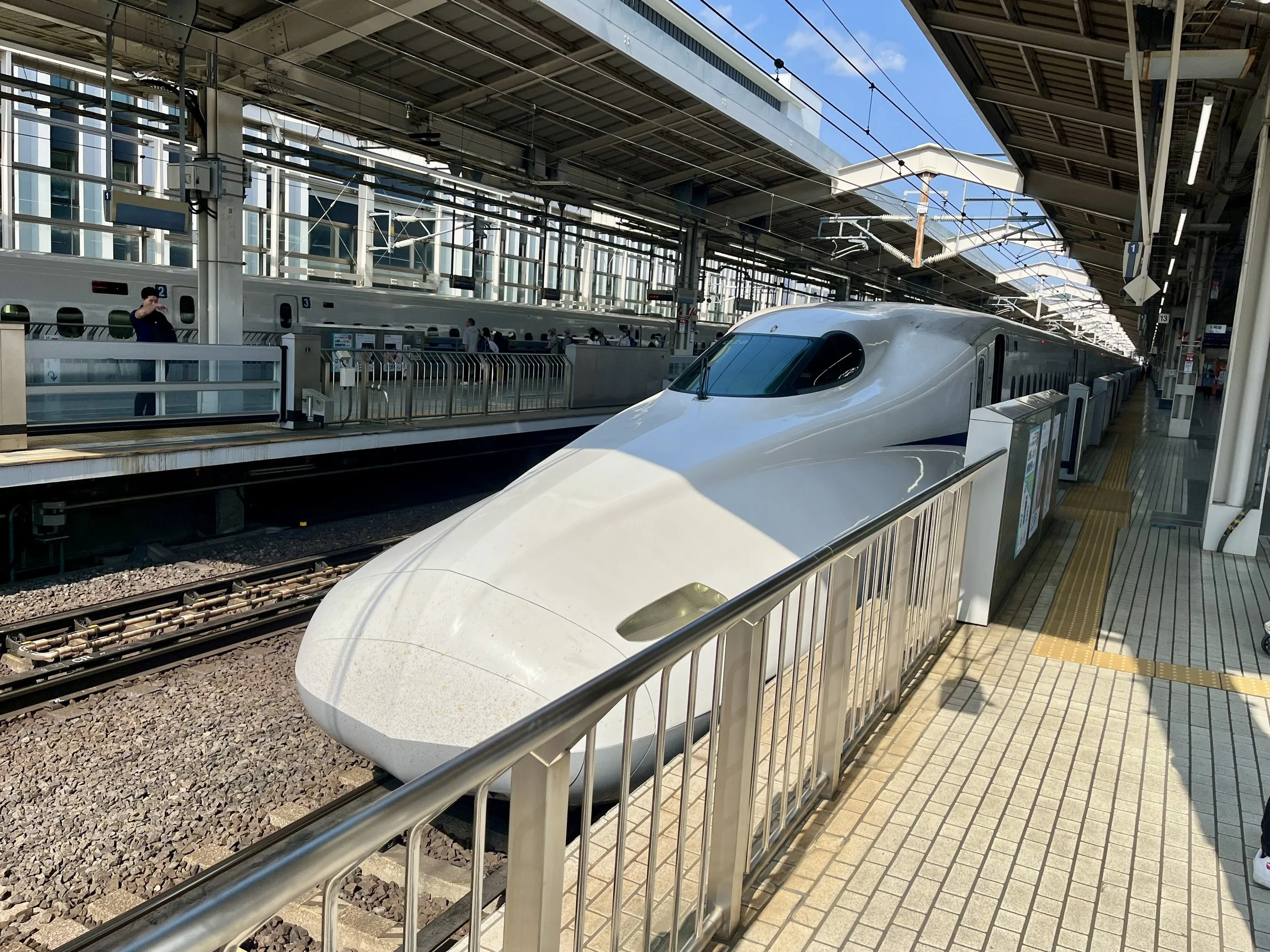
Then we walked to the Shinkansen (bullet train) ticketing area and I got as far as “good afternoon, we are two people going to Kyoto.” (To which the Ticketmaster responded in rapid Japanese) then, “I’m sorry, do you speak English?” I was happy to make it that far before having to bail, though. It is getting easier to spit out words without choking on them …or accidentally using Spanish.

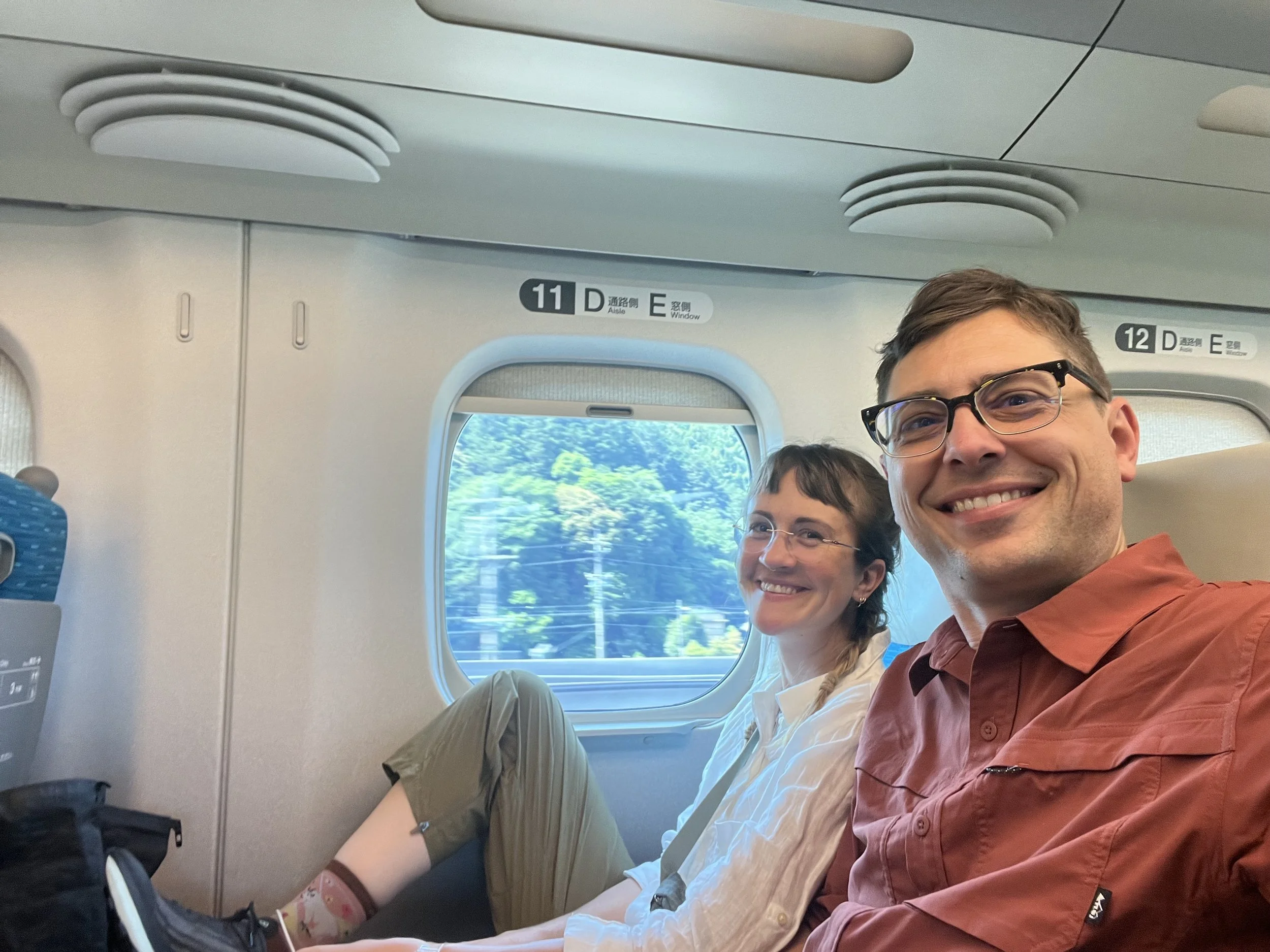
We purchased non-reserved seats (cheapest) and headed in search of the non-reserved Shinkansen cabs, watching others to figure out what to do. The Shinkansen is Hiroshima-bound but makes a stop in Kyoto where we will disembark. We ended up with two seats together next to a window and settled in to enjoy two hours of quiet and relaxation to study Japanese, journal, and read.

All public transit we’ve experienced so far has been astoundingly clean and orderly. The sounds are pleasant too: twinkly happy video-game noises to indicate a coming announcement, or a train arriving soon. Even on the most crammed train ride (where I was certain not one more person would fit after us) at least ten more people got on. We didn’t even have to hold on as no one would be moving an inch until exploding out of the open doors on arrival at the next station.

Chris has felt right at home in Japanese culture so far, while admittedly it has been a bigger learning curve for me. Coming from Texas/Mexican culture which is big and boisterous, it’s a stark difference to find myself in a place with such a reserved and polite people. People eat quietly (apart from the slurps), speak softly, display outsized gratitude and extreme humbleness.

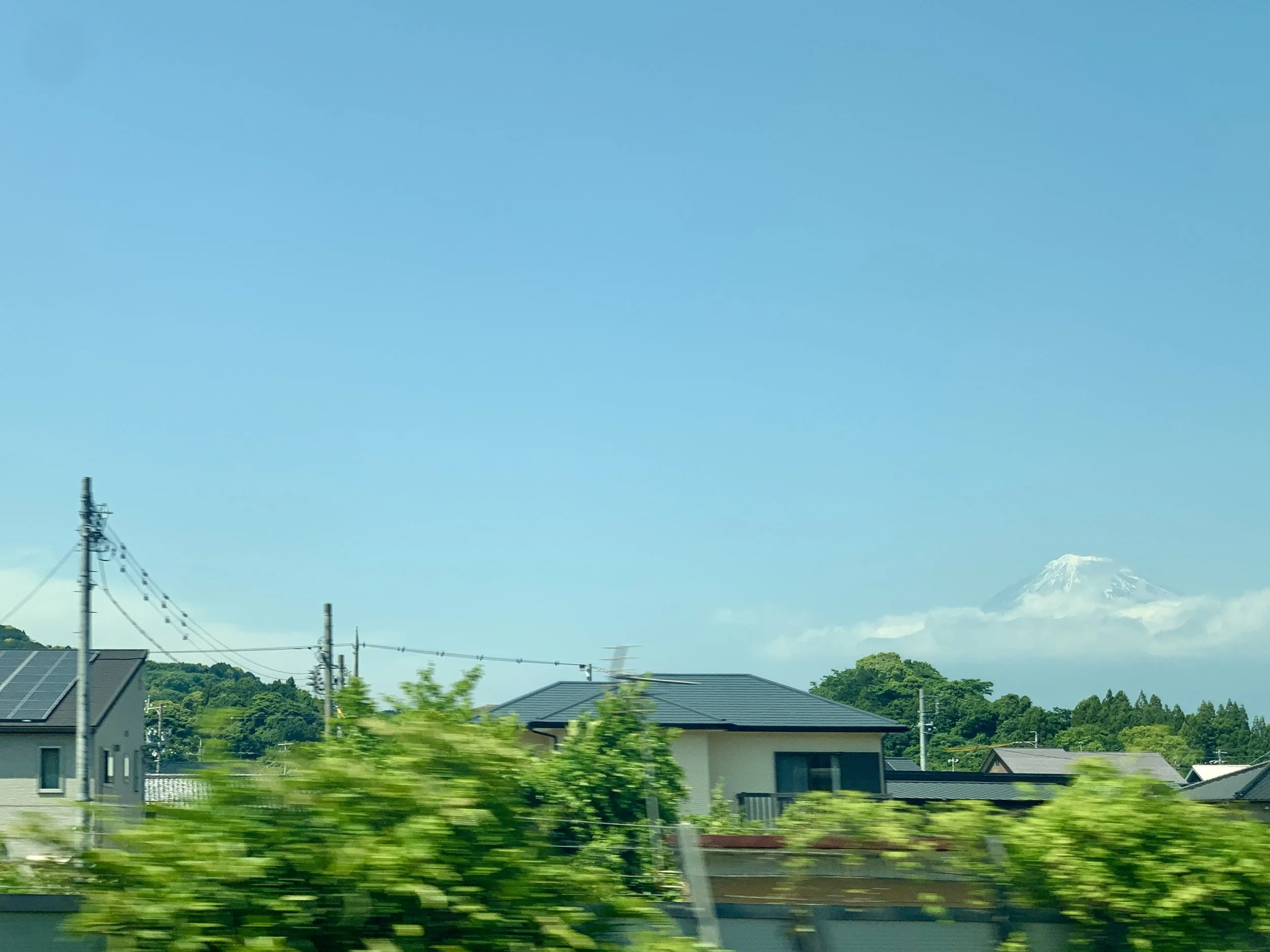
The Shinkansen got us to Kyoto at speeds of around 150-200mph. We passed several mountain ranges on the way out of Tokyo, including Mount Fuji, which peeked out dramatically from behind the clouds.

On arrival in Kyoto, with some two hours until check in (it is bad form to be early or late in Japan) we decided to find a cafe to pass time at. Near the Shinkansen station was a place called Mercy Vegan Factory Kyoto, and we ordered a sando, matcha pudding, and mock egg salad sandwich to tide us over. After, we headed back to the station to take the Kyoto subway to our b&b.

When we arrived at Azukiya B&B, at 5pm on the dot after successfully navigating two train transfers with zero margin for error, we were greeted by a delightful woman who manages the b&b. This place was recommended to us by our friends Anna and Chase who incidentally also honeymooned in Japan (and hiked the Kumano Kodo)! Chieko complimented my Japanese and pronunciation which made my day (although one must always reject any compliment: “no, still long, long way to go…”). We had a funny interaction when she brought us some mochi and green tea. I tried to ask in Japanese “does it have dairy products? Because of allergies he cannot have dairy at all” but instead said something to the effect of “I’m smiling, and because of an allergy he cannot have smiling at all.” Nyūseihin (Nyū = dairy, seihin = products).

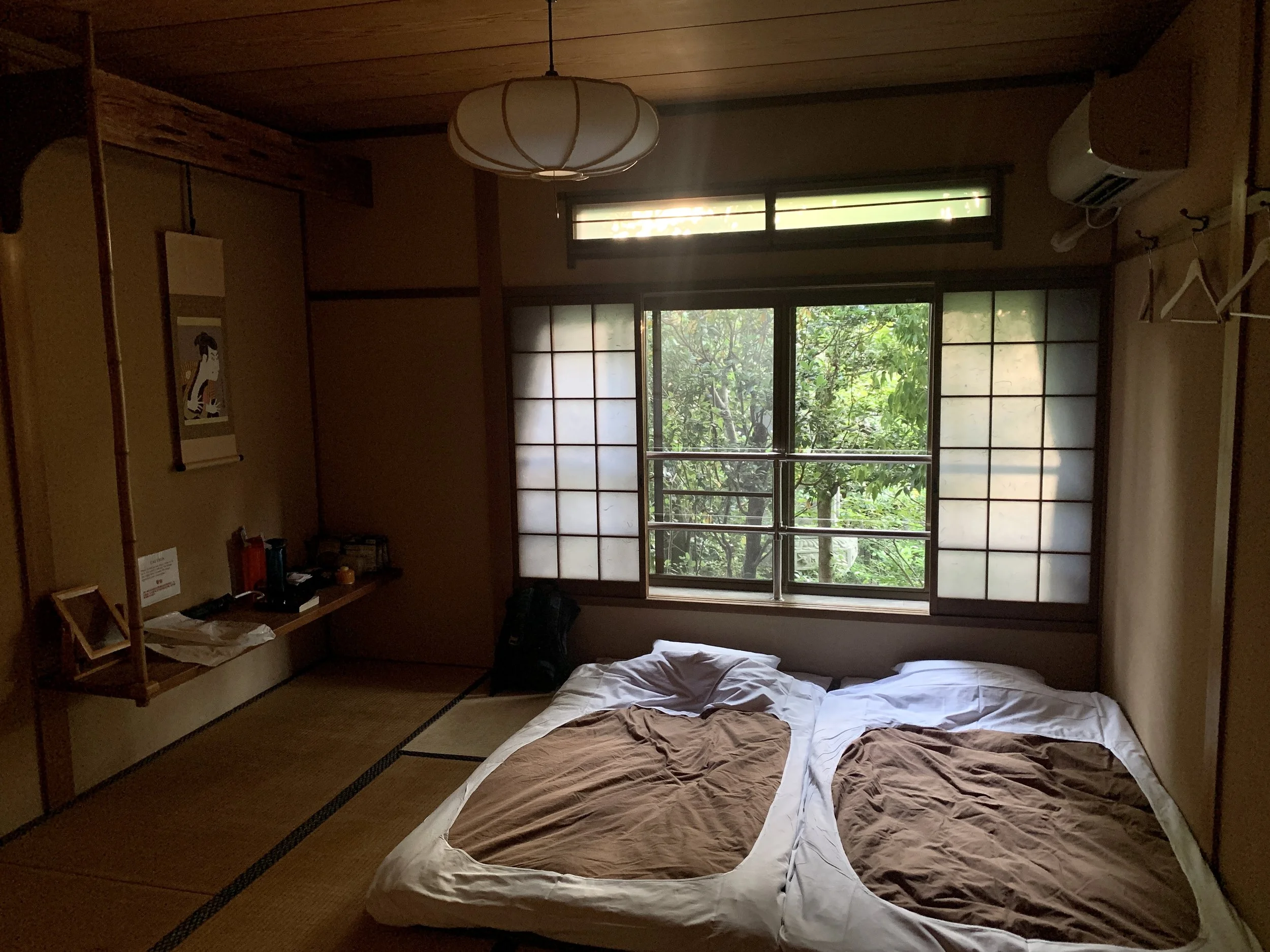
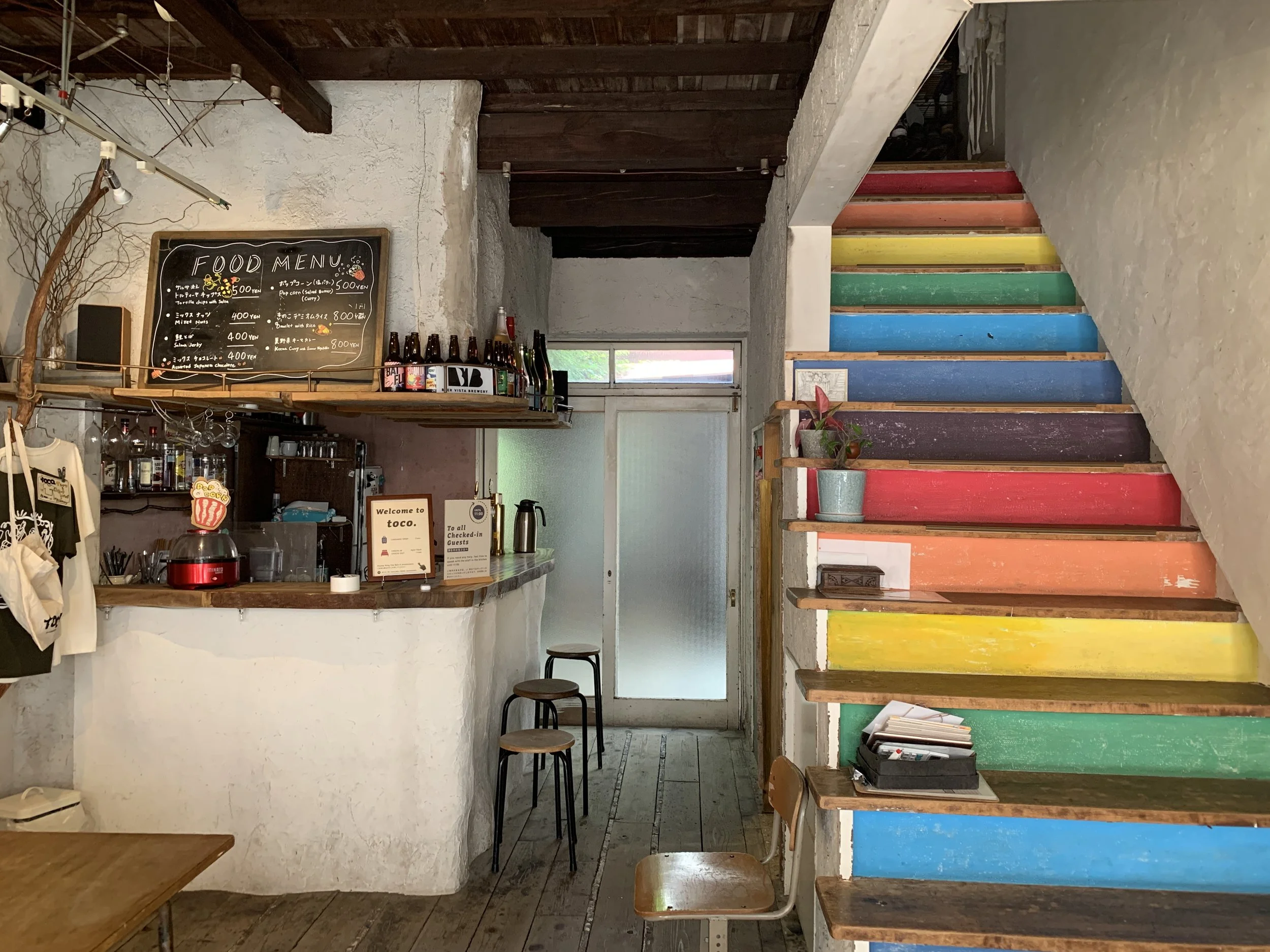
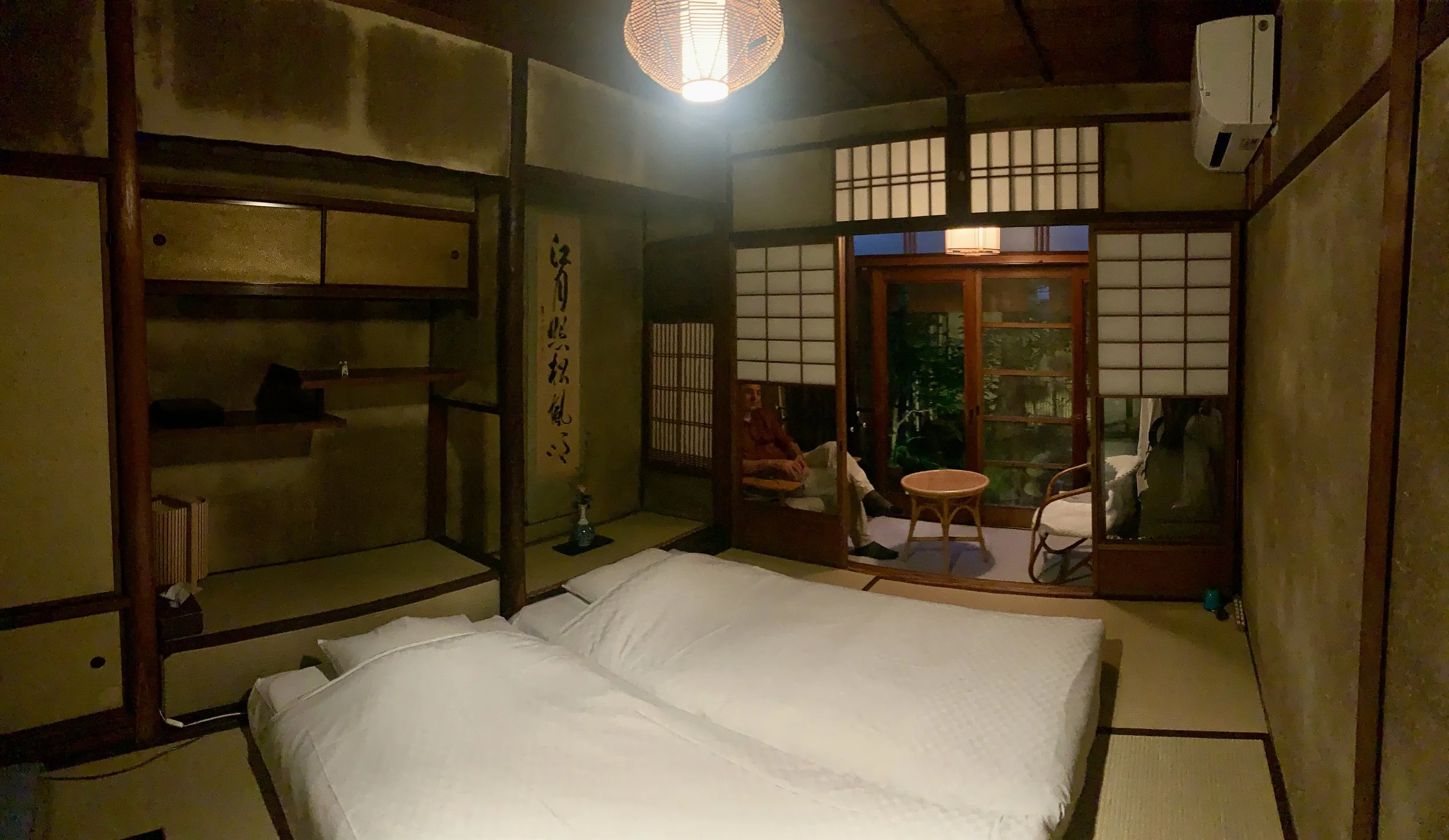
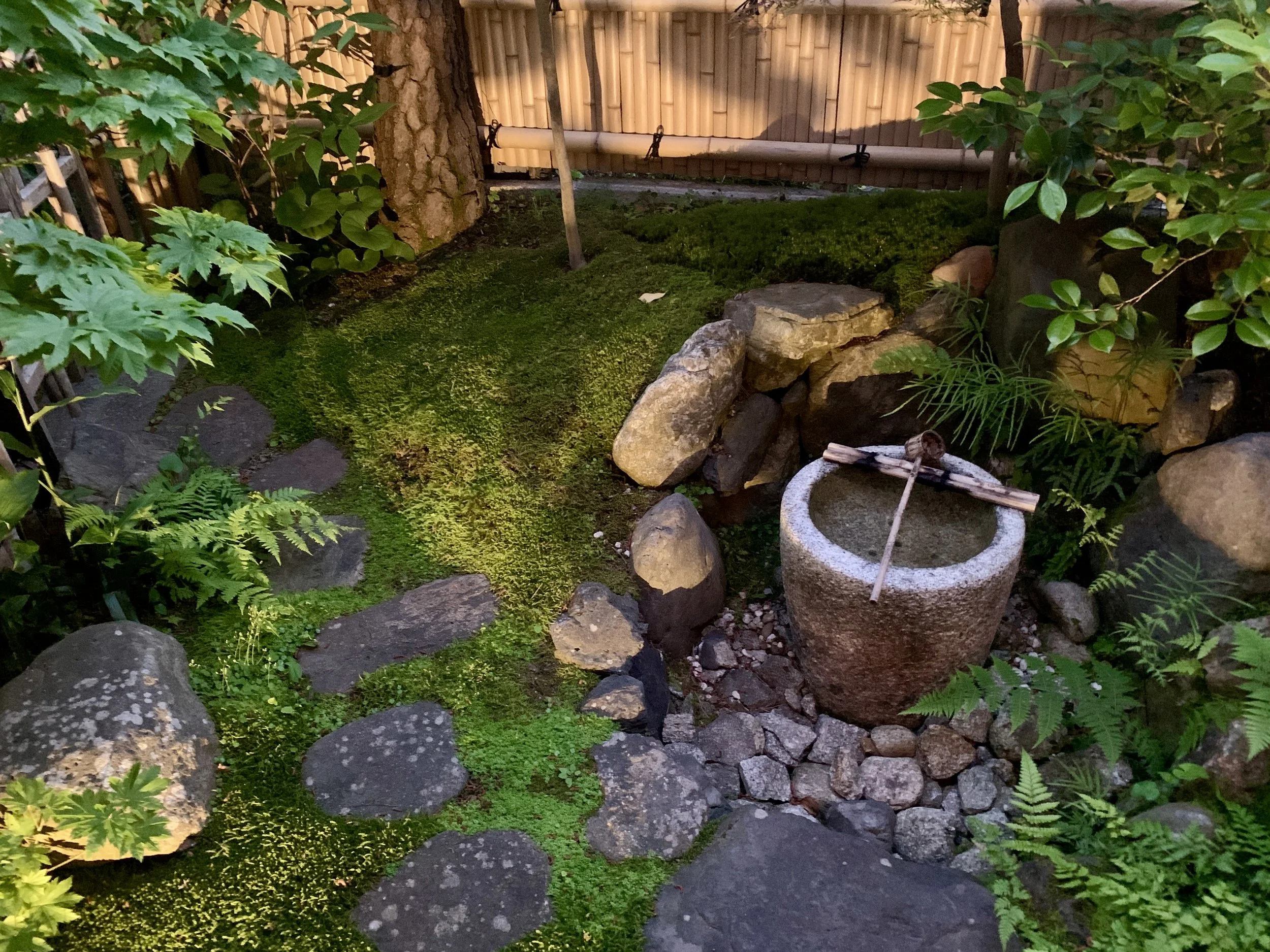
Like Guesthouse Toco, Azukiya b&b is another quiet oasis in a major city. This time however, we have a lovely private bath and kitchen, and access to a charming Japanese garden just outside our room. One of the best things about this trip so far for both of us has been catching up on sleep, and this is sure to be another special spot for solid rest.

Honeymoon Plans

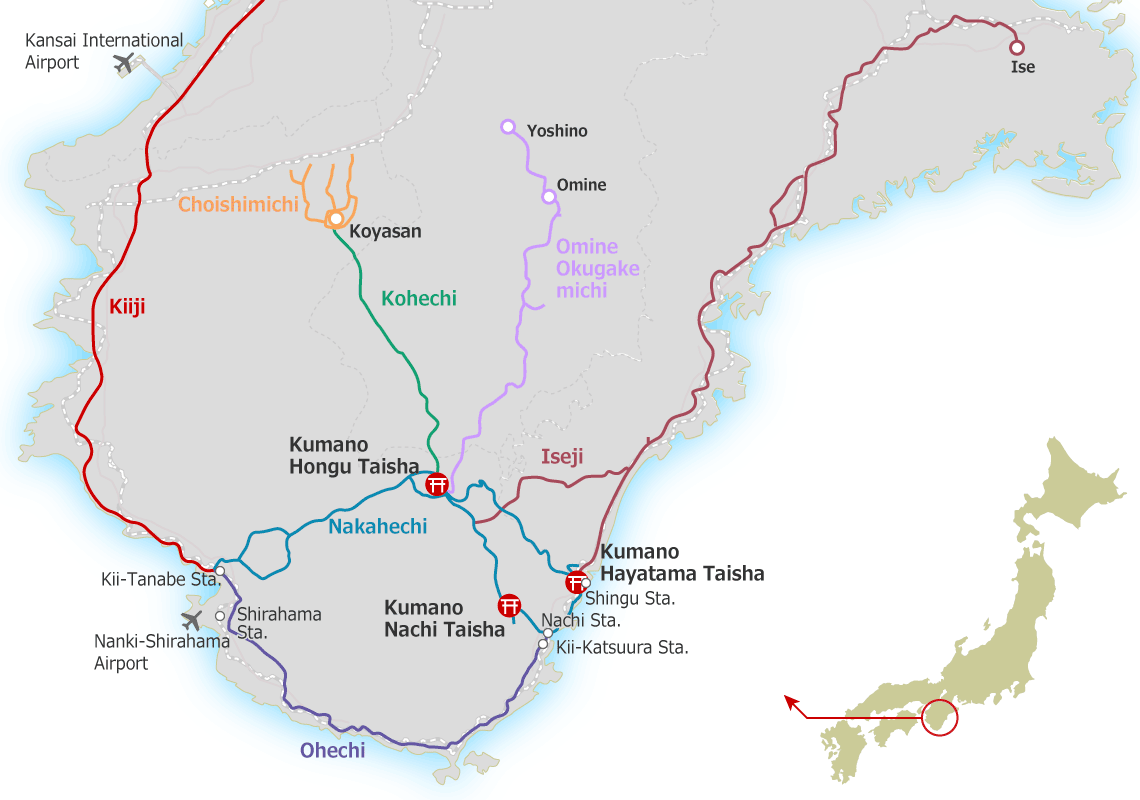
The Kumano Kodo is an over 1,000 year old network of pilgrimage trails on Japan's Kii Peninsula. It is one of only two UNESCO World Heritage pilgrimage trails, the other being the Camino De Santiago network in Europe. Like the Camino, the Kumano Kodo has several routes to choose from, of varying distances, terrain, and popularity. We have stitched together two routes to build a 10-day trek. The Nakahechi (~70km) and Kohechi (~65km) routes will take us through forests, over mountain passes, past grand shrines, and will include a traditional boat ride on the Kumano River where it meets the Kumano Nada Sea, part of the North Pacific Ocean. Our hike will end with a temple-stay on sacred Mount Koya (Koyasan), the founding site/headquarters of Shingon Buddhism.

Source: Tanabe City Kumano Tourism Bureau

Compared to the Camino de Santiago—for which I booked no lodging in advance when I walked the last 100km from Sarria to Santiago de Compostela with family in Fall of 2024—the Kumano Kodo takes an incredible amount of advance planning and budgeting. For this and a number of other reasons, there are far fewer pilgrims on the Kumano Kodo. Tent camping is highly restricted to designated campgrounds, which range from few and far between to simply nonexistant depending on the route. Pilgrims instead stay in ryokans (inns), minshukus (guesthouses), hostels, and temples, with the option to opt into meals, including dinner, breakfast, and a packed bento box lunch. Luggage shuttles are also an option, although we’ve chosen to stow our urban gear in the train station and carry our backpacking gear for the love of the game. Because of the limited availability of lodging, pilgrims generally make reservation requests 4–6 months in advance of travel.

We made all of our reservations through the local booking system website, linked at the bottom of this entry. It took us about 10 hours broken out over the course of two nights, because the booking system functioned best during Japan daytime hours. This experience was not for the faint of heart. Every logistical variable had to be taken into consideration. For each lodging selection we had to pick a first choice, and at least three back-up options, define dietary restrictions (especially interesting to navigate since Chris’ Alpha Gal diagnosis last year), provide a projected arrival mode and time, and so on. Once the booking request was made, we received booking approval in a little under two weeks, which was lucky as the wait can often be a month or more. When the approval came in, we had 48 hours to complete payment. Our reservations were processed a couple days after Christmas, with most of our first choice lodgings, so this was a great note to end 2025 on.

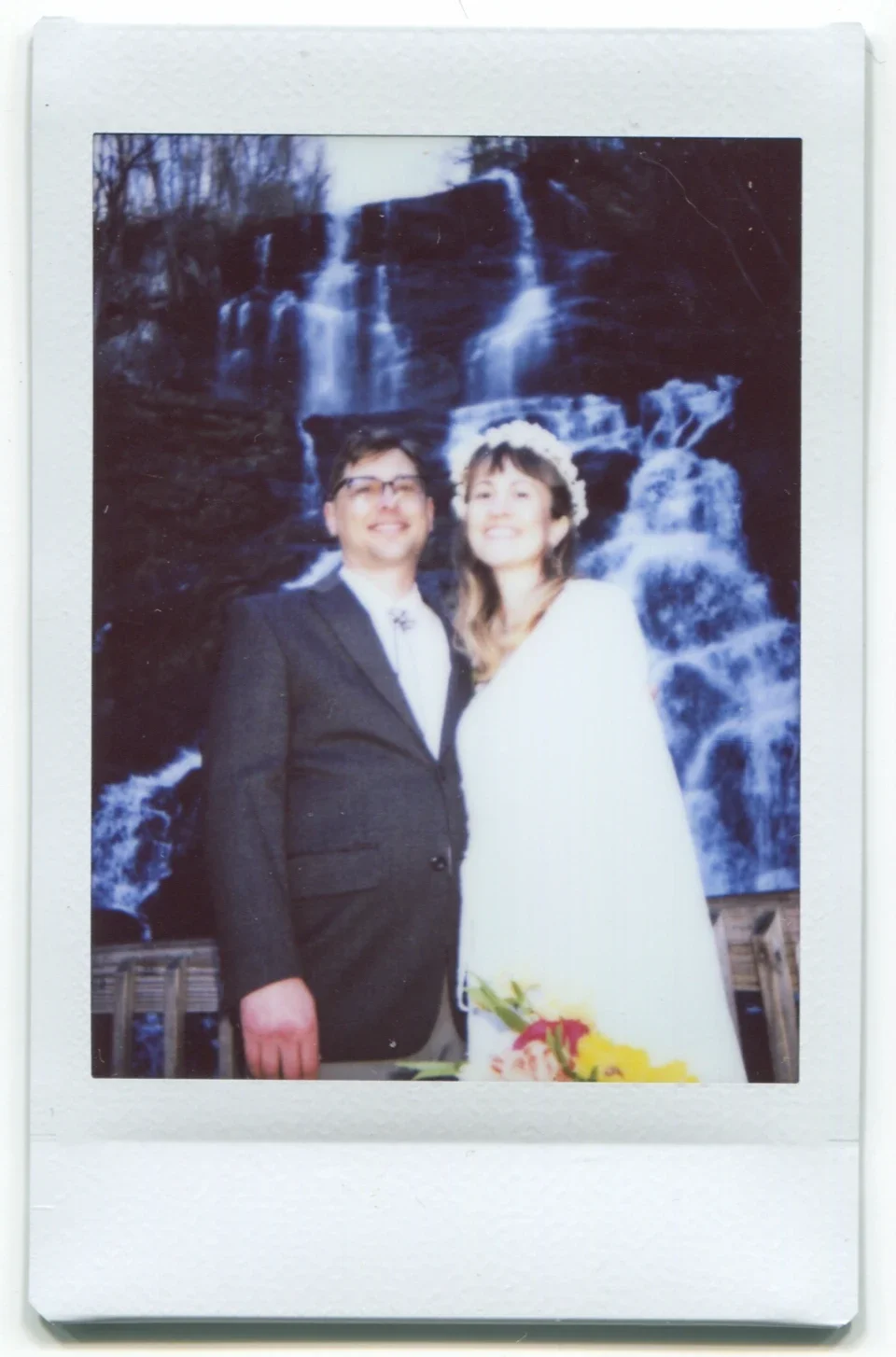
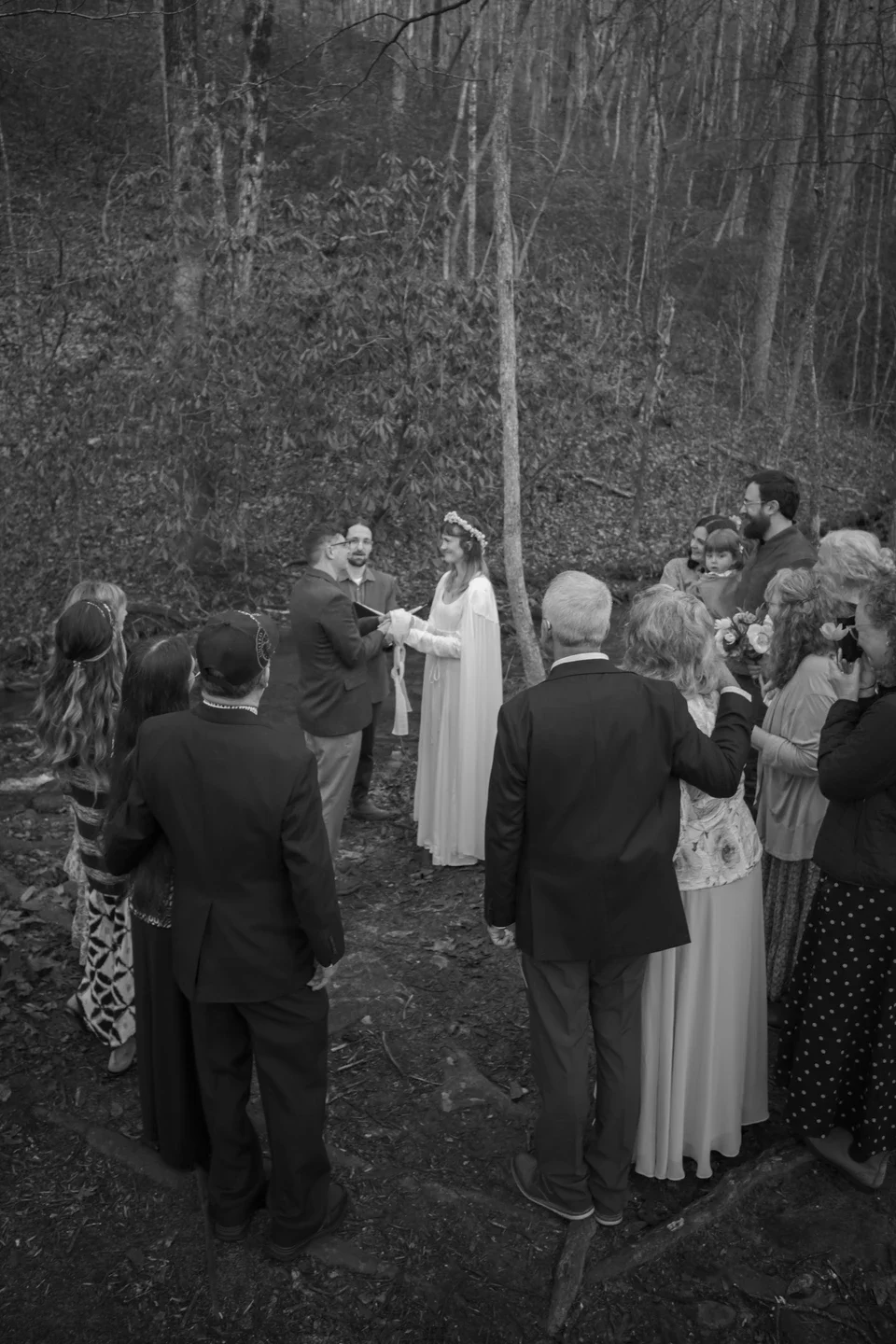
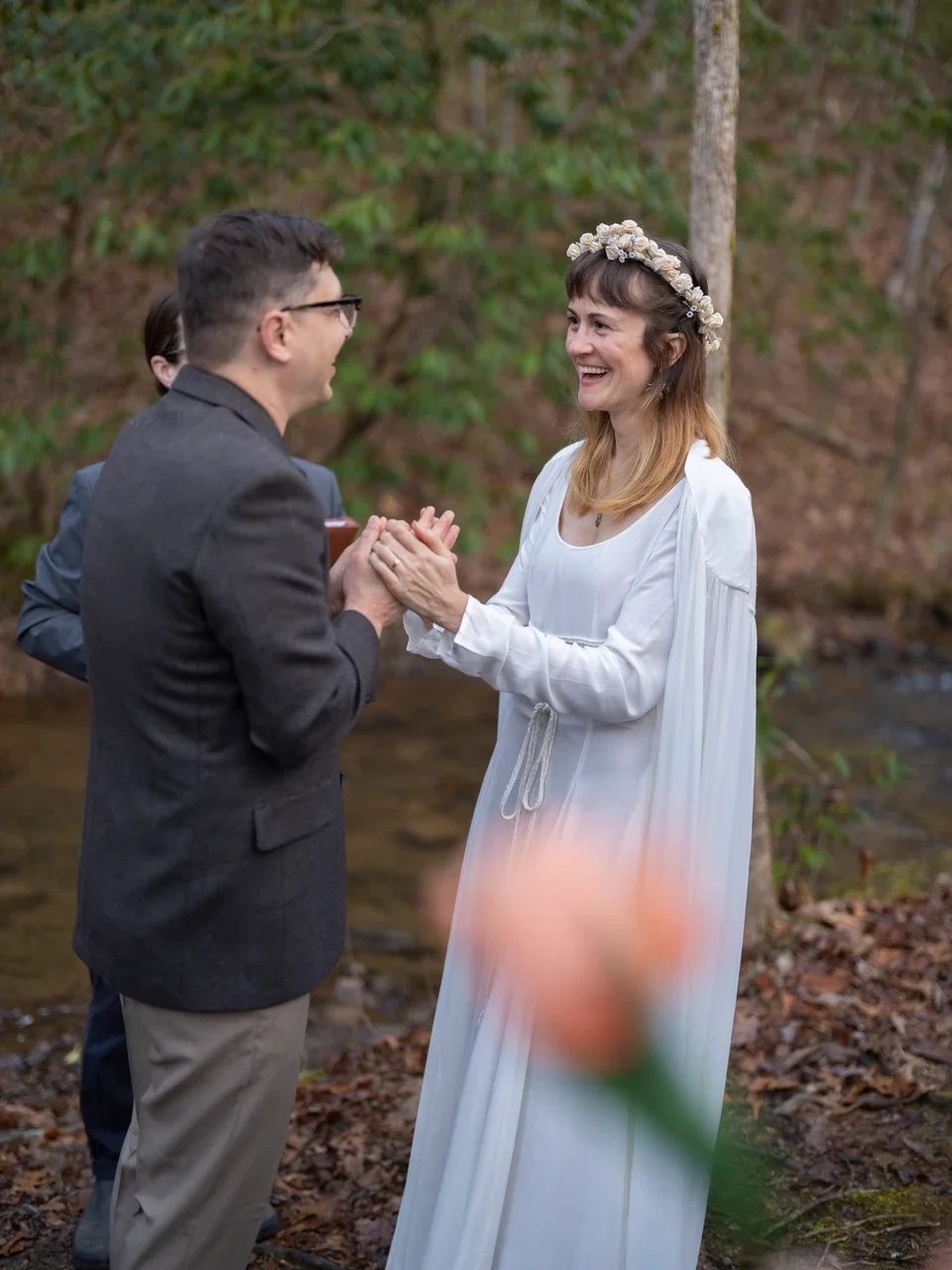
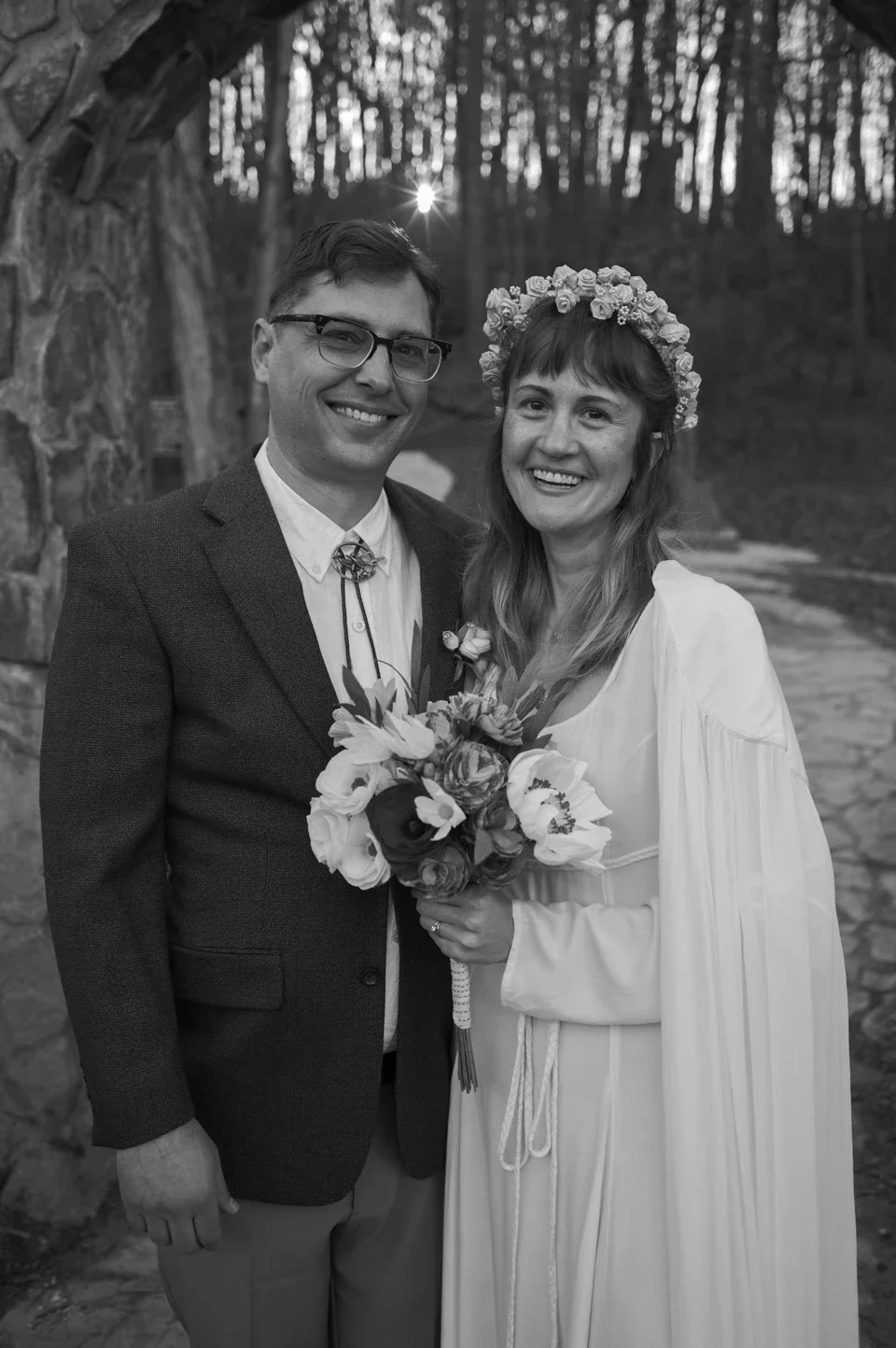
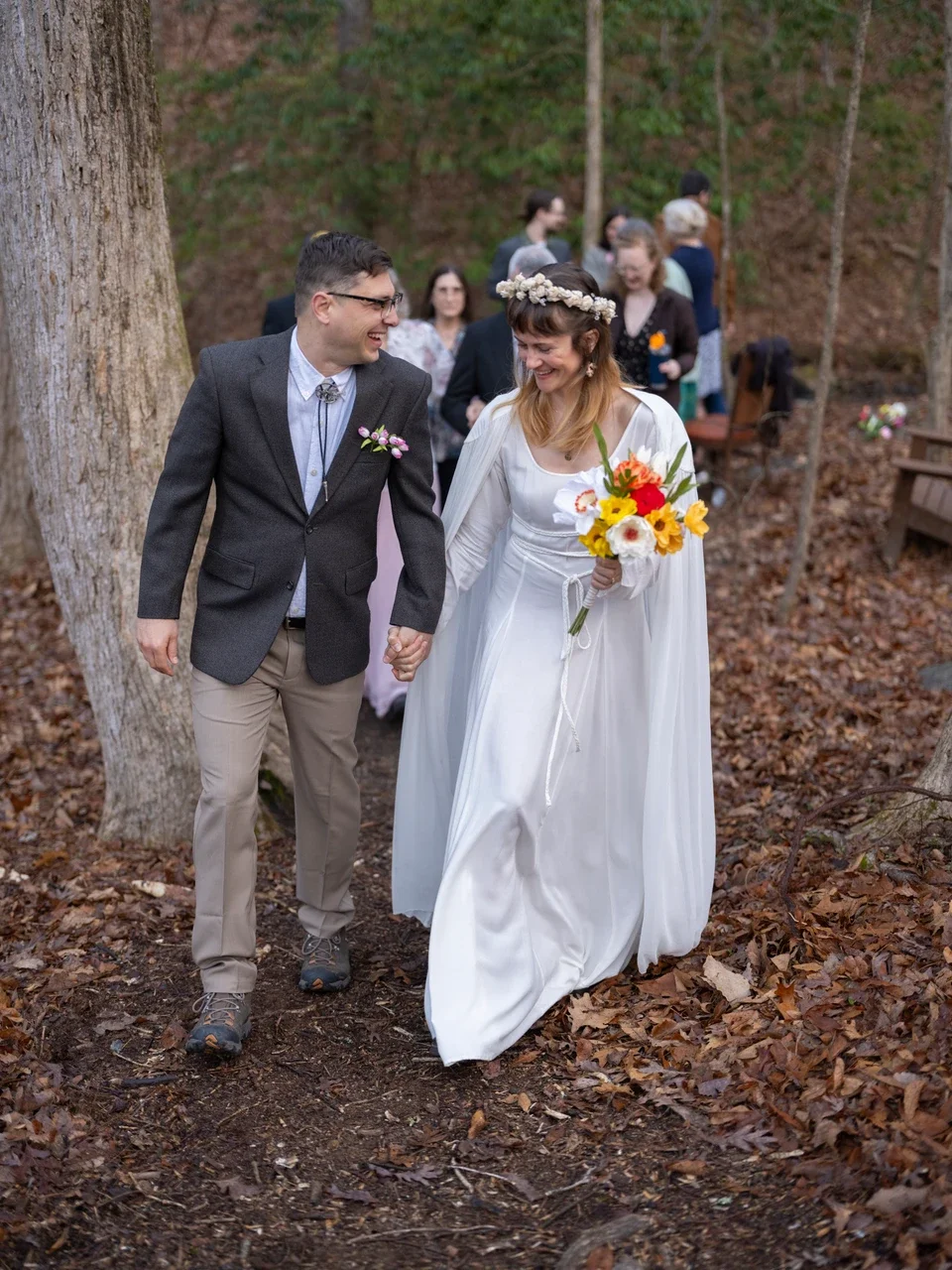
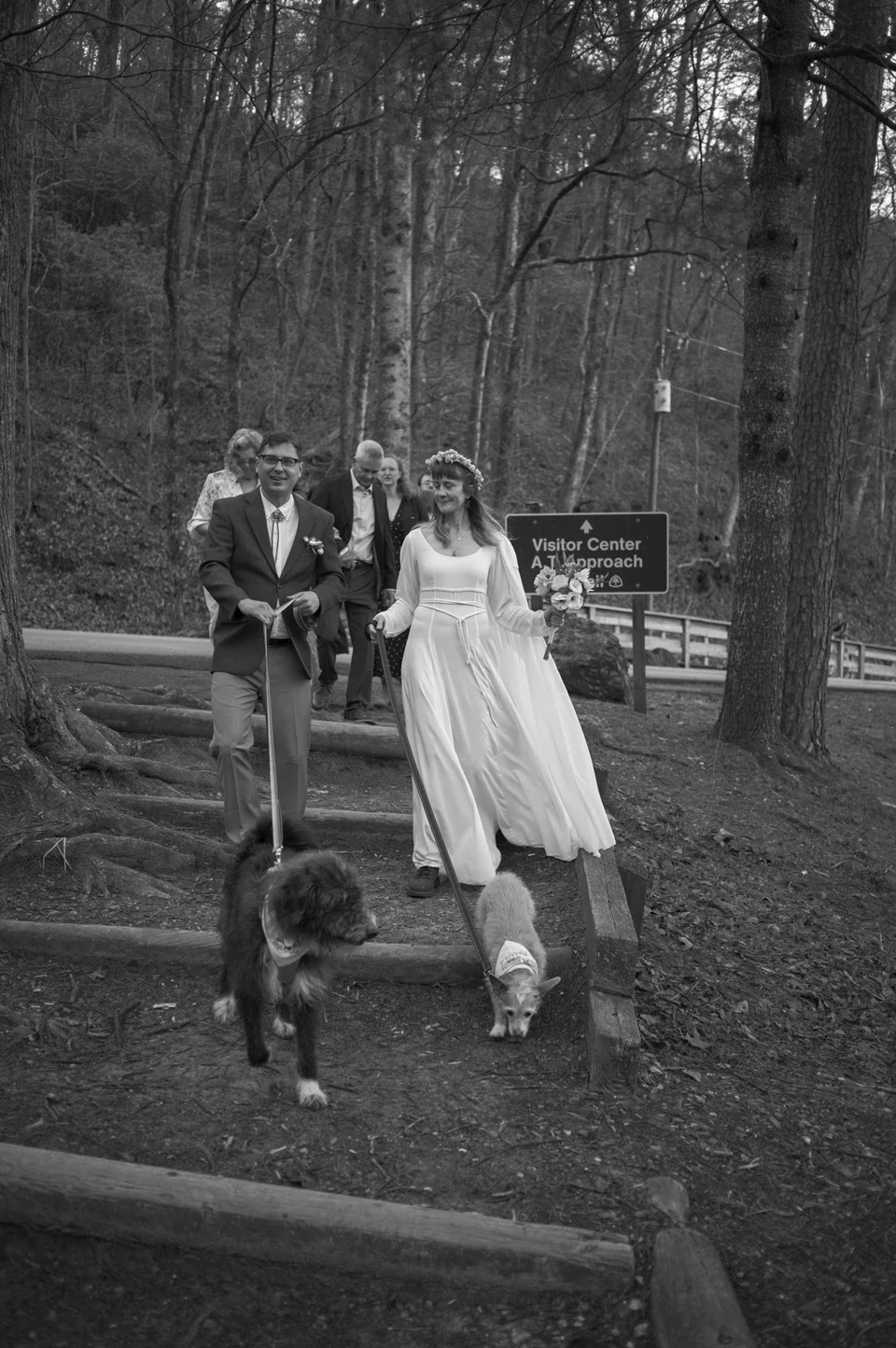
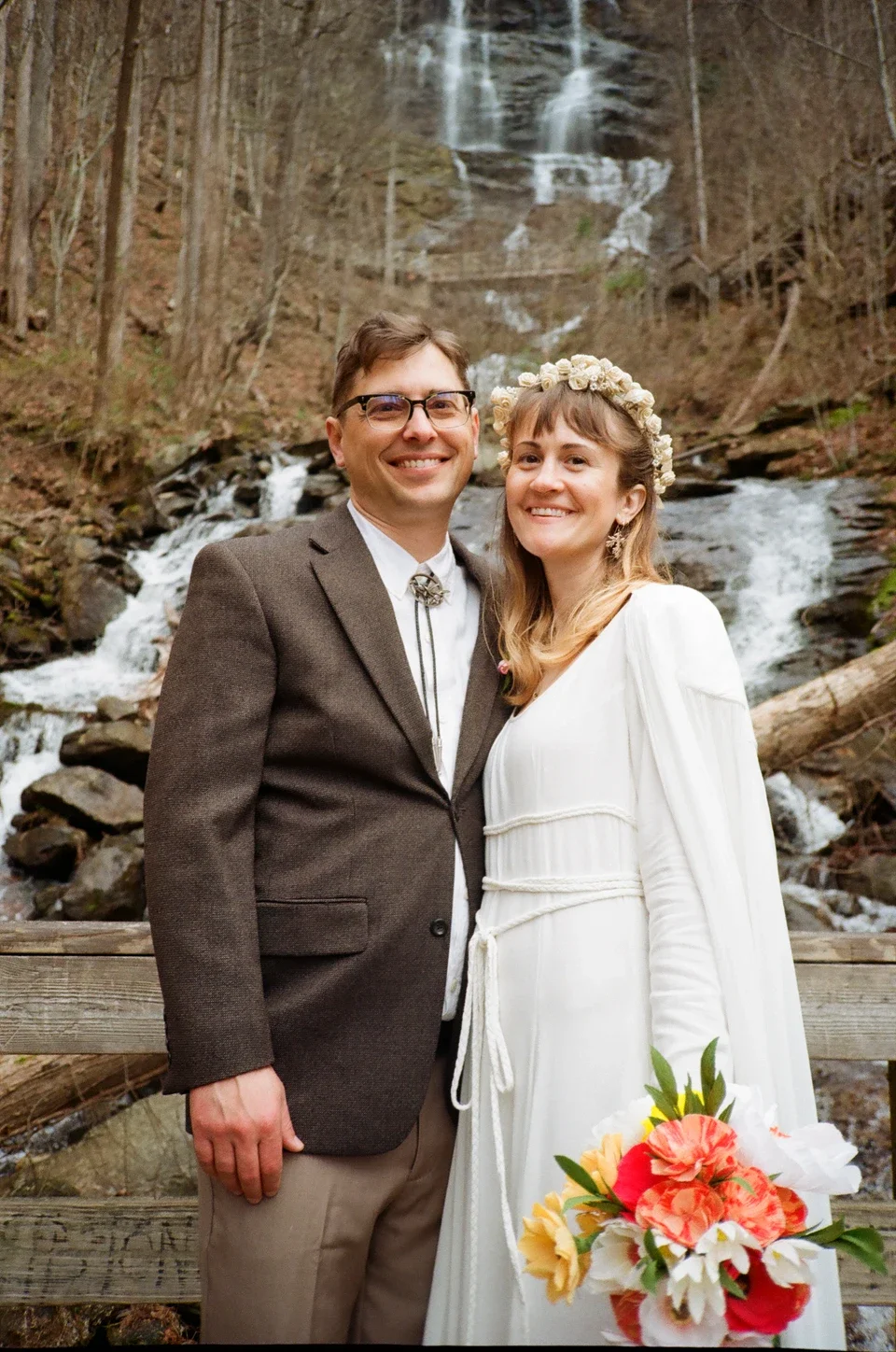
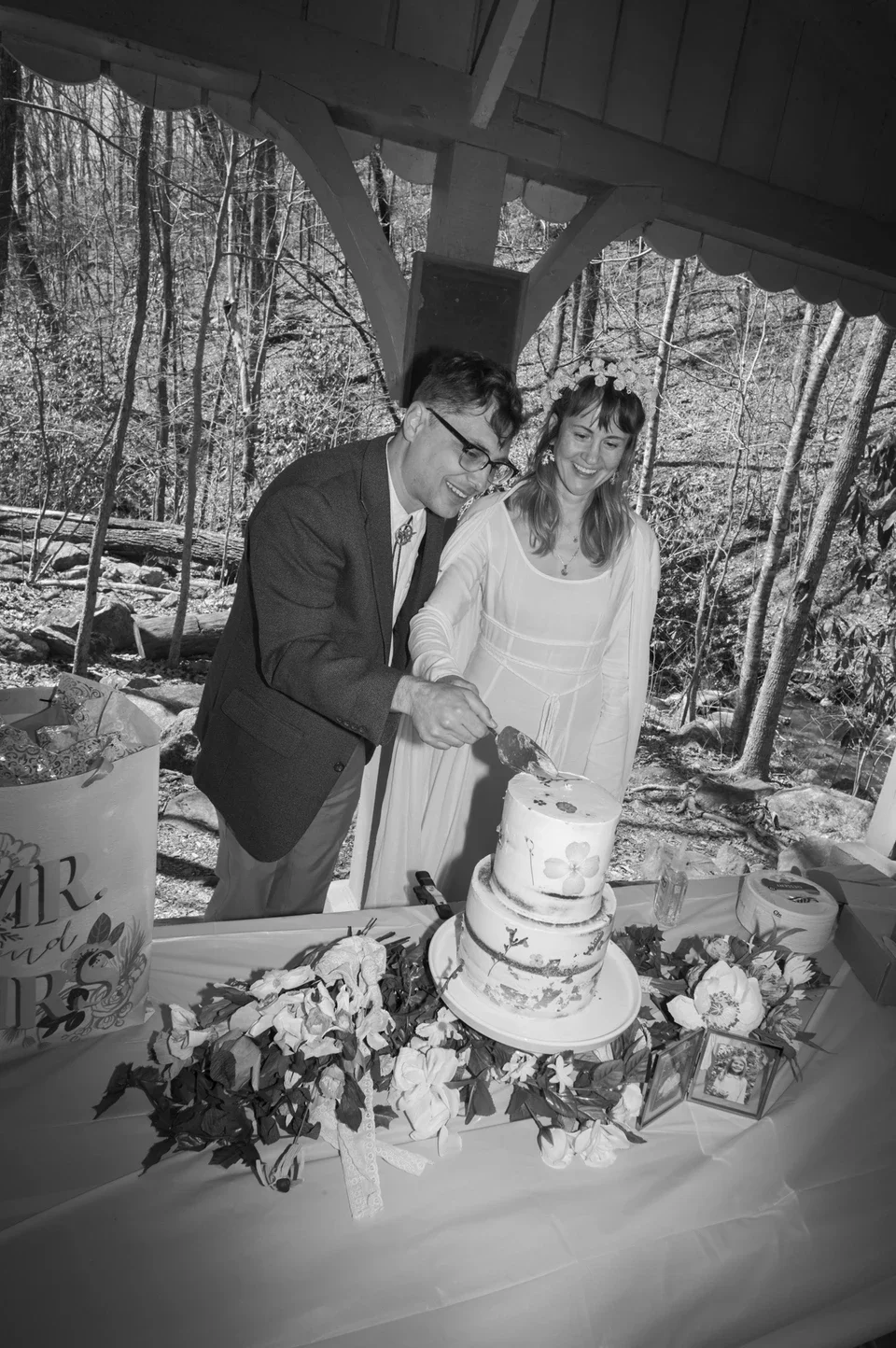
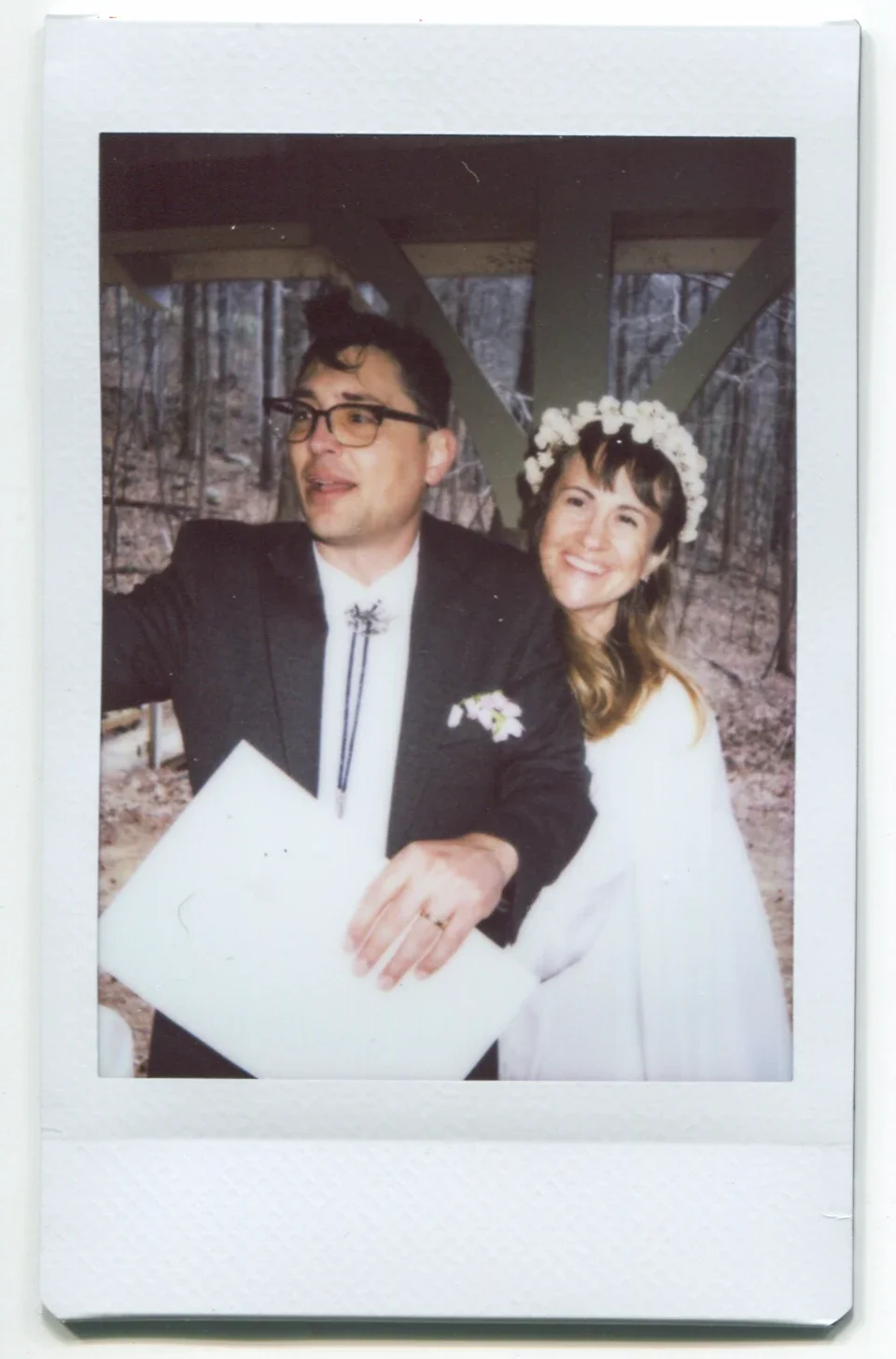
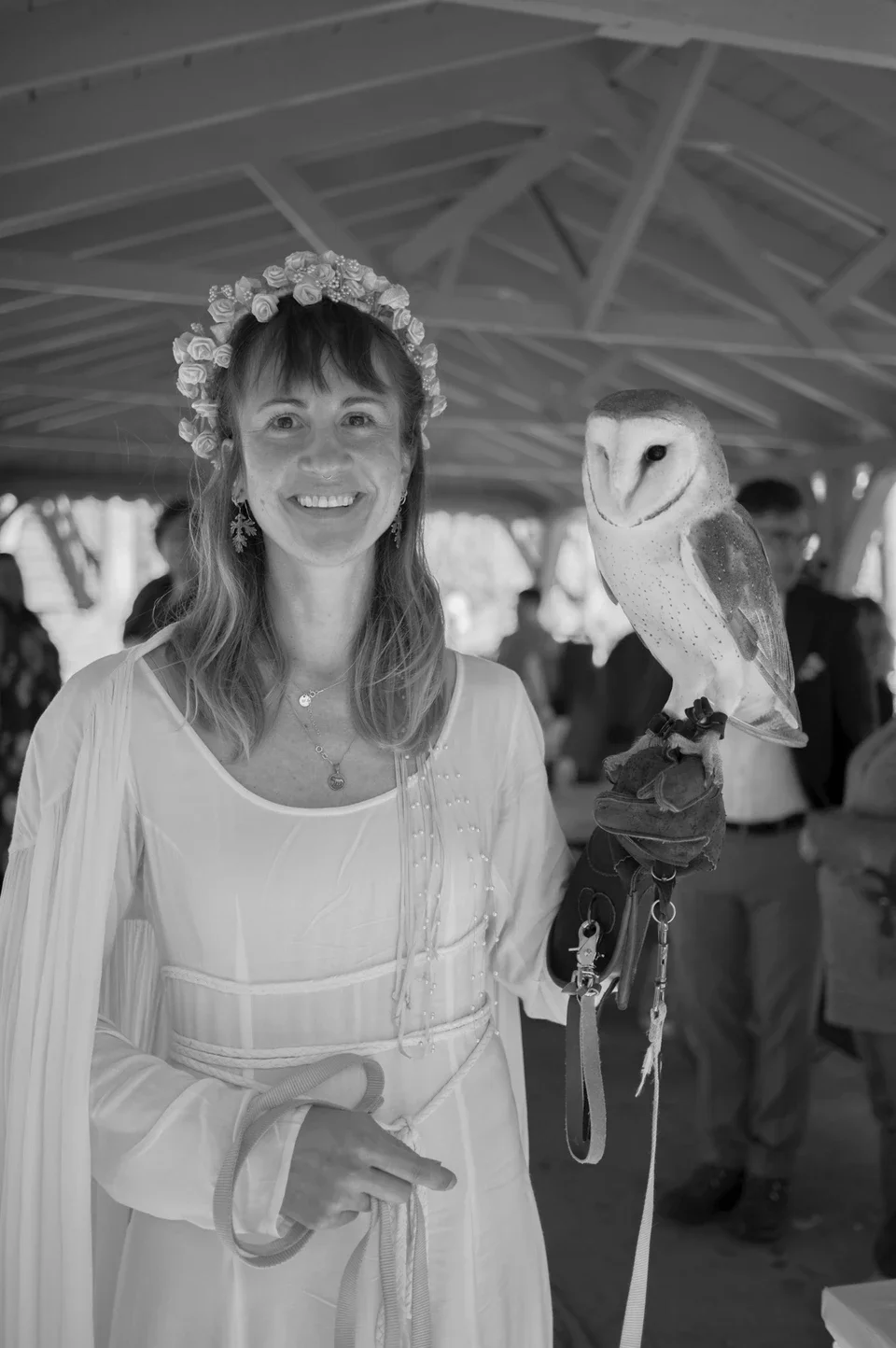
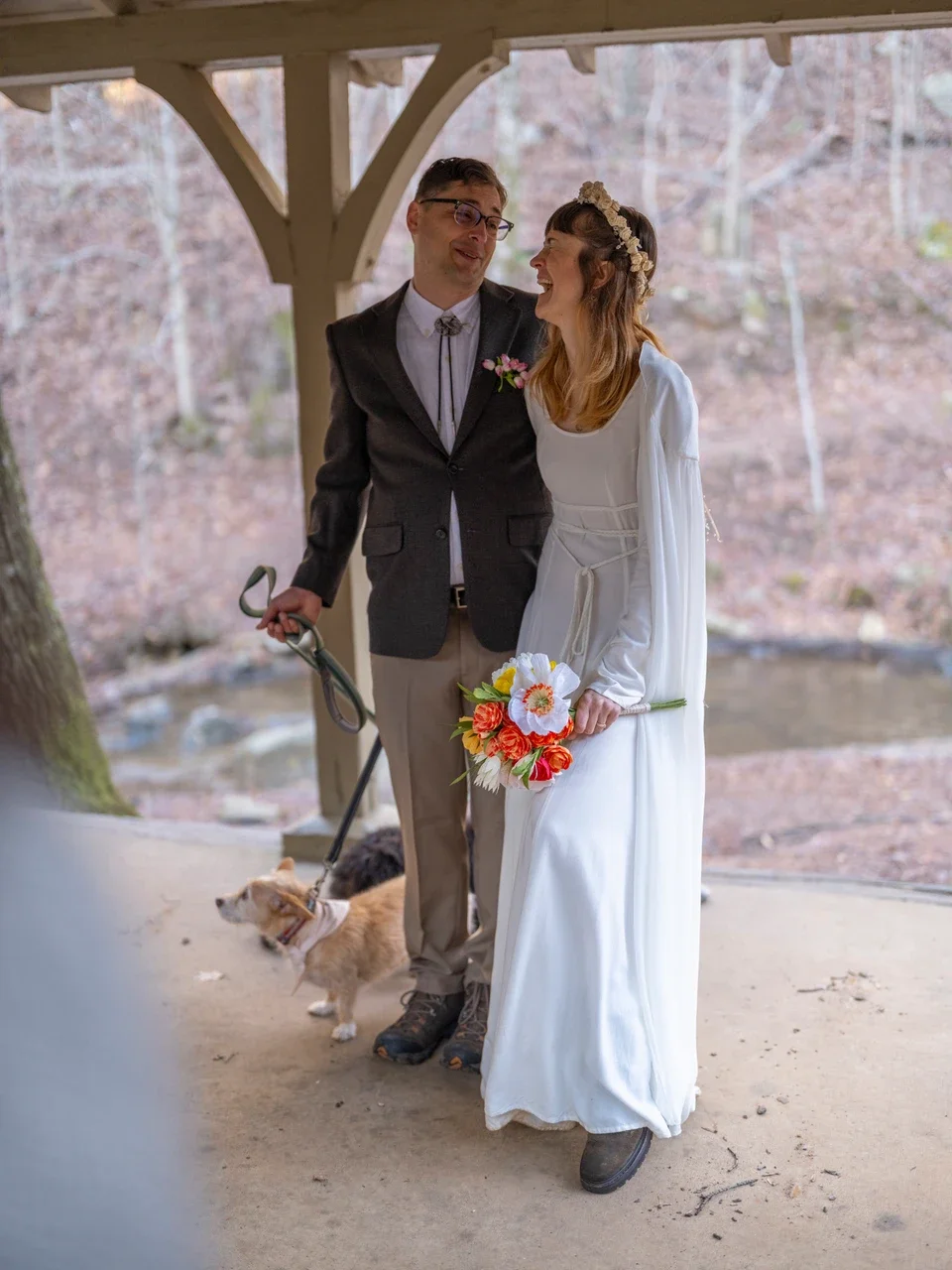
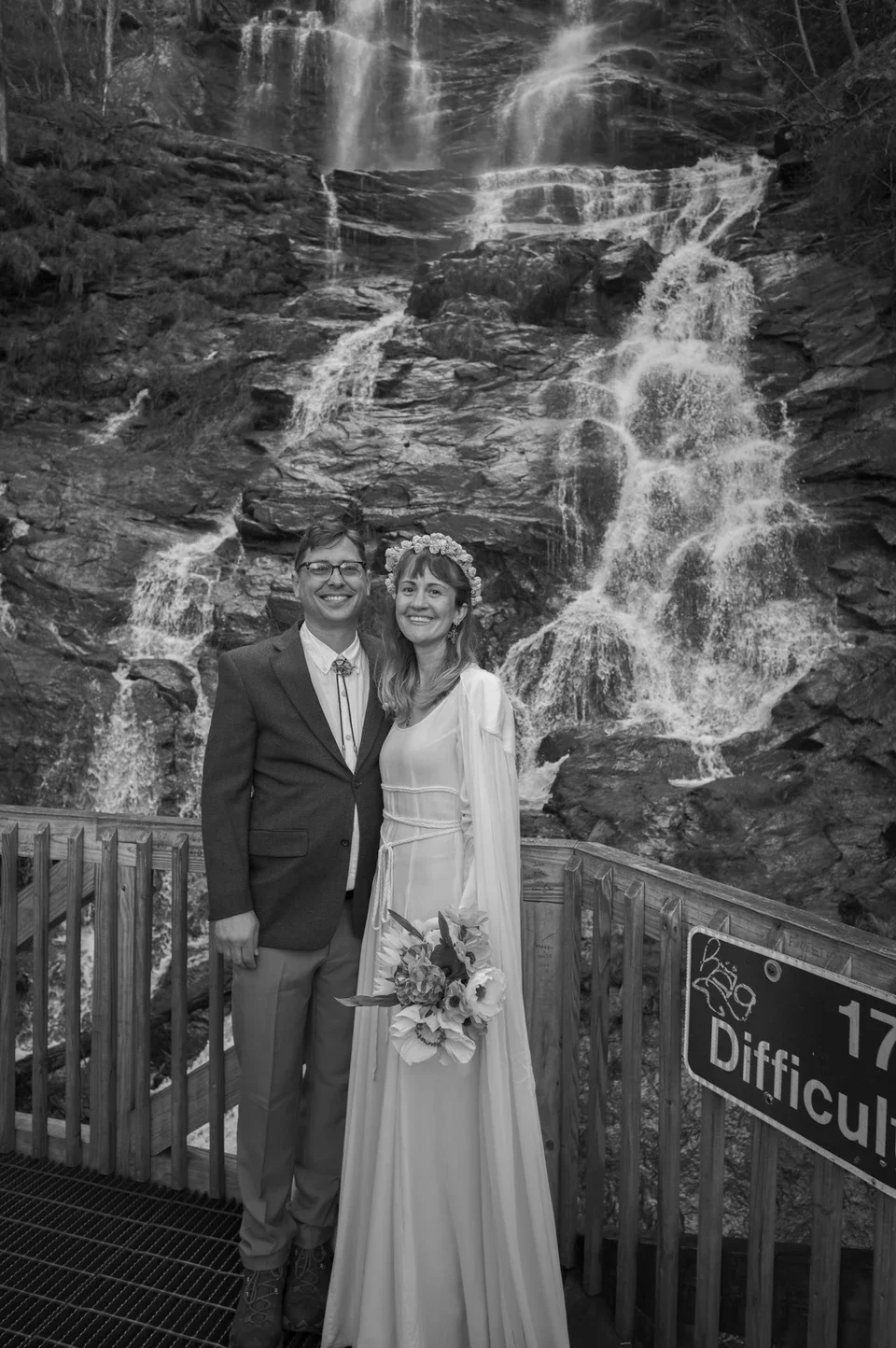
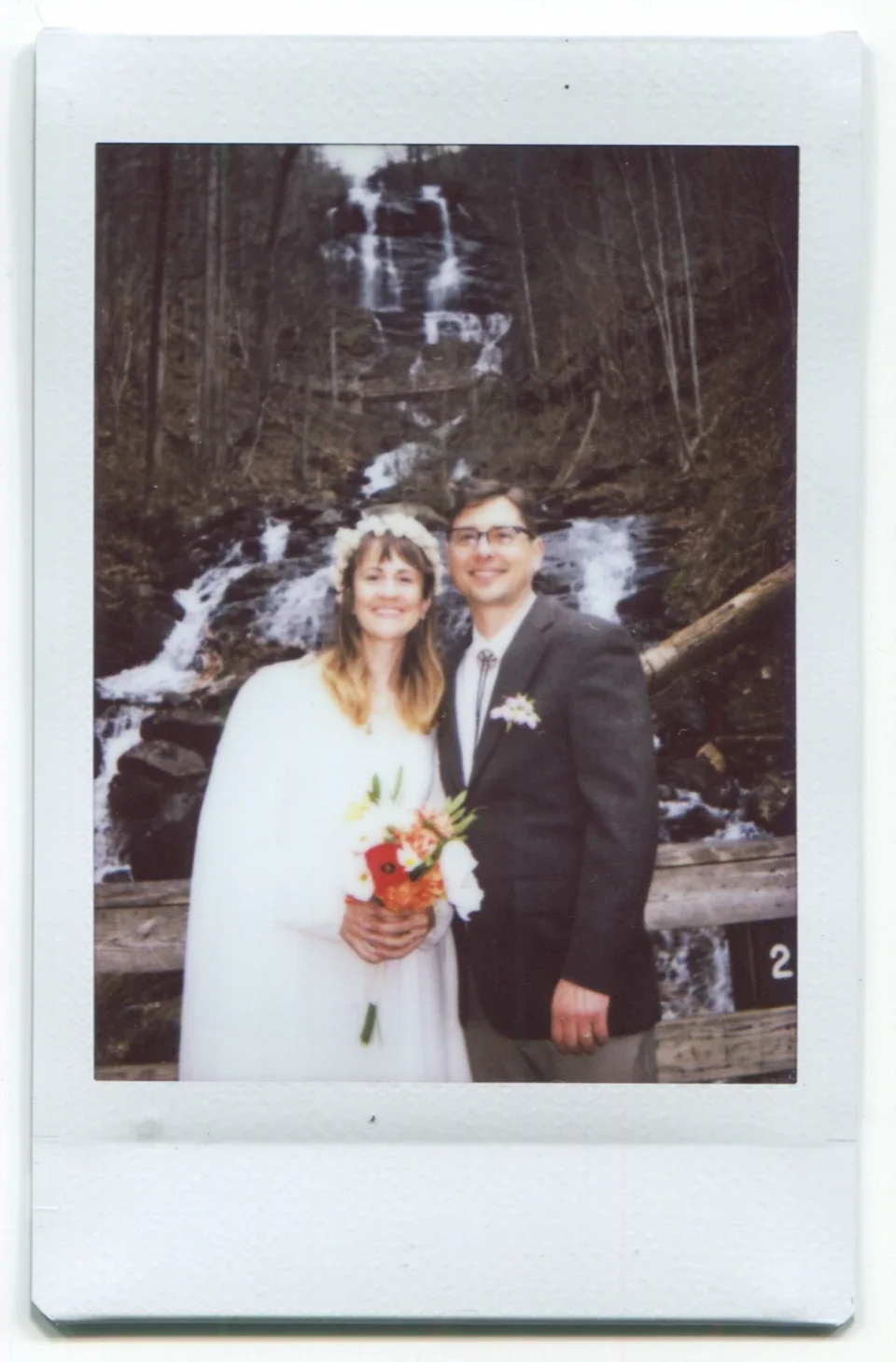
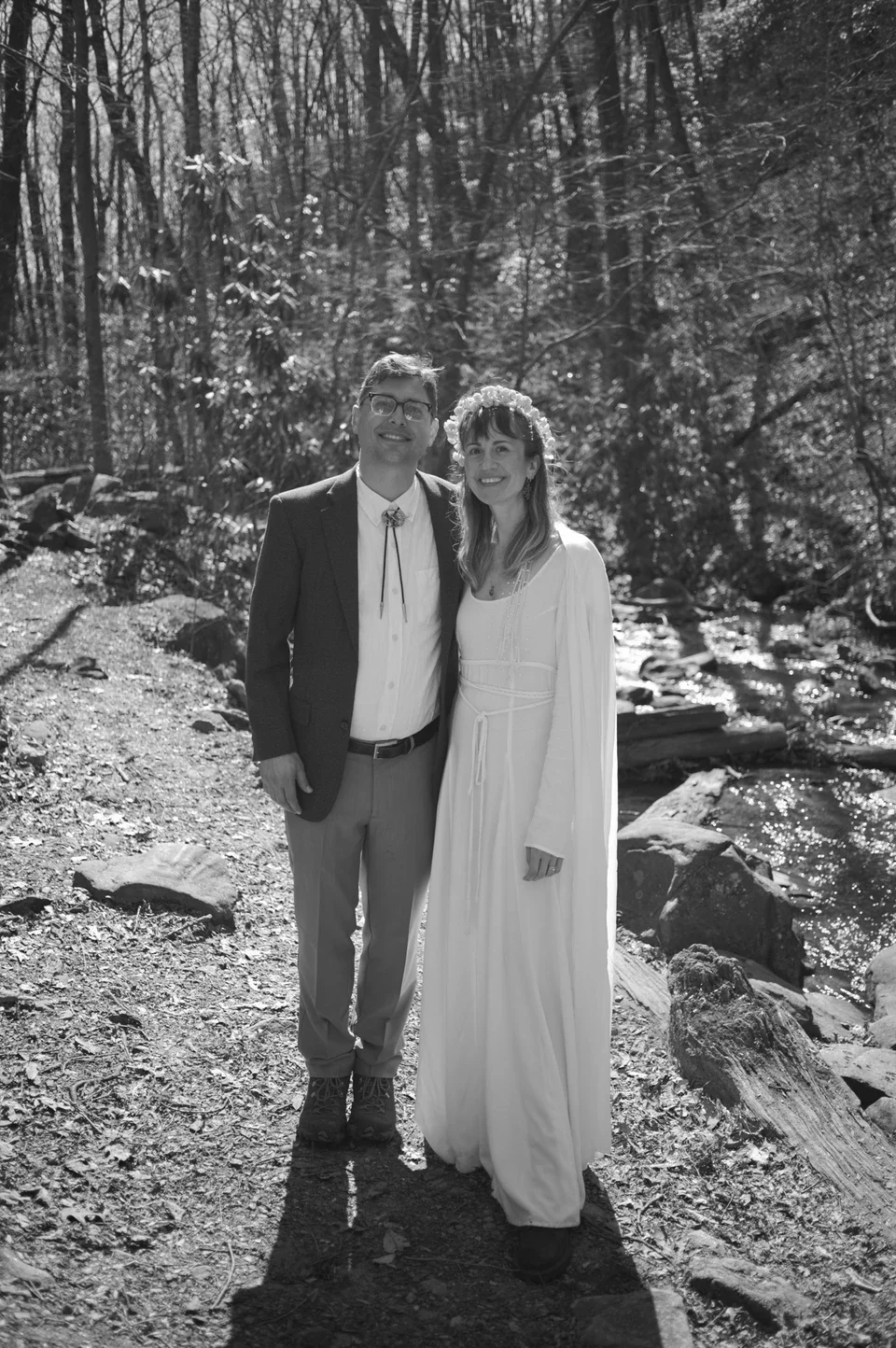
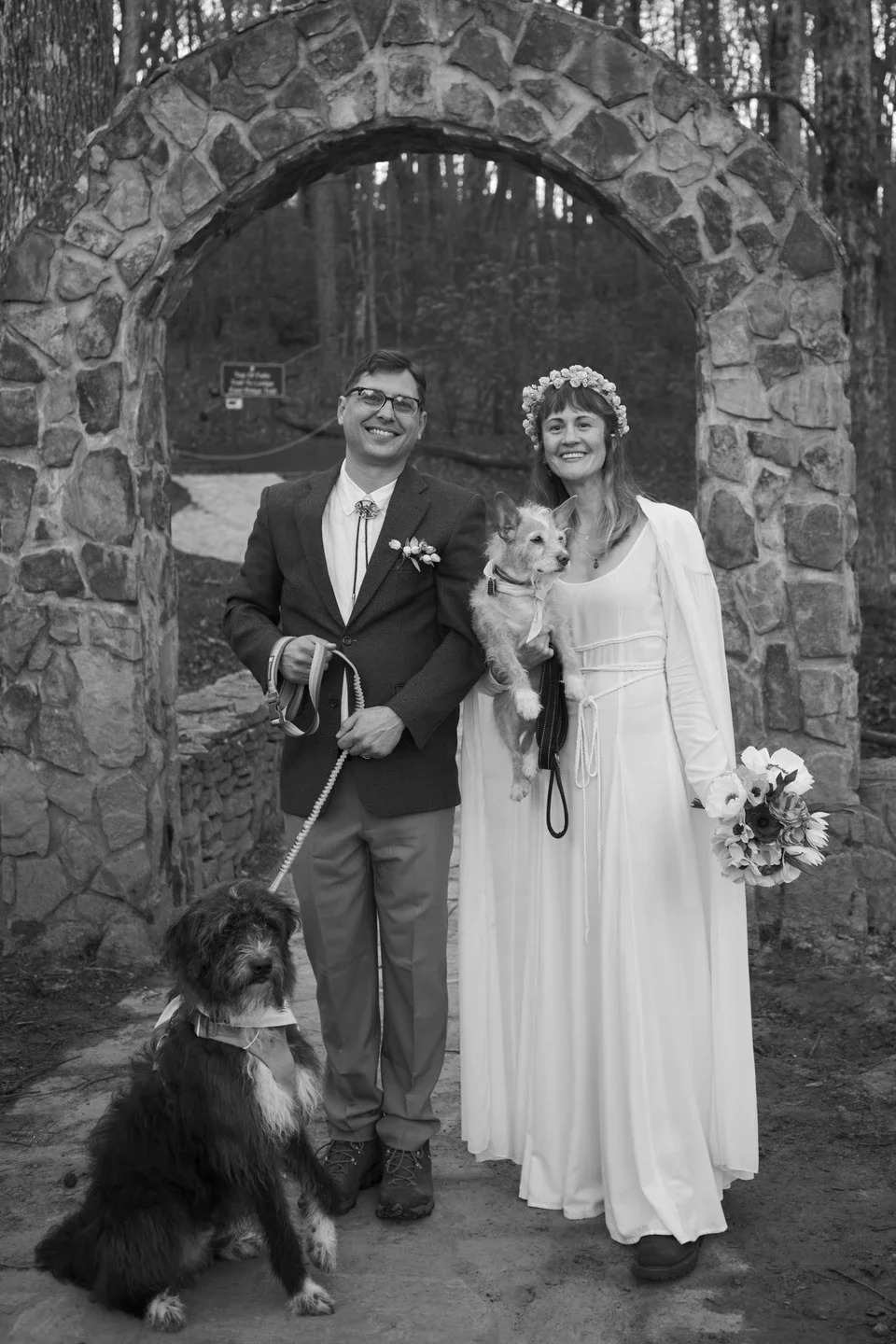
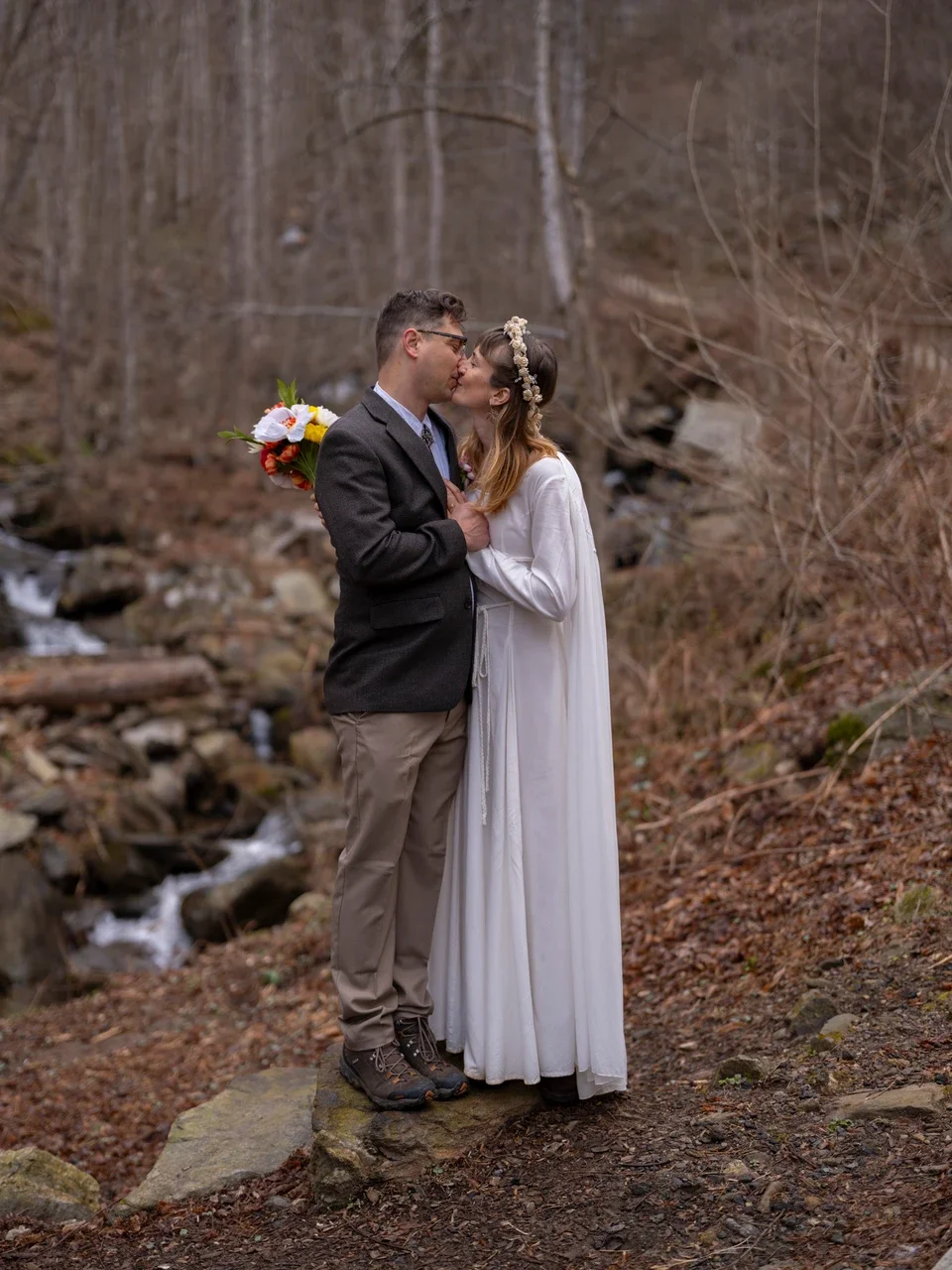
Comically, it was riding the high of our honeymoon booking success that inspired us to finally get our wedding on the books… better take care of that before we go on our honeymoon! See wedding photo carousel below ♡♡

The Kumano Kodo is sure to be a memorable experience and since we loved keeping an online journal about our Appalachian Trail thru-hike, we’ve decided to do the same with this special trek. Thanks for following along!

Learn more about the Kumano Kodo: https://www.tb-kumano.jp/en/kumano-kodo/

Wedding photography by Chase Brantley