
Thursday, May 21
Takijiri-oji to Takahara • 4km
One thing we’ve noticed when needing to do our business out and about is an absence of hand towels or dryers. People carry their own small towel throughout the day, whisking it out or their handbags/pockets and then tucking it away just as swiftly. I’m so impressed by all the small ways people take individual responsibility for themselves here, to make everything work more smoothly for everyone. I’ve finally tired of leaving the sink with wet hands, so have dug my backpacking microfiber towel out of my pack and folded it into my pants pocket to have on the ready today.
I slept well, although Chris did not, and has developed a cough. The son had apologetically informed us the night before that his mother snores heavily, so I slept in sweet oblivion for several hours with earplugs and eye mask before realizing his mother’s snore was totally tolerable and nowhere near the shelter-rattling snores we encountered from middle aged-on men on the Appalachian Trail.
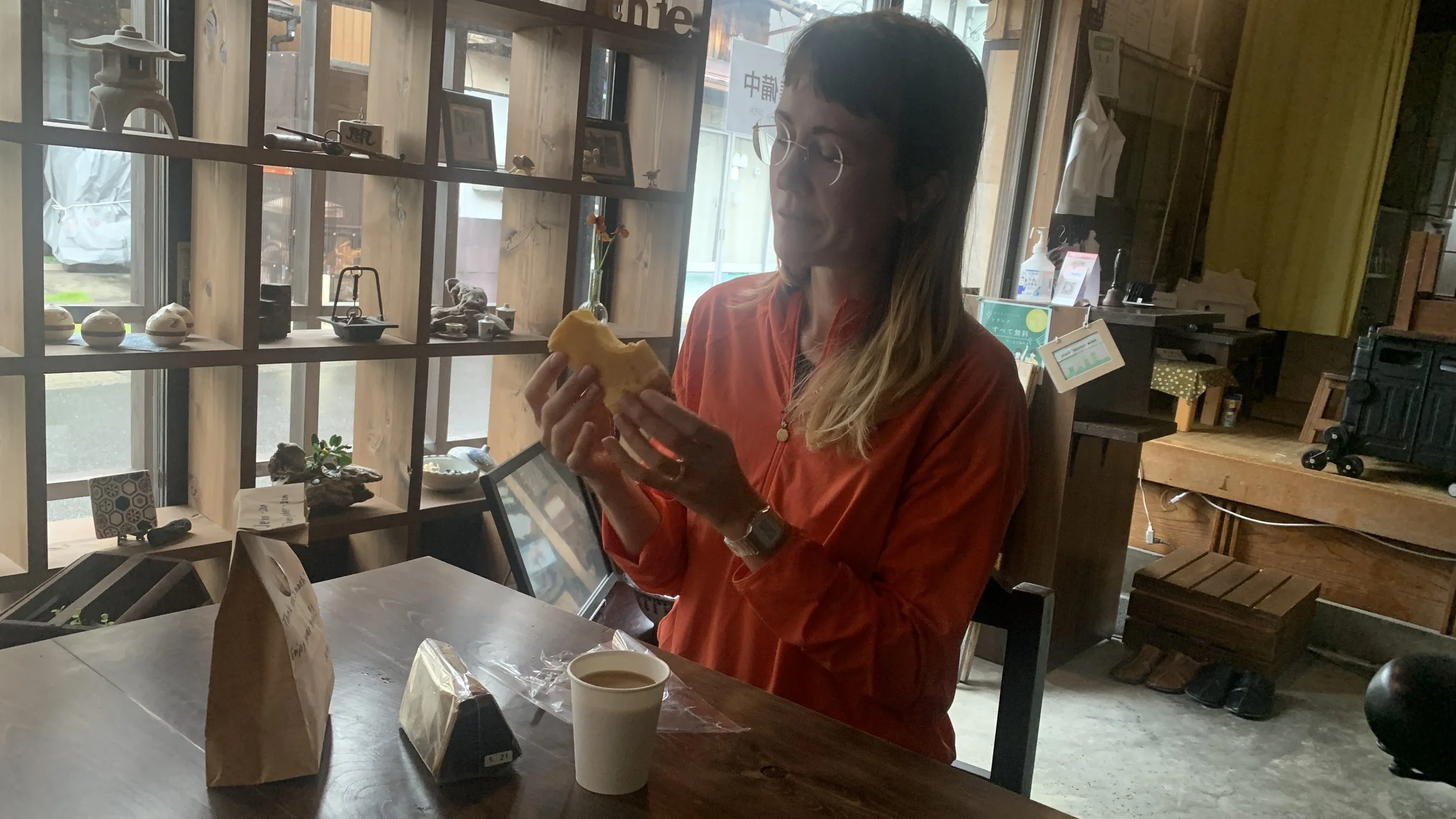
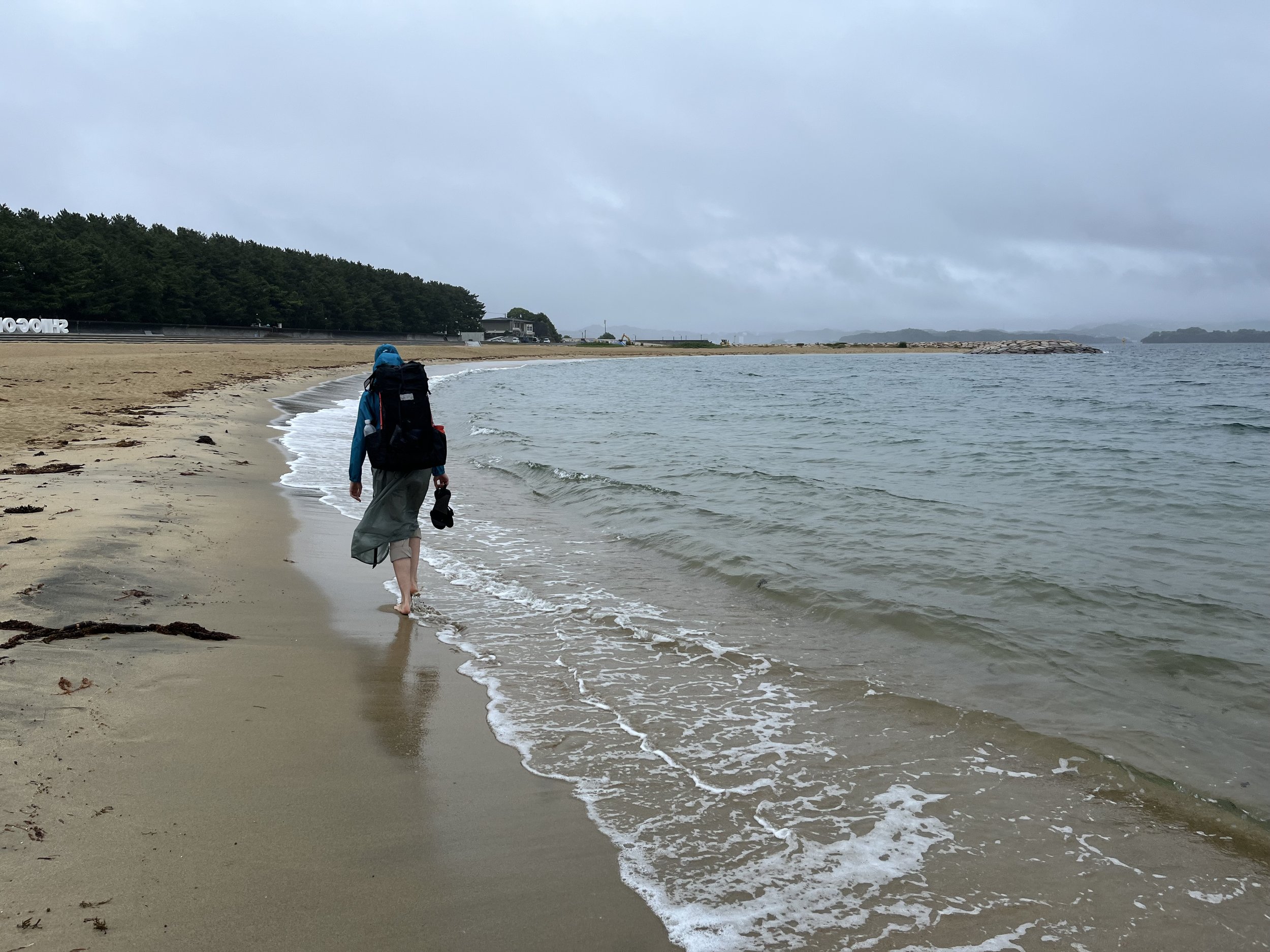
After getting our packs situated, eating my fluffy chiffon cake, and drinking coffee, we set off into the rain to find the beach. We walked barefoot in the waves and then through a park as we made our way toward the visitor center where we needed to pick up a guide map/book and pilgrims credential (stamp book).
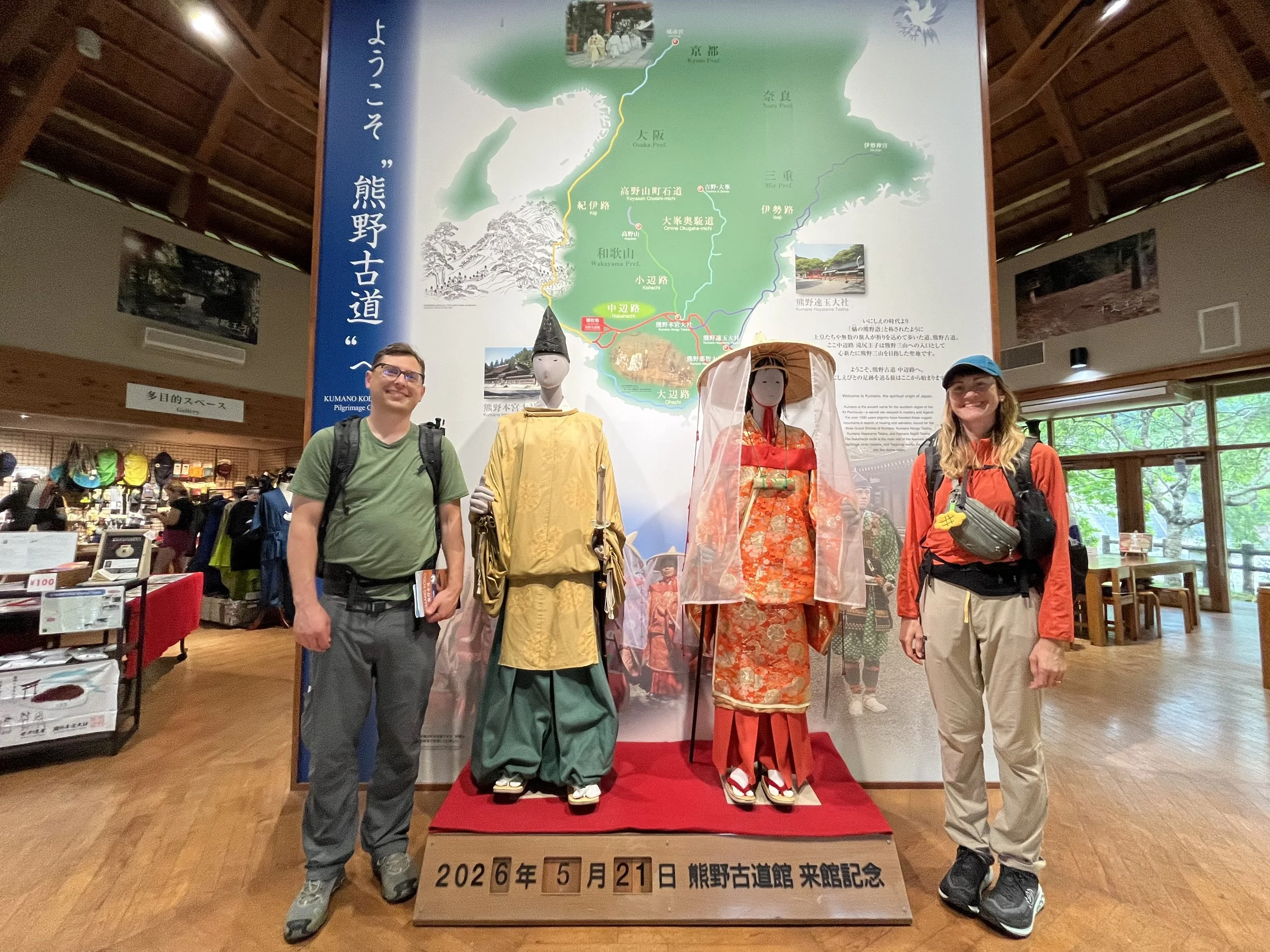
Along the way to the visitor center we took a short detour to visit the local Shinto shrine - named after fighting roosters - where we practiced our first Nirei-nihakushu-irei (meaning literally “2 bows, 2 claps, 1 bow”) to make a prayer and pay our respects.
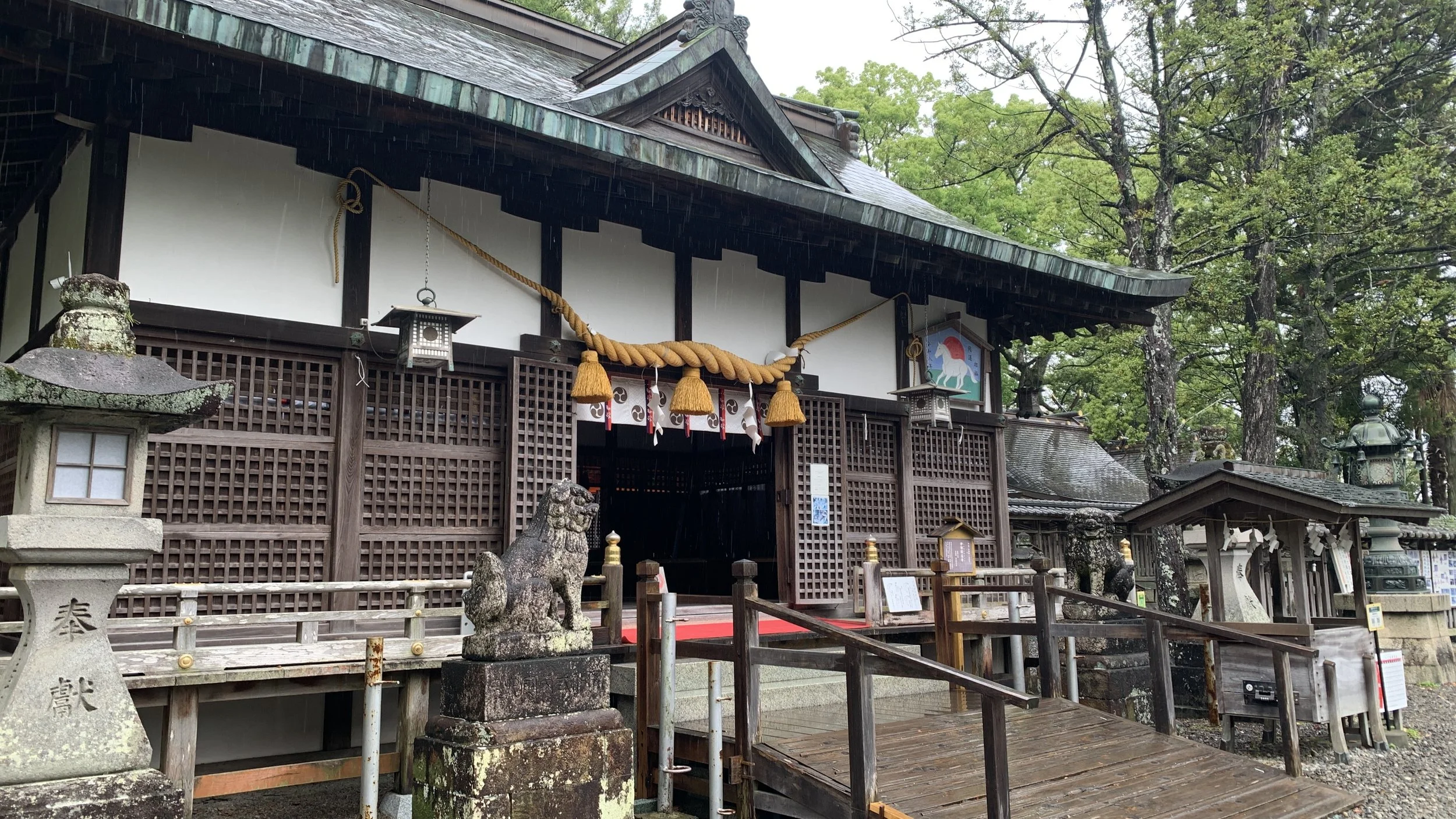
Once at the visitor center we picked up the final items we needed, including a lighter for the handful of occasions that Chris won’t be able to eat the food at our lodgings. Some of the most remote accommodations, particularly along the Kohechi route, cannot make modifications beyond vegetarian requests. I got us more of the adzuki bean and pickled plum rice cakes from the 7-11 next door for lunch on the trail. We also saw a nice exhibit about the collaboration between the Camino de Santiago and Kumano Kodo, including the certificate that dual pilgrims receive. We also got our first stamp of the trail. Then we went to wait at the bus stop along with a handful of other backpackers.
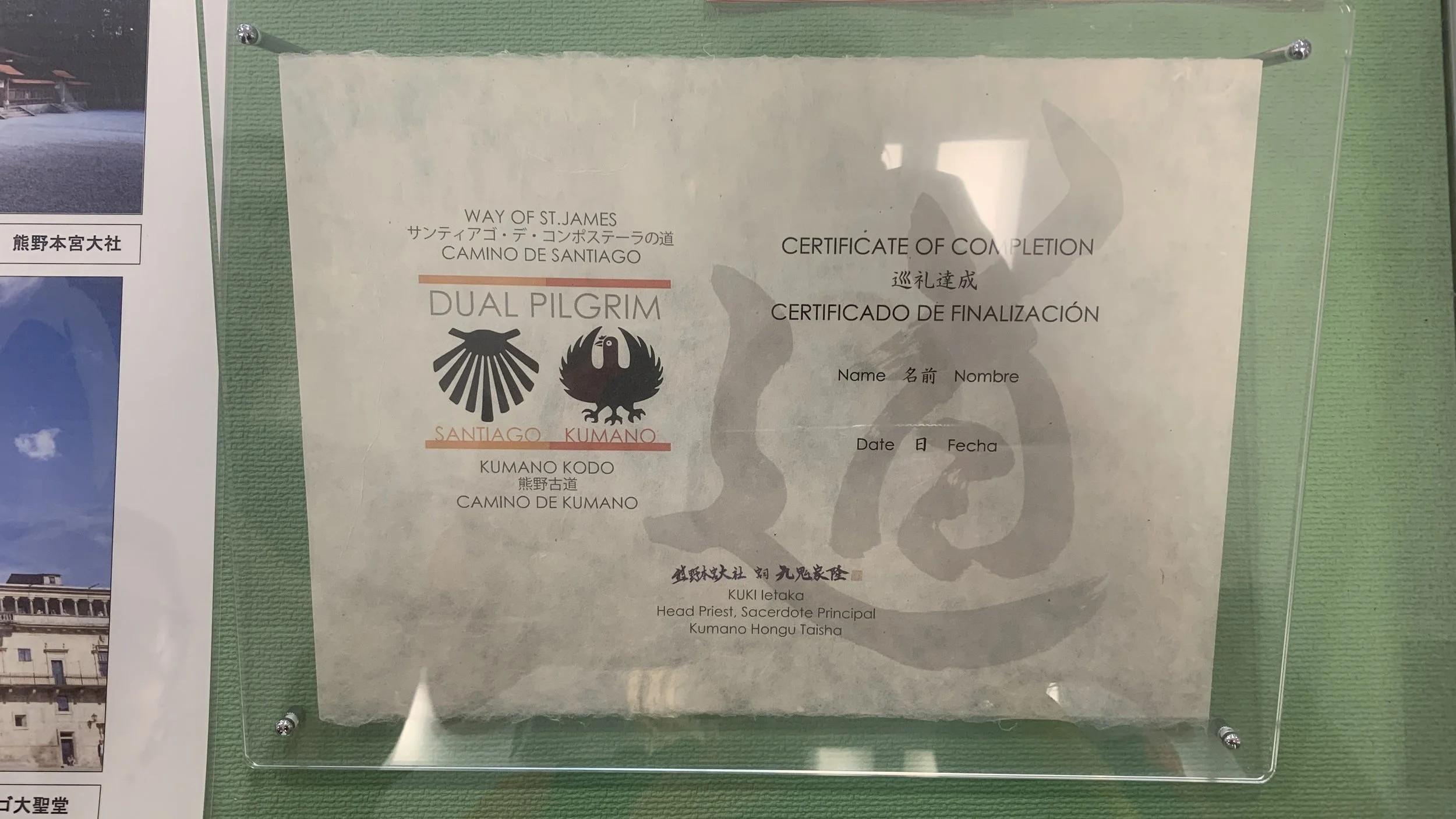
The 45 minute bus ride to Takijiri-oji went smoothly, and on arrival we stopped into the visitors center to check out the museum. One particularly neat item was a scroll from 1200 containing a man’s trail journal from his Kumano Kodo pilgrimage.
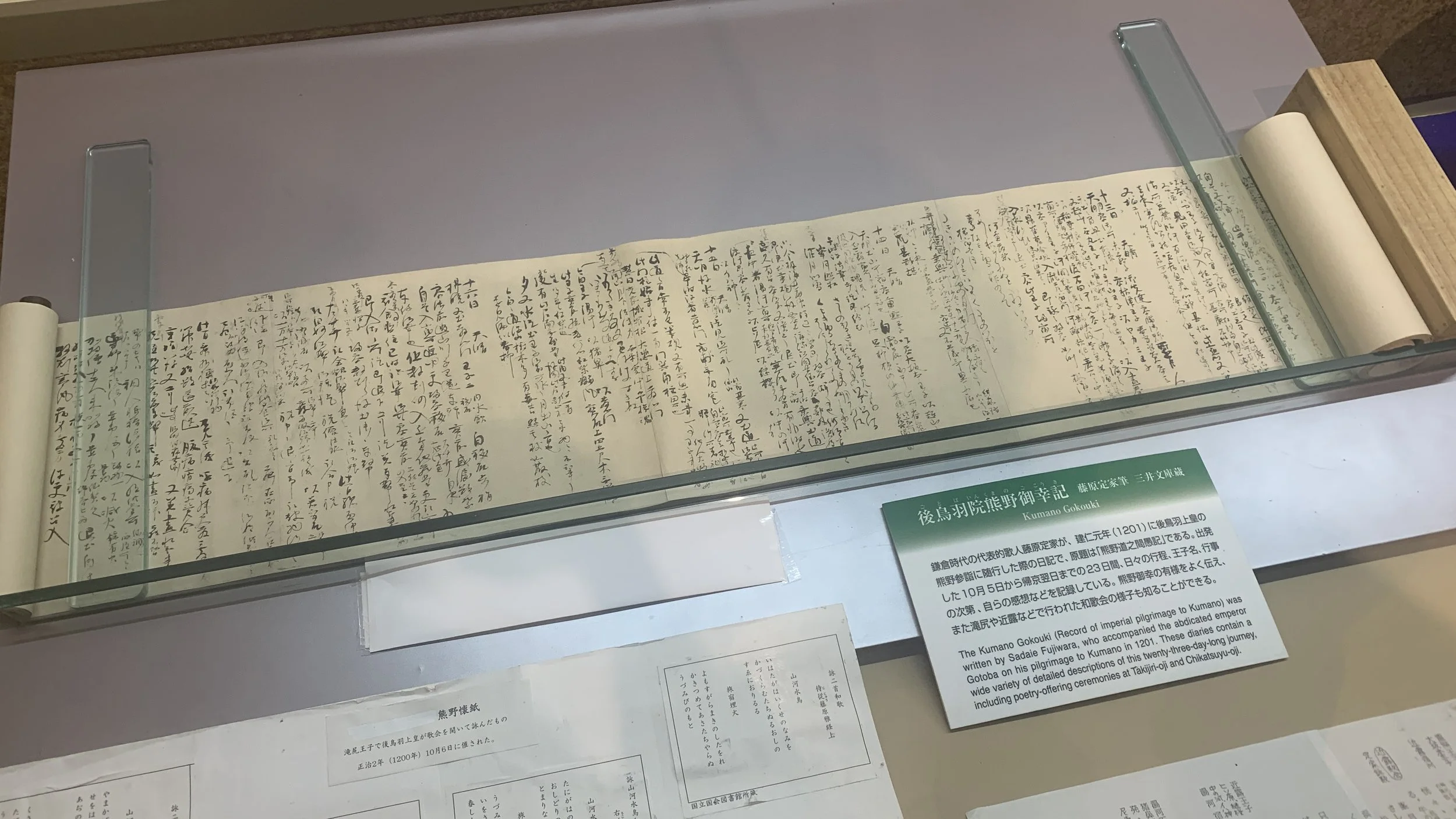
There were also a couple of mannequins dressed in traditional attire as would have been worn by pilgrims hundreds of years ago. The history of the trail is far too complex for me to get into here but in summary, it’s been around for over a thousand years, to the extent that there was lodging and food that pilgrims could partake in.
The trails fell into disuse for several hundred years due to state sponsored religious reform, and post-war reforestation and infrastructure. Eventually interest in the trail resumed and it became a UNESCO world heritage pilgrimage in the early 2000’s. Pilgrims pass right through the remains of many of those tea houses and settlements from hundreds of years ago, and many of the sites have interpretive signage explaining the significance and relaying local stories involving that spot.
It was pouring rain as we set out, but we stopped to pay our respects at the shrine before stepping foot on the trail proper. Straight into a brutal uphill we went, followed by a wet crawl through a small cave where hikers must squeeze through a shockingly small cave mouth, shoving pack and poles through the opening ahead of us.
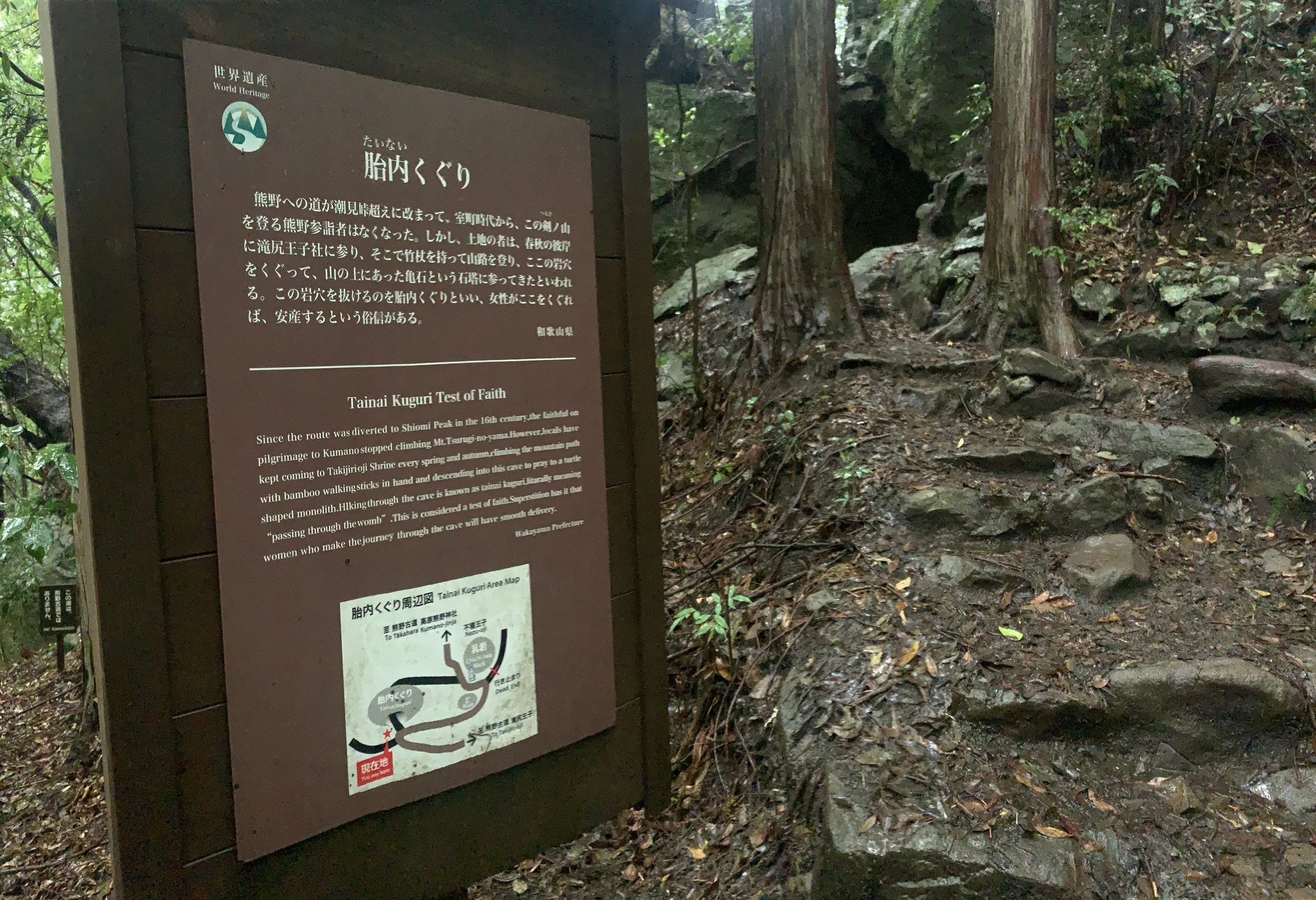
This served nicely for ridding us of any pretense of staying clean as we were from this point on covered in mud from head to toe. The local tradition apparently says if a woman passes through the opening she will have a smooth child birthing experience. In other words, well worth the trouble.
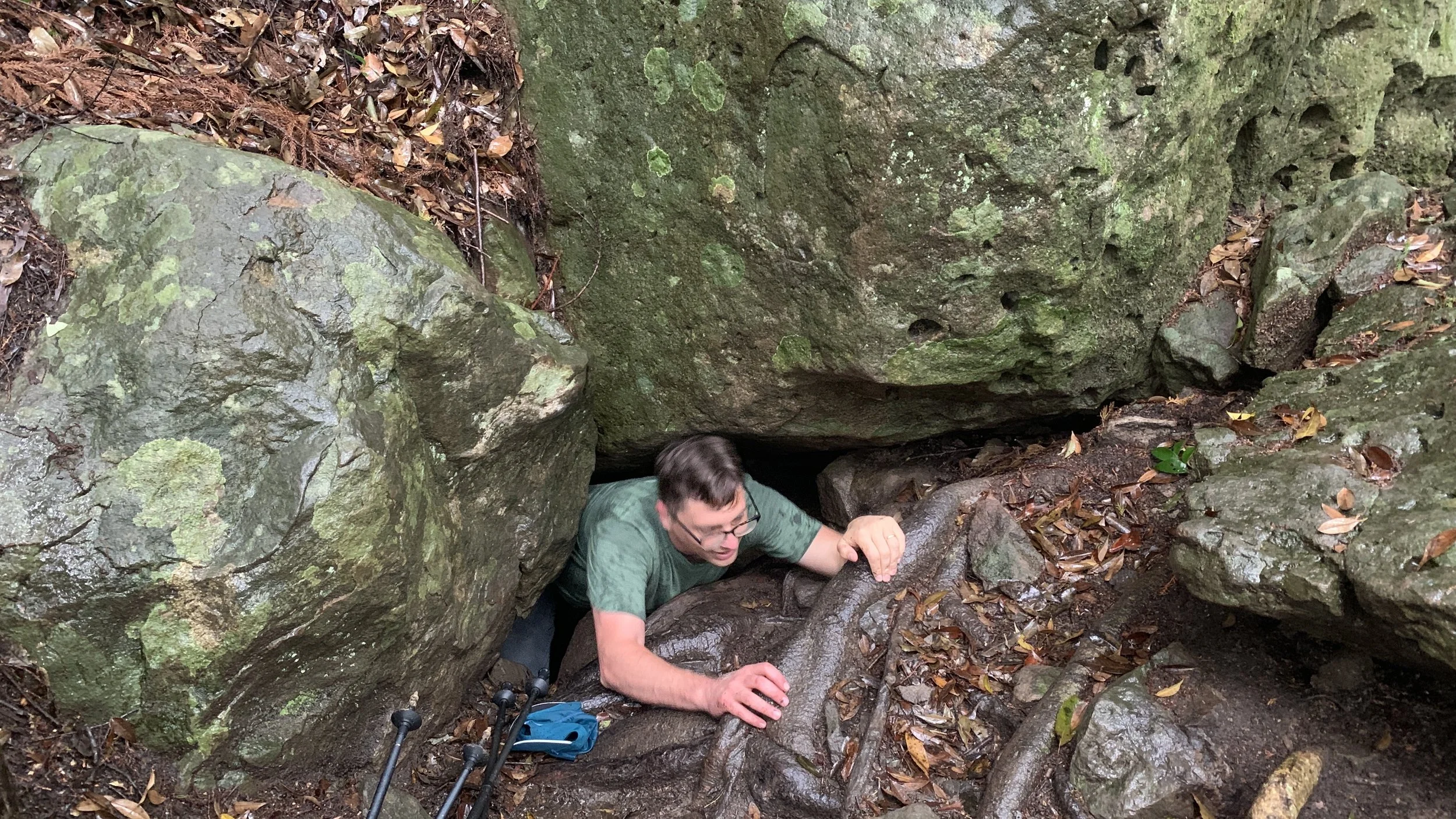
Shortly, we met our first other hikers, two Australian friends on holiday named Bernice and Lisa. We leapfrogged with them the rest of the 4 kilometers.
Admittedly it has been a pleasant surprise that the trail is as challenging as it is. It reminds us both a bit of parts of the AT, these wooded ~3,000 foot mountains …the rain not withstanding.
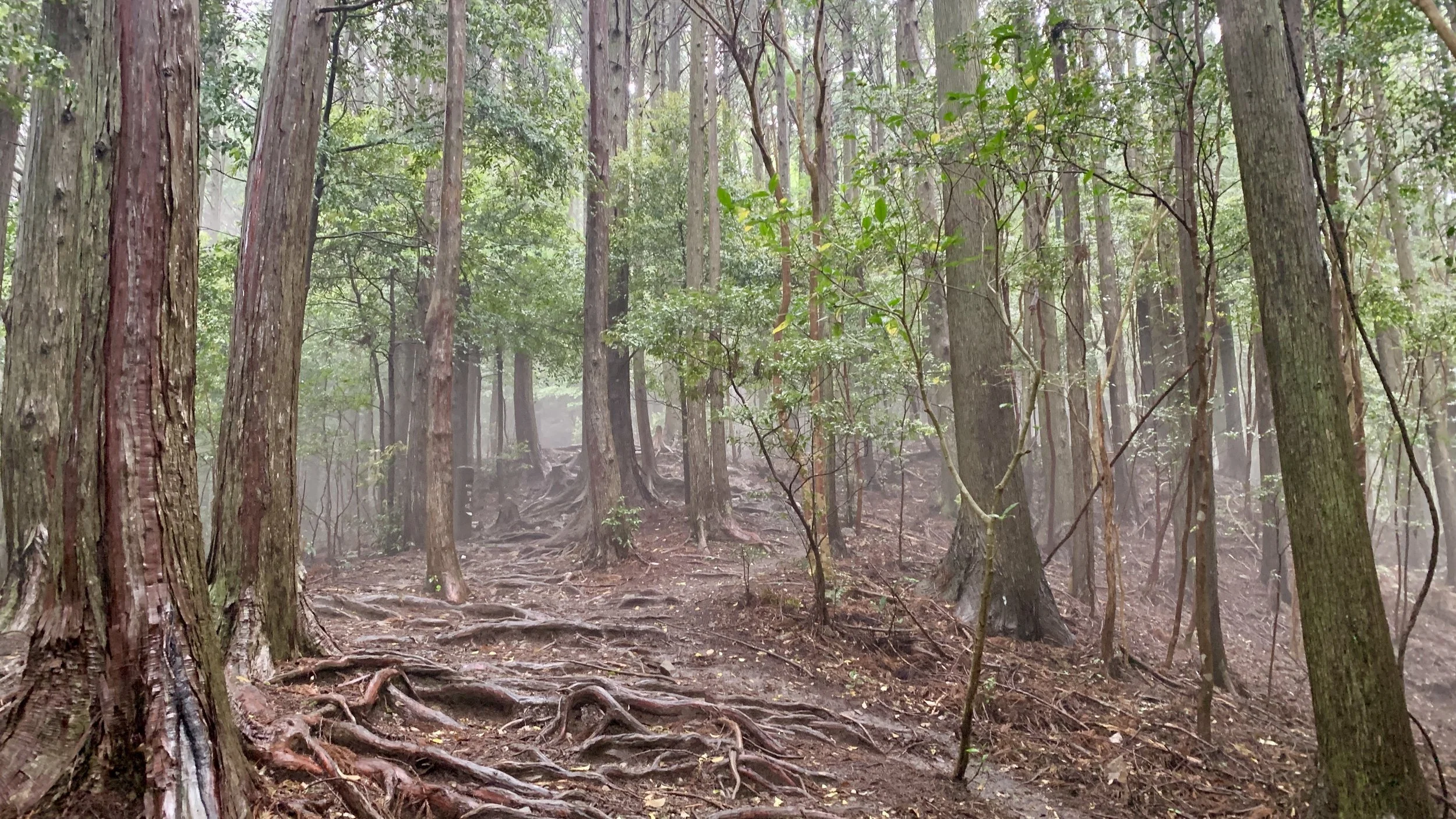
We stop at each small shrine to stamp our pilgrim credential and each stamp is a unique work of art. We’ve decided to share a credential - which feels fitting for a honeymoon trip (and totally not because I promptly lost mine, no…). All the more reason for us to go back and do a full Camino together to become “dual pilgrims”.
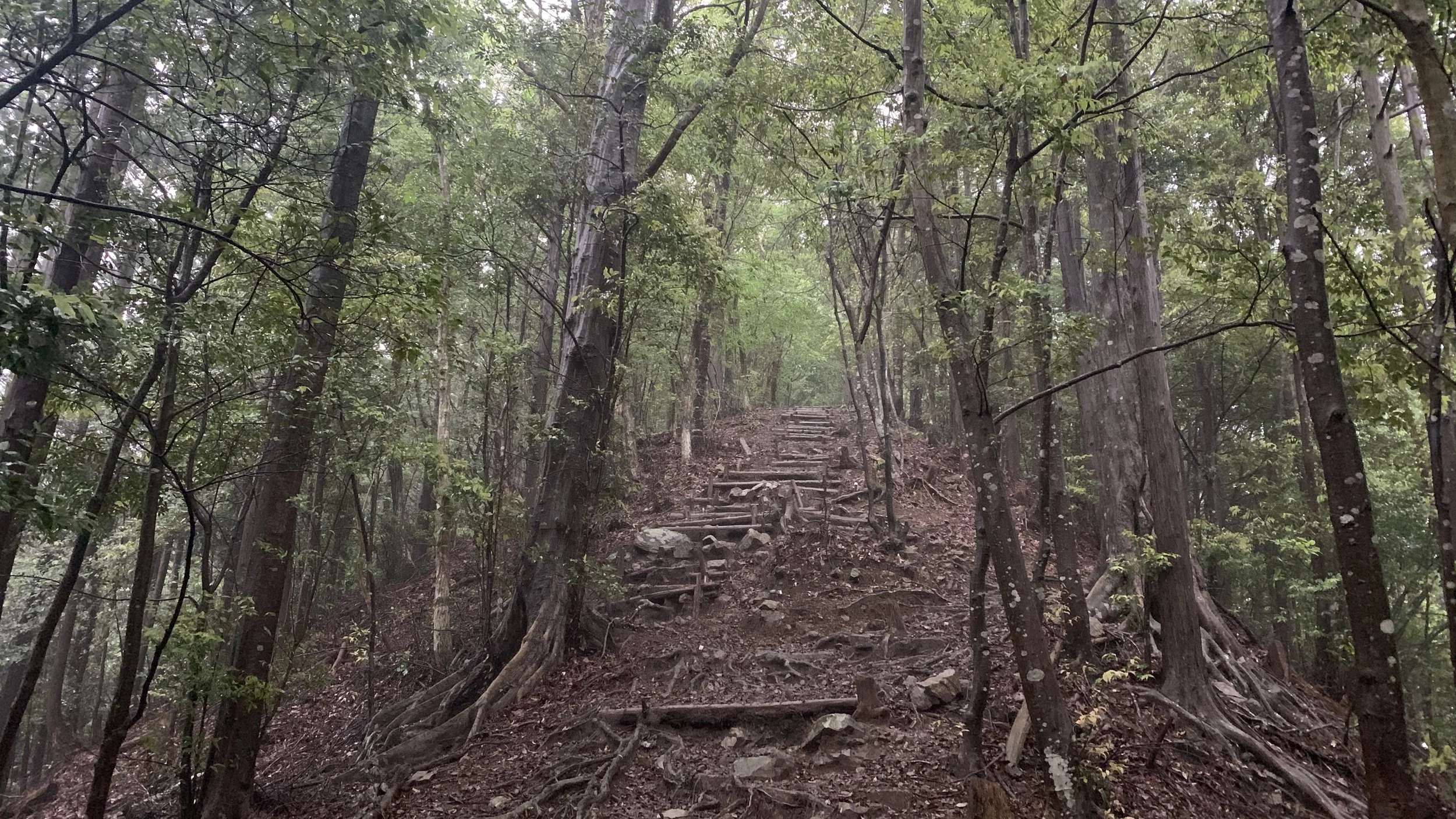
I am certain that this humidity, sweating in rain gear, and pushing myself physically is exactly what I need to kick this cold quickly. My head is clearing already. Up we go, inching closer to Takahara, stopping to enjoy our pickled plum seaweed rice cake at the first magnificent view.
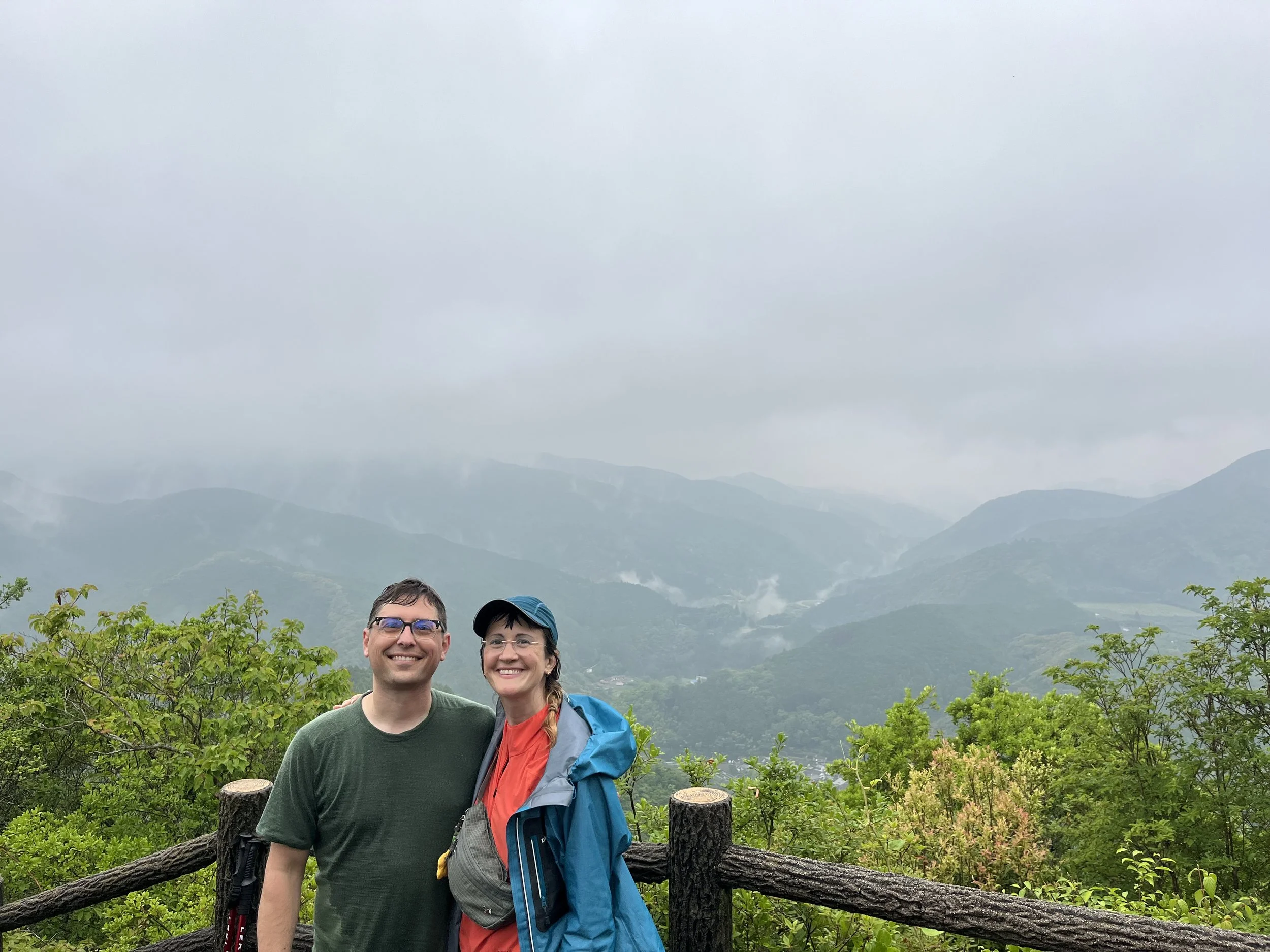
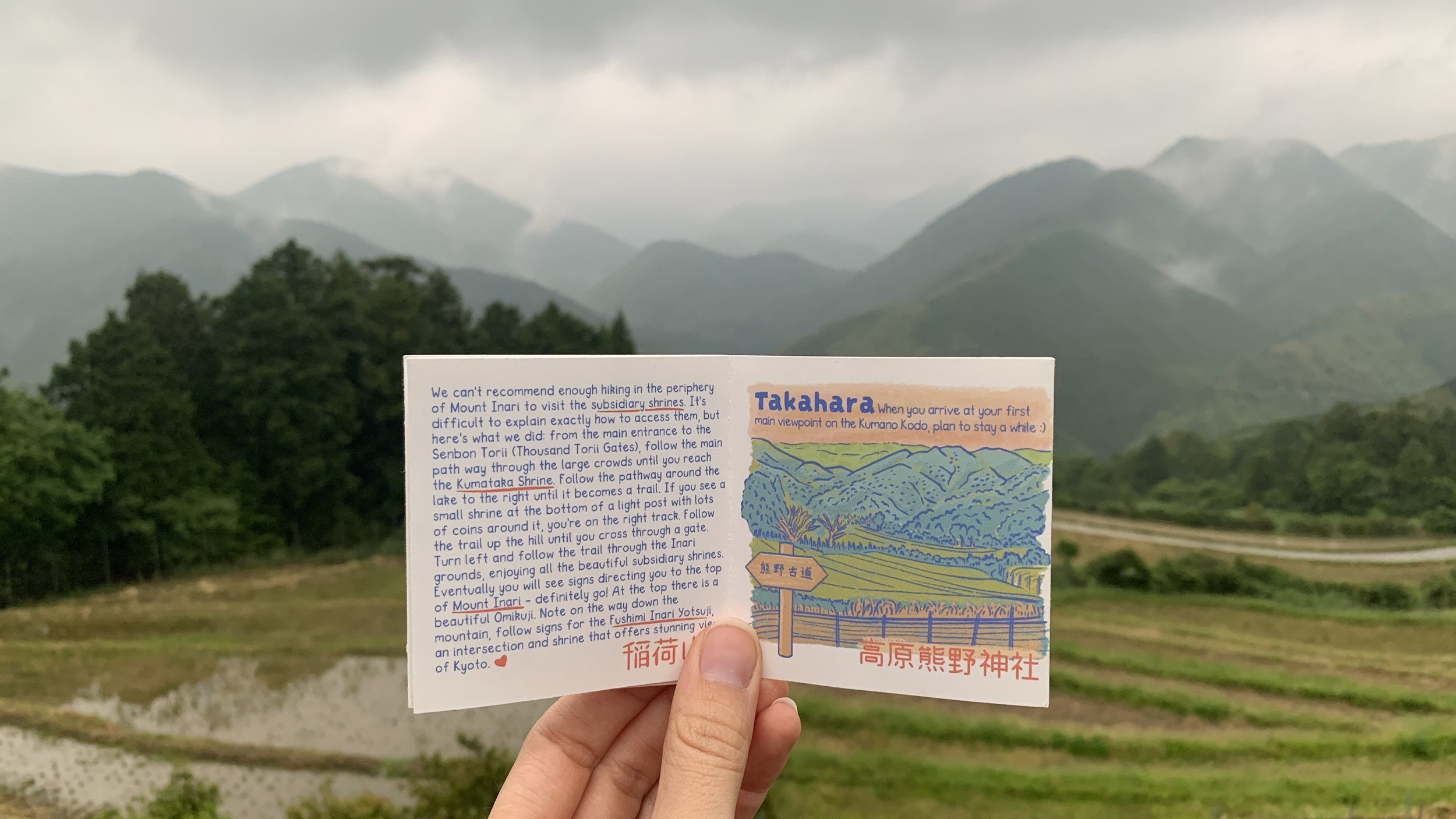
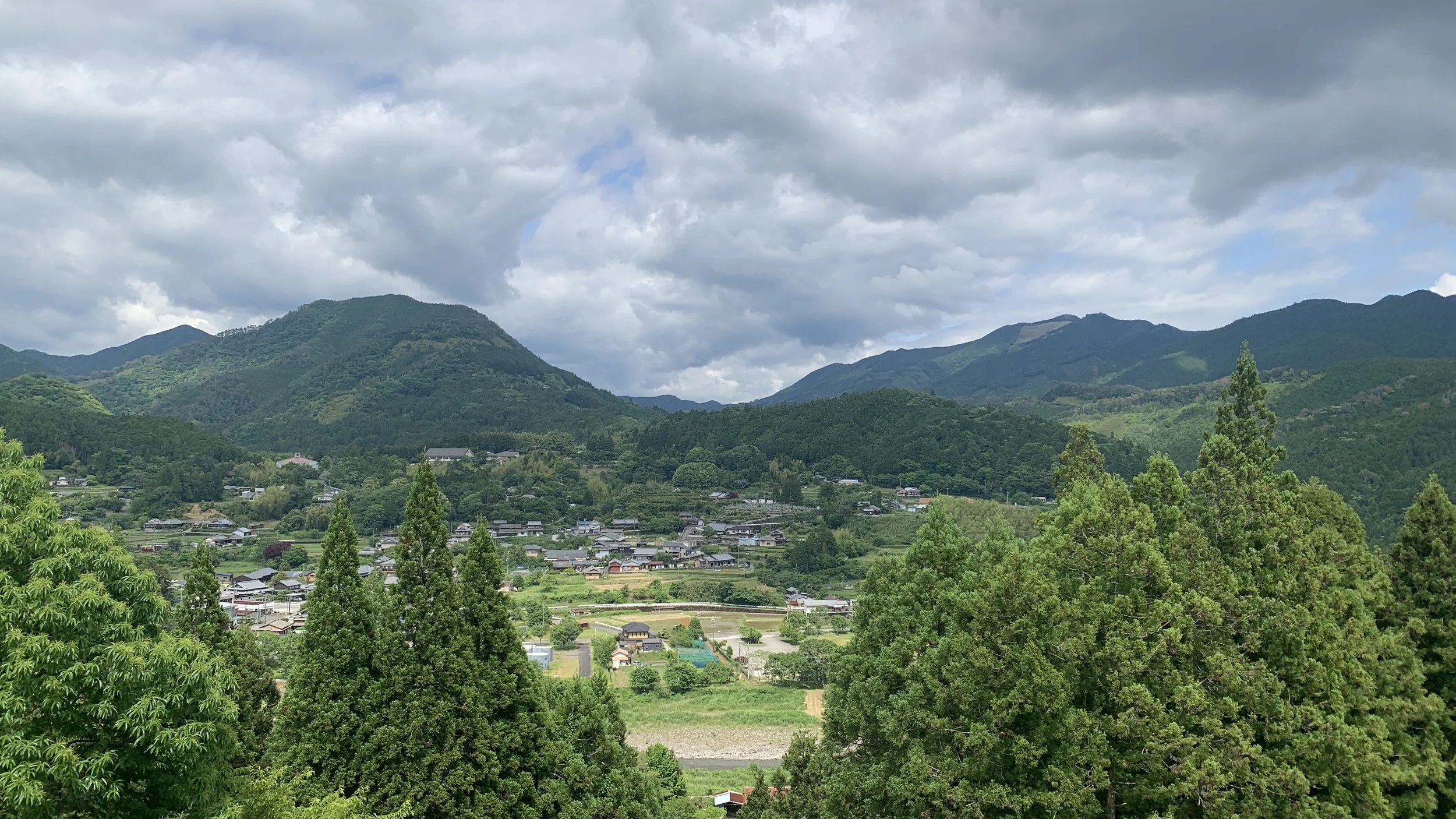
Arriving in Takahara we had a short walk past some homes and other pilgrim accommodations, before arriving at a lookout point in the center of the village with a gorgeous view of the mountains and rice paddies. Planning to stay awhile here was the final note in our illustrated honeymoon guide!
A man below rides a machine through one of the paddies, while to our left a wooden water mill steadily creaks and groans as it spins evenly. A couple of long colorful kites ripple in the breeze.
There was large map showing where the areas at greatest risk of landslides were and you could see several landslides in the distance, mountainside scraped bare like an open wound.
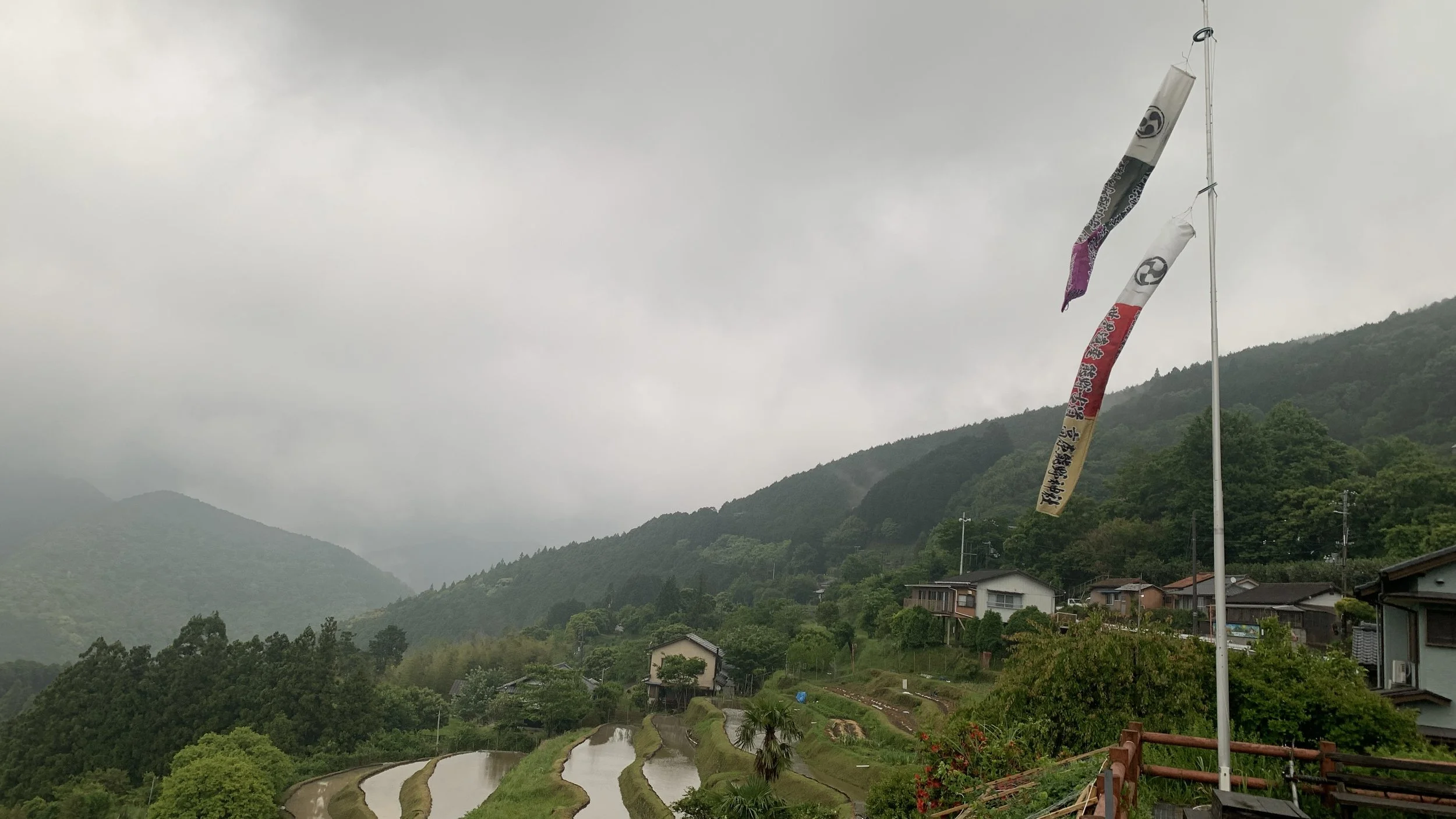
Onward up a very steep cobblestone path through the mountain village until we reached our first accommodations on trail: Keyaki.
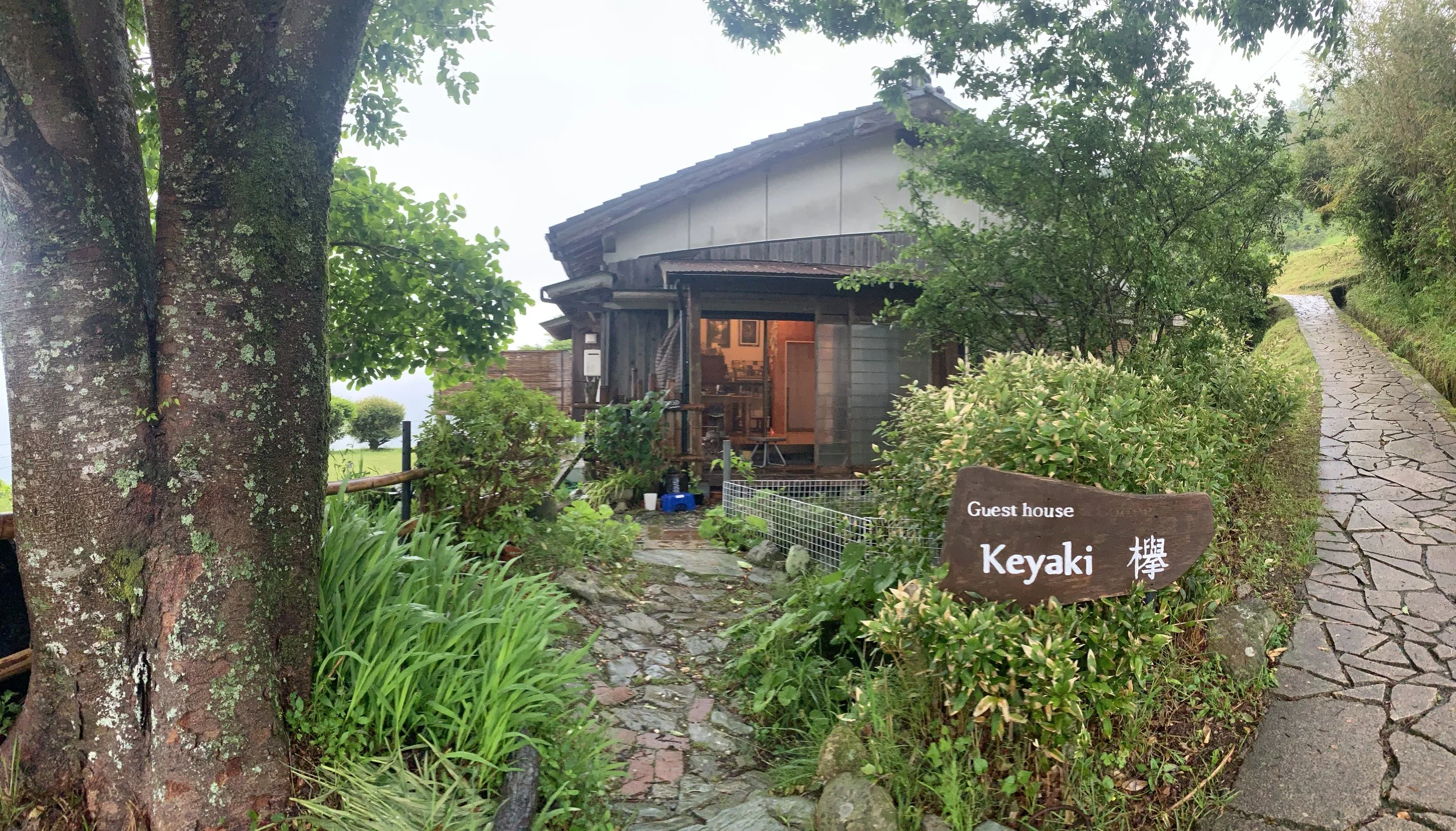
When we booked Keyaki we had no idea the level of excellence we had in store. On arrival, Mahito-san asked us to remove our shoes and put them in a vertical shoe-drying locker on the patio. The house looks over a small rice paddy and has immaculate views of the mountains.
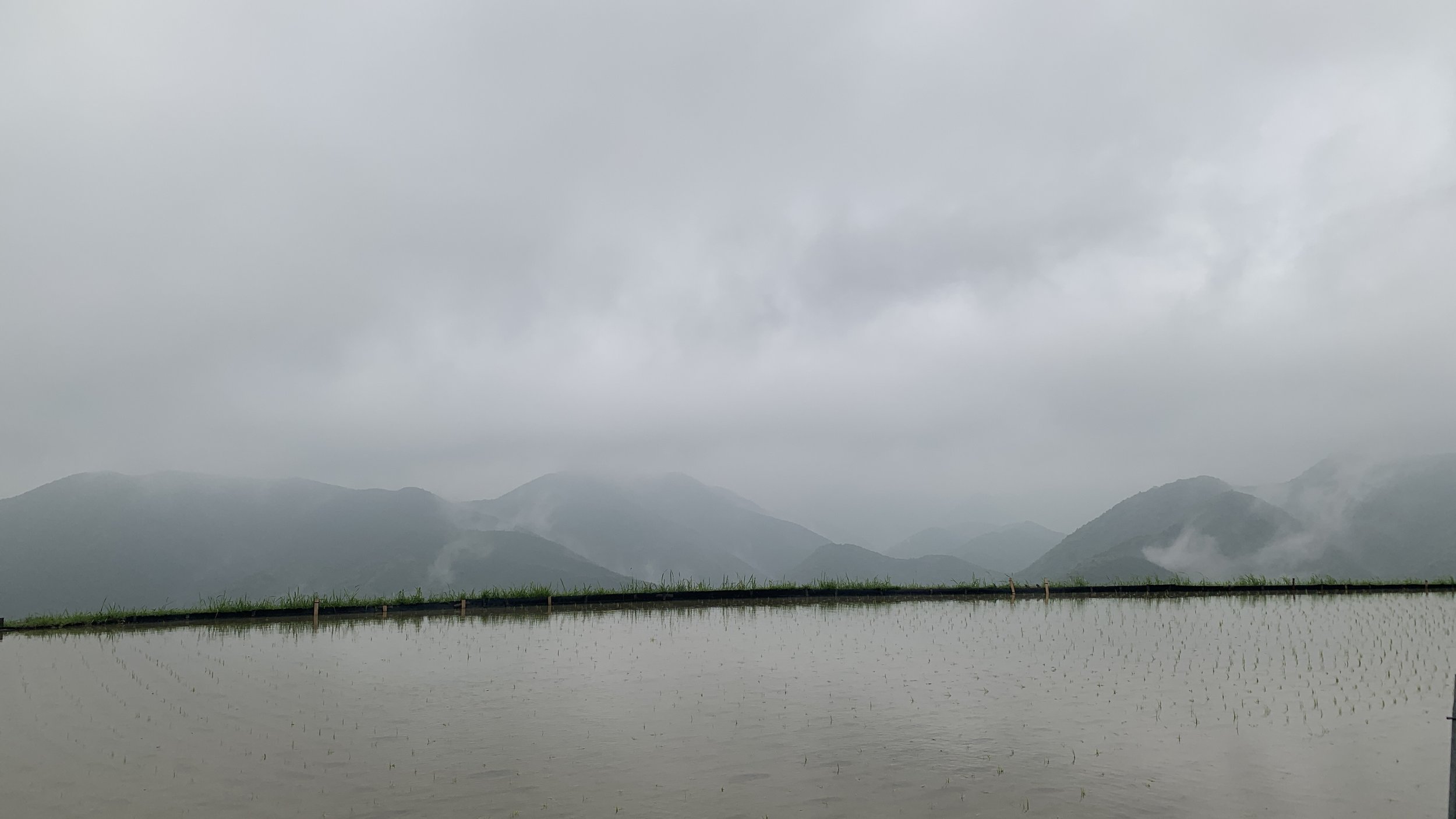
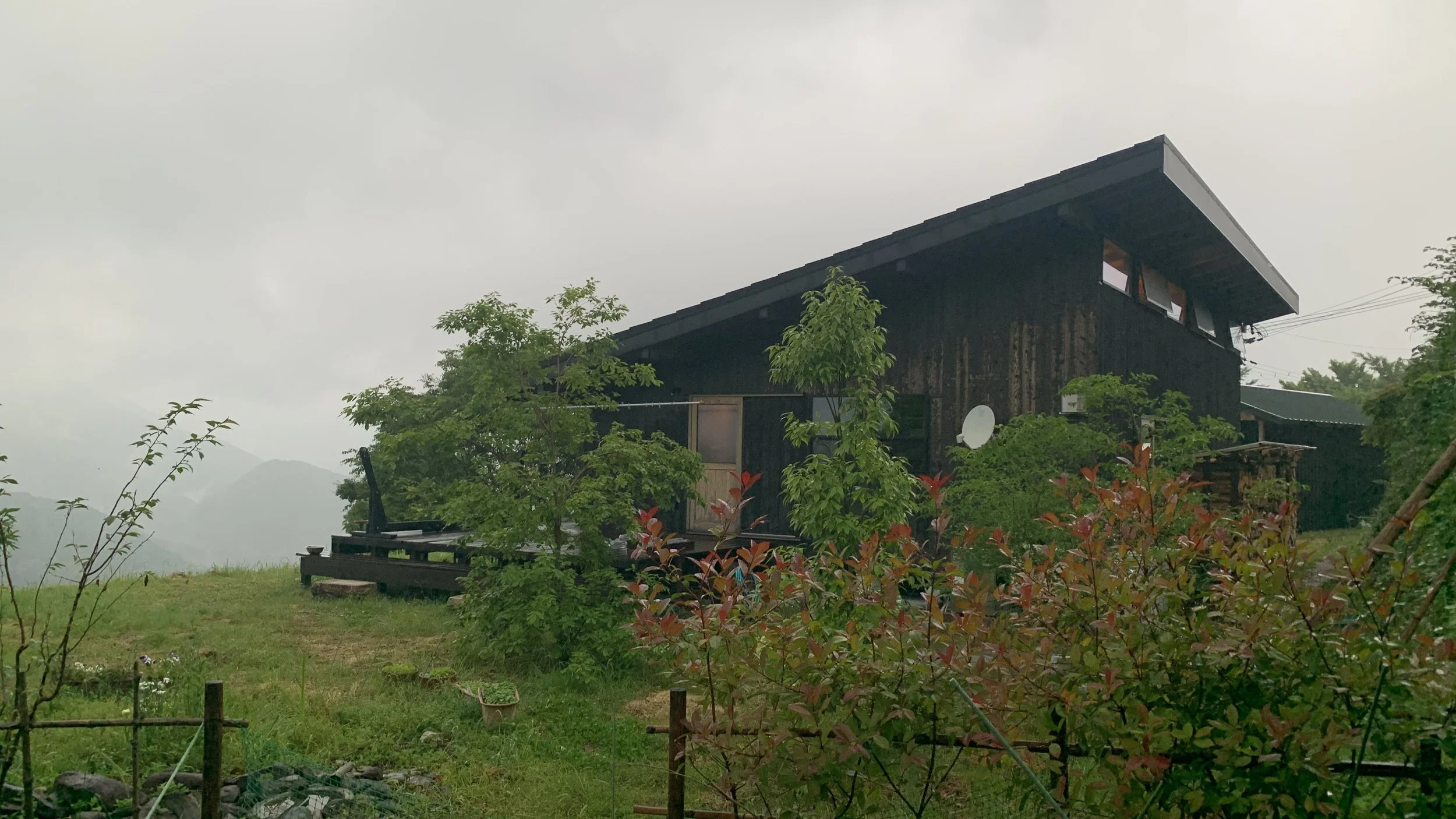
Mahito and his wife live here with their 3 young children and rent our half of their home to Kumano Kodo pilgrims, as well as a small, elegant studio one land tier down from the main house, where our Australian friends are evidently staying.
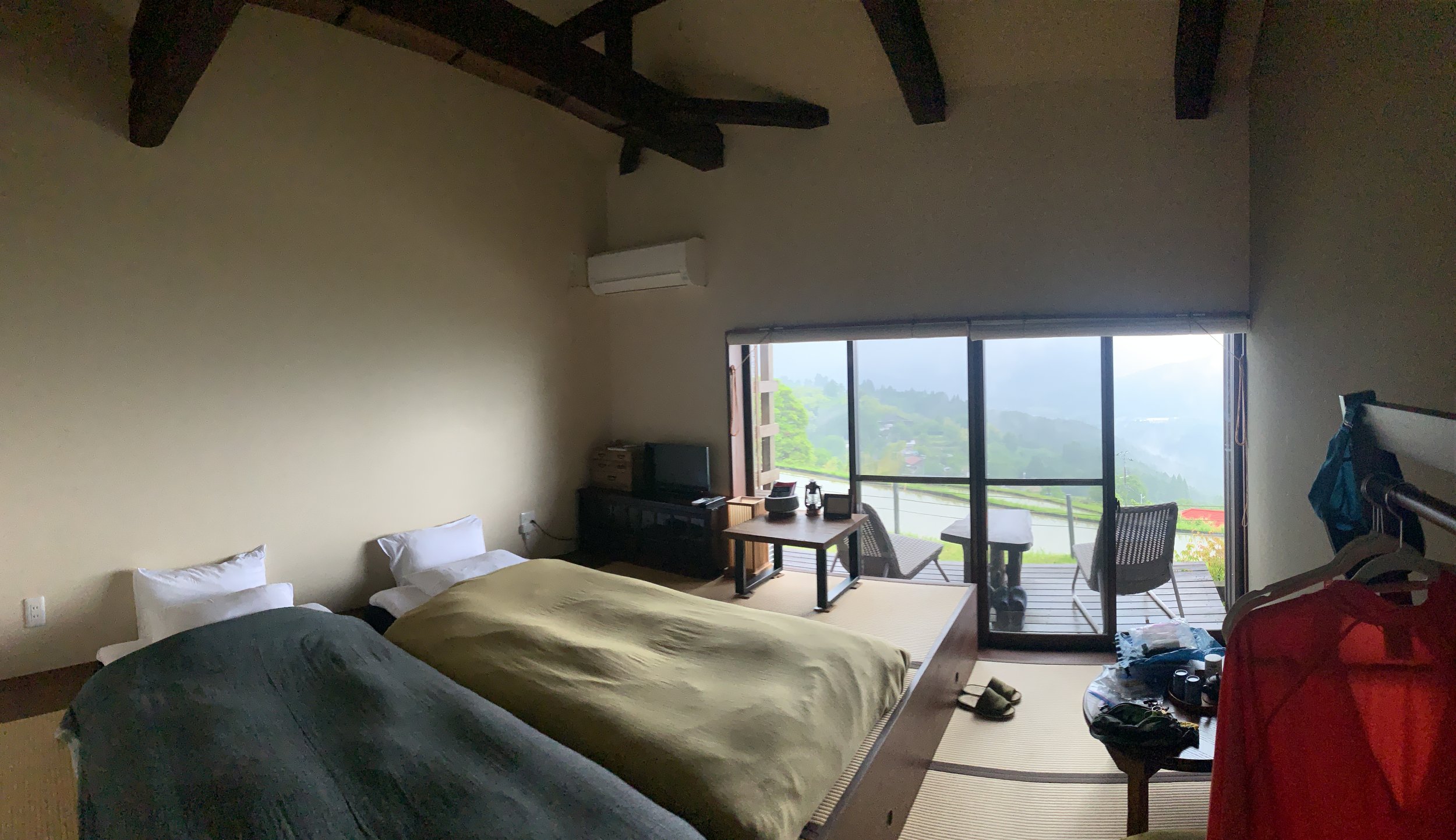
Our room is blissful, well cared for, and elegantly designed. Out of our sliding glass door wall is an open air patio. The bathroom is immaculate and with another deep soaking tub inside a fully waterproof room with a handheld shower nozzle. The coffee station, too, is a work of art, with a chemist set drip coffee set up, a hand crank grinder with fresh beans, and little ceramic mugs with saucers and tiny spoons.
While Chris took a bath I hiked back down the steep cobblestone path to the overlook point in the village to see if I could find the neko (cat) that reportedly likes to greet people there. The cat evidently had better things to do, but I did find a neat Nakahechi mural, and got to see more of this little village.
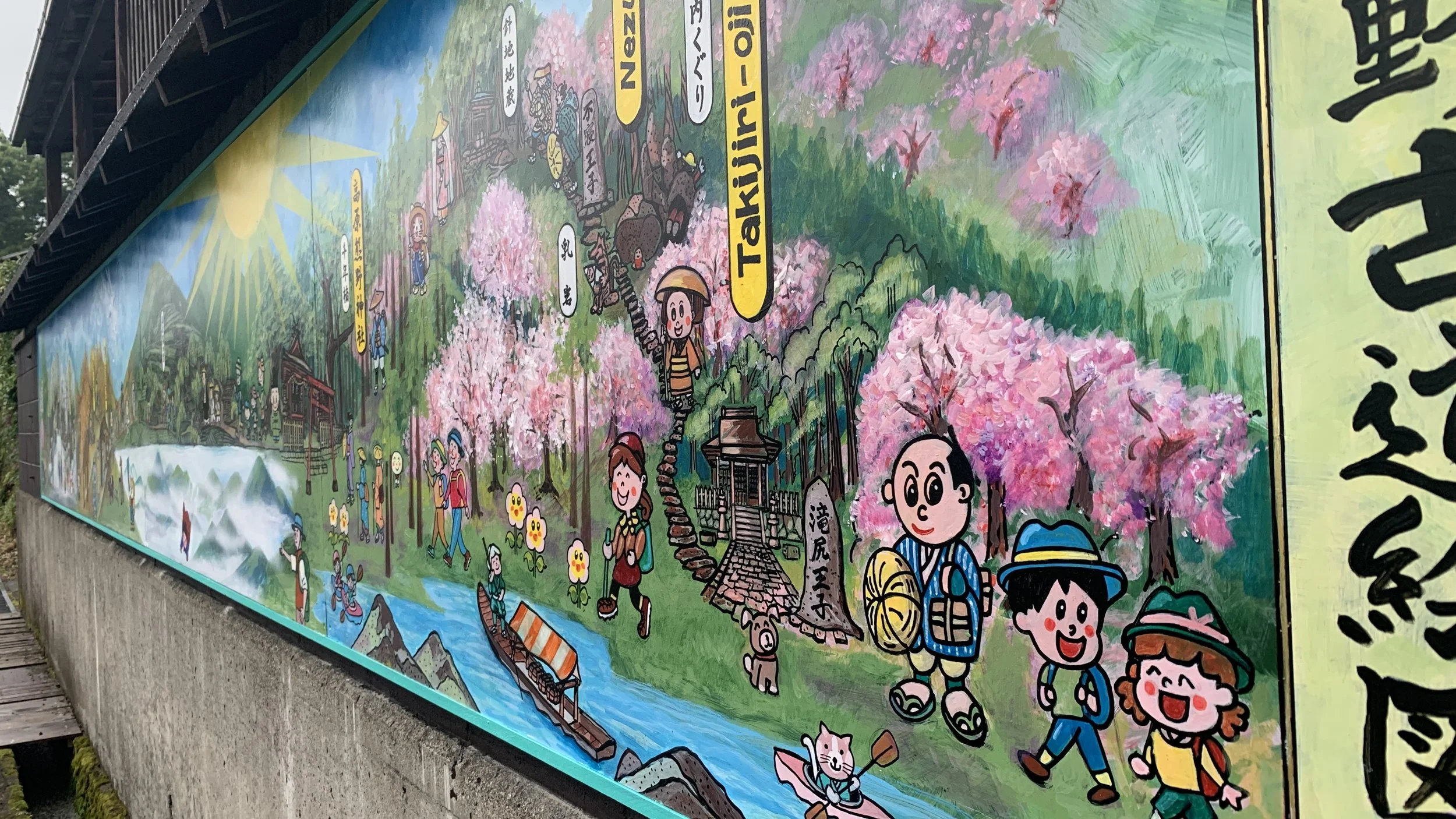
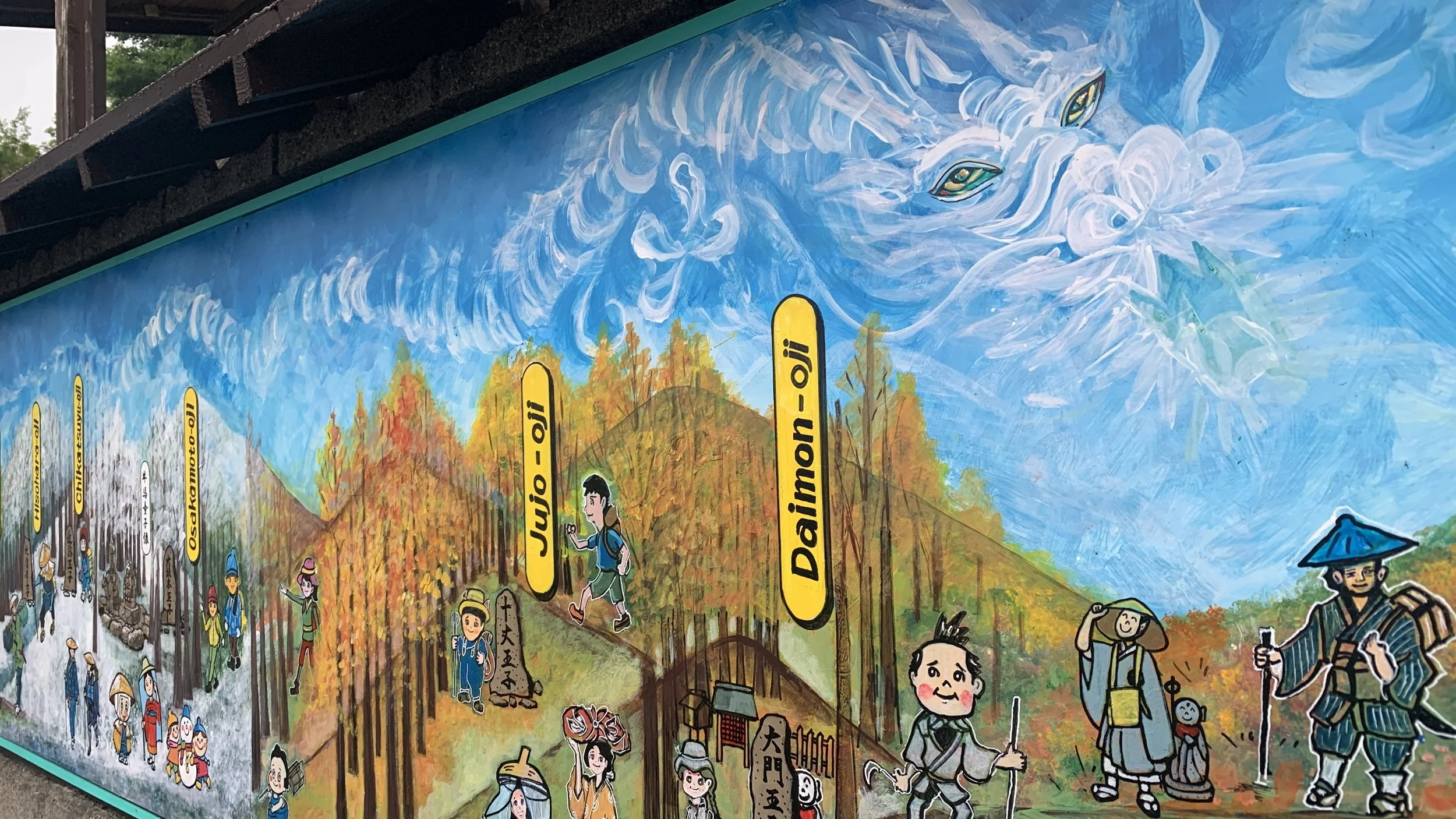
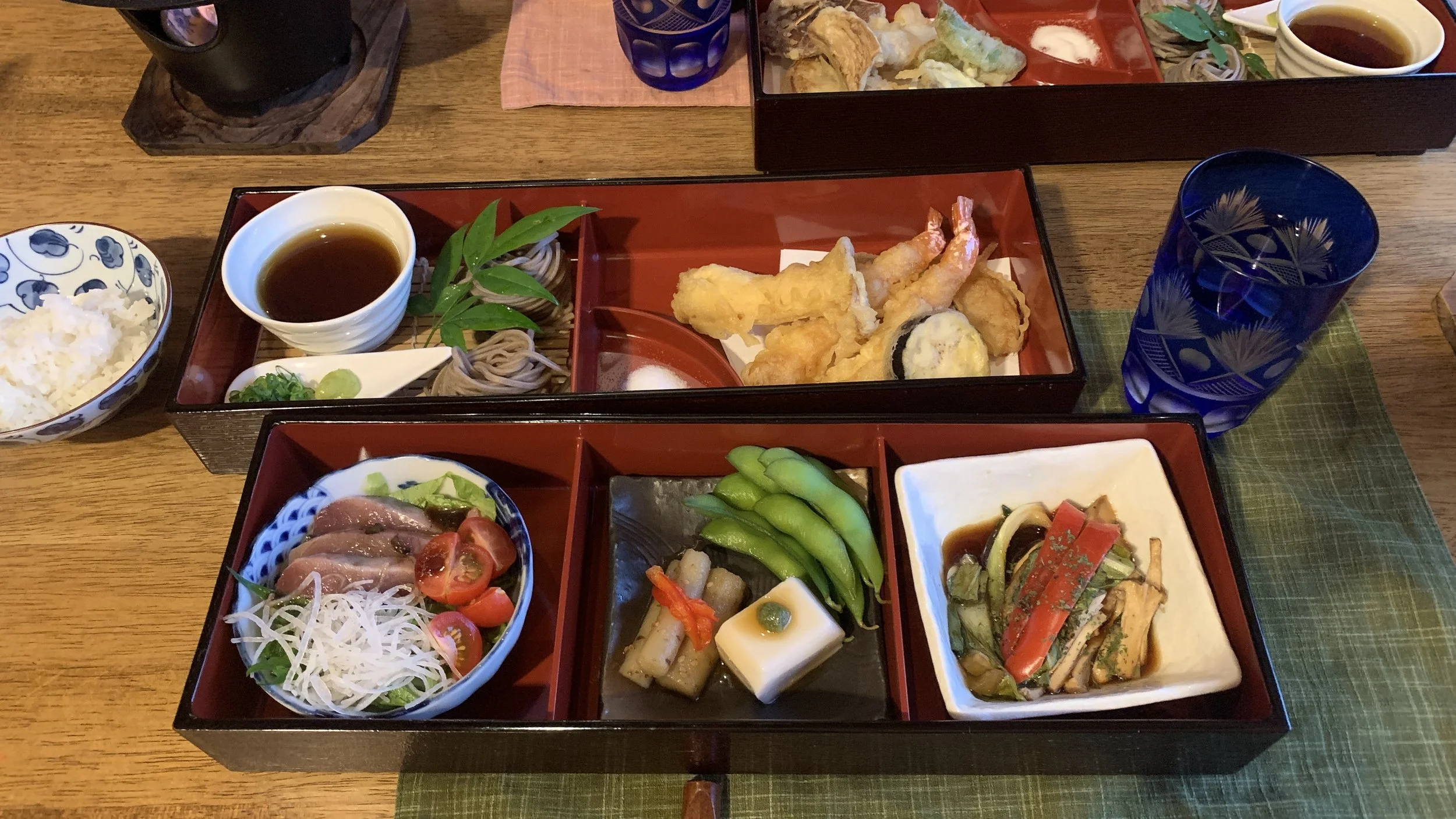
Back at Keyaki, my own bath felt like the nail in the coffin for this cold of mine, causing my body temperature to rise dramatically, mimicking a fever. I finished up just in time for dinner - and no, this dinner spread may actually be the best of our lives. Mahito-San was the chef, and each element was prepared to perfection. The view wasn’t bad either.
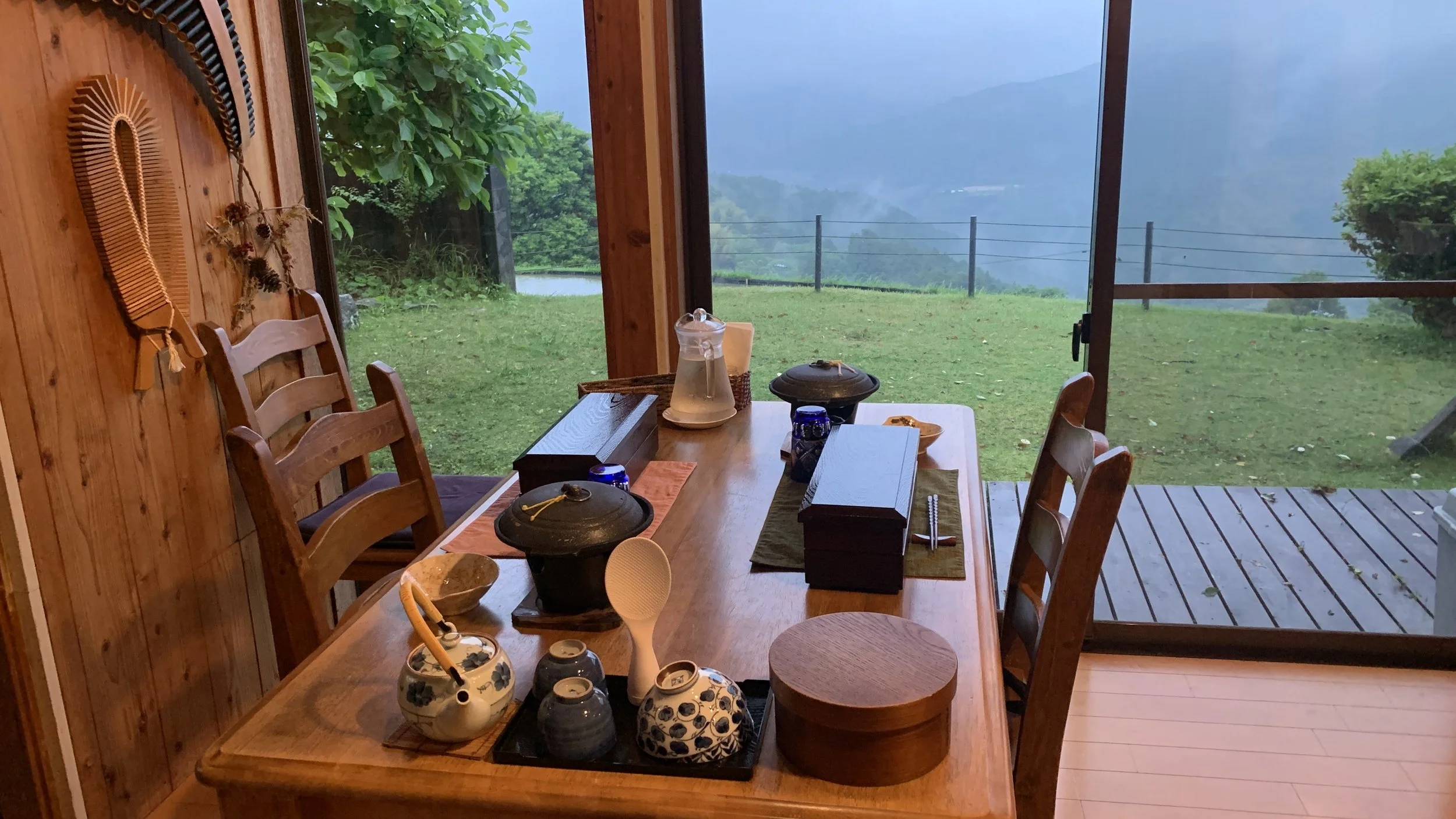
I opted to list myself as having no dietary restrictions when we applied for accommodations on this journey in hopes of increasing our odds of being accepted (rural Japanese diet includes much fish and meat), so I locked in mentally when Mahito-san lifted the lid off my sukiyaki to reveal a simmering hot pot of thinly sliced cow meat, and other meaty delicacies.
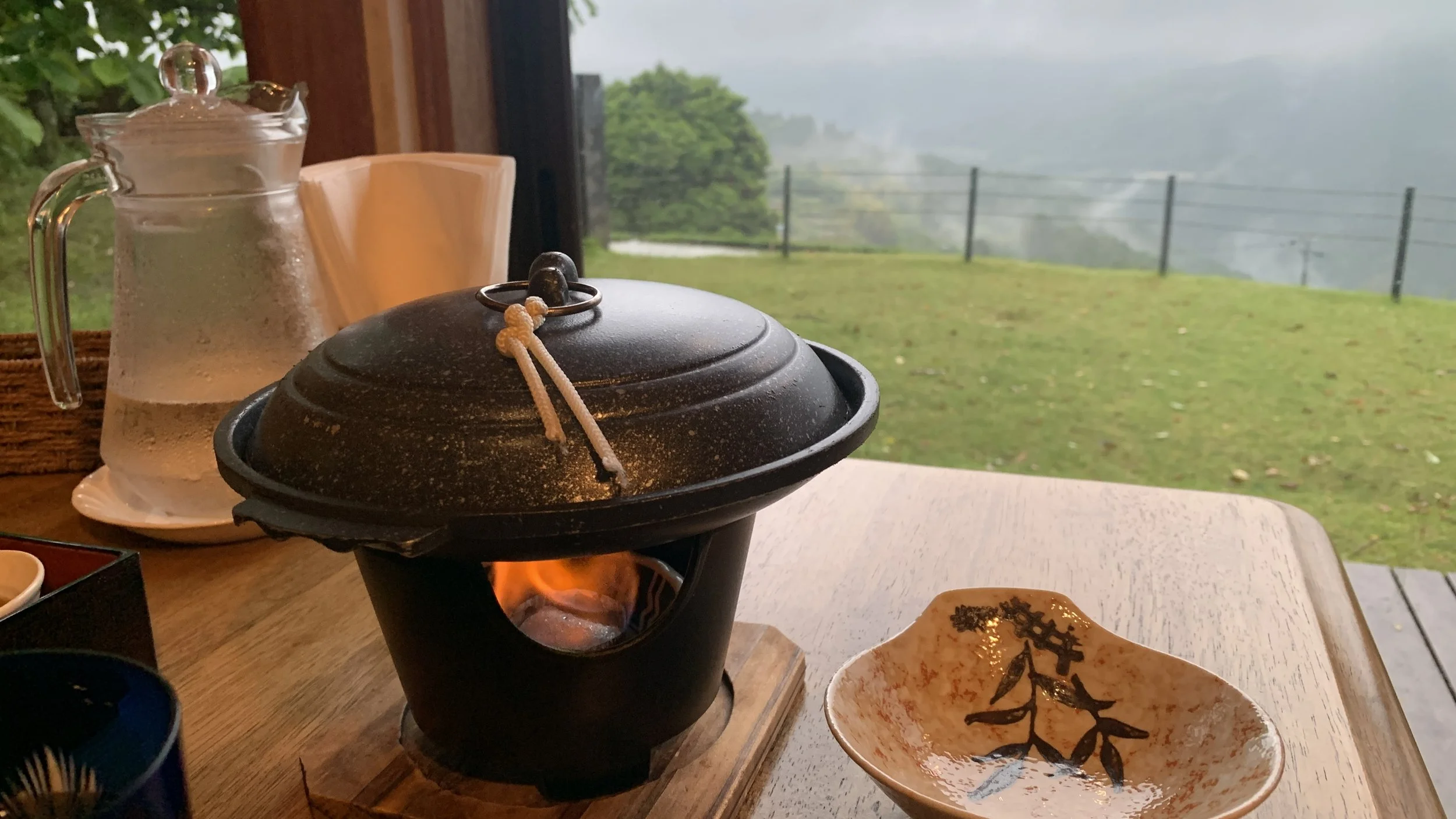
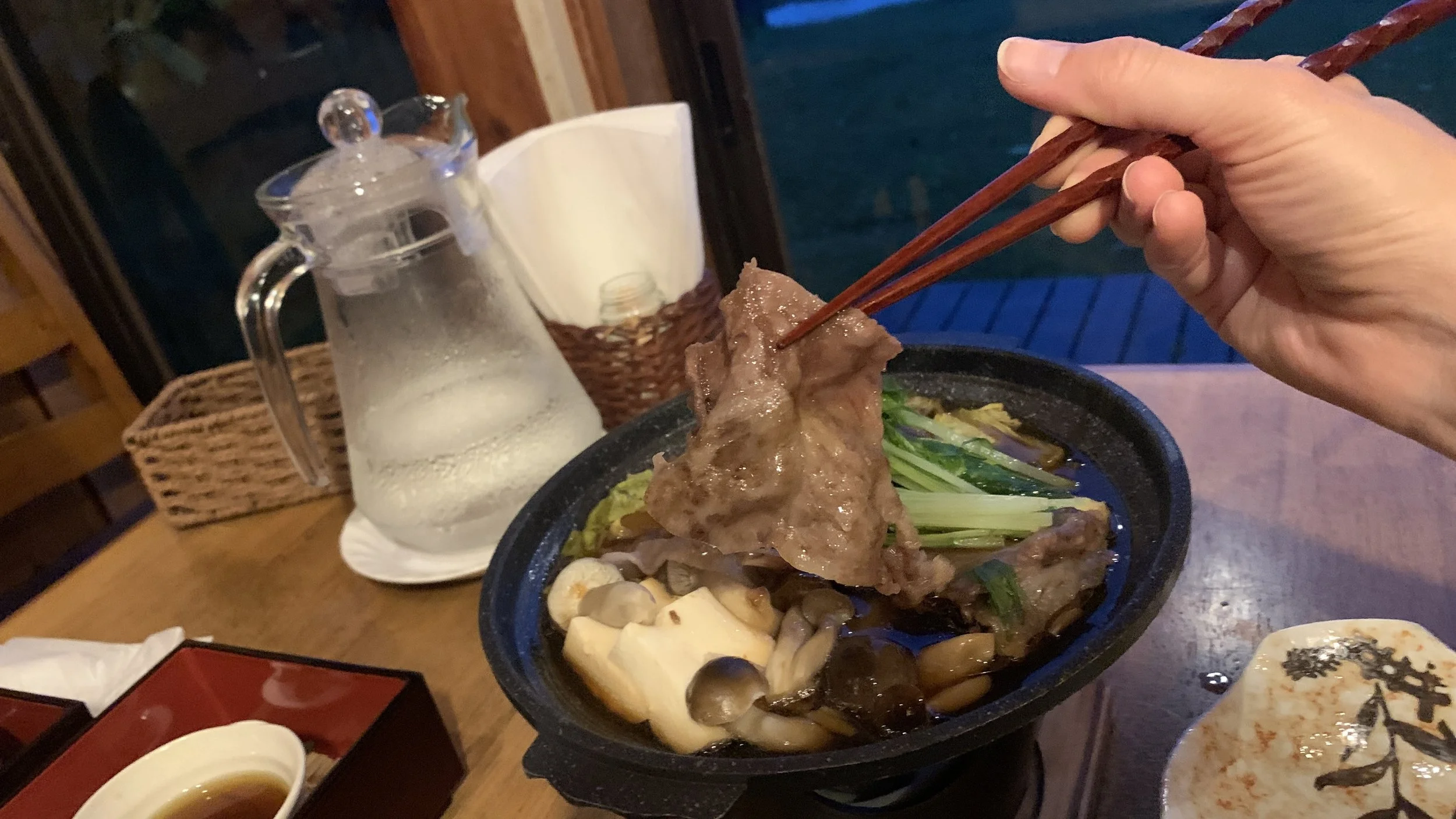
I needn’t have worried. The beef was delicious, as was the tempura battered shrimp and mushrooms, rice, vegetables, noodles, miso, etc.
We went to bed shortly thereafter. I’m feeling significantly better but Chris’ allergic asthma is seeming quite persistent, though I suspect he may have an underlying cold as well.
Friday, May 22
Takahara to Chikatsuya • 12km
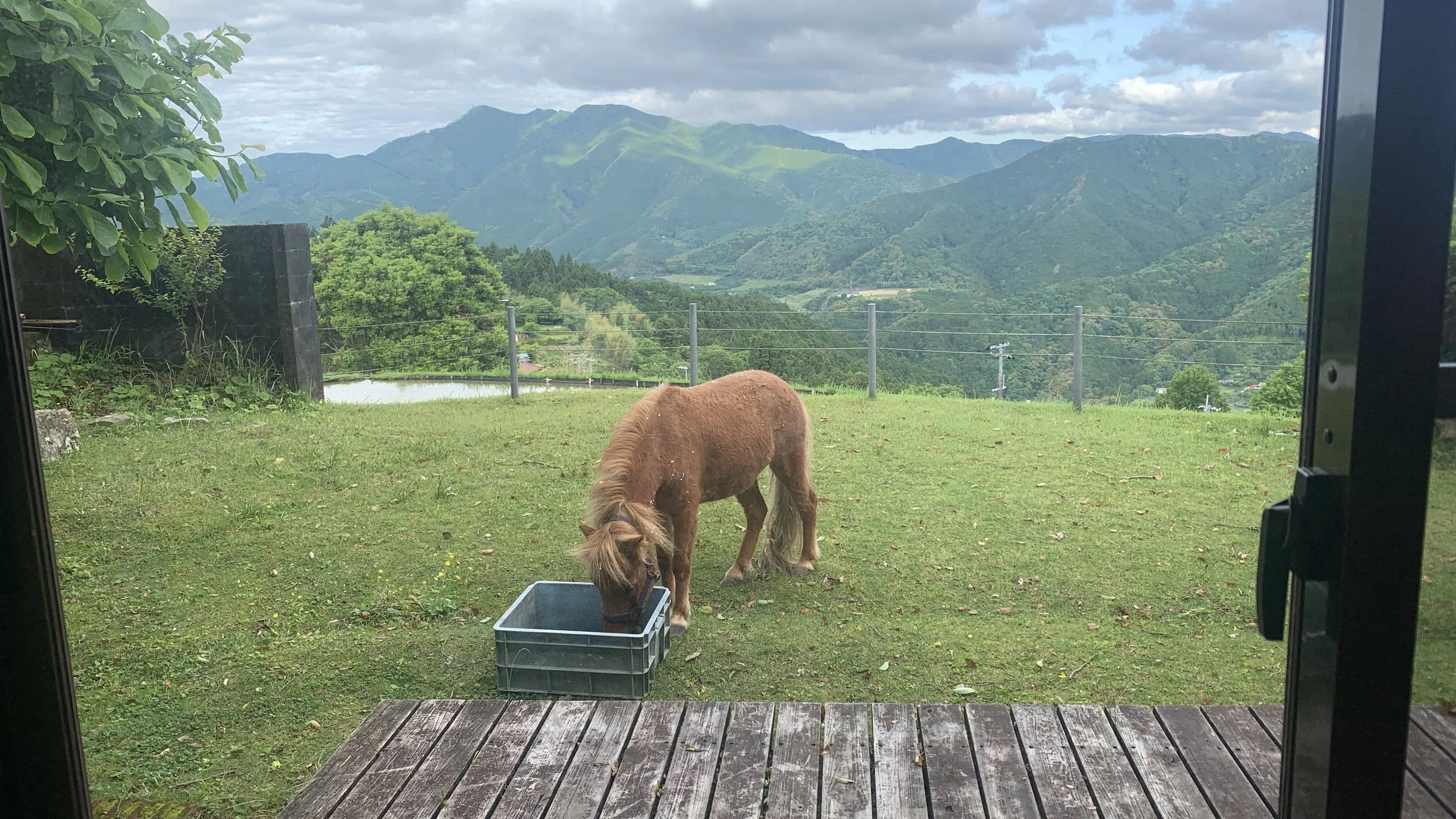
Phenomenal breakfast! Toasted sandwiches, hot veggie broth, tea, coffee, scrambled eggs for me, and a mysterious roasted root of some sort for Chris. The family’s 17 year old pet pony, Chaka, ate his breakfast just outside the window, too. And mounted over the kitchen was a beautiful painting of Chaka, by Mahito-san’s mother.
Over breakfast we had the chance to meet the other lodgers, another couple: Whitney (Presbyterian pastor) and Amy (labor & delivery nurse), taking this trip to celebrate sending their 3rd and final kid off to college. We had quite a laugh when they joked about a heated encounter they had during their transit to Kii Tanabe when there was a ticket mishap. “30 years of marriage nearly down the drain!” We have had similarly fraught moments, especially within the public transit realm, since every time we figure something out another high-stakes puzzle appears so it was fun to laugh about this aspect another couple.
After saying goodbye to Mahito-san and his cute little daughter Sayulee, we set out from Keyaki around 9 for our first full day of hiking. Shamefully late start, but a 13km day should make for both a pleasant pace and arrival time in Chikatsuya.
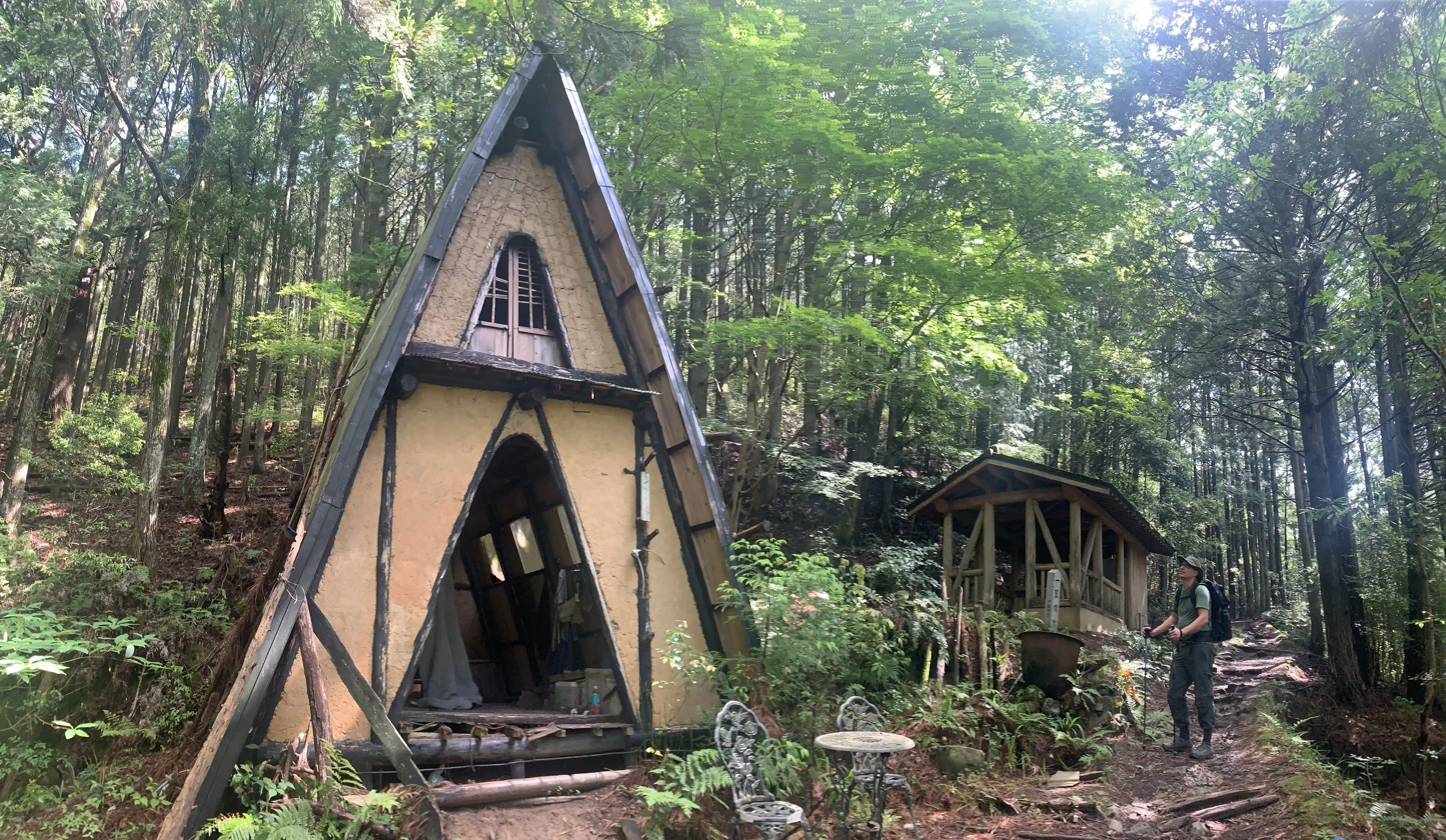
The hike was beautiful and no rain made for extra enjoyable walking. We passed an interesting A-frame mud hut that that seemed abandoned, next to a picnic shelter.
Around lunchtime we stopped at a small grocery spot directly on trail that had a wide assortment of tasty snacks and drinks and plenty of outdoor seating. Since Keyaki provided a bento box for us for lunch, we sat and enjoyed those before getting back on trail.
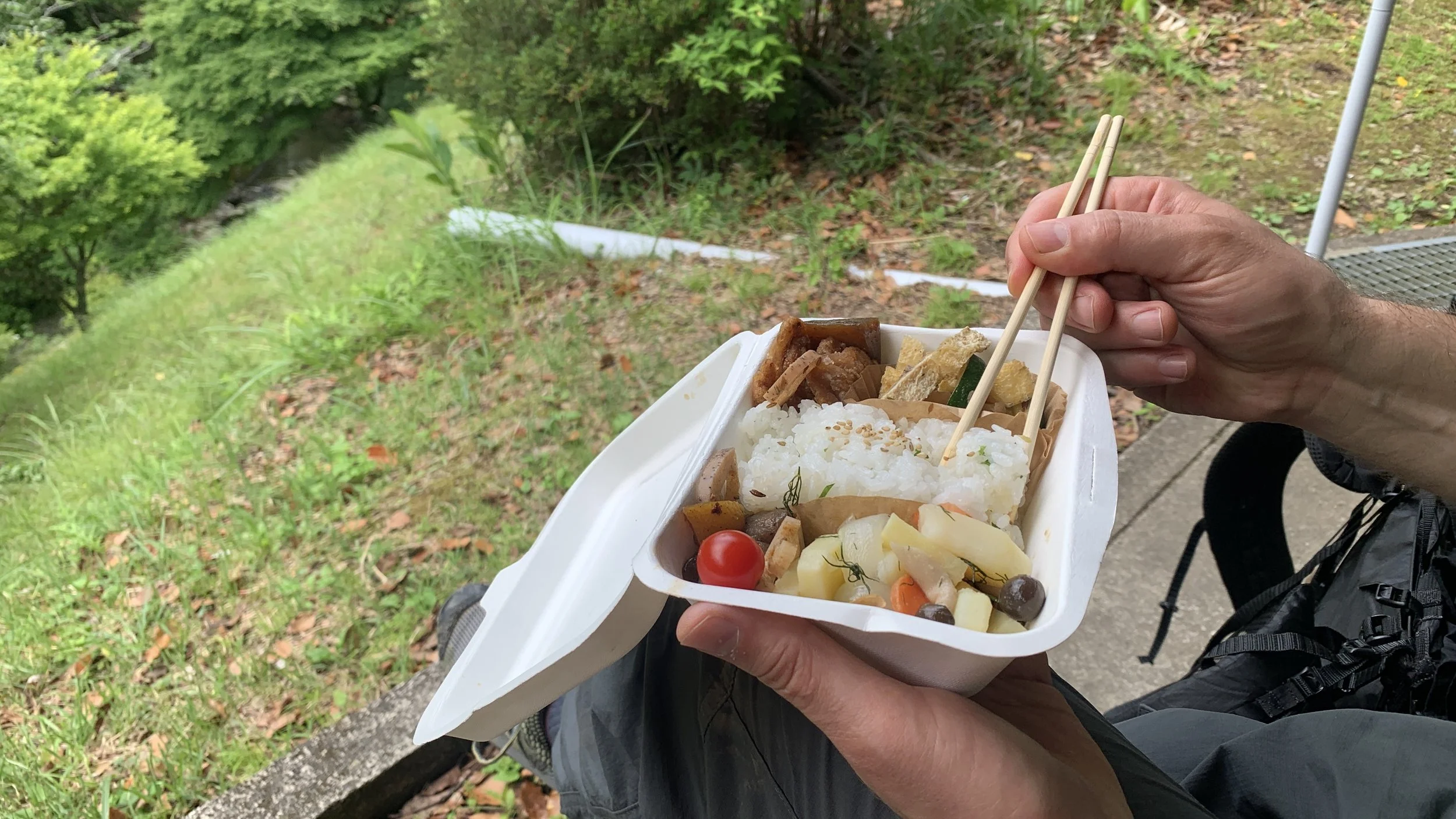
For desert I purchased a packet of locally made mochi that listed mugwort as an ingredient. Very neat, and I’m curious whether I’ll notice any dream effects from the mugwort (that is if the Google translation was even correct…. It can make some pretty wild guesses as to word meaning, like the time it listed cockroaches as an ingredient on some savory crackers).
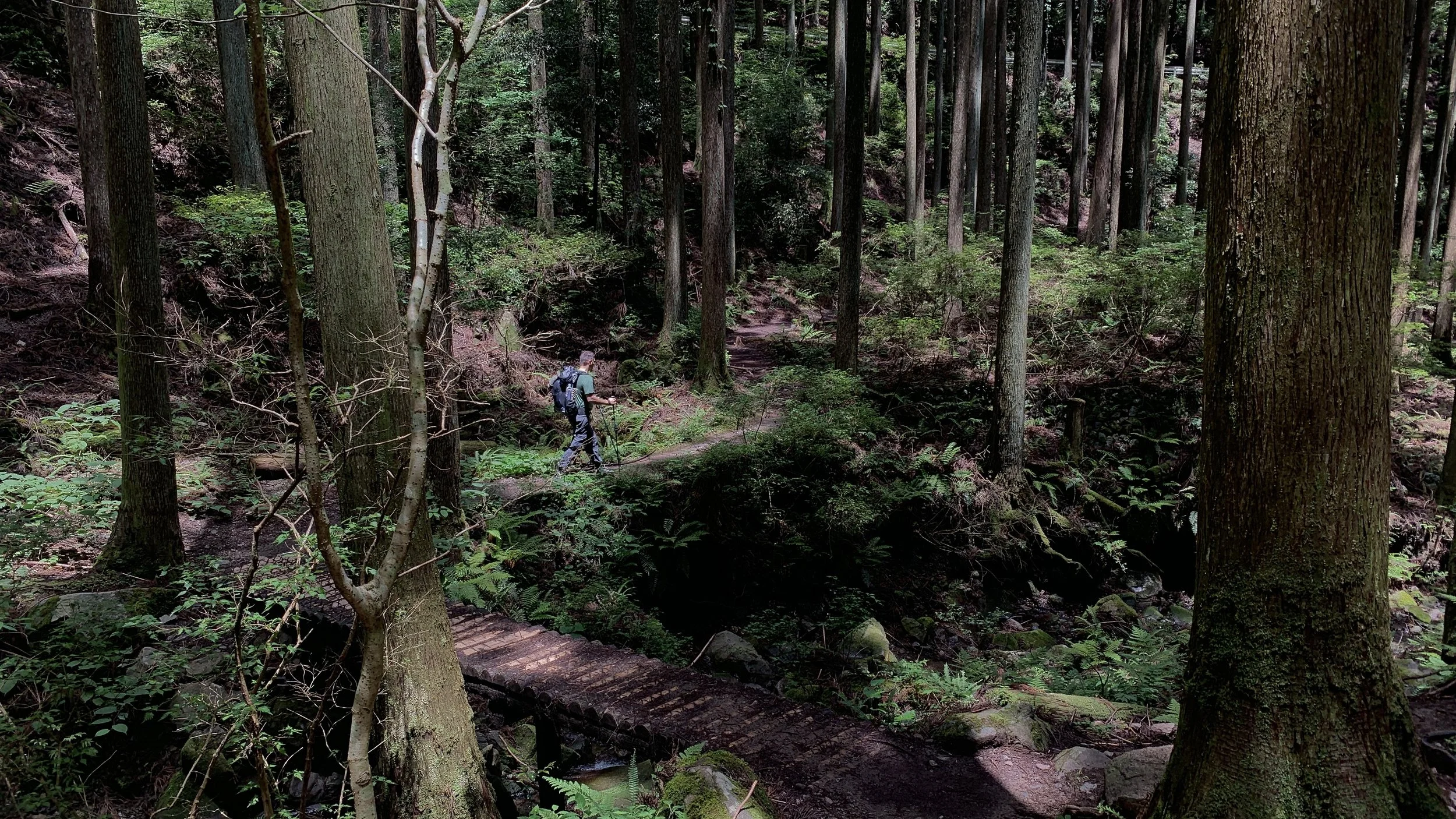
We hiked together awhile with a woman named Camille, from Paris, France, and also leapfrogged with our neighbors from the night before, Amy and Whitney. We all ended up chatting for a bit when we reached the overlook point for Chikatsua.
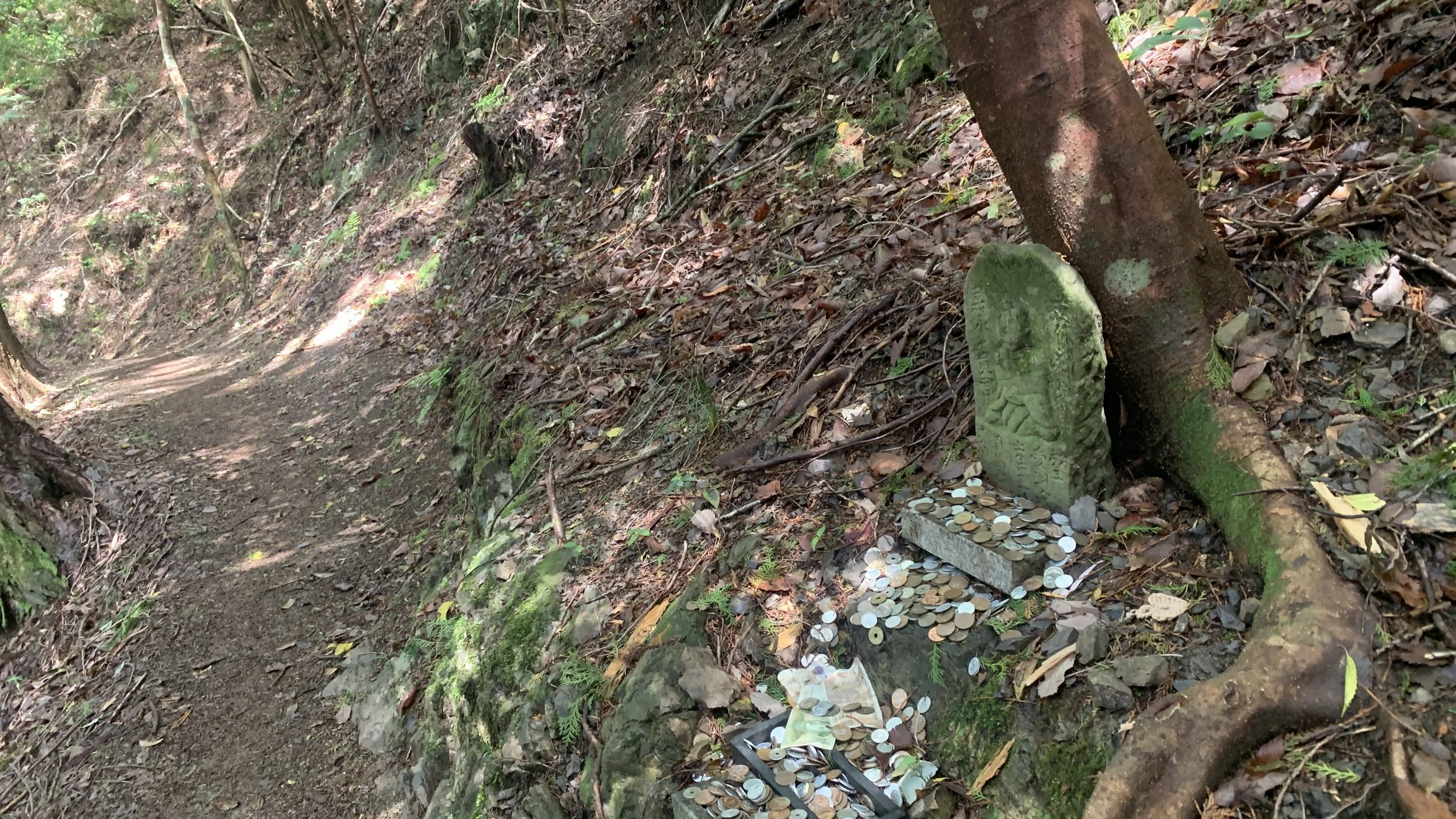
The whole walk is lined with Ojis: a stone marker commemorating a shrine that used to be here and describing some story related to the shrine. One such oji explained the story of how the village of Chikatsuya’s name came to be. Chi = blood, ka = and, tsuya = dew. We have been enjoying the tales told by these stones and it’s incredible to think of what it must have been like for these pilgrims of 1100, 1200, hiking in straw sandals, carrying swords for protection, etc. One detailed the former homestead site of a man who had been recorded by a 16th century pilgrim to have lived on a particular mountain ride “long ago”.
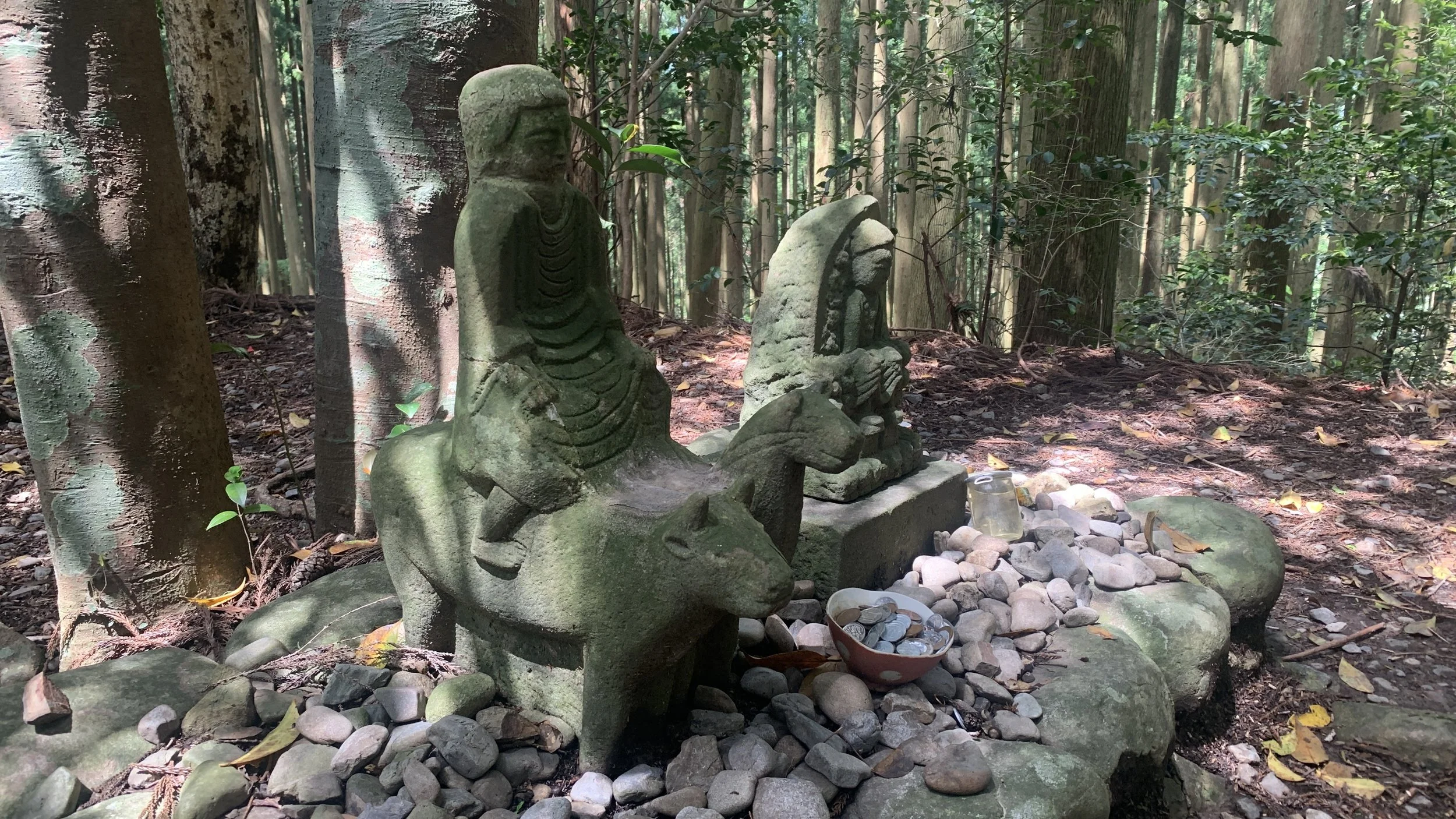
Many held lore around esoteric events at the sites they occurred at such as the “three-fold moon” and others pay tribute to pilgrims who met their ends on the Kumano Kodo, such as a man as recent as the in the 1800’s who starved to death in the trail and when the townspeople eventually found him discovered that he had placed a gold coin in his mouth before passing, presumably as a way of performing his own funeral rites. So moving was this to the townspeople that a shrine was erected in his honor.
When we arrived in Chikatsuya around 2:30 we realized our accommodations were only a 20 minute walk up trail, so we stopped at Sakura Beer Garden for a drink with Camille. Another pilgrim, Juliette from the Netherlands, joined us and we stayed for a couple hours, playing the ancient Japanese game GO (it’s the world’s oldest still played board game, and one Chris has been learning with our friend Chase), drinking homemade ginger ale, and a Kumano Kodo pale ale.
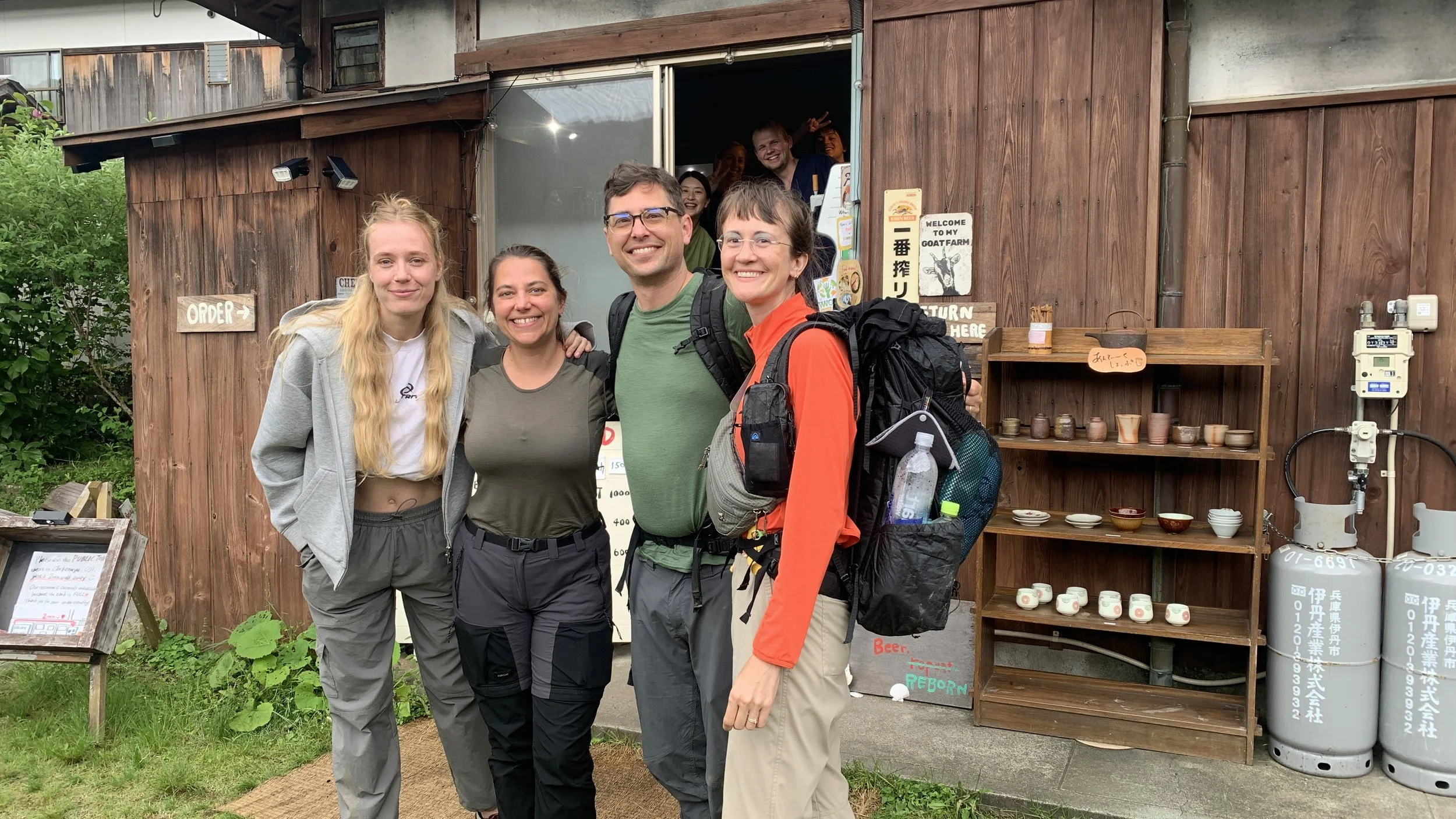
Juliette works in human rights processing immigration applications and said there had been a huge uptick in American immigrants since Trump. She told us if we ever want to try to live in the Netherlands the Dutch American Friendship Treaty (which evidently works more in favor of Americans than the Dutch) would be the route to take. With the looks of a storm rolling in we departed the beer garden for our lodging at Guest House Housen Cafe.
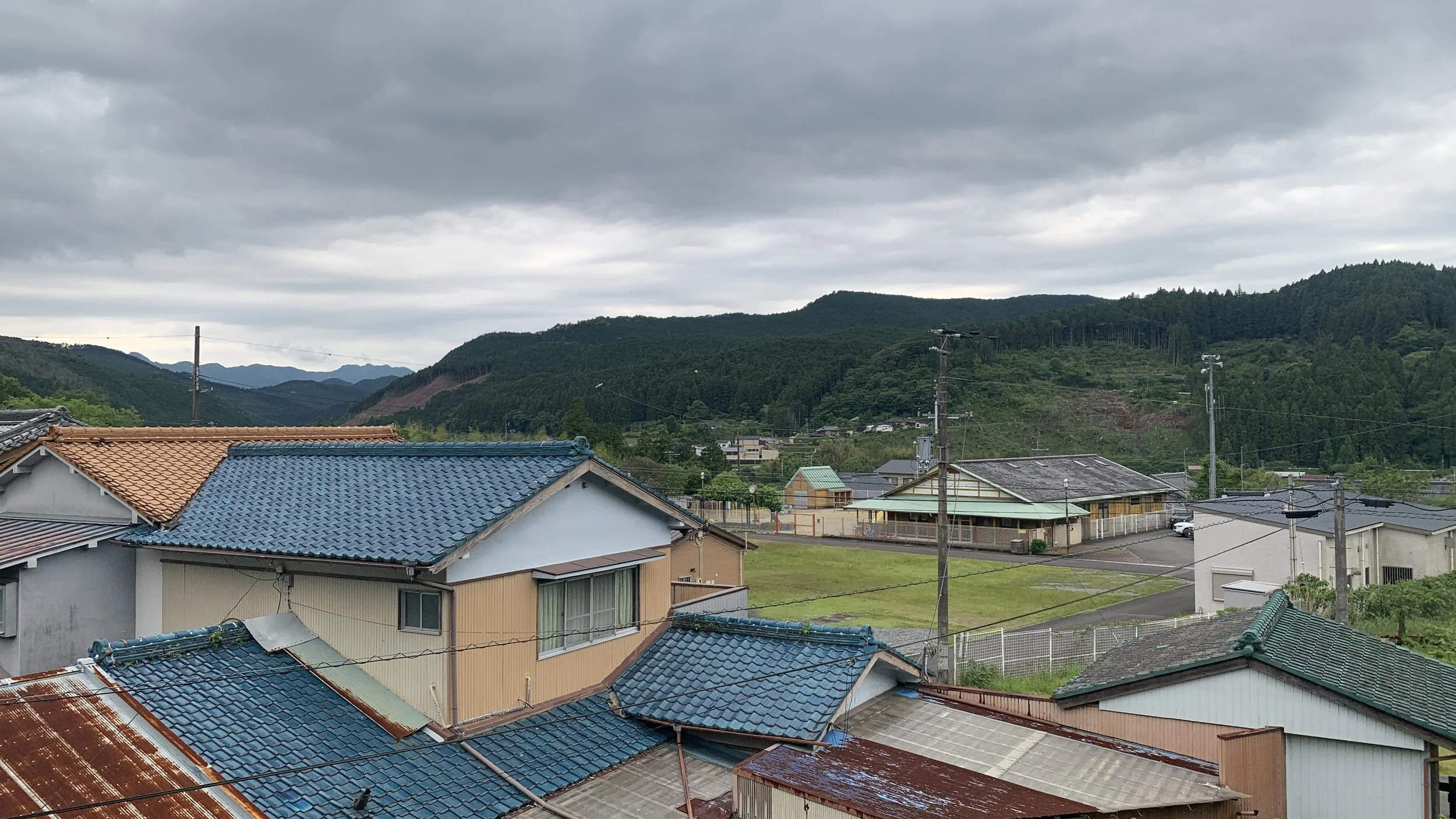
Tonight we have “western beds” which I wasn’t too jazzed about when booking but once we felt their softness, and discovered the two screened windows in the bedroom to create a cool draft, we knew we would sleep well.
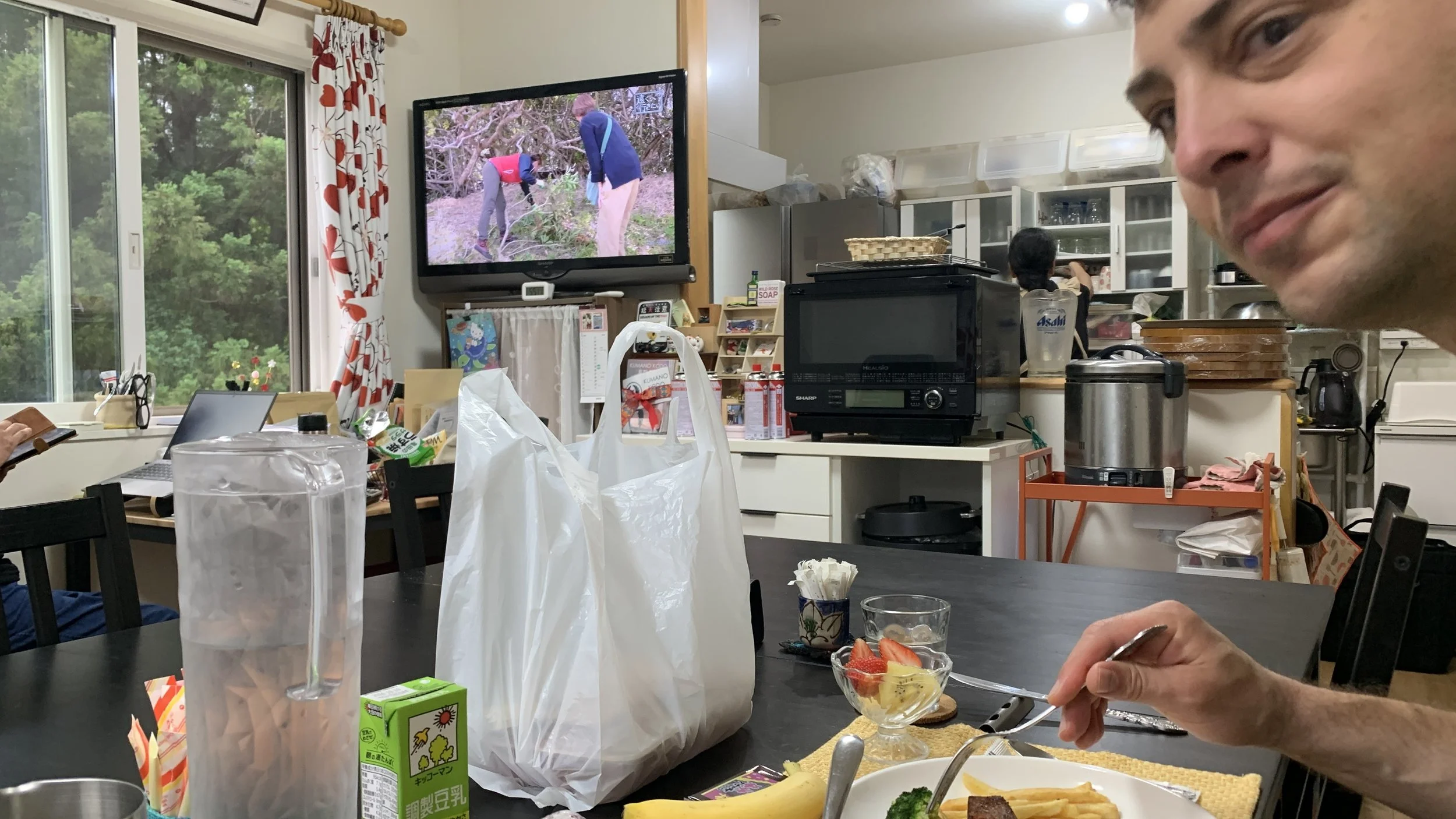
A very different experience from our previous lodging but just as special for getting to see a perhaps less romanticized way of life in the mountains here. Our hosts were very gracious, cooking a huge meal. Once again I forced my way through a mountain of different animal meats, side eyeing Chris’ fruits and vegetables with no small amount of envy. The kitchen was bright, the television blared with Japanese news (we were riveted by a dramatic story of a bear that made its way into the city and had to be removed, kawaii commercials about cat food, etc.).
At one point when I had to get up to use the toilet, our hosts looked alarmed when I stood, so I said “sumimasen, o tearai” meaning roughly “excuse me, bathroom”. And they laughed heartily. The older woman who was making most of the food complimented my Japanese and I’ve gotten faster at the “Īe madamadadesu” or, “no, still long way to go.” Which I can now top off with “demo jōzu eigo yo” or “but your English is skillful.” Slowly getting there… conversations dead-ending a little less quickly is a win. We purchased some chips from the owner’s adult son who had a small cafe next door, walls lined with his manga collection from floor to ceiling, many of which appeared quite old/loved.
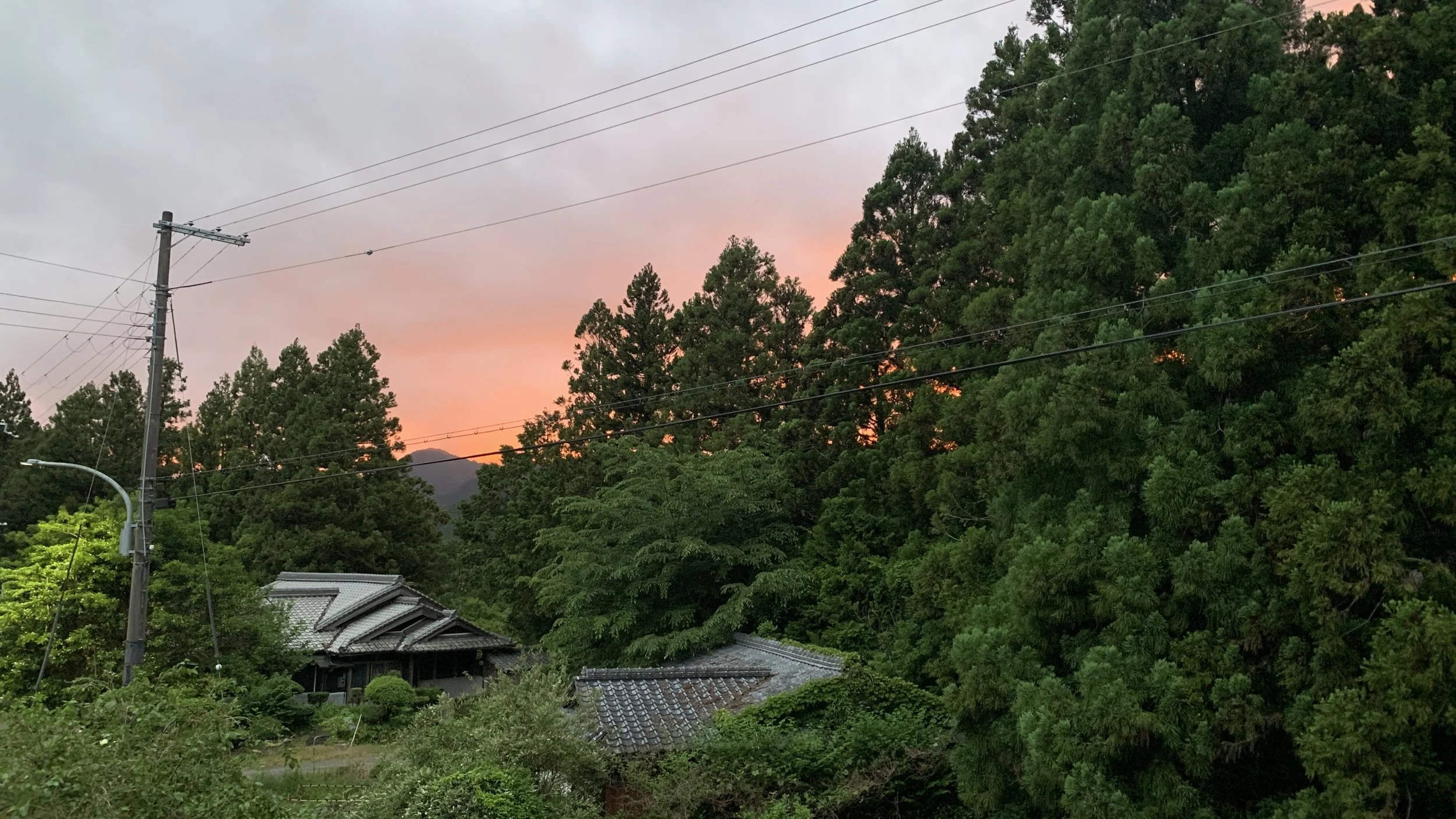
After showers and laundry, and finally publishing the Tokyo section of the blog. It has been tougher to keep up with journaling with how constantly we stay busy, unlike journaling from a tent on the Appalachian Trail with nothing else to do after sundown. I will say showering each evening has been quite a treat, as is the regular opportunity for laundry. I swear all this meat is fixing me the meat sweats and I’m way stinkier than usual.
As we fell asleep an owl whose hoot I did not recognize, called from the woods outside our window.
Saturday, May 23
Chikatsuya to Hongu Taisha Grand Shrine • 27km
6am breakfast, another yummy mountain of food! We surreptitiously moved some packable items into our lunchboxes so as to not offend our hosts by leaving items behind. My plate had French fries and a small hot dog… a sweet gesture that we chuckled about a bit later. We have adored everyone we’ve met so far but have found the families that host pilgrims to be ultra charming, perhaps because we are allowed to catch a glimpse of their lives as well.
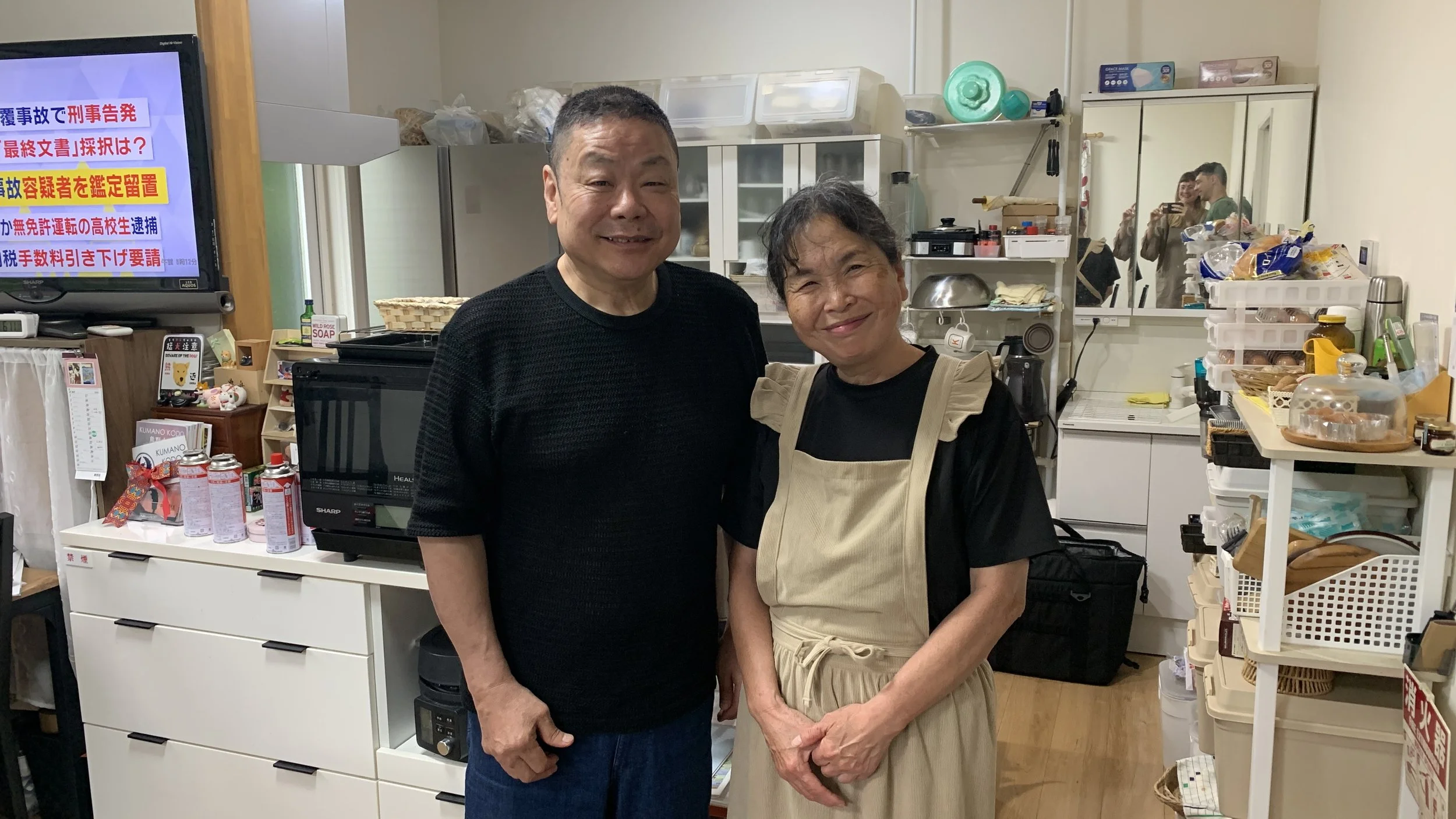
As we set off into the woods at 7am, in an attempt to tackle our longest hiking day early, the owner leaned out the kitchen window to wave goodbye (and point us in the right direction). We both slept amazing and felt good about our chances of being able to complete the full distance from Chikatsuya to Kumano Hongu Taisha Grand Shrine, which I had estimated to be about 22km. As an aside, thank goodness Chris can eat fish. It’s quite a staple in this peninsula, and understandably so.
Rain began almost immediately, and continued throughout the day, though never too heavy. There were several shrines as well. One had a monkey skull offering at it. One had a very old cherry tree paying tribute to the couple who had planted it after giving birth on the Kumano Kodo and leaving their baby behind, as a means of asking for the baby’s protection.
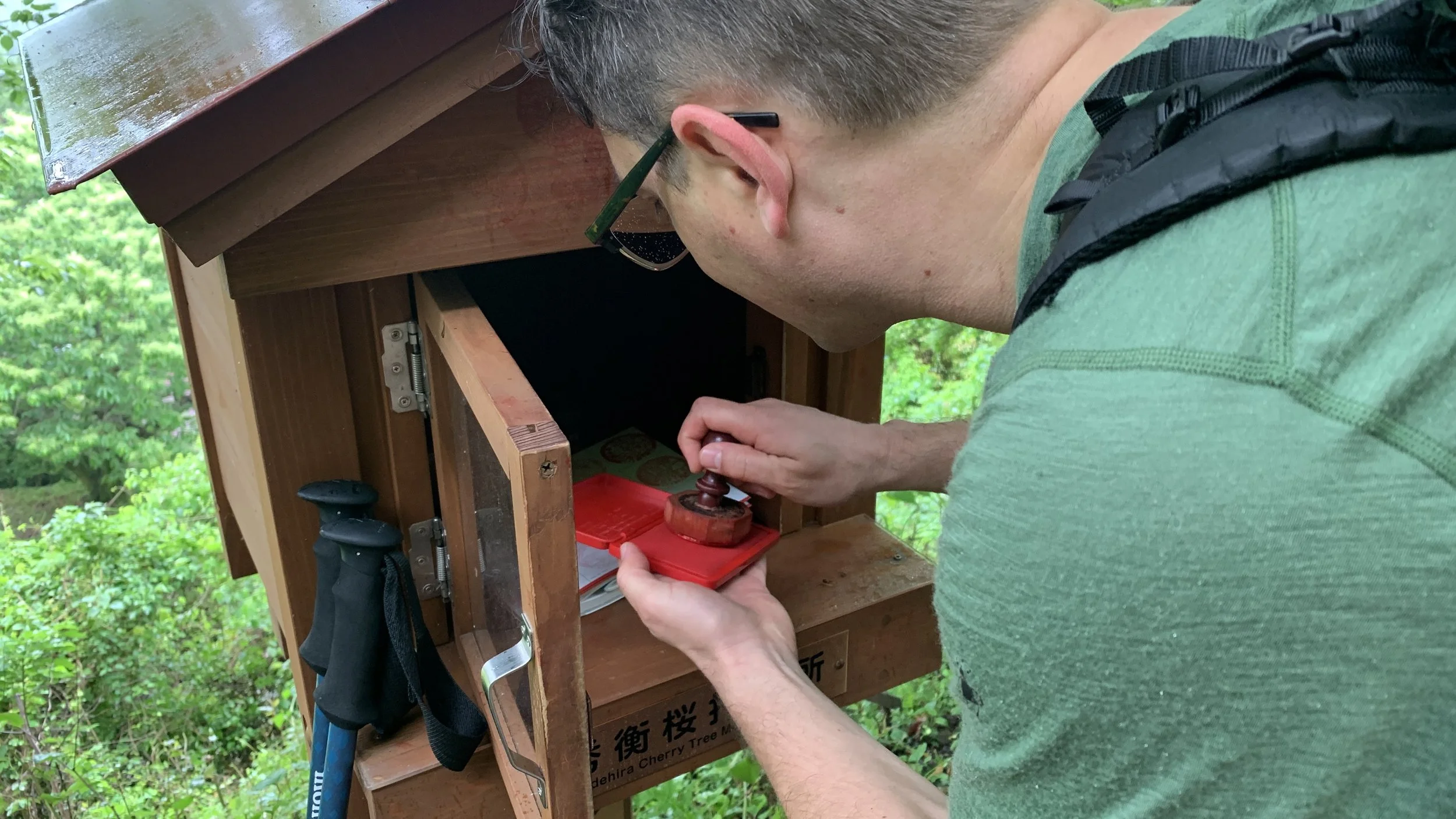
Yet another recognized the remains of a dying settlement in which the Japanese government eventually relocated the remaining families. The descendants of these families still return to the site for specific festival days. Later, a landslide wiped out a great swath of these community ruins, leaving a bright patch in the middle of the woods.
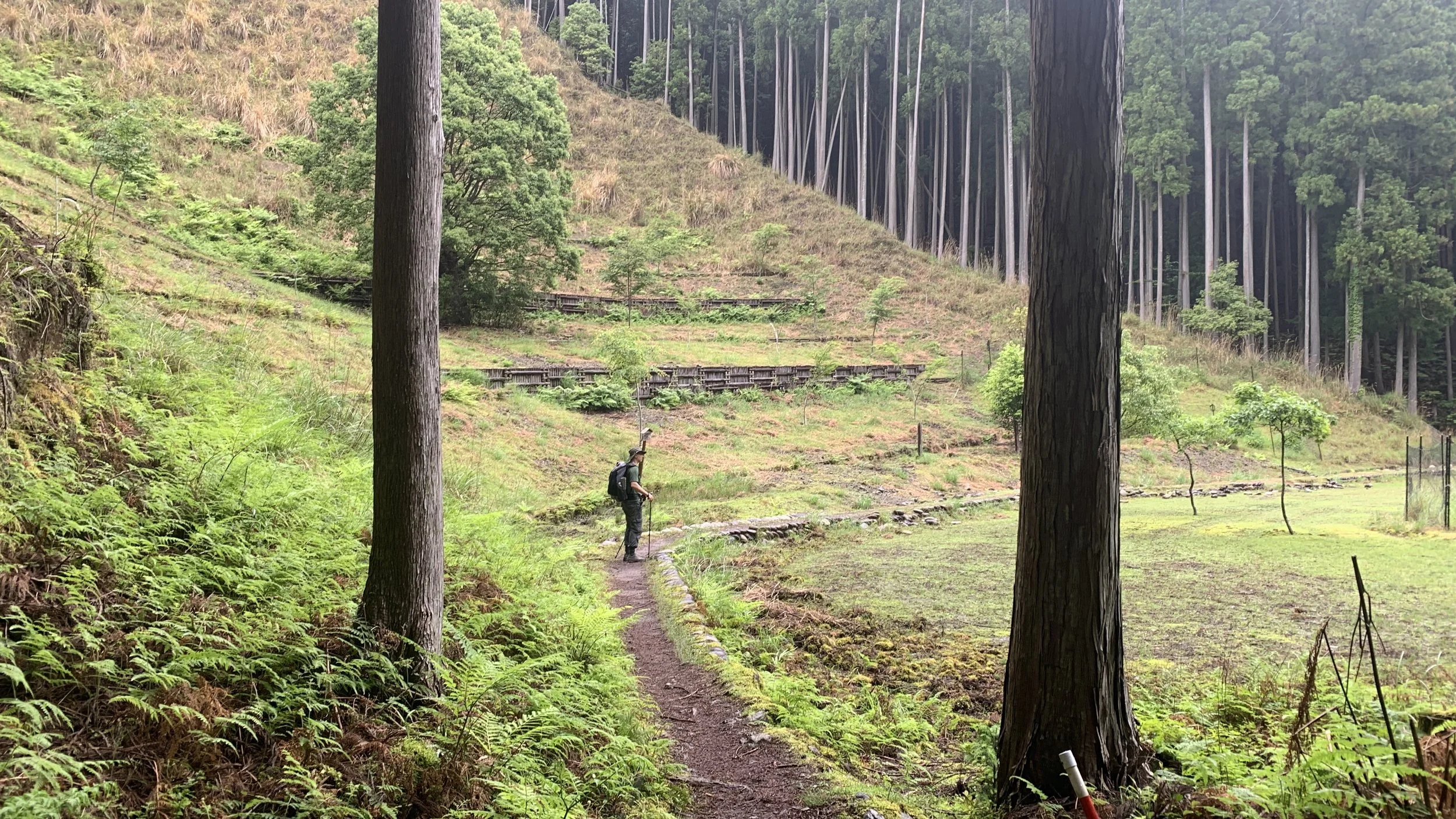
On our second of three big climbs of the day we met a software developer named Matthew who had just moved to the Bay Area. He was pleasant to talk to and we passed some time discussing Japanese language when it came out that he was reasonably proficient after taking 2 or 3 Japanese classes at ACC (Austin Community College) before moving to SF.
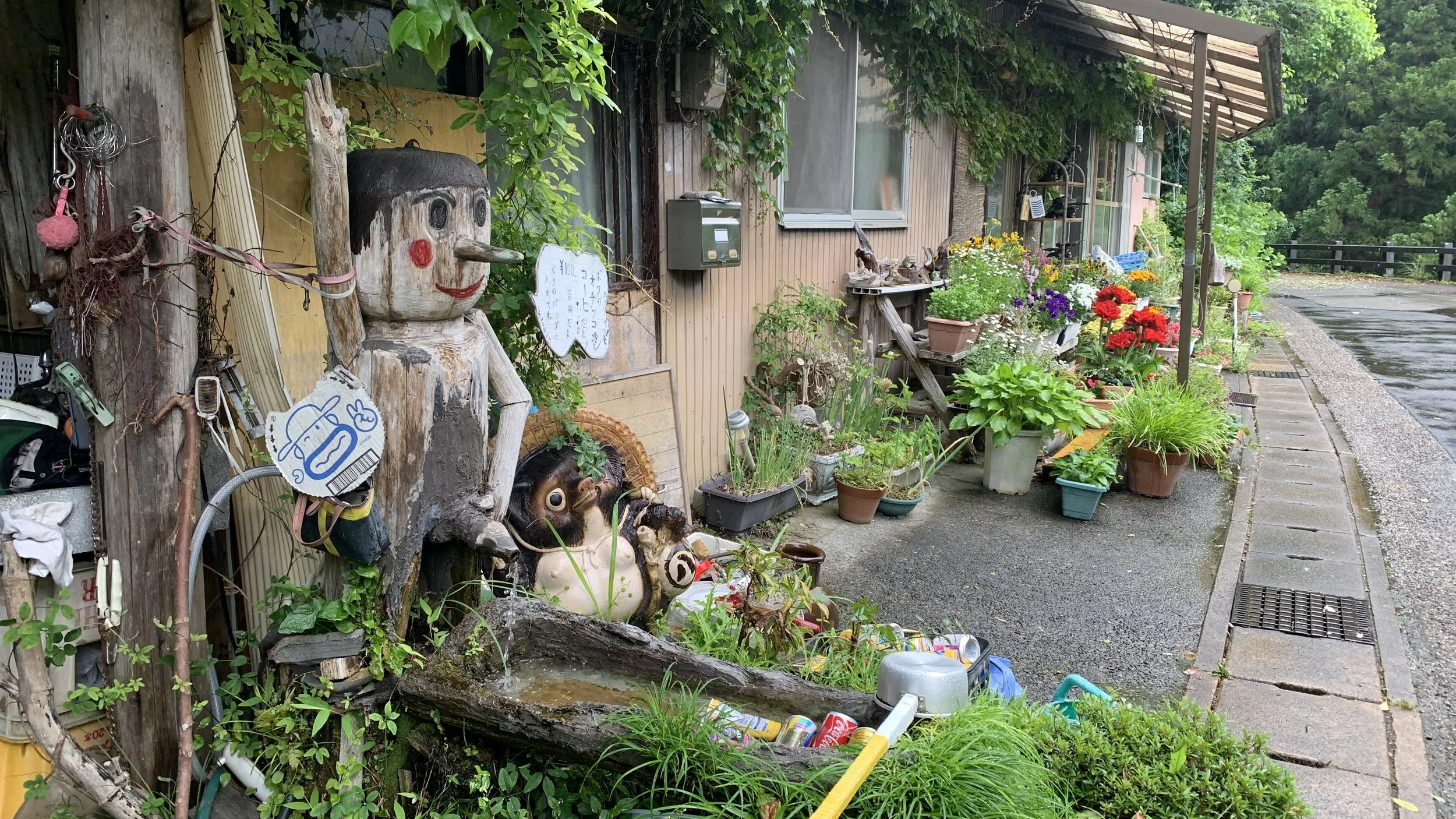
We made respectable time and stopped for lunch at a covered shelter where we encountered Amy and Whitney, Matthew, Bernice and Lisa, and an Austrian couple we hadn’t met yet. A bit too wet and focused to eat a big lunch, we ate the vegetables and left the giant mystery seaweed/rice ball for later, setting back out into the wind and rain with Matthew, Amy and Whitney. We all leapfrogged one another for the next few hours and when Amy and Whitney missed their bus at Hashinman Oji shrine and decided to keep hiking with us to the end (Hongu Taisha) we all cheered. It was like a little tramily (trail family) had formed, and made the final 6k push go by much more easily.
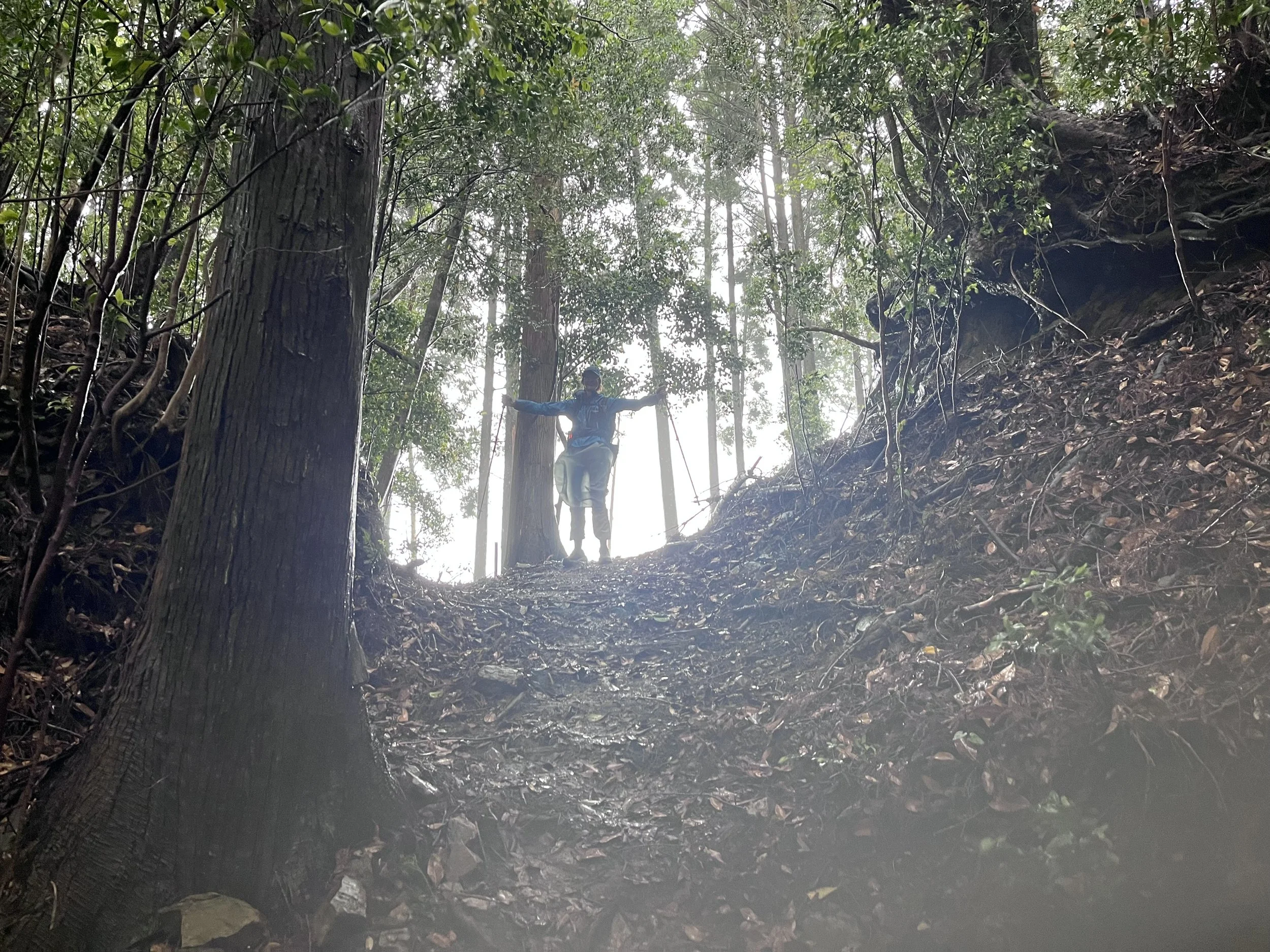
Not having my trail legs yet, this 26k (roughly 17 mile) day really took it out of me and the last four miles were a bit of a grind. At the same time we passed through some of the most awe-inspiring scenery of the walk so far, so we can’t complain.
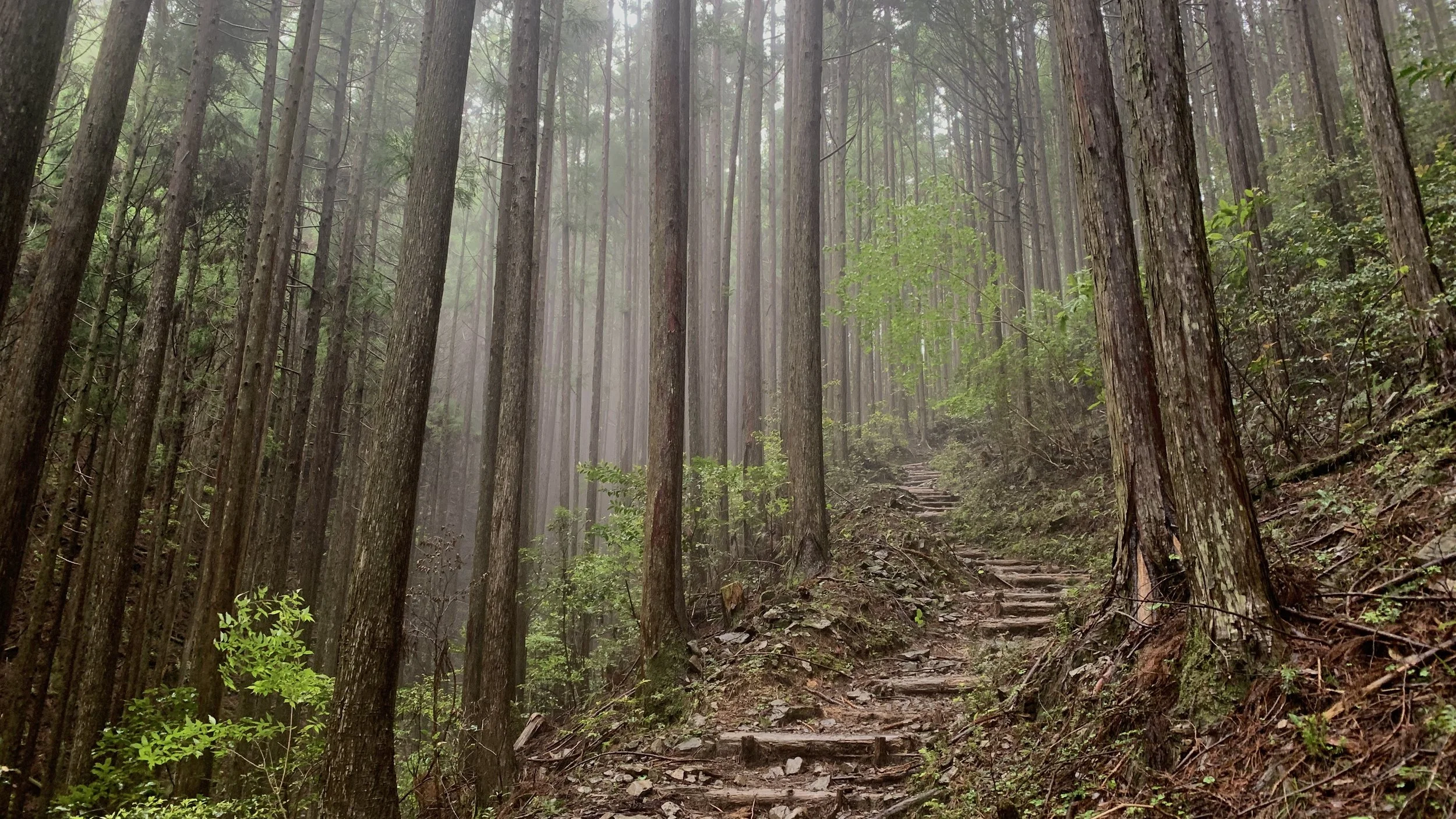
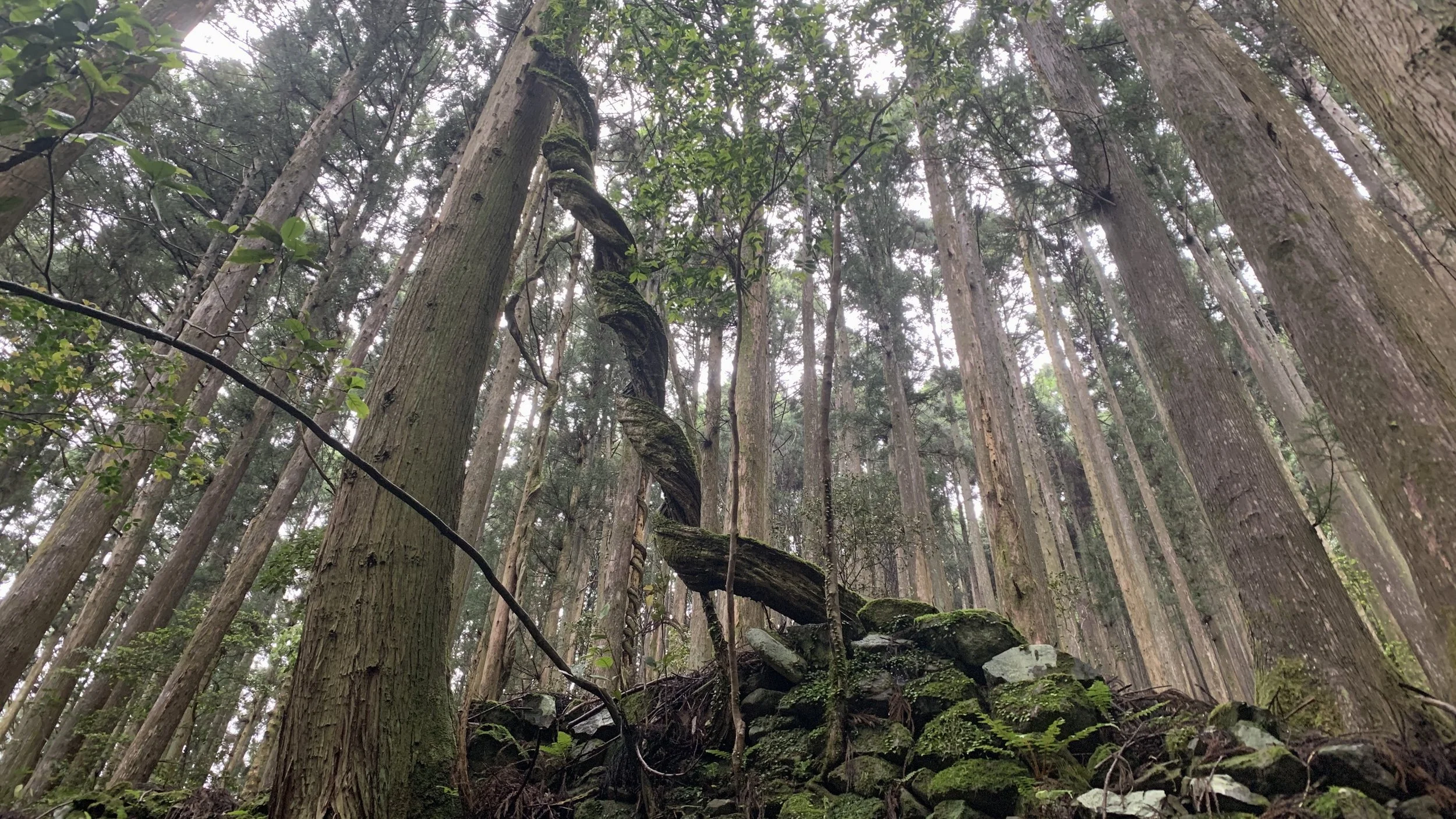
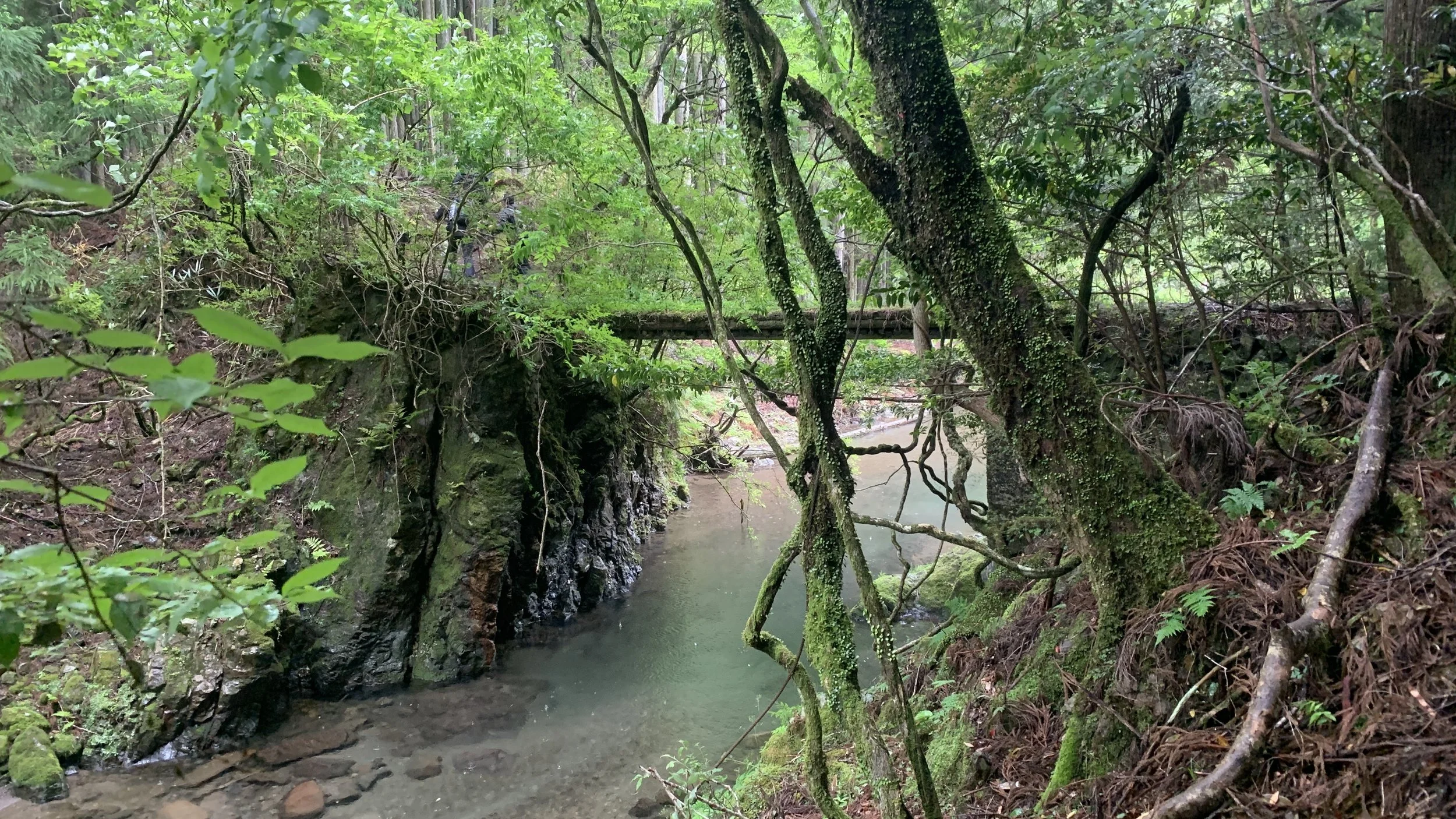
Oji Forest was so lush and with a clear, at times even blue, creek with mini waterfalls and footbridges criss crossing back and forth. The persistent rainfall and clouds settled into the layers of the mountains also increased the intensity of every color, smell, and fullness/magic of the forest.
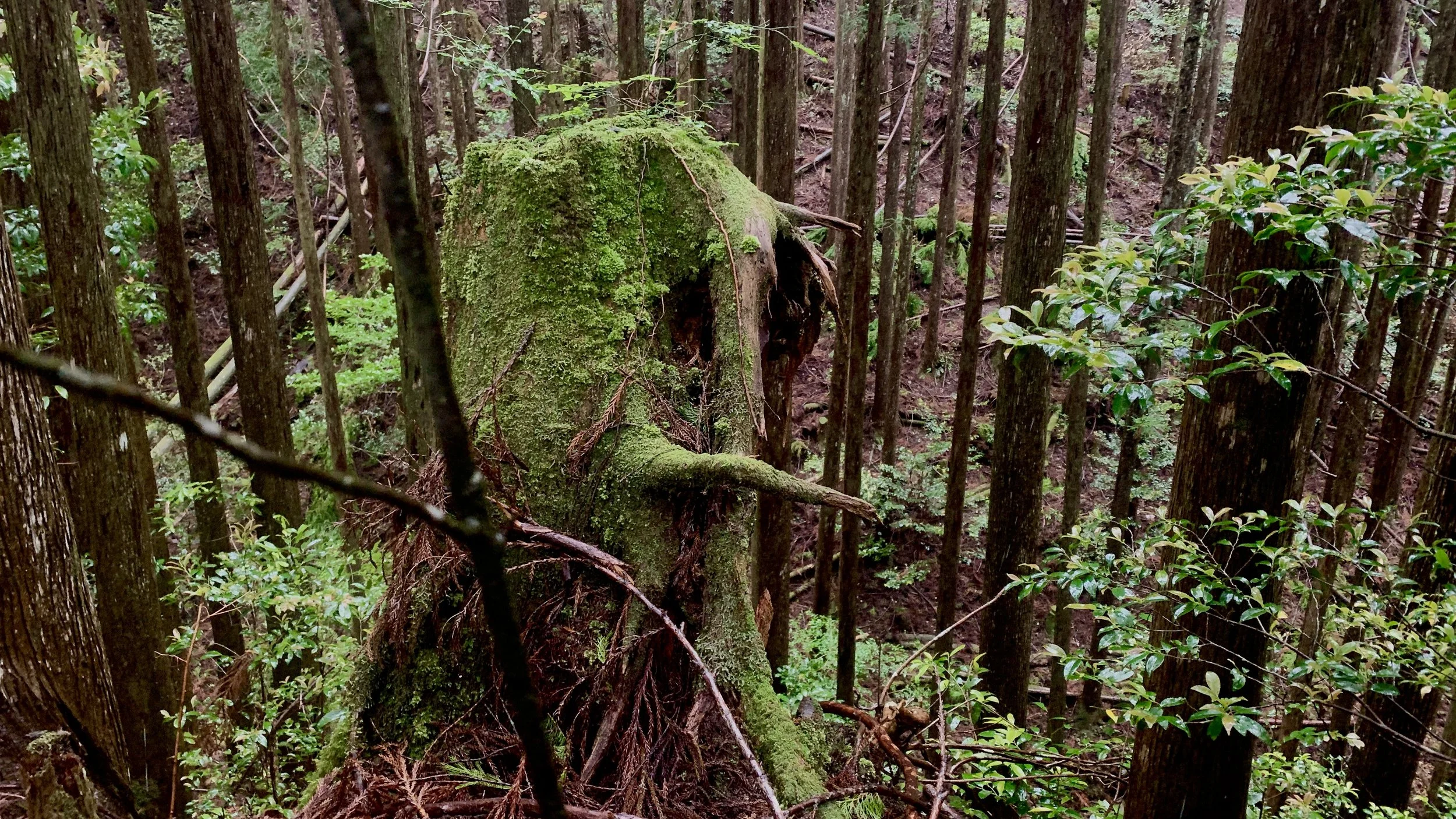
At one point we even encountered a mossy stump that looked nearly identical to the polluted river spirit that comes in need of a medicinal bath in Miyazaki’s Spirited Away:
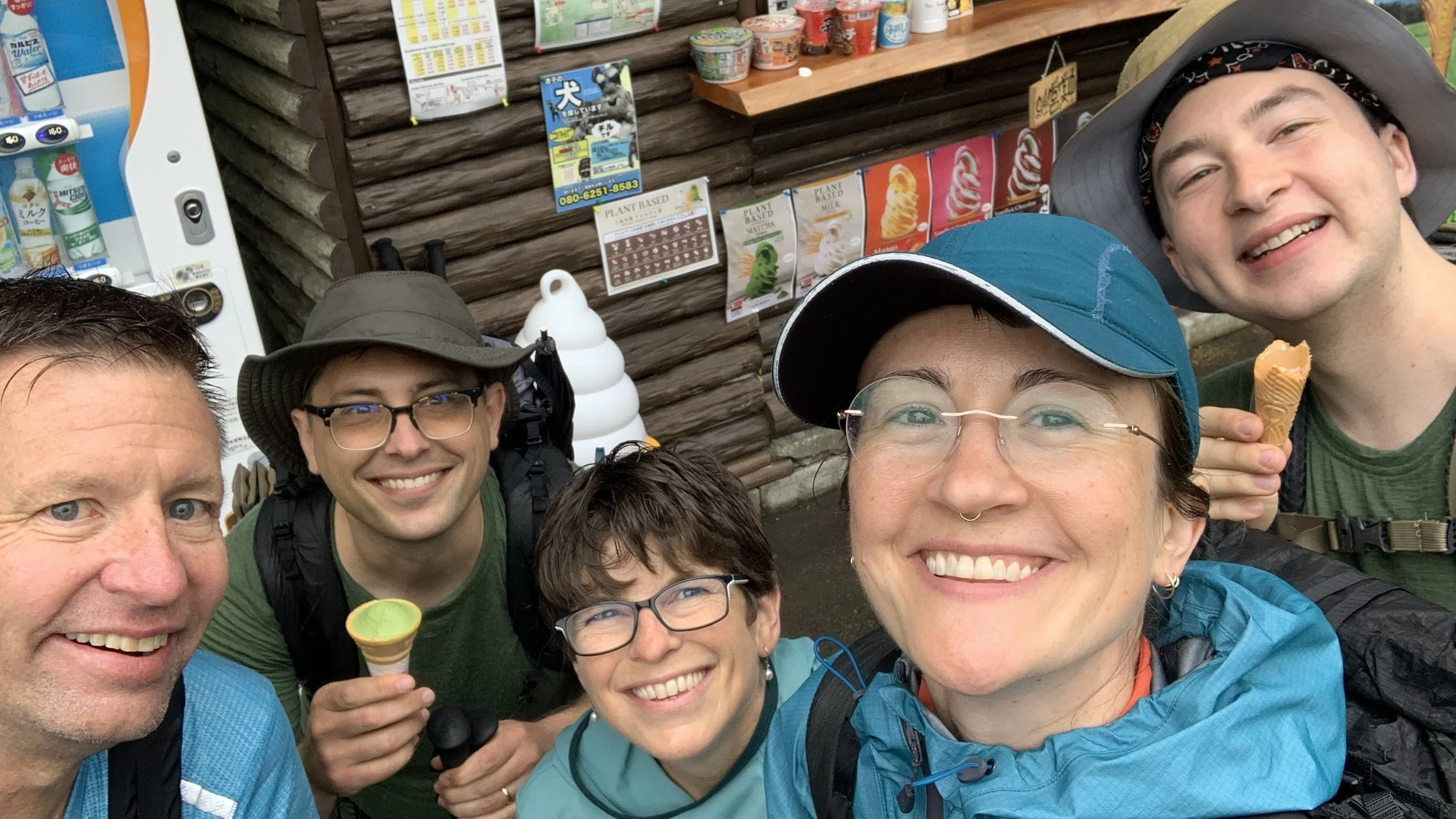
As we neared Hongu Taisha, we passed a Kohechi route trail marker - the route we’ll be doing next when we loop back to Hongu Taisha after completing the full Nakahechi route. Shortly thereafter we came across an icecream stand that had a dairy free matcha icecream cone so we all stopped for a much needed sugar boost for the final push to the temple.
At Hongu Taisha we met a hiker from the Philippines named Arnold, and got a group photo beneath the Tori gate. We were too tired to spend much time appreciating the shrine, so we decided to pay it the proper respect when we come back this way in a few days, opting instead to catch the bus to our onsen (natural hot spring) town of Yunomine, only about a mile away as the crow flies.
A winding 40 minute bus ride later we parted ways with Amy and Whitney (Matthew and Arnold stayed behind at the shrine) and landed in Yunomine Onsen. A natural hotspring river runs through the town, where there’s a couple small restaurants, a public and private bath house, and a little sectioned off part of the hot spring where anyone can steam/boil their food.
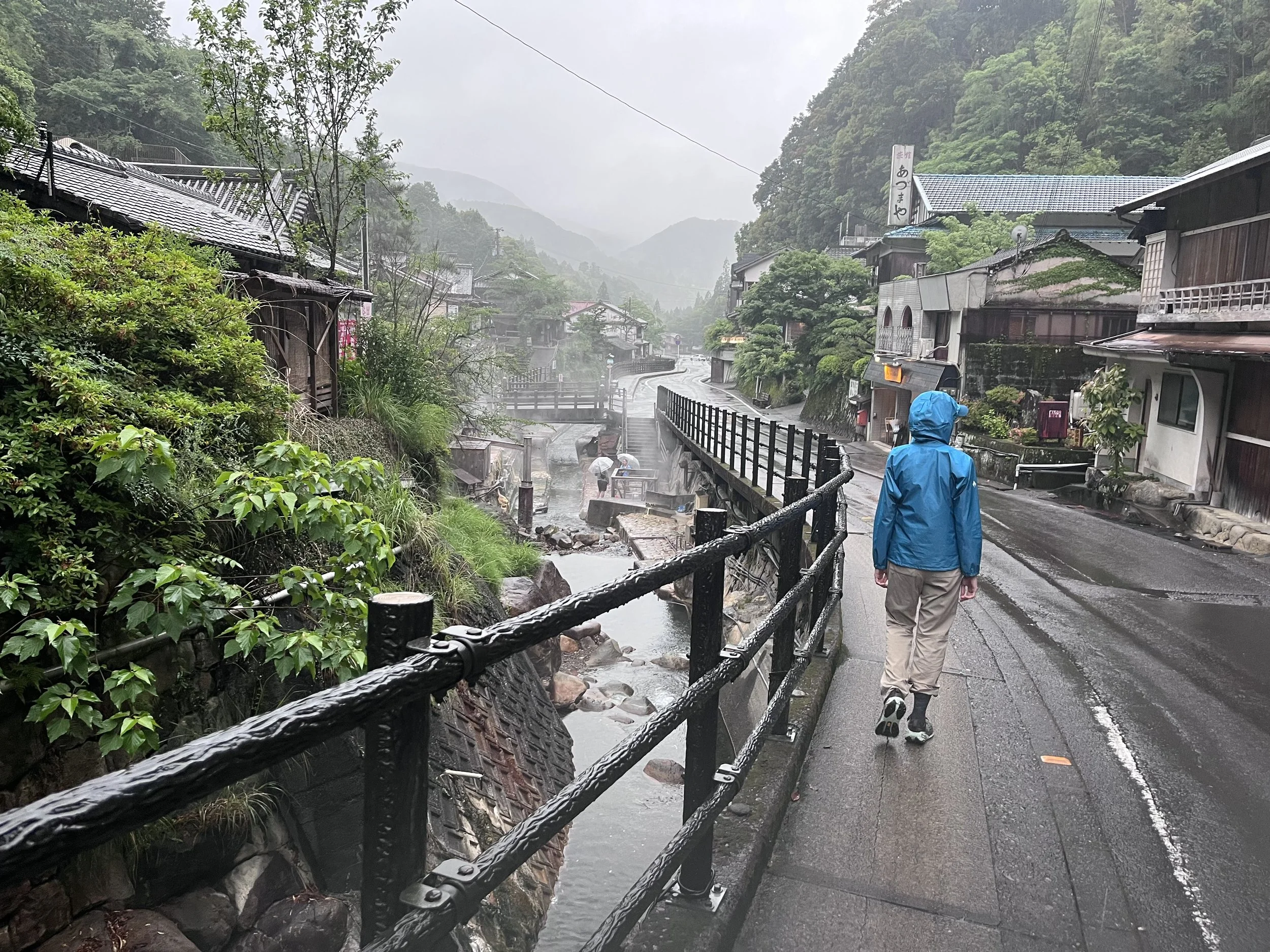
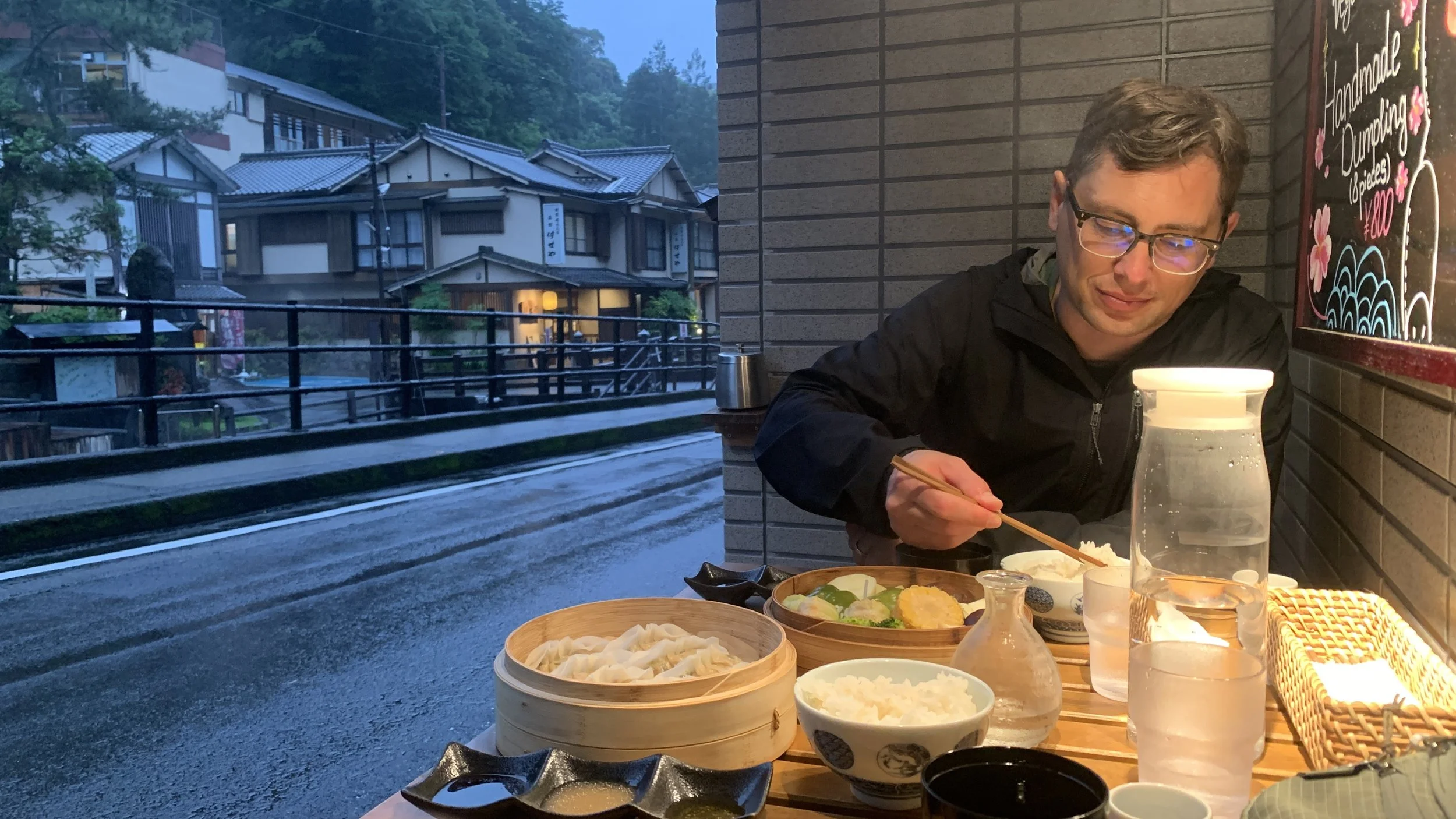
Checked into our hostel, we went straight for dinner where we sat in a little outdoor nook, protected from the rain and with a view of the town center. After getting our fill with Onsen-steamed veggies and gyoza, sake, and miso soup, and saying hello to a tiny shiba-inu looking dog we made our way to the public bathhouse.
It was an hour wait for the private outdoor onsen right on the river so we sat and read up on the Kohechi in a guide map we had acquired at the J Hoppers hostel we’re staying at.
The soak was exquisite. Super hot water in a rock pool, enclosed by a small wooden hut, with the river rushing by a couple feet from the hut. Just what Chris needed to soothe his asthma and what we both needed to help our bodies recover from today’s distance.
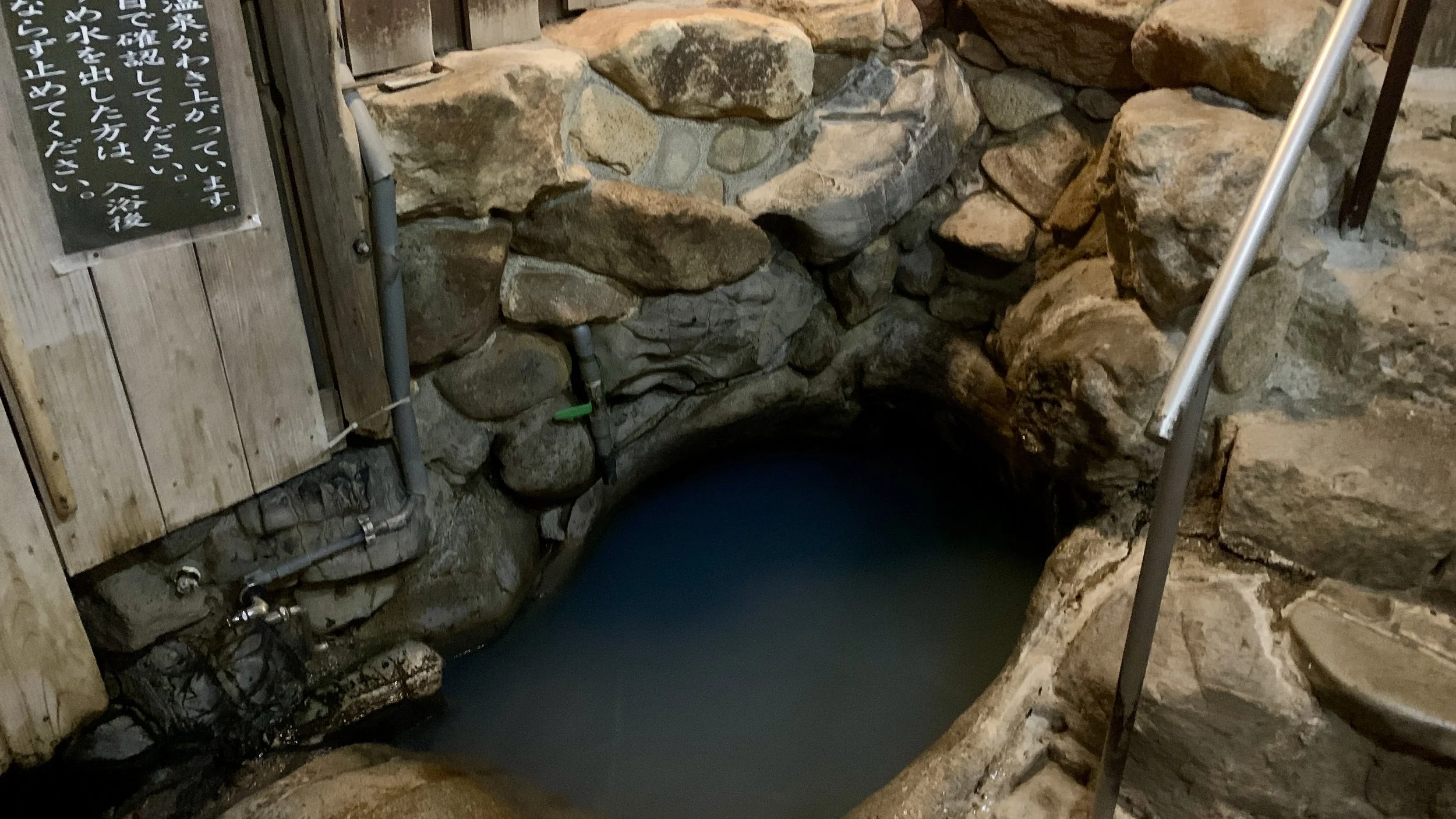
Then outdoor shower in the Hostels own onsen, followed by yet another soak in the onsen. Sleep. Tomorrow begins our next leg of the journey where we’ll take a traditional pilgrimage boat ride down the Kumanogawa River for Shingu, where we will rest for a couple days before looping back up the final stretch of the Nakahechi, between Nachi Taisha grand shrine and Hongu Taisha grand shrine.