
Sunday, May 24
6:30 rise to pack and prepare to catch our traditional boat tour down the Kumano-gawa river to the coastal town of Shingu where we will take two rest days before getting back on trail. Thankfully we both slept amazing last night with the sound of the river outside our window. We have been sleeping with the windows open as often as possible, grateful for the opportunity for fresh air when we have screens on the window.
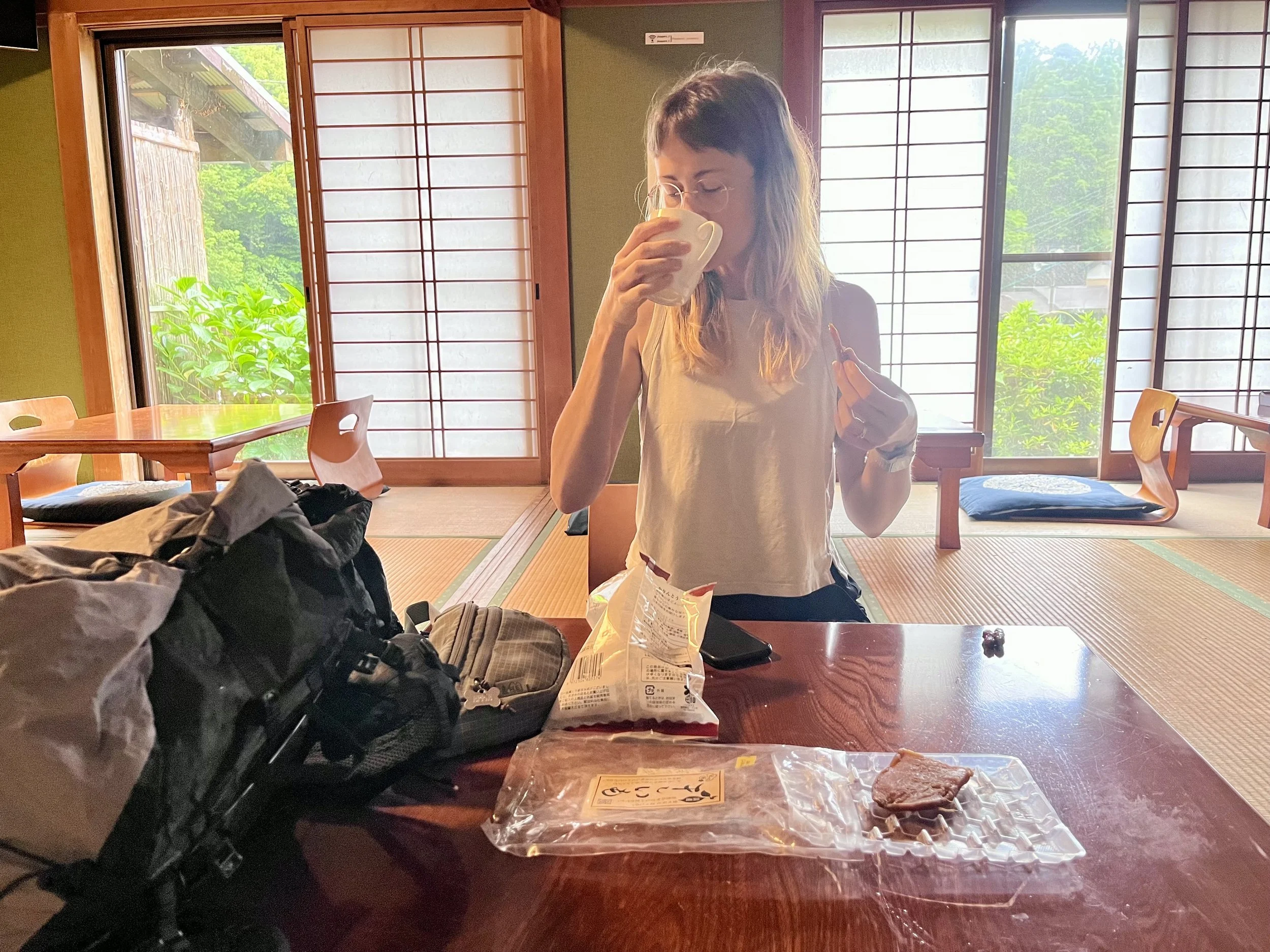
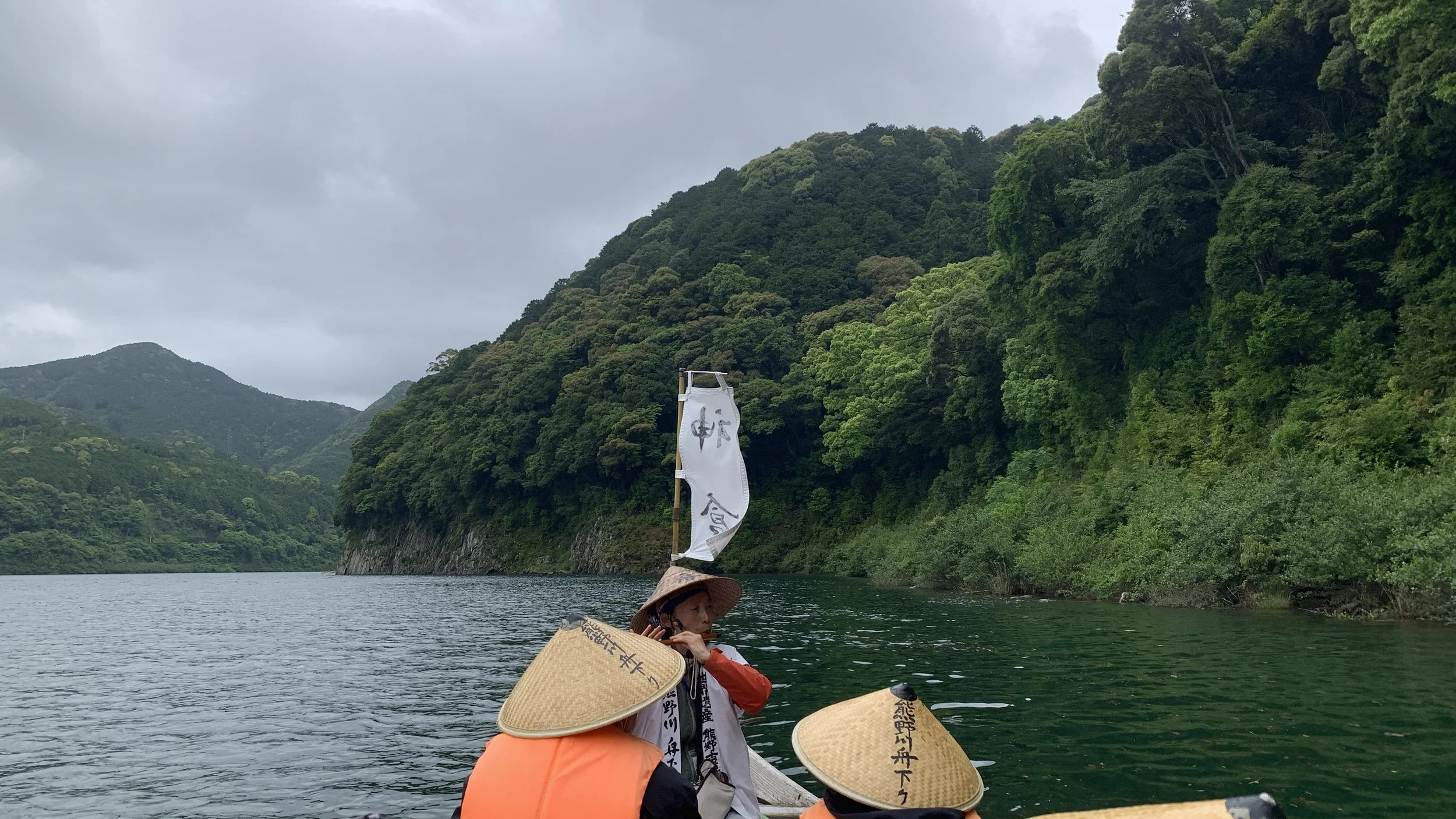
We said our goodbyes to Camille and Juliette, who turned out to also be staying at J Hoppers, and after a breakfast of coffee and dried yams we headed to the bus stop. A crowded 45 minute bus ride later, on which we recognized several other faces from the past few days, we arrived at our boat launch, where we were equipped with life jackets and kasa (bamboo hats).
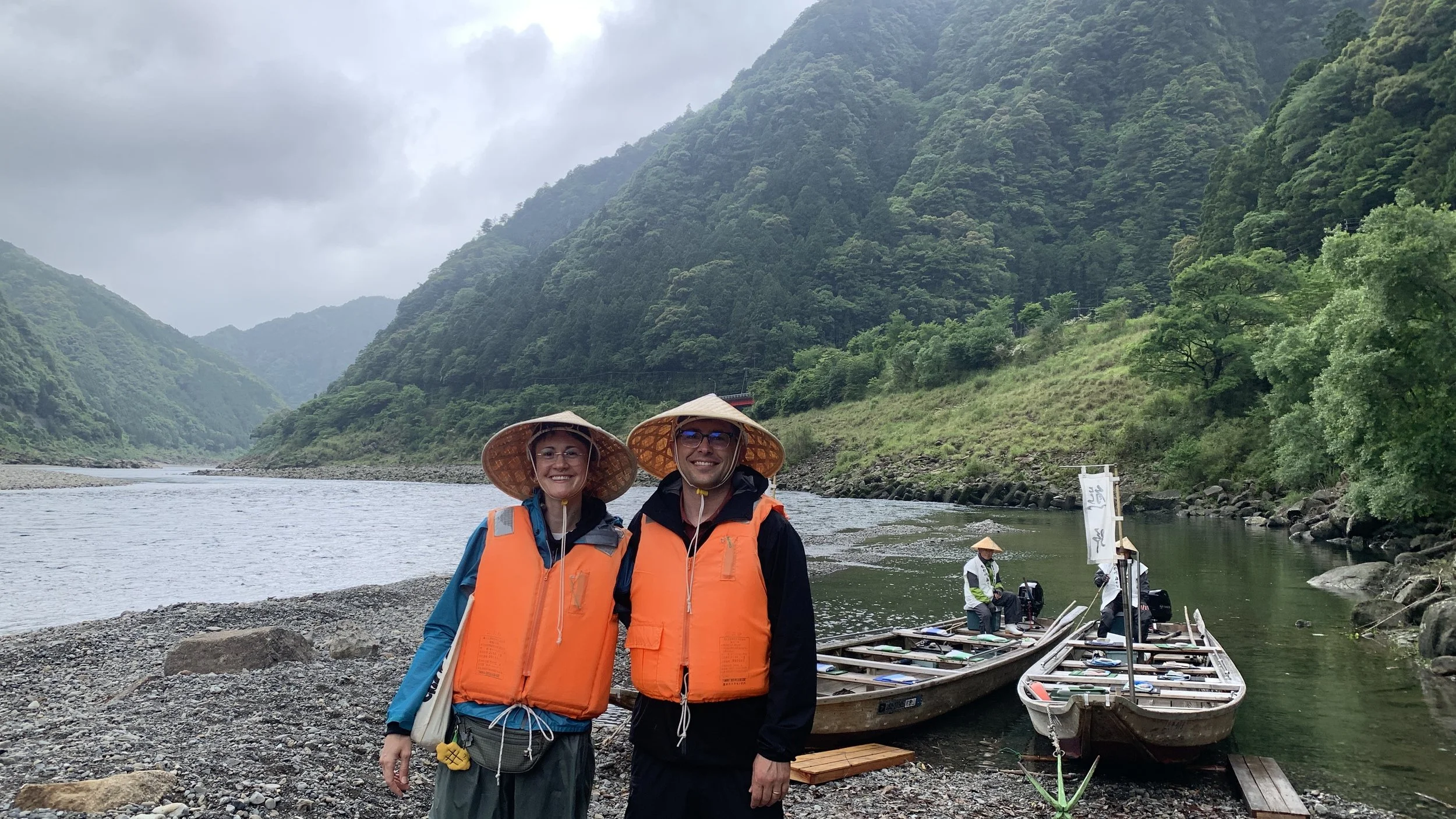
The boat ride lasted about an hour and a half thanks to a modern motor. Had the boat no motor we were informed it would have taken pilgrims of the past roughly 4hrs to complete the journey to Shingu on the Kumano-gawa river. We filed in as pairs, six passengers in total, with our tour guide at the front and the navigator in the back. A bit misty at first but it cleared up quickly once we were on the water.
We saw many incredible sights, including rock formations, sacred sites, and water falls, along the way. An osprey soared overhead, while cormorants, herons, and hawks were everywhere hunting for a mid-day snack.
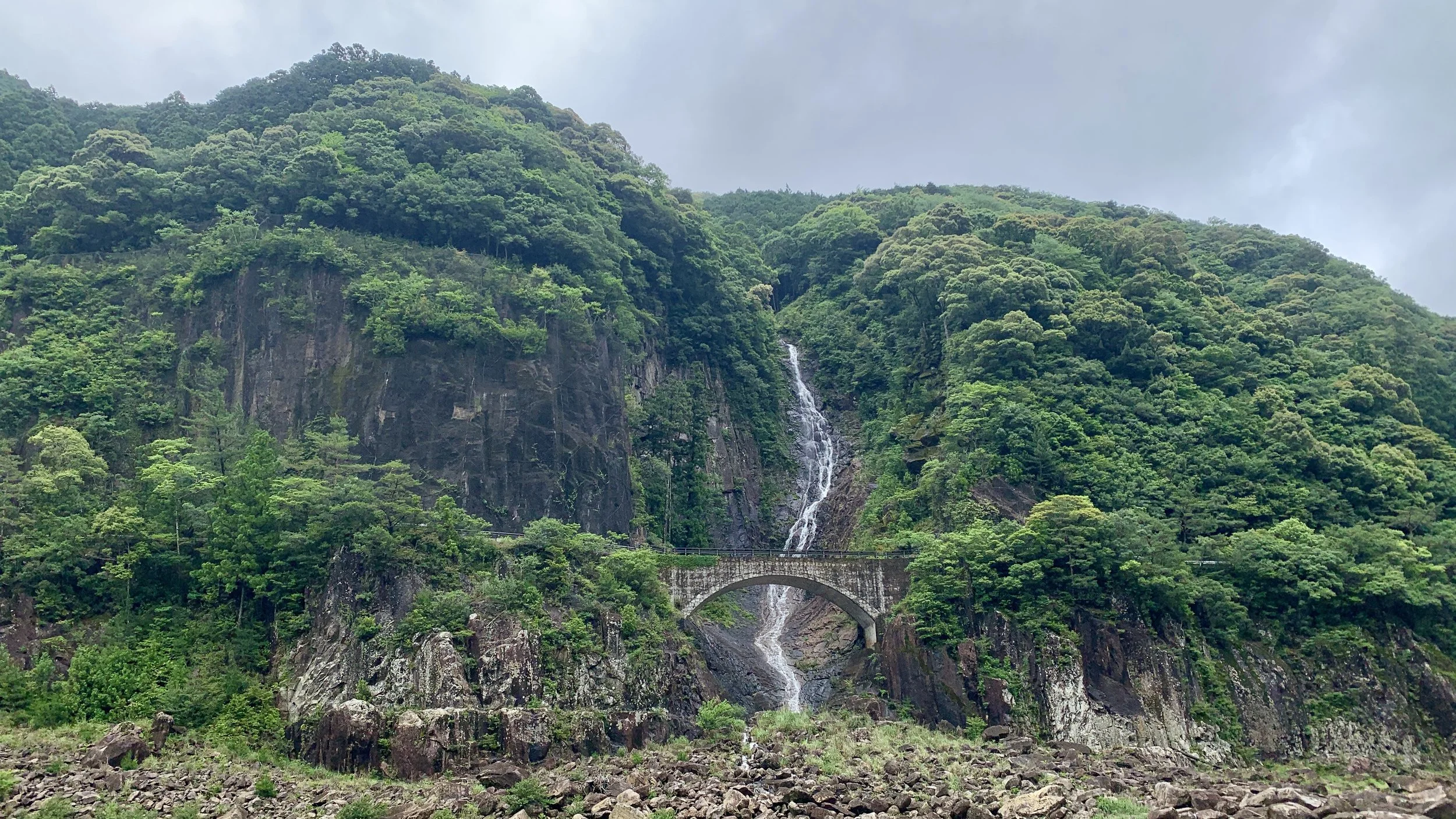
Our tour guide was born and raised in Shingu and told us about her experience surviving the catastrophic 2011 earthquake and tsunami that elevated this river to incredible levels. She pointed to shorn landscapes high up in the cliff-sides where water levels had reached. Her own home had water enter up to knee level. It has been interesting that even when we’re in what feel to us as relatively high elevation villages, or at least quite a good distance from the ocean, there will be tsunami evacuation instructions tacked on various buildings and sign posts, often indicating not only which direction but how far to flee.
We floated past cliff edges where the water was over 25m deep. A strangely bright blue water color that simply vanished into a solid seeming opaqueness. We saw the river-facing sides of the mountains which hold the Kamikura and Nachi shrines where we will visit tomorrow. At one quiet spot in the river the navigator shut off the boat engine and our guide played a slow, somber melody on a wooden flute. We also circled around a sacred island connected to the a festival tradition at Kumano Hayatama Taisha.
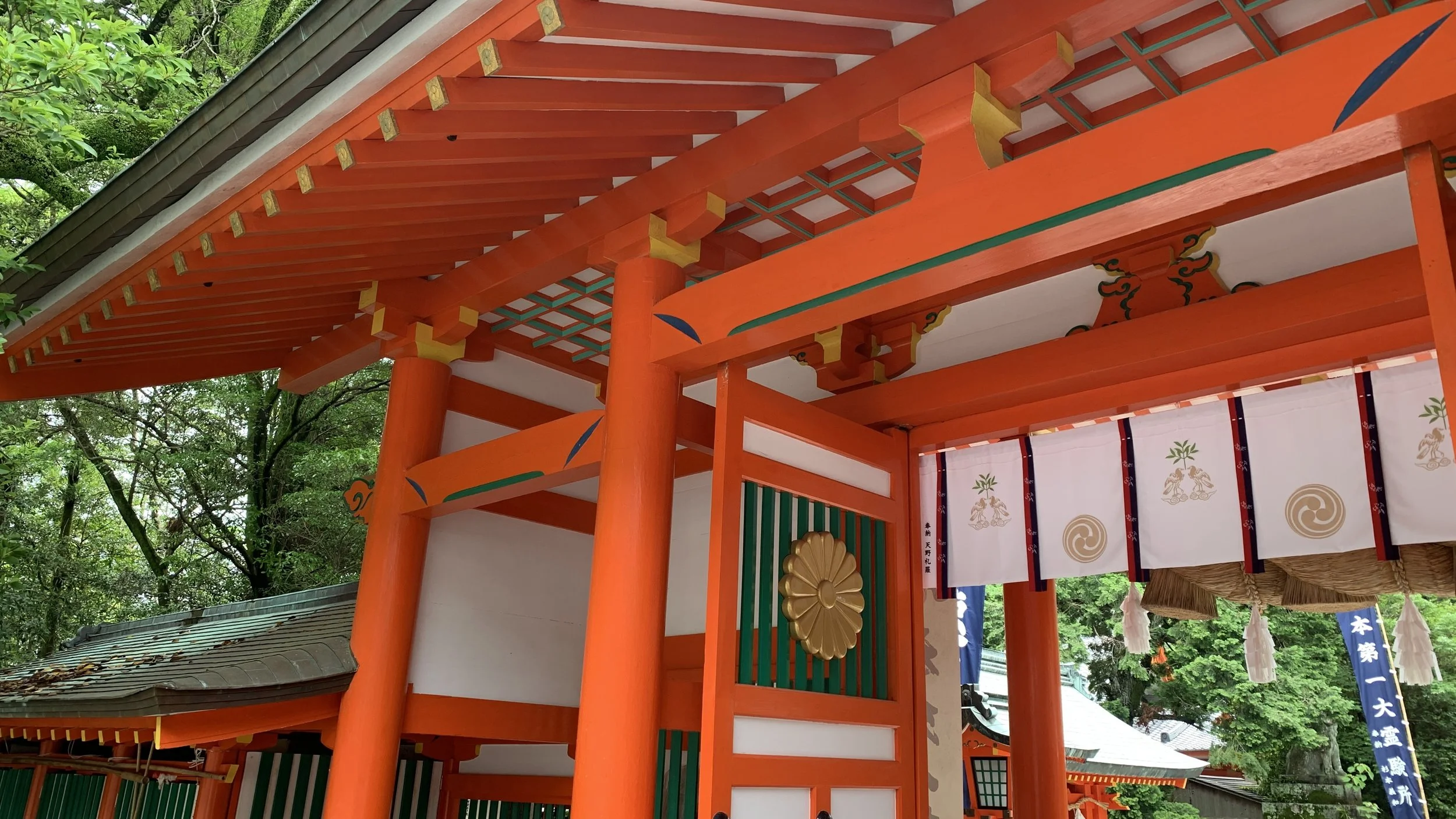
When we arrived at Shingu we purchased a bag of locally grown oranges and walked to Kumano Hayatama Taisha, one of the three grand shrines of the Kumano Kodo. We walked around appreciating the grandeur, made a prayer, and Chris dropped into the small museum to see some of the artifacts while I took a moment to myself on the steps, to write.
From there we stopped at a Japanese Italian restaurant where they graciously made us a plant-based pasta, although I also ordered a delicious tiramisu that was more pudding-like than what I’m familiar with, but delicious!
Our hosts at Kamikura Hideaway house told us we could check in early. One surprise has been that the Kumano Travel website remains useful even after arrival in Japan, as this is where our hosts communicate with us - some just to check in and others to ask specific questions or coordinate arrival times. So, we walked a short distance through the neighborhood to our rental, where we met Mio, who gave us a short tour of the house and offered some recommendations for the area.
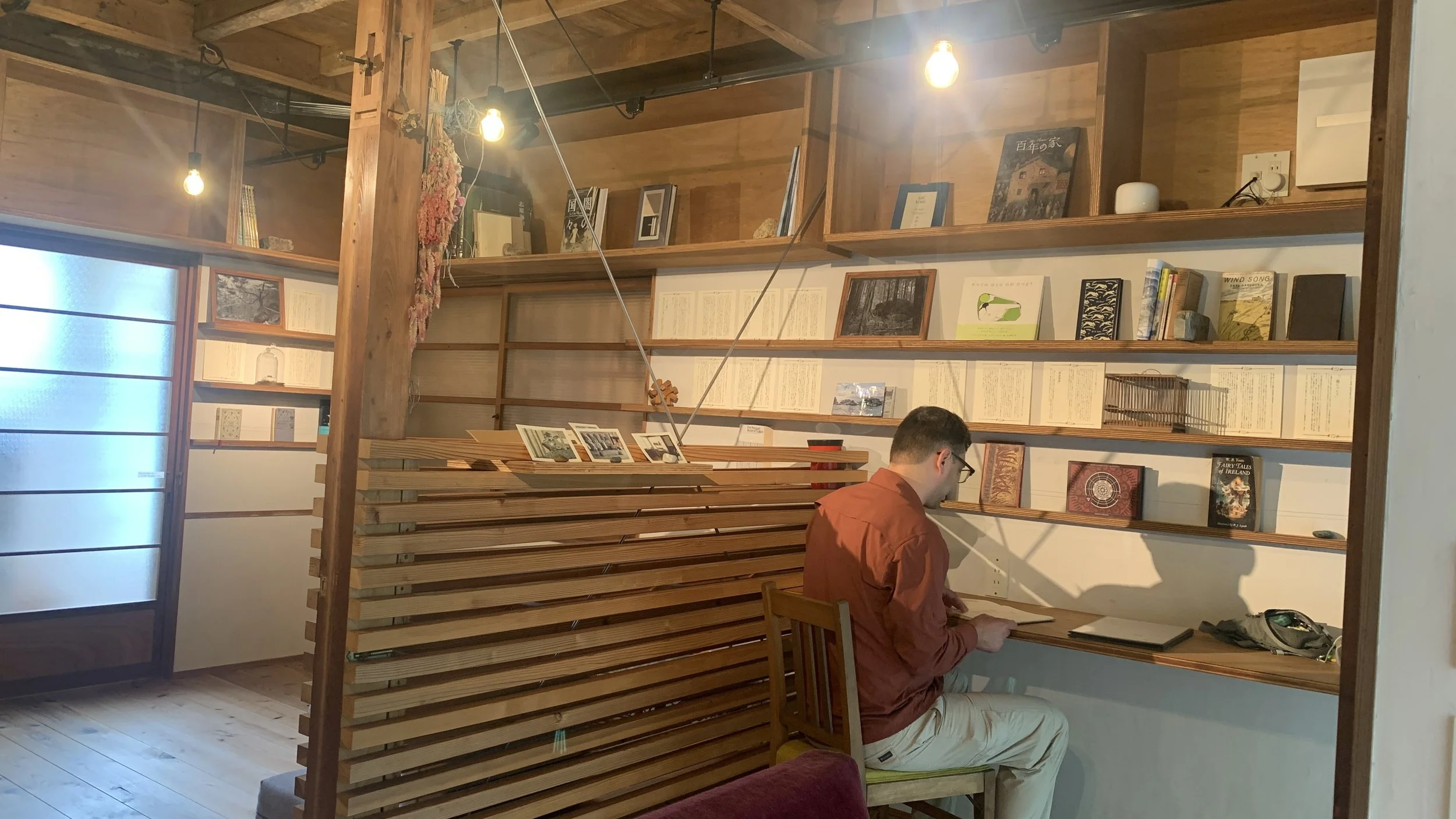
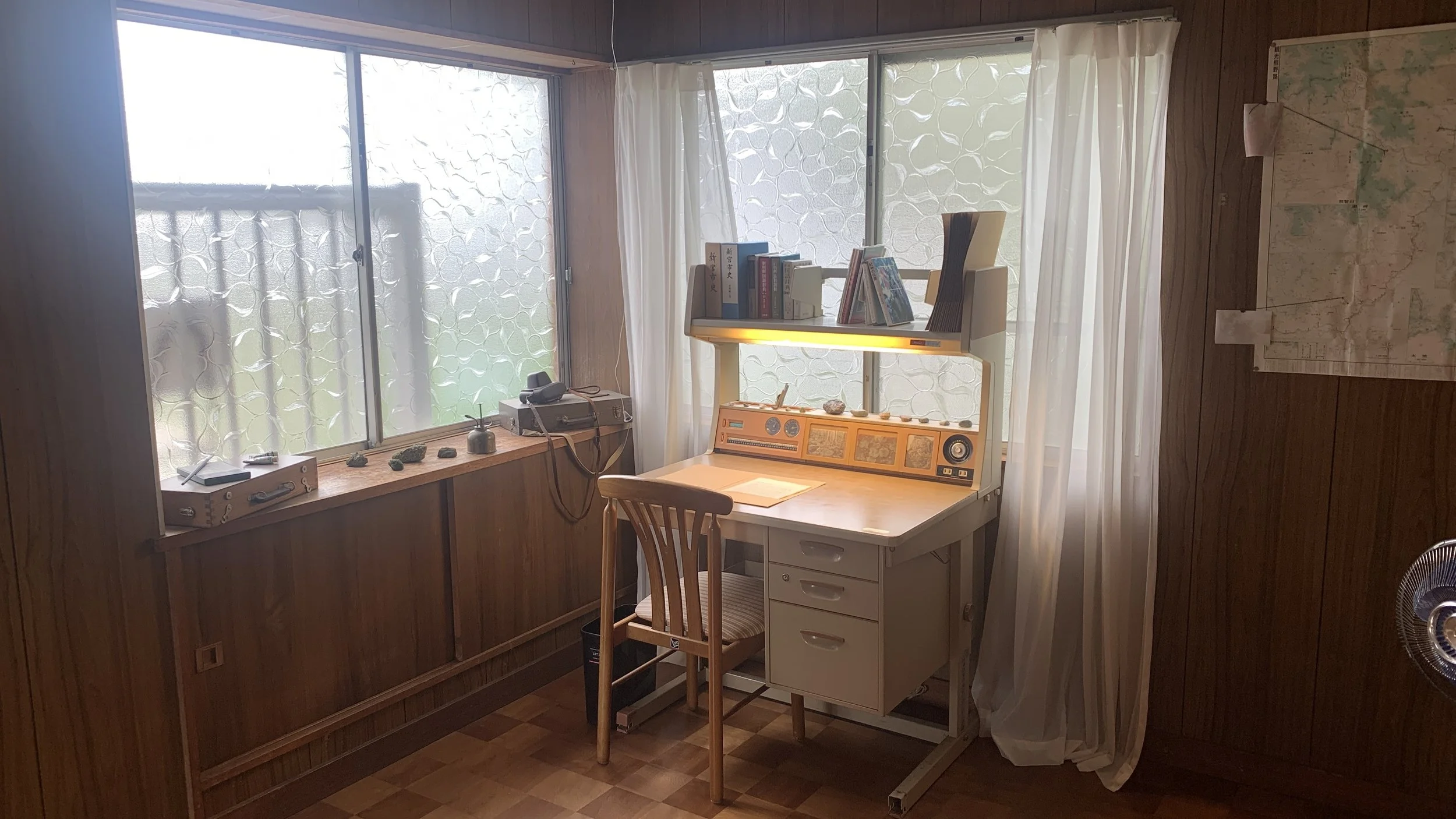
The house is like a time capsule and there was an entirely unexpected twist. The house comes with a story that guests can choose to unravel by reading the hand-bound house book. The book weaves a narrative into each item and curated nook in the house, with stories from some of the surrounding Shinto shrines.
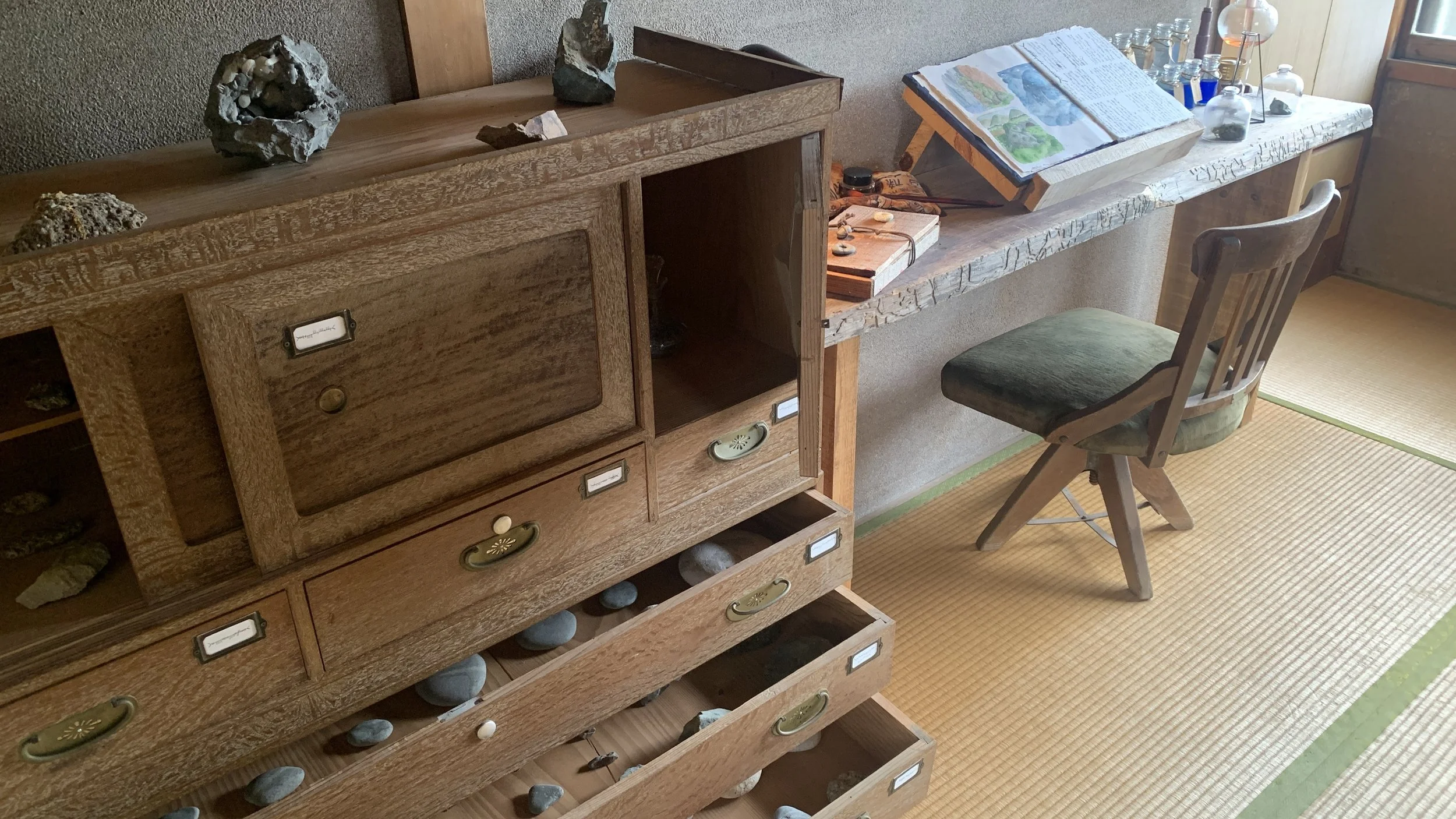
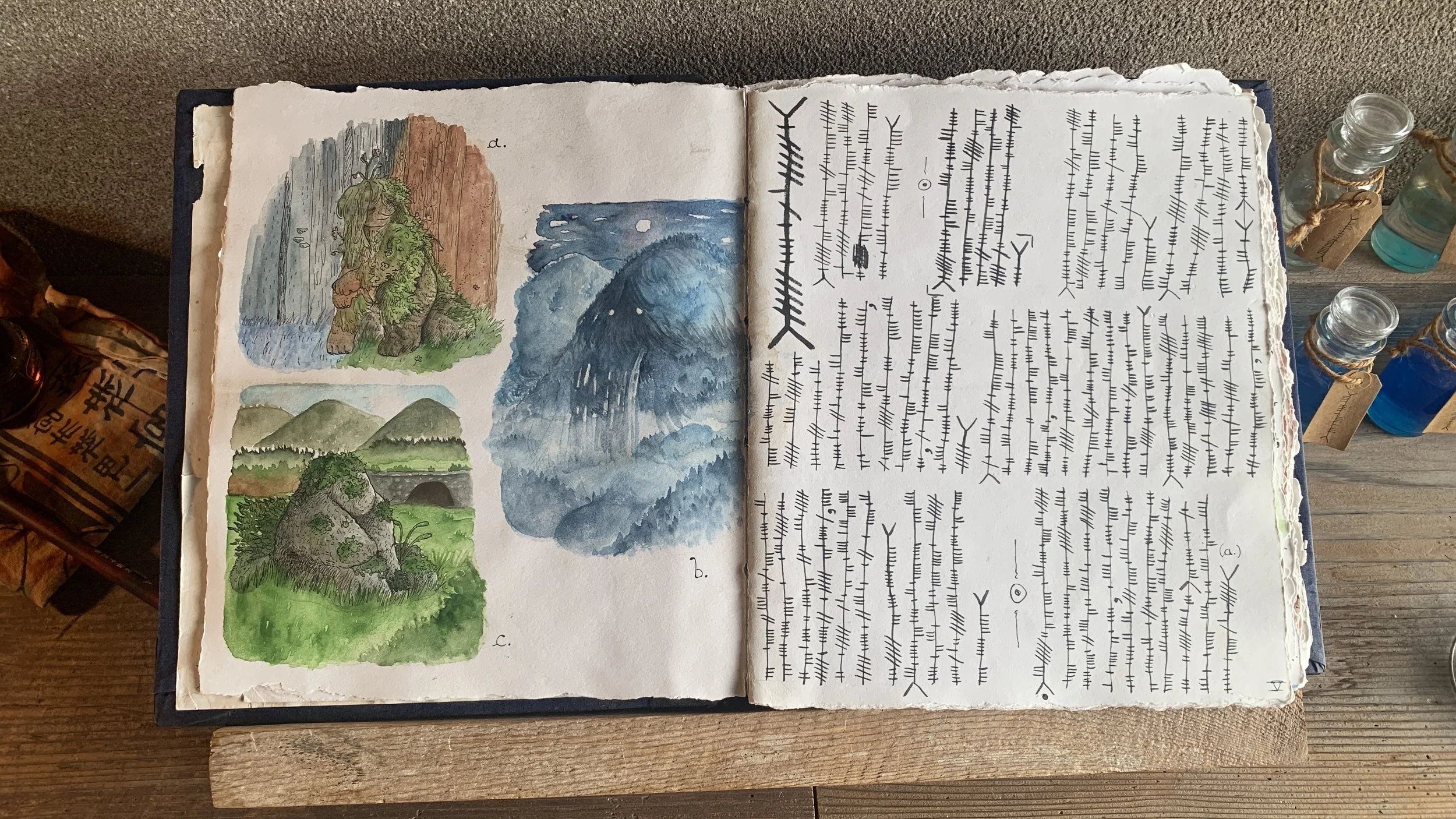
This interactive aspect creates an air of mystery and makes the guest feel as though they have stepped into a storybook, if they choose to “participate” by reading the book and exploring the installations inside the home. I’ll refrain from giving any spoilers!
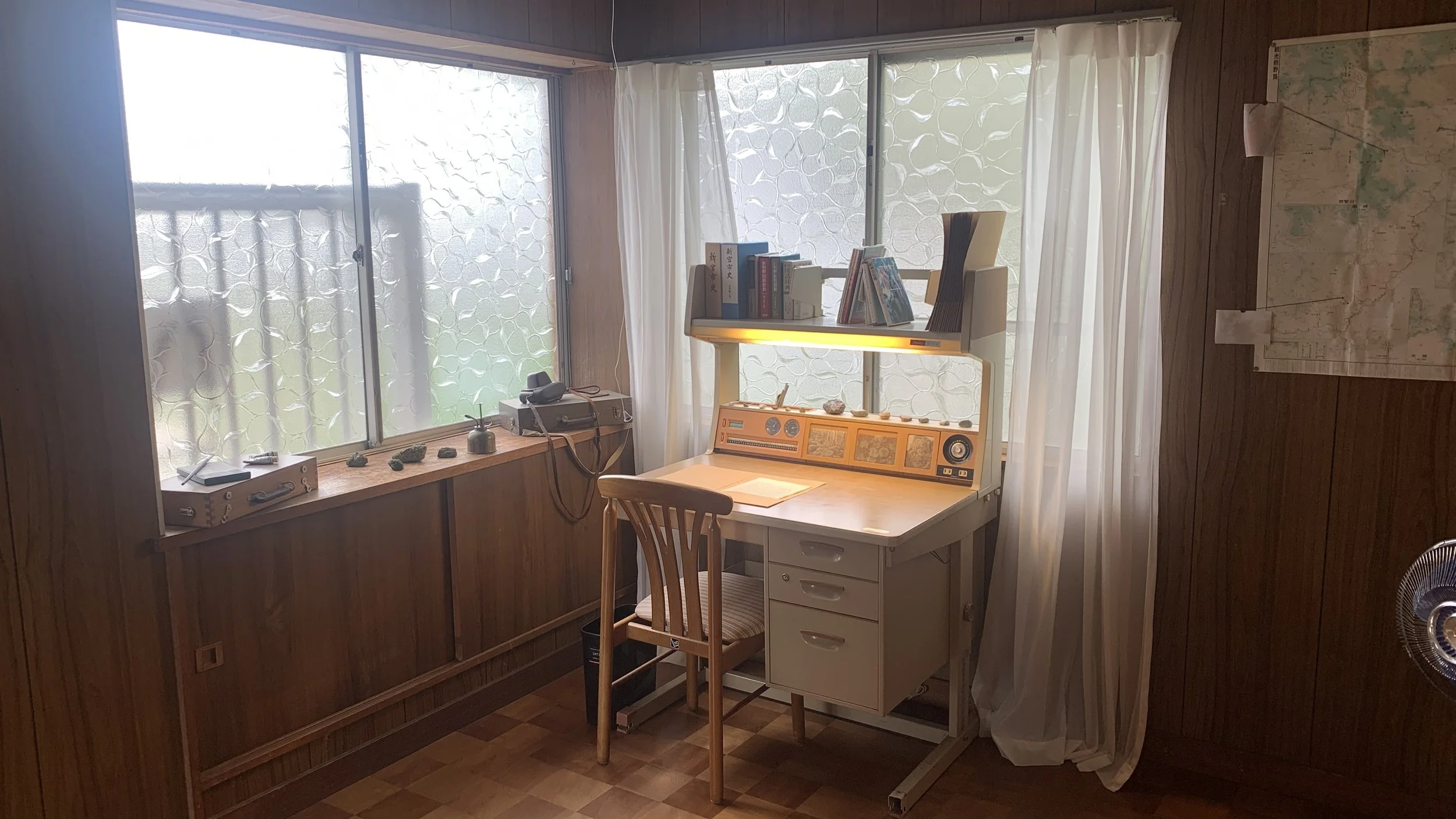
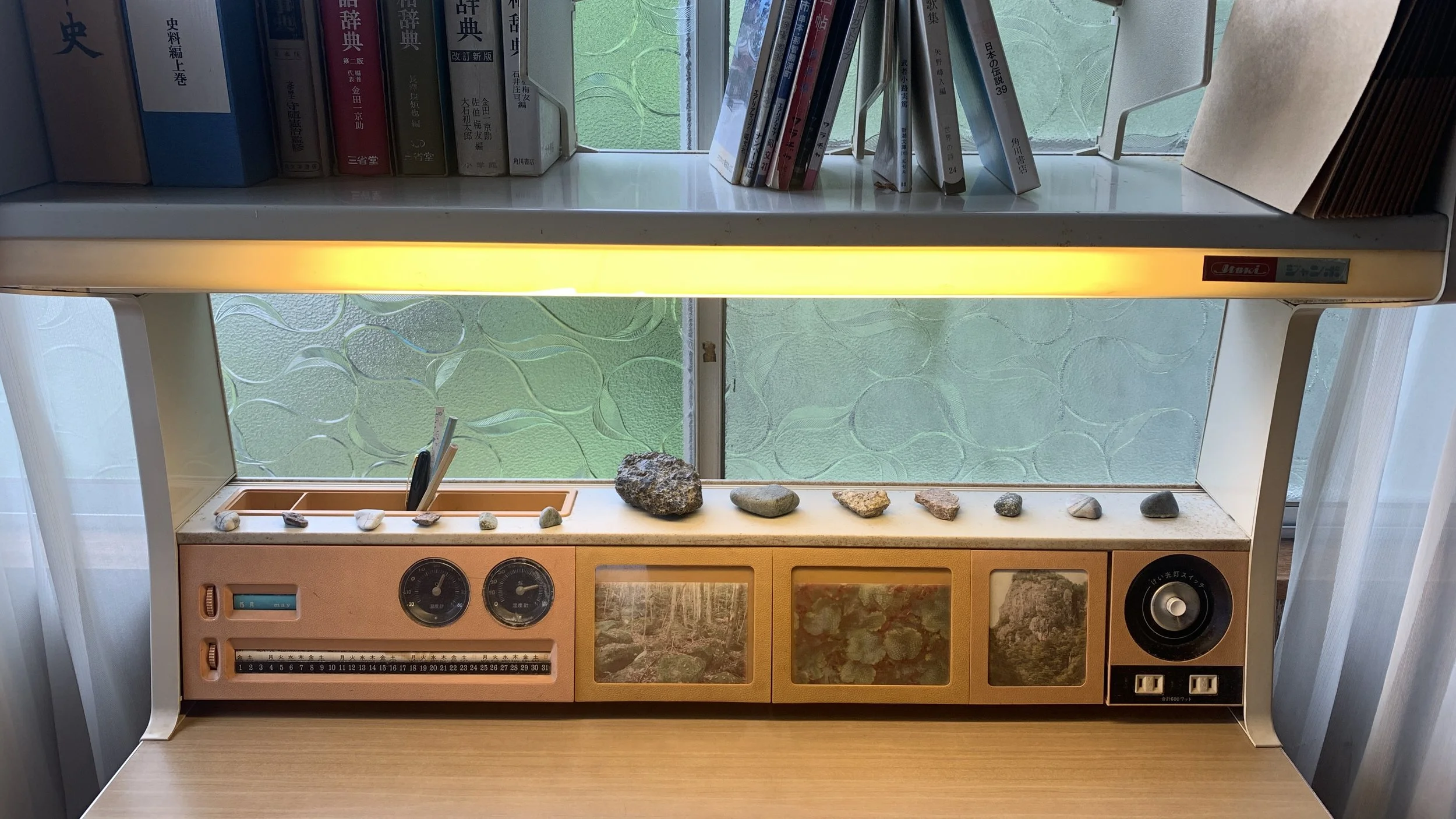
Our hosts have thought of every detail, and left us local coffee beans for the morning and sake for the evening.
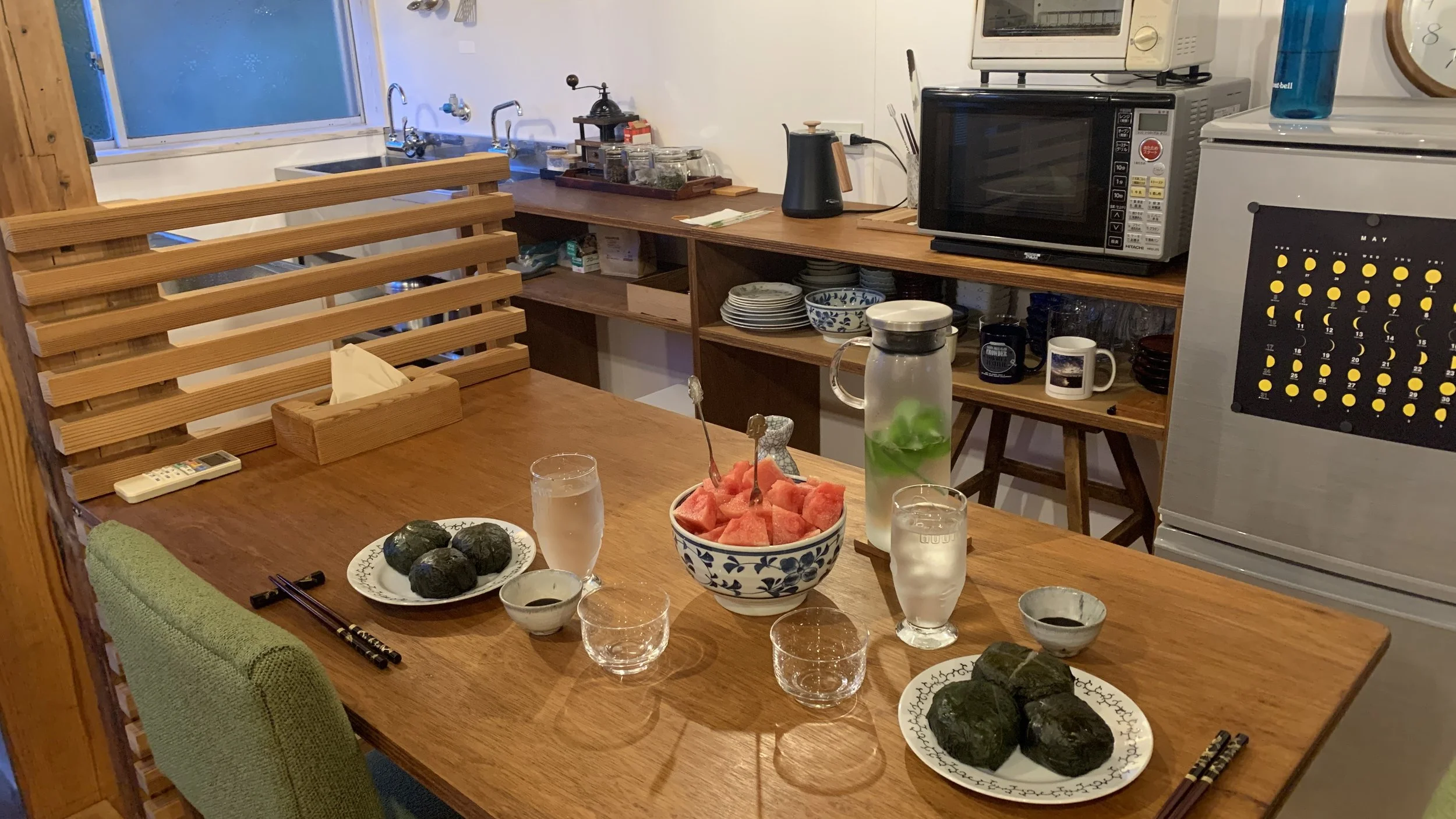
After getting acquainted with Kamikura Hideaway House, we visited Asuka Jinja shrine, then swung by the grocery store for an assortment of Japanese snacks to enjoy with our sake, including a baby watermelon and snap peas grown in Wakayama! To top it off, some Mehari-zushi, a local staple consisting of rice balls wrapped in pickled takana (mustard) leaves.
We spent the evening enjoying our temporary home, and getting the Garmin Inreach Mini 2 set up, which is likely way overkill but we wanted to have it ready by the time we start the Kohechi route, since it is more challenging and remote than the Nakahechi. It will be “fun” to finally learn how to use one of these things anyway for future trips.
Monday, May 25
Coffee, watermelon, and leftover rice balls for breakfast, then we walked right next door to Kamikura Jinja shrine, where the Kumano gods are said to have first descended to earth. This shrine was really unique and wonderful. As usual, we are impressed by the number of elderly Japanese doing these very steep, uneven hikes as a matter of routine out of reverence for these deities and traditions.
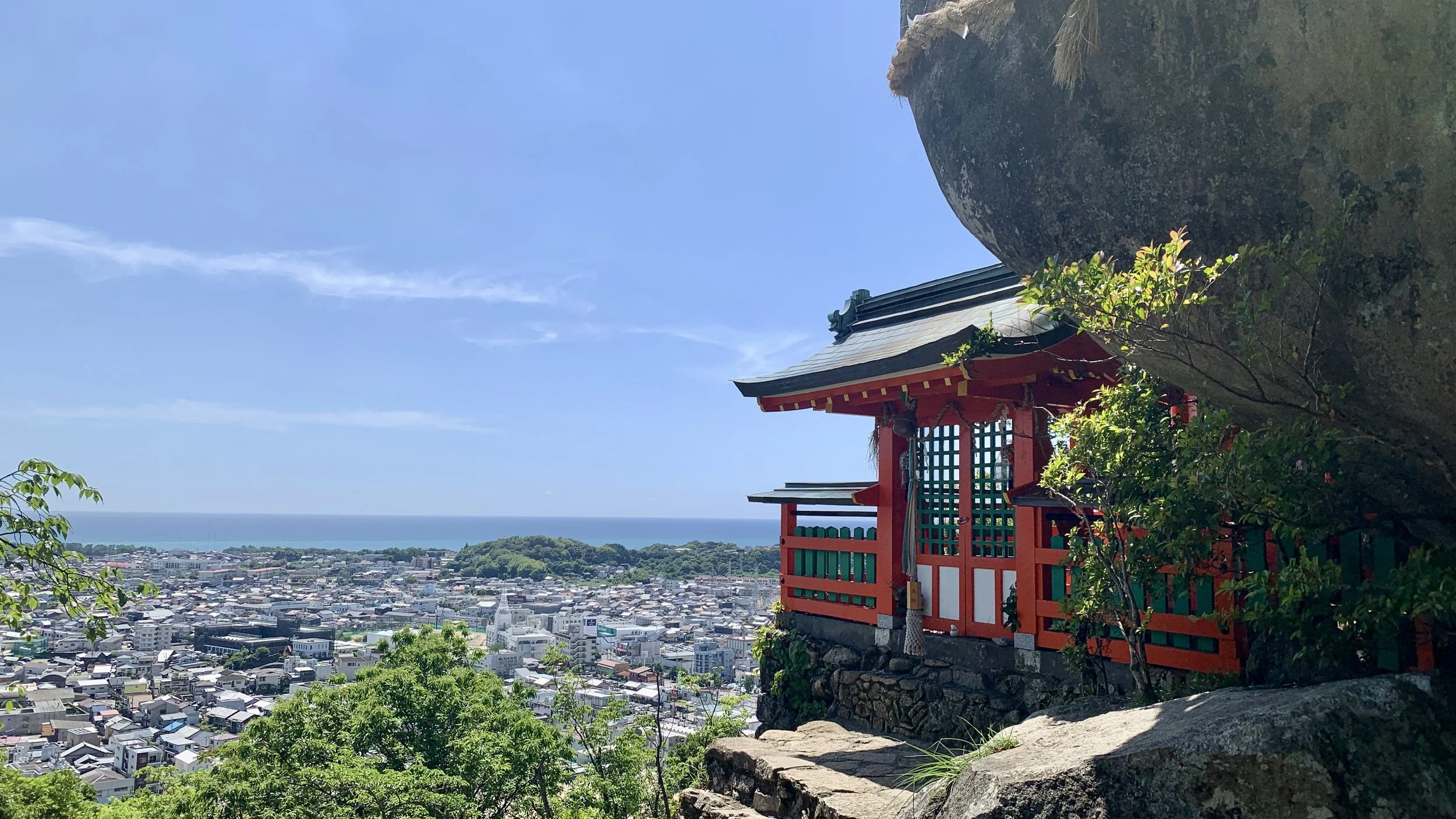
From there took a 1.5 hr bus journey to Kumano Nachi Taisha so that, although we would be setting back off on the trail from this point tomorrow, we could take our time exploring the grand shrine, subsidiary shrines, and pagoda. We also wanted to climb the classic Daimonsaka stairs through giant cedar trees that are hundreds of years old, including a “husband and wife” cedar tree that are over 800 years old. Plus, doing this climb today meant we wouldn’t have to start the day off with it tomorrow.
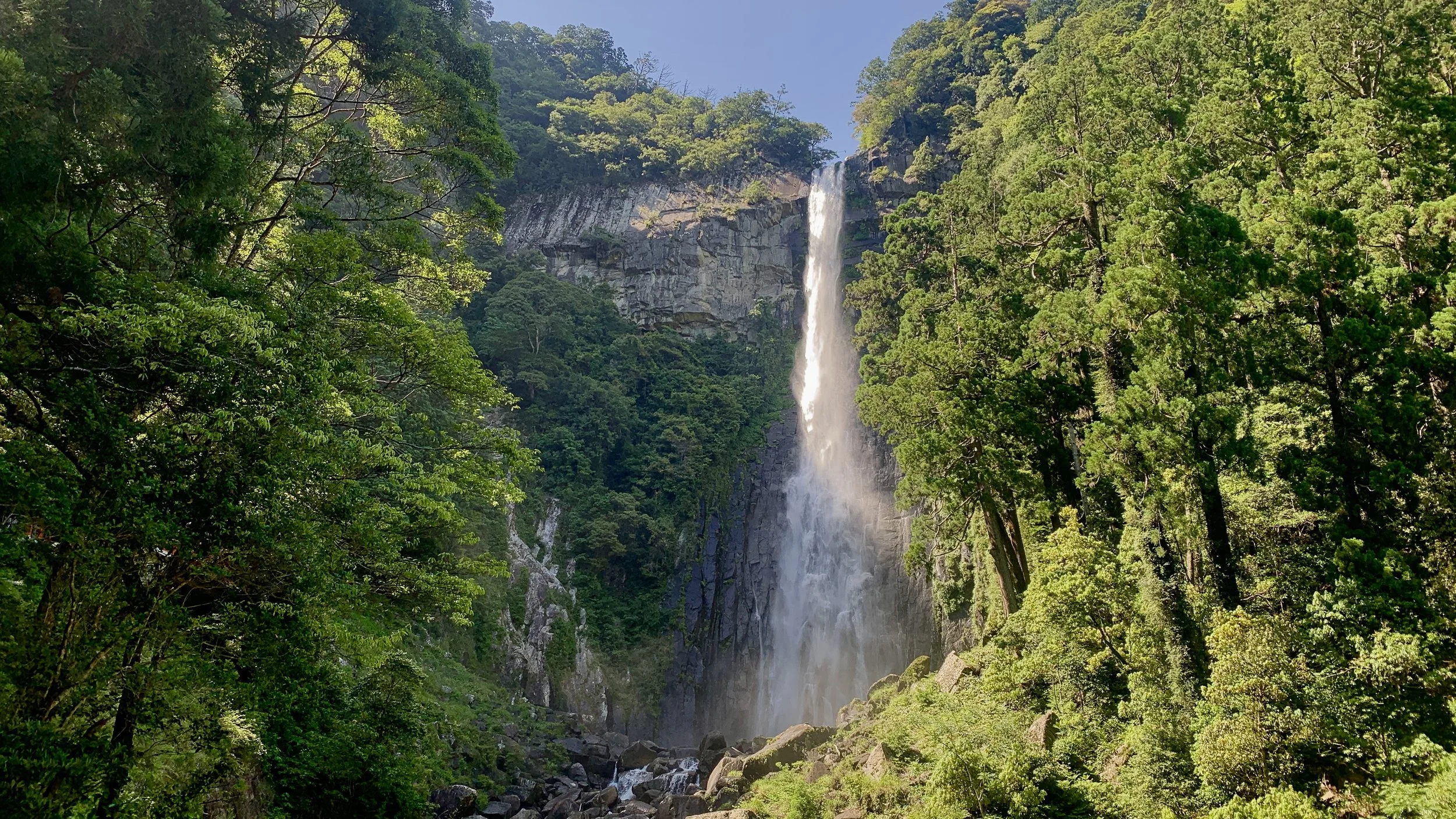
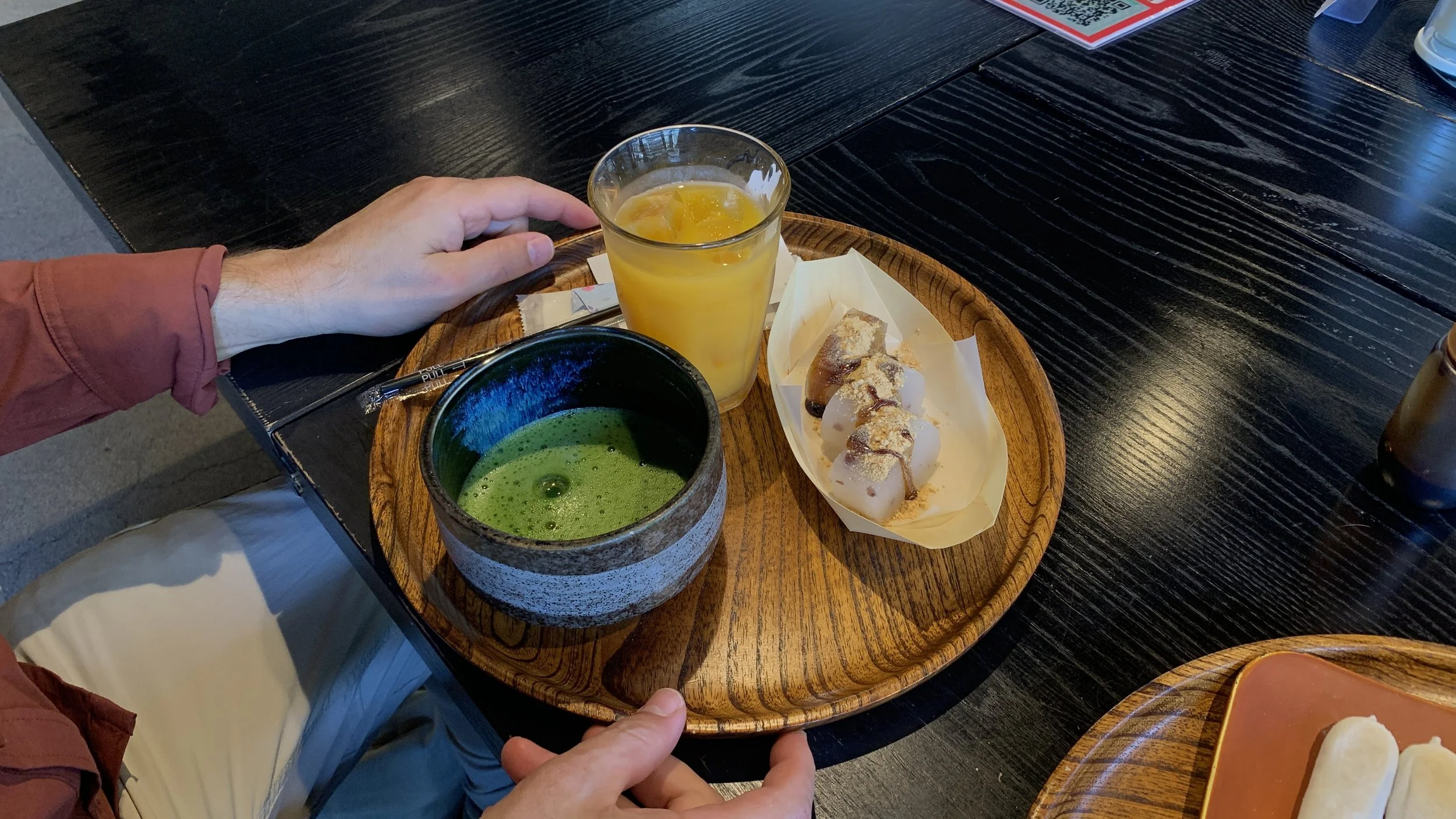
The shrine complex was massive and pretty fatiguing to wander around in the direct sun, and with lots of other people around (though still nothing like Kyoto). We are glad that we did so today rather than squeezing it into the morning tomorrow while stressing about how long it might take us to hike the next 14km. Our guide map warns that the section from Nachi Taisha to Koguchi is a challenging one. We skipped lunch today in all the bussing/walking but dropped into a mochi cafe near the shrine where I ordered Otaki mochi and Chris ordered Kuzu mochi.
Kuzu is the Japanese name for Kudzu, which is fiercely pervasive in the US, but native to Japan so coexists peacefully with the ecosystem here. Kuzu is a common ingredient in Japan, and works a bit like corn starch, as a thickening agent, although it can be prepared all kinds of other ways, too. Apart from seeing the occasional Kudzu Flower Jam for sale at farmers markets in Georgia, and a very unique kudzu basket weaving class that I took with my friend Libby this spring, this plant doesn’t get utilized much in the States. Anyway, the Kuzu and Otaki mochis were both delicious, paired with a side of fresh squeezed Wakayama Orenji (orange) juice and matcha tea.
Walking from the pagoda to the grand shrine we ran into none other than Matthew, who we had parted ways with two days ago! We had wondered if we’d encounter any of our trail friends this evening as those who kept moving on the Nakahechi to complete the full stretch from Takijiri-oji to Hongu Taisha to Nachi Taisha grand shrine would be finishing the two day stretch of trail between Hongu and Nachi that we’d be picking up at tomorrow, heading north. We later learned we just barely missed Amy and Whitney, too!
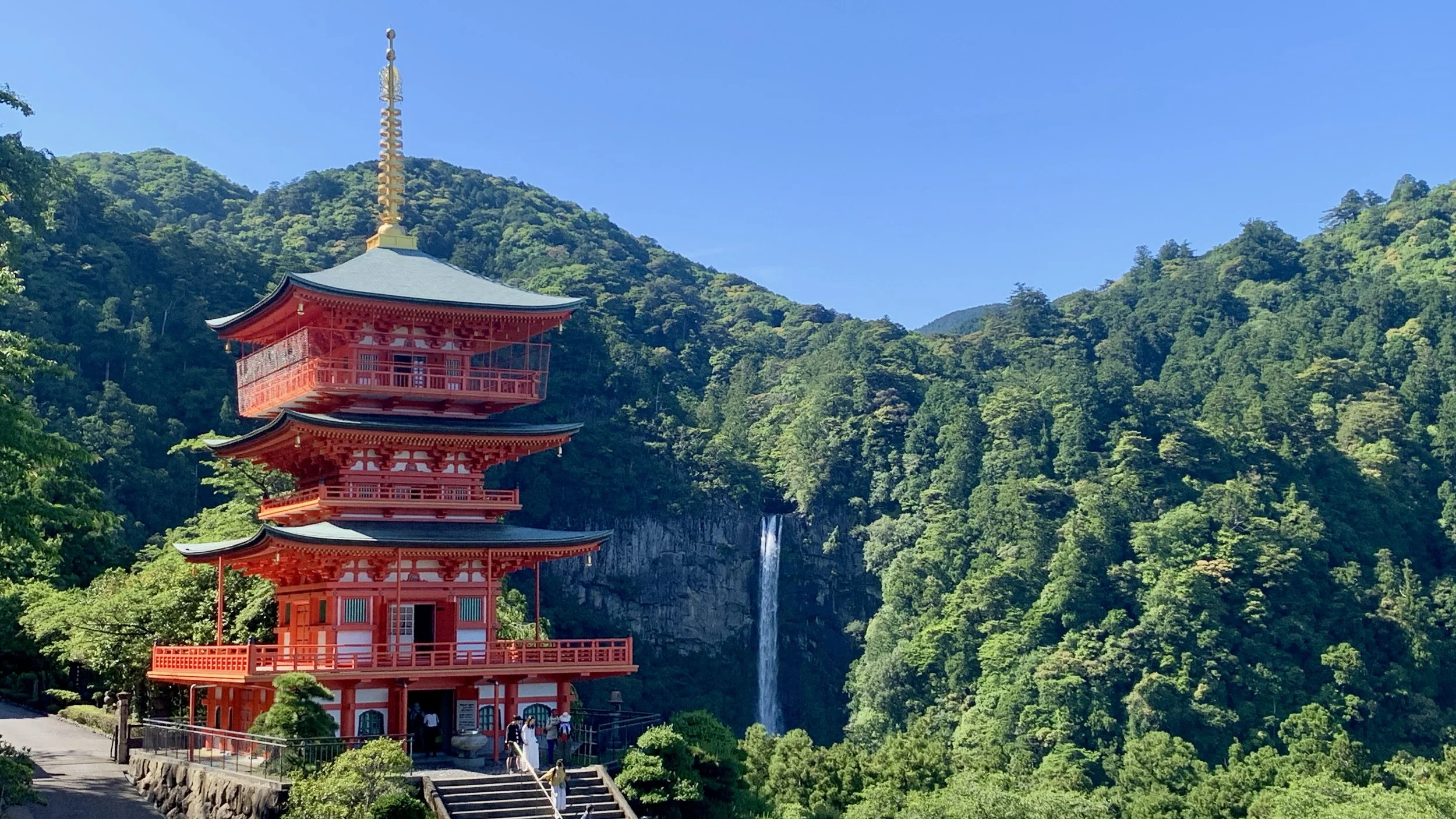
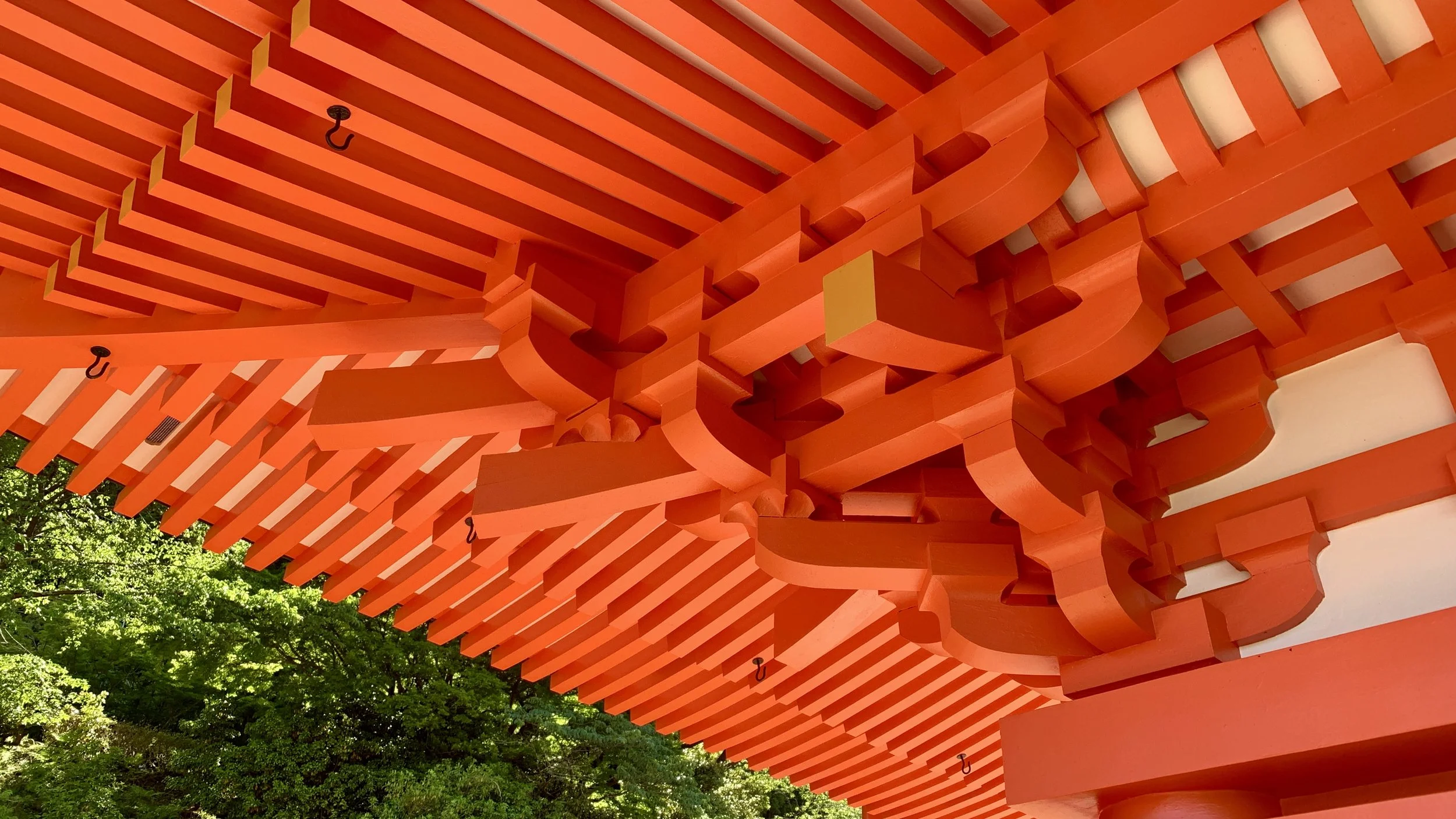
Other highlights from Kumano Nachi Taisha today include seeing the starting place for the 33 Kannon Pilgrimage at a Tendai Buddhist Temple, picking up postcards stamps so we could send mail home (only ¥100 to mail a postcard anywhere in the world from Japan), identifying the spot where we would be starting off on the Nakahechi tomorrow. We also had the opportunity to write a wish on a goma (a special wish stick) which we then carried through the womb of a giant hollow tree root system, and left it at an alter on the other side to be burned in ceremony later.
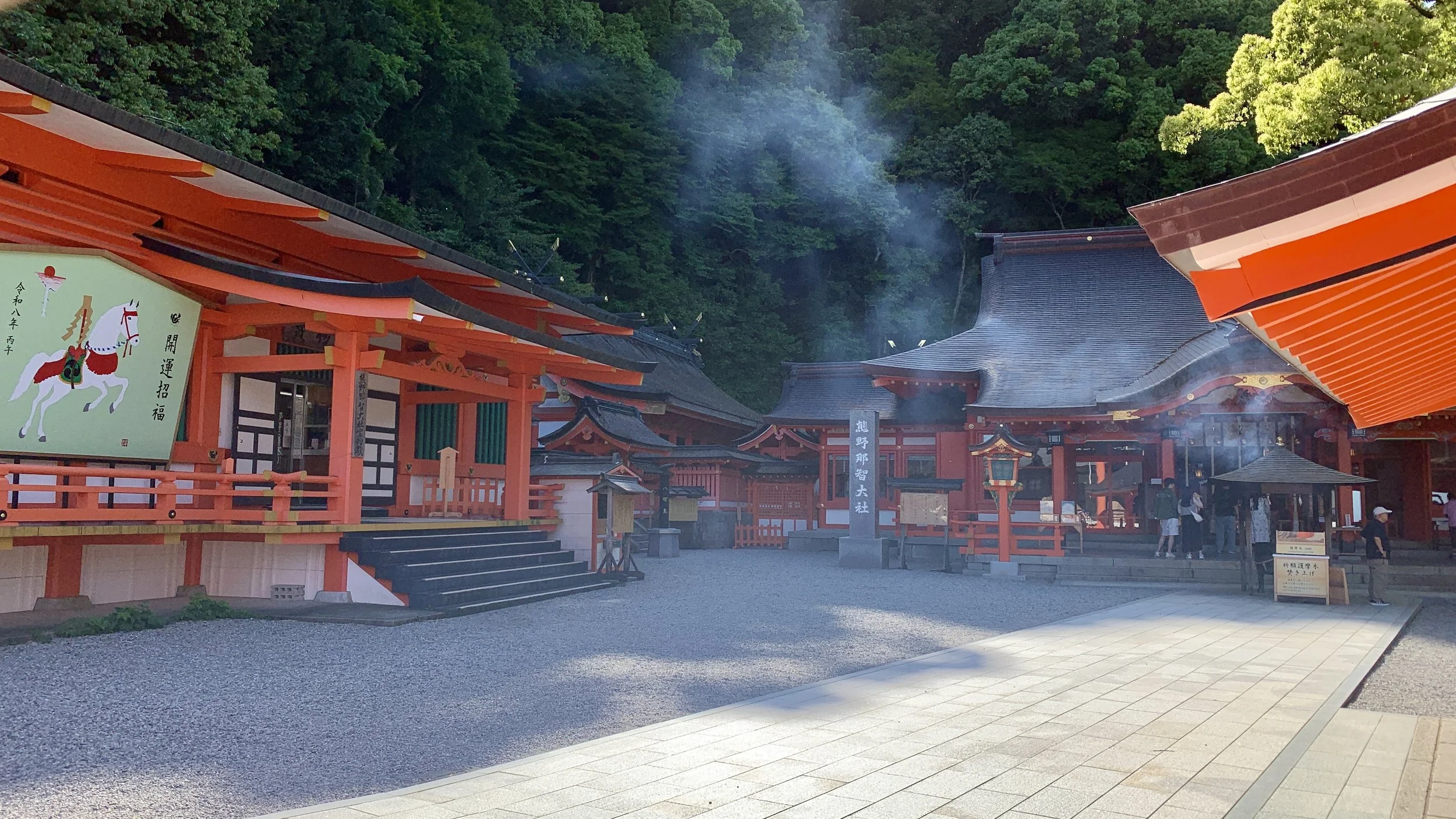
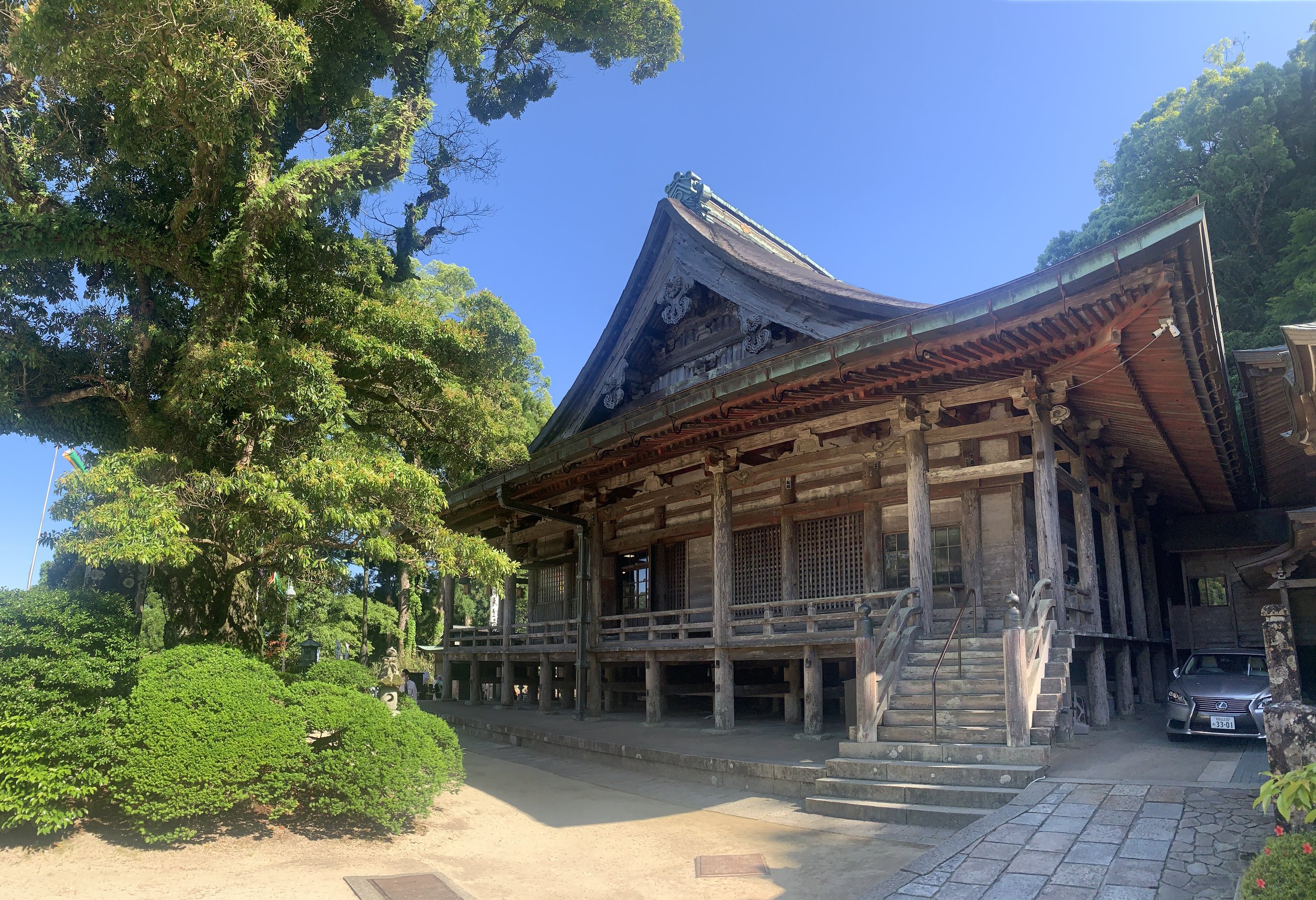
Leaving Nachi Taisha by bus we were presented with the option of heading back to Shingu or first stopping for food in Kii-Katsura. On the brink of withering away completely, we opted for the latter and found ourselves at yet another Japanese Italian restaurant, Wine Kumano, where we shared several dishes and felt our life force slowly restore.
This evening we are looking forward to getting lost in the story of the house again, completing the book that Chris has been reading aloud to me in bits.
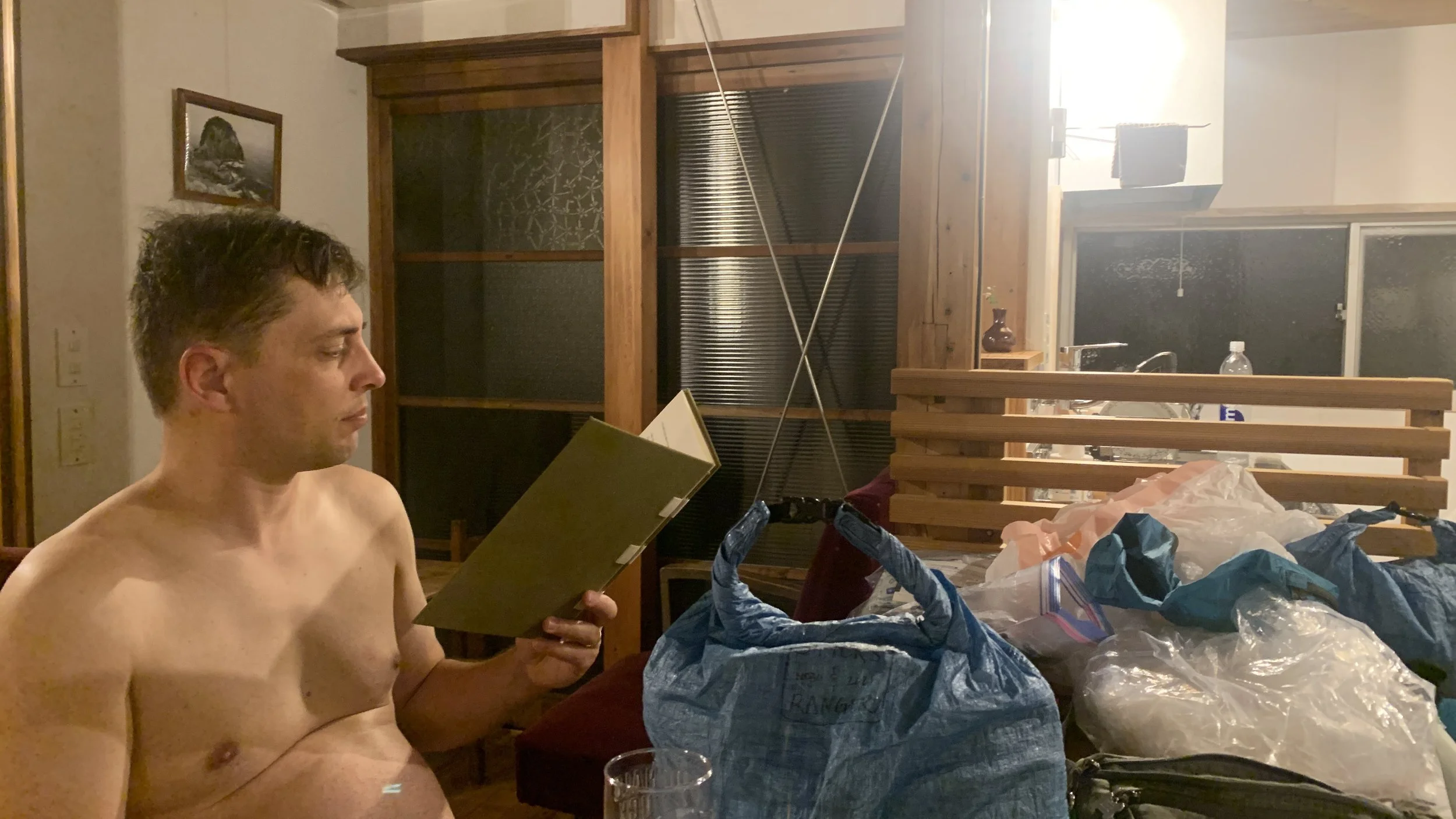
We did just that: finished the story, signed the guestbook, and prepped our packs for ducking back into the forest tomorrow. Chris is still battling allergy-induced asthma and I have plantar fasciitis (I think) developing in my right foot, so we are going to try to take care of our bodies as we hike tomorrow. Lots of water and stretching. We finished off the sake gift from our hosts, and went to bed. A note on high quality sake: I’ve never found an alcohol that didn’t make me feel a bit woozy, but nice sake seems to only relax me a bit but without the brain fog. Lovely.
Phrases learned: totemo shinsetsu (so kind), Yoroshīdesu ka? (Do you mind?)
Tuesday, May 26
Nachi Taisha to Koguchi • 15km
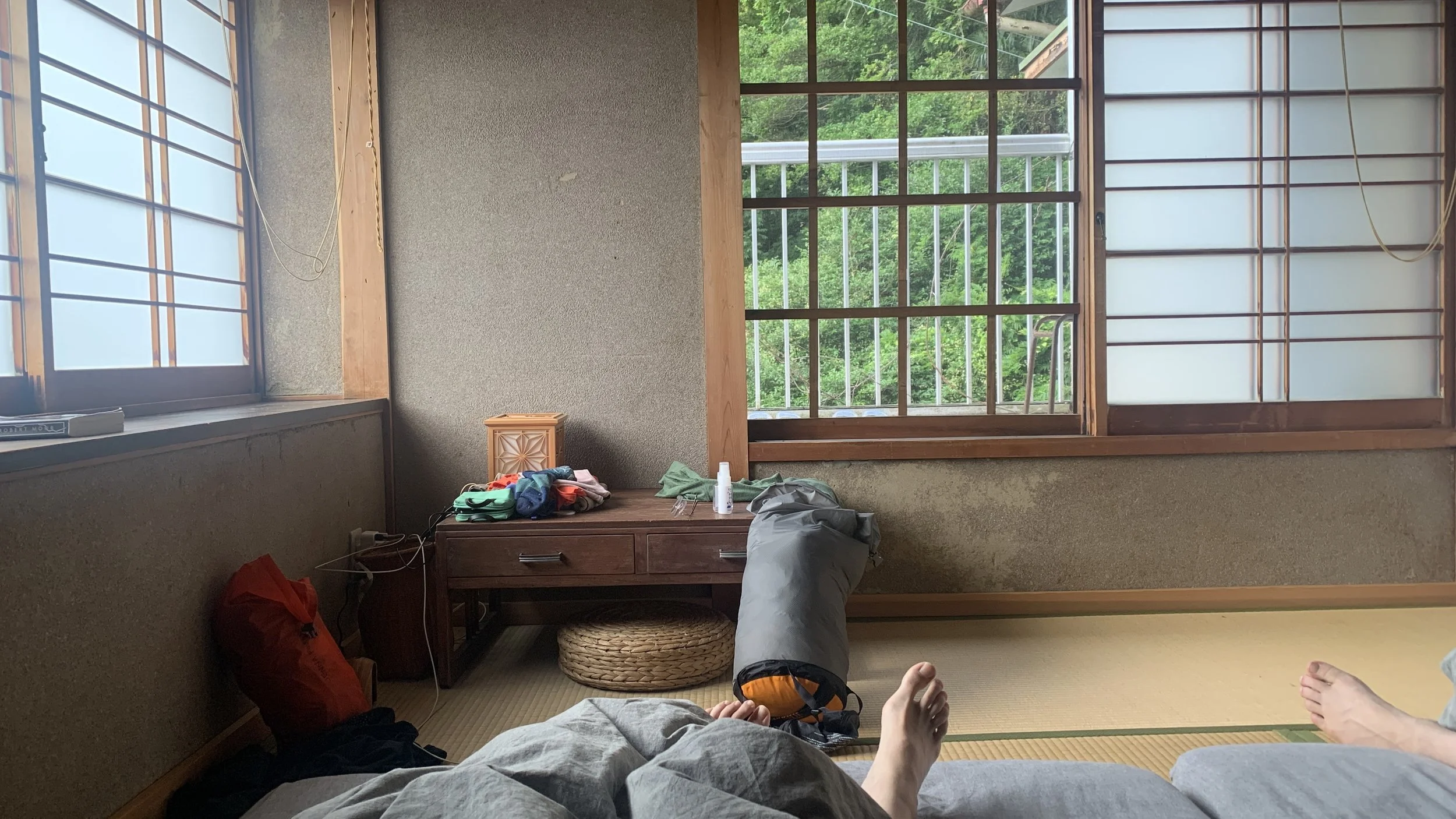
After saying our goodbyes to Mio’s husband Tetsuji-san, who came to bid us farewell, we caught the bus back to Nachi. It’s a 1.5hr bus journey that can otherwise be achieved by car in 20 minutes, but the time to journal and people watch is preferred. There are school kids on every corner walking to school this morning and it’s very cute seeing the crossing guards whistling and waving to try to maintain order, reminding the kids to keep out of the road. Shingu seems like a nice place to raise a family. We have seen kids of all ages playing, biking, riding the bus, shopping in the grocery stores, both accompanied and unaccompanied by adults, and touring the cultural sites in large school groups.
Arriving at the waterfall, we hauled ourselves back up a number of steep staircases, pleased with ourselves to have walked Daimonzaka and explored the shrines yesterday so we could get focus on hiking today. We were on the trail by 9:30am, heading up towards the highest point on the Nakahechi: the 800 meter Ôkumotori-goe (passing over clouds).
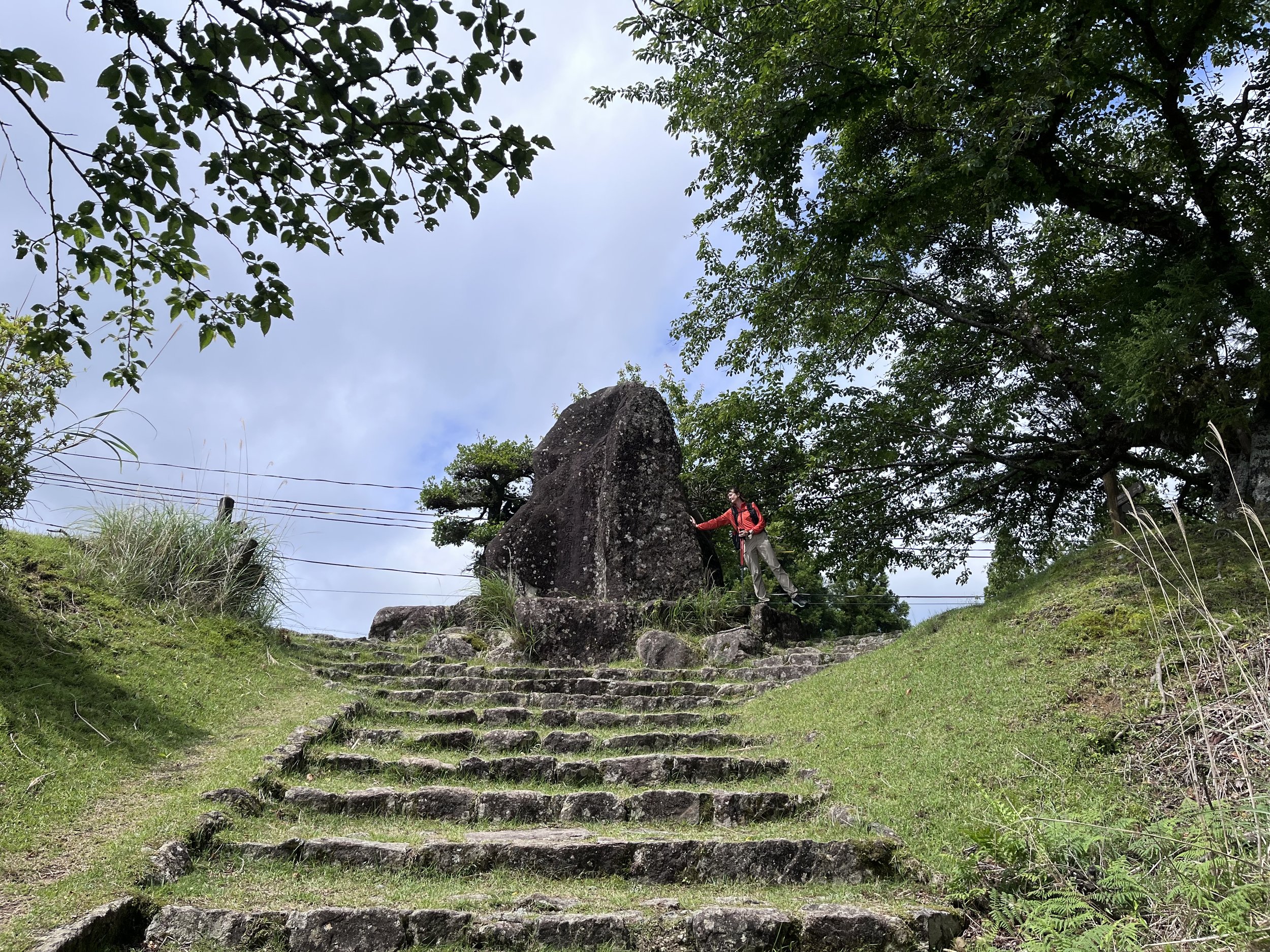
Due to the challenging nature of this stretch the guidebook recommended starting by 8am. Having crawled through a small cave to the “birthed” at the start of the Nakahechi with little to no ado from the guidebook, we took this warning quite seriously. 9:30am start was the best we could do due to public transit limitations, so I was concerned about finishing in time for our host to pick us up in Koguchi at 4:30pm. Plus this pestering plantar fasciitis is a problem.
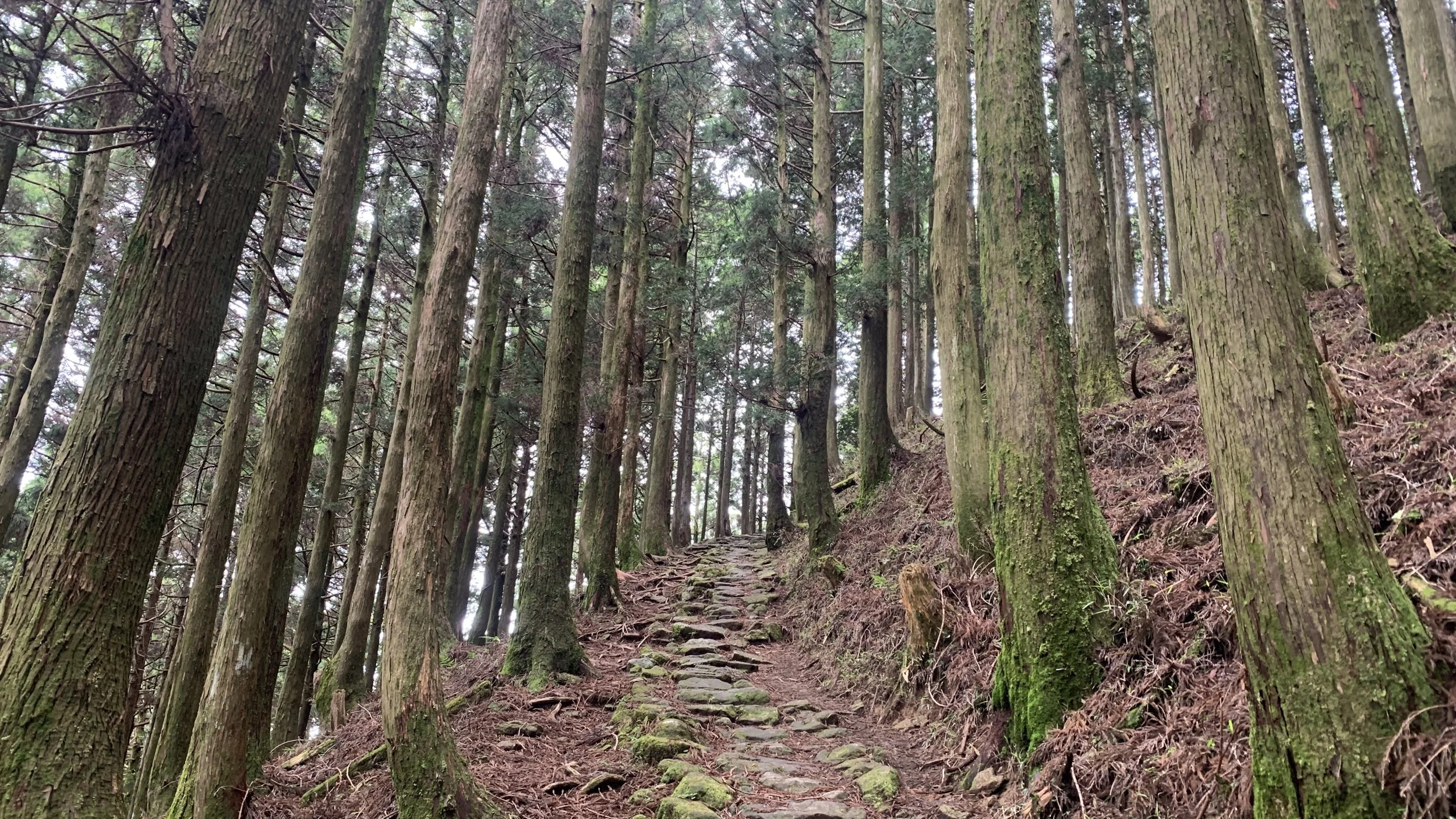
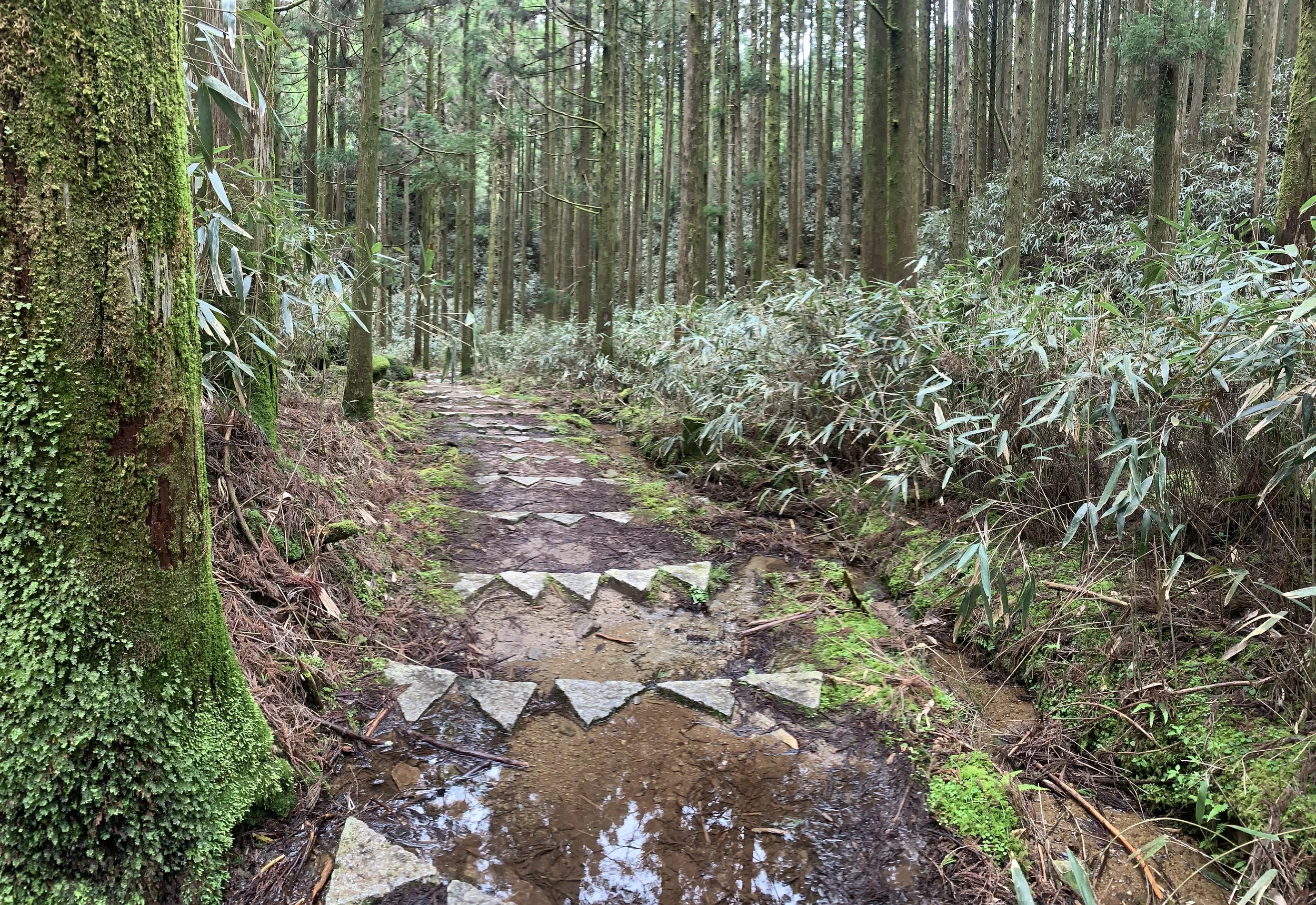
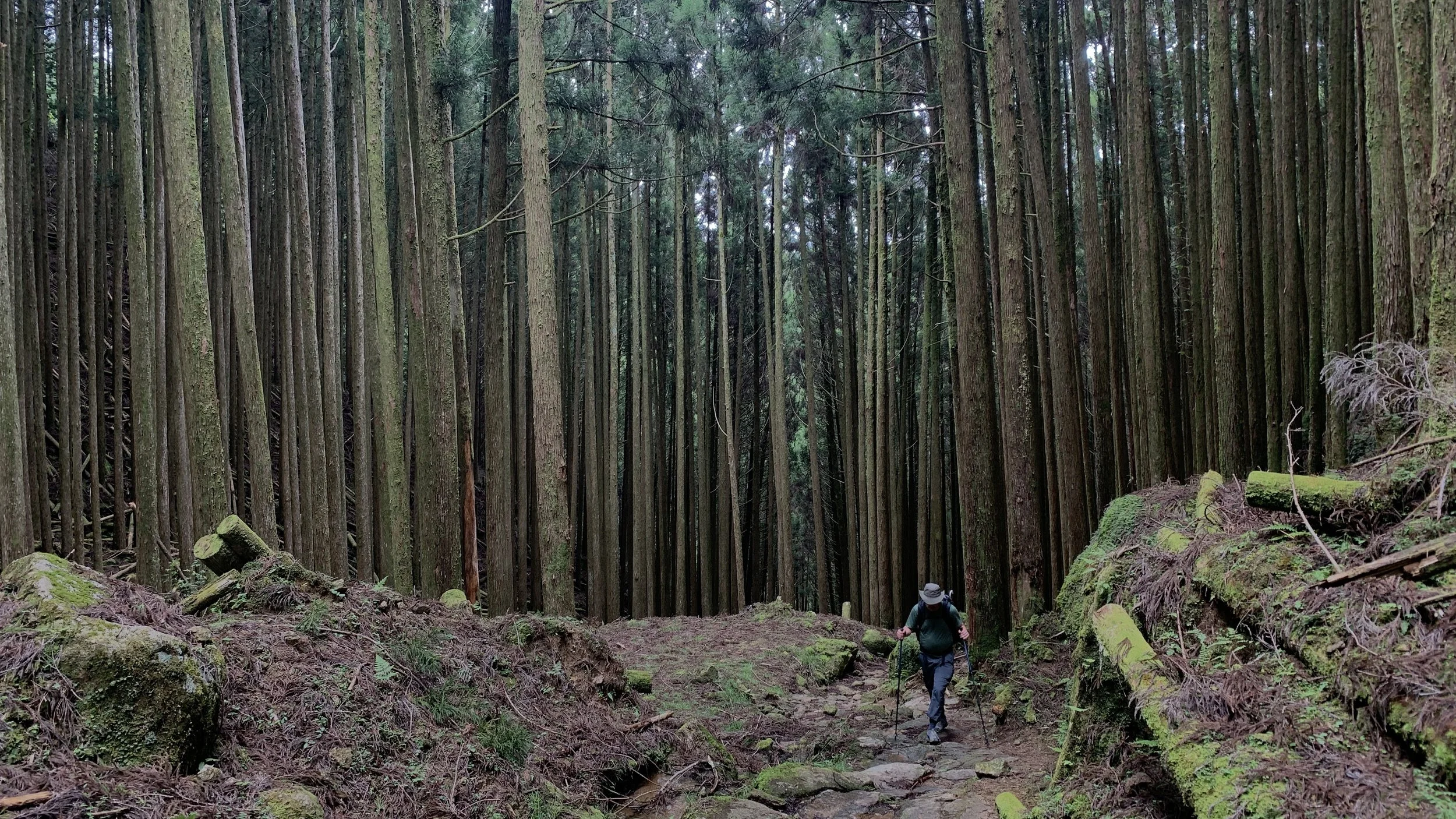
It turned out to be one of our favorite days on trail. Super lush forest, lots of creek-side walking, great weather, ocean views from the ridge line, and moss-covered boulders everywhere (trolls, obviously).
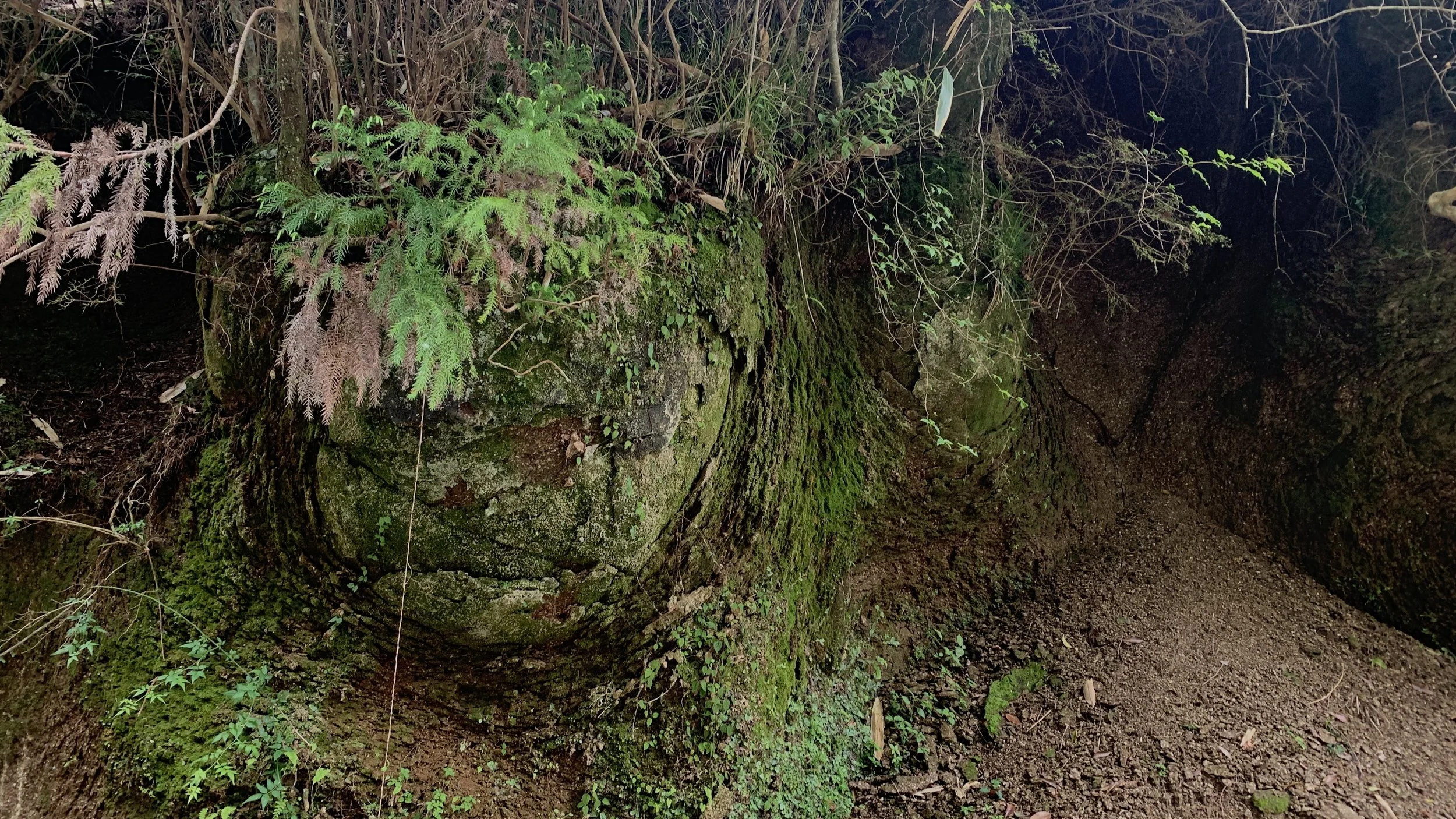
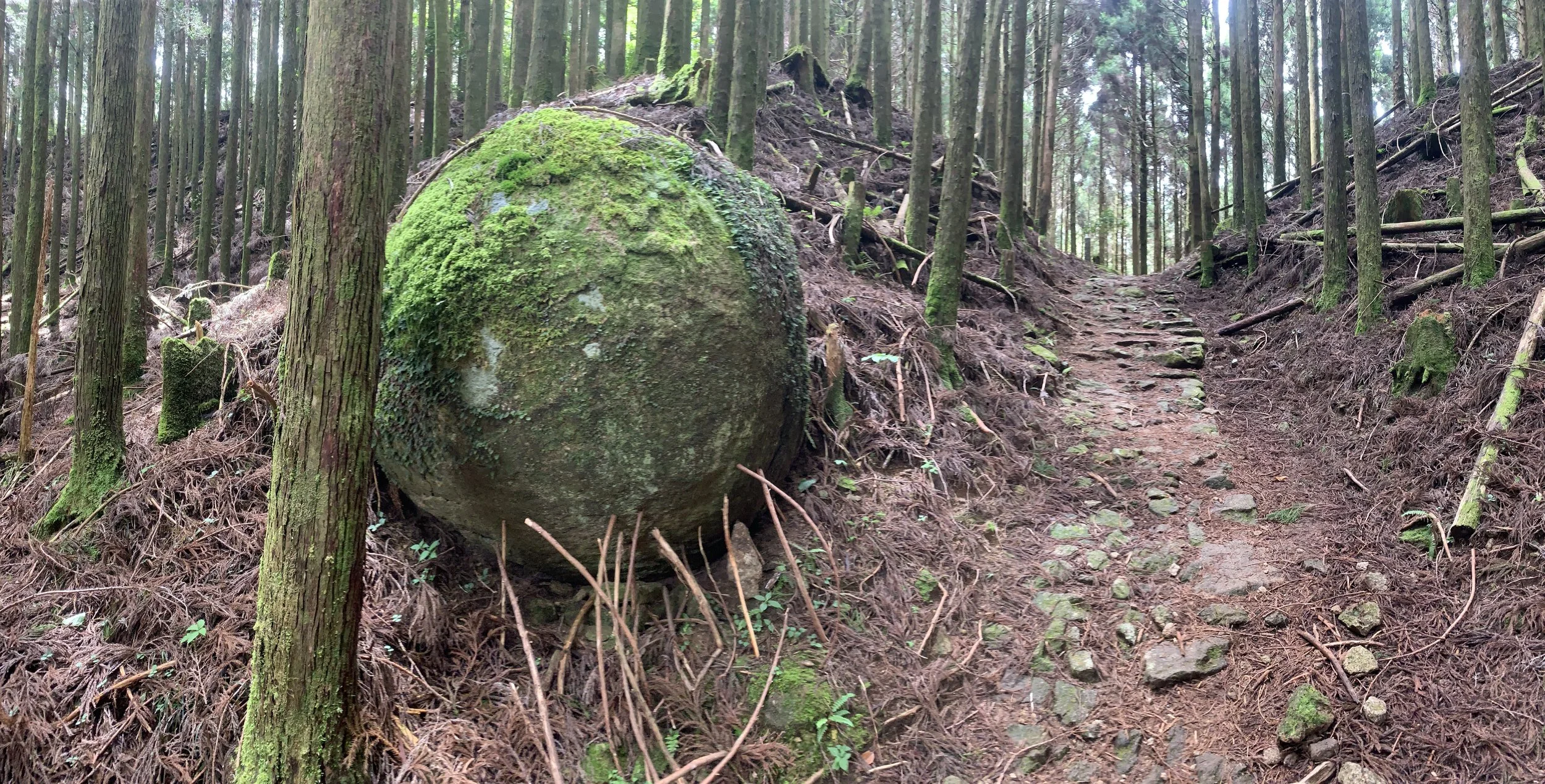
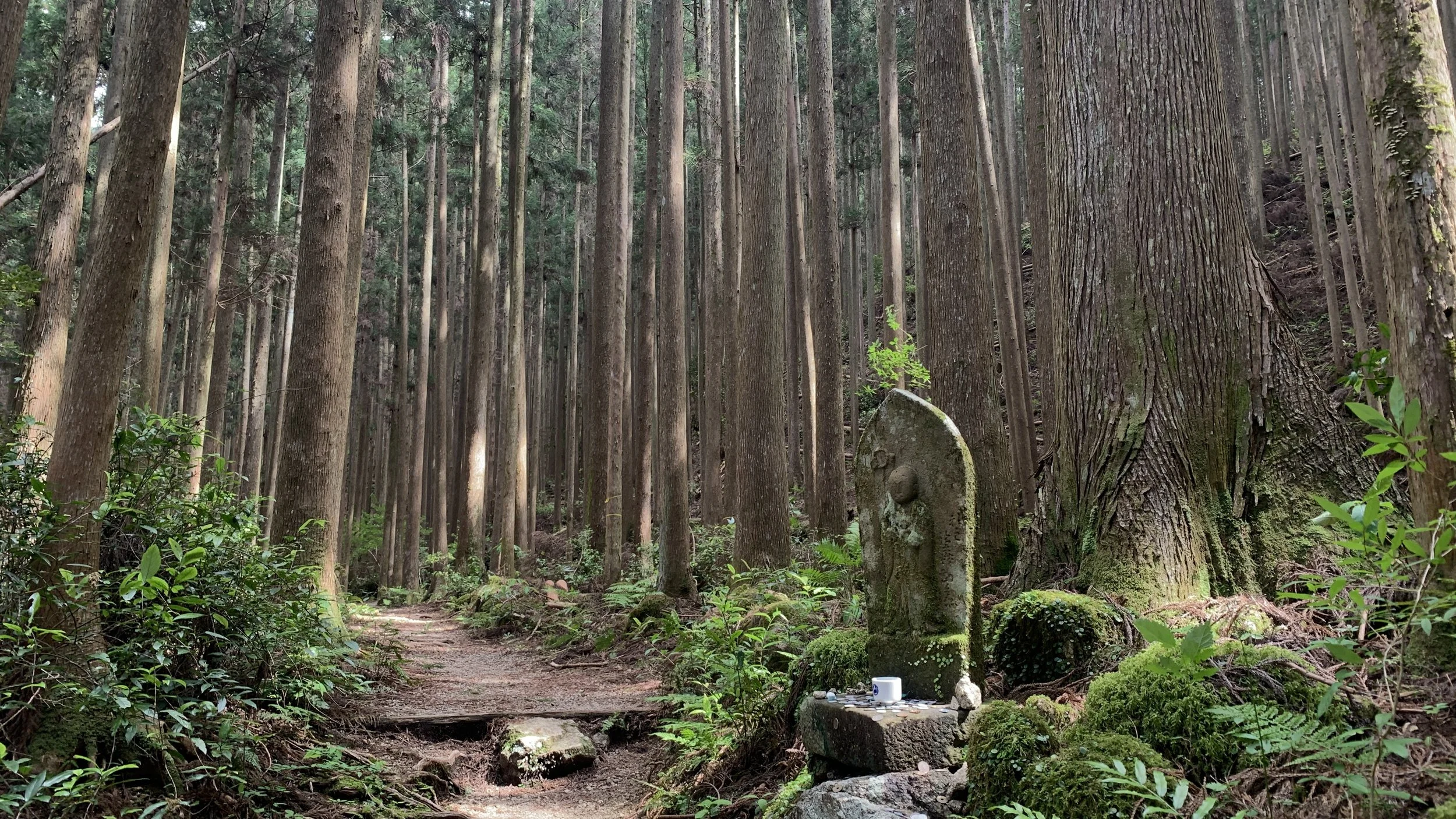
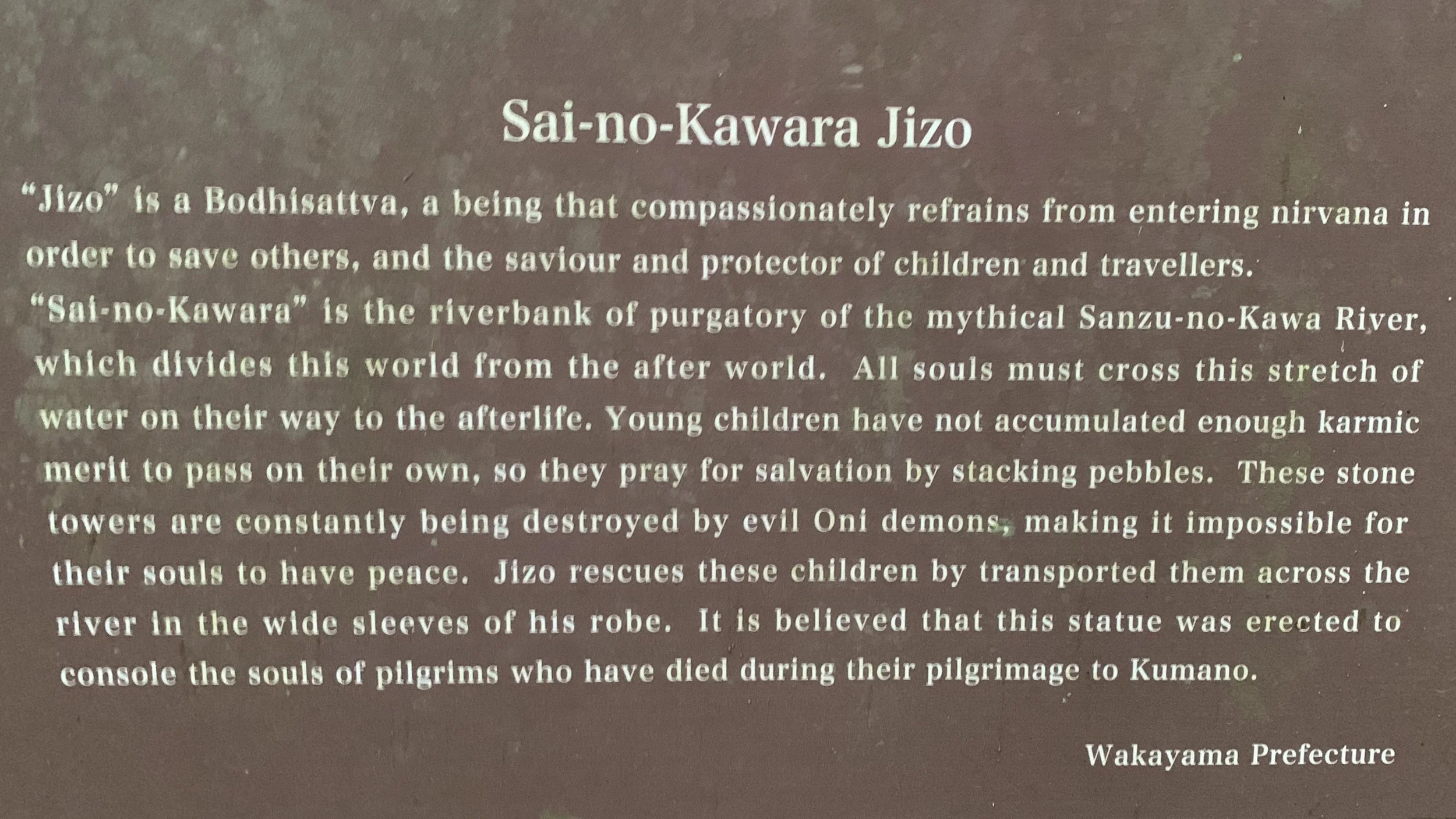
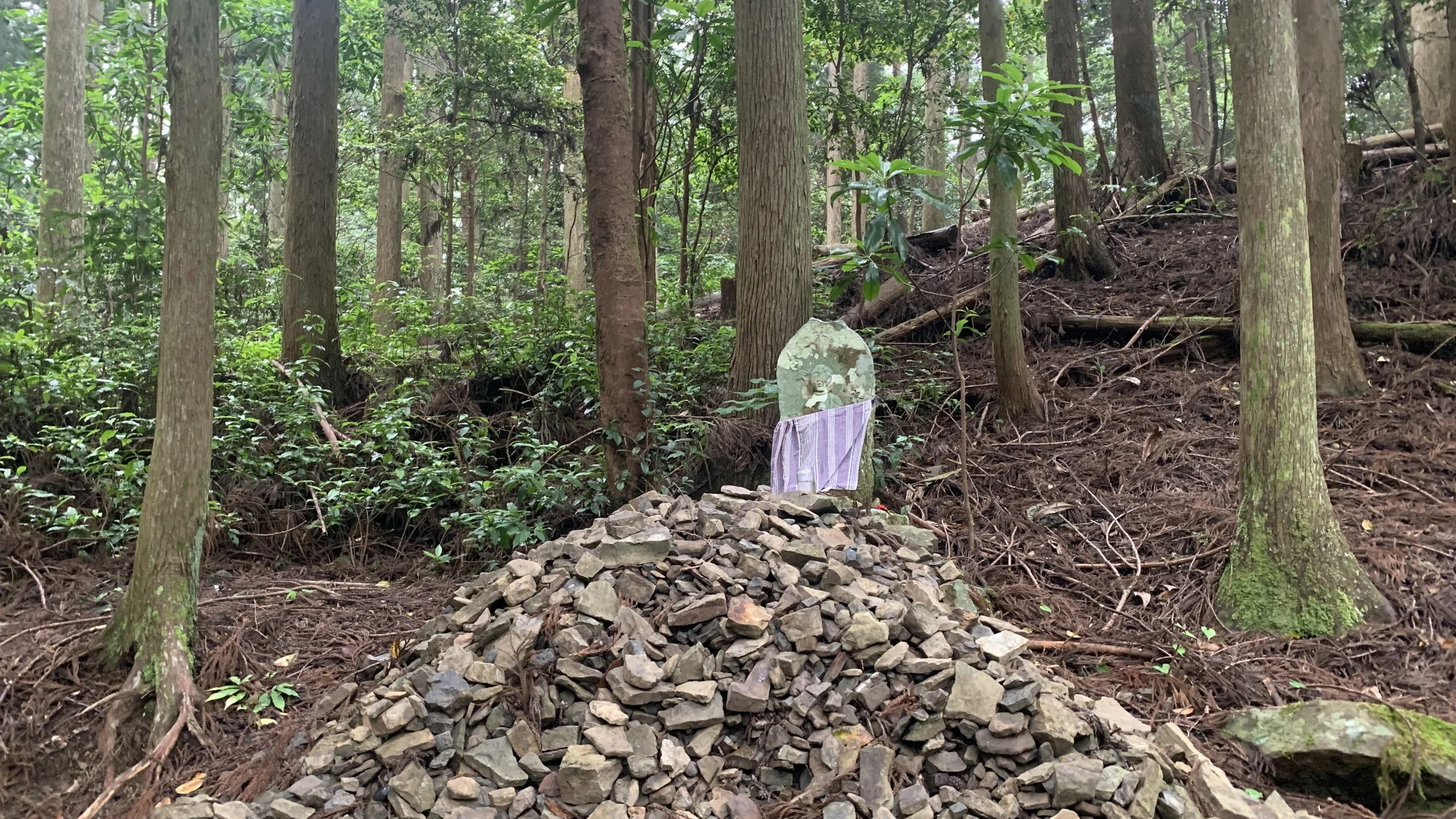
There was a stretch known as Moja-no-Deai, (Abode of the Dead), where we were on high alert when we’d see another figure approaching.
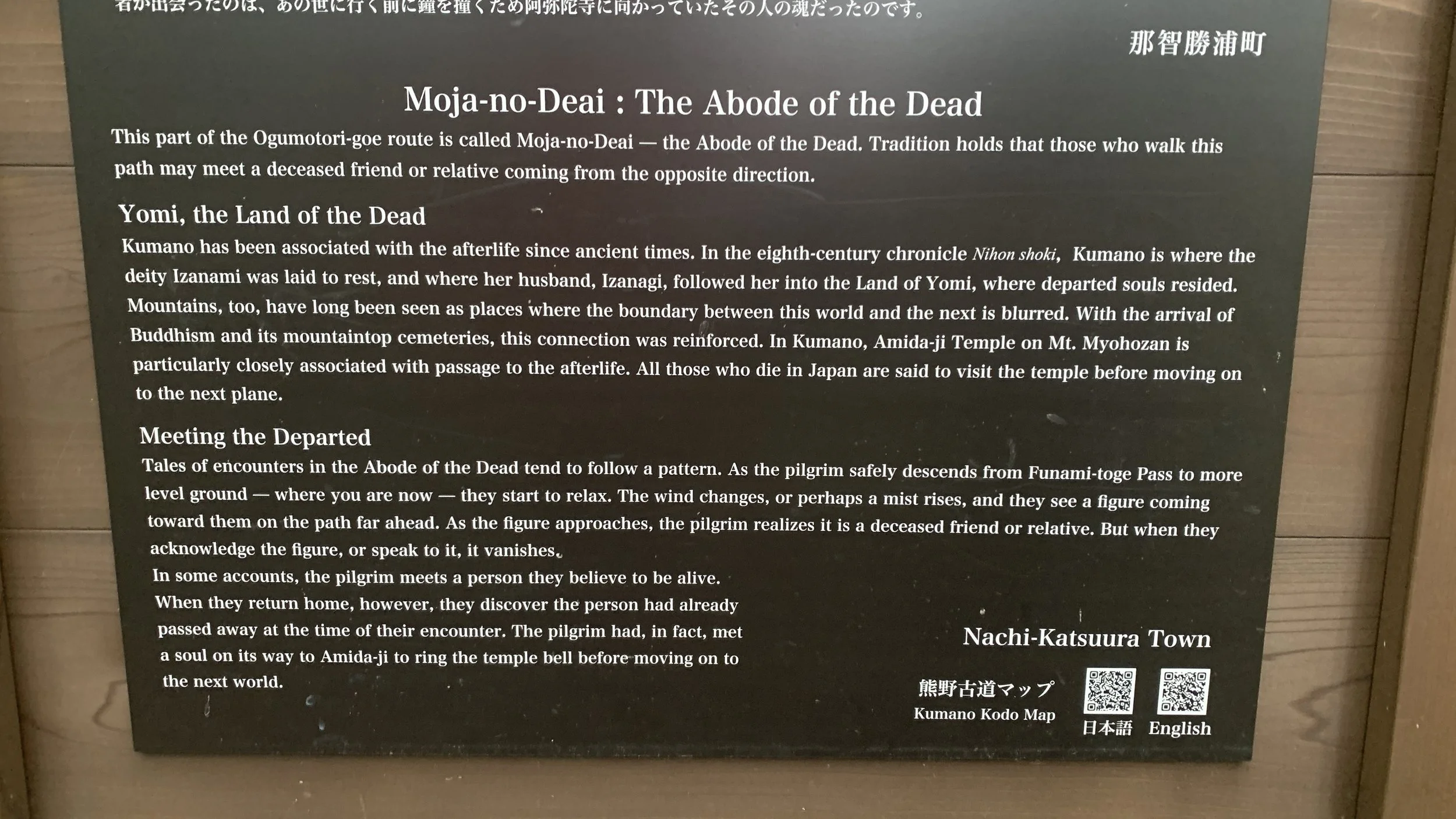
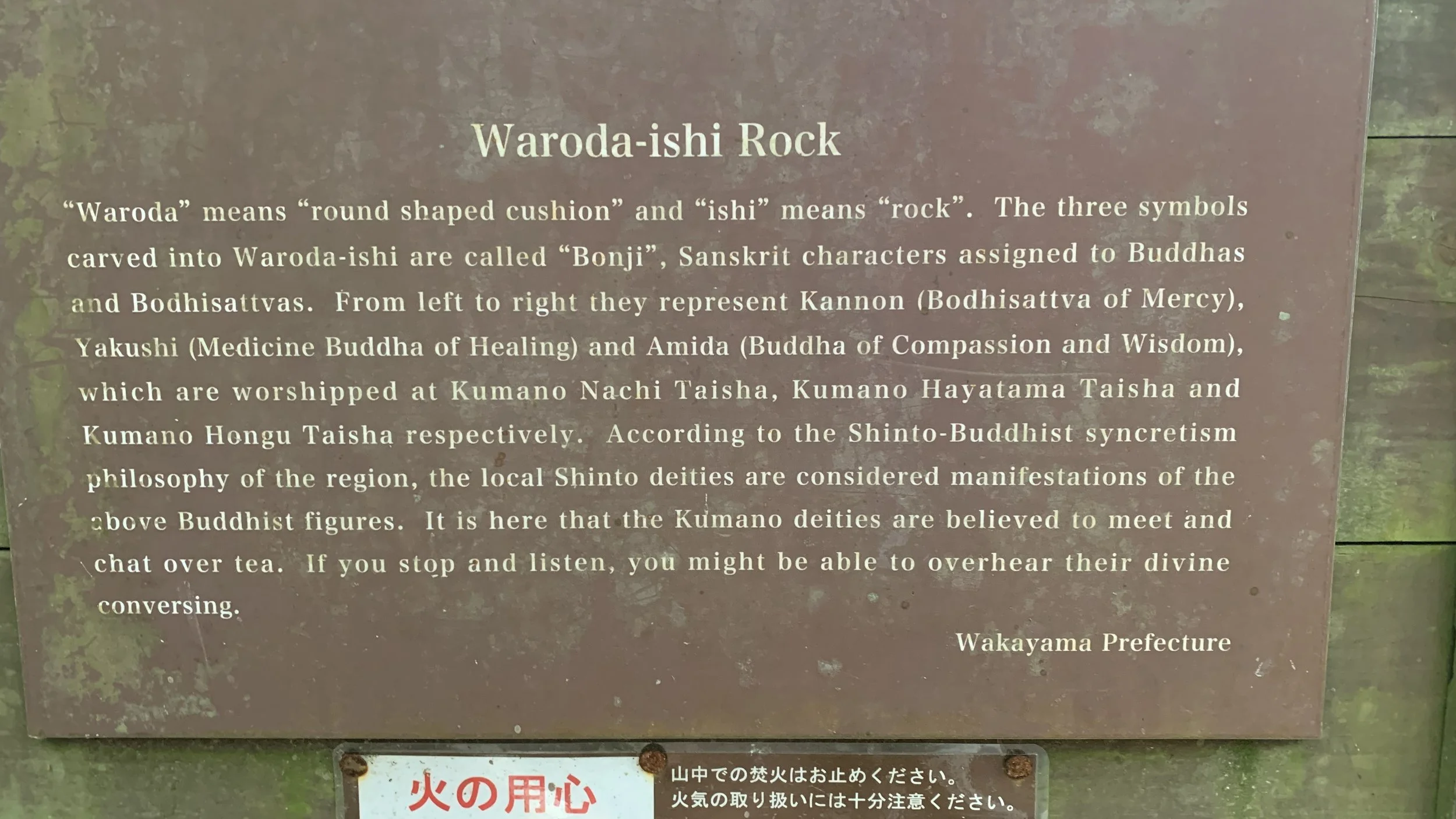
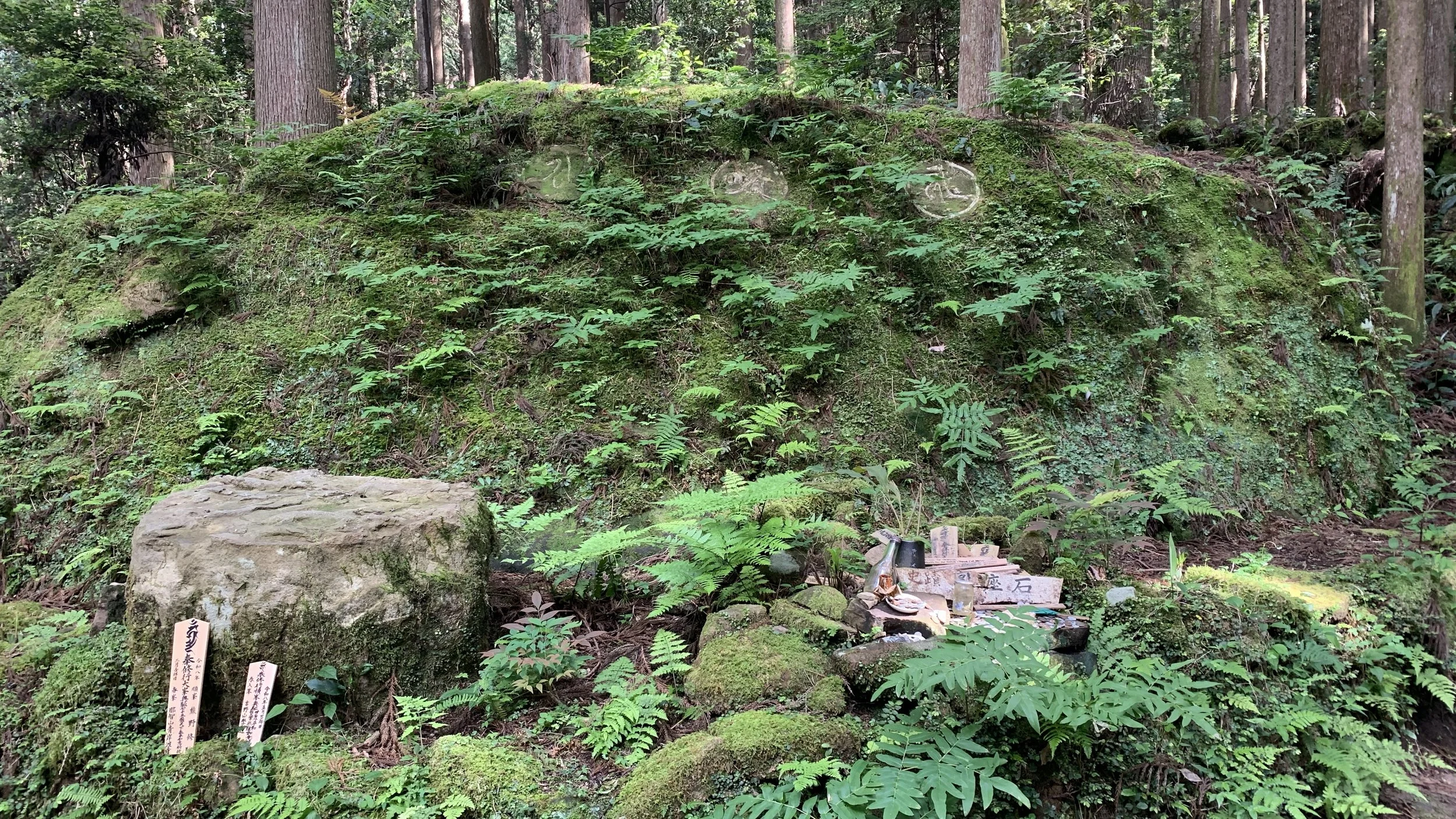
Waroda-ishi rock was a special place as well, a site where Kumano deities are thought to meet to converse.
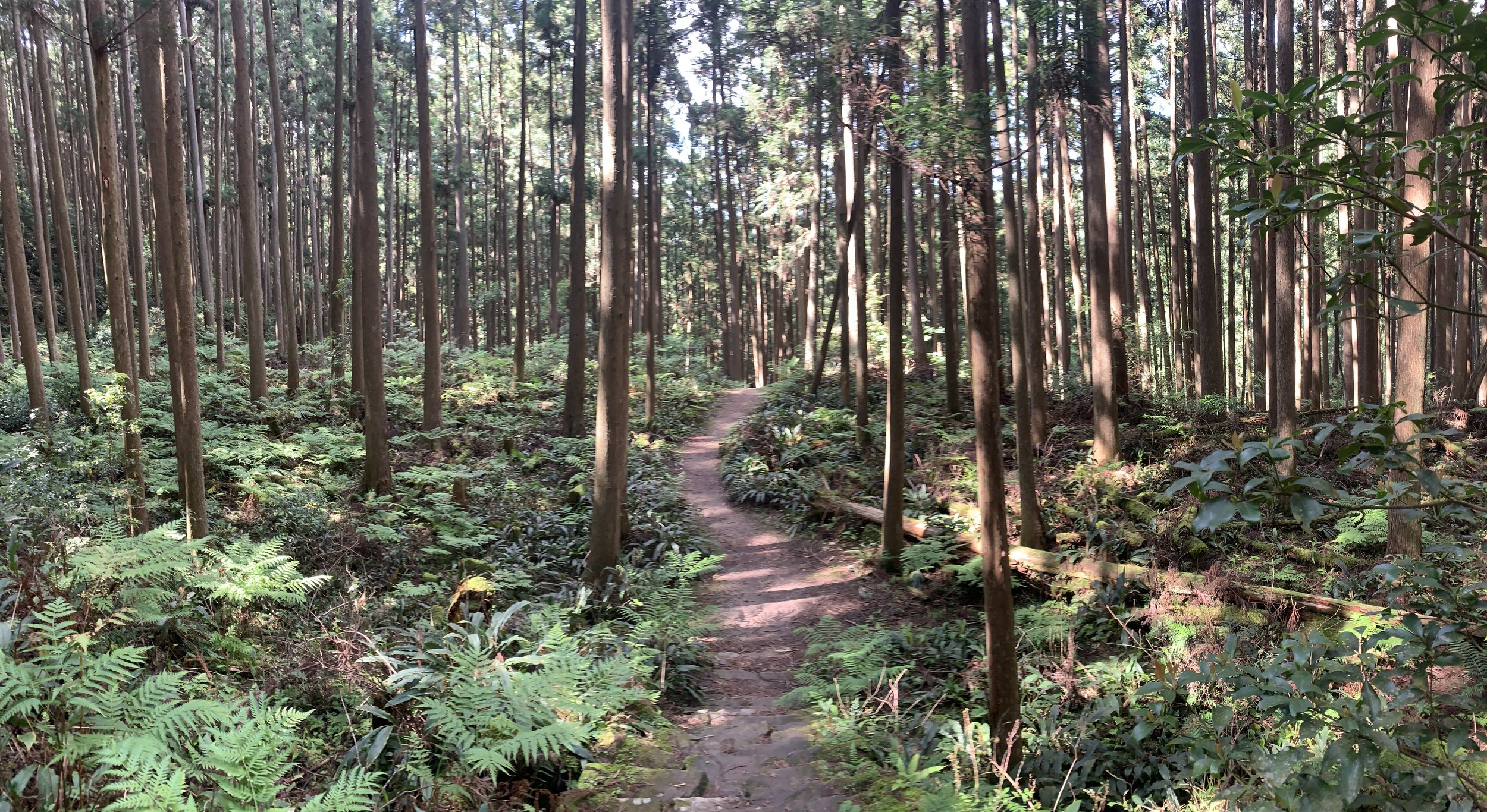
Despite my fears about timing, everything turned out fine, of course, and without pushing (and fueled by discussing hypothesis about the Kamikura Hideaway House story) we cruised into Koguchi at 3:30pm. This gave us enough time to sit around outside the humble yet charming little grocery store run by the most adorable/sweetest older, literally blue-haired, Japanese woman, while we waited on our shuttle. The woman knew I could only speak/understand a little but would launch into these seemingly elaborate explanations and stories, which would inevitably lead to me apologizing profusely for not understanding, and her making large mimetic motions in what felt like a high stakes game of charades. She was such a bright soul and the experience colored the whole afternoon.
I bought several snacks, and we nibbled on them outside while chatting in the shade with a couple from the Netherlands, another from Vancouver who are heading in the opposite direction of us, and Tina from Australia, who we discovered will be with us back at J Hoppers in Yunomine Onsen tomorrow night. When Chris had another coughing fit I went into the cafe nextdoor (surprisingly urban feeling for this extremely small village) and got him a hot ginger rooibos and a homemade yuzu brownie for myself.
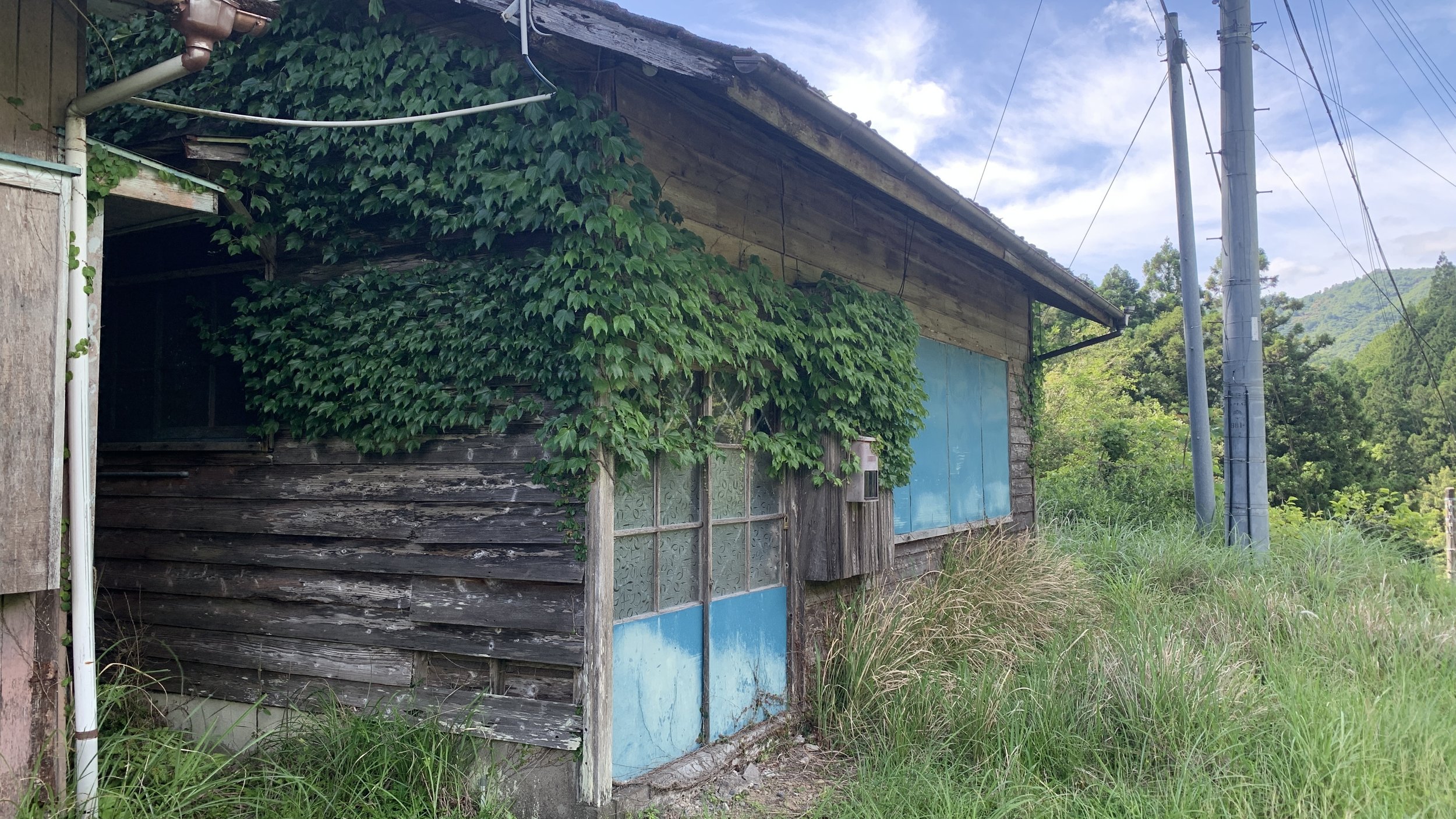
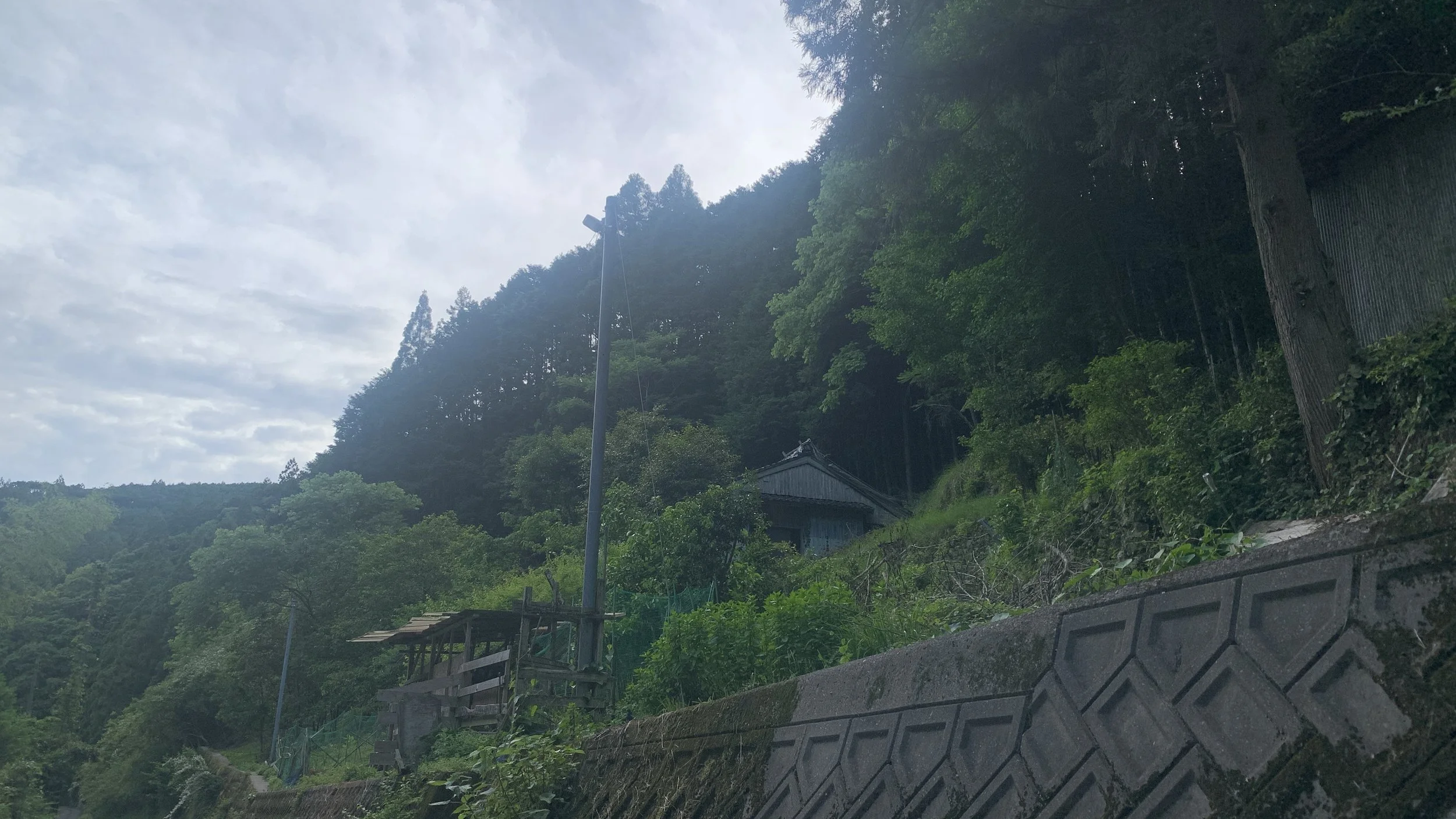
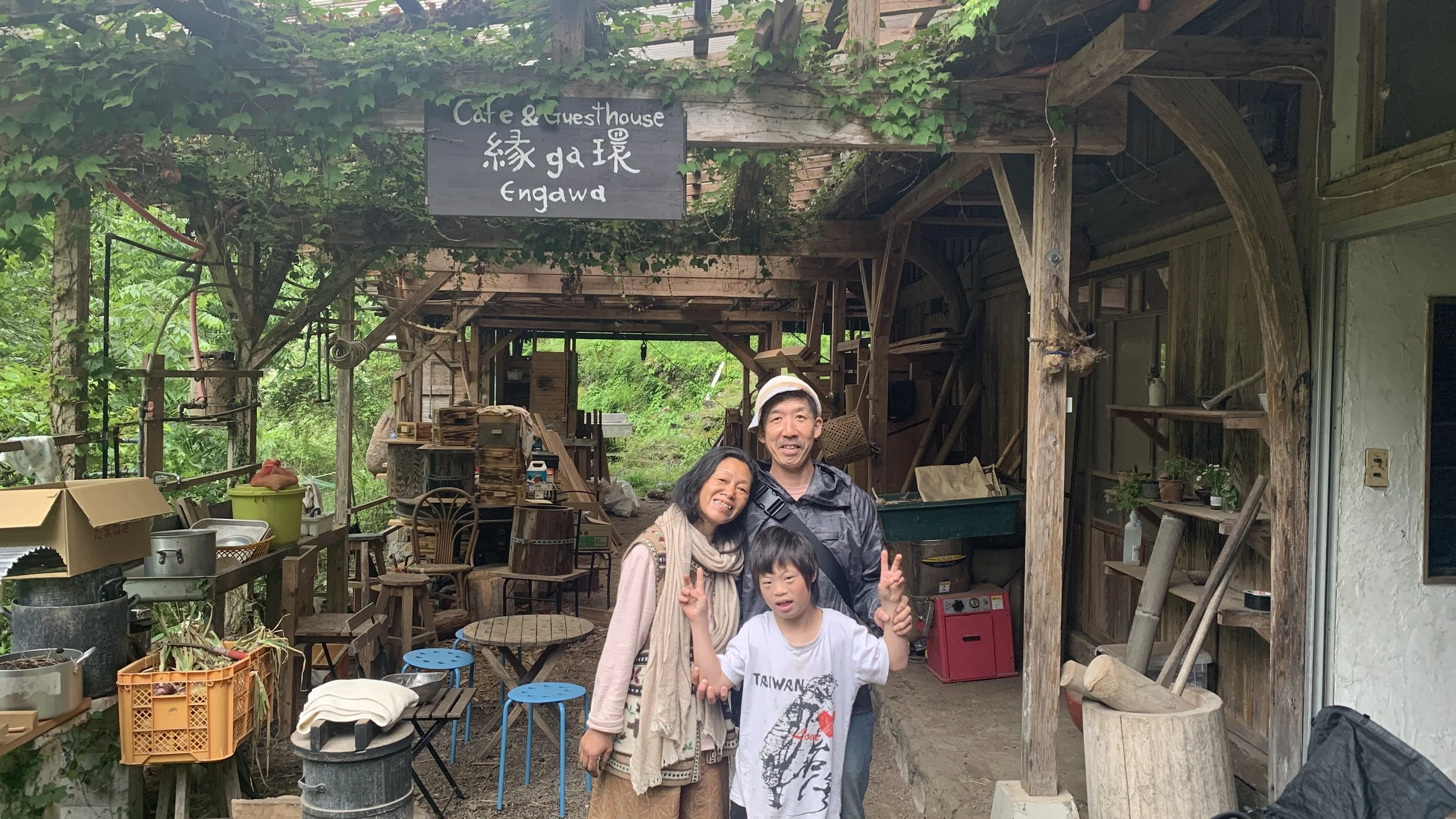
We’re staying at a really cool all-vegetarian homestead tonight that has given us a close-up look at rural Japanese living. The owner picked us up from Koguchi in his blue van and we communicated in a mix of English and Japanese for the 20 minute drive to his family’s homestead.
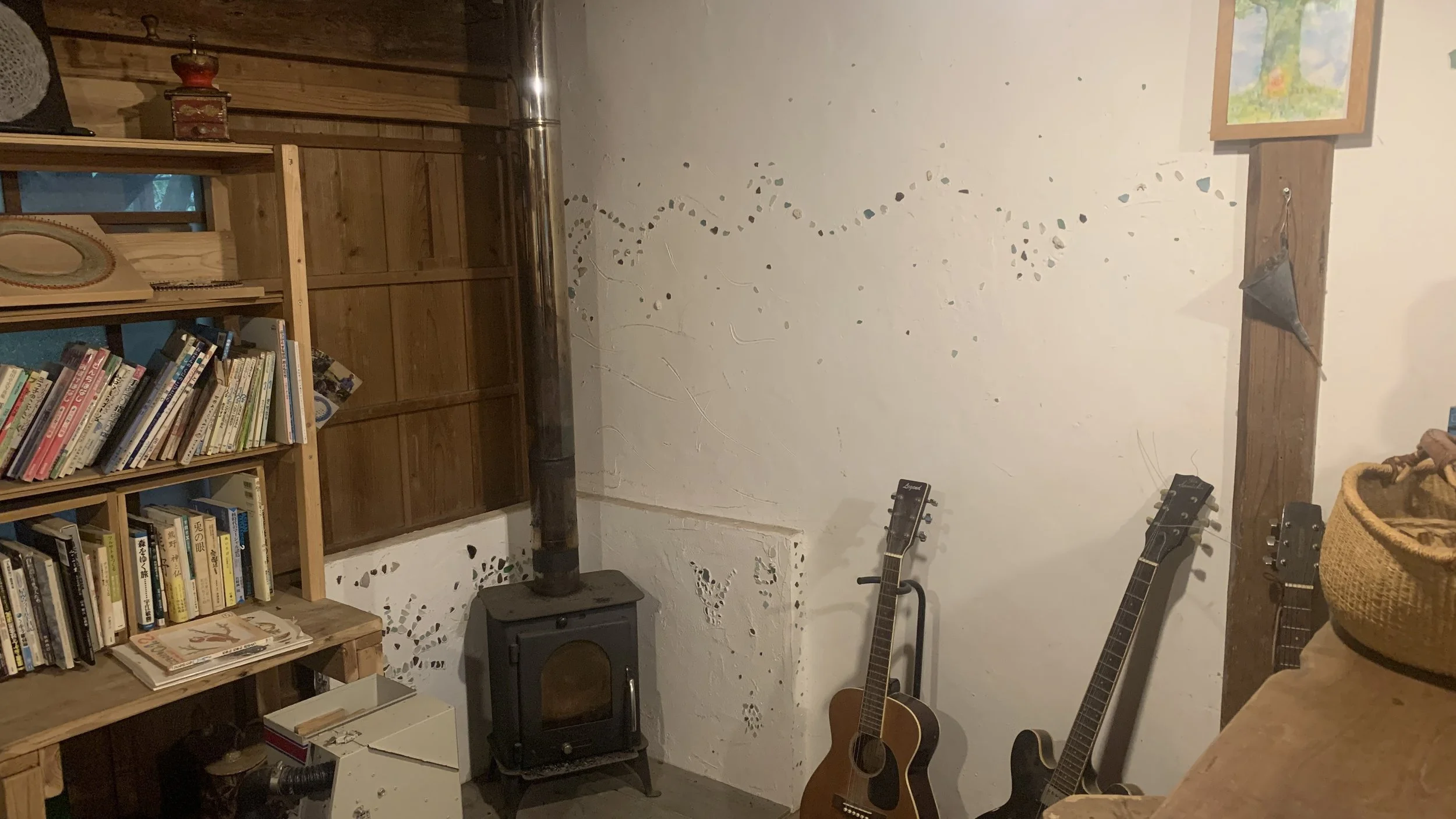
They have two goats, several chickens, a couple of dogs and cats, and he and his wife grow much of their own food for their family of 7. He is, evidently, good friends with Tetsuji-san, the owner of Kamikura Hideaway. We are in an upper level room in his house that he and his wife built themselves (or possibly renovated). Everything has a DIY feel to it and you can feel love everywhere.
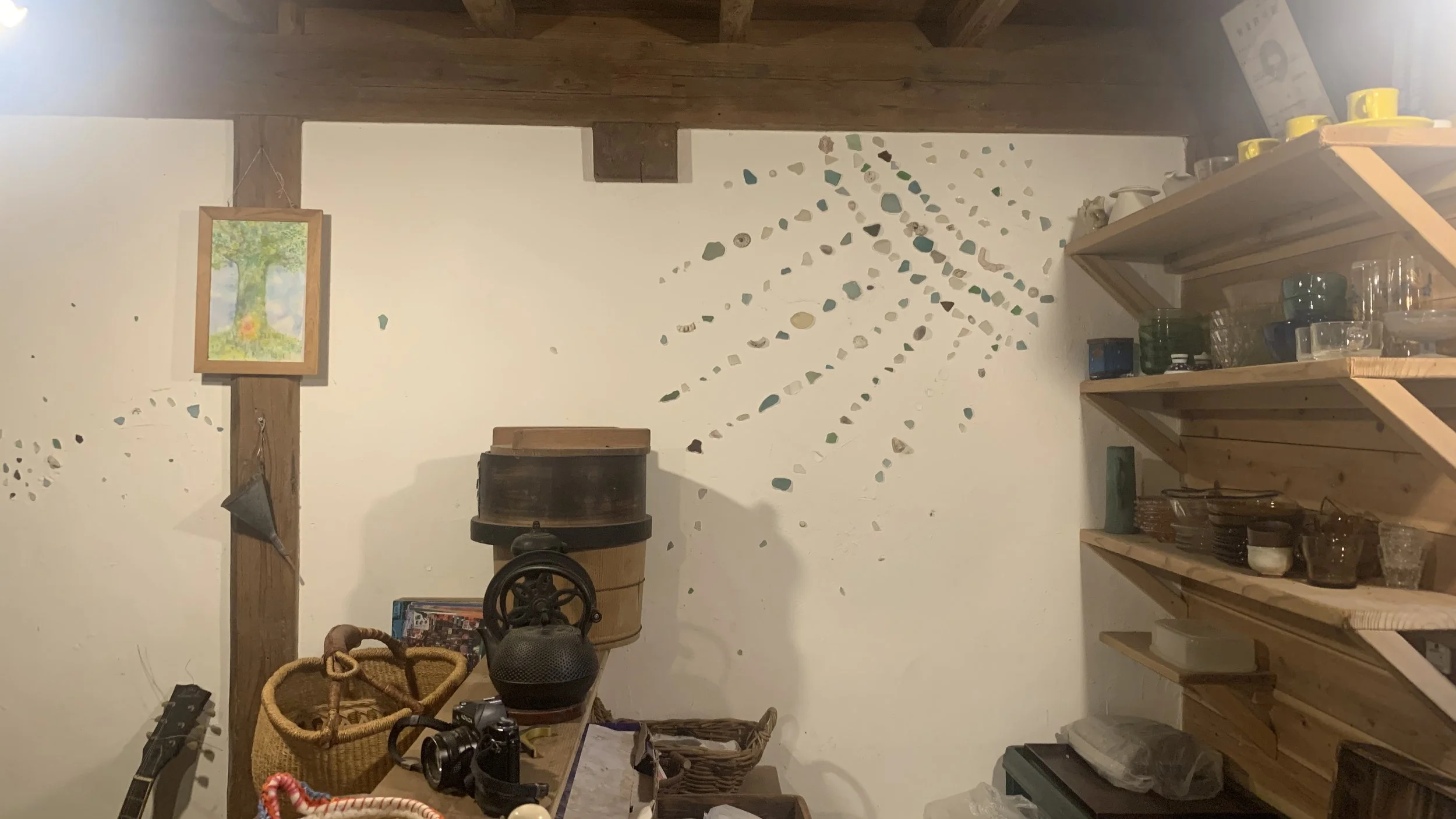
Patterns of sea glass are lovingly pressed into the plaster. Seiichi-san built all the furniture himself, too. We all share a composting toilet with a neat hand-crank system so that you churn the rich black soil below every time you do your business, ten times, back and forth, so satisfying. There is no smell besides that of rich soil.
They both are artists, and we bought a few of his wife’s wares that they had on display in the common area in the home they share with Kumano Kodo guests. There was a framed black and white family photo that Seiichi-san took in an abandoned schoolhouse where he staged and the most lovely photo of his children standing on stools side by side drawing on a chalkboard while his wife sits nursing the youngest in the doorway.
The dinner was outstanding. All plant-based and made with majority items that the family grew themselves at their garden and rice paddy a roughly 10 minute walk down the road. Komatsuna (a Japanese green that is a personal favorite from our own garden in Athens), soup, home-grown steamed rice, tofu, fried bean cakes with sauce, and so on.
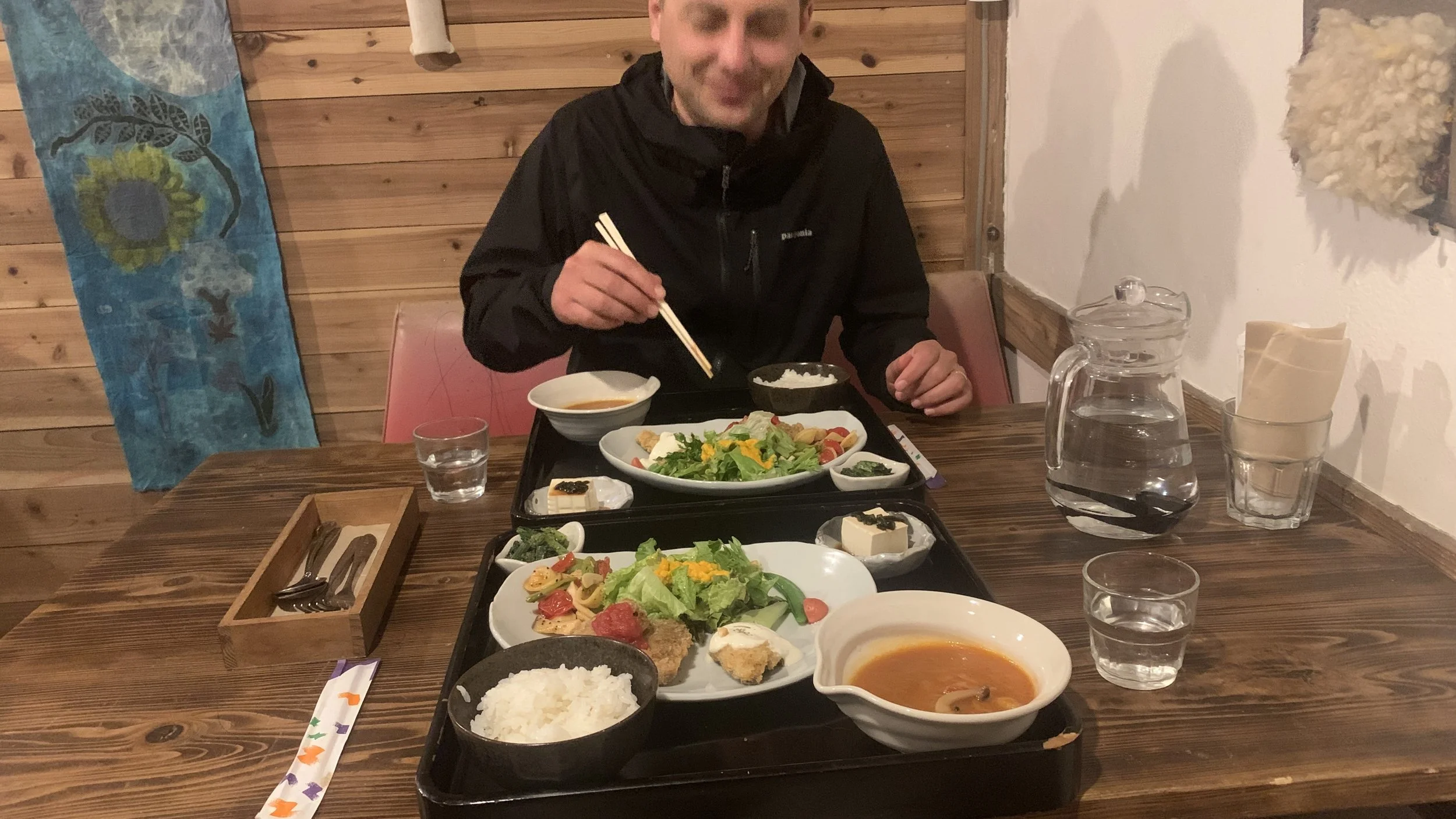
I think we will sleep well here with windows open and the sounds of the forest.
Wednesday, May 27
Koguchi to Hongu Taisha • 13km
I don’t know if it was the amazing food, good rest, the beating my foot took yesterday, or my intentional use of the “rest step” (a way of walking when you don’t press off the ball of you foot as you climb, thereby letting your thighs do most of the work), but my plantar fasciitis feels almost healed today.
Seiichi-san made a wonderful breakfast of French toast with honey from the family’s bees, coffee, toast, sweet bread, and greens.
He has some plumbing work to do today at J Hoppers in Yunomine Onsen, where we will arrive once again by foot tonight, so has generously offered to drop off items we don’t need on the walk today. Slackpacking!! Also neat that our last 3 lodgings in a row have all been connected to one another on some way.
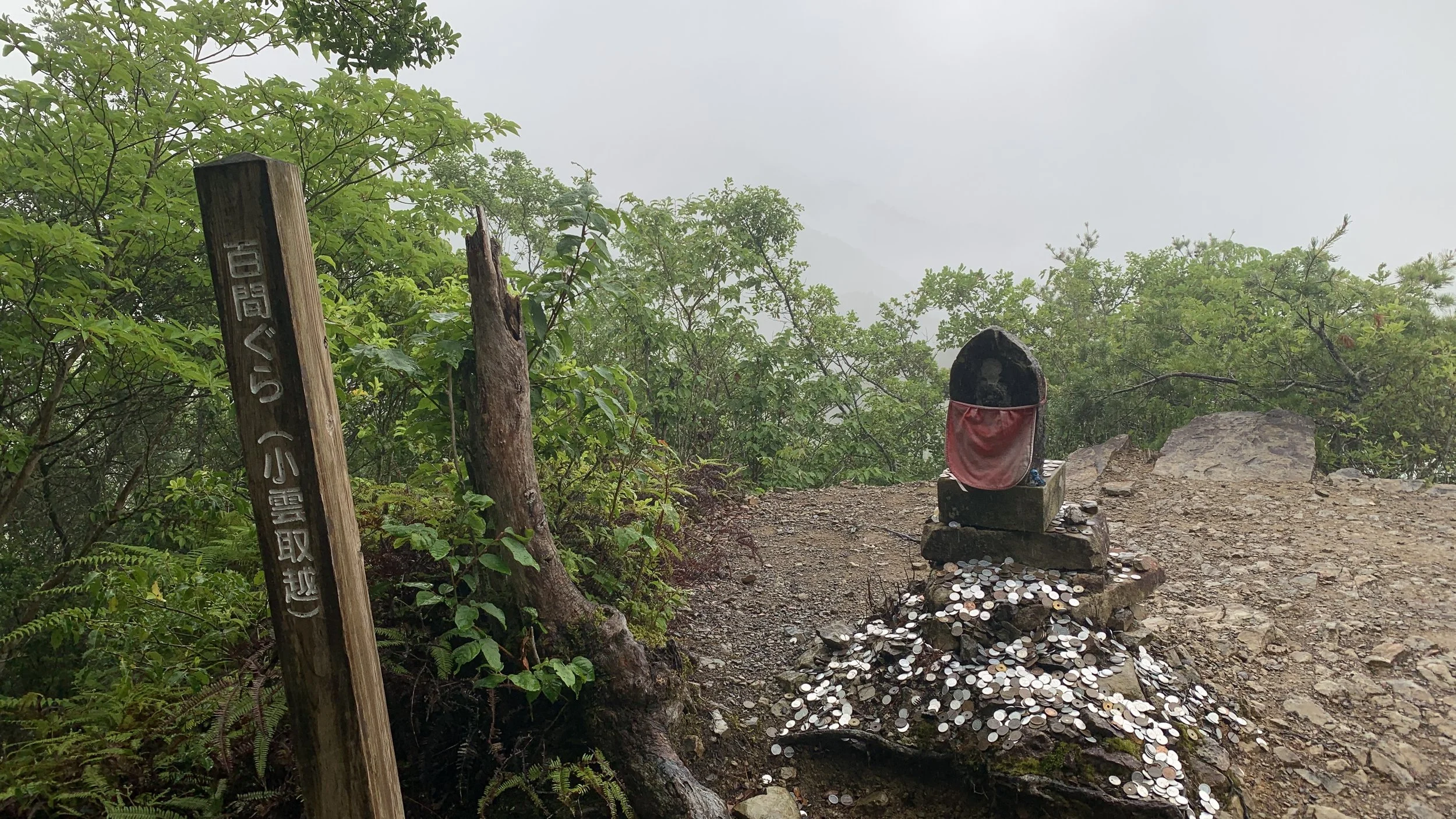
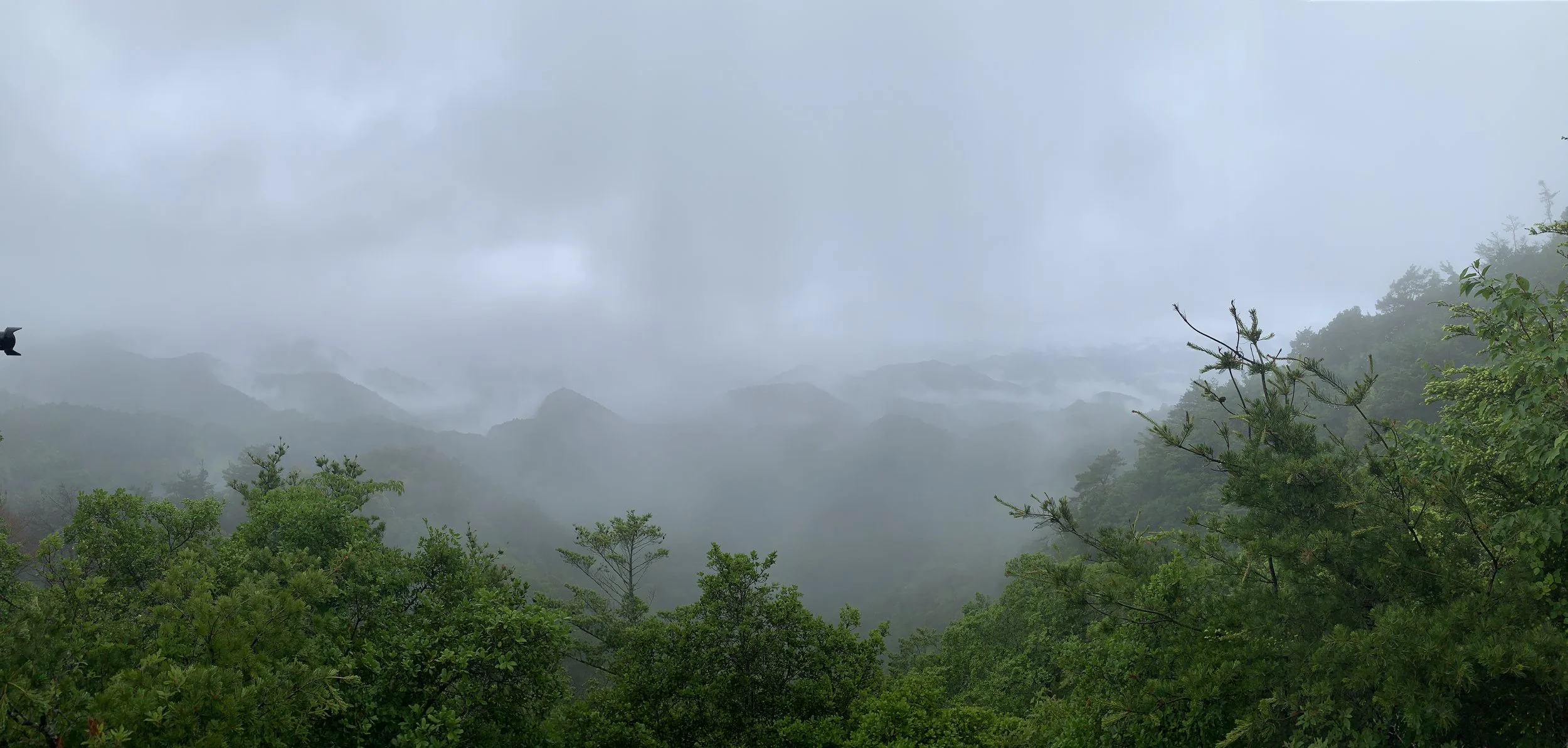
We had a great hiking day. It was one of the most gentle days in terms of elevation, and we felt like we were flying. It rained most of the day, but we had several nice views nonetheless.
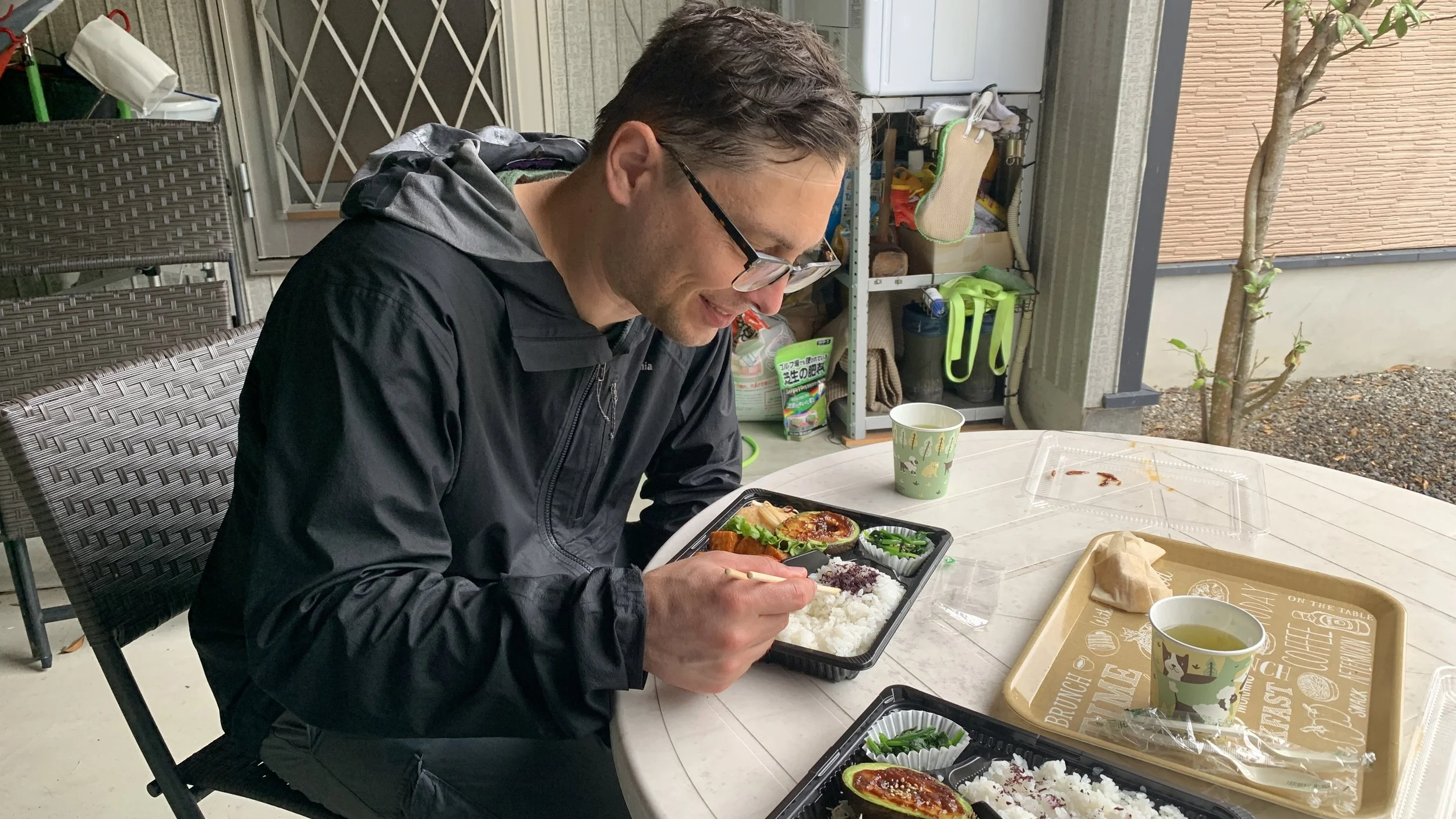
When we arrived in Ukegawa, the town just down the road from Hongu Taisha, and where a 3 or 4 km road walk begins, we found our way to a little restaurant operating out of someone’s residence via a sliding window. They made us two bento boxes with fish but no egg/dairy/meat (Chris’ evil trifecta), then insisted on pulling the car out of the garage, dragged the table and chairs in there from outside, and asked that we eat in there since the outdoor seating was uncovered. Totemo shinsetsu! (So kind!) The food was amazing, naturally, and after having our fill we went to catch the bus to Hongu Taisha, choosing to forgo a walk on the highway in the rain.
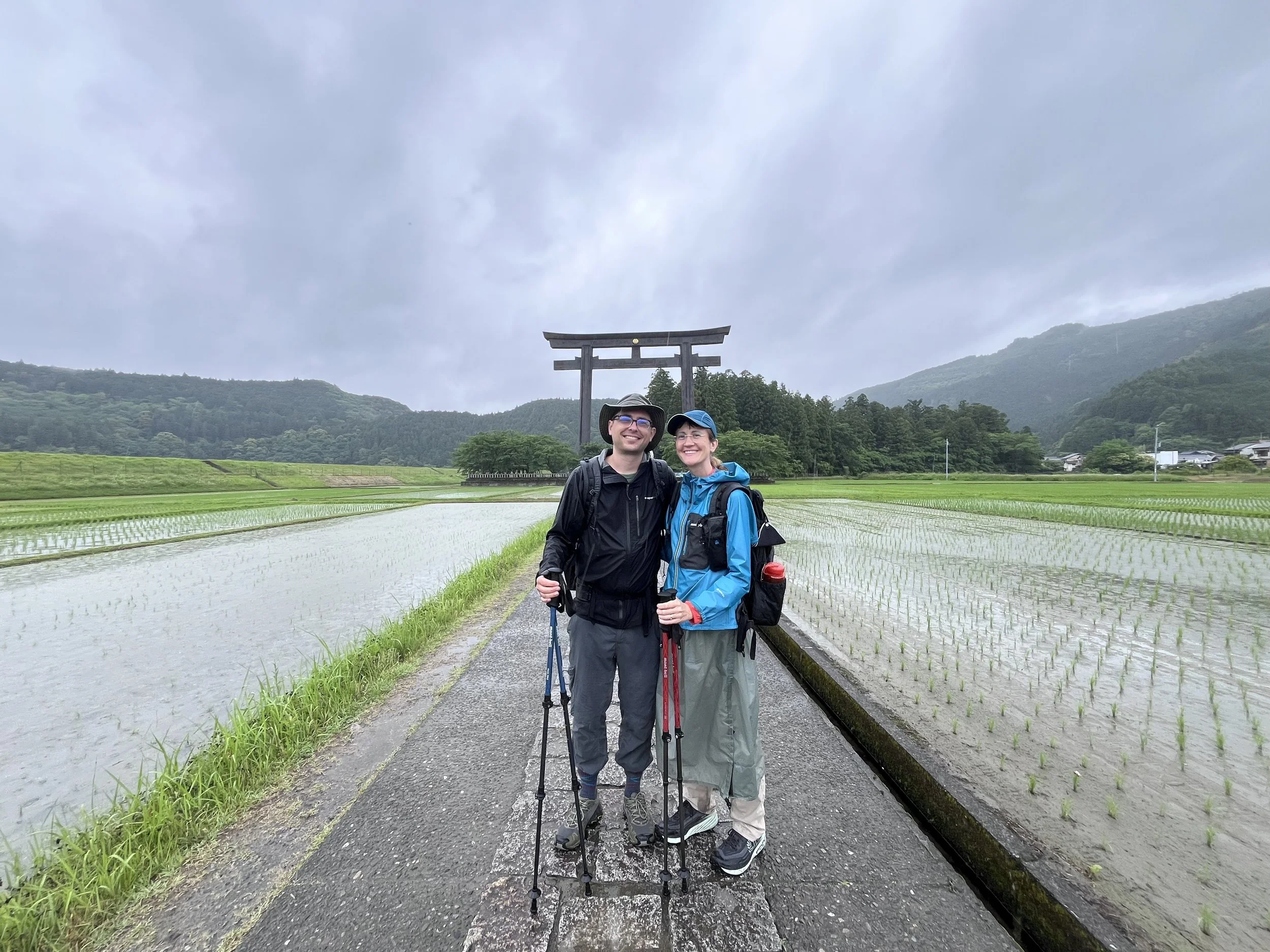
As we neared our dismounting point Chris noticed the giant Tori gate in the rice paddy fields, so we hopped off one stop earlier to start here. Immediately after getting off the bus we ran into Tina and all walked together to enter beneath the behemoth Tori gate that marks the entrance to the location of the original Hongu Taisha Grand Shine before it was relocated to higher ground.
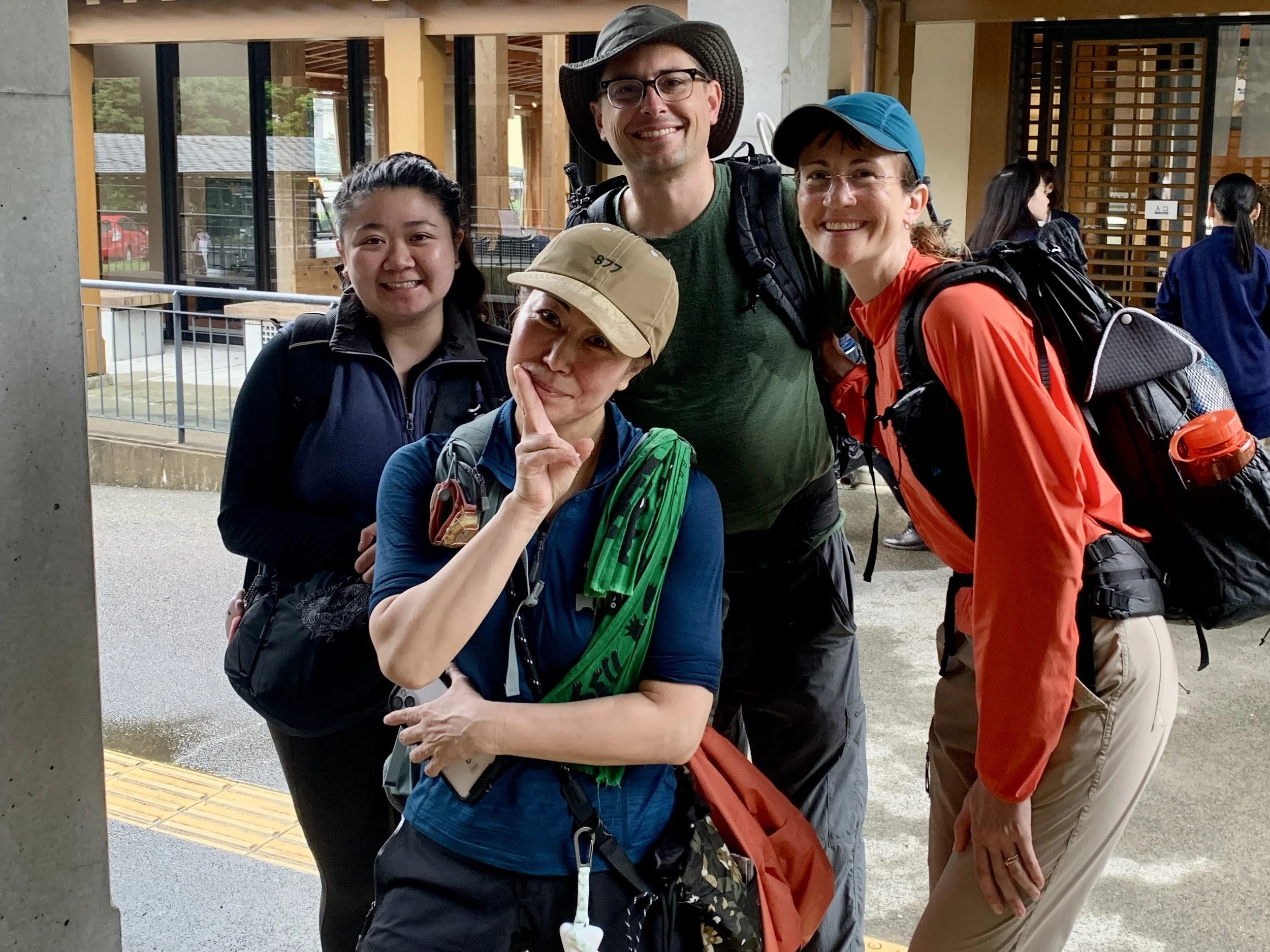
After that the visitor center, where we learned more about the history of the Kumano Kodo and picked up a stamp booklet for the Kohechi. We also ran into Akiko, a Japanese woman who was part of our little north-bound group of friends from Nachi to Hongu.
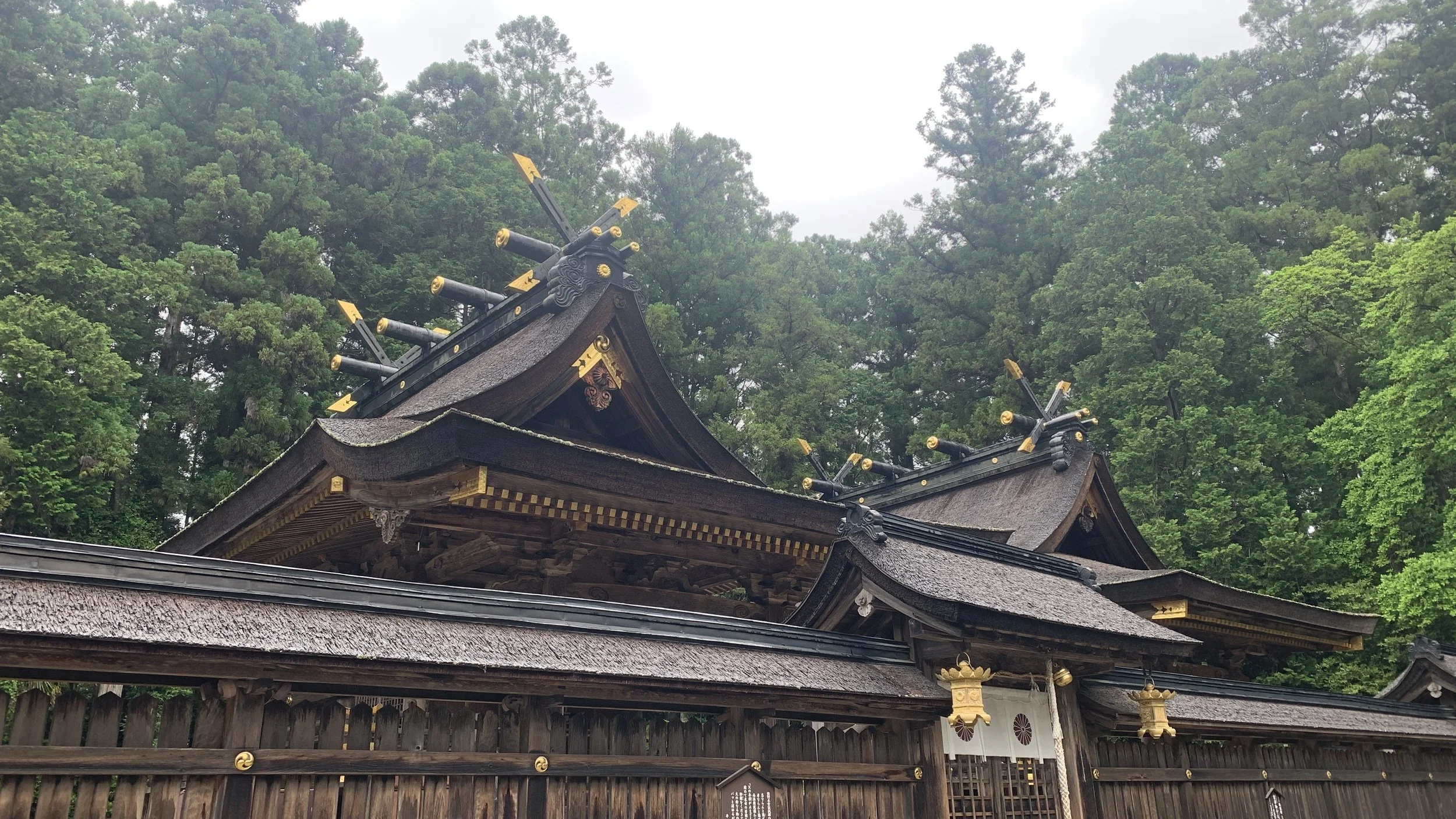
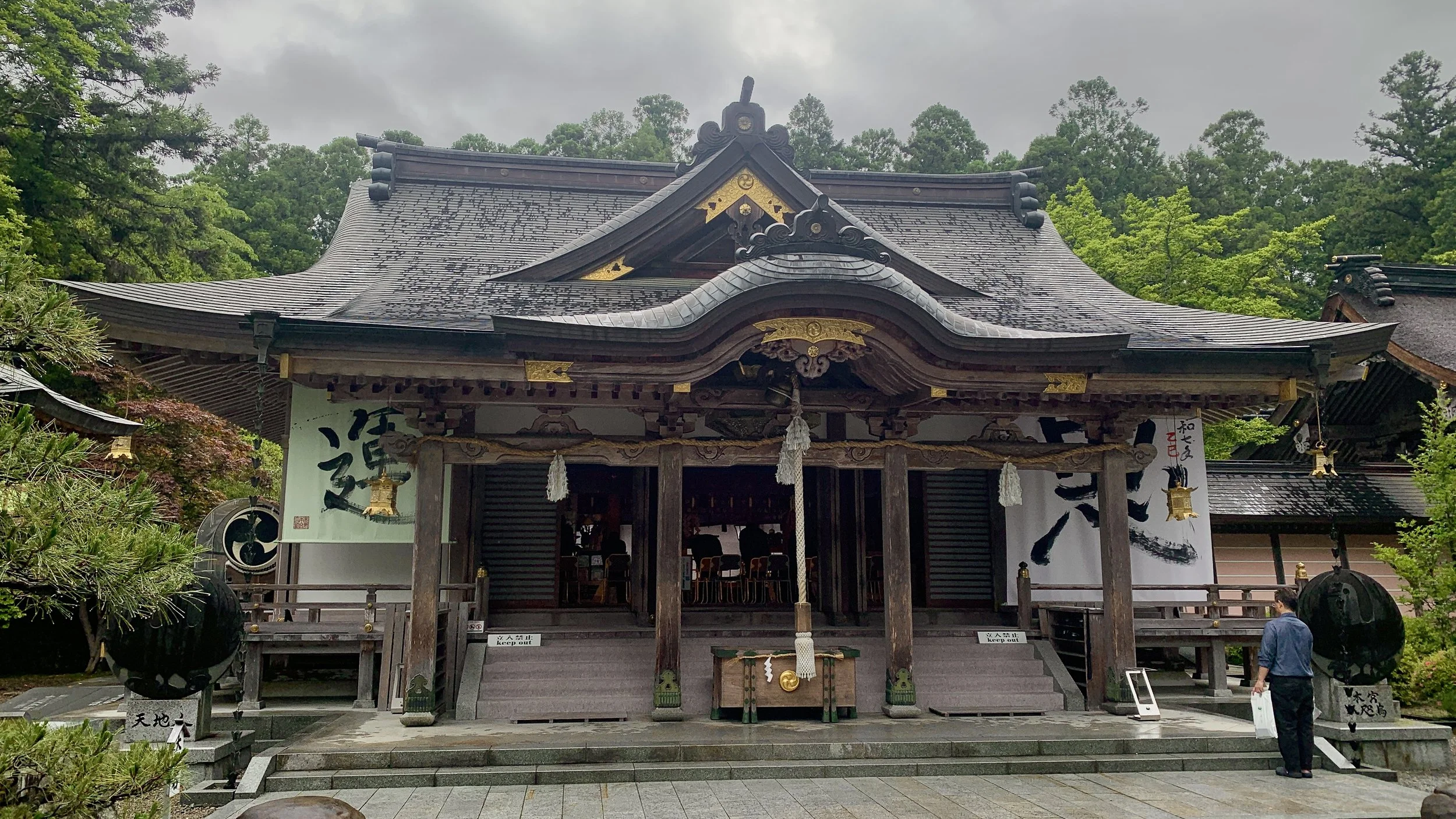
From there we walked to the grand shrine and paid our respects to the present, past, future, 4th shrine, relationship shrine, and main shrine.
We also purchased a couple amulets to carry with us: one for healing and another for harmony between the Kumano Kodo and Camino de Santiago, which we’d like to do together someday. The east/west collaboration amulet was very cool looking, too, designed by manga artist Hirohiko Hiraki.
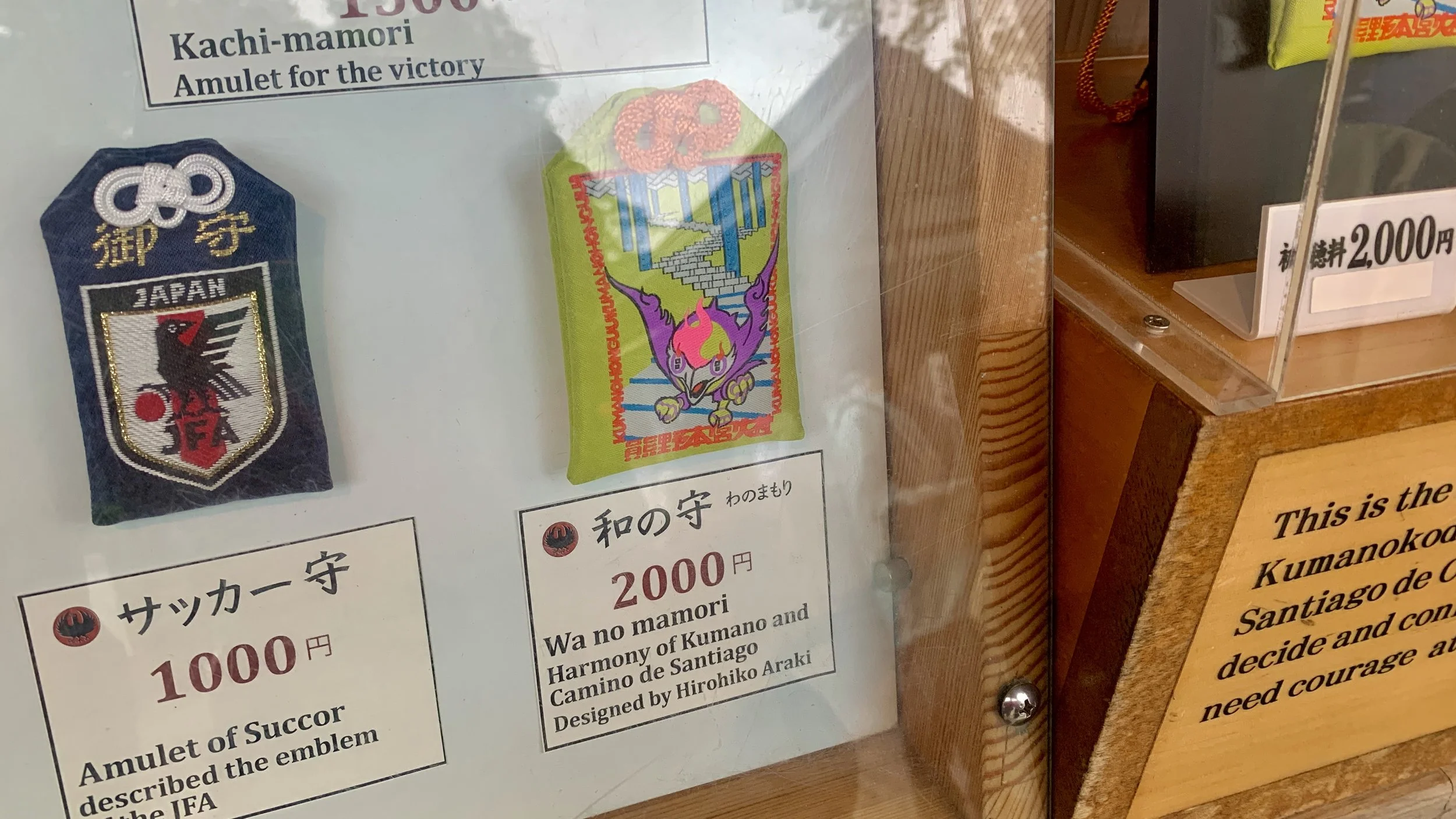
Exhausted by this point, and starting to worry that this might be our last chance to pick up snacks before we end up on the remote Kohechi route tomorrow, we stopped at a grocery store to stock up. Favorite Japanese snack (so far) is the Bonchi Age: sweet and savory crispy rice puffs that are coated with bonito and kelp dashi. We ended up with bean paste, several varieties of nuts and dried fruits, tried and true ritz crackers and oreos, and odds and ends like candied lemon peels, Japanese skittles, and asparagus-shaped crackers.
On leaving the grocery store we made a pit stop by the chemist across the street for ibuprofen (proactively, in case the plantar fasciitis flares up again) and a nasal irrigation thing for Chris, which he discovered mid-use that evening that it had mint extract added! Invigorating…
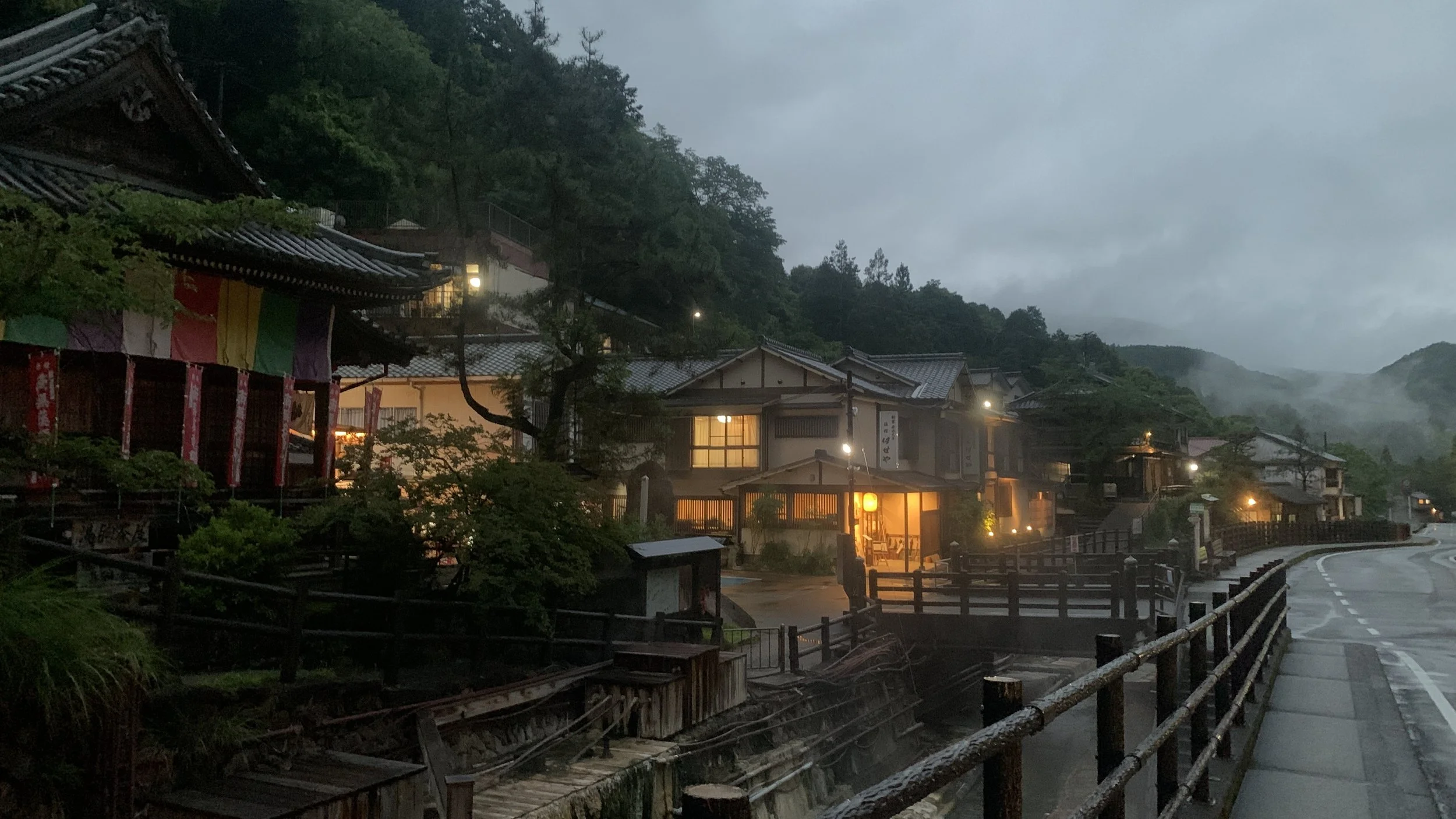
From there, Chris, Tina and I caught the bus to Yunomine Onsen to J-Hoppers Hostel for my and Chris’ second time around stay. Tina has reserved a bed one of the dormitories. We immediately also ran into the Dutch couple that we’ve been seeing several times a day since leaving Nachi Taisha. It’s nice to know the ropes at the hostel this time and be able to get settled in right away since we have been adjusting to a new place almost nightly on this journey.
We went back to the same restaurant as before and enjoyed a great meal with Tina.
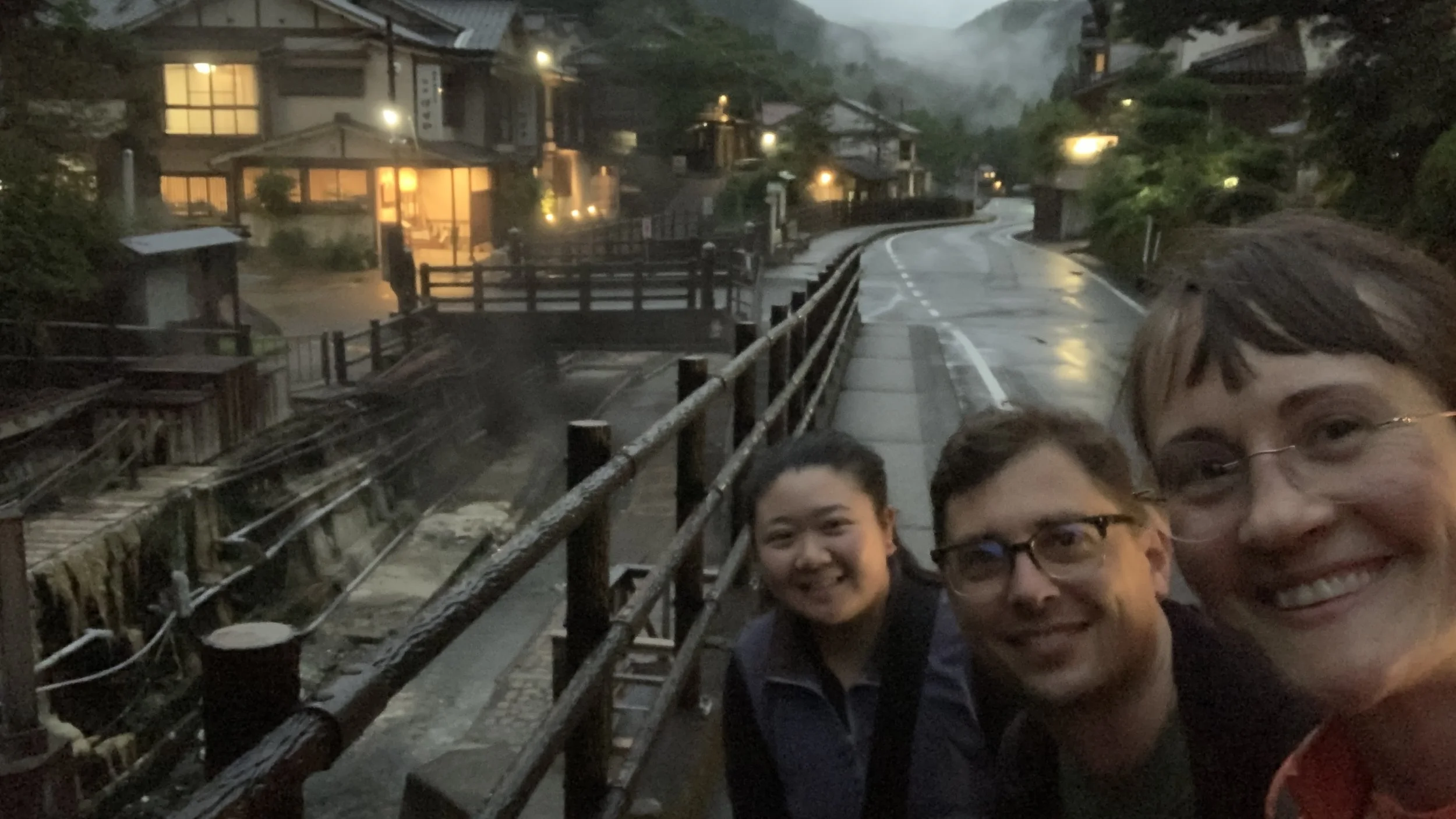
Back at the hostel we bathed in the onsen and worked on paring down our packs so we only had what we needed for this next stretch. After beefing up the hostel donation box quite substantially, and lightening our packs by at least a couple pounds, we turned in, eager to find out what the Kohechi is all about. Tomorrow.