Thursday, May 28
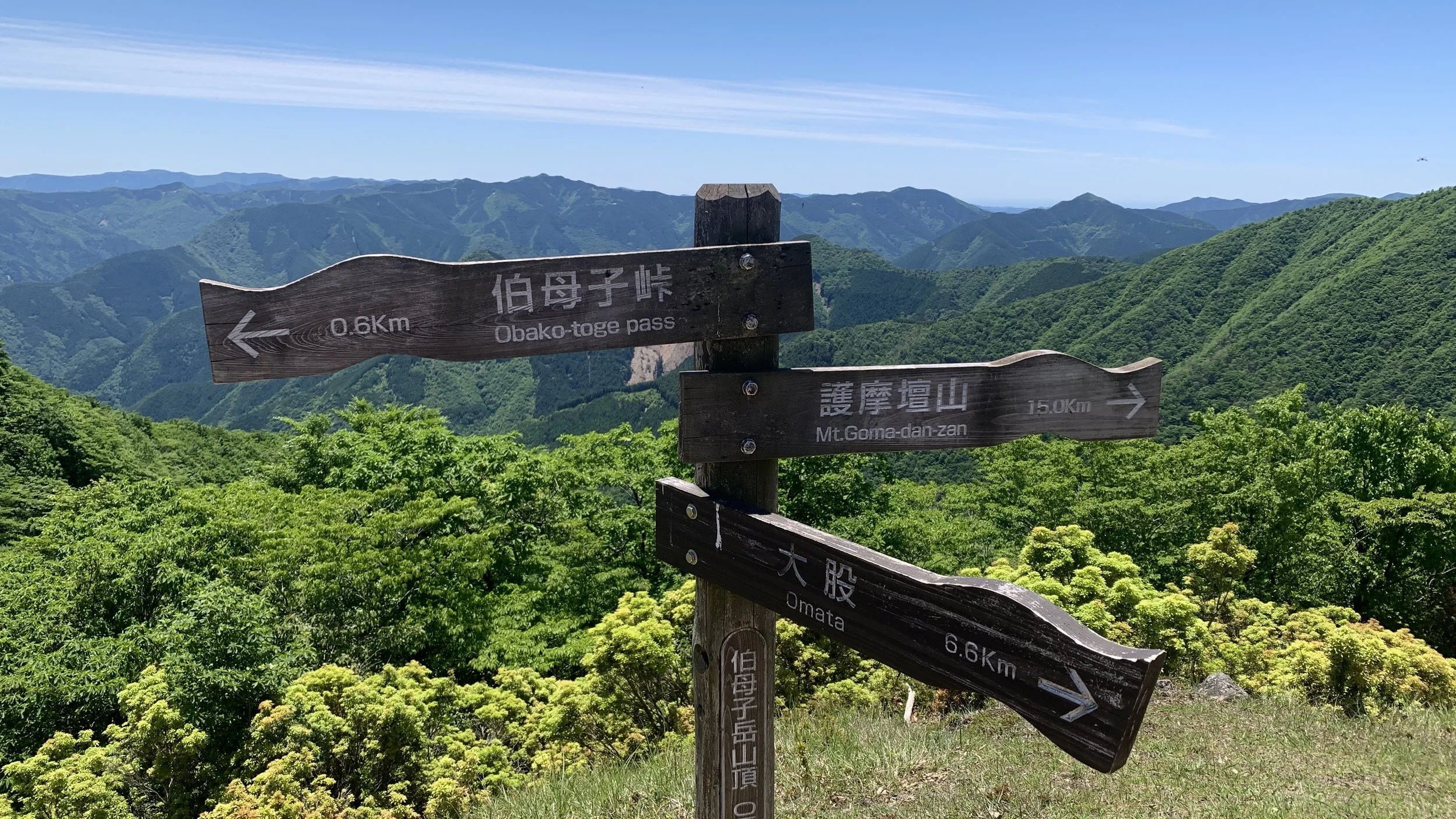
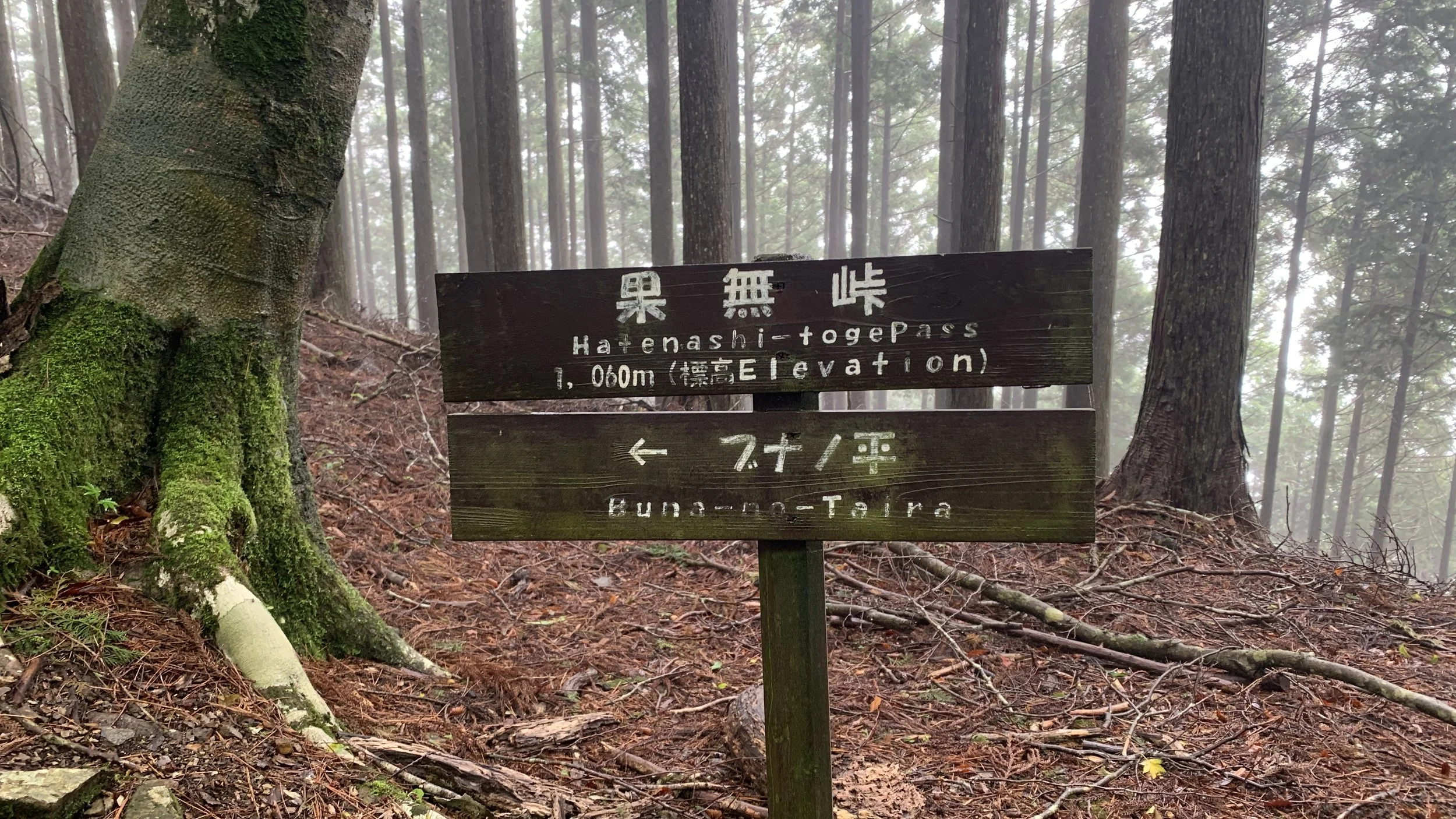
Hatenashi-toge • 10km
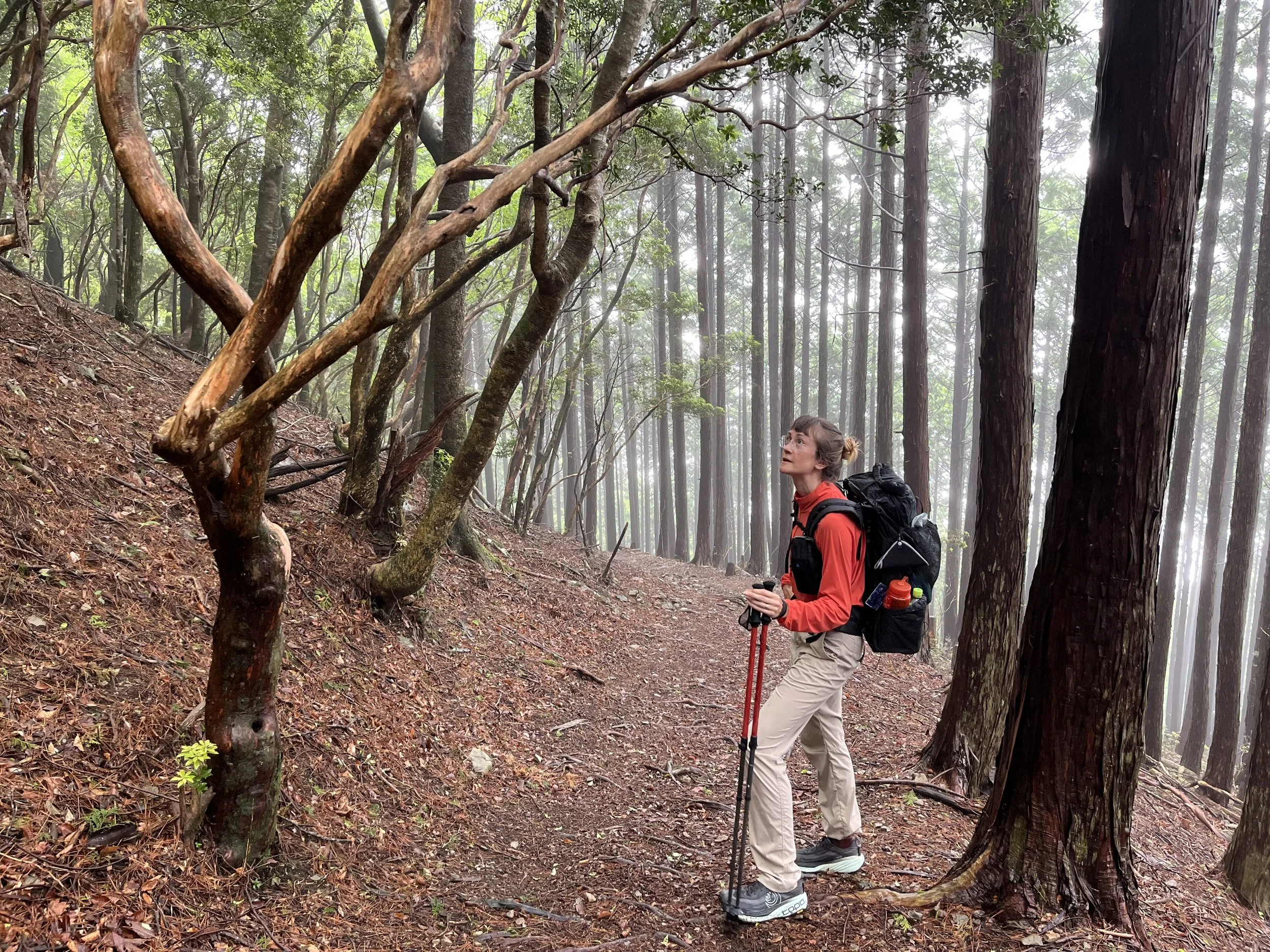
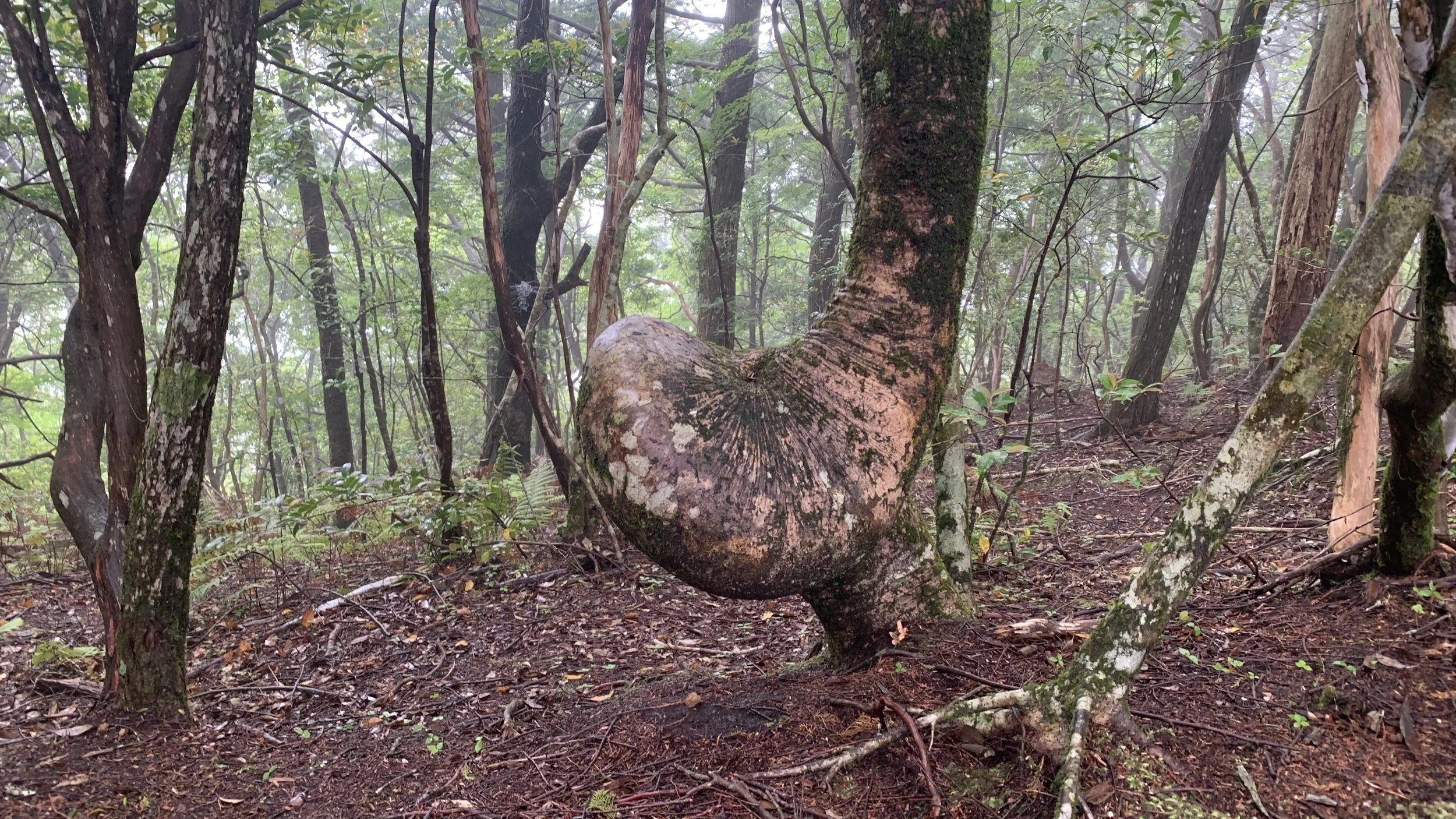
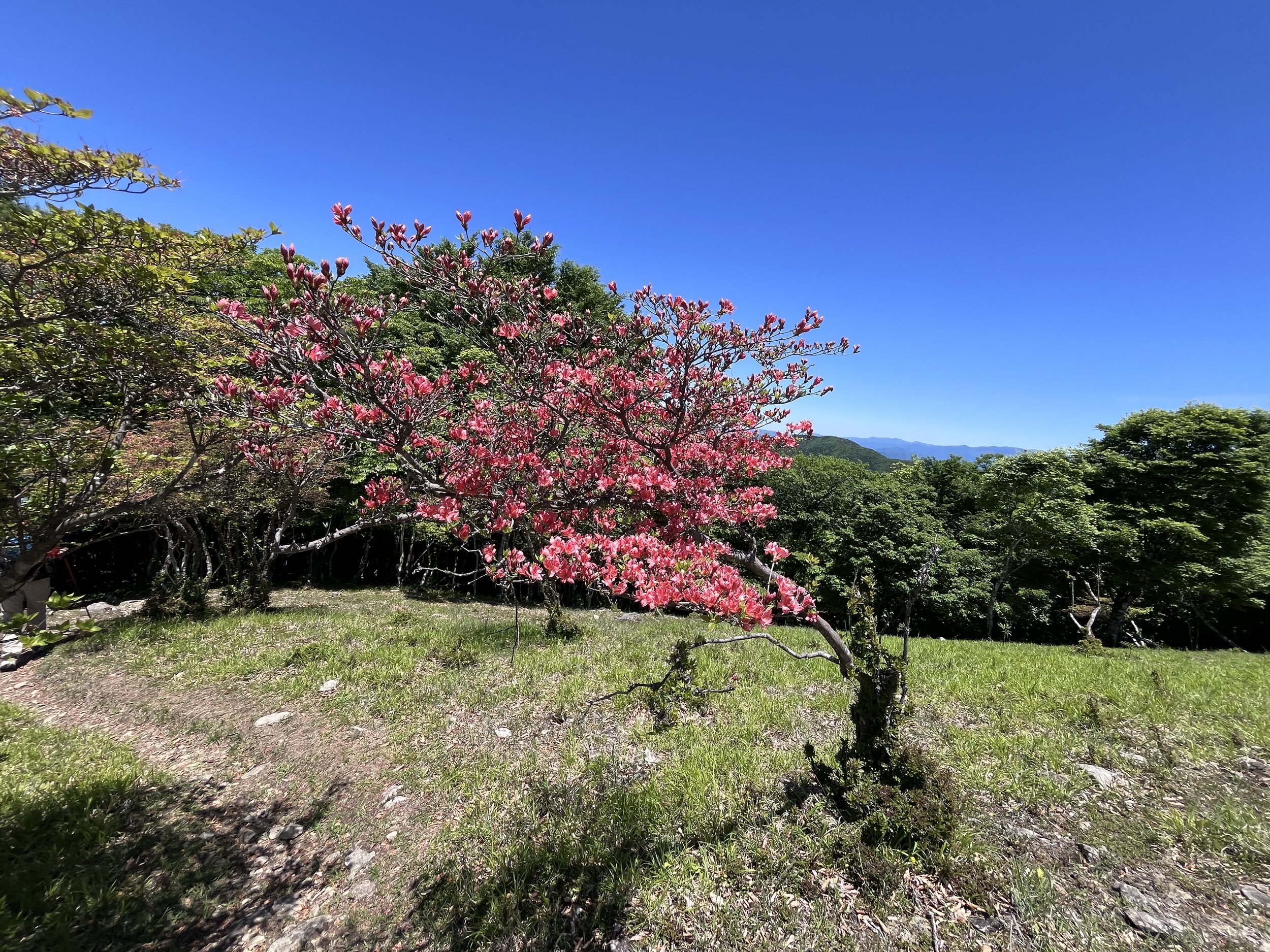
Always stopping to appreciate unique trees.
Started out the morning at 6am. Coffee, final packing, and on the bus out of Yunomine headed for the base of the first mountain on the Kohechi - Hatenashi. A half hour bus ride to bypass a road walk, we began climbing up toward the over 1000m Hatenashi-toge at 7:30am.
Today’s mountain elevation profile is like a cartoon of a mountain, starting at sea level, climbing straight up to a peak and then back down again to make a nearly perfect triangle. There’s *so* much warning language around this Kohechi route that I have to keep reminding myself that this is well within our skill level, but it’s not without trepidation that we began the climb this morning.
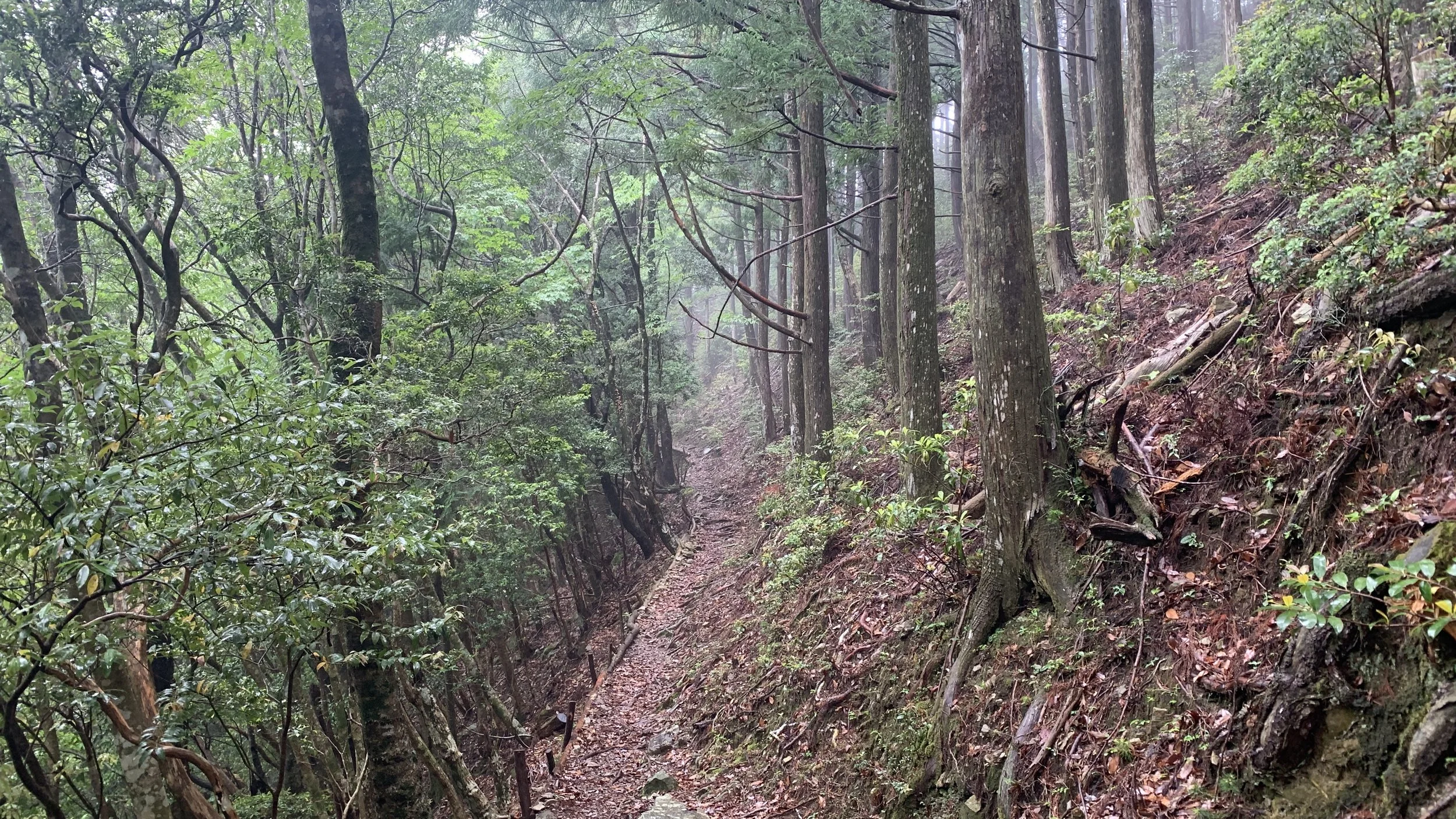
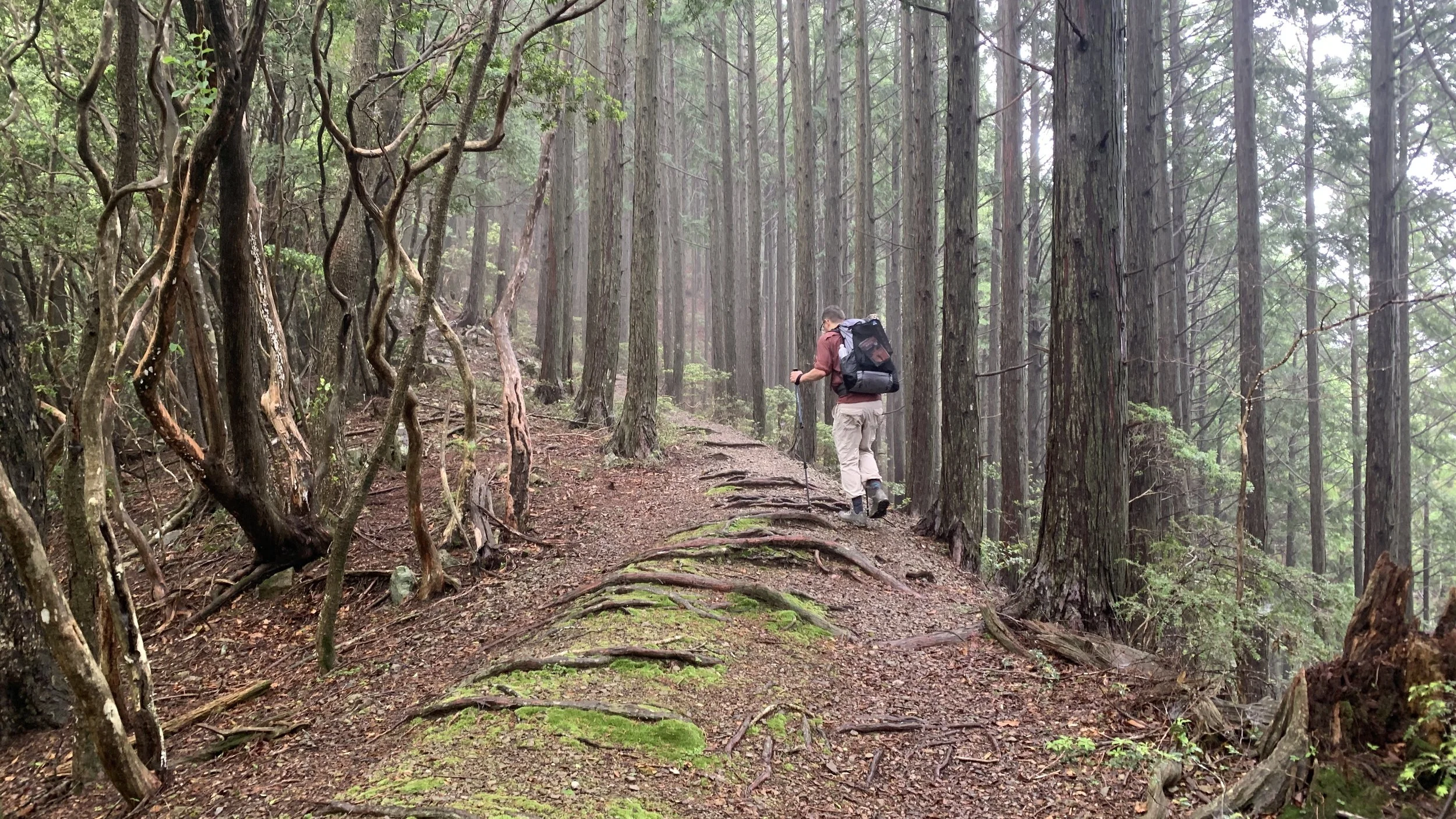
It ended up being a beautiful hike. I believe we have left the Wakayama prefecture and will be in Nara prefecture for the remainder of our pilgrimage.
All the way up and back down the other side of the mountain were the 33 Kannon and Jizo statues of the 33 Kannon Pilgrimage.
All in all we crossed paths with four solo hikers: three Japanese and one Japanese American. Each person was delighted to stop and chat, saying we were the first person they’d seen for hours. We had read this about the Kohechi, that there would be much more solitude. Likely a hair less so for us since we’re going the less popular direction, meaning we’d cross paths with just about every person on trail each day.
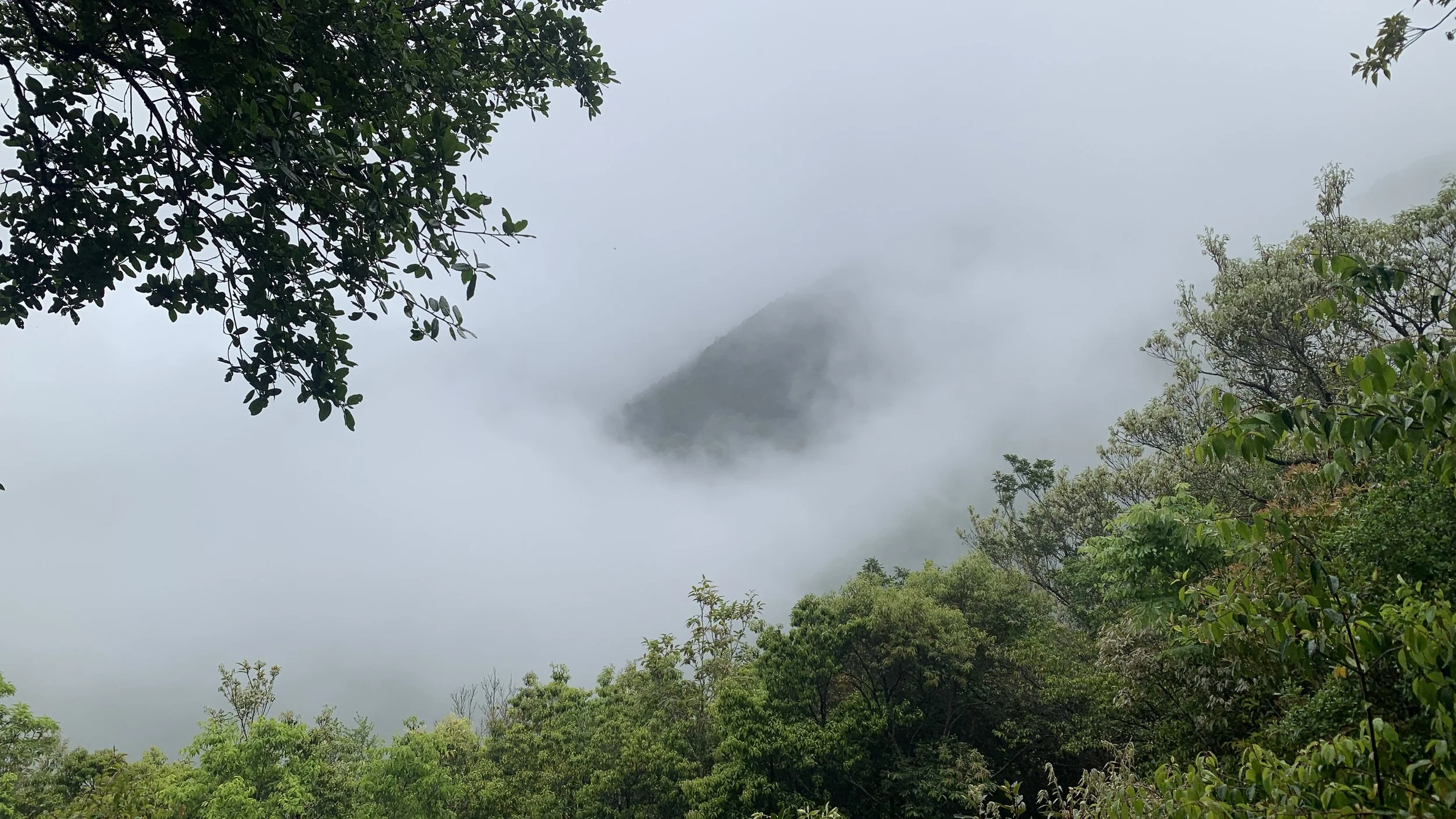
Coming down the other side of the mountain we were greeted by astonishing views of Totsukawa Onsen village below, where we were headed for the night.
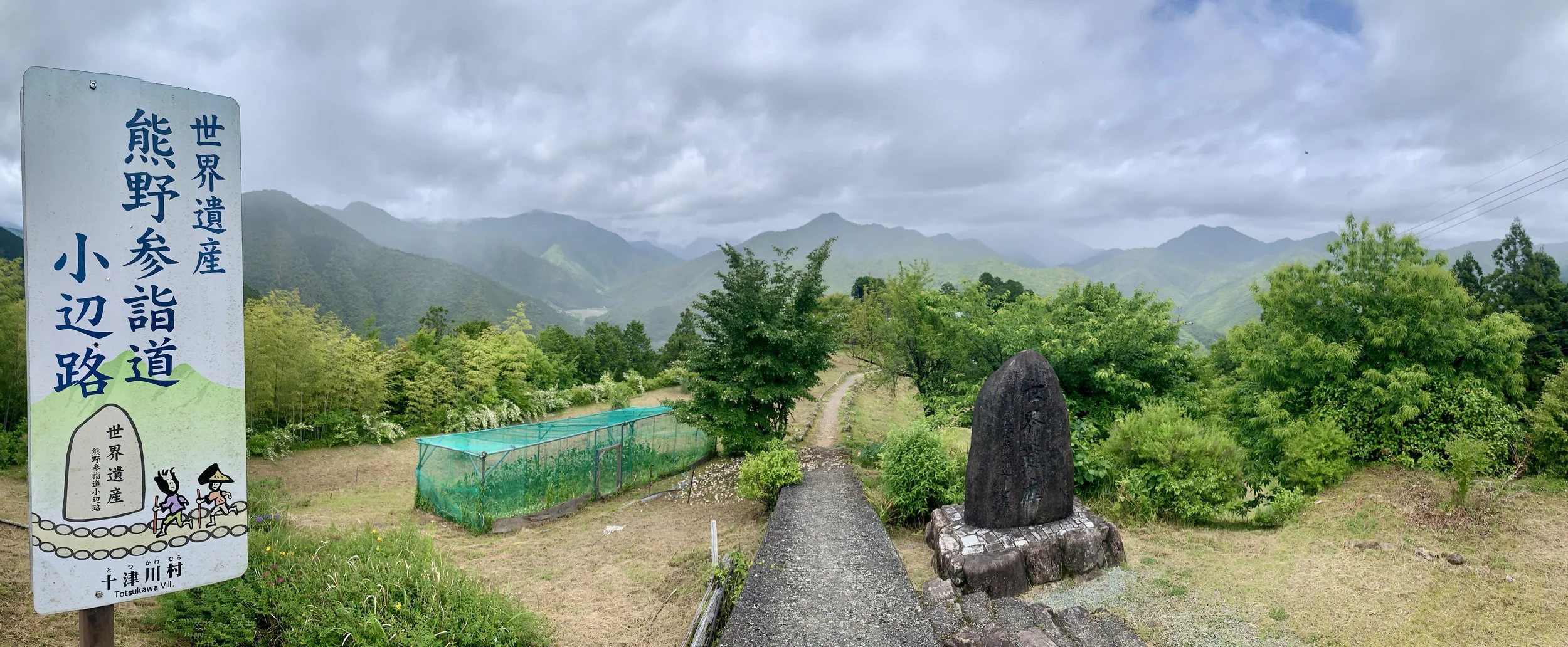
Approaching Totsukawa Onsen Village
The day became fairly warm, in the 80’s Fahrenheit, so we were glad to have the climb done before noon. The trail passed straight through several private properties, some abandoned and others occupied.
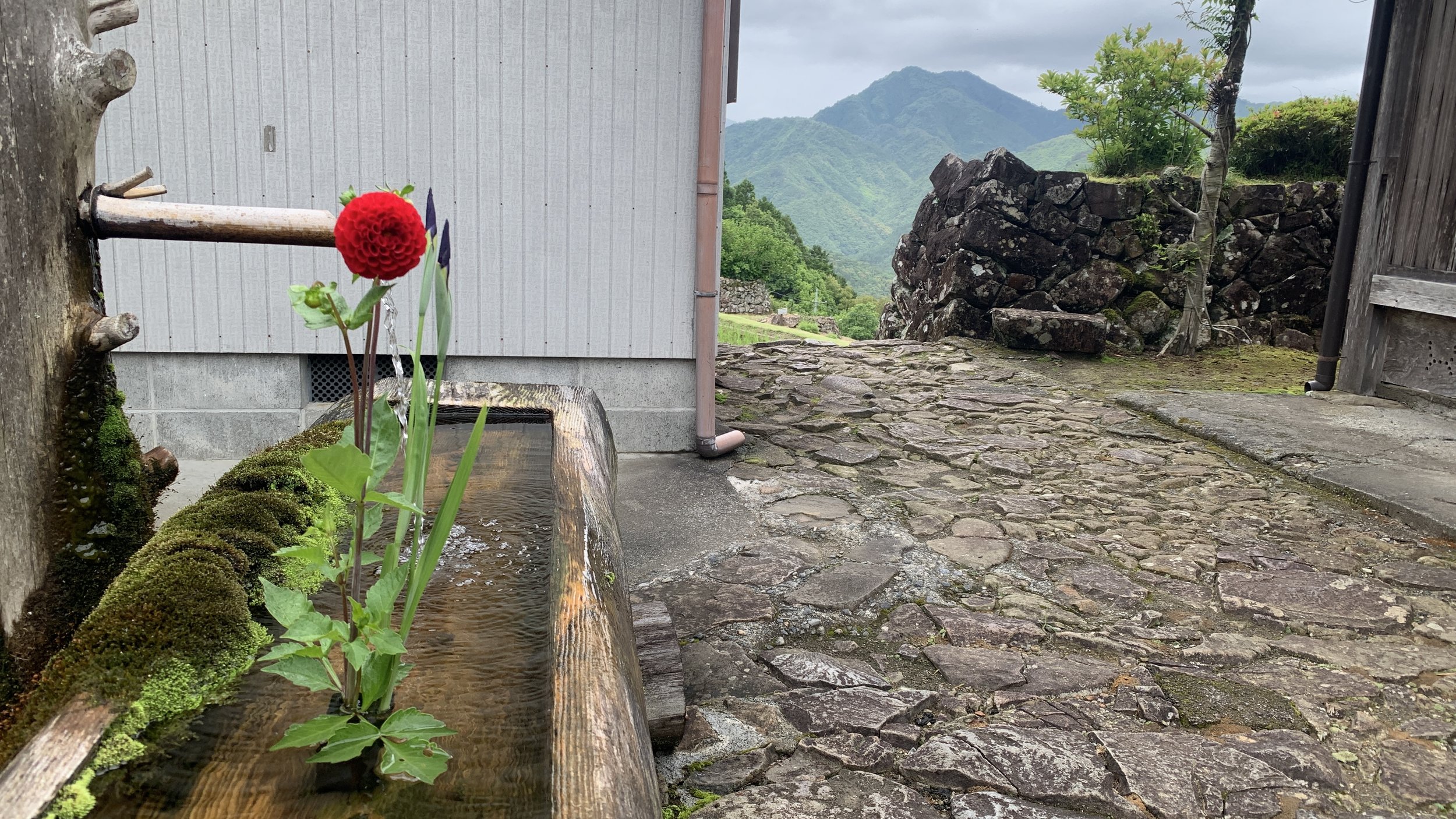
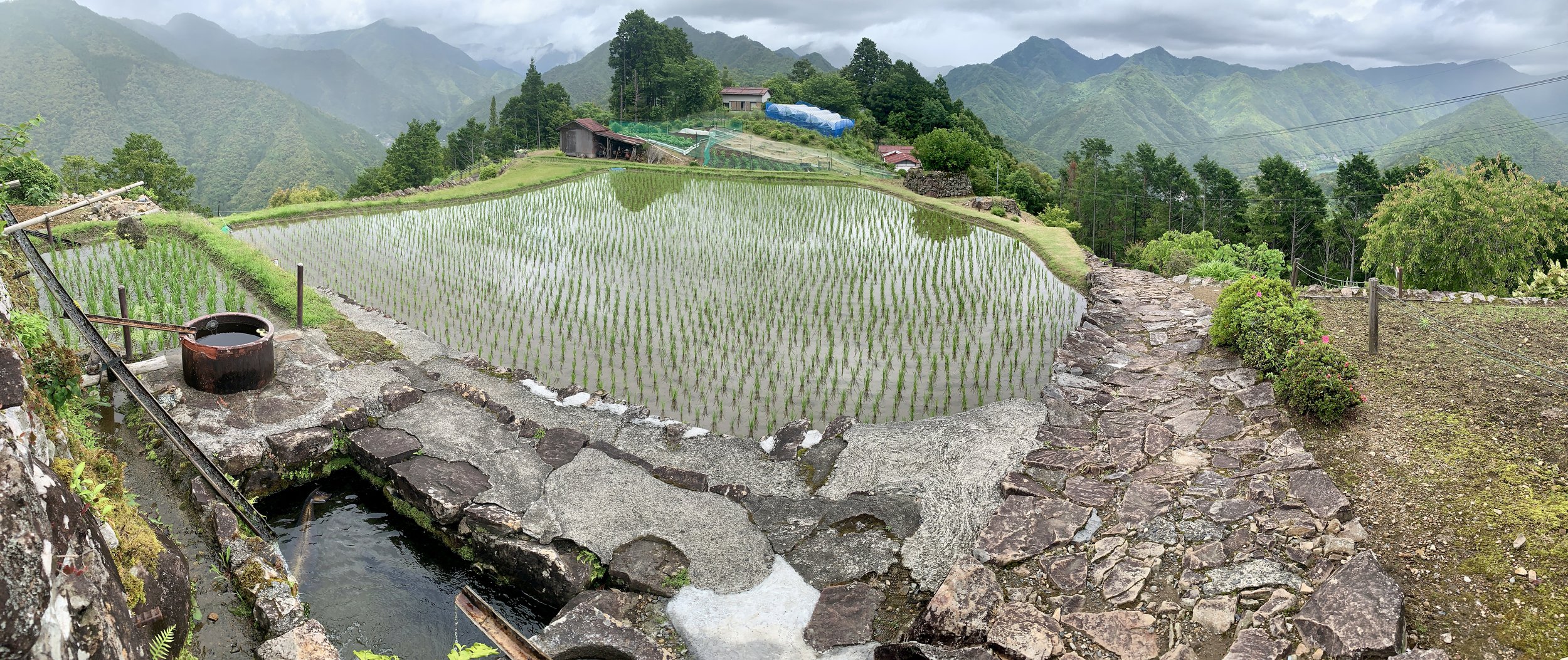
One especially cool homestead had 180 degree views of the mountain range beyond from their rice paddy, and a couple of gigantic carp in a small stock tank.
Down we went, poking our way along a slick, steep, basically cobblestone ramp, passing a small group of elderly Japanese who we were making the impressive climb out of town to the lookout point. We have been saving our daily bag of Bonchi Age to enjoy it at what we think is probably the best view of the day, as eating snacks at hard-won views is a pinnacle life experience.
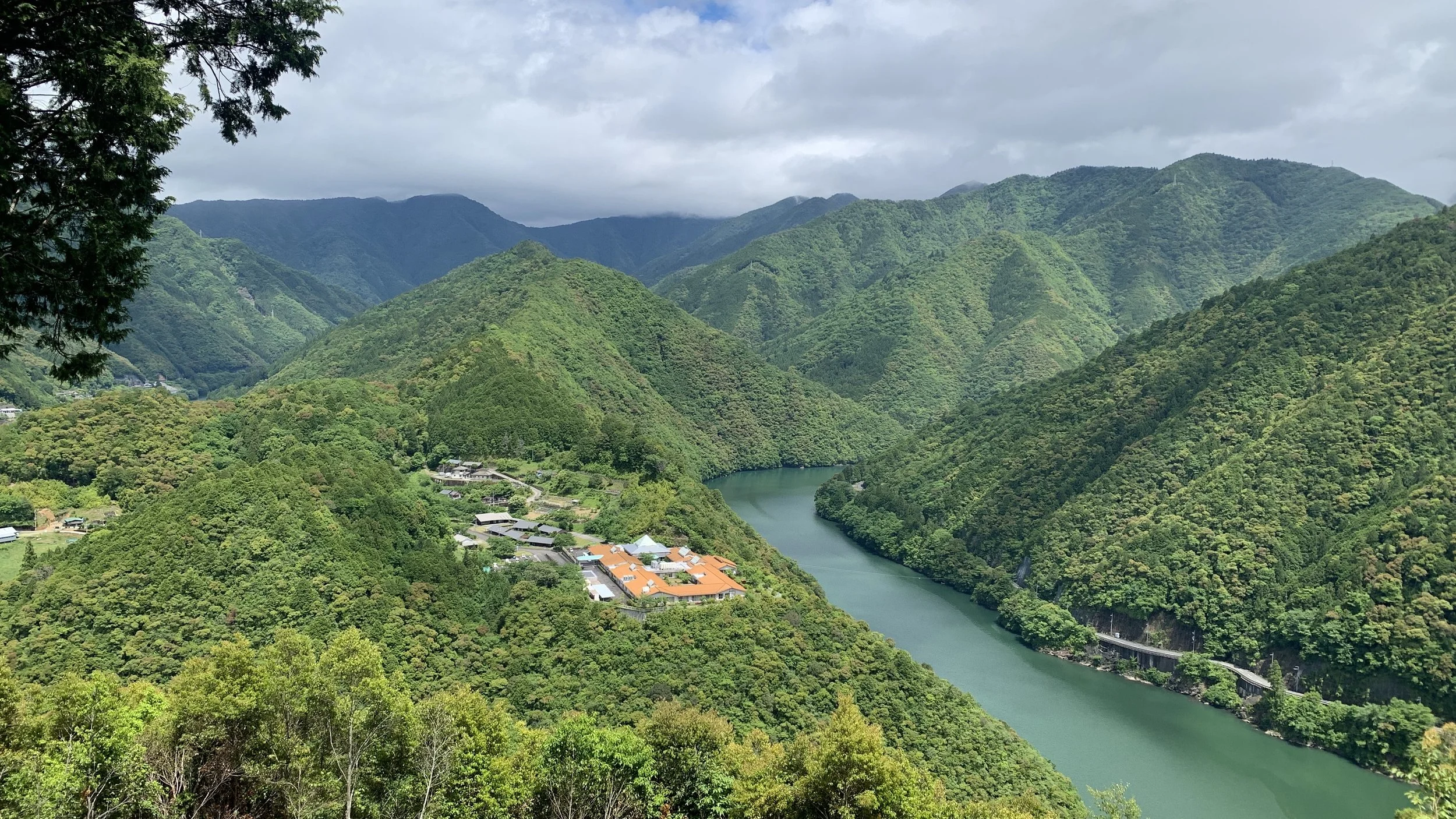
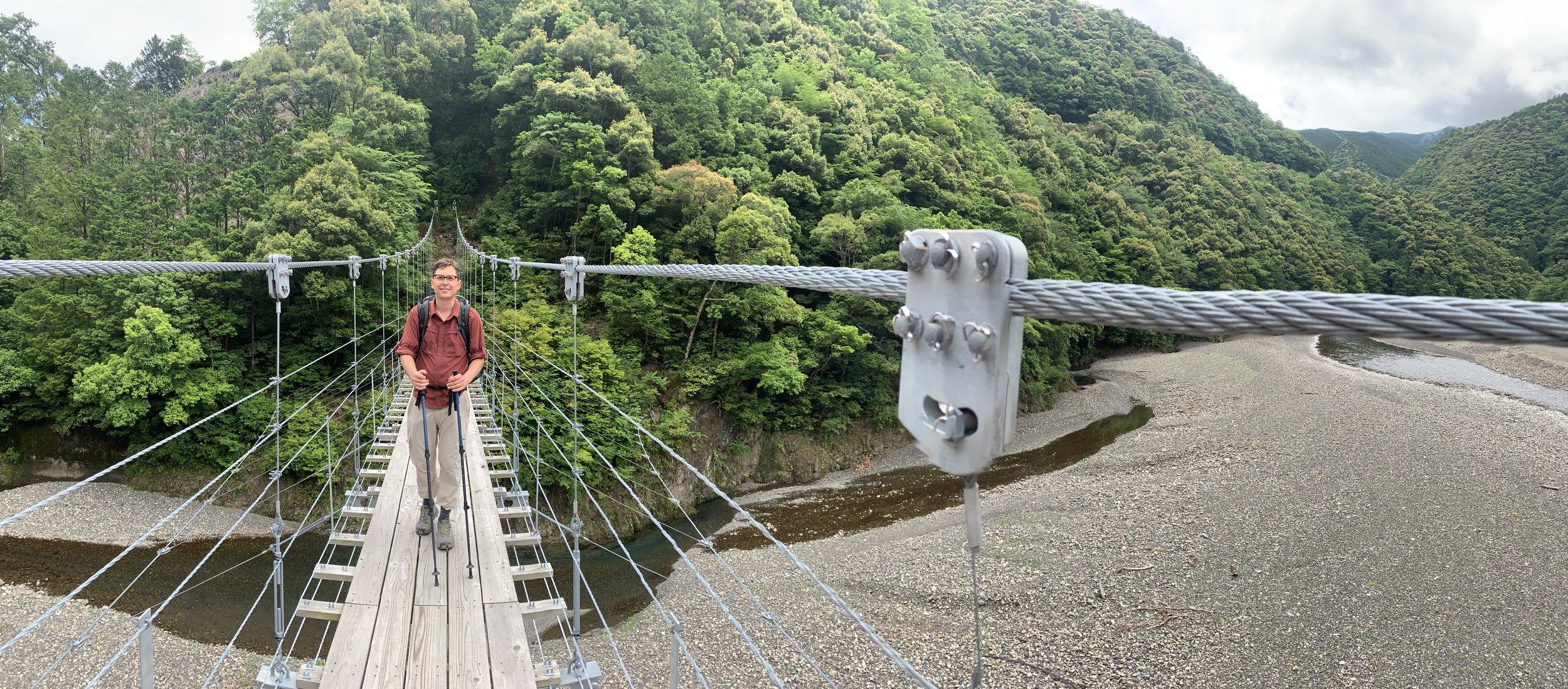
Down at the river we crossed an epic pedestrian suspension bridge, then backtracked to Minshuku Taiyo-no-Yu, which is off trail by a couple kilometers, so that we could take a smaller road to get there. This short road walk took us over a visually striking red bridge with giant fish swimming lazily in the clear blue water far below.
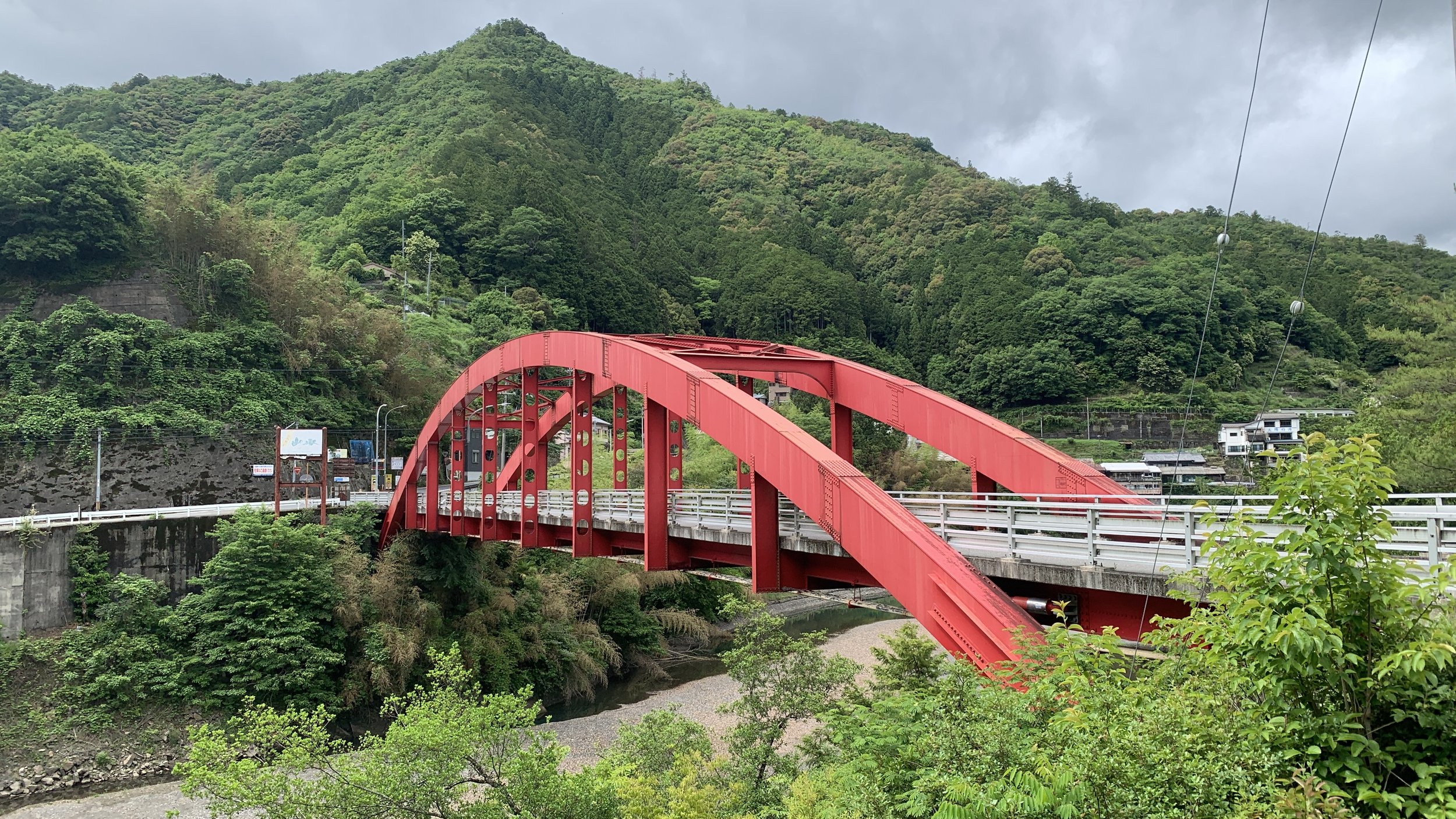
Totsukawa is a tiny village that feels crammed into the mountainside, without much space for cars or pedestrians on the roads, so we did our best to hug the edge of the mountain as we walked to our accommodations. I will say that in Japan vehicle operators seem particularly respectful of pedestrians, always giving us a wide birth and stopping at crosswalks at the first sign of a pedestrian stepping foot onto it.
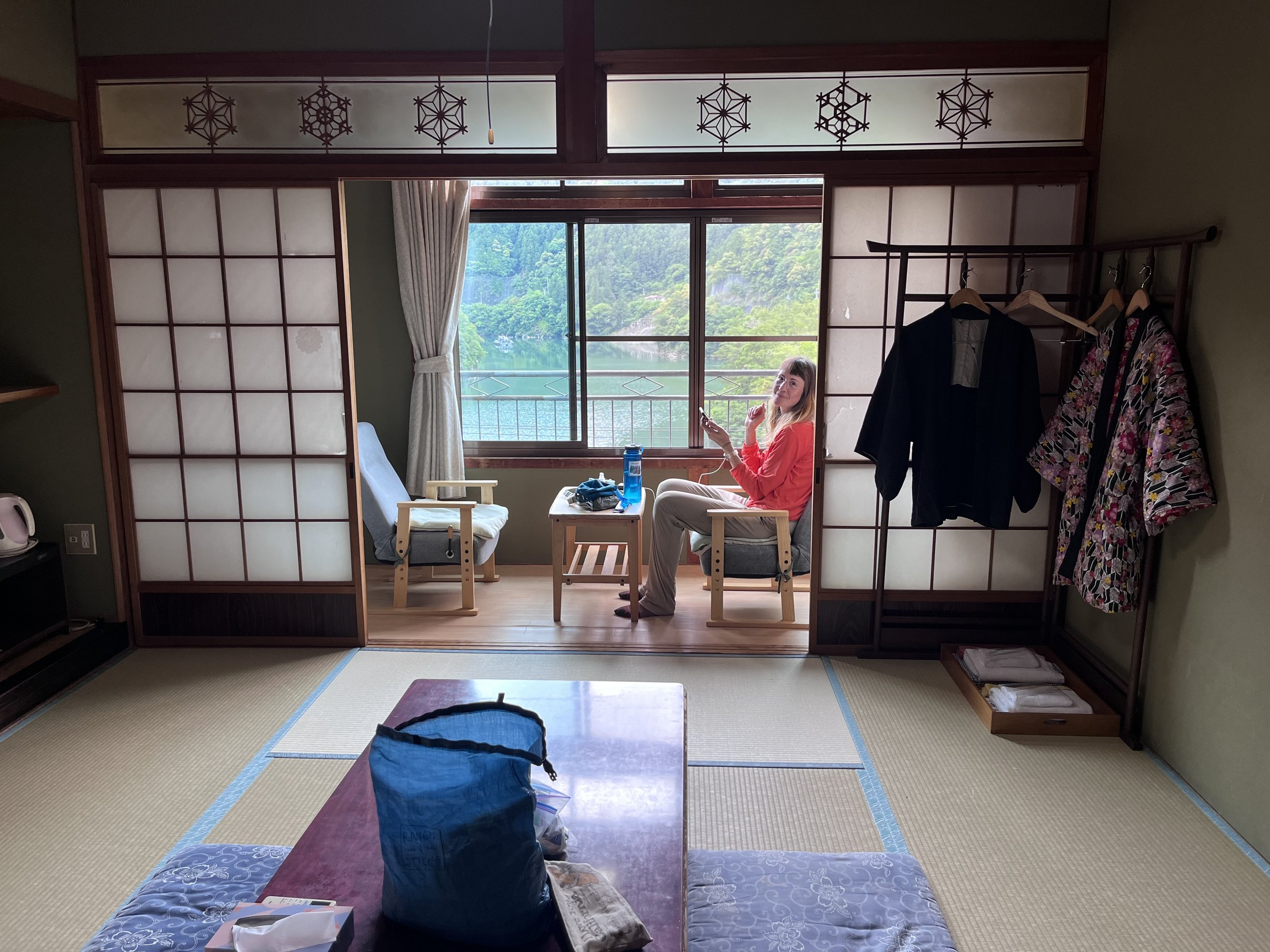
After getting checked in, we both laid down on the tatami mats in our room (which has an incredible view) and promptly fell asleep.
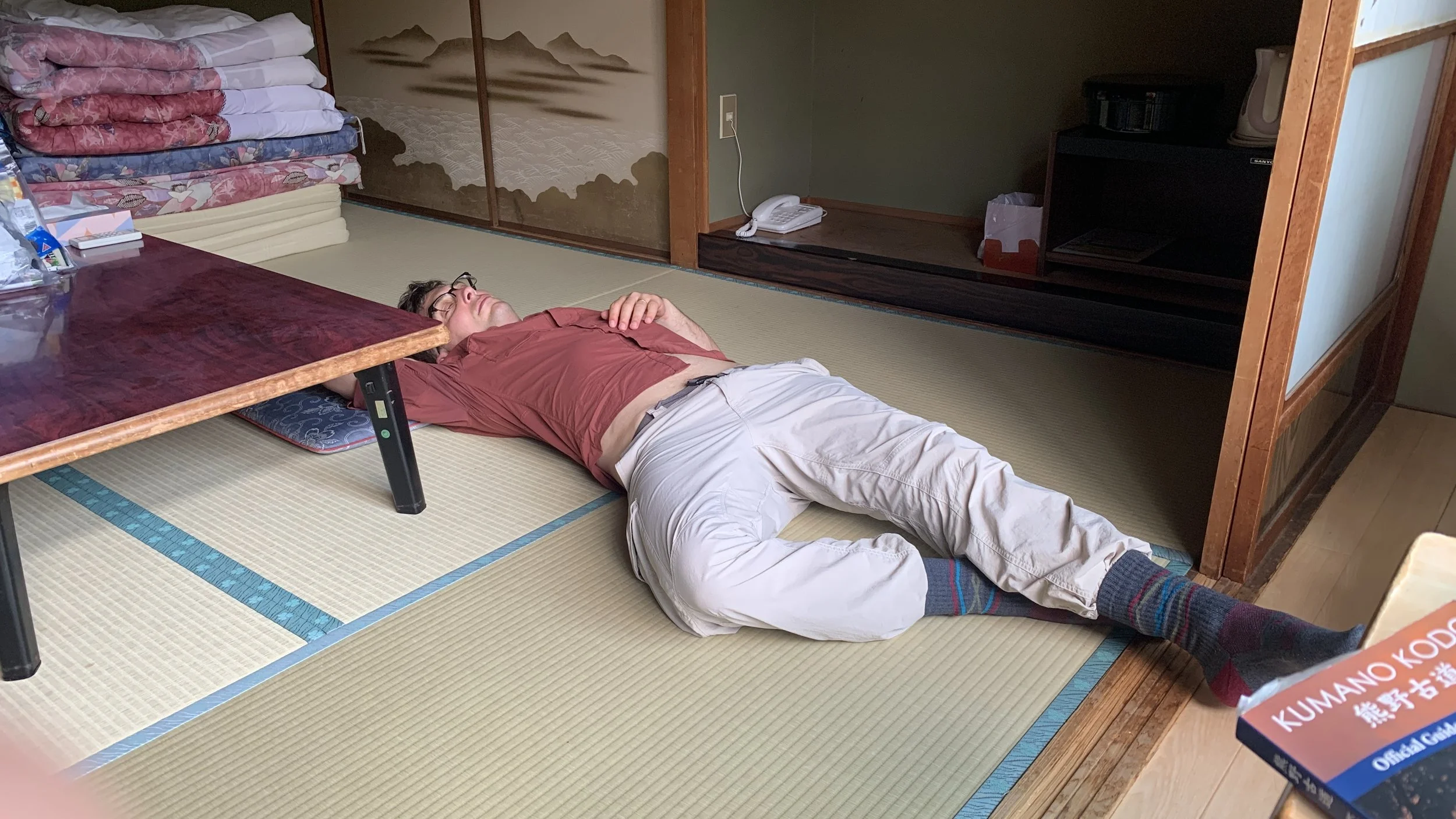
We woke up 30-45 minutes later feeling more refreshed though no less warm. Not much we can do about it until temperatures come down after sunset as the mini splits in our accommodations seem to consistently exacerbate Chris’ allergies. Thankfully, as with most of our accommodations, the windows have screens, so we opened the windows before going in search of food.
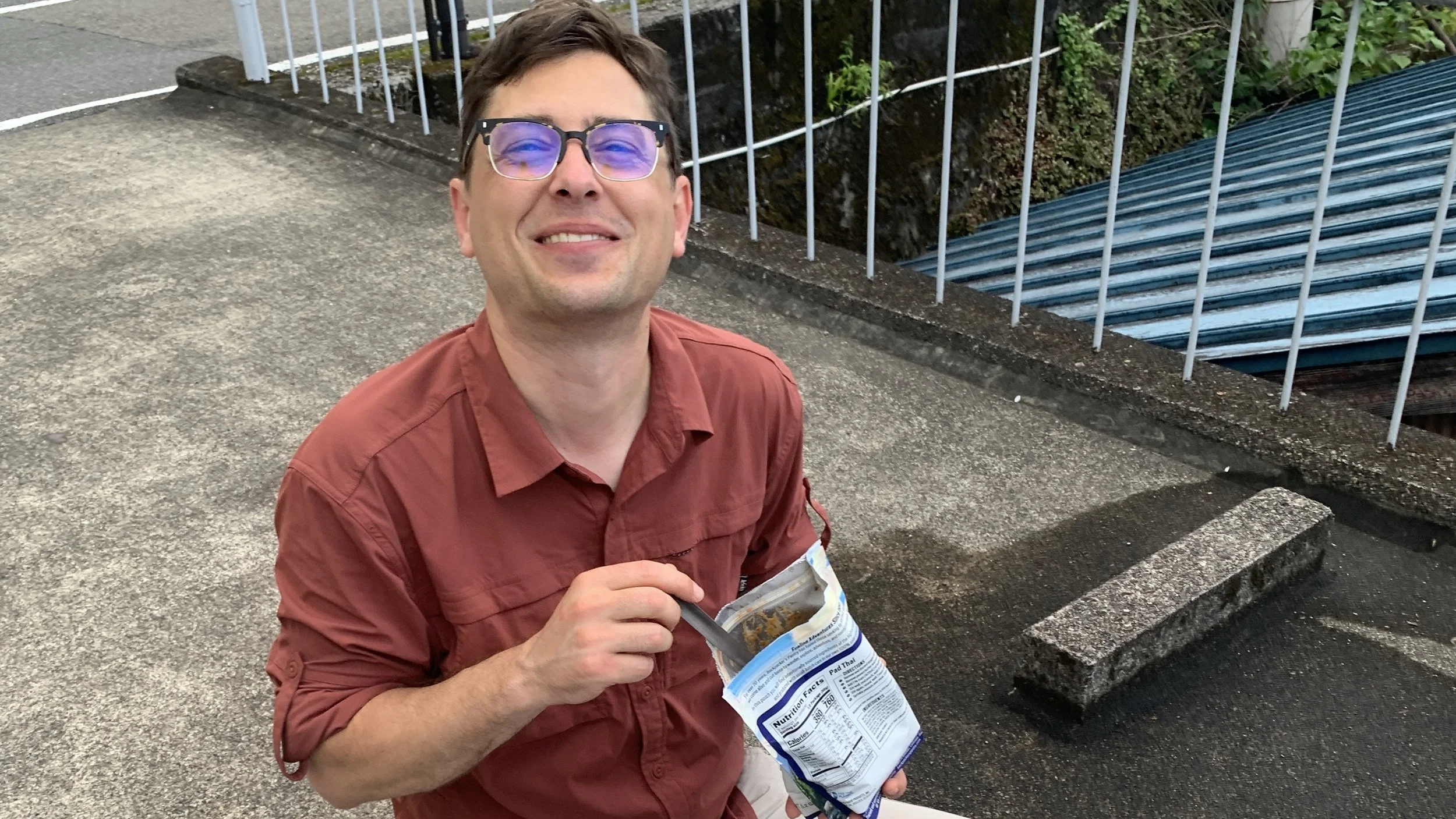
Hungry for dinner (hiker hunger has absolutely set in) and since we opted out of the meal here, we decided to eat early. While still light out, Chris sat in the small parking lot outside the Minshuku, overlooking the lake, and boiled water on the backpacking stove to rehydrate a backpackers pantry Pad Thai.
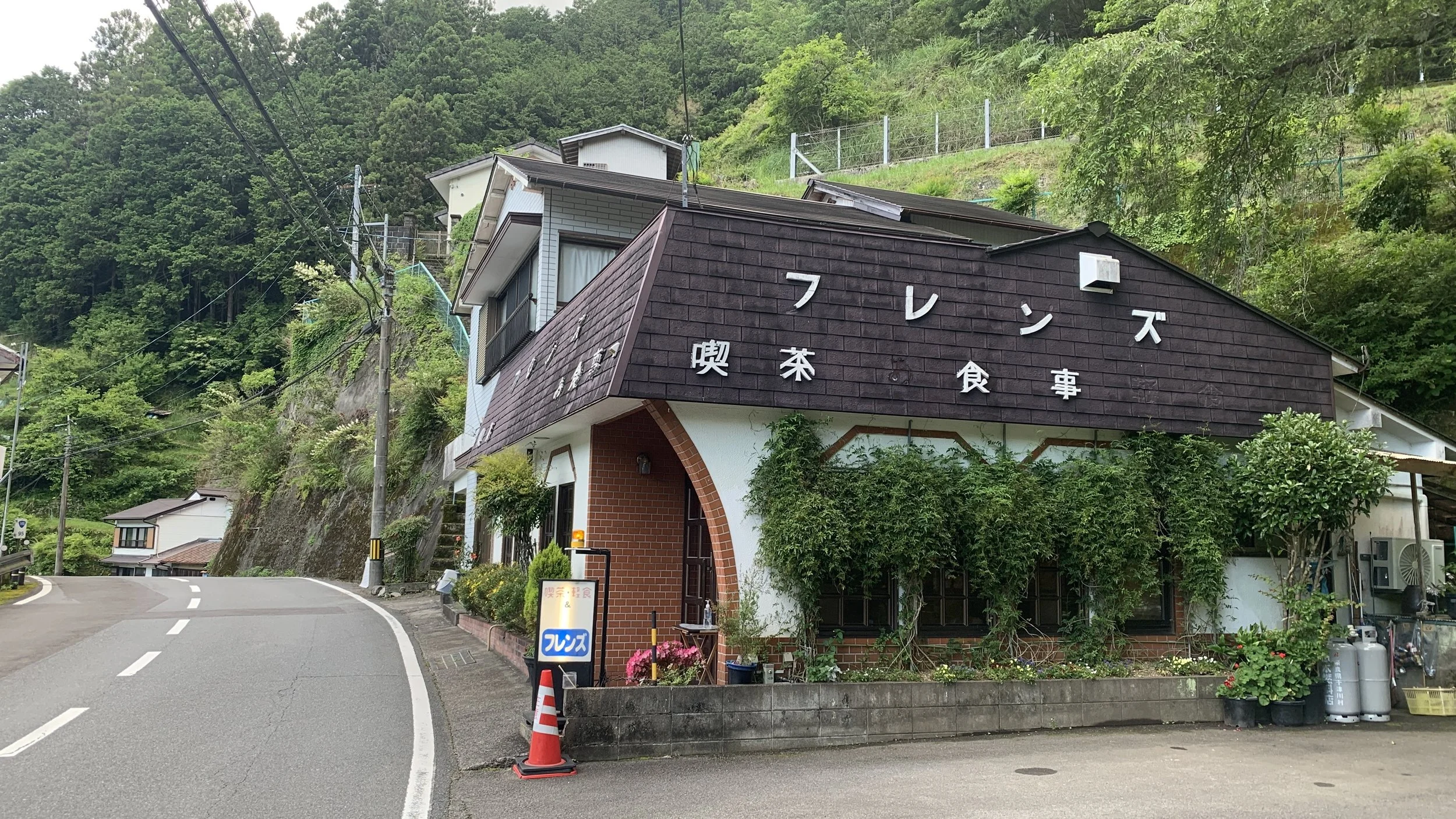
Meanwhile, I walked just down the road to a small, smoky diner to give my business to an older woman who immediately set about cooking up a storm in the back kitchen once I managed to communicate my order. All the locals we’ve encountered on the Kohechi so far speak about as much English as I do Japanese, often less! I had intended to ask about taking the food to go so I could eat with Chris but quickly got in over my head and resigned myself to eating in the diner alone, out of fear of offending the owner. She is not put off by my lack of ability to converse, rather, launching into long spiels and pausing to allow me an “ahhh” then continuing until the one sided conversation eventually fizzles out. A very sweet interaction.
Another older Japanese man wanders in at one point and sits at the bar for a spell, they chat and he leaves. I ordered the Yakisoba meal set and when it arrives I ask if it’s ok if I sit at the bar and I end up eating while watching a bewildering Japanese news segment that seems to be about some theater performer.
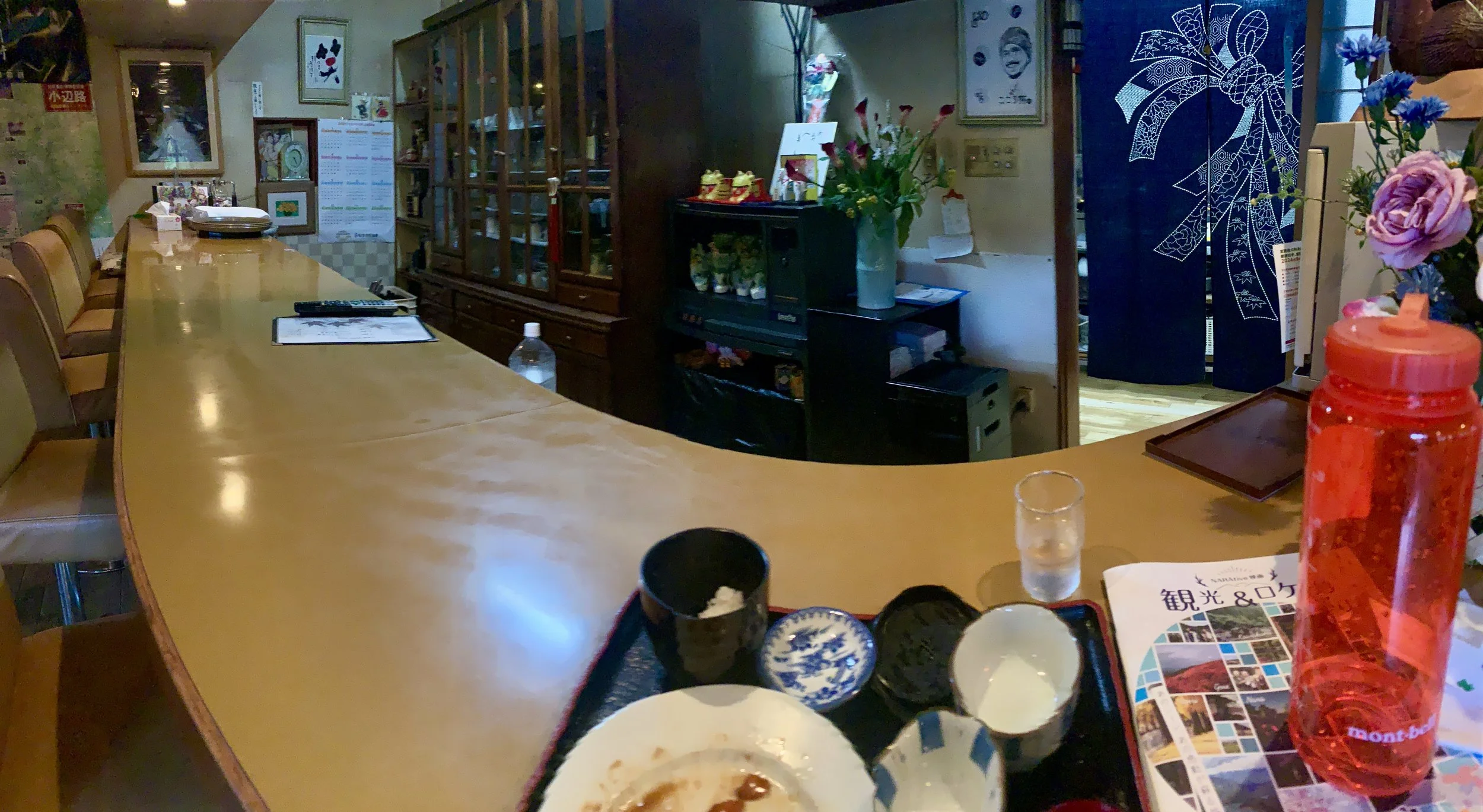
The food was amazing: yakisoba, miso soup and rice, some kind of pasta salad that reminded me of southern comfort food, pickled vegetables, and potatoes. I ate every last scrap, thanked her profusely, and then made my way back to our Minshuku.
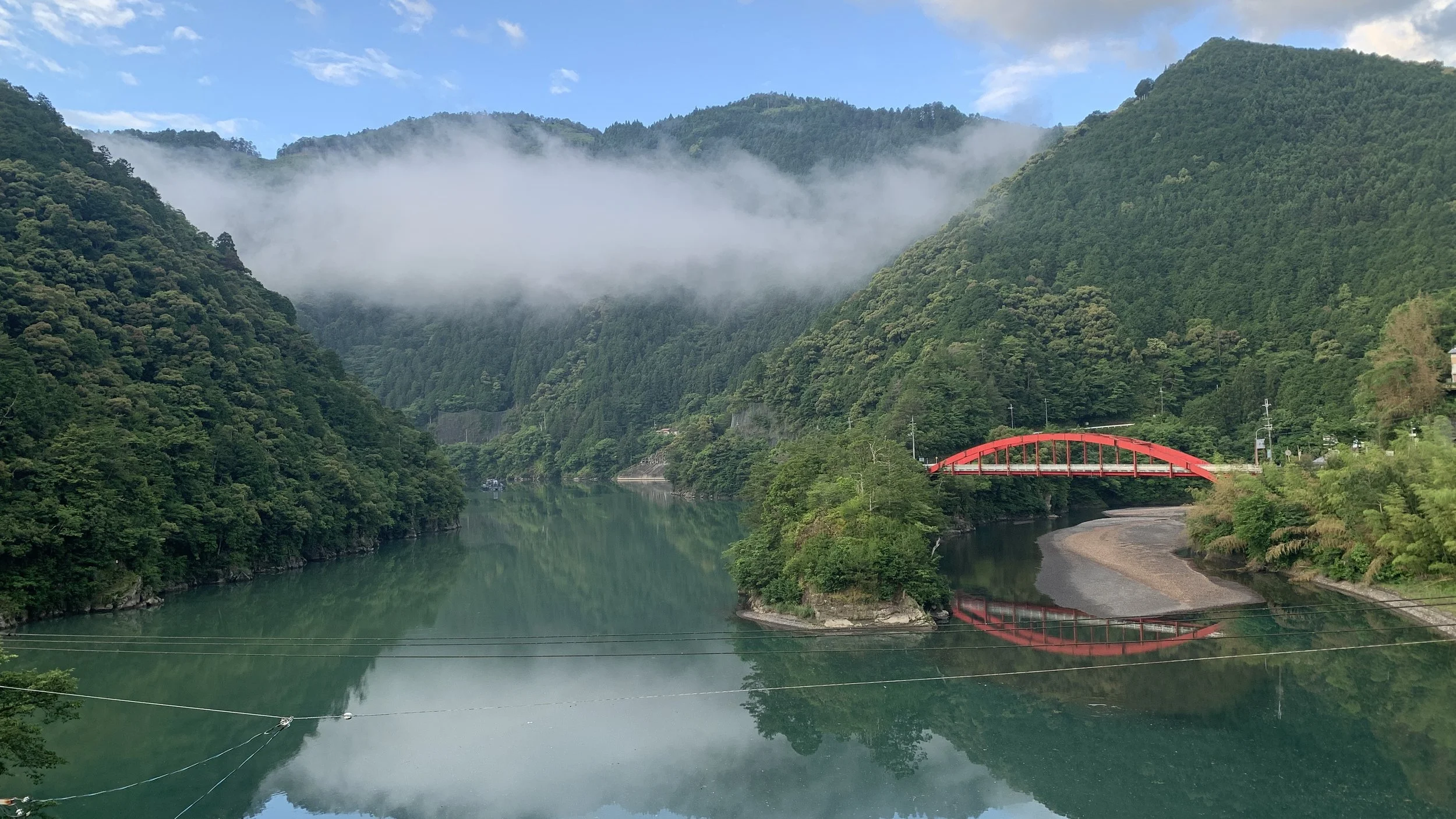
View from our room at Minshuku Taiyo-no-Yu
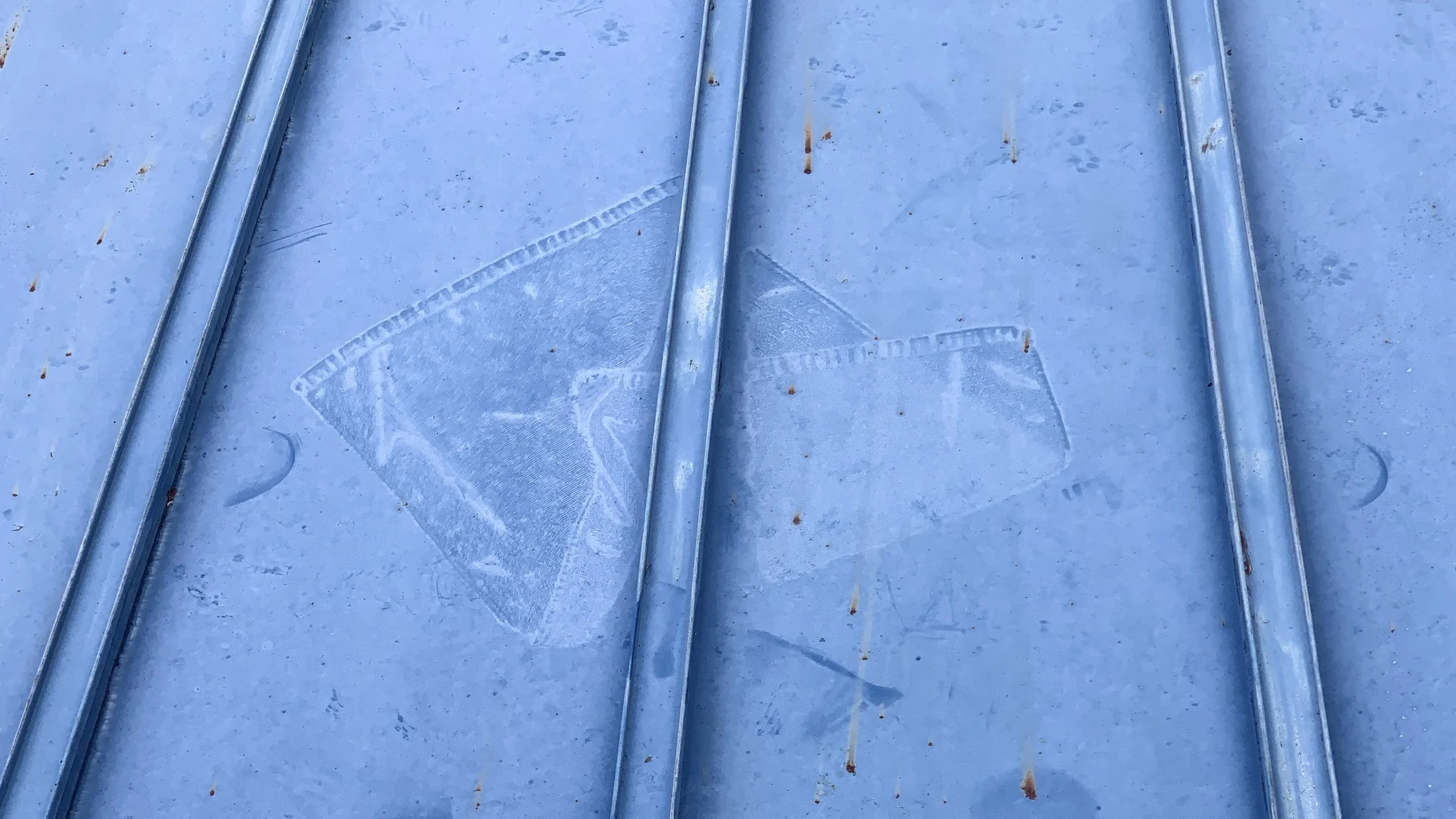
Accidental Art
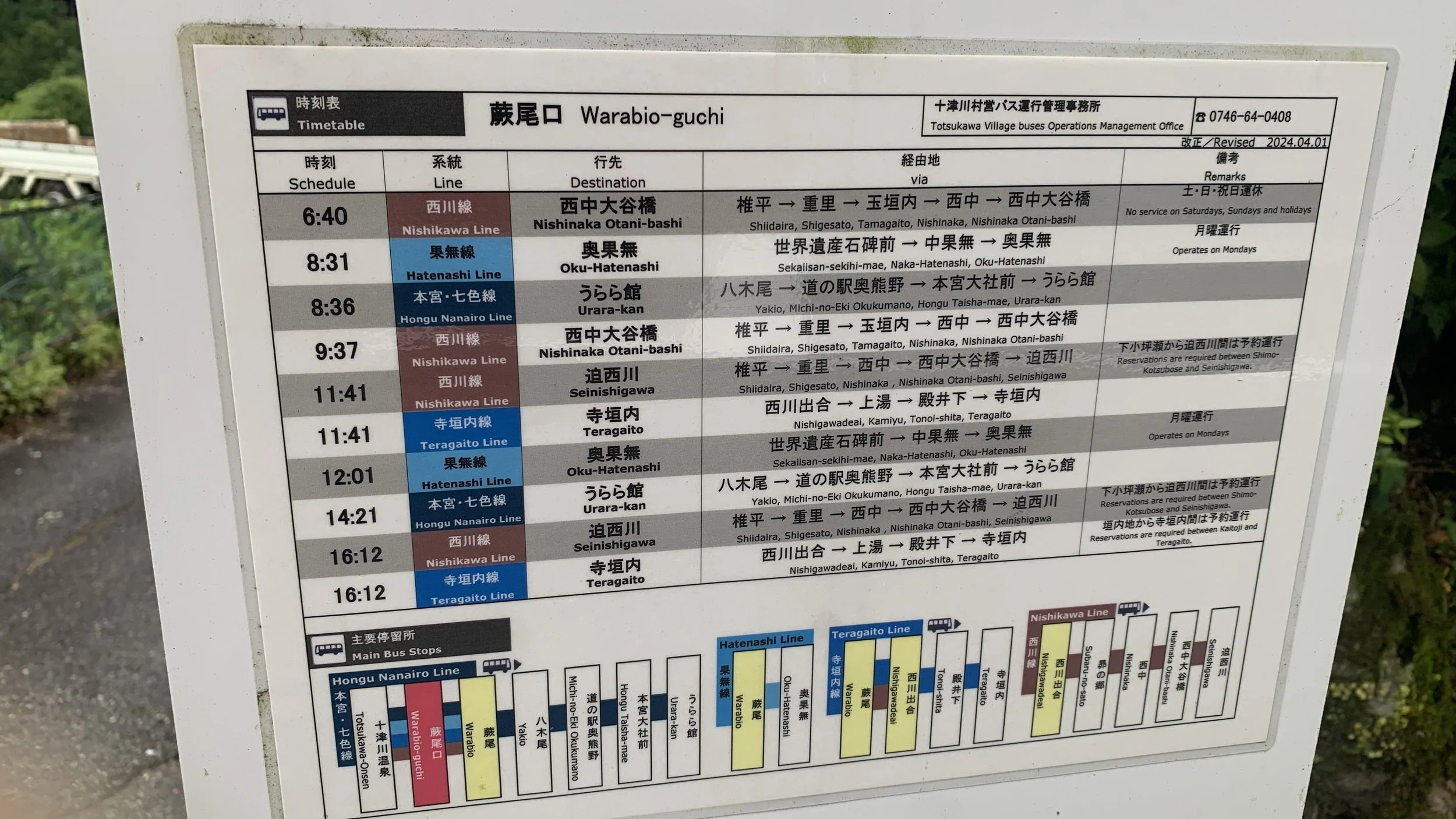
Deciding to once again skip the extra long road walk tomorrow to get to the base of the mountain, I walked to check the bus schedule posted at the stop just down the road. The busses in this area dont show up on Google maps so I’m trusting the process. Based on the laminated map at the stop we’ll take the Nishikawa line at 6:40am for Nishinaka bus stop. The next one doesn’t come until 9:37am, so we have to be ready if we don’t want to be hiking in the heat of the day tomorrow. Along the way I also picked up an unsweet green tea from a vending machine by the road to help fuel the climb in the morning.
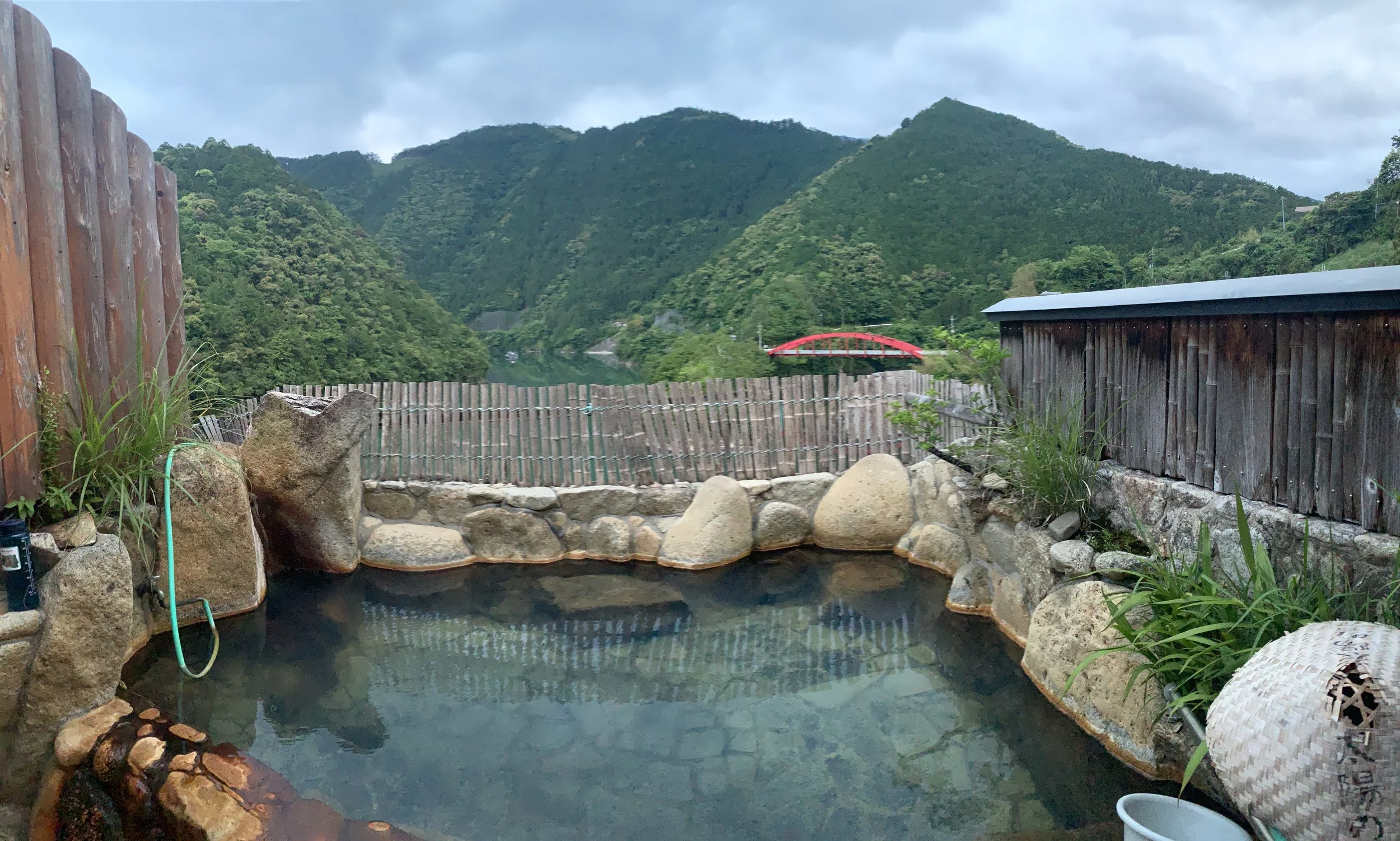
Back at Minshuku Taiyo-no-Yu, Chris and I showered and soaked in the piping hot open-air onsen with more stunning views of the mountain, water, and roads below. After catching up on the journal and taking care of laundry, deep slumber.
Friday, May 29
Muira-toge • 12km
Up and out of the Minshuku and waiting at the bus stop by 6:30. The bus appeared like magic, right on time. Displaying no English, I asked “Nishinaka ni?” (To Nishinaka?) as we mounted, to which the driver gave an affirmative. Along the way the bus slowed for a couple Japanese Macaque monkeys that hurried across the road and leapt into the trees on the roadside.
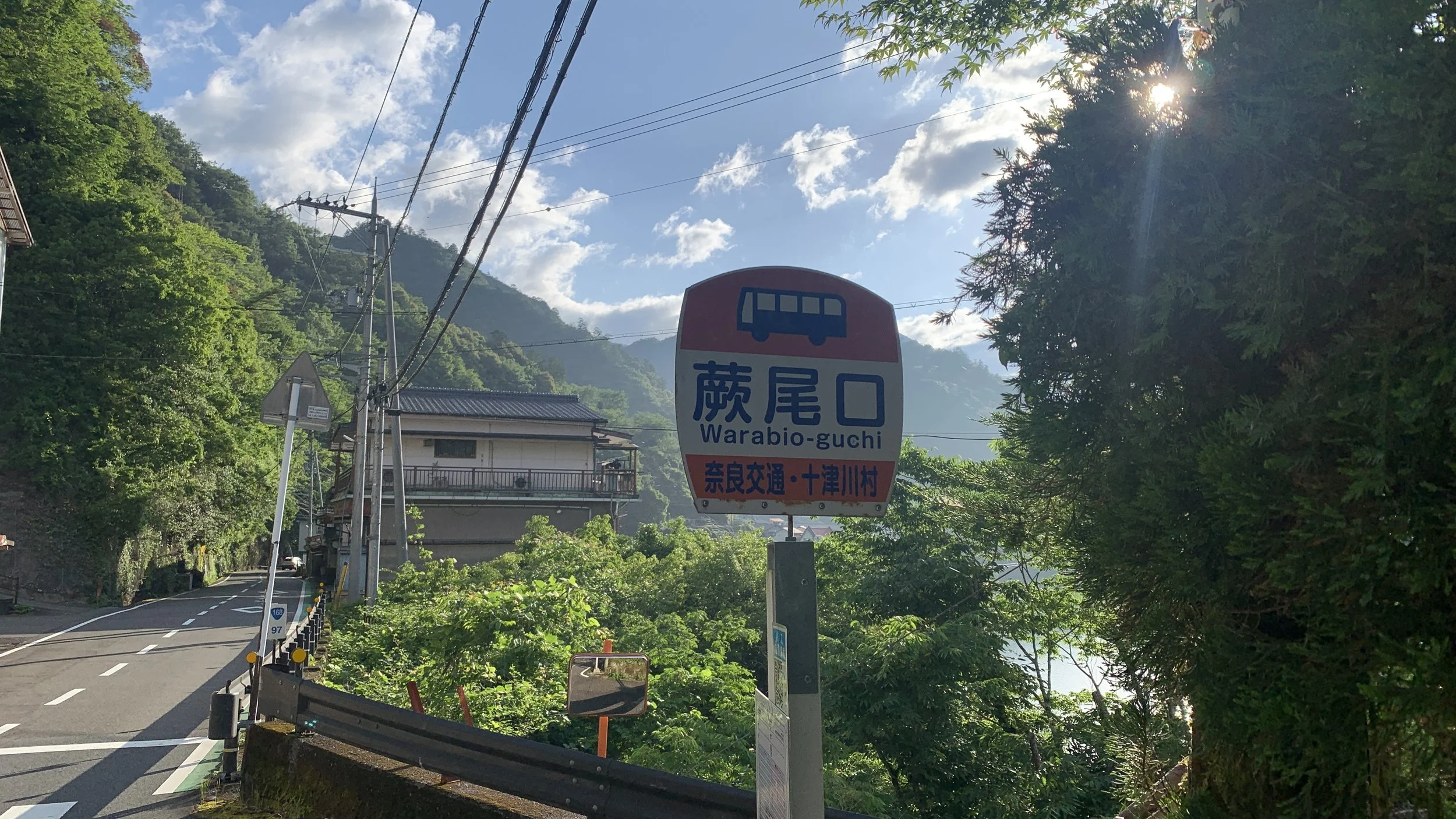
It was incredible that the bus fit on this narrow, winding mountain road at all, and as we slowly advanced forward there was one stretch where an unsuspecting car had to reverse quite a ways in order to allow us to pass. 30 minutes later, after covering what by the looks of it would have been a rather unpleasant and grueling nearly 8km road walk, we arrived at the base of Muira-toga, delighted by our analog, rural Japanese bus achievement. This will be another 1000m summit and descent, though more graded than Hatenashi-toge pass the day before.
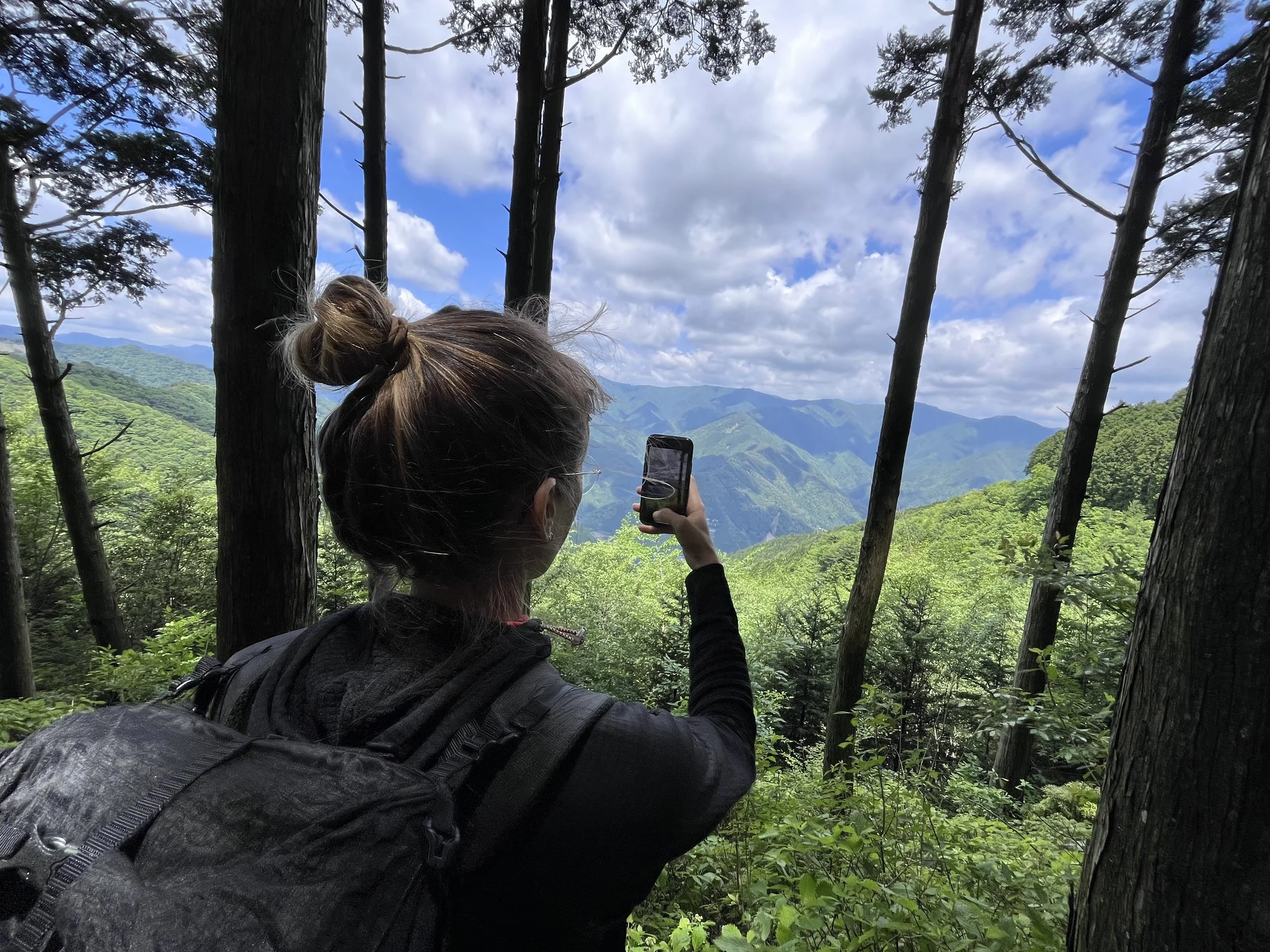
The ascent once again passed by smoothly with more good conversation. In many ways a backpacking honeymoon has been perfect for the hours of wiling away the time and miles by discussing anything and everything… verbally constructing a vision of the life we’d like to build together.
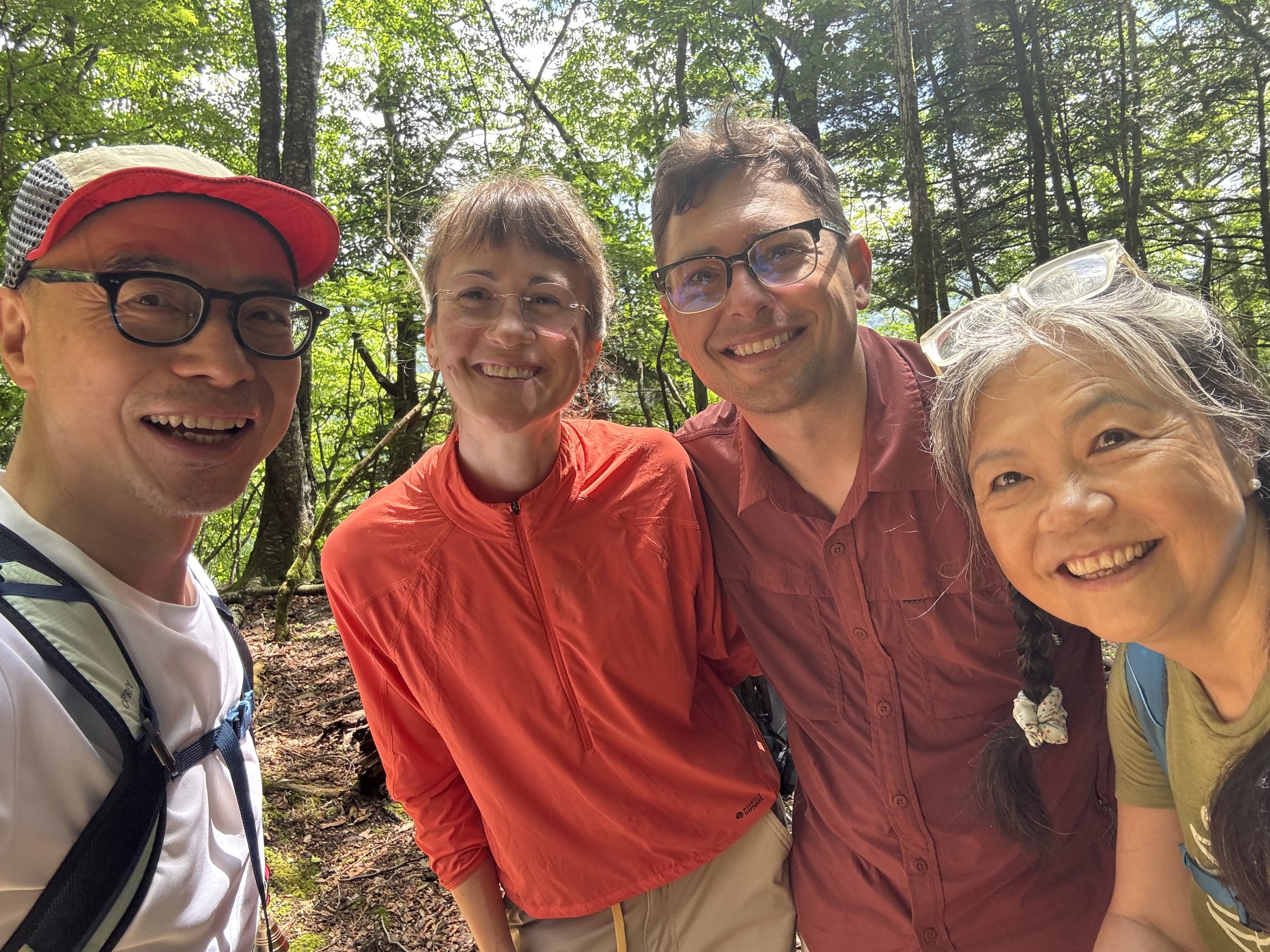
At one point we frightened some large animal that crashed away through the woods; likely either a clumsy deer or a wild boar from what brief glimpse we had. Once again, we didn’t see any more people until we neared the summit and encountered a couple of retired Chinese-American New Yorkers, Minwei and Joan, who we learned we would be effectively swapping lodgings with tonight. They spoke highly of Minshuku Yamamoto, where we’ll be staying tonight. Chatting for a spell, they suggested we add the roughly 7 day Tour de Mont Blanc to our backpacking wishlist.
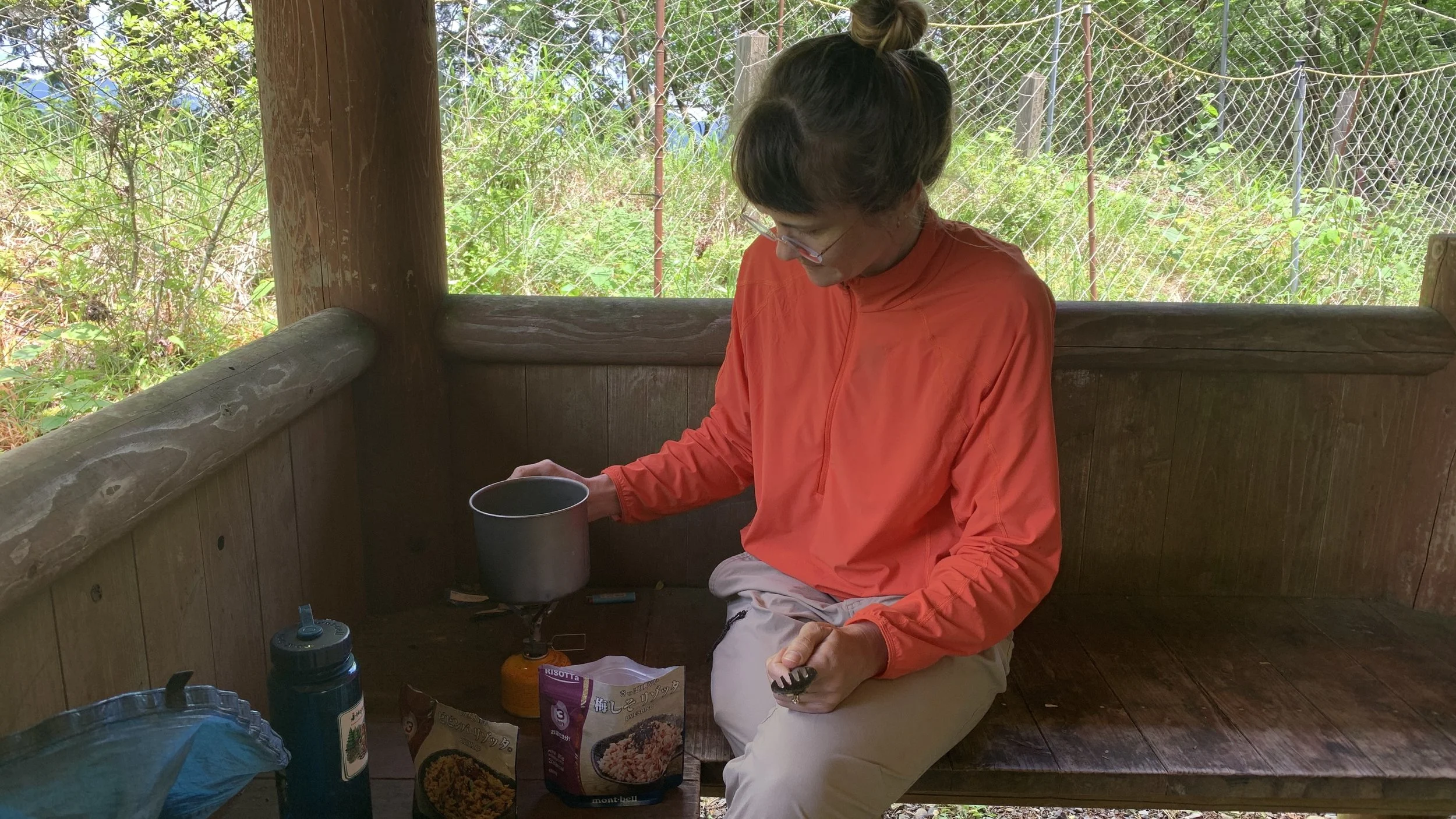
After crossing Muira-toge pass we came to a covered structure where stopped to boil water to reconstitute a couple of Japanese backpacking meals we picked up at Mont-bell: Bibimbap risotto and Umeshisho (plumb and shiso leaf). The views from here on out during our descent were outstanding, and the temperatures dropped instantly when we made it over the pass, to the extent that I put on my grid fleece sweater.
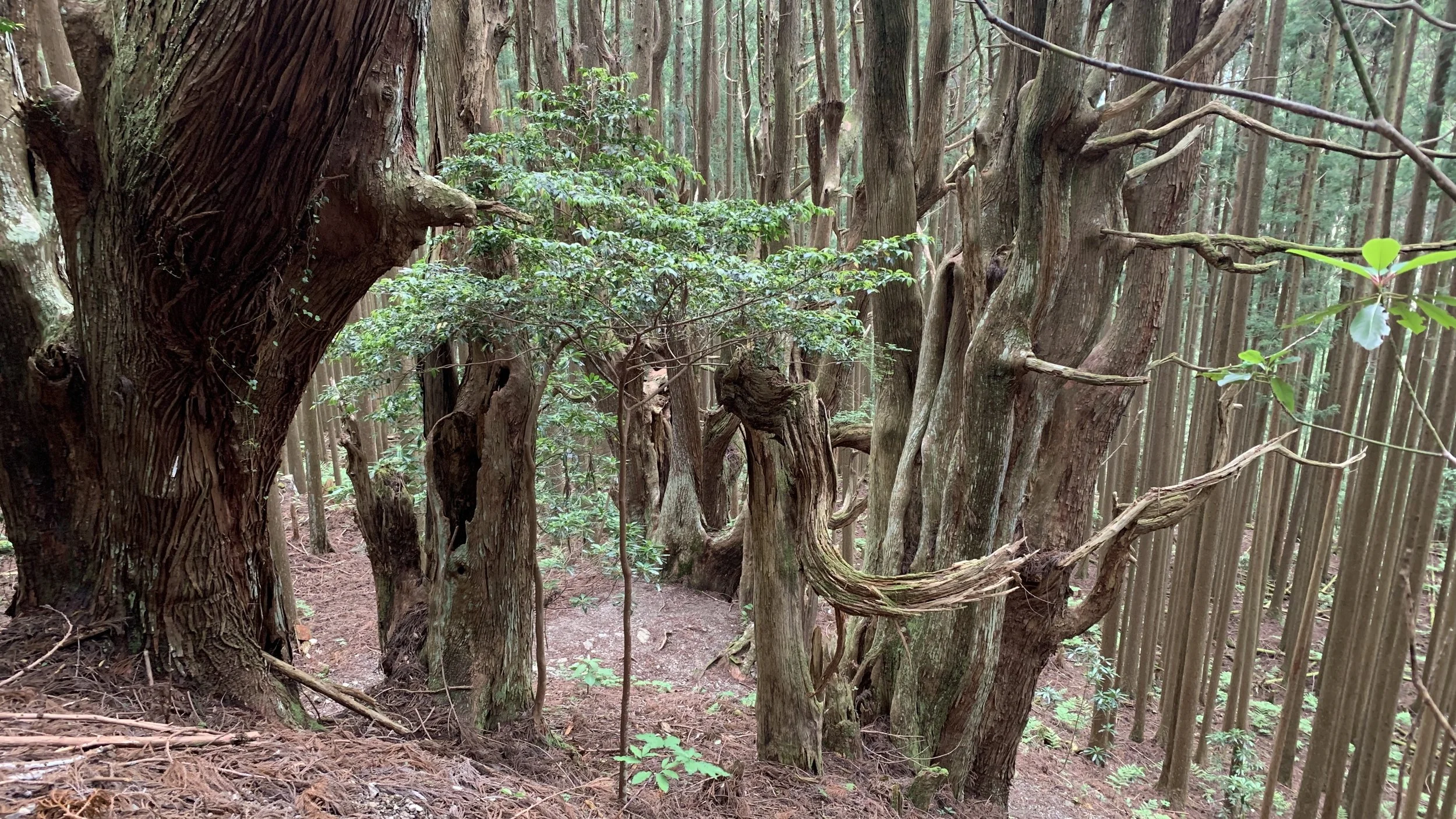
Halfway down the mountainside we gasped as we encountered a grove of over 500 year old cedar trees in front of some tea house ruins. These cedars were unlike anything I’d ever seen before; their presence was powerful and ancient. They were giant, twisted and tortured looking, and absolutely glorious. New life grew all over them.
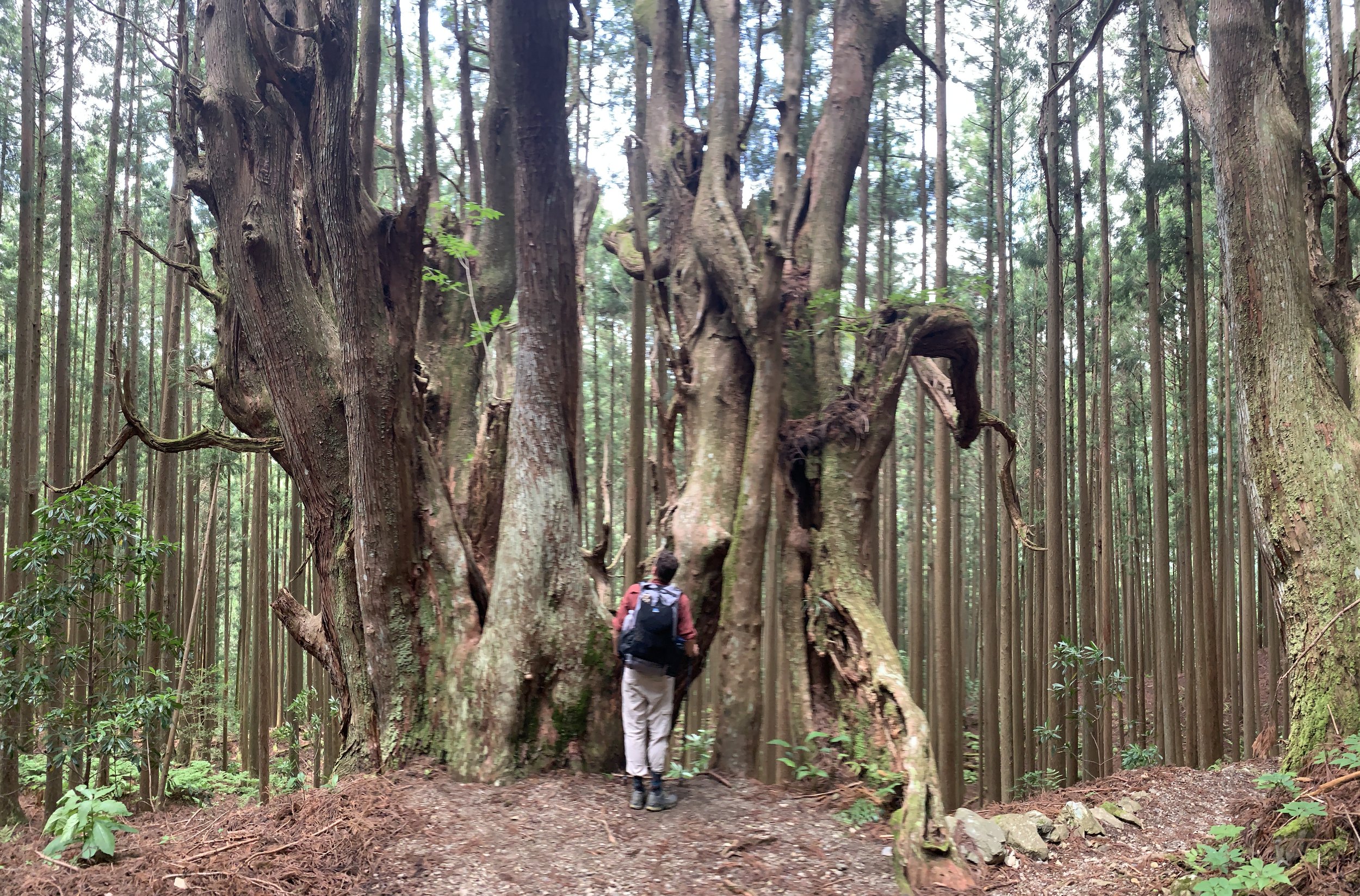
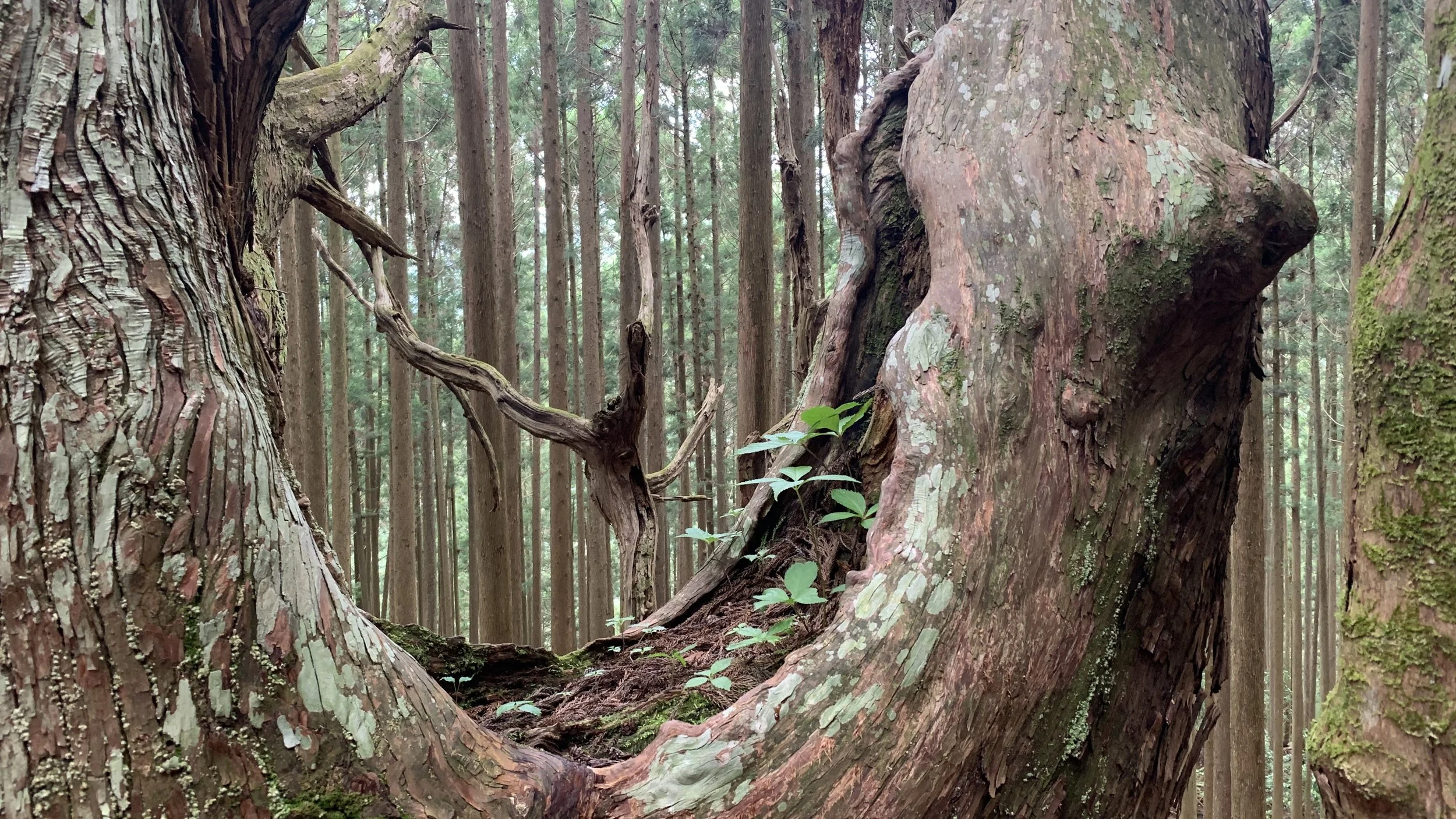
When we reached the base of the mountain, we had a decision to make between a 2km walk to Minshuku Yamamoto, or a complimentary shuttle pickup. Because the detour looked to be a trail rather than a road walk, and it was only 1pm, we opted to walk. The trail was less maintained but still lovely, and wrapped alongside the edge of the mountain with views of the river below.
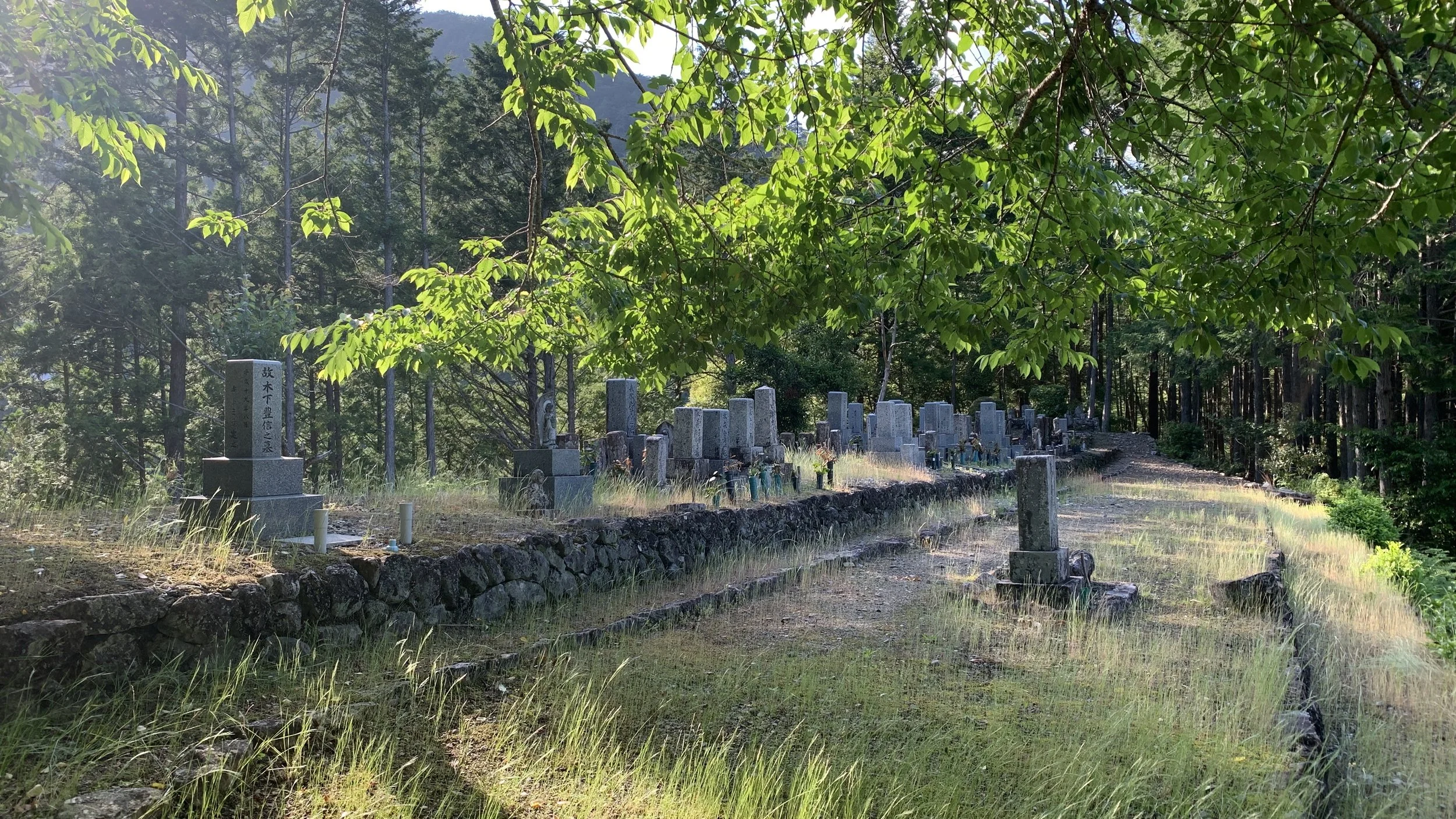
Eventually we popped out of the woods and into a valley where there are only a handful of homes, with Minshuku Yamamoto farm stay smack dab in the middle. We passed a small cemetery and a rice paddy, arriving just in time to see the owner outside. He gave us a quick tour and then let us be to enjoy the space, informing us that dinner would be at 5:30.
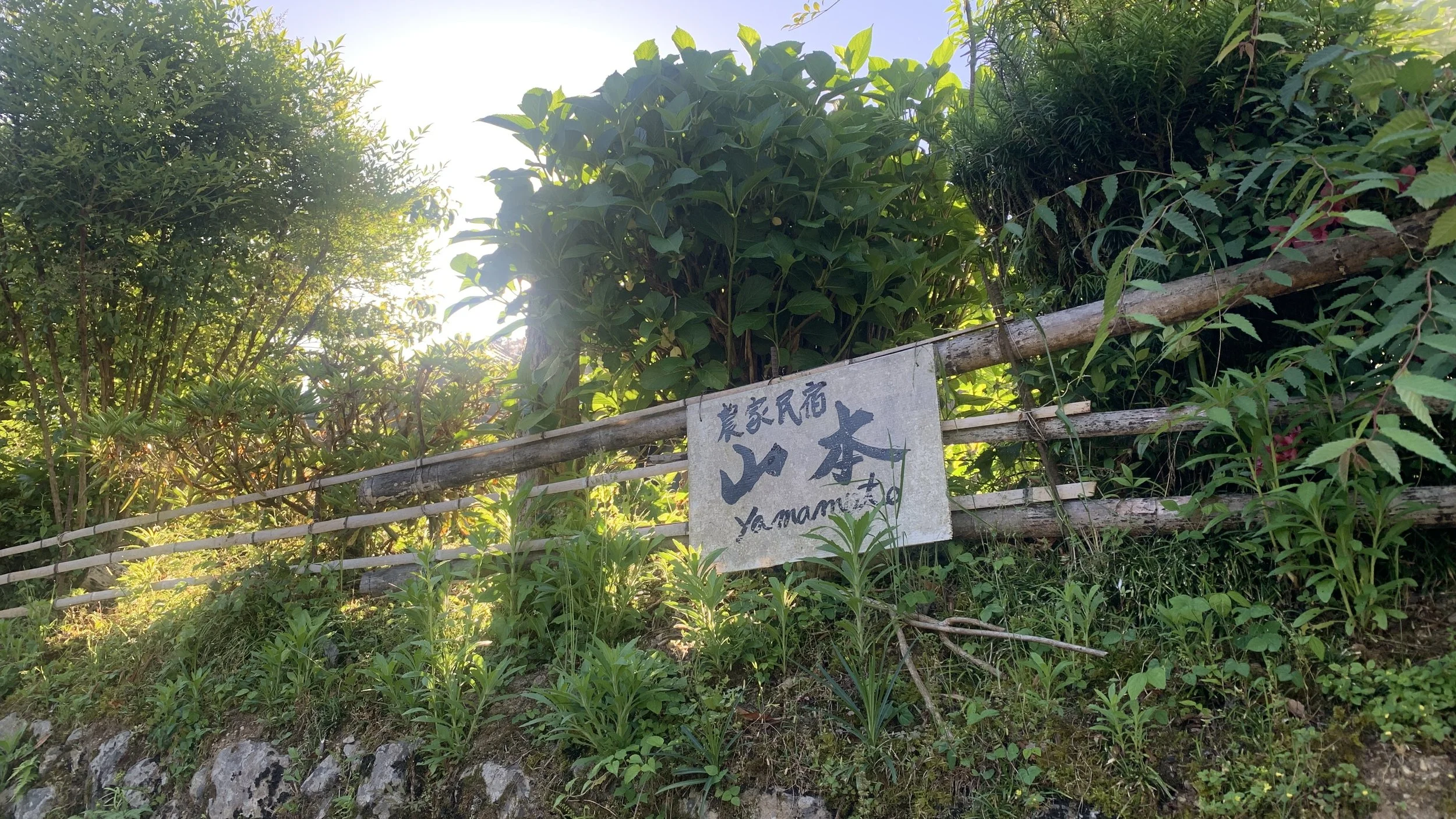
Minshuku Yamamoto
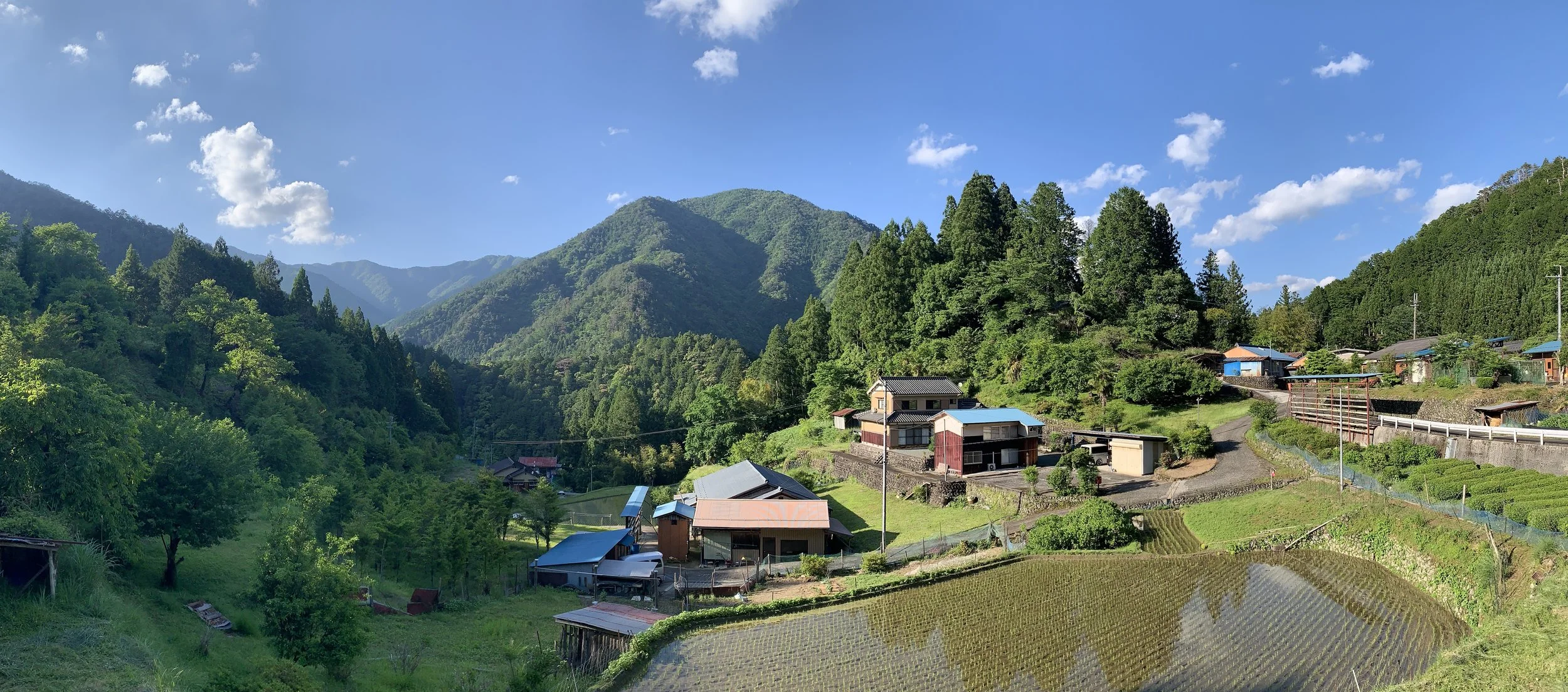
So much did we enjoy the tatami mat nap yesterday that we made this the first order of business today, immediately laying down for a short floor nap. Then, I journaled and we took turns showering and walking around the tiny village. I love the abundance of edible plants and fruiting trees. It seems every nook of this little valley offers some form of nourishment to its inhabitants. I also wandered around the garden, admiring the tiered plots loaded with potato plants, asparagus, and elephant ear (whether ornamental or edible I’m unsure). There is a chicken coop with healthy looking chickens that appear to be in the silkies family.
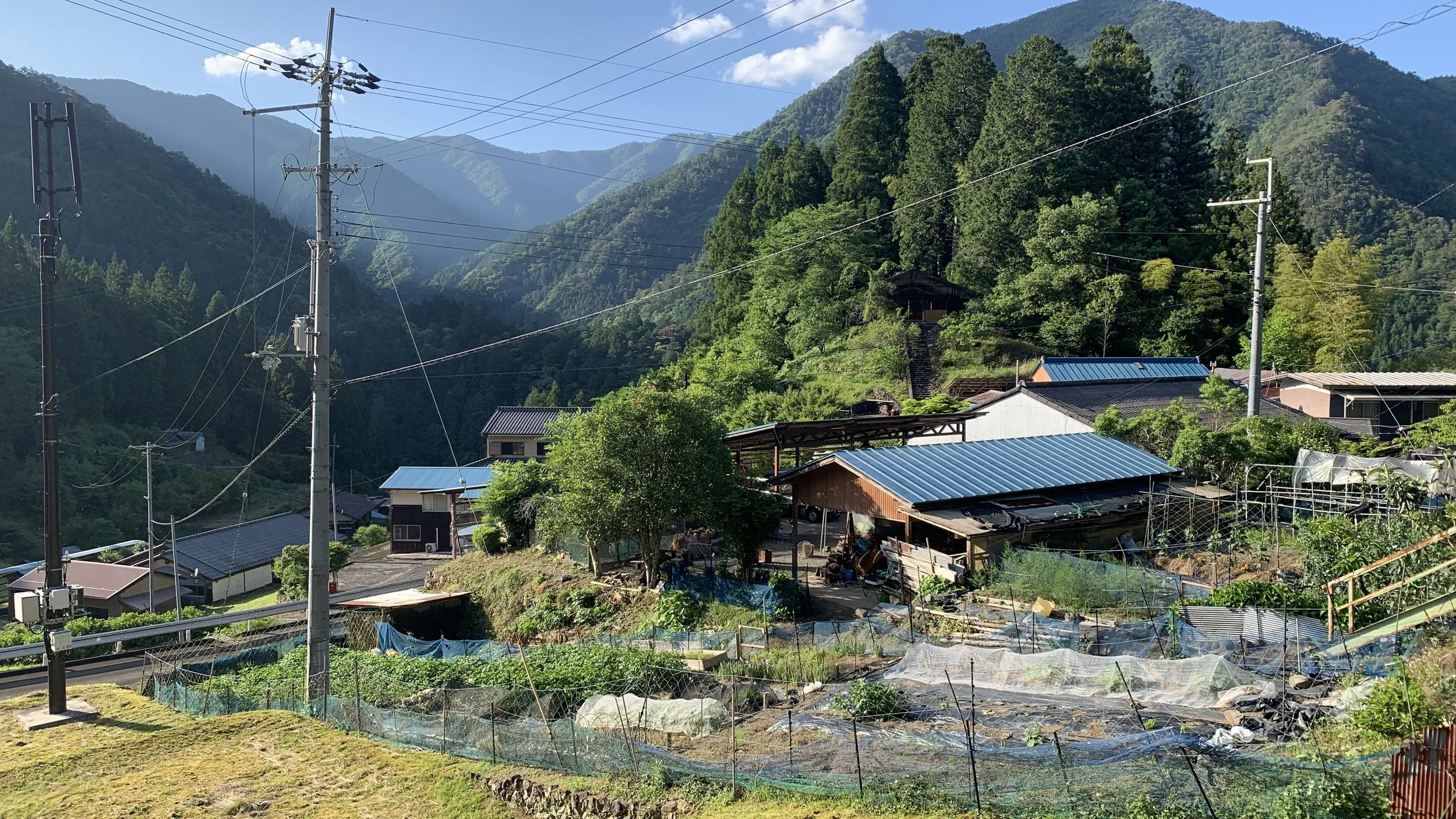
View of Minshuku Yamamoto garden
Up a small hill from the Minshuku is an old Shinto shrine with views over the valley and I can see a small, well cared for cemetery glinting in the light at eye level. About a block the other direction is a helicopter landing pad… of all things.
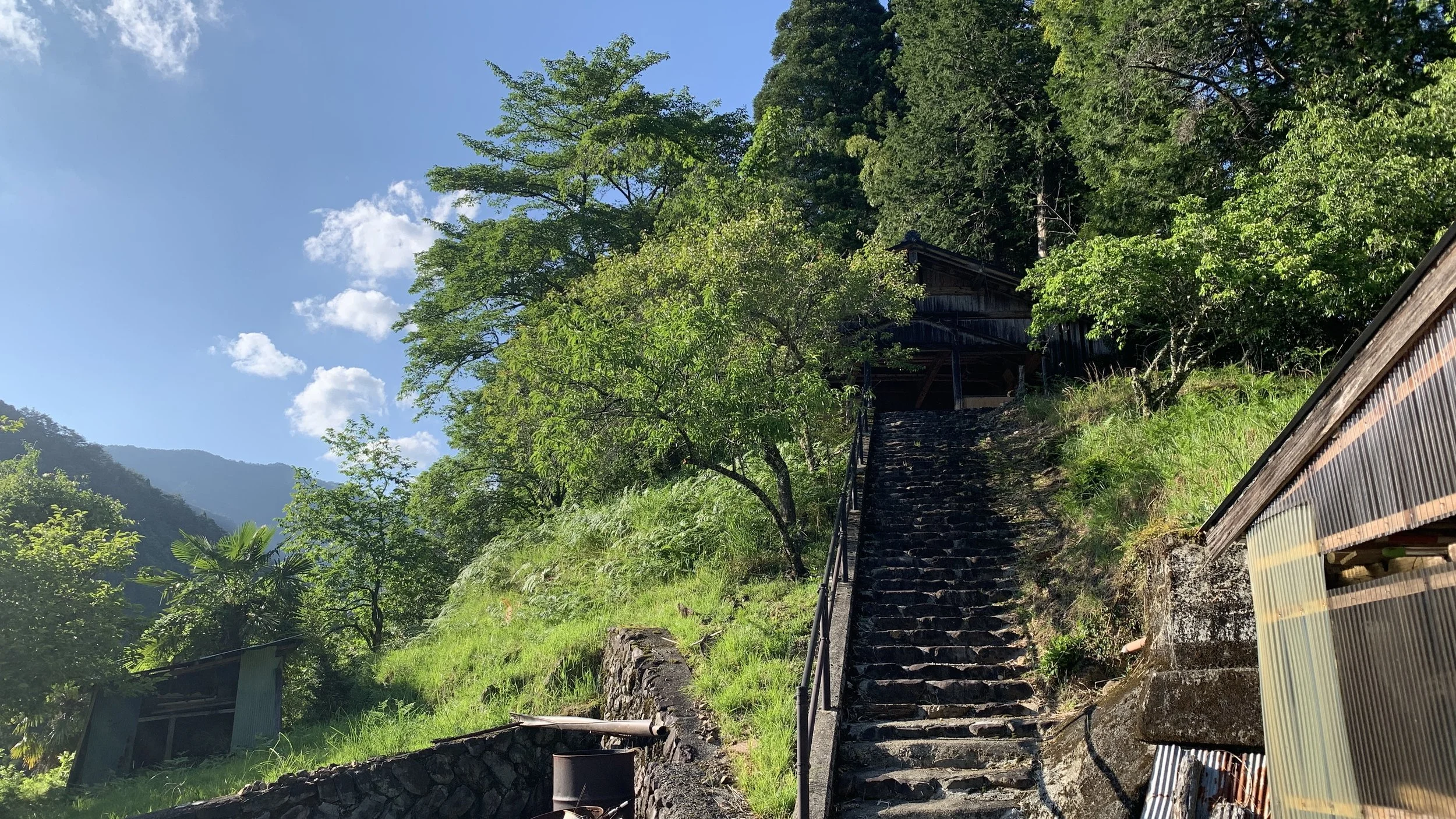
Shinto Shrine
Dinner was at 5:30 and as usual we sat across from one another, kneeling on small pads on the tatami mat floor. The dinner was one of the best we’ve had: tempura carrot tops, persimmon leaves (I had no idea you could eat these), amago fish (freshwater salmon native to western Japan), and other battered or pickled items from their extensive garden, plus tofu, eggplant, fresh steamed rice, hot tea, and more.
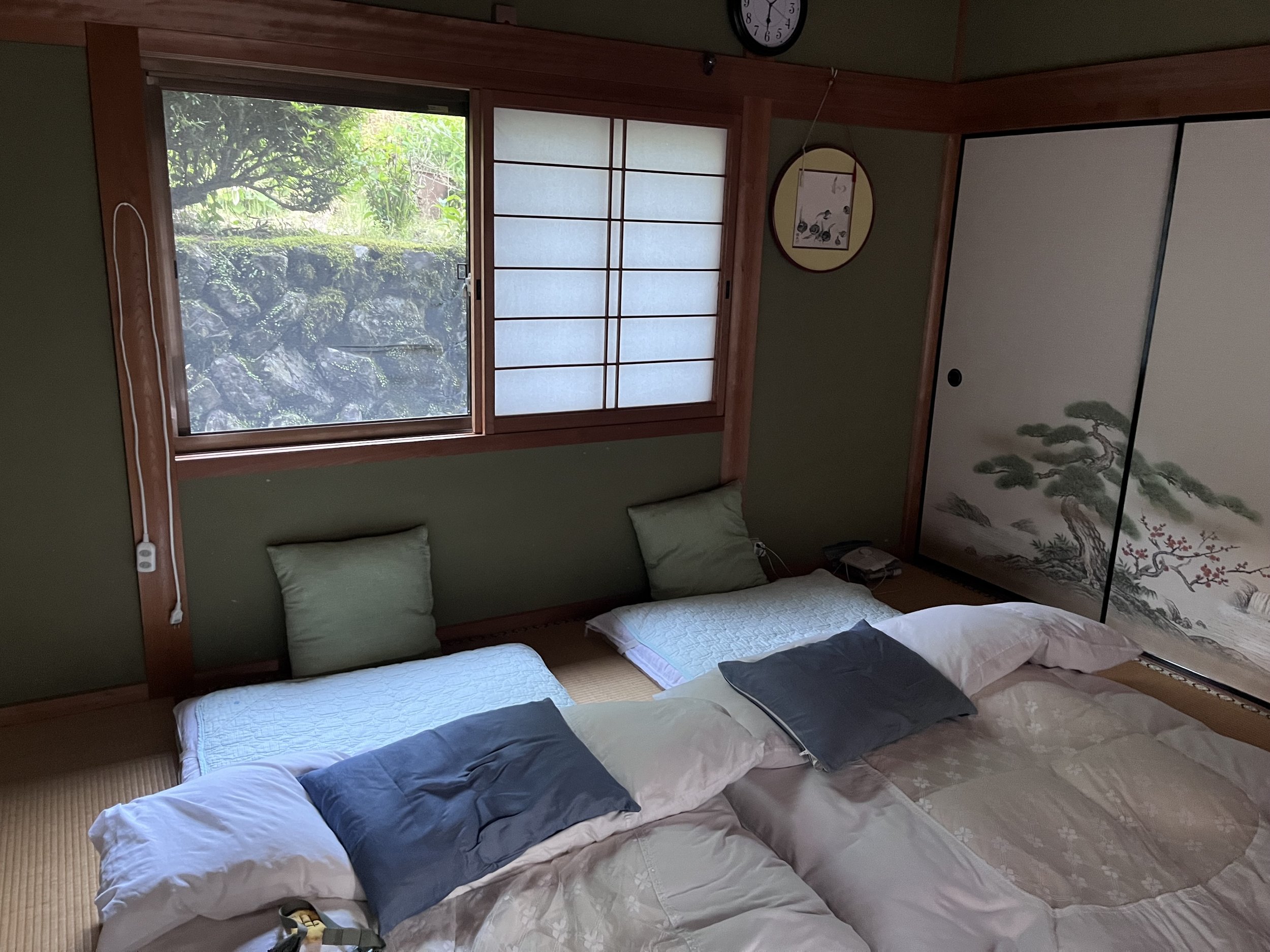
Satisfied, full, in love with life, each other, and Japan, we went to sleep on our comfy futons with the window wide open.
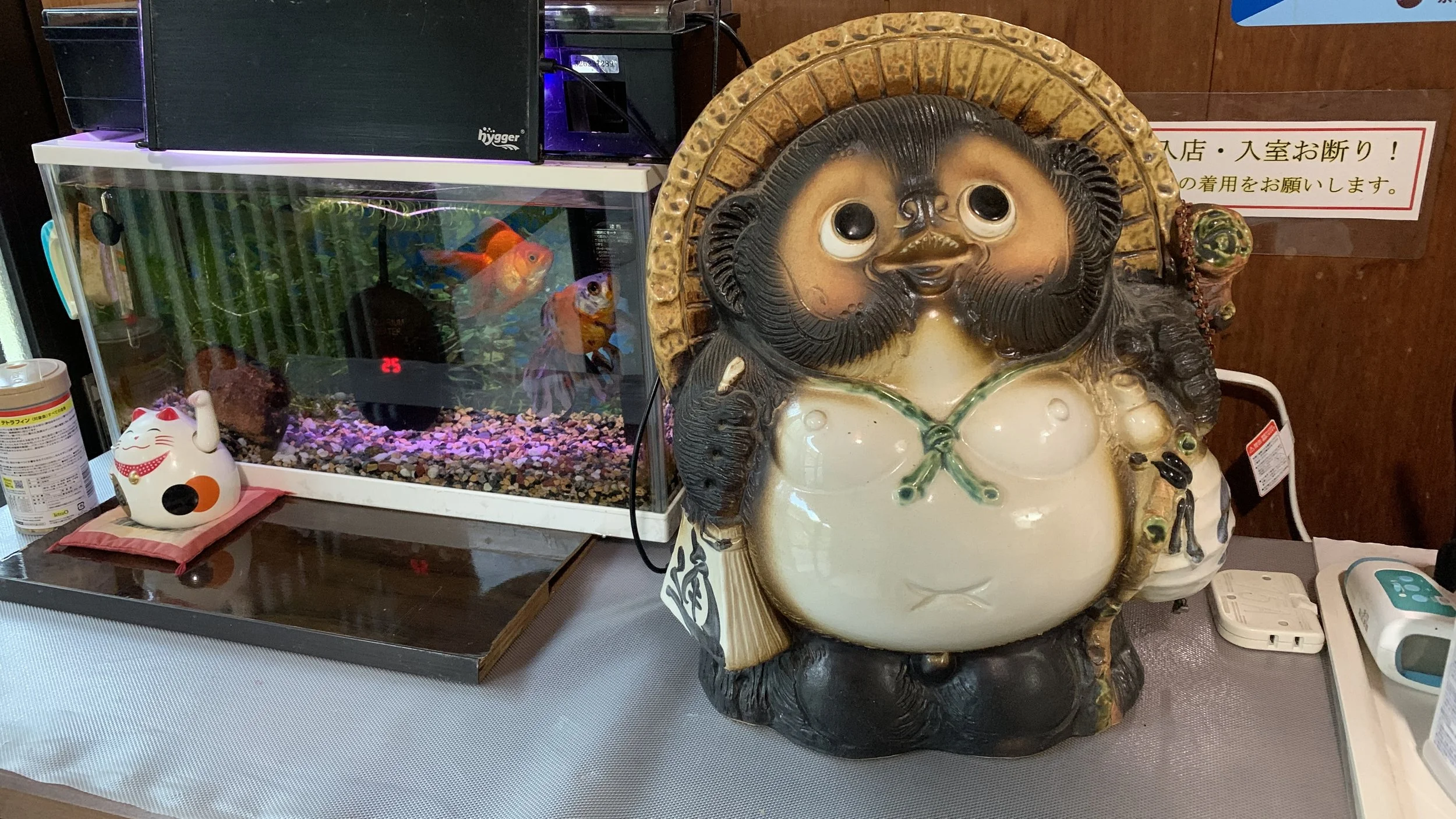
Tanuki!
Saturday, May 30th
Obako-dake • 13km
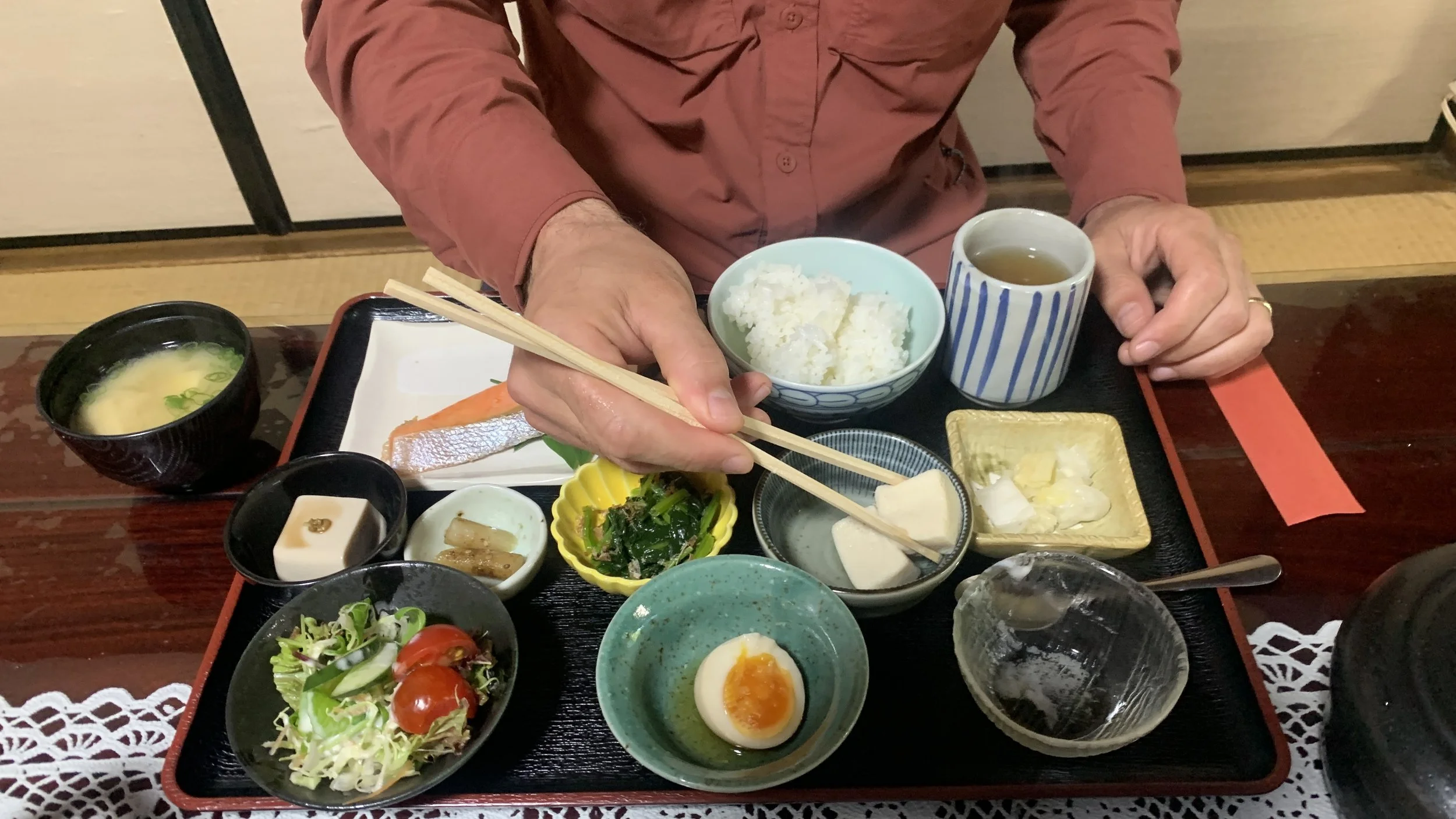
Huge breakfast - especially for me since I took on the responsibility of eating Chris’ dairy and egg products, determined not to insult our sweet hosts. I had decided to skip the yogurt until the woman kindly pointed out that the honey drizzled over it was from their bees.
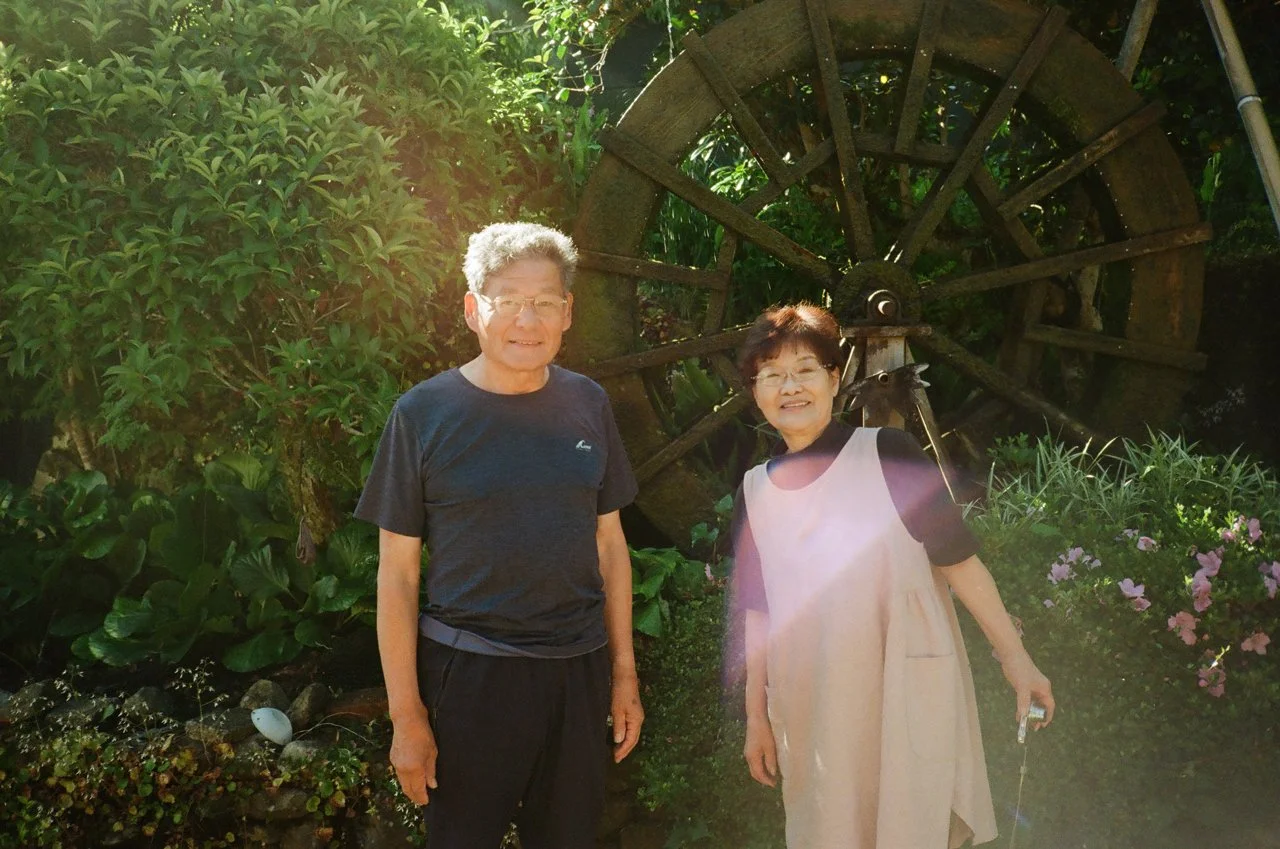
Bellies near bursting, our host dropped us off at the trailhead for Obako-dake pass. Today would be the highest elevation point of the entire hike, and since it was a clear day we were looking forward to rewarding views from the top.
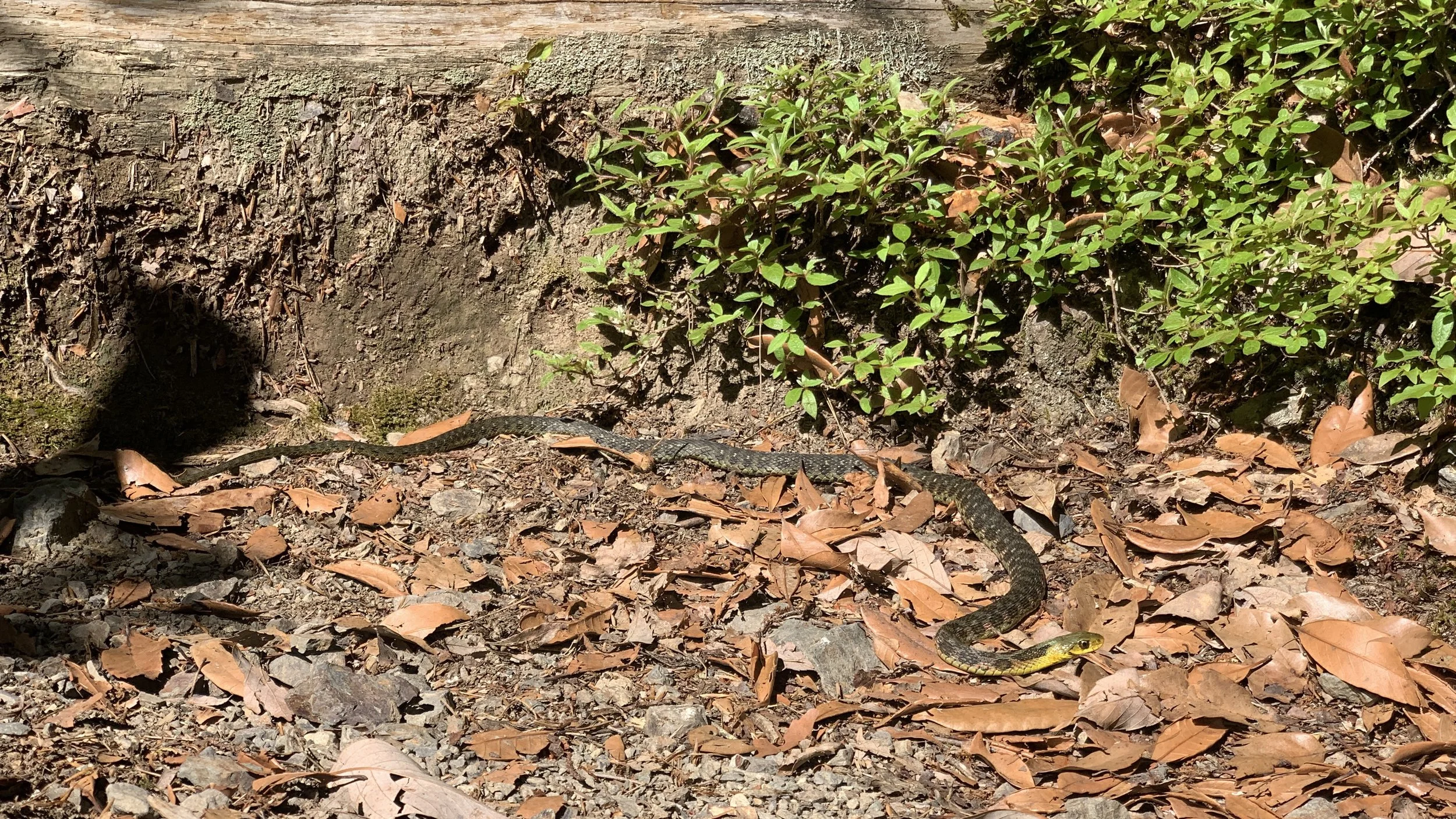
The climb was enjoyable, though uneventful, apart from seeing a nonvenemous snake, and skirting around an area that had dramatic signs warning of murder hornets nesting in the tree. As with days prior on the Kohechi, we didn’t see another human soul until we neared the top.
The typical summit is that of Obake-toge pass but we had to take a detour, presumably because of a landslide, which have been plentiful along the Kohechi. A number of times we’ve inched along a narrow ledge across crumbly landslide ledges.
The final stretch of the summit detour was fairly grueling in that it was a steep slope, not well established, and although it was only just past 11am the air had warmed considerably.
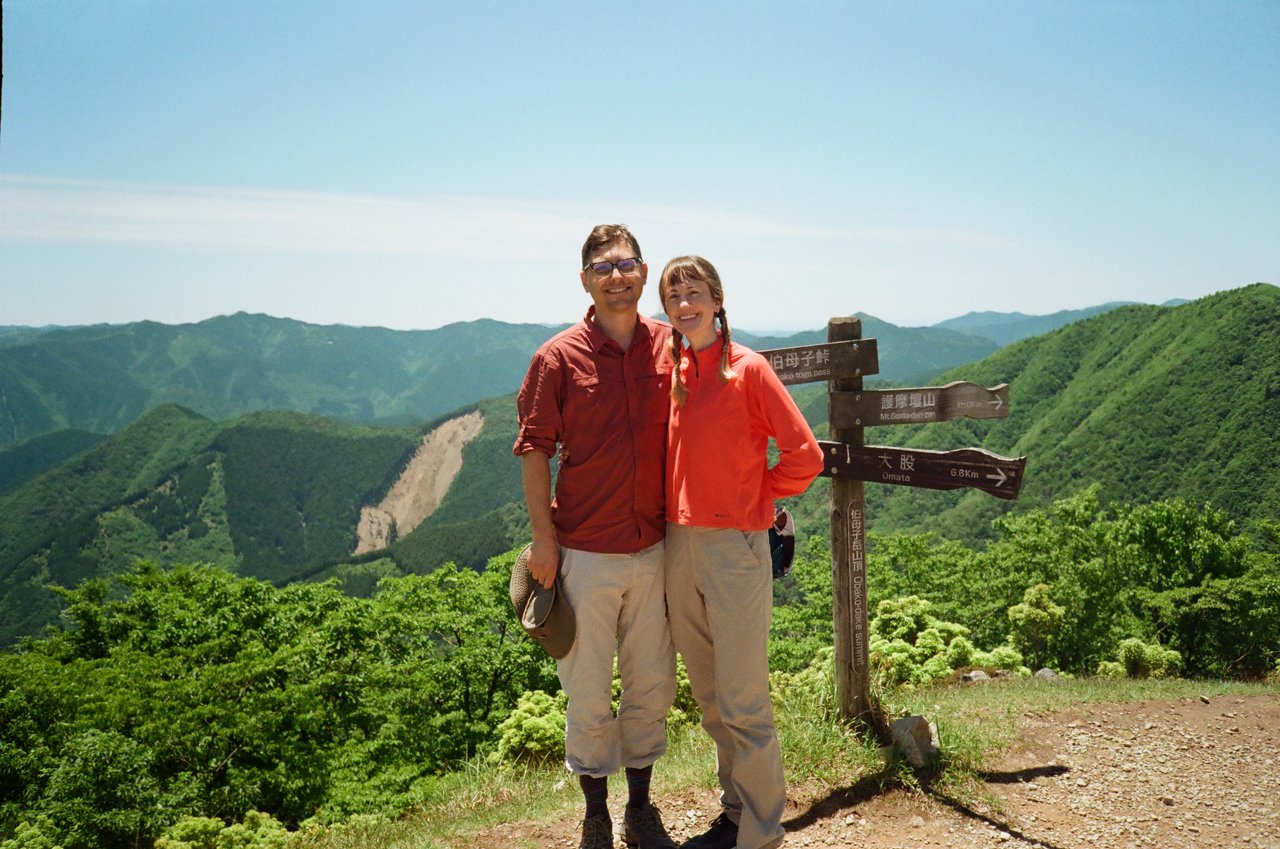
We emerged from the trees after saying hello to a pair of Chinese friends headed down from the summit, and discovered in the small grassy bald more hikers than we’d seen in the last 2 days combined. There were eight to ten people on top of Obako-dake pass, spaced out eating lunch and napping in the sun.
The guy nearest us was eating cup ramen with his chopsticks while we shared a bag of Bonchi Age before cracking open our bento boxes from Minshuku Yamamoto. The lunch contained sushi, a scrambled egg rolled up into a tight spiral (sushi?), and apple slices. Beginning to bake in the sun, we made our way back down the other side, headed for our last accommodation on trail: Hotel Nosegawa.
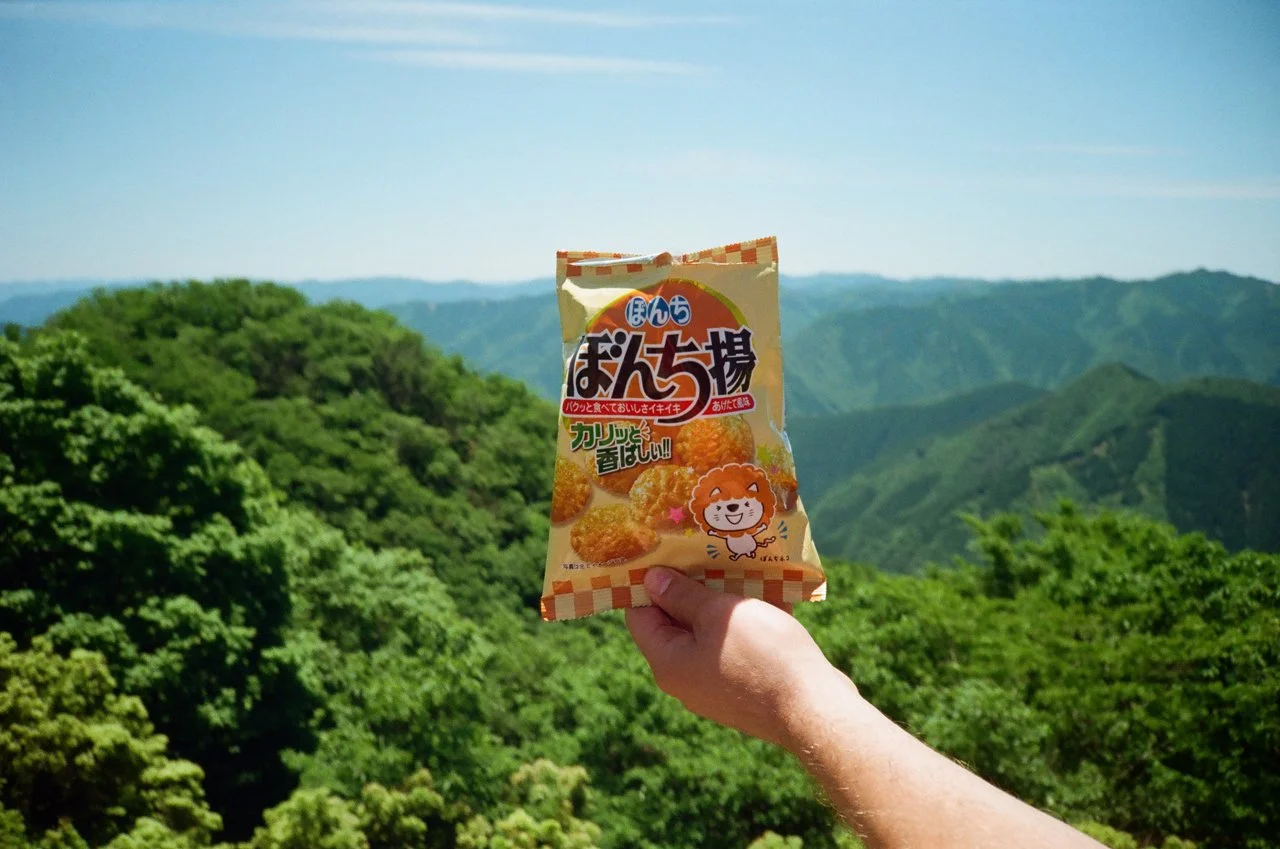
Bonchi Age, my love
Nearing the base of the mountain, we came across a small cabin that had a sign on the door stating that this was a private cabin that the owner is happy to share with hikers - to feel free to use it and be sure to leave it the way you found it.
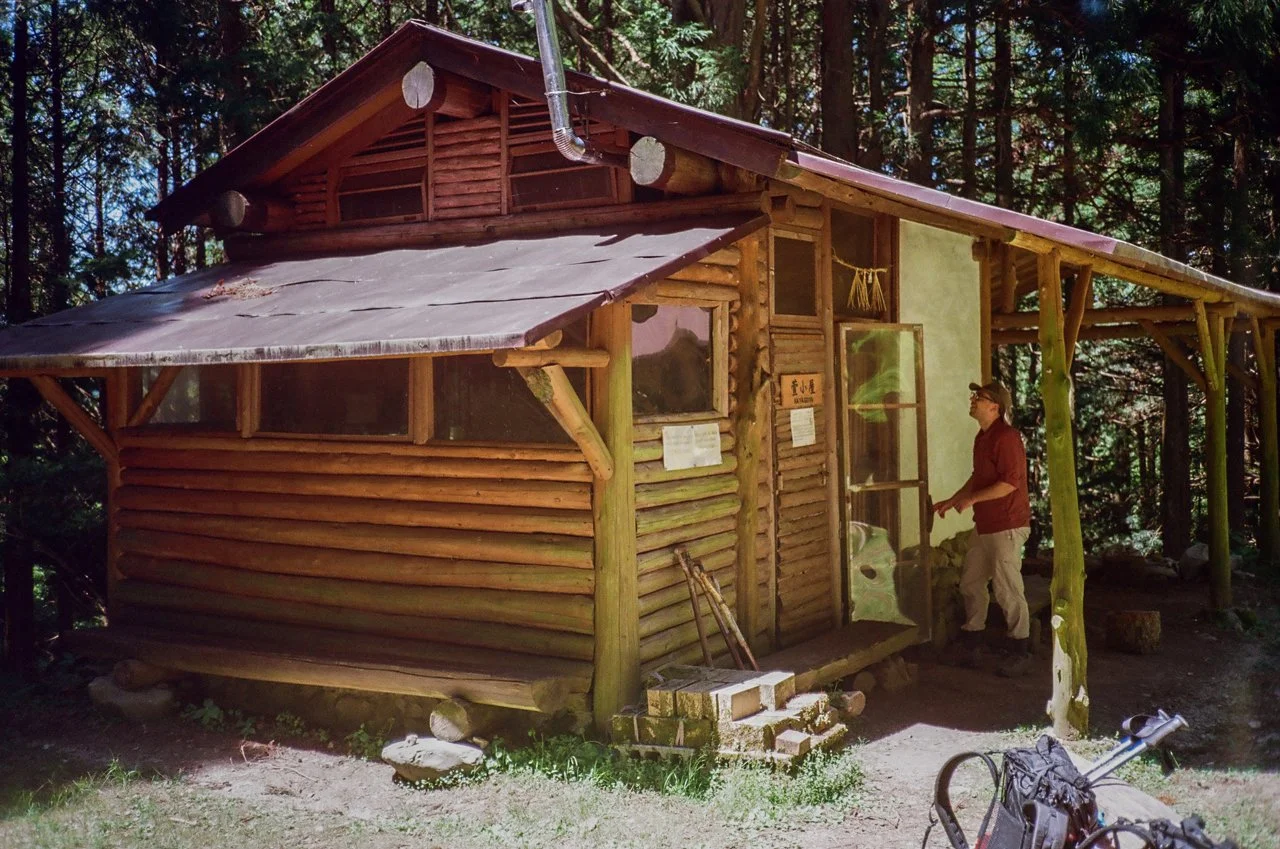
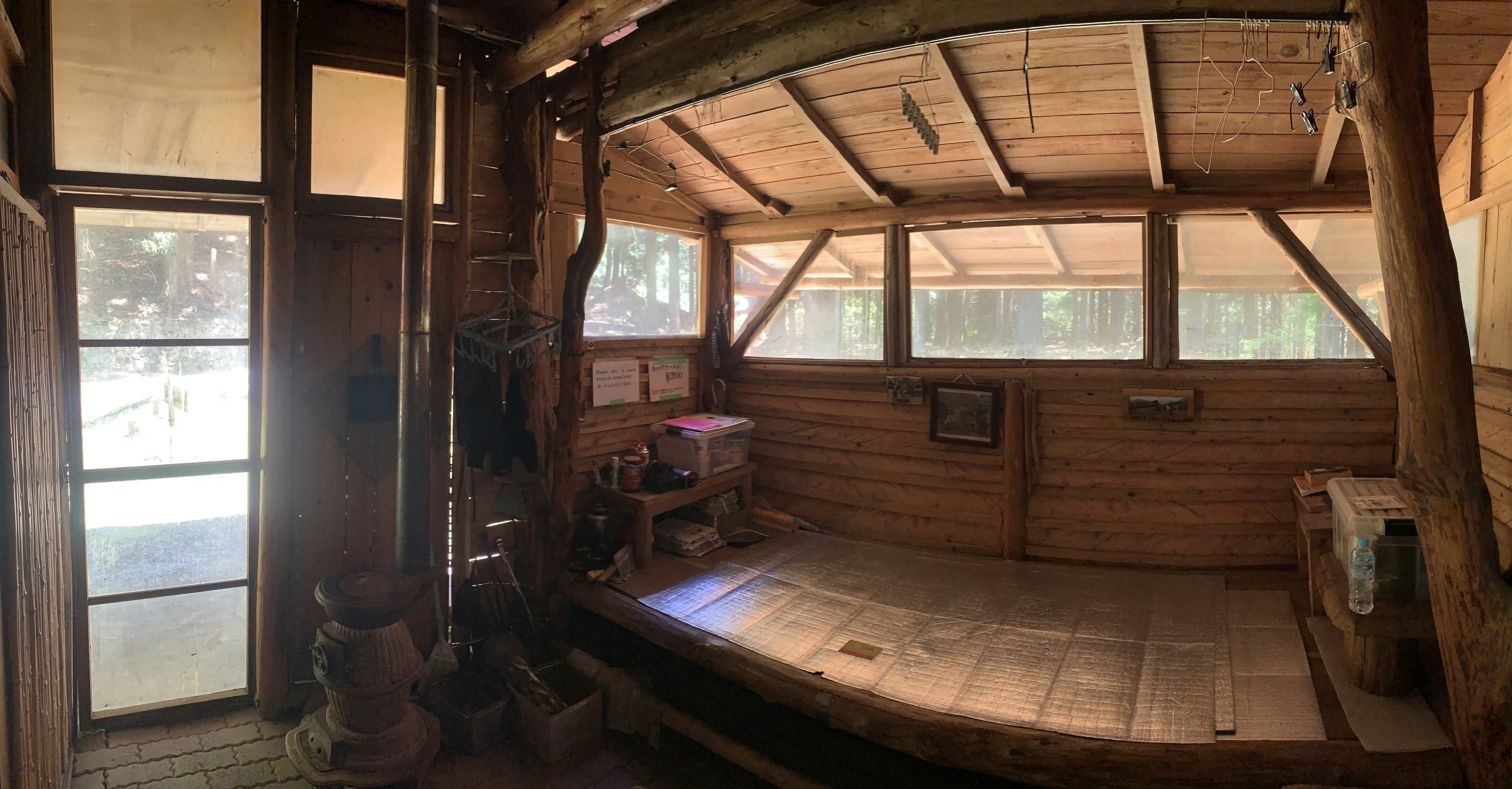
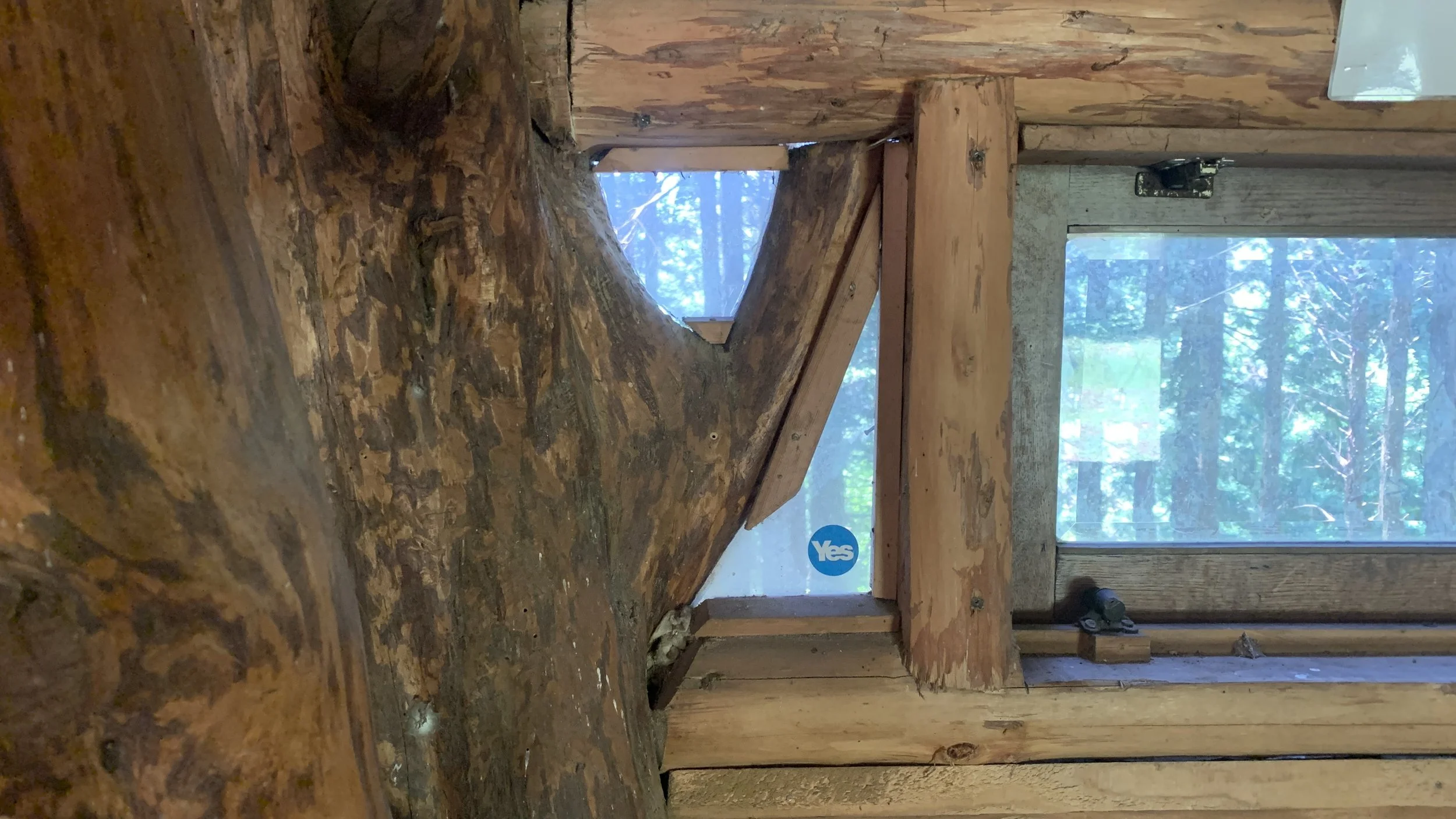
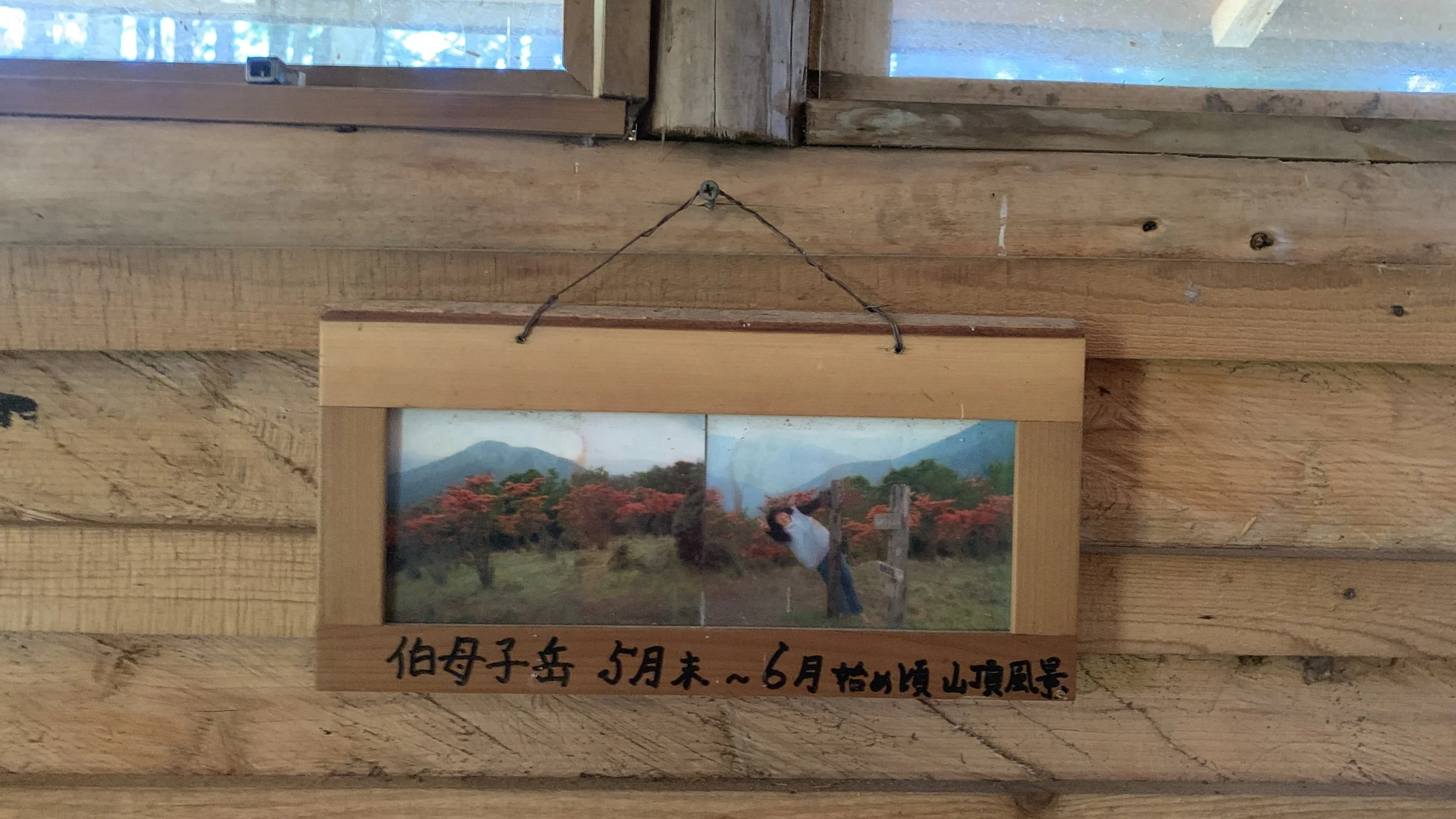
We unlatched the door and stepped inside to find a wonderfully rustic interior with insulated benches to sleep on, a stove in the middle of the floor for cooking and a wood-burning stove for warmth. There was a large fire pit out front and wood to use for fires. Signage merely requested guests put out any fires before leaving.
There was also a small insulated stone pit of cold water on the outer edge of the cabin being continuously pumped/replenished, and covered by a sheet of plexiglass and some boards, which served as an in-ground refrigerator. Signage indicated that it was a suggested donation of ¥200 for soda and ¥300 for beer. We took an unsweet green tea to share and left change in the donation box, drinking it on the log bench mounted in the shade of the cabin’s awning, with a view of the trail. When another hiker showed up we took our leave to allow them to enjoy the serenity of the space.
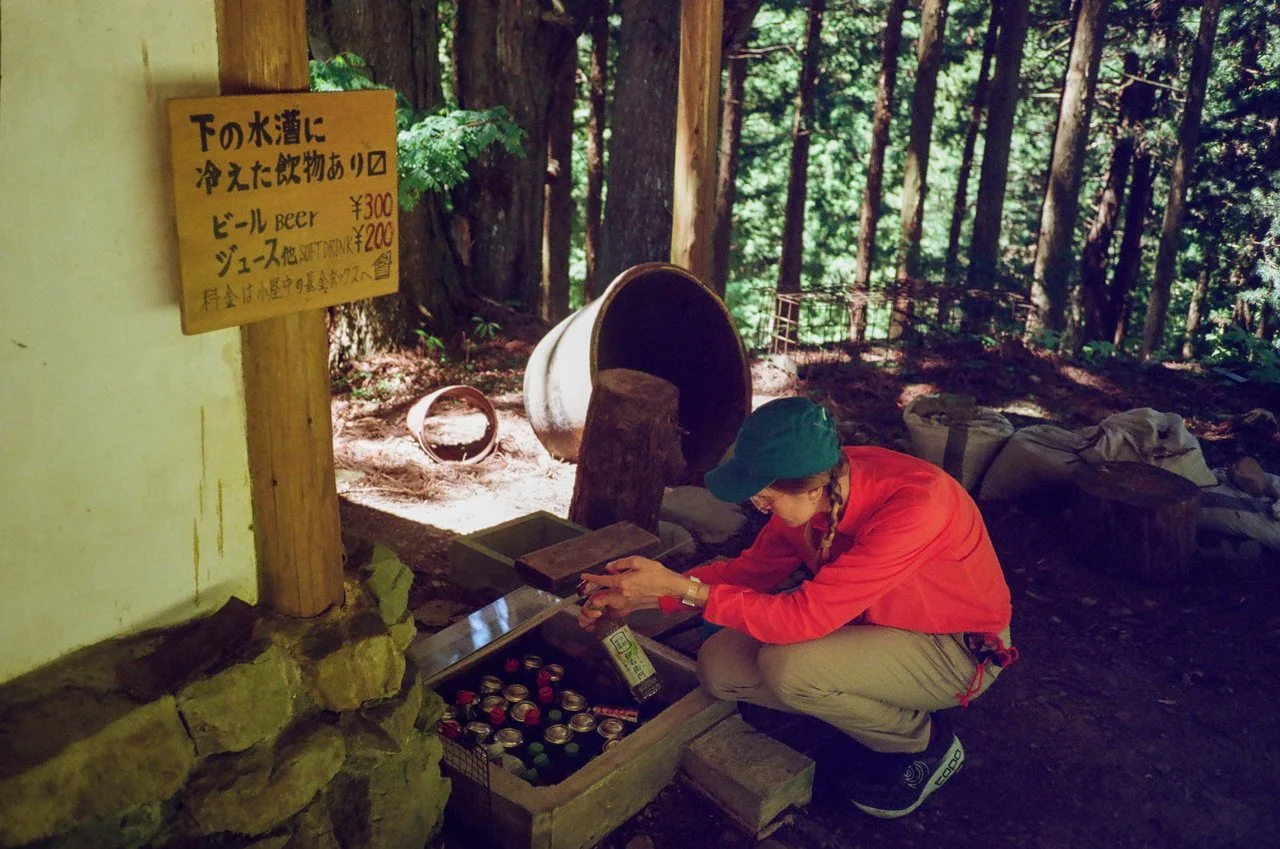
Ocha ka bīru? (green tea or beer?)
Down in the valley we found the pay phone from which we were to call our accommodations for a shuttle ride. It was a pastel pink rotary phone that took a ¥10 coin to place a call. We called the hotel; my first opportunity to use “moshimoshi!” or “hello!” as reserved for a phone greeting. “Jenna Foster desu. Watashitachiha ima Omata ni imasu.” Meaning, “This is Jenna Foster. We are at Omata [bus stop] now.” Five minutes later our driver arrived and we hopped into the van for a short 3km drive to the hotel.
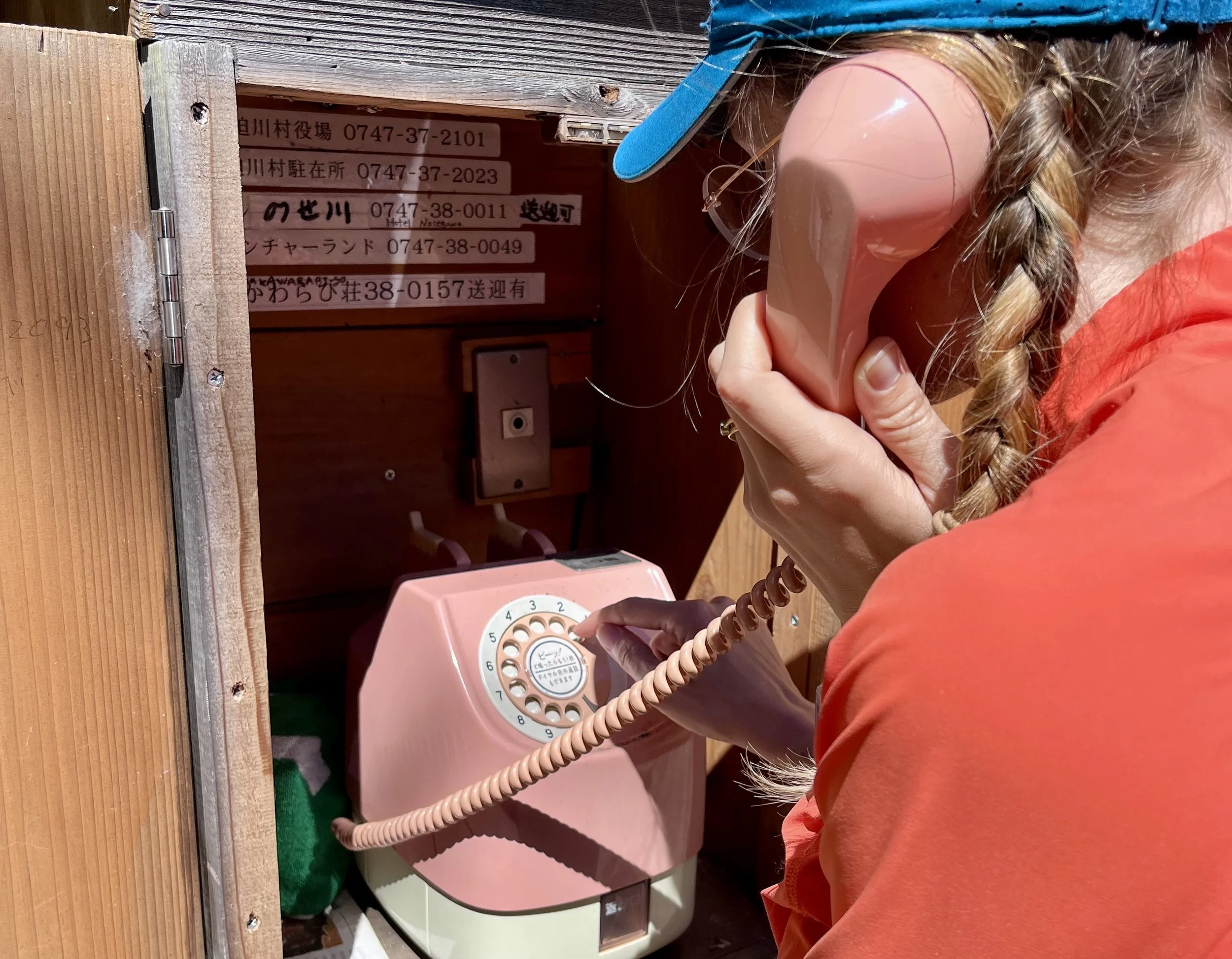
Moshimoshi!
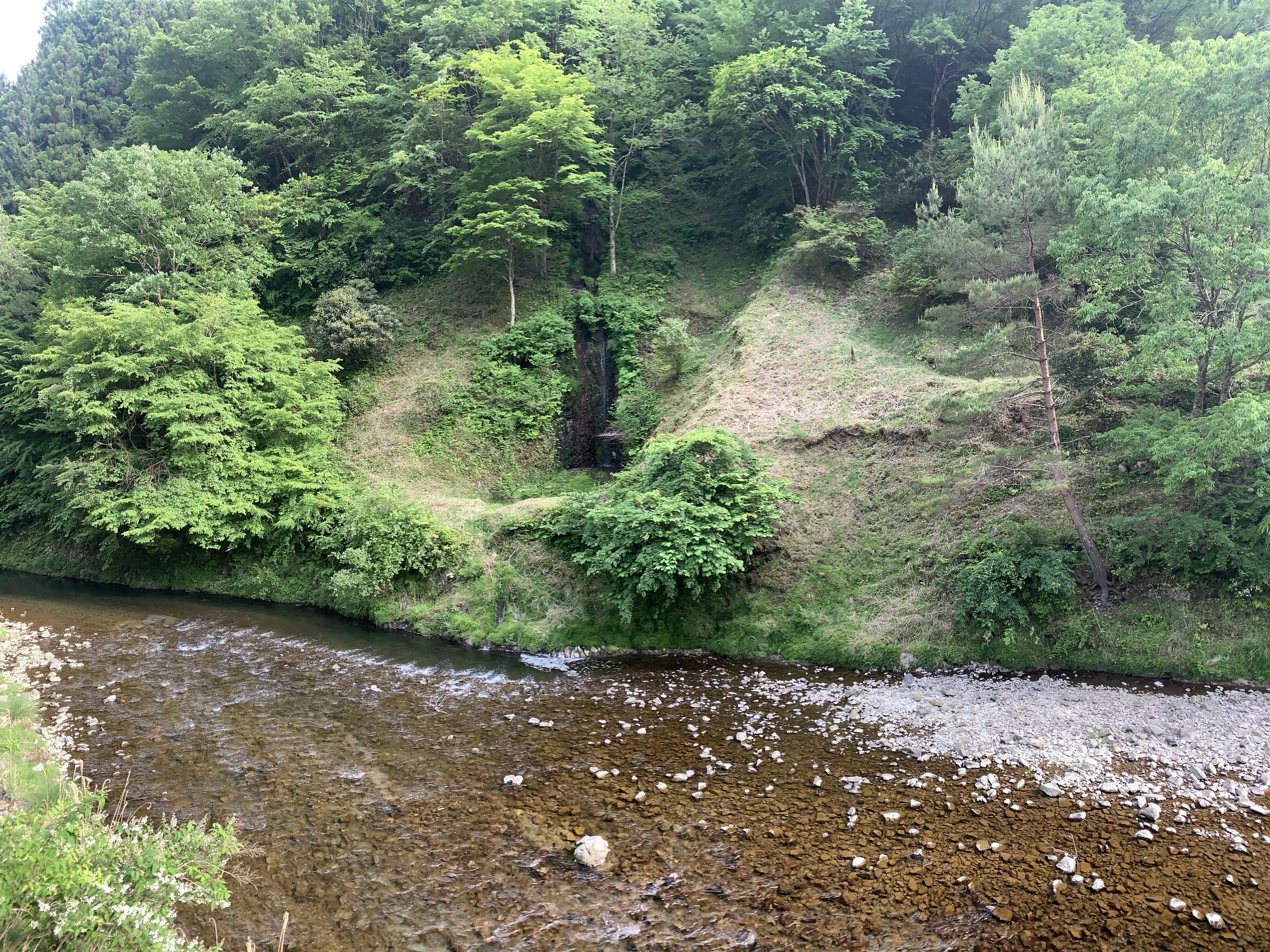
When we pulled up at the hotel the exterior appeared rather dubious but what awaited us inside was a pure backpackers delight: full of charm and character, the hotel looms over a crystal clear river with a thin, multi-tiered waterfall pouring into the river directly across from the hotel.
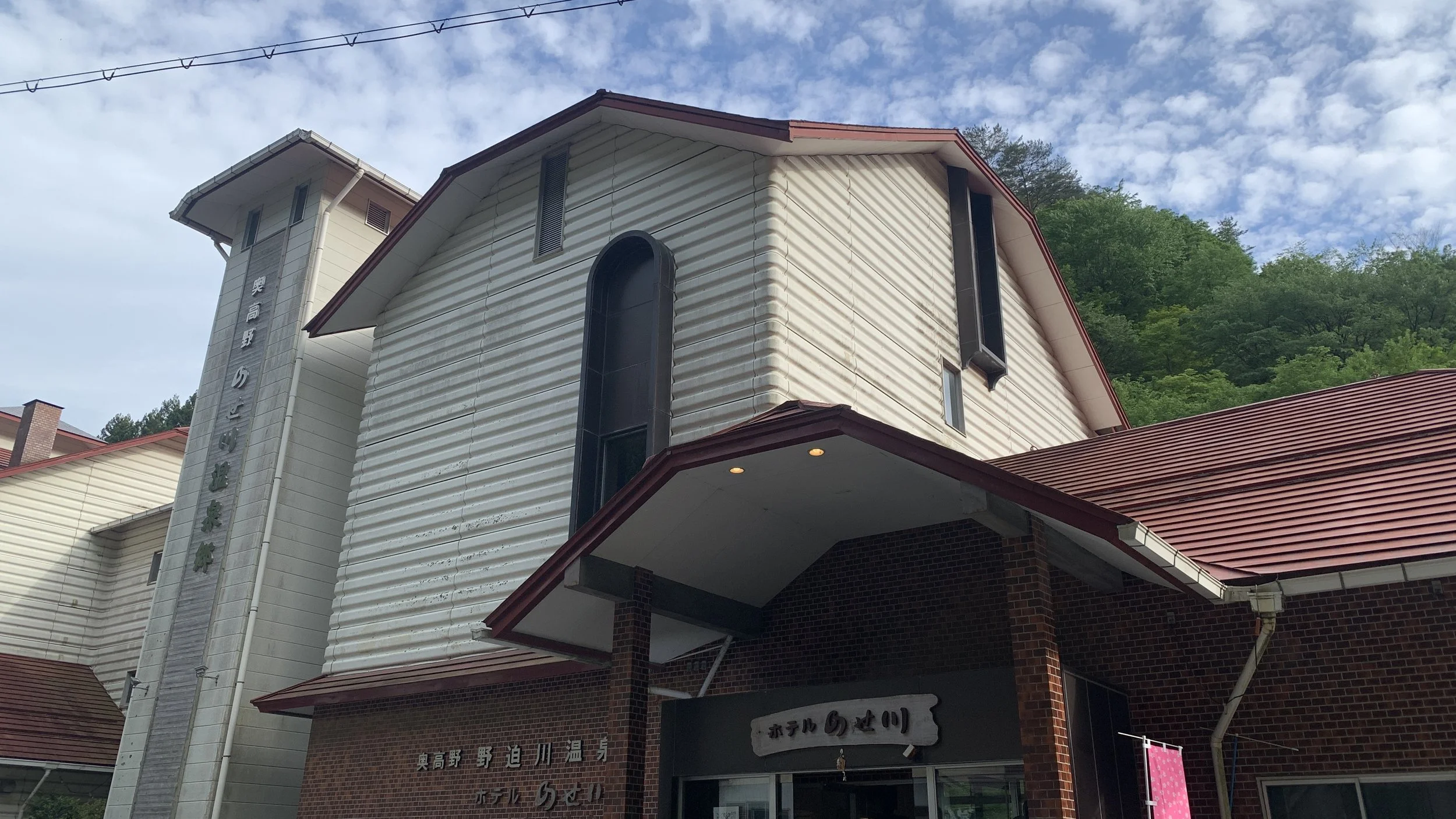
Hotel Nosegawa
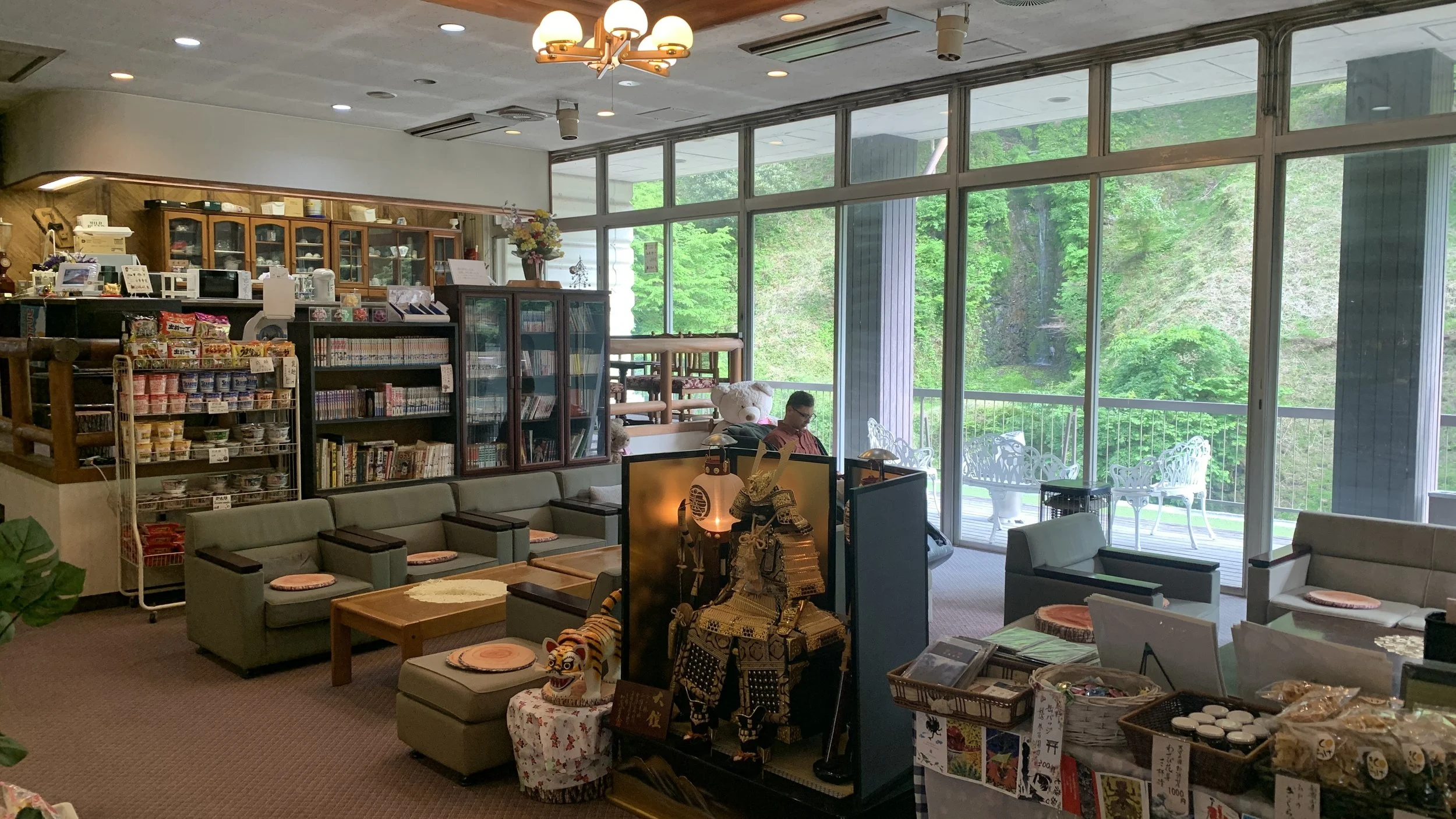
The lobby boasted a large collection of manga for guests to peruse, along with a small shop full of edible goods, and a well-worn Fujiiryoki massage chair (free to use!) that delivered one of the best/most aggressive massages of my *entire* life. We considered seriously for several minutes whether one of these chairs would be a worthy investment for our home back in the states. …perhaps if we ever open a backpackers hostel. The front desk manager took us on a short tour of the facilities, looking us up and down and saying simply “tall” as he reached for their largest robes for use in the public onsen.
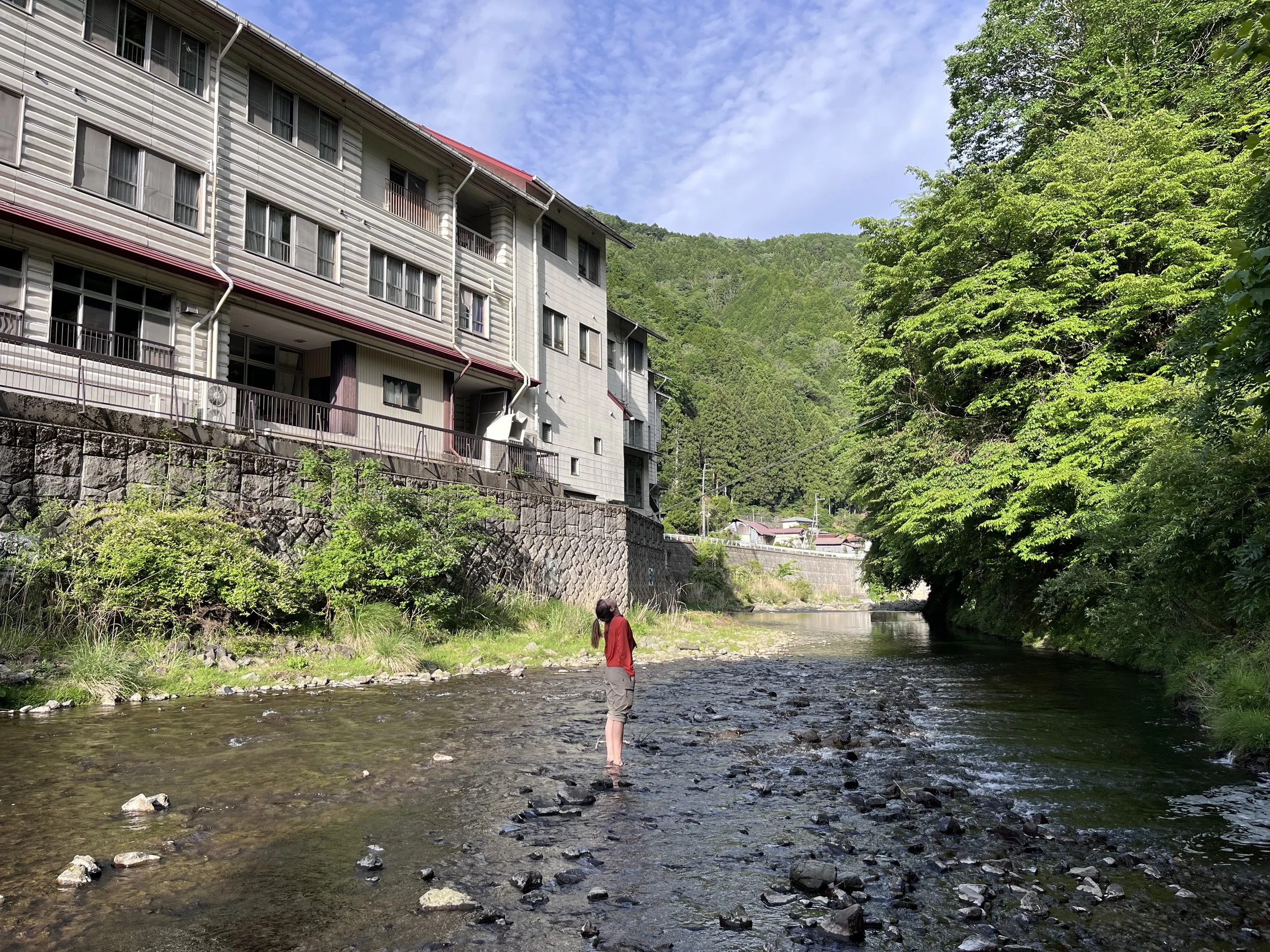
Our room is on the second floor and while there is evident water damage around the sink and toilet, the vibes are good, the beds are comfortable, the futons are cozy, there are free snacks in the room, and when we open the window screen we can listen to the river and waterfall below. Down the hall are two public onsens, one for men and one for women.
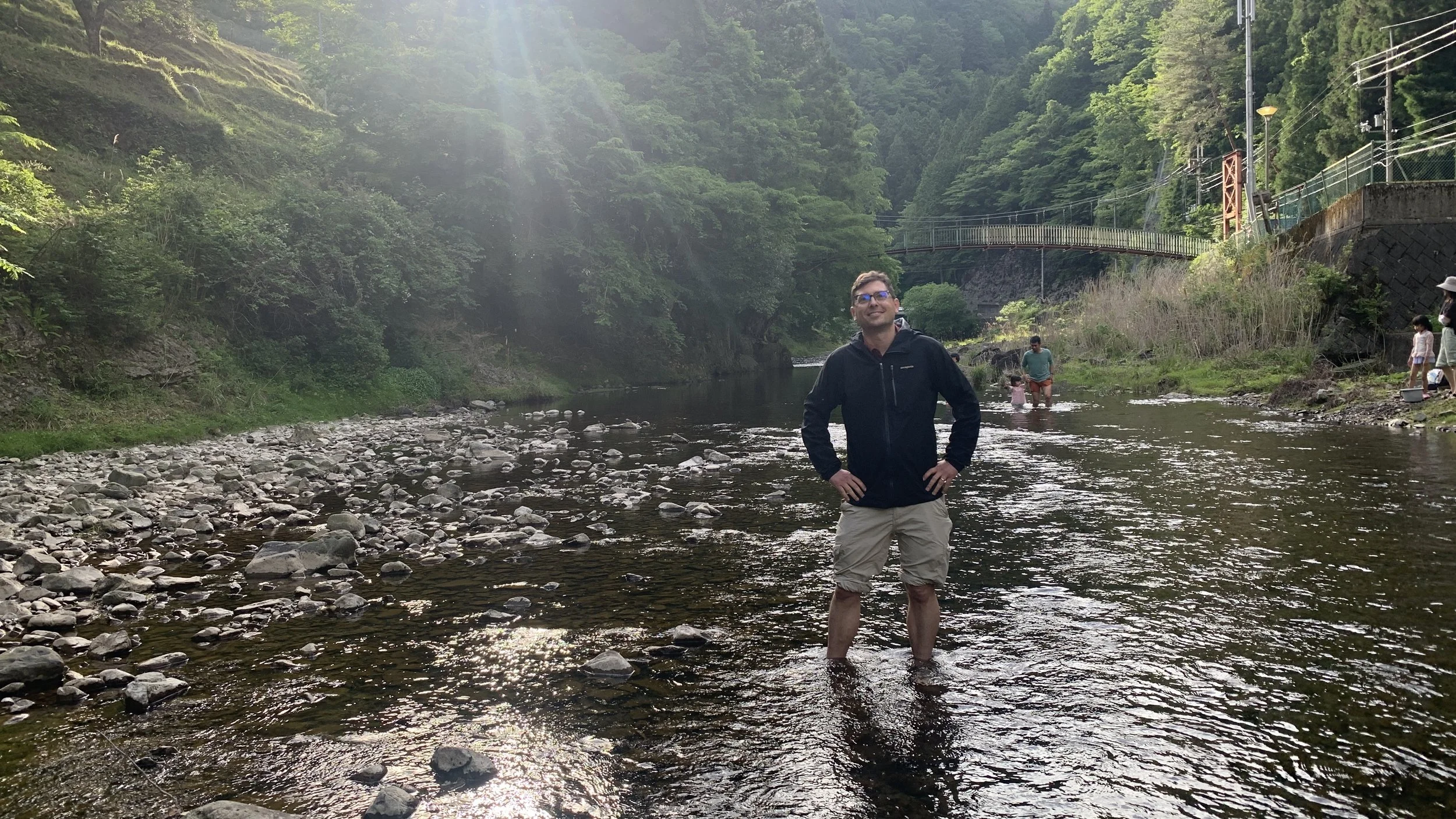
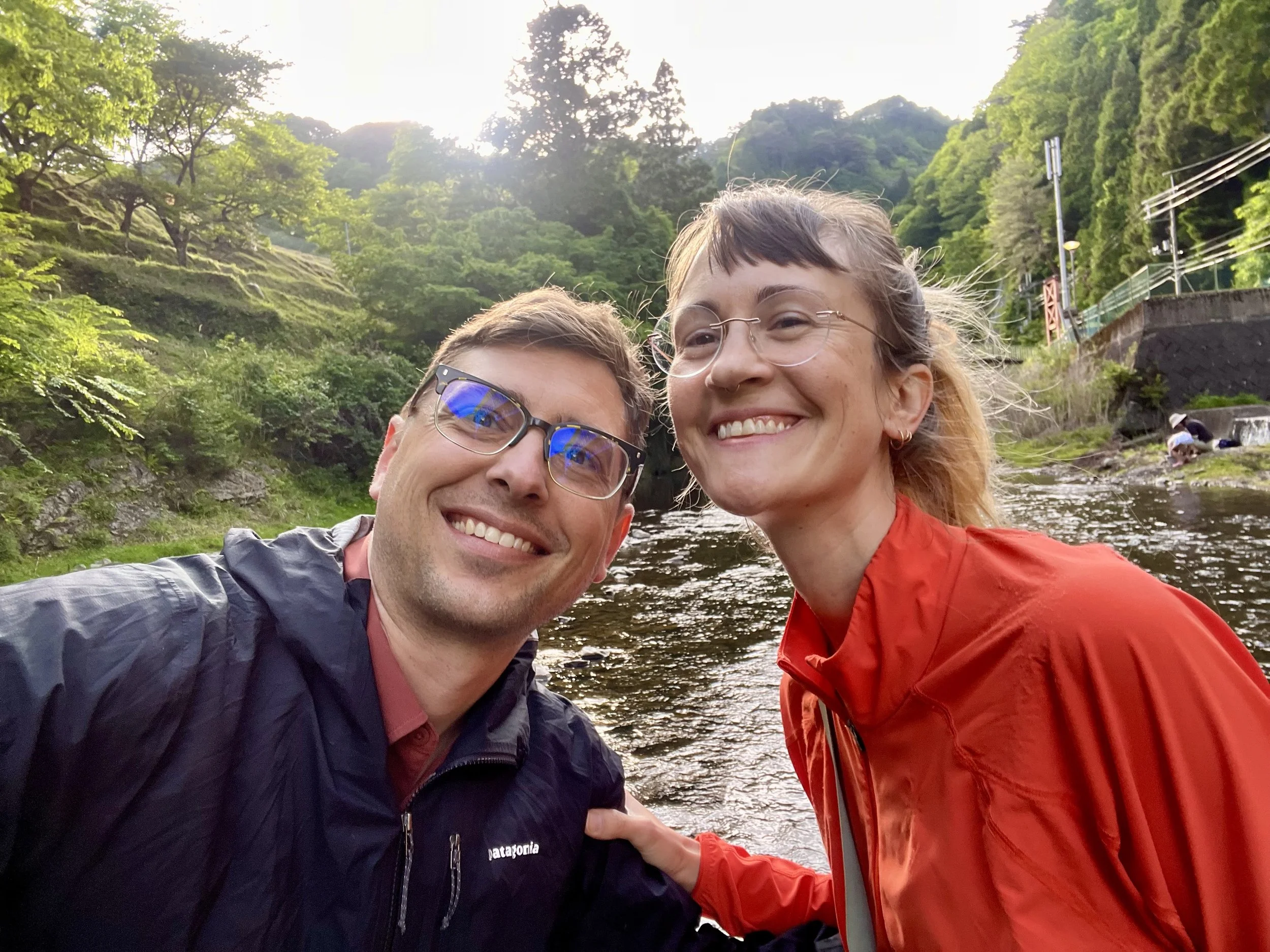
After wading in the river for a spell while a sweet family with three young children also played in the water, we came inside to use the public baths. The womens’ onsen had a great big window that spanned from tub to ceiling and all the way across the room, so you could look out over the river and waterfall through foggy glass.
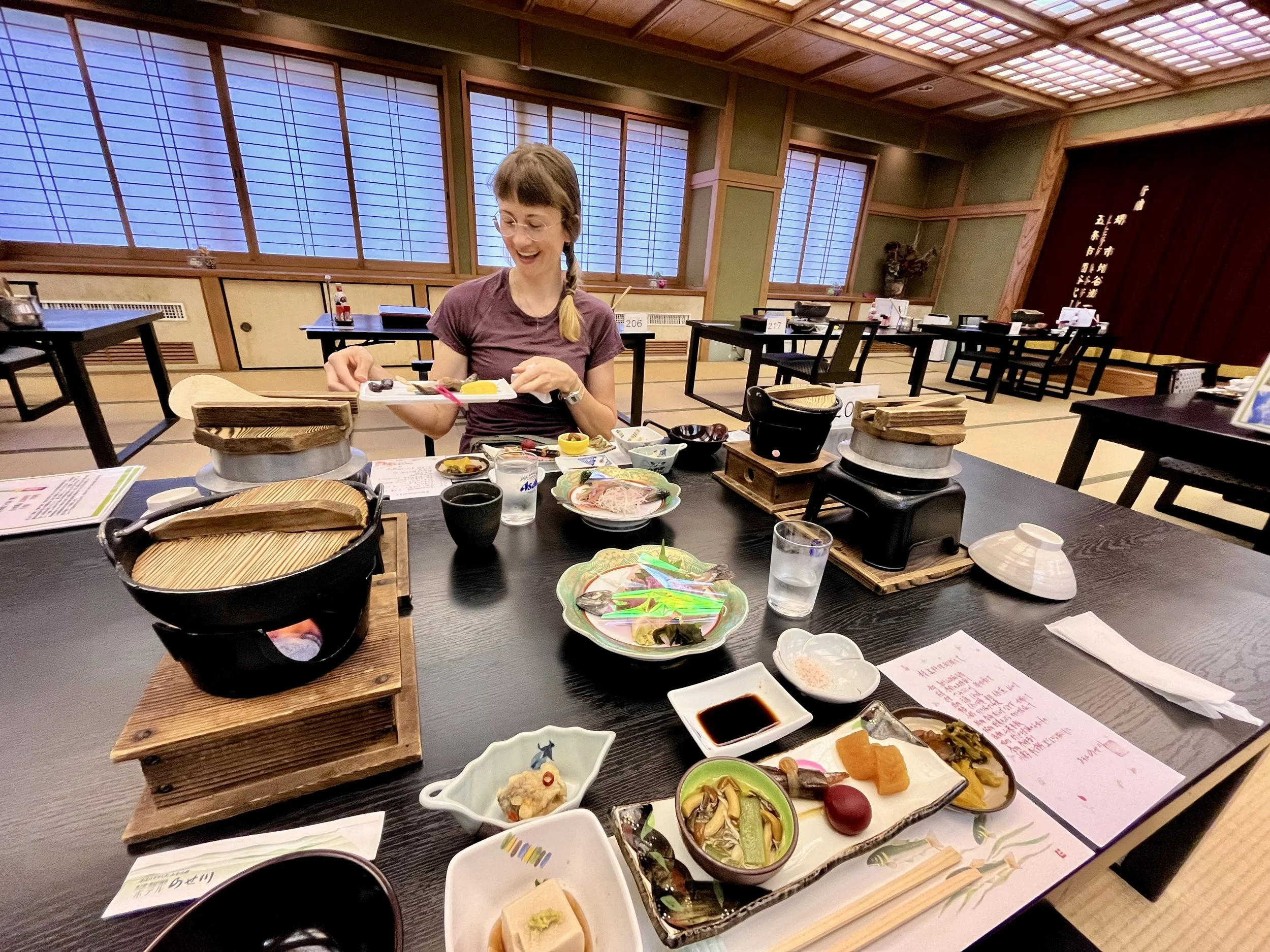
After the onsen, we headed straight to the dining room. It was a delicious marathon of a meal, in a huge Japanese dining hall, with at least a dozen dishes. We left our slippers outside the hall with everyone else’s and came in to sit in low chairs on the tatami floor. Between our meal in the dining room and time in the onsen we get the impression this is a popular destination for Japanese. The demographic in the dining hall doesn’t seem like hikers, and it is a Saturday. I watched a man at the table caddy corner to us for cues on how we were supposed to char our fish over the open flame… and then how to eat it.
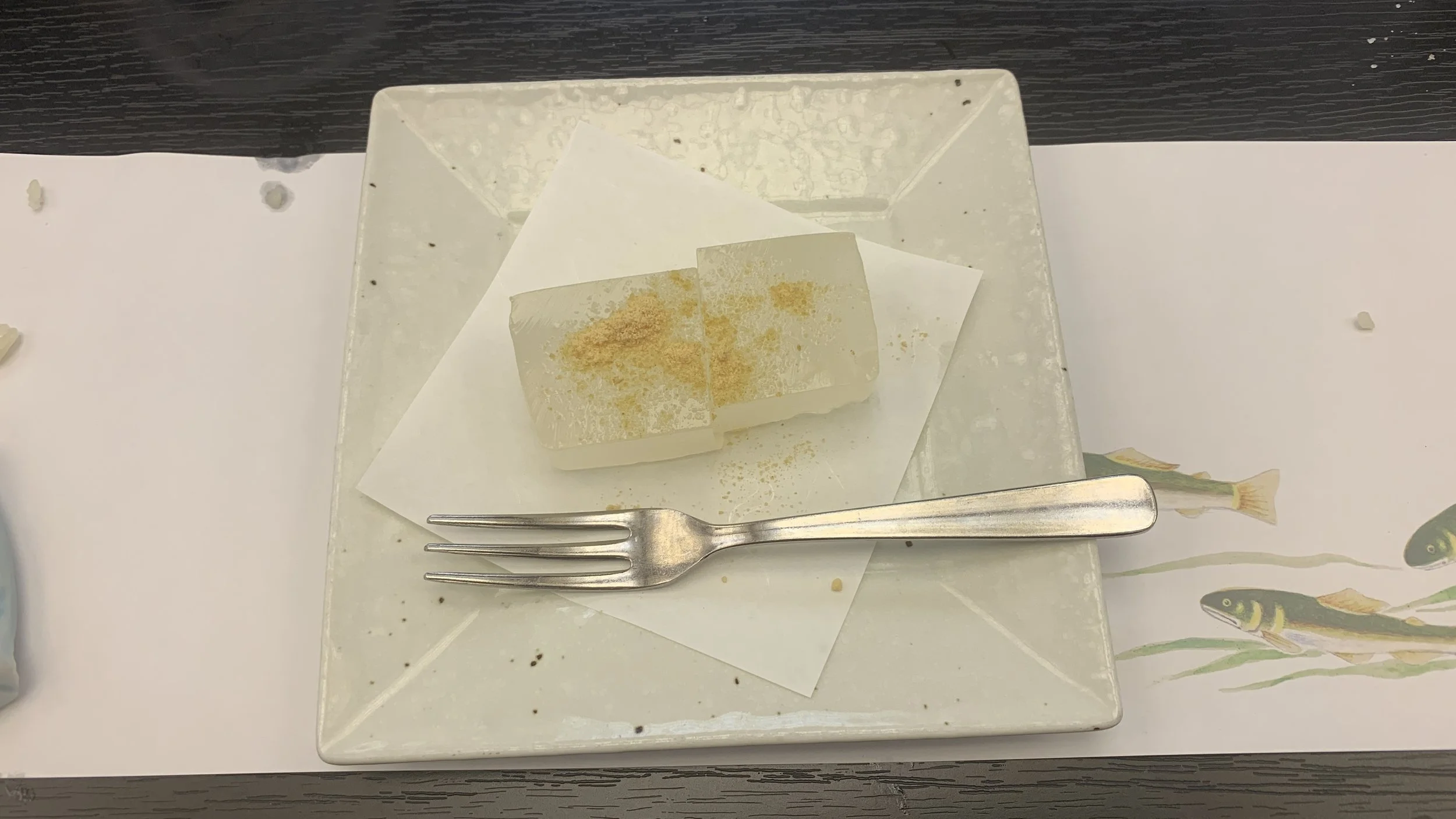
Kuzu desert
A couple funny moments during the dinner as well, like when I had to the ask the server if the iridescent paper atop the fish was edible (it wasn’t) at which point I became suspicious about the edibility of other items as well, including the leaf garnish with the serrated edges that I had already eaten a couple of today. It turns out this is oba, an aromatic herb that is to my relief, definitely edible. It’s so yummy in fact that I’d like to see about growing it in my own garden (in addition to persimmon and maybe giant bamboo).
Back in the room Chris complained about eating the “whole ocean” of sea creatures tonight and thus being unable to move, and I couldn’t stop laughing because it really was an absurd amount of food.
Sunday, May 31
Koyasan • 17km
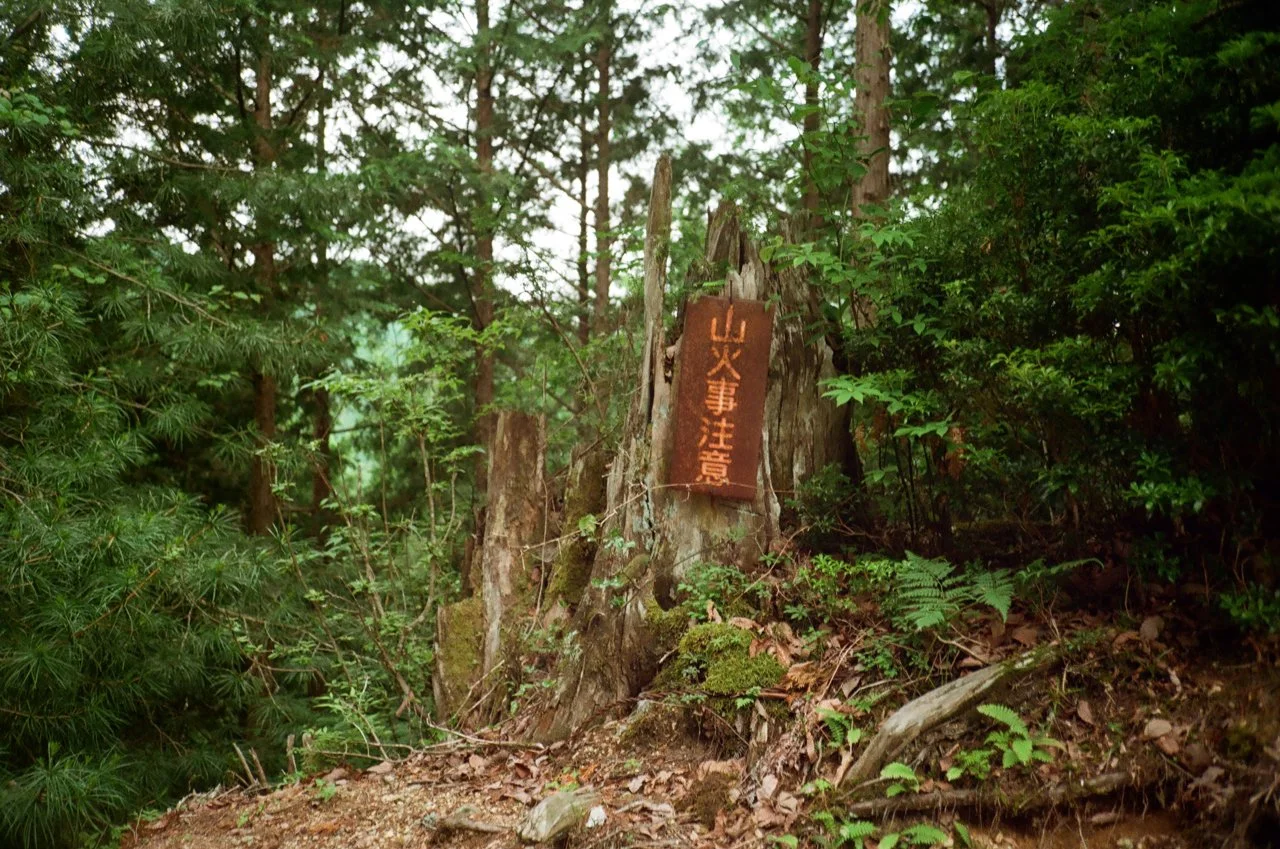
A sign near Koyasan warning of wildfire risk.
After yet another huge breakfast meal, and a final massage in my favorite massage chair of all time, we caught the 8AM shuttle back to the trail. I love how everyone sees you off in a Japan. Each host has stood outside to wait for us to disappear out of sight. Even at our hotel members of staff did this to say goodbye.
There were three older Japanese ladies on our shuttle, hiking the Kohechi from Koyasan to Hongu Taisha. They engaged in an upbeat conversation with our deep voiced shuttle driver, who was also the front desk manager. I wish I could have understood the story he was telling, but there were lots of unison “ehhh?!” (yeah?!), “so desu ka…” (Is that so…) and “honto desu!” (That’s true!) We bid them farewell at the pay phone bus stop and parted ways.
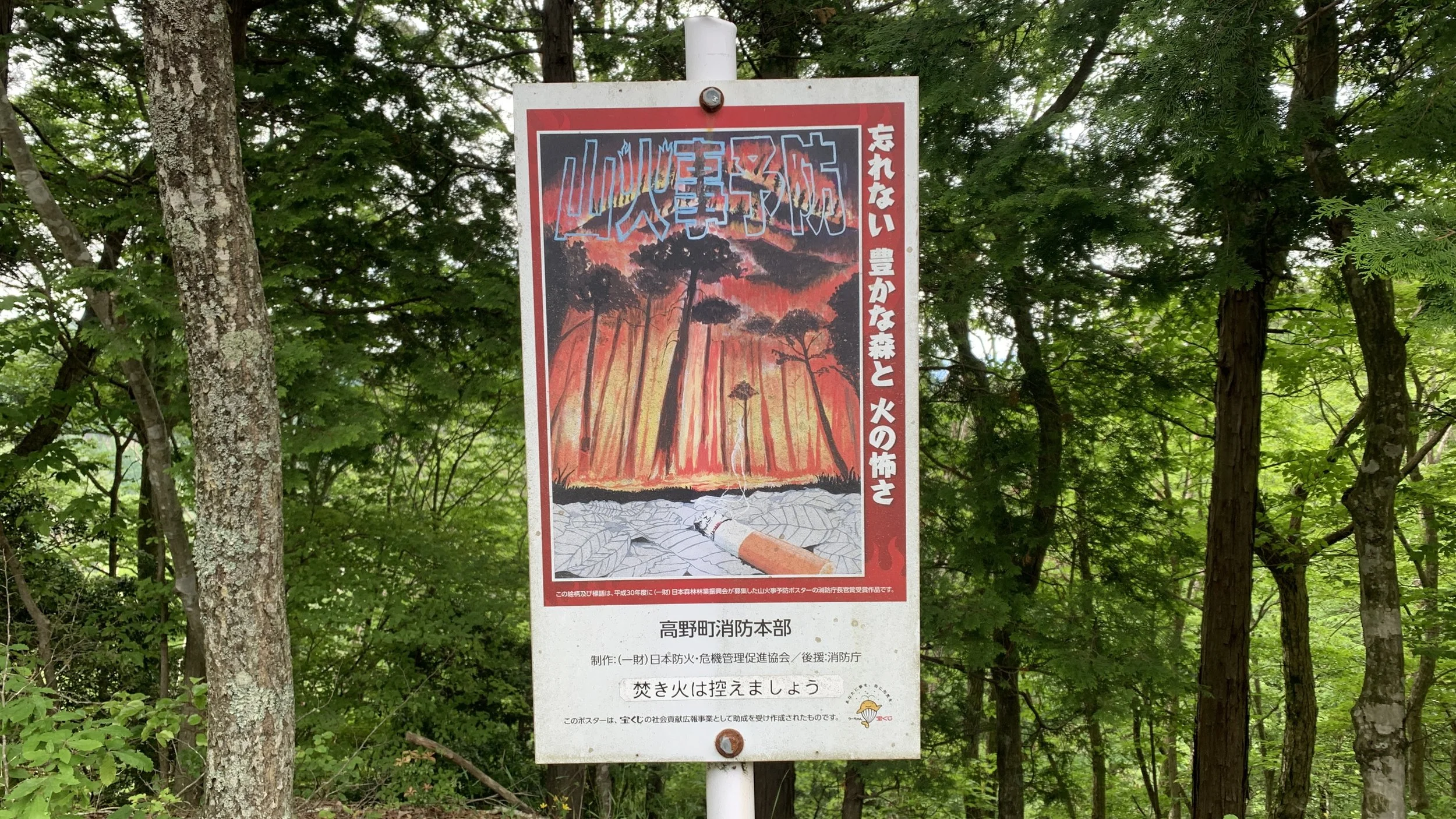
Today’s walk was tinged with sadness that the hike is ending, and concern for the typhoon heading for Japan, expected to make landfall in the Kii penninsula in two days time, and then arrive in Tokyo on the day of our scheduled flight back home. Today is also our least favorite day in terms of terrain, as you can tell we are nearing ‘civilization’. Constantly switching between trails and road walks, including a lengthy walk on a narrow yet busy road which was pretty unnerving, and on which I fell and skinned my knee just to seal the deal.
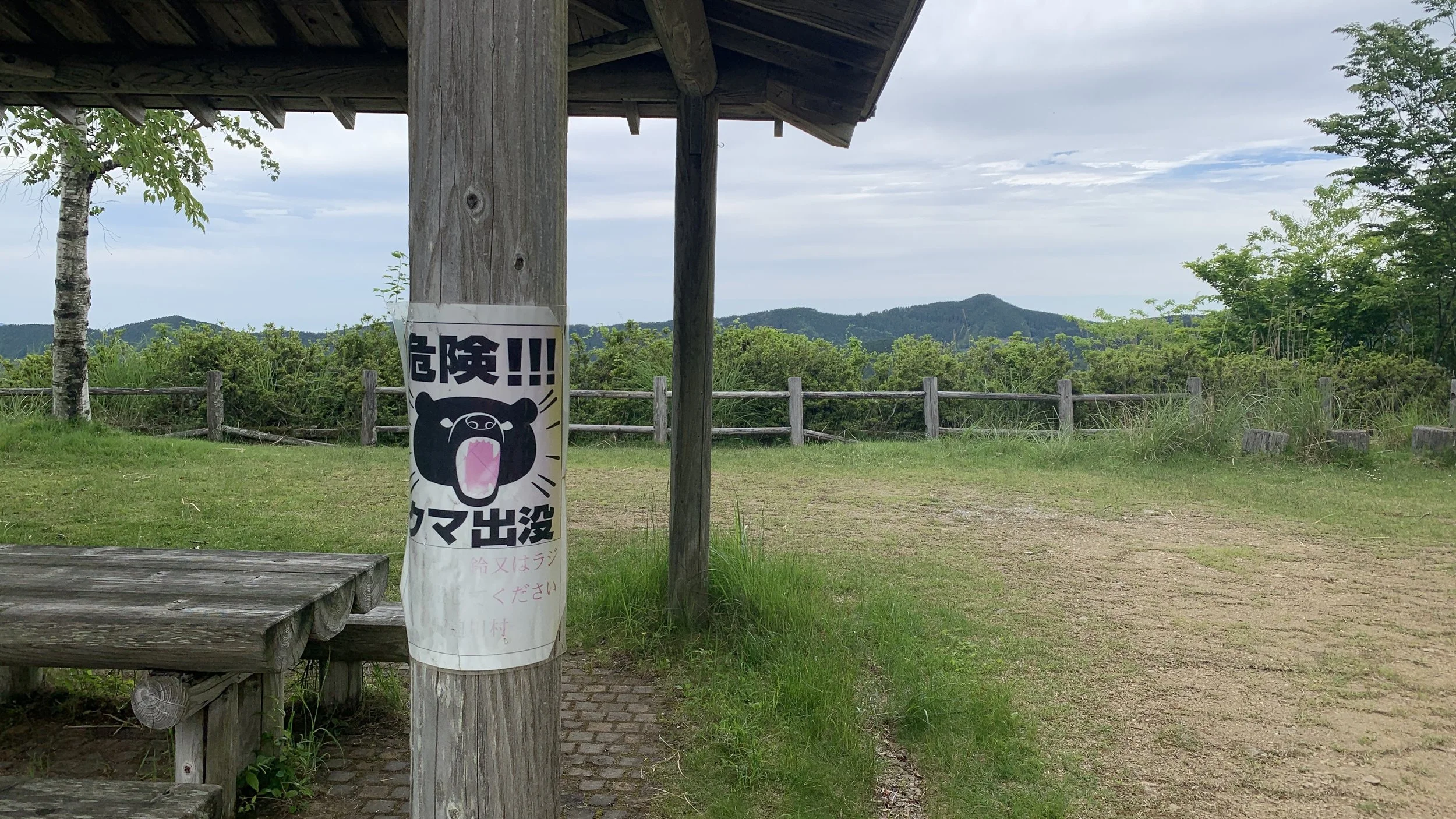
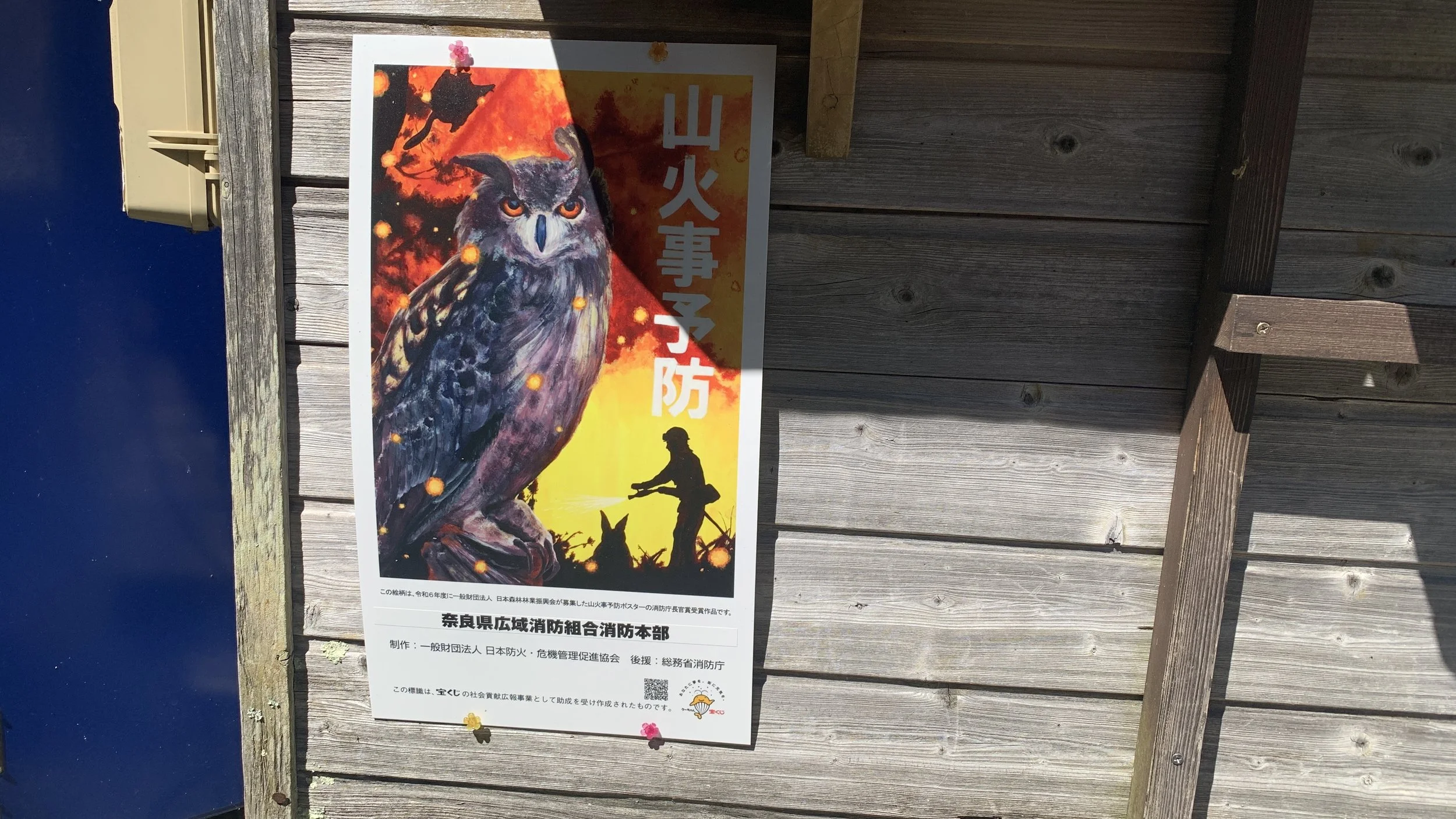
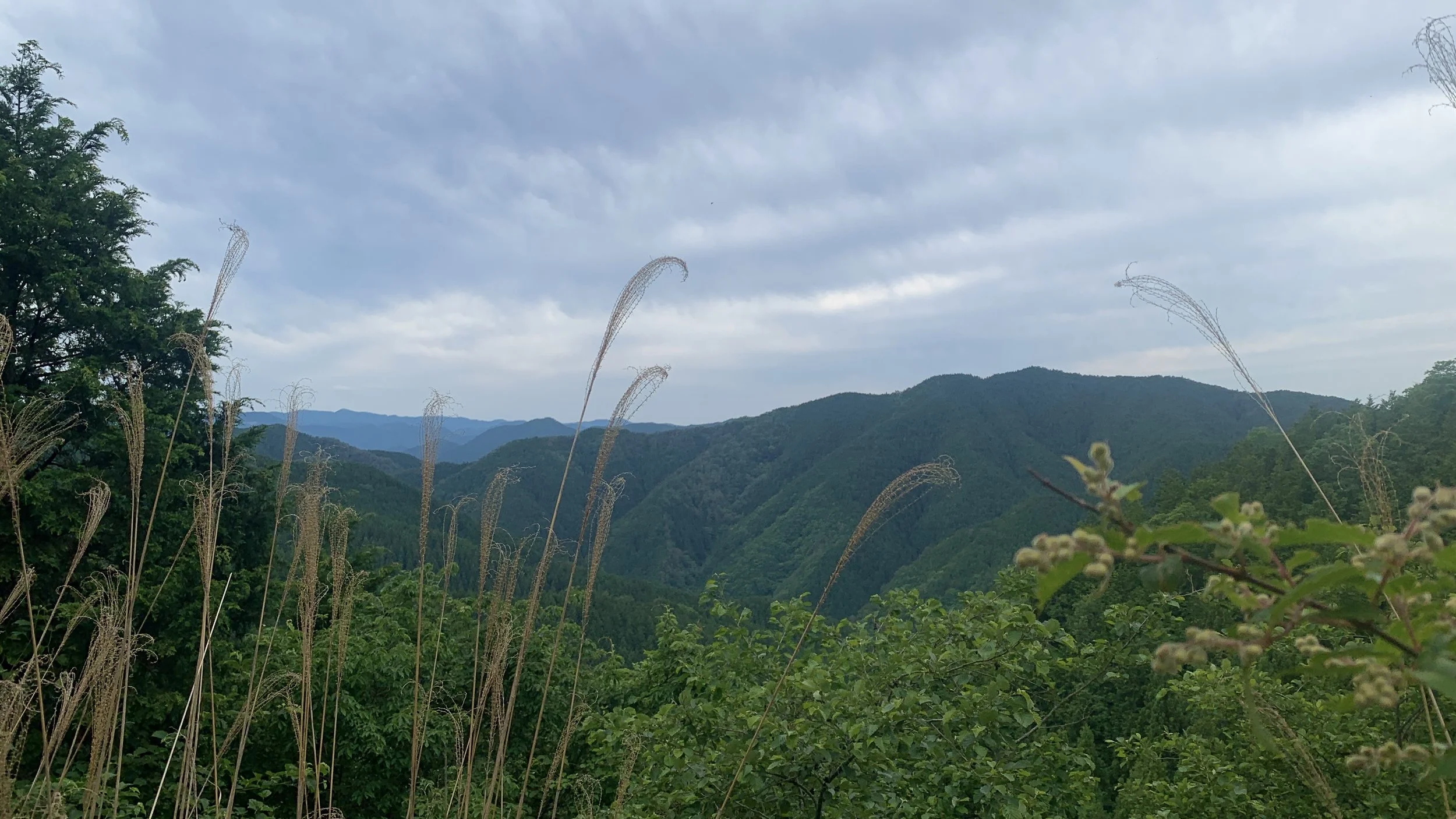
This is also the most asiatic black bear warning posters we’ve seen. Koyasan is a major destination and many make the trip by public transit or car, so I supposed that lends itself to the friction between people and bears. At one break spot at a scenic overlook Chris spotted a murder hornet and we took our leave.
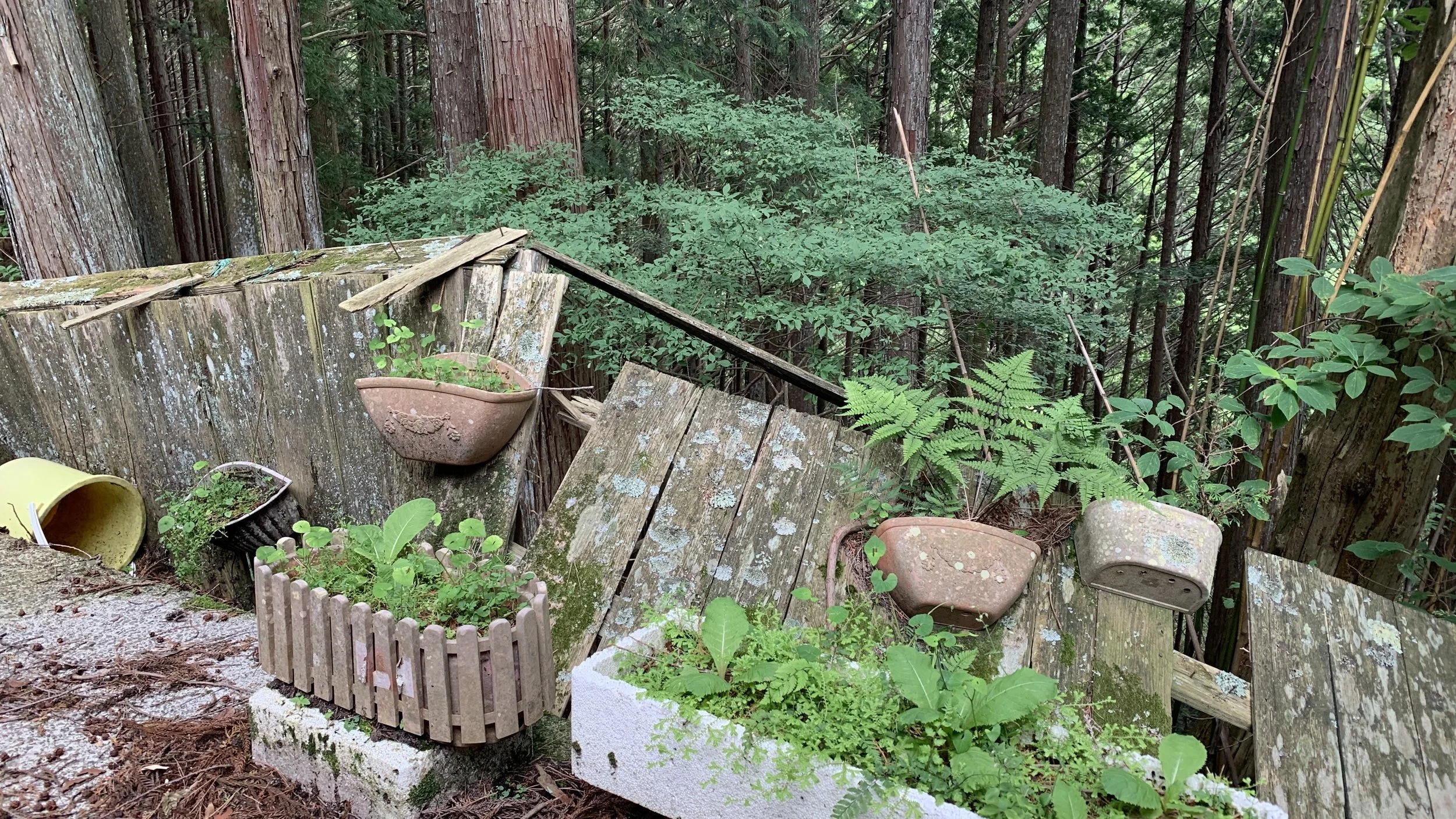
A micro-forest is forming in these abandoned pots.
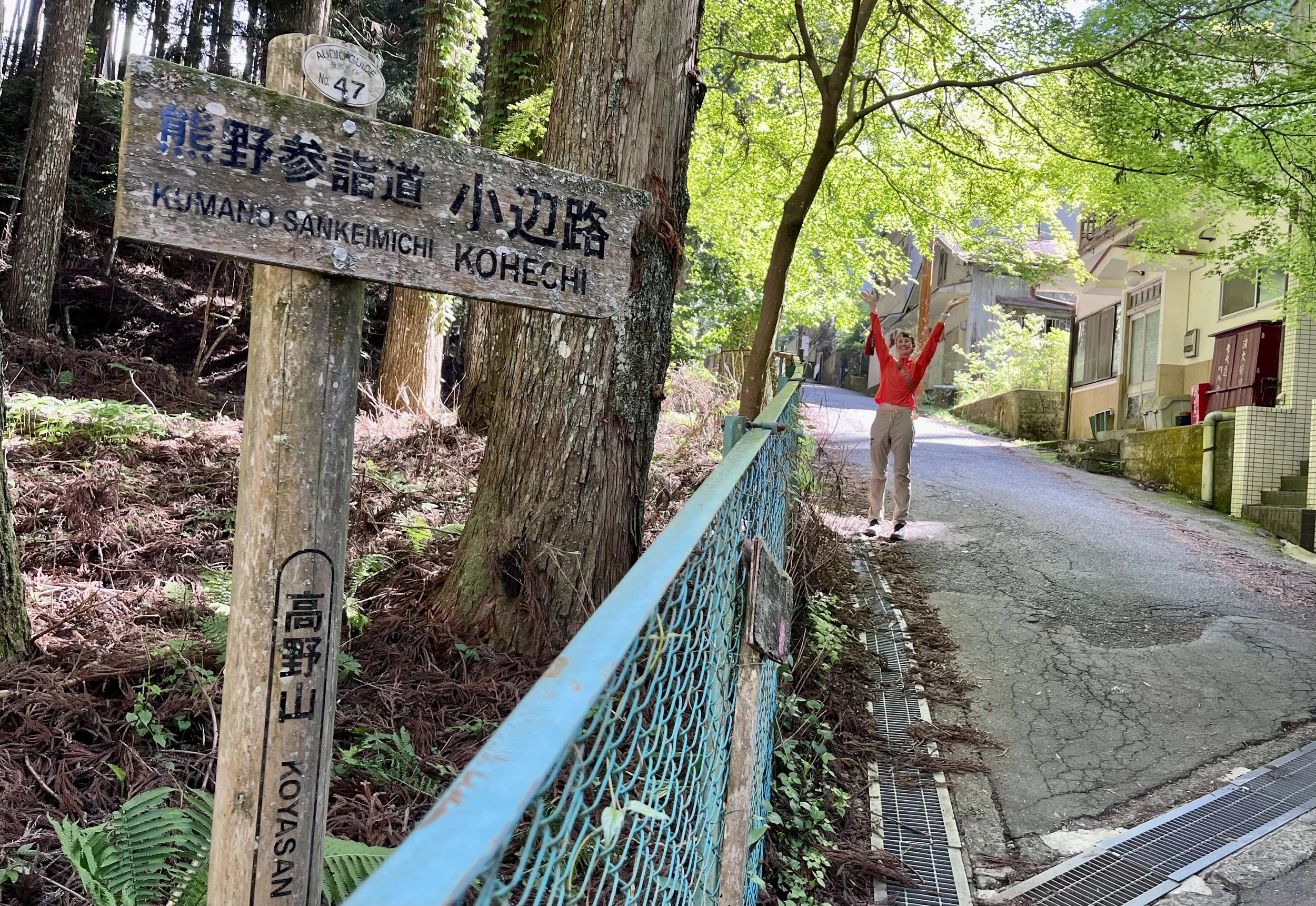
Our arrival in Koyasan was anticlimactic at first, as the trailhead was rather nondescript and begins passing several abandoned homes on the outskirts of the town. However, as we reached the city center we encountered a thriving cultural center with lots of tourists (perhaps 50/50 Japanese vs other).
Unsure about the ethics of bringing our packed lunch bento boxes into the temple were staying in tonight, as Buddhist temples are vegetarian (no fish, meat, egg), we sat to eat on a bench on a quiet street. Chris couldn’t think about eating more fish without actually gagging so he ate a sleeve of ritz crackers, while I enjoyed sushi fried fish with the typical packed lunch vegetables.
My advice to anyone hiking these trails would be to only opt in for dinner and breakfast, if given the option at booking. The quantity of food, while novel at first, and so generous on the part of our hosts, has been pretty overwhelming. We would have been happier with snacking for lunch.
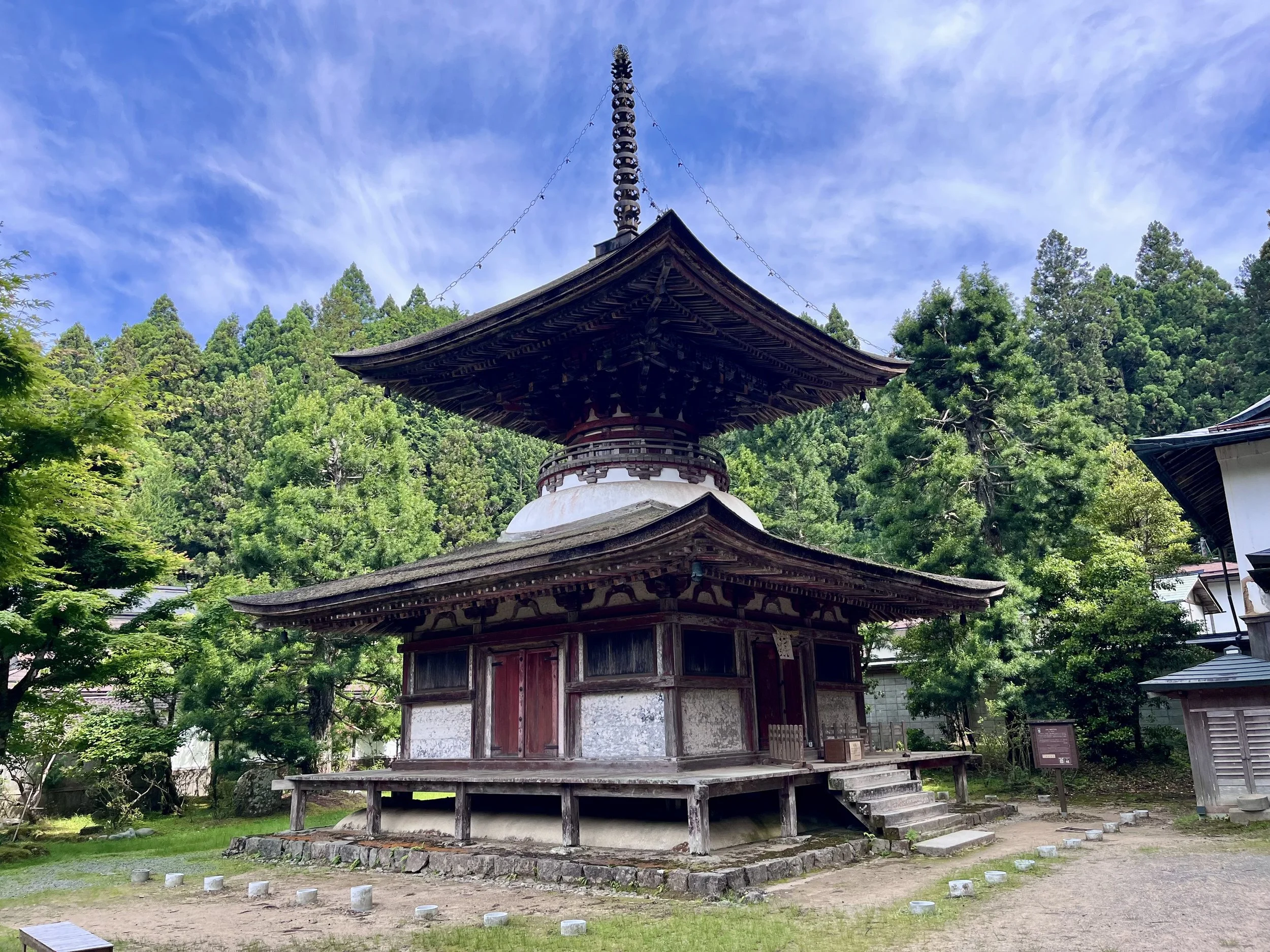
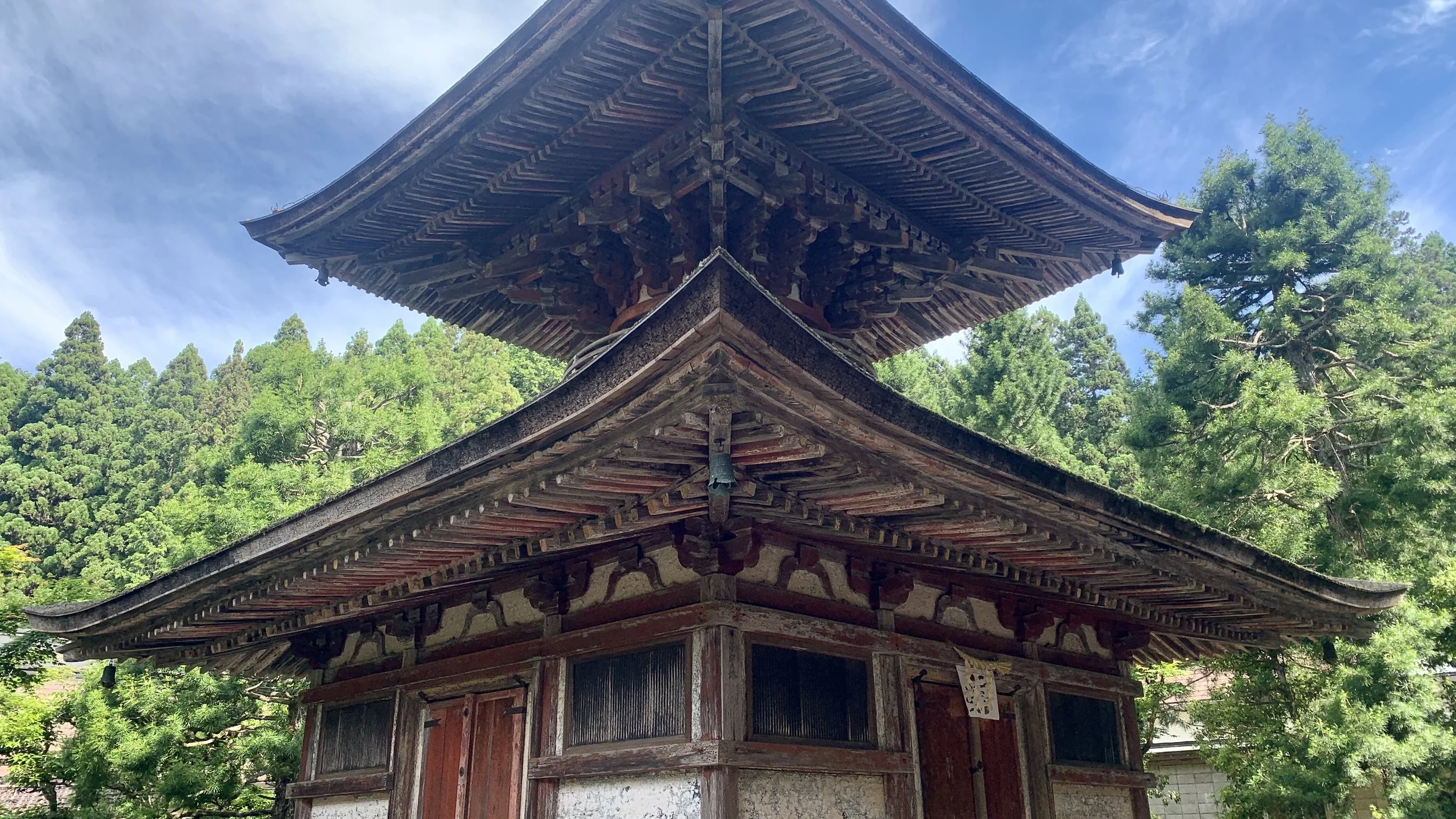
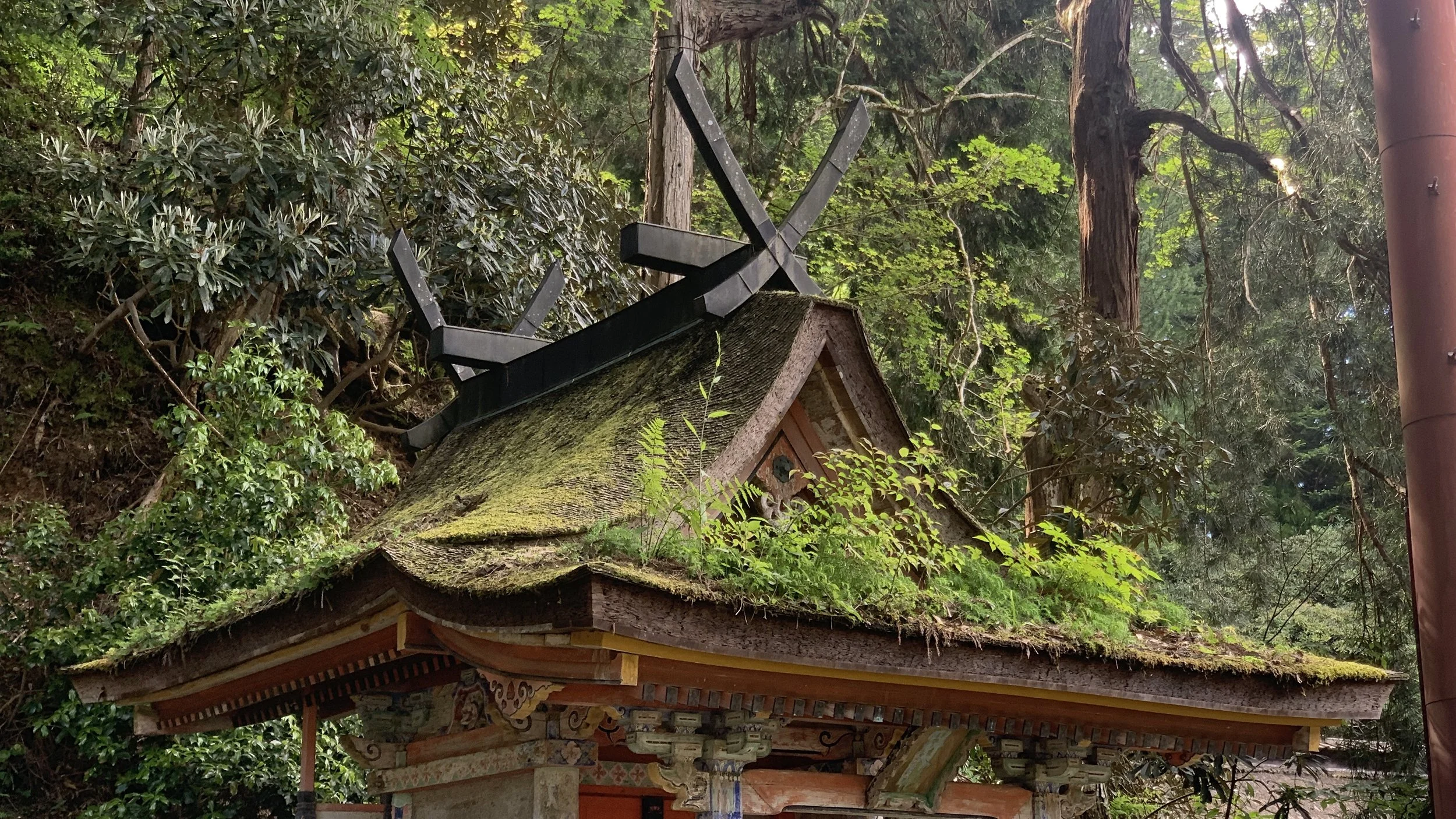
First we visited Kongo Sammai-in, a temple which boasts the oldest Stupa - a Buddhist shrine/monument - in Koyasan, built in early 1200. There was a grove of giant cedar trees and also a very small shrine built around I believe 1500.
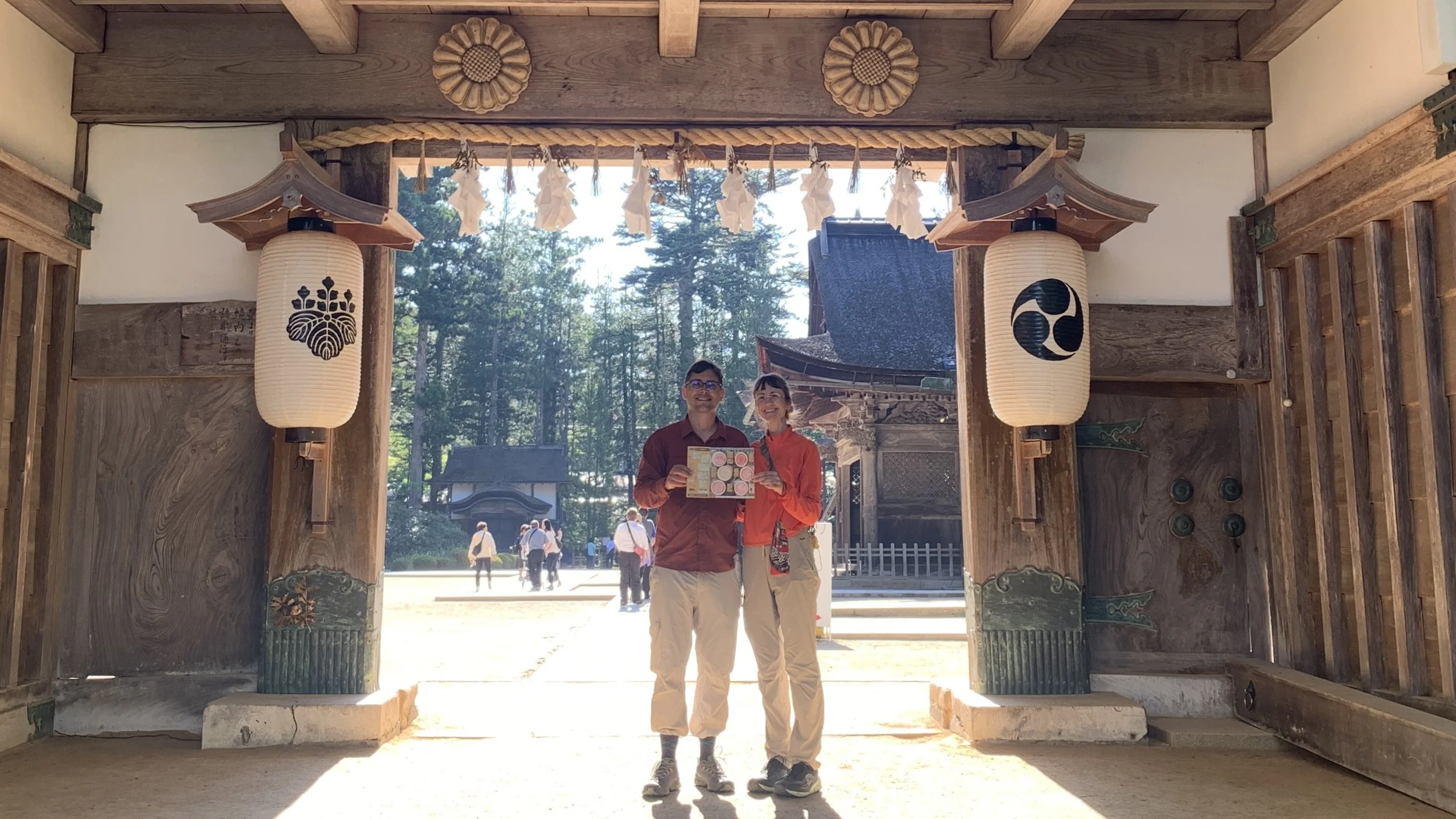
After this we went on a wild goose hunt for our final Kohechi stamp, which turned out to be at the visitors center nearest Muryoko Inn Temple, where we are staying. Getting that final stamp and then finding our way to Kongobu-ji temple, it finally felt as though our 13 day pilgrimage had come to a close. Bittersweet. Now begins a new chapter.
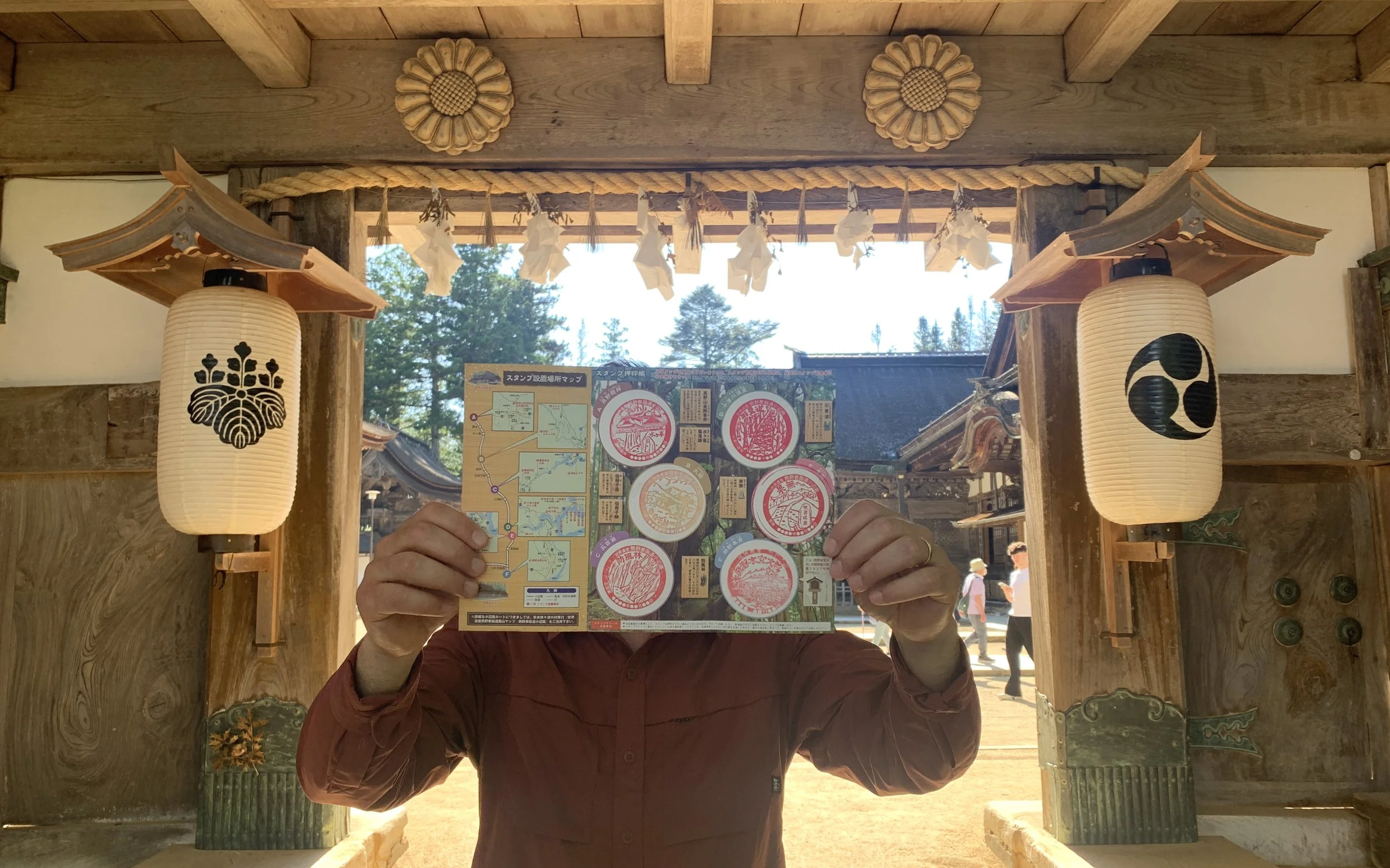
Kohechi pilgrim credential, completed.
We very much enjoyed walking around the Kongobu-ji temple which was full of rich history - including paintings dating back to the mid 800’s. Photography was not allowed, nor was sketching for that matter, so you’ll just have to trust me that this is a very worthwhile experience to have in Koyasan.
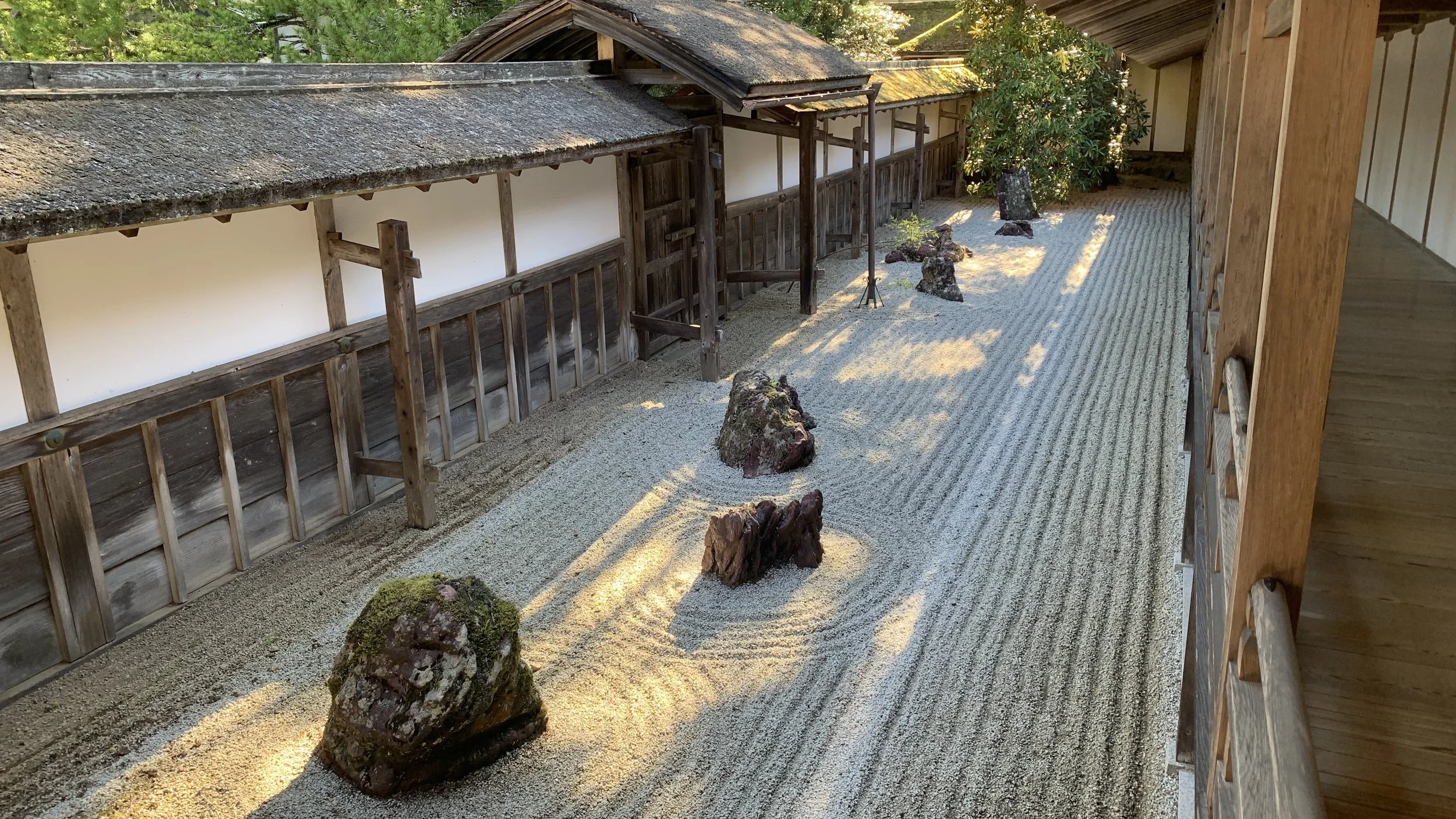
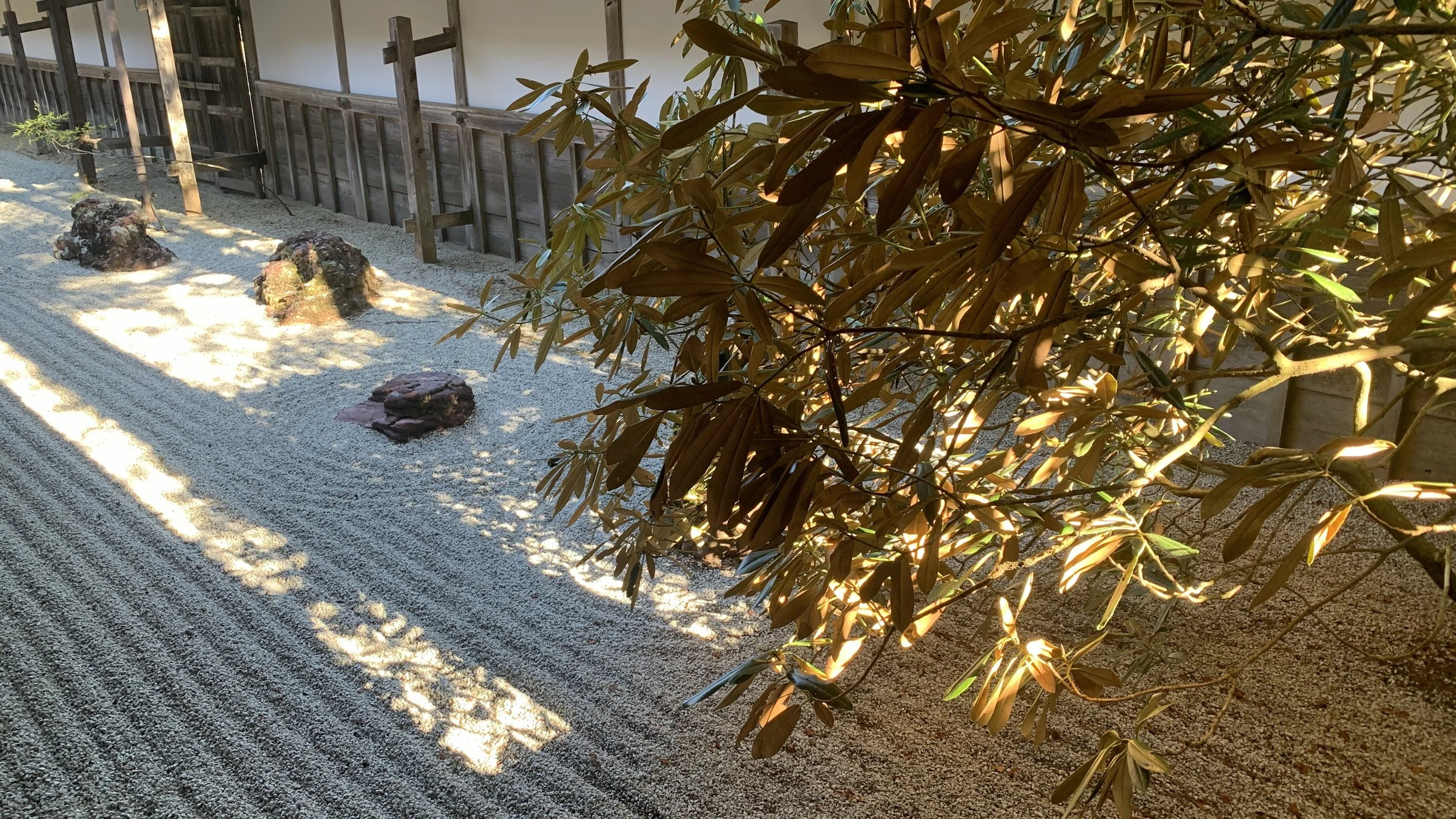
We checked into the temple just in time for dinner so immediately dropped our bags in our room and headed for the dining area. We shared the experience with a French couple and quietly enjoyed a refreshingly plant-based meal!
This, plus a visit to the public bath and a quick dip in the onsen left us feeling restored and ready for a nighttime walk through the Okuno-in Cemetary where many important/historical figures are laid to rest, including Kobo Daishi, the founder of Shingon Buddhism. It is said that Kobo Daishi is not dead but in eternal meditation, praying for the salvation of all souls.
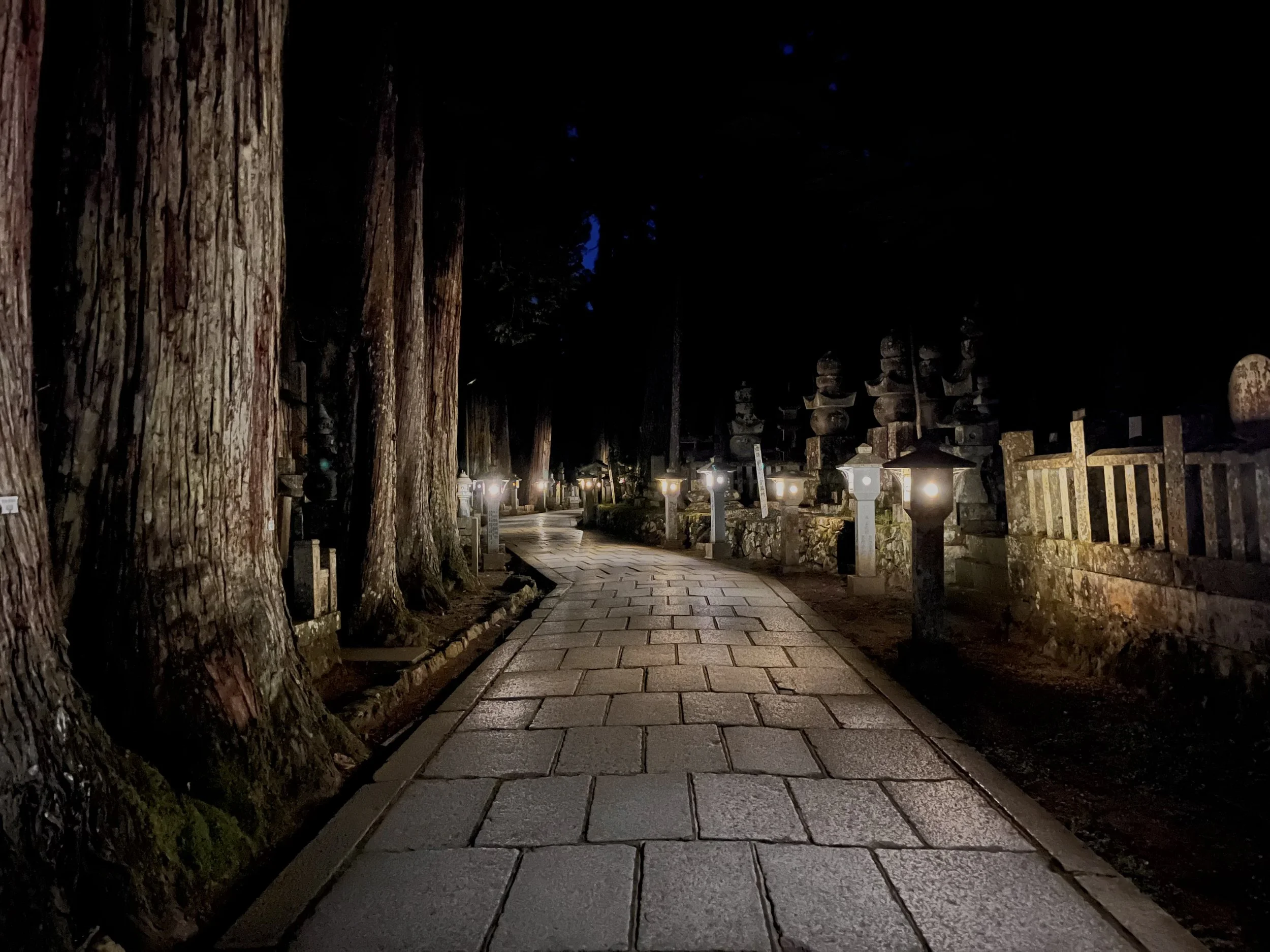
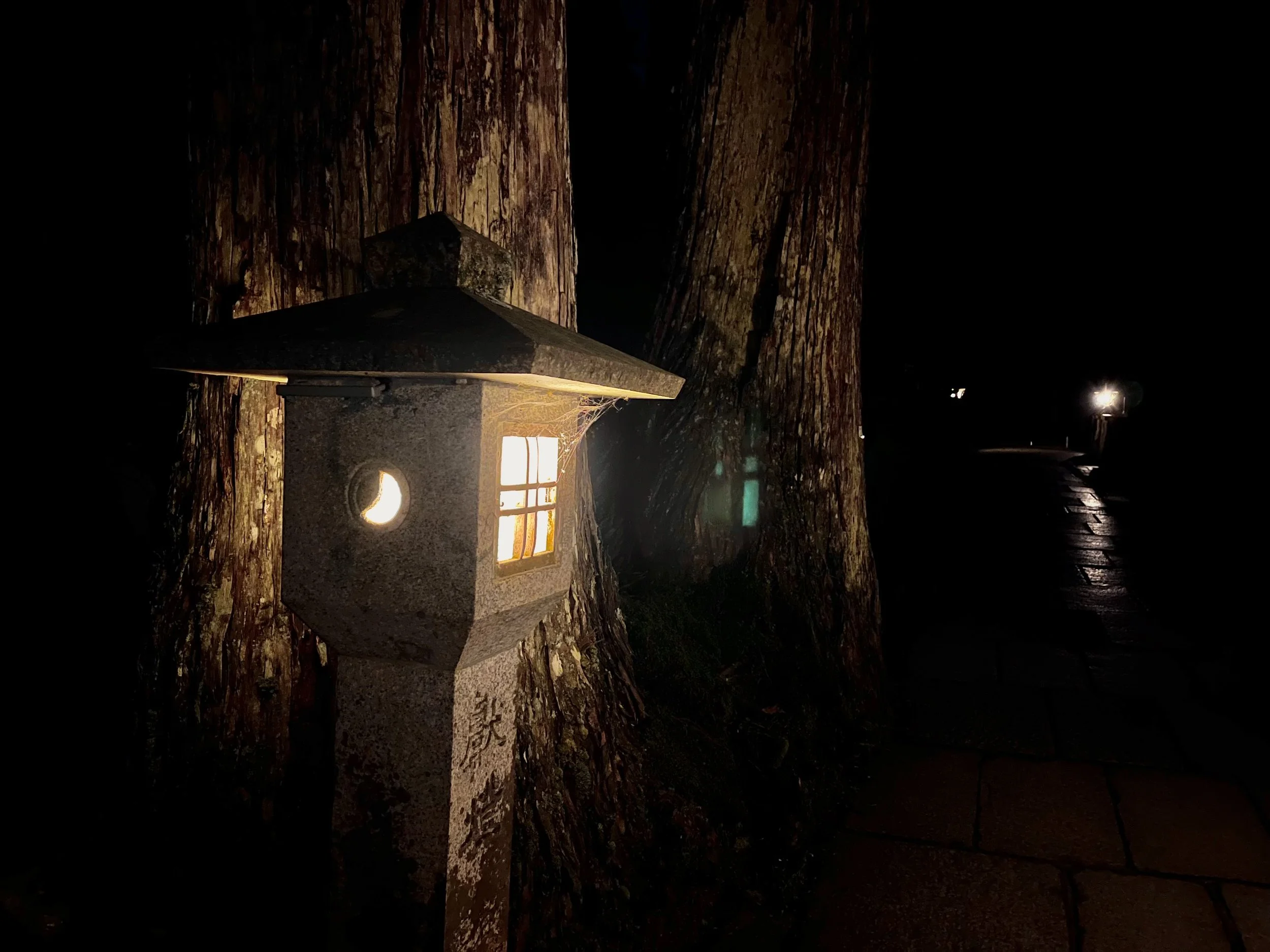
The cemetery walk was magical. The long path was lined with glowing lunar lanterns made of stone. Ancient cedar trees loomed amidst the tombs and memorial sculptures. We paid our respects to Kobo Daishi outside his mausoleum, where a monk chanted the heart sutra.
Having caught the last bus to the cemetery, we walked back to our lodging. Back at the temple we made our futons and turned in for the night.